
Woe to you, scribes and Pharisees, hypocrites! For you tithe mint and dill and cumin, and have neglected the weightier matters of the law, justice and mercy and faith . . . You blind guides, straining out a gnat and swallowing a camel! (Matthew 23: 23, 24)
On May 25, 2007, federal prosecutor Bob Govar was questioned by Alvin Clay’s attorney, George Hairston.
Q. The last time we talked you were chief of the criminal division?
A. That’s correct.
Q. You’re no longer chief?
A. No, sir.
Q. Were you demoted, sir?
Federal prosecutor Steven Snyder had heard enough. “Your Honor, I object. I don’t think that has any relevance to this particular proceeding. He wasn’t demoted for anything having to do with this case or this trial.”
“We don’t know that, Your Honor,” Hairston fired back. “What we do know is there are reports and information which I would like to explore that he was demoted for a threat to a newspaper, using his office stationery. I think that goes to credibility.”
Judge Leon Holmes wasn’t impressed–Bob Govar’s demotion was ruled out of bounds.
Unbound by the arcane rules of courtroom etiquette, I am free to explore the circumstances surrounding Bob Govar’s demotion.
Our inquiry begins in 1990, the year Bob Govar was asked to investigate allegations that District Attorney Don Harmon, a prominent drug war crusader, was a tax evader, a recreational drug user, and a drug dealer who traded cocaine for sexual favors.
The federal government had been ignoring these allegations for years, but the ostrich approach was no longer feasible. A prominent candidate was running for Sheriff of Saline County on the promise that Dan Harmon would be investigated.
Jean Duffey, head of the 7th judicial narcotics task force, had been sending Govar information on Harmon for years. “We began to realize,” Duffy told a reporter in 1996, “that we were not ever going to be able to bring drug dealers’ cases to court without involving the public officials with whom they appeared to be involved.”
In other words, Dan Harmon was just an egregious case of business as usual. Like the informant and the state trooper involved in the infamous Operation Wholesale, a long list of public officials learned how to supplement their modest incomes by feeding off the drug war.
In June of 1991, U.S. Attorney Chuck Banks announced the results of Bob Govar’s investigation. “Quite frankly,” Banks told reporters, “we found no evidence of any drug-related misconduct by public officials in Saline County.”
Exactly six years later, The Wall Street Journal made a sobering announcement:
“On Wednesday, the jury in Chief U.S. District Judge Stephen Reasoner’s Little Rock courtroom convicted former county prosecuting attorney Dan Harmon of using his office as a criminal enterprise to extort narcotics and cash, handing in guilty verdicts on five counts of racketeering, extortion and drug distribution.”

In the course of the trial, drug dealers testified that Harmon dismissed charges in exchange for large cash payouts.
Women testified that charges had been dropped in exchange for sex.
Harmon and Roger Walls (head of the 7th Judicial District Drug Task Force) were charged with conspiring with a “cook” named Ronnie Joe Knight to manufacture methamphetamine.
Tina Davis testified that Harmon snorted a line of cocaine in front of her in his office.
Harmon’s ex-wife, Patricia Vaughn, testified that both she and Harmon were regular meth users. “We smoked it,” she told jurors, “we used the needle . . . sometimes 10 or 12 times a day.”
Released on bail following the trial, Dan Harmon was re-arrested after he attempted to bring methamphetamine to a girlfriend’s apartment. According to a report in the Arkansas Democrat-Gazette: “Confronted by the FBI, Harmon ran though the apartment complex and jumped into a pond with his clothes on.”
Methamphetamine is water soluble.
Oddly, the criminal acts alleged against Dan Harmon began a few months after Bob Govar’s initial inquiry absolved the prosecutor of all wrongdoing. Can we really believe that Harmon went bad within days of receiving a clean bill of health? Or was Govar’s investigation a pathetic cover-up?
Bob Govar pretended to see no evil in the Harmon case for the same reason he pretended to believe a thoroughly discredited state trooper named Clayton Richardson–it was about controlling public perception.
Dan Harmon’s credibility was first called into question in the late 1980s when he took over the investigation of the mysterious deaths of two young men near the Pulaski-Saline county line. Tragically, the Train Deaths (as they came to be known) are so wrapped up in anti-Clinton conspiracy theory that it has become virtually impossible to distinguish fact from fiction.
Some believed that Dan Harmon was responsible for the train deaths; some accused two police officers, Jay Campbell and Kirk Lane. Others believed that all three men had a hand in the murders.
While Harmon was investigating Campbell and Lane, Campbell and Lane were investigating Harmon. Not surprisingly, both investigations came up empty.
When Pat Mastriciana, a Clinton-loathing conspiracy nut, linked Campbell and Lane to the train deaths, Campbell filed a libel suit. Bob Govar joined a long list of police officers in singing Jay Campbell’s praises. Govar and Campbell had been working narcotics cases together for years.
Govar went to bat for Campbell again in 2006 when his old friend was indicted for behavior that might have shocked Dan Harmon. Campbell had served as Lonoke County police chief after being fired by the Pulaski County Sheriff’s Department in 2000.
When Charles McLemore, an officer with the Arkansas State Police, started investigating in Lonoke County, the allegations just kept multiplying. McLemore reported “Irregularities, including drug use, sex, and personal use of prisoners to perform personal services for various individuals.”
Jay Campbell, it turned out, was using state prisoners to perform odd jobs on his own property and hiring them out to local residents, including the mayor of Lonoke and his own friend Bob Govar.
“Prisoner Andrew Baker disclosed that Chief Jay Campbell’s wife had a very close relationship with at least two of the [inmates],” McLemore reported. “Baker disclosed that the chief’s wife, Kelly Campbell, had brought a fifth of vodka, a fifth of gin, and a fifth of Royal Crown” to the jail and shared it with inmates.
Prisoners who preferred marijuana to alcohol, Baker reported, were accommodated.
According to a number of inmates, Kelly Campbell allowed pictures of herself to be taken in provocative poses with inmates and had engaged in sexual activity with her favorites “ten to twenty times” in and around Lonoke including “the Holiday Inn Express, the press box at the ballpark, the Campbell’s home on Cherry Street, and the chief’s office at the Lonoke Police Department.”
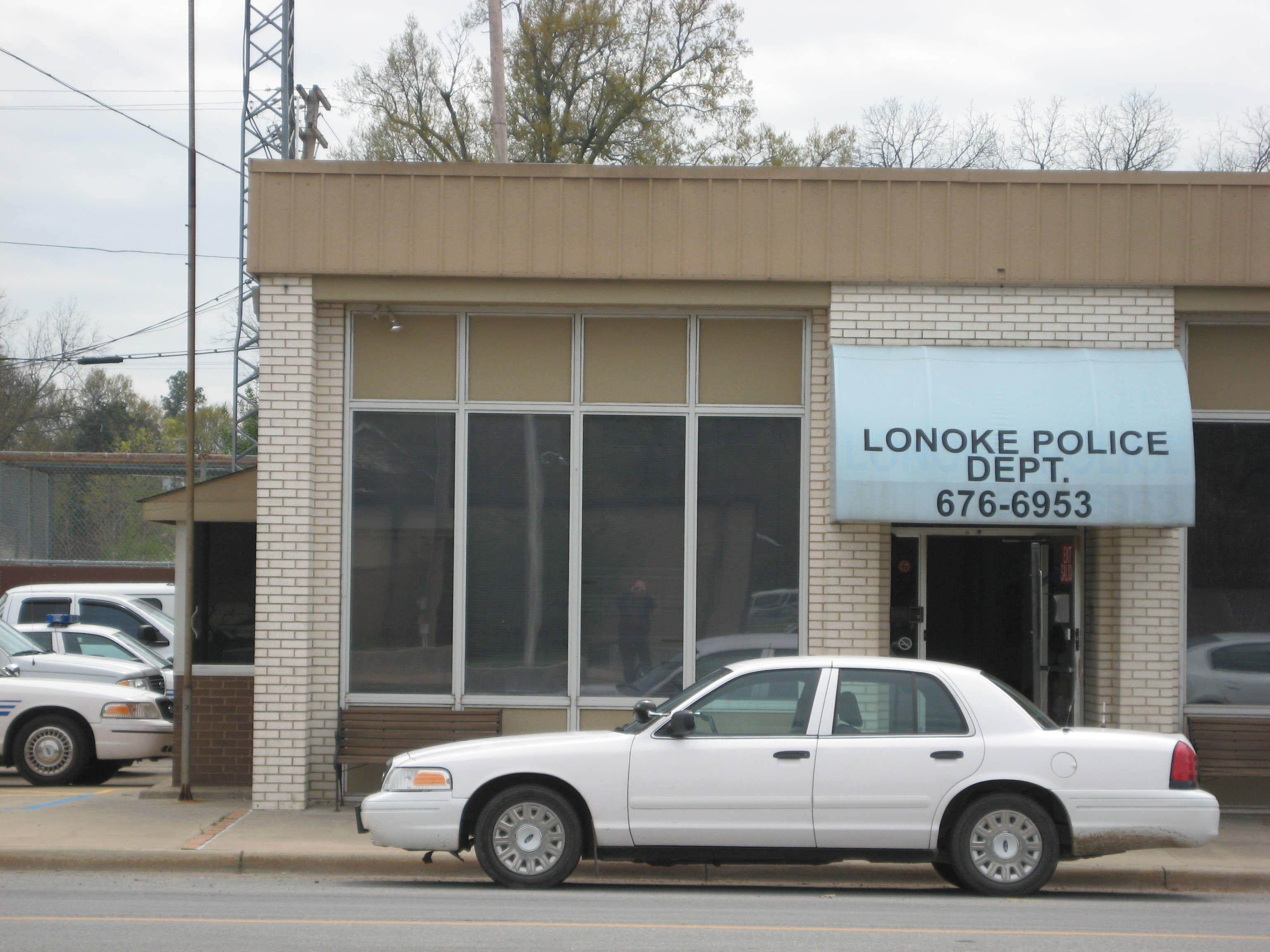
A long list of local residents reported that, after visits from Jay and Kelly Campbell, money, valuables and prescription medication turned up missing. The natural explanation was that Jay and Kelly Campbell were addicted to pain killers.
Lonoke County District Attorney, Lona McCastlain knew she was in over her head when all this information was dumped on her desk

Lona McCastlain
Handsome and intense, McCastlain is a Republican, a rarity in Democratic Arkansas. When I told her I worked with a criminal justice reform organization that intervenes in cases of official corruption, she smiled.
“If you’re looking for corruption,” she said, “you’ve come to the right place.”
“This was an appropriate case for the feds,” McCastlain told me. “I handed it to the U.S. Attorney’s office on a silver platter. I took all the files I had and gave them to [U.S. Attorney] Bud Cummins. He knew at that point that Govar was involved with the misappropriation of labor.”
Cummins seemed interested, but he told McCastlain she needed to talk to the FBI. “They told me they’d get back to me,” she recalls. “The next Monday morning they called and said that they couldn’t take the case.”
The reason: “The State Police had taped interviews and the FBI didn’t do that.”
McCastlain had no choice but to try the cases herself. Big name lawyers had signed on to represent Campbell and his co-defendants and Campbell’s old friend, Judge John Cole of Saline County, was coming out of retirement to try the case.
“Judge Cole and Jay were backslapping the first day of trial,” McCastlain recalls.
Moreover, as had been true when the feds prosecuted Dan Harmon, most of the potential witnesses were alleged drug dealers and prison inmates. “You can’t win cases like this when you have that kind of witnesses,” McCastlain told me. “I am glad I tried this case; but I shouldn’t have done it. It was too much for me.”

Jay and Kelly Campbell
Shortly after the Campbell’s were convicted, Garrick Feldman, editor of The Arkansas Leader, wondered aloud why the outgunned prosecutor had being forced to go it alone.
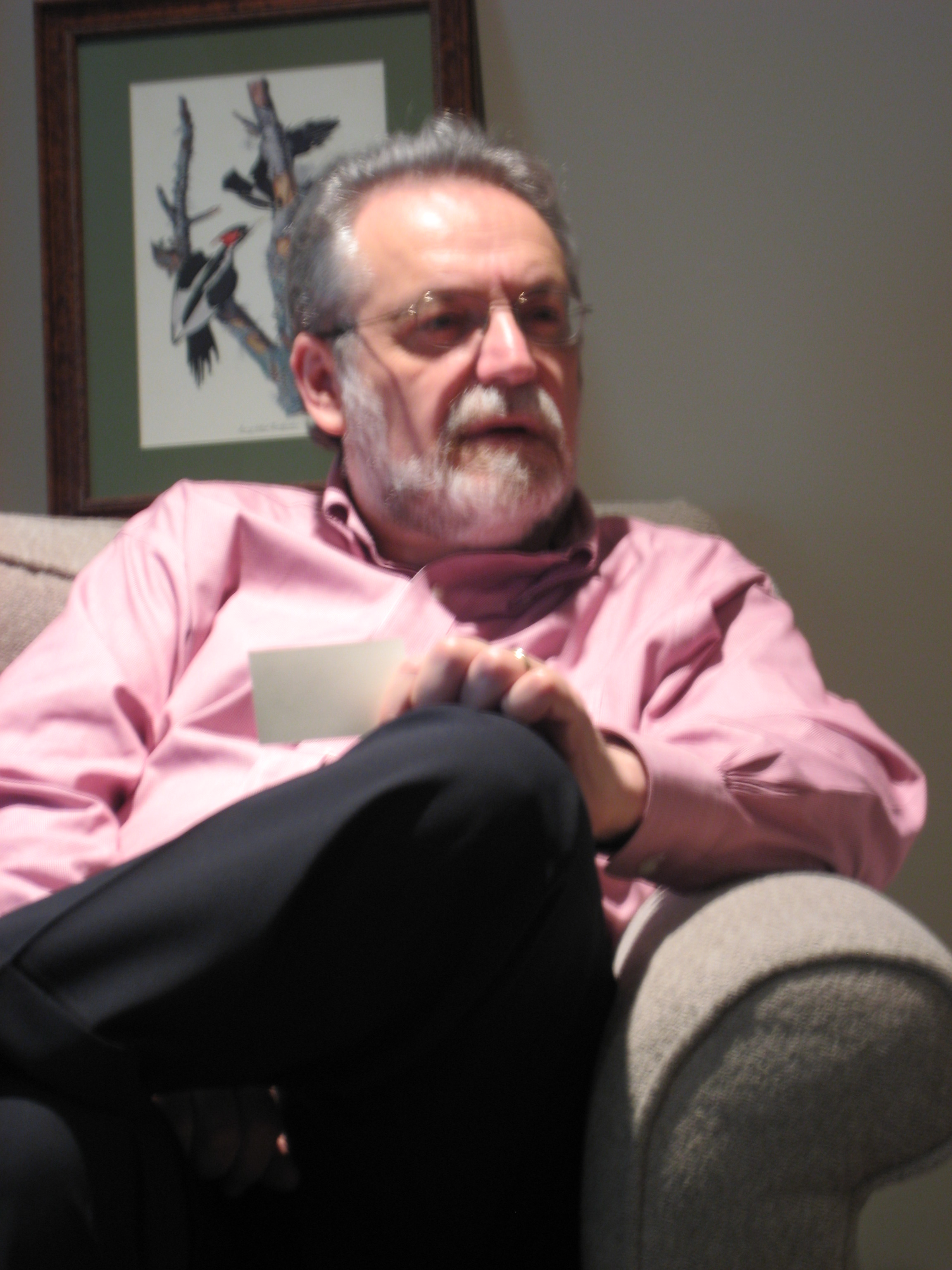
Garrick Feldman
In an editorial called “Why didn’t the feds take this case?” Feldman posed the obvious questions. “Did the Campbell’s have friends in high places who protected them from federal indictments–specifically, a good friend in the U.S. attorney’s office who has received favors from Campbell, and an FBI agent who knows him well?”
“Two law enforcement officials have told us,” Feldman continued, “it was improper for a deputy U.S. attorney named Robert Govar to let Lonoke prisoners clear his land before he built his house in Lonoke.”
But what really bothered Feldman was Govar’s testimony at trial: “He in effect became a character witness when he testified that Campbell had a wonderful family. The jury wasn’t impressed.”
An enraged Govar tapped out a strange email on government stationary.
“I just wanted you to know that I will be engaging the services of the best libel lawyers I can find to sue you,” Govar said. “Your article, ‘Why didn’t the feds take this case?’, in the April 25, 2007 issue of The Leader contains lies which damage my professional reputation.
“You will be receiving a letter from them soon which will provide more details. I hope you and some of your ‘sources’ have fifty million dollars but, if you don’t, take good care of my newspaper.”
Feldman forwarded Govar’s email to U.S. Attorney, Tim Griffin and Bob Govar was summarily demoted.
“My parents survived the holocaust,” Feldman told me when we chatted in his office. “The communists put my family in jail before I came to this country. And he thinks he’s going to intimidate me with that nonsense? That was a drunk writing an email at 11:30 in the morning when he’s already drunk; and then he sobers up and wishes he hadn’t written it.”
Govar’s ill-fated email, naturally, became the subject of Feldman’s next column.
“Robert Govar of Lonoke–formerly chief of the criminal division in the U.S. attorney’s office in Little Rock who’s now been demoted–threatened to sue me last week over a column I wrote about him and his buddy Jay Campbell, the crooked cop who was sentenced to 40 years in prison, along with his wife Kelly, who received a 20-year sentence.”
“He thinks we’ve ruined his reputation because we wrote he’d been hanging out with Campbell too long,” Feldman wrote. “A lot of people think Govar sullied his reputation long before we wrote about him.”
“In their heyday, Campbell and Govar were both known as bullies as they worked together on various criminal investigations. ‘Two peas in a pod’–that’s how a law-enforcement official characterized the pair when he heard about Govar’s ridiculous email.”
Feldman ended the column with high praise for Tim Griffin. “But Griffin hasn’t gone far enough,” Feldman opined, “he should fire Govar if he hopes to bring back respect to the U.S. attorney’s office.”
Six days later, Greg Palast, a British journalist covering American politics, accused Tim Griffin of producing “caging” lists during the 2004 election in which Griffin played a prominent role in George W. Bush’s re-election effort.

“The Griffin scheme was sickly brilliant,” Palast wrote. “We learned that the Republican National Committee sent first-class letters to new voters in minority precincts marked, ‘Do not forward.’ Several sheets contained nothing but soldiers; other sheets, homeless shelters. Targets included the Jacksonville Naval Air Station in Florida and that city’s State Street Rescue Mission. Another target: Edward Waters College, a school for African-Americans.”
If the letters came back as undeliverable, the names were challenged when the recipients tried to vote on residency grounds. Tim Griffin resigned in disgrace.
Two weeks later, George Hairston was asking Bob Govar why he had been demoted and Judge Leon Holmes was ruling the question irrelevant.
Govar’s history is relevant to the Alvin Clay case in three ways.
First, Govar’s ill-considered letter to Garrick Feldman exposes the prosecutor’s mean and vindictive side. The prosecutor relishes the singular power he wields as a U.S. attorney. If he possessed the authority to crush Feldman he would have done so. Govar takes professional criticism personally and takes revenge when he can.
Only a vindictive prosecutor would have launched a witch hunt against a fellow attorney before the slightest hint of wrongdoing had emerged. Only George Vena resented Alvin Clay enough to open such a case at Bob Govar’s behest.
George Vena’s threat to Alvin Clay was similar in style and spirit to Govar’s threat to Garrick Feldman. Both men are capable of cooking up a vindictive prosecution if they think they can get away with it.
Secondly, Bob Govar’s enthusiastic pursuit of Alvin Clay contrasts strangely with the shelter he has afforded to men like Dan Harmon and Jay Campbell. Govar has been straining out gnats and swallowing camels.
Compared to the Bonnie and Clyde exploits of Harmon and Campbell, the accusations against Ray Nealy and Alvin Clay evoke the antics of Eddie Haskell and Beaver Cleaver. Beaver got in trouble for hanging out with the street savvy Haskell. Alvin Clay has shown equally poor social judgment, but does this qualify as a federal case?


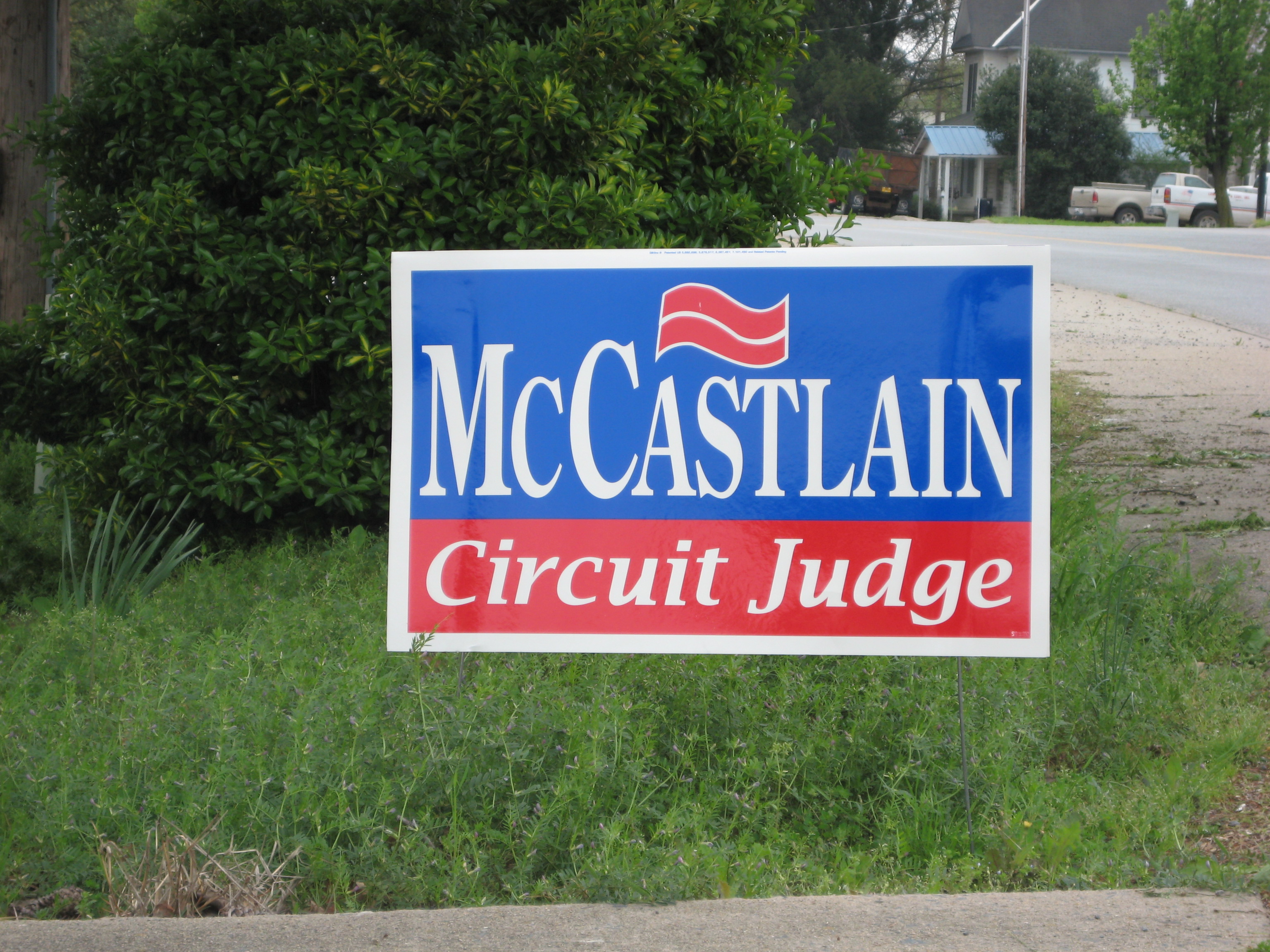
If so, why did the feds force Lana McCastlain to prosecute Jay Campbell and company when her office lacked the requisite resources? (McCastlain, buoyed by popular support for her prosecution of Campbell, is running for judge).
Finally, Bob Govar’s quarter-century friendship with Jay Campbell demonstrates the perils of guilt by association prosecutions.
Can we really believe that Bob Govar didn’t know that his buddy had extreme addiction issues, or that Campbell could use, manufacture and sell drugs without Govar being aware of it?
Are we expected to believe that a federal prosecutor with thirty years experience took advantage of Campbell’s felon-for-hire scam without knowing it was illegal?
The guilt-by-association case I have just sketched out against Bob Govar is far more compelling than the case Govar has built against Alvin Clay.
Am I suggesting that Bob Govar should be prosecuted as an accomplice to the comically corrupt Campbell?
Not for a moment.
Govar’s 1990 investigation of the obviously guilty Dan Harmon should be investigated.
Govar’s 2000 prosecution of almost two dozen defendants on the perjured testimony of Clayton Richardson should be the stuff of scandal.
Did Govar discourage the FBI from taking the Jay Campbell case? Is anybody but Garrick Feldman even asking the question?
Govar’s role in suborning perjury and withholding exculpatory evidence in the Alvin Clay warrants a stiff rebuke from somebody.
But none of these sins, egregious as they are, offer proof beyond a reasonable doubt that Govar was entangled in the manifold sins of Jay Campbell.
Nonetheless, if Govar was indicted for conspiring with Jay Campbell, a jury would probably convict. That’s what scares me about the May 27th trial of Alvin Clay.

 Friends of Justice
What I read is not surprising. I am a TN resident and I practiced law for 1973 to 1990. I turned a female client over my knee in 1990 and popped her rear 4 times. I did this with her consent. 4 days later she had me arrested. I had knowledge that a former Mayor for 46 yrs. who had been ousted from office by a private citizen, was flying cocaine into the city’s airport from his new home in Florida. He appeared outside my office the day I was arrested. I consented to disbarment. One year later I learned the TBI had lied to me about evidence to protect the former Mayor. In 2005 I discovered that 5 of our 6 trial judges had been selected grand juries illegally for at least 10 yrs. They actually allow the forewoman to select 12 grand jurors from as many as 40 names. Her husband’s law firm represented the county and most cities within the county. The forewoman could effective stop any indictments from being issue against the “politically prominent if she could get one grand juror to follow her lead. She put cases of the special people off until the last day of the Grand Jury and she often asked certain jurors if they wanted off after one day’s service and then she selected the replacement juror. I was able to get over 70 pages of court records certified by the clerk. The records were basically attendance records and records of the people the presiding judge selected to “serve” as grand jurors. The judges selected from 16 to 40, instead of only 12 required by law. I even found one hand written note from the forewoman to the clerk stating: “These are the grand jurors I have selectd for July. Please send them notice.”
I went to the FBI with all of the certified evidence and the Nashville U.S. Attorney told the FBI to
“Leave it alone.” I have tried for 3 years to get someone at the DOJ interested in this corruption as well as more corruption that I have uncovered going all the way to the TN Sup. Ct. and I have never gotten past the “Correspondence Section”of the DOJ. On Sept. 25, 2008 I received a reply to my telephone call the day before to the Criminal Section of the Civil Rights Division of the DOJ. I had left a message about the judicial corruption in TN. The lady who returned my call would not give her name or any employee ID #.
She said that there was no one in the DOJ who had the authority to investigate alleged criminal conduct against a sitting state judge. I asked her to cite me to the statute that provided such a prohibition. Her response: “Mr. Kersey, you know I can’t do that.”
The FBI agents throughout TN are totally controlled by three people: the U.S. Atty. for the Western, the Eastern, and the Middle District of TN. If the U.S. Atty. says “Leave it alone.” there appears nothing that can be done. The corrupt DOJ has created a class of citizens who are above the law: Judges. I have no way of knowing how many other classes are above the law.
There needs to be a nationwide website that can attract attention to this corruption. The national media nor the local media will touch anything involving judges. They are apparently too powerful.
My telephone # is 615-896-5030.
John Kersey, Sr.