 The Sisters of Providence of Saint Mary-of-the-Woods in Indiana are proud of Donna Stites, an Associate of the order incarcerated at the Indiana Women’s Prison in Indianapolis. Yesterday, I sat down with Publications Manager Connie McCammon who wove my rambling reflections into the article below.
Friends of Justice express interest in Donna Stites’ story
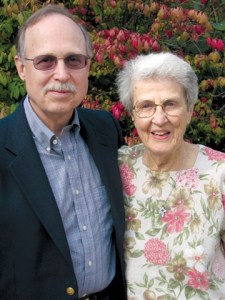
Dr. Alan Bean is the executive director of Friends of Justice.Many Providence Associates and Candidate-Associates came to know Providence Associate Donna Stites through the winter 2009 issue of HOPE in an article titled “Wanting to be seen as somebody.” This article shared Donna’s journey from a life of drugs, prostitution, murder and prison to her life as an associate of the Sisters of Providence. Walking beside her on part of her journey has been her companion, Providence Associate Priscilla Hutton of Paris, Ill., and Sisters Rita Clare Gerardot and Catherine Livers.
In March 1985, Donna was sentenced to 50 years for a Vanderburgh County, Indiana, murder to be served consecutively with an eight-year sentence for theft that she received in August of 1984 in the same county. Later in 1985, Donna received a 40-year sentence for another murder in Posey County to be served consecutively with the Vanderburgh sentences. It is this second sentence that Donna and her attorneys have argued is illegal “because the trial court had no statutory authority to order it served consecutive to any other sentence; that her guilty plea was not knowing, voluntary, or intelligent because she had been misinformed by both the trial court and counsel regarding the actual penal consequences; and that counsel was ineffective for failing to advise her that the trial court could not impose a consecutive sentence.” (Indiana Court of Appeals Web document downloaded May 22, 2008)
Priscilla has taken up the call of this injustice and has sought the assistance of Dr. Alan Bean, executive director of Friends of Justice, a criminal justice reform organization. Alan has served as a minister for Baptist and United Methodist churches. Residing in Arlington, Texas, with his wife, Alan has been ministering with the organization since 2000.
Alan and the Friends of Justice have brought the national spotlight on such cases as the Tulia, Texas, drug sting in 1999 and the Jena Six (Louisiana). Priscilla is hopeful that Alan can shine the national spotlight on the injustices of Donna’s case.
Alan made a trip to Indiana and visited with Donna and Priscilla on Monday, Sept. 14, 2009, at the Indiana Women’s Prison in Indianapolis. The following day he sat down for an interview with a staff member of the Sisters of Providence.
1.) How were you introduced to Donna Stites’ story?
I received an e-mail from Priscilla Hutton. Priscilla is her minister of record at the Indiana Women’s Prison. Priscilla had a number of concerns. With Donna, the issue was not guilt or innocence because she has never denied she was guilty. There are several things that interested me about [her] story. One is the fact that she was able to come to faith and was able to find grounding for her life in the midst of her struggles as an inmate and that she was able to move beyond her past so that she no longer identifies herself as the woman who did all those terrible things back in the day, but she sees herself as an associate of the Sisters of Providence — a Christian disciple — which is quite amazing.
 Sister Rita Clare Gerardot is just one of the people who has helped Donna Stites on her journey. Pictured with Sister Rita Clare is Alan Bean. Also I’m interested in the story because it shows what can happen when people — when a community of faith — reaches out to the least of these and shows the compassion of Christ. It hasn’t just been Priscilla, but several of the sisters have gotten involved in Donna’s story and have worked not just with Donna, but her mother and her sister, who’s in the free world. [Donna’s mother died at the Indiana Women’s Prison in May 2008.]
History plays such a big role in this story. Donna’s mother was traumatized as a young girl, was exposed to things that no child should ever be exposed to. She grew up basically in a house of prostitution, had mental issues as a young woman, received shock therapy [but] was a brilliant, beautiful, charming woman but just a broken person — a person who just made absolutely terrible decisions, who had no personal boundaries, no real sense of what it meant to be a mother. Trauma is passed from generation to generation. And how do you put a stop to that? How do you intervene in intergenerational dysfunction and bring redemption to the situation?
2.) How can you help Donna?
The first thing that I can do is to tell the story — just put it into writing and hopefully get the attention of somebody in the major media who might want to pick this thing up. So that’s one thing: just tell the story. And not just tell the story of Donna, but also tell the story of the Sisters of Providence and the work they do. I’ll start blogging on it.
Donna’s legal situation is very confusing [The members of the legal system] can say that she has served enough time in prison. She has two sentences, one of which was not imposed properly so the system could decide to vacate the second sentence and release her or they could decide to uphold it and keep her inside. A lot of it depends on whether you think Donna Stites is the woman who committed the crimes or whether you think Donna Stites is a redeemed child of God. The legal system tends to answer it as if she’s still who she used to be because that’s the way the legal system thinks. Whereas the community of faith that has been working with her sees her as a redeemed child of God and feels that she has paid her debt to society and should be released. So you get these two different [views]: one group is looking through the lens of faith and the other group is looking through the lens of law.
In the case of Donna, there really isn’t that much debate about her guilt or innocence. It’s true she was not the prime mover in either of the murders and wasn’t even involved in one directly, but she implicated herself. She got involved. She helped dispose of the body. And then she took the rap as if she was the sole perpetrator. And I think the thing that really struck me about Donna when I was talking to her is that she has a very strong sense of justice. I think she was born with it. And that sense of justice when she was on the streets — stealing and prostituting and scamming people and doing anything to get drug money — she still had, it’s just that she had this warped morality. But given the constraints of that moral vision, she still felt that she wanted to do the right thing — which in that case meant lying about what happened and taking all the blame upon herself. [That] is a very noble, wrongheaded and dysfunctional thing to do, but it’s very noble in its own way.
Given the kind of moral world she lived in at the time she was trying to do the right thing. And that sounds strange because you’d think somebody who was as screwed up as she was at the time — strung out on drugs, doing all kinds of illegal and immoral and degrading things — wouldn’t have a moral compass. But she did. It’s just that it was a misguided, misinformed moral compass. And as soon as somebody from the outside was able to reach into her world and introduce her to a different moral world, then that side of her came out and started to control her life. So she moved away from a lot of the dysfunctional, self-destructive things she was doing and was able to re-orient around Roman Catholicism and Catholic morality. And you know, if that can happen with Donna, who else could it happen with?
3.) What do you think about Priscilla?
The thing about Priscilla, she’s a brilliant woman, very compassionate and has a deep commitment to her Catholic faith. She was not a Catholic by culture or by upbringing. She chose that tradition because it felt like coming home for her. She talks about the sisters all the time. I realize that without that identity, that support, being part of that community, she couldn’t do what she’s doing. She’s very much a representative of a community.
When you work in the prison system, you have to be able to think independently because society’s verdict on these people is that they are throw-away people, they aren’t worth working with. When you intentionally walk through those prison doors and open yourself to the lives of people who, in many cases, have done horrible things and people who are quite willing to scam you and manipulate you, lie to you, and you’re willing to reach out to those people with the grace of God anyway and take risks, you can’t do that as an individual. You have to have a moral vision that has been shaped by a community and is sustained by a community. And I think Priscilla sees herself as being a representative or a missionary, a disciple, somebody who is ministering as a Christian, but more specifically, out of a particular religious vision.
4.) Final thoughts, Dr. Bean?
I still don’t know if I can do anything. But I’ve learned serendipity in this work — if you’re working with a good set of facts and you’re working with committed people, good things will happen.
(Or as the Sisters of Providence would say, it’s Providence.)
Donna Stites has a release date of 2026.
 Friends of Justice
Dr. Bean, thank you for spending time with Donna. I feel that we have only scratched the surface of this story of redemption. If the legal system is really about rehabilitation, then Donna has been rehabilitated. She has grown spiritually as well as emotionally. Her first step was admitting her guilt. The road to true redemption has lead her to seek help and to understand how to be a better person. I know she is a better person now. I’m her sister. Thank you for your support Dr. Bean.