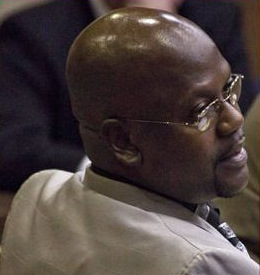
Author: Alan Bean

Dr. Laura’s racial meltdown

I had just finished watching Stephen Colbert’s hilarious treatment of Dr. Laura Schlessinger’s recent rant when I got my weekly call from WEUP Radio in Huntsville, Alabama.  Radio host and journalist David Person asked me for my take on Dr. Laura’s tirade. 

Here’s the background (you can get the full audio and text versions of the complete conversation here).  Dr. Laura got a call from a black woman with a white husband.  The woman was upset because her husband’s friends sometimes toss around racially offensive language in her presence and ask racially insensitive questions.  Dr. Laura asked what her caller meant by “racially offensive”.  Some people, she explained, are hyper-sensitive about race.  Then Dr. Laura launched into phase one of her rant:

“A lot of blacks voted for Obama simply ’cause he was half-black,” she informed the caller. “Didn’t matter what he was gonna do in office, it was a black thing. You gotta know that. That’s not a surprise. Not everything that somebody says — we had friends over the other day; we got about 35 people here — the guys who were gonna start playing basketball. I was going to go out and play basketball. My bodyguard and my dear friend is a black man. And I said, “White men can’t jump; I want you on my team.” That was racist? That was funny.”

The caller was undeterred.  “How about the N-word?” she asked.  “So, the N-word’s been thrown around . . .”

This was Dr. Laura’s cue to give us phase 2: (more…)

Blago and the Hammer beat the feds

Rod Blagojevich
Tom "The Hammer" Delay

 Two prominent politicians dodged judicial bullets in the last twenty-four hours: former Illinois Governor Rob Blogojevich and Tom “The Hammer” Delay, the erstwhile Republican house whip.  

Neither Rob nor Tom are entirely in the clear, of course.  The man with the second most impressive mop of hair in politics (Texas governor Rick Perry still holds the “good hair” title) was convicted of one count of lying to investigators.  Mr. Delay, meanwhile, is still under indictment in Travis County, Texas. 

Blagojevich was indicted for allegedly going on a political corruption crime spree. According to US Attorney Patrick Fitzgerald, “The conduct would make Lincoln roll over in his grave.”  Perhaps, but it didn’t horrify enough jurors to get a conviction on 23 or 24 counts.  (more…)

Robert Reich: The Military as Giant Jobs Program

Robert Reich

Robert Reich has boldly gone where few American pundits have gone before: he has called the US Military an extravagant and woefully inefficient jobs program.  You can find the entire post on Reich’s website, but I have reproduced the guts of his argument below.

Tragically, the same argument could be made about the US criminal justice system which employs 2.4 million people.  The expense can’t compete with military outlays, but the principle is the same.  Americans are willing to spend endlessly on the military and on public safety but are reluctant to fund real jobs programs.  That sounds too much like socialism.

Reich, as you will see, has an interesting way of working around this problem.

America’s biggest — and only major — jobs program is the U.S. military.

Over 1,400,000 Americans are now on active duty; another 833,000 are in the reserves, many full time. Another 1,600,000 Americans work in companies that supply the military with everything from weapons to utensils. (I’m not even including all the foreign contractors employing non-US citizens.)

If we didn’t have this giant military jobs program, the U.S. unemployment rate would be over 11.5 percent today instead of 9.5 percent. (more…)

Prison Reform in Mississippi

When you enter any Mississippi state prison you encounter this picture of Christopher Epps.  The Mississippi Commissioner of Corrections is the only black face in a collage of photographs hanging on a cinder block wall; but his picture is alone at the top.  He is Commissioner, after all.

This well-written story in Governing describes how Mississippi, the reddest of red states, backed away from the logic of mass incarceration.  A combination of factors allowed the Magnolia State to halt the upward spiral of growing prisons and deteriorating conditions.  First, the ACLU filed a lawsuit claiming that conditions in Parchman prison’s notorious Unit 32 were inhumane.  Then Ronnie Musgrove, a moderate Democrat, appointed Christopher Epps as Commissioner of the MDOC.  Here’s a quick exceprt from the article:

In August 2002, one month after the ACLU filed a lawsuit targeting the conditions on death row, Gov. Ronnie Musgrove appointed Epps commissioner of corrections. That same month, a team of ACLU attorneys and experts got their first look inside Unit 32. It was “a soul-searing experience,” Winter recalls. The conditions in Russell’s modified, “special management” cell, wrote psychiatrist Terry Kupers, were enough to “cause intense anxiety and rage, psychiatric breakdown and in a large proportion of cases, suicide.”

The following year, Judge Jerry Davis handed down an injunction ordering the MDOC to improve conditions in Building B. In 2005, the ACLU filed a complaint seeking to extend that relief to all of Unit 32. Then in April 2006, Commissioner Epps did something unexpected: He agreed to enter into a consent decree. And that December, Epps did something even more surprising. At a meeting with ACLU expert witness Austin, Epps directed Sparkman to form a task force that would work with Austin to develop an entirely new classification system for the state correctional system. Evidence for the need to radically change was not far away. In the summer of 2007, Unit 32 went from hellhole to war zone as violence exploded with the growth in rival gangs among the prison population.

To restore order, Epps made key personnel changes and reached out to the National Institute of Corrections for technical advice. In short order, a team from Connecticut, a prison system with well regarded gang intervention programs, arrived to assess the situation. After a week at Parchman, the group presented its report to Epps. Its recommendations were surprising.

“They said, ‘Commissioner, you’ve got to get them something,'” recalls Epps. “‘You’ve got these guys locked up in a cell, 80 square feet, with Plexi on the door. It’s not air-conditioned. So when they shout out or hurt someone, what can you do?'”

After consulting with Sparkman, Epps decided the MDOC would try a different — and deeply counterintuitive — approach. It would respond to the worst outbreak of prison violence in recent history by loosening the controls on Unit 32. The inmates would be given a chance to return to the general prison population by displaying good behavior. Unit 32 would have group dining, recreational activities and even classes.

Today, Parchman’s Unit 32-B holds only 85 death row inmates, Curtis Flowers is one of them.  After each of his four convictions for murdering four people in 1996, Flowers has been transferred to Unit 32.  When sentences are vacated and new trials ordered by the MS Supreme Court, Flowers is transferred to a county jail. 

Following his most recent conviction in June of this year, Curtis is back in Parchman.  A recent AP article suggests that Unit 32 will soon be shut down permanently.  I will send these articles to Curtis and get his read on the situation.

Speaking of Curtis Flowers, an almost comically bad article on his recent conviction appeared today in an obscure site called “Legal Info”.

The feature article in Governing shows what can happen when a governor has the guts to appoint a pragmatic African-American corrections official as commissioner and when that commissioner is willing to work hand-in-hand with a civil liberties organization instead of seeing reformers as the enemy.  Epps gave politicians the cover they needed to put an end to a truth in sentencing law that forced inmates to serve 85% of their sentences.  This punitive move gave inmates little incentive for good behavior and sent the inmate population soaring. 

It didn’t hurt, of course, that Mississippi is saving a lot of money by reducing its prison population.

Although Mississippi has one of the largest incarceration rates in the nation (it was briefly number one before the reductions discussed in the article) it ranks 45th in terms of racially disproportionate inmate population.   Christopher Epps understands that harsh corrections tactics and punitive sentencing policies are counter productive.  Every time I visit a Mississippi prison I wonder how a black man sleeps at night presiding over the Mississippi Gulag.  Now I know.

The drug war in spiritual perspective

Since Mexican President Felipe Calderon declared war on Mexico’s four major drug cartels four years ago, an estimated 28,000 people have died.  In the process, the hand of the cartels has been strengthened. 

Calderon’s drug war has killed or imprisoned an impressive list of prominent drug lords; but this superficial success has created opportunities for new players to fill the void or move up the money ladder.  Most of the violence flows from an intense internecine struggle for influence and control.

A major shift in Mexican policy took place in 2000 when Vicente Fox and his PAN party (National Action Party) ended the long political rule of the PRI (Partido Revolucionario Institucional).  Traditionally, the PRI related to Mexico’s drug cartels the way a referee relates to competing prize fighters.  Each cartel was given a protected sphere of influence, the quid pro quo being that politicians from small town mayors to the president would get their allotted cut of the ill-gotten gains. 

Fraud on this massive a  scale partly explains the moral appeal of Mr. Fox and the PAN, but a simple shift in ruling party couldn’t end corruption this endemic.  Four years and 28,000 corpses later, Calderon finds himself in deep political trouble.  His critics are calling Mexico a failed state and, as many Mexicans feel a surprising nostalgia for the bad old days, the PRI is staging a comeback.

Desperate men take desperate actions and President Calderon is no exception.  He recently raised eyebrows around the world by suggesting that drug legalization is worthy of serious consideration.

As a recent article in the Guardian makes clear, Calderon isn’t placing his personal stamp of approval on the legalization idea.  He says it would lead to a spike in drug usage and place generations of Mexican children at risk.  The president’s legalization talk is best interpreted as a dig at the United States.  Were it not for America’s insatiable appetite for marijuana and cocaine, the argument goes, the cartels would never have come into existence. 

Calderon’s comments come on the heels of a call for marijuana legalization from three former presidents of Latin American countries: César Gaviria of Colombia, Fernando Cardoso of Brazil and Ernesto Zedillo of Mexico.  Since marijuana accounts for between 50 and 70% of illegal drug use (depending on whose figures you accept), cartels would take a major financial hit if the drug was legalized and regulated. 

But it wouldn’t help much if Mexico decided to unilaterally legalize marijuana or any other illegal drug, the huge American market would continue to fuel the Mexican drug trade.  Cartels wield enormous power and enjoy considerable prestige in Mexico because, in a world of poverty, they are bristling with cash.  They make sizable donations to churches; they buy off priests and politicians; they dictate news coverage; and they have little trouble recruiting new employees.  Economically, the cartels are often the only game in town.

Even if Mexico and the United States moved in the direction of full drug legalization, the cartels could survive.  They have invested a large slice of the narco-pie in legitimate business ventures for the purposes of money laundering and have developed extensive international connections.  If they lost the North American trade, they could ramp up their operations in the rest of the world. 

But there is no doubt that drug legalization would suck much of the money out of a burgeoning Mexican drug trade, shifting the fight in the government’s direction.

The legalization debate may be moot.  Barack Obama understands that drug legalization makes sense as public policy, but since Richard Nixon declared war on drugs in 1976, it has been smart politics to pour ever-greater sums  into SWAT teams, interdiction and prisons.  The Obama administration has been talking about enhanced treatment for drug addicts and has been reticent to bang the drug war drum, but increased funding for the Byrne grant program suggests that the president understand the game he has inherited.

As pubic safety policy, the war on drugs makes no sense at all.  By now, most sentient Americans understand that the best way to ensure a lively market is to make a commodity illegal and then declare war on it.  The higher the risks involved in getting the illicit item to the consumer, the higher the potential profits.  Arrest one player and two more rush forward to take his place. 

Unfortunately, the war on drugs has never been about public safety or public health.  Presidents Nixon and Reagan declared war on drugs for strictly political reasons.  In America, illicit drug use had been (falsely) associated with people of color for generations.  From the mid-1960s on, hippies and political radicals were added to the suspect list.  Therefore, by declaring war on drugs, conservative politicians were demonizing poor people of color and young white radicals for political gain.  It was a code language everyone could understand.  Better still, no one could oppose a war on drugs without appearing to side with Lucifer and the hosts of hell.

Then, late in the Jimmy Carter years, America entered the period of “malaise” and “stagflation” that conservatives associate with failed liberal policy.  Inflation had reached unprecedented levels, unions were strong, and corporate profits were dropping like the anvil in a road runner cartoon.  The bi-partisan response was neo-liberal economic policies emphasizing free trade, outsourcing and a variety of similar strategies designed to strengthen the standing of international corporations at the expense of American labor. 

At the same time, the American workplace was going high-tech.  As demand for highly trained technicians rose, the need for unskilled labor plummeted.  The impact of these economic developments in small agricultural communities and in the urban core of major American cities was utterly devastating.

After three decades of post war economic expansion, America found itself with a large pool of surplus labor, disproportionately people of color.  What to do?

The war on drugs dovetailed perfectly with the nation’s economic crisis.  No one in the political world talked about mass incarceration, but that was the new game in town.  From a suburban perspective, the prison boom was largely invisible.  But poor black communities were being gradually ripped apart.  By the time the shift to mass incarceration hit full stride in the mid-1990s, half of the adult males in many neighborhoods had done time or were doing time.  In these communities, life for the average black male was a soul-destroying rotation from prison to the streets and back to prison.  It was virtually impossible for convicted felons to break the cycle.  This was by design. 

In her stunning book, The New Jim Crow, Michelle Alexander puts it like this: “We need an effective system of crime prevention and control in our communities, but that is not what the current system is. This system is better designed to create crime, and a perpetual class of people labeled criminals, rather than to eliminate crime or reduce the number of criminals.”

Successful “progressive” politicians have lacked the political courage to stand up to a hulking monolith that was devouring more and more citizens every year.  Typically, Democrats have survived a harsh political climate by embracing the cruel logic of drug war and mass incarceration.  The people bearing the brunt of these policies didn’t vote and the rest of the country didn’t care.

If America legalized drugs, the drug war balloon would pop.  For decades now, law enforcement has been richly rewarded for rounding up as many low-status people of color as the prisons could hold.  When we ran out of prison beds we built more.   Texas had 40,000 prisoners in 1980.  Now we have 173,000. 

If drugs were legalized in America, the profit motive driving the street level drug trade would disappear overnight.

But think about it, how would we control poor communities of color with unemployment rates at Great Depression levels if we didn’t have the drug war? 

As more and more attention is paid to the fraudulent mechanics of mass incarceration, conservative politicians have gradually turned their attention to the immigration issue.  If we lose one pretext for demonization, another must be invented. 

But how can you fill 2.4 million prison beds apart from the drug war?  You can’t. 

The jobs of  2.4 million Americans are directly dependent on the criminal justice system?  That’s right: the system requires one criminal justice employee for every prisoner.  If we legalize drugs, at least one million of these folks will be out of work.  Some of them will be prison guards; others will be courthouse bureaucrats, defense attorneys and prosecutors.

Of course, we could divert the money we are currently using to fund the machinery of mass incarceration into job creation programs and elaborate public works projects.  But would an electorate raised on drug war hysteria and racial stereotyping support such a common sense venture?  Not a single American politician is betting on it.

Drug legalization is a policy fraught with moral ambiguity, but the same, in triplicate, can be said of the drug war.  When the problem is a voracious human appetite for mind-altering substances, all the solutions come in dismal shades of gray.

So what do we do?  First, we start telling the truth about the drug war and mass incarceration.  If the politicians can’t summon the courage to address the elephant in the room, let’s address it for them.  Looky there, an elephant!  It’s that simple.

Secondly, we must learn to live without demons.  Or, to put it a bit differently, we should become more concerned about the demons inhabiting the nether regions of our own hearts.  That’s where the problem lies.

Finally, we must realize that neo-liberal economic theory and full employment are antithetical.  America can put everybody to work if we want to badly enough.   Where the private sector falls short, the public sector must find its role.

You can’t do criminal justice reform without dreaming of what Martin Luther King called “The Beloved Community”, a place where love supplants hate and what’s good for us trumps what’s good for me, a place where Mexicans, Americans and Canadians work for mutual prosperity.

At the core, our biggest problems are always spiritual.

Judge won’t give Flowers a new trial

FlowersJudge Joseph Loper has denied Curtis Flowers’ motion for a new trial.  The judge had ruled on similar motions filed before, during and after Mr. Flowers’ June trial, so this announcement comes as a surprise to no one.   

Flowers had argued, among other things, that the composition of the jury (eleven whites and one black) deprived him of a fair trial. 

Flowers has never been convicted when more than a single black juror has been seated on the jury; he has never escaped c0nviction when, as has been the case on four occasions, eleven of the jurors were white.

Montgomery County is 45% black and 55% white.

The composition of the jury, by itself, has never been a big legal issue in the Flowers case.  The law has become increasingly unfriendly to claims of racial bias.  The first two verdicts were overturned because the state chose to trying Flowers for only one of the four murders committed in 1996 at the Tardy Furniture store but introduced evidence related to multiple murders.  The verdict in Flowers 3 was overturned on a “Batson challenge” because DA Doug Evans used all fifteen pre-emptory strikes on African Americans.  

In Flowers 4, the death penalty was off the table and five black jurors were seated.  African Americans, especially in the state of Mississippi, tend to oppose the death penalty while whites strongly support it.  All five black jurors held out for acquittal in Flowers 4.

In Flowers 5, the state once again asked for the death penalty and tried the case before a jury of nine whites and three blacks.  Two of the black jurors suggested in post-trial interviews that they supported a conviction with the understanding that white jurors would agree to a sentence of life in prison without parole.  That strategy was rendered moot when James Bibbs, the third black juror, held out for acquittal.

“The judge got real loud,” Bibbs told Tom Mangold of the BBC last year.  “He said ‘you are lying, you committed perjury’. I was disappointed, all these years you do all these things for the community, then you are called a liar like that out in the public, it was degrading.”  Bibbs, a retired school teacher and Vietnam veteran, was charged with perjury for allegedly withholding personal knowledge related to the case during the voir dire process.  When civil rights attorney Rob McDuff forced DA Evans and Judge Loper to recuse themselves, the Mississippi attorney general’s office quietly dropped the charges.

But the point had been made.  In Flowers 6, black residents were desperate to avoid jury duty, excusing themselves for a wide variety of reasons. 

In last week’s ruling, Judge Loper argued that Flowers “should not be heard to complain about the racial makeup of the jury, since the overwhelming majority of the members of his race stated that they could not sit in judgment of him because of kinships, friendships, and family ties.” 

Loper also speculated that “given the prominence of the Flowers family in Montgomery County and given their large extended family, it is far from certain that another venire would have resulted in more African Americans serving on the jury.”

Loper failed to mention that persons closely associated with the four victims of the 1996 slayings frequently insisted that they could serve as fair and impartial jurors.  As a result, the venire grew progressively whiter as the voir dire unforlded.  Ultimately, the jury was chosen from a group of thirty-five whites and ten blacks.  Since the state and the defense both had 15 peremptory strikes at their disposal, DA Doug Evans could have produced the cases’ first all-white jury had he so elected.  Wisely, Evans left a single black resident on the jury for the sake of appearances. 

Judge Loper didn’t mention the chilling effect the criminal indictment of Mr. Bibbs had on the Montgomery County’s African American community.  No black person in the state of Mississippi relishes the prospect of sitting on a jury with eleven white folks in a case fraught with racial undercurrents.  Knowing you could find yourself on the hurting side of a criminal indictment only deepens the sense of apprehension.  When a CNN reporter tried to get comment from the black community she could get only one interview on tape, and that was from a black man who insisted that his name not be mentioned. 

I’m not sure why the Jackson Clarion-Ledger accompanied their story with Mr. Flowers’ prison mug shot.  An expressionless black guy in prison whites certainly looks guilty.  The paper could have used one of a dozen photographs taken during trial when Flowers appeared in formal attire.  Now that he has been convicted, I guess the paper decided to make him fit the convict mold.

Judge Loper’s decision clears the way for Mr. Flowers’ appeal to proceed to the Mississippi Supreme Court.  It is difficult to anticipate how the Supreme Court justices will rule.  The successful Batson challenge following Flowers 3 was supported by copious evidence of flagrant bias.  There is little in the record from Flowers 6 to support a standard Batson claim unless it is argued that Mr. Bibbs was indicted for the express purpose of intimidating potential black jurors.  Unfortunately, while common sense suggests a connection between the Bibbs indictment and the behavior of potential black jurors in Fowers 6, it’s a tough case to make before the Supreme Court. 

If you are unfamiliar with the Flowers case (and are still reading) you can find all the background you could ever desire here.

Reporters generally have a sketchy feel for the basic facts of this case.  For instance, the AP story on Judge Loper’s decision ended with what the writer doubtless considered damning facts:

“Among those testifying during the latest trial was Clemmie Flemming, who said she saw Flowers running out of the store at the time of the killings on July 16, 1996. Firearms expert David Balash had testified that the residue found on Flowers’ right hand the day of the slayings was in a spot consistent with firing a handgun.”

The reporter likely didn’t realize that the state ballistics expert originally assigned to the case attached no evidentiary significance to a single particle of gunshot residue or that forensics experts generally agree that small quantities of GSR (as it is commonly called) can be picked up by casual contact, especially in police stations.

It is also unlikely that the reporter was aware that Clemmie Flemming has told more than half a dozen Winona residents that she invented her testimony, that a number of friends and family members have testified to this fact, or that Flemming’s testimony has been repeatedly refuted by the man who was her driver on the morning in question.

That’s the problem with this case.  The state has all kinds of evidence, but none of it can stand up to careful scrutiny. 

Until this case is re-investigated from the ground up, Curtis Flowers will never receive the justice he deserves and the sense of finality and closure coveted by the good people of Winona, Mississippi will remain illusive.

Alan Bean, Friends of Justice

A Southwestern Strategy?

A New York Times editorial addresses the flap over the fourteenth amendment.  “Leading Republicans have gotten chilly toward the Constitution’s 14th Amendment, which guarantees citizenship to people born in the United States. Senators Mitch McConnell, John McCain, Lindsey Graham, Jeff Sessions and Jon Kyl have been suggesting that the country should take a look at it, re-examine it, think it over, hold hearings.”

Here’s the heart of the editorial:

As statements of core values go, the 14th Amendment is a keeper. It decreed, belatedly, that citizenship is not a question of race, color, beliefs, wealth, political status or bloodline. It cannot fall prey to political whims or debates over who is worthy to be an American. “All persons born or naturalized in the United States, and subject to the jurisdiction thereof,” it says, “are citizens of the United States and of the State wherein they reside.”

People like Mr. Sessions, who pride themselves on getting the Constitution just right (on, say, guns), are finding this language too confusing. “I’m not sure exactly what the drafters of the amendment had in mind,” said Mr. Sessions, the top Republican on the Judiciary Committee, “but I doubt it was that somebody could fly in from Brazil and have a child and fly back home with that child, and that child is forever an American citizen.”

It’s true that air travel was not a big focus in 1868, but this is not about a horde of pregnant jet-setting Brazilians, if, indeed, such a thing even exists. The targets are Mexicans, and the other mostly Spanish-speaking people who are the subjects of a spurious campaign against “anchor babies” — children of illegal immigrants supposedly brought forth to invade and occupy.

Are these folks wanting to scale back the force of the 14th amendment?

Perhaps, but my gut tells me all this chatter about anchor babies is a pre-election publicity stunt.  If every conservative talking head in the nation is chattering about “anchor babies” (or “little terrorists”), the base is energized and more substantive matters are pushed to the sidelines.  We are witnessing the latest iteration of the Republican Party’s Southern Strategy. 

The assumption is that racial demagoguery translates into votes as sure as the sun rises in the morning.  Only this time the target isn’t undercaste black people.  Sessions, McConnell et al have their guns aimed squarely at Mexico and a string of border states.  Call it the Southwestern strategy. 

Unfortunately, racist rhetoric ginned up in advance of an election eventually translates into public policy.   Richard Nixon talked about “crime in the streets”, the need for law and order, and topped it off by declaring a war on drugs.   According to Nixon adviser H.R. Haldeman, the president “emphasized that you have to face the fact that the whole problem is really the blacks.  The key is to devise a system that recognizes this while not appearing to.”

For the most part, Nixon was just talking.  But when Ronald Reagan re-declared a war on drugs in 1982 he put vast sums of money where he mouth was.  Even the ostensibly progressive Bill Clinton used tough on crime rhetoric (and billions in drug war funding) to shore up his reputation with the electorate.

For now, the Republican’s Southwestern Strategy is just pre-election blather.  But if this vile species of hate speech attracts votes it will be followed by public policy initiatives; maybe even a serious attempt to dial back the 14th amendment.

The Fierce Urgency of Then: What We Can—And Must—Learn from the Past

This compelling guest post is by Renee Romano, Associate Professor of History at Oberlin College.  Renee is currently working on a book entitled, Justice Delayed: Civil Rights Trials and America’s Racial Reckoning.  

On a blazingly hot Saturday this past June, a large group gathered to honor the memory of Andrew Goodman, James Chaney, and Mickey Schwerner, three civil rights workers murdered in Neshoba County, Mississippi in 1964. As we visited key sites associated with their deaths, ministers offered prayers, activists sang freedom songs, and many of the participants called passionately for more trials to bring the men who committed this murder to justice.

As powerful as the day was, a few there wondered whether this attention to the past served more as an expression of nostalgia for former activists than a critical form of political engagement. Given that critics have charged those who have lobbied authorities to reopen decades-old murders with reopening old wounds, living in the past, and wasting resources, it seems fair to ask whether there is a point to reliving this history.

This question is especially relevant for activists today who are fighting against contemporary racism and inequalities. When there is so much today to be done—trying to free Curtis Flowers from an unfair and biased justice system provides just one example—is focusing on the racial wrongs of the past worthwhile? My own research into the efforts to reopen cases of civil rights era murders have convinced me that fostering a meaningful engagement with the past is vital for those fighting for social and legal justice.

Why should we still be talking about events that happened forty or fifty years ago? What’s at stake in whether the nation is forced to confront its history of racial violence fully and forthrightly?

First, we must acknowledge that ignoring a painful past does not make it go away. Americans as a people tend to be forward-looking, to believe that little good can come from dwelling on the past; better to simply forget it and move on. But there are certain pasts that cannot be forgotten so quickly, and that, indeed, it is dangerous to forget or to repress. Religious scholar, Solomon Schimmel has called these “wounds not healed by time,” while Bishop Desmond Tutu refers to them as pasts that “refuse to lie down quietly.”[1]

The violence and legal travesties of the civil rights era represent just such a past that “refuses to lie down quietly.” We don’t actually know how many men, women, and children were killed in the 1950s and 1960s in what might be termed “civil rights era” racial violence. The FBI has unearthed over 100 cold cases from the civil rights era that were not resolved at the time, and there are likely significantly more that may never come to light. But only eleven of these murders resulted in any kind of trial or legal reckoning at the time, whether on the state or federal level.[2] In other words, over ninety per cent of those murder cases did not generate any kind of legal response at the time. And in the handful of cases that actually came before a court, juries typically could not settle on a verdict or refused to convict, even when the defendants had confessed to the crime. The few who were sentenced to jail for a civil rights era murder, moreover, served very little time. Most spent less than six years in jail, and some served no jail time at all. The two teenagers convicted of shooting 13-year old Virgil Ware in Birmingham in 1963, for example, got a scolding and a suspended sentence from the judge. As Ware’s brother noted wryly years after the crime, “You could get more time back then for killing a good hunting dog.”[3]

Both the killings and the utter failure of American institutions to respond to them have had long-term affects, not only on the friends and family of the victims, but on the larger communities in which they took place. Although the sites of these killings were not marked by memorials or plaques, they were not—could not be—forgotten. Even today, the conflict remains potent enough that gravesites of civil rights era murder victims are vandalized. Historic acts of violence can continue to shape social relations for decades, contributing to “distrust, fear and resentment,” in the words of legal scholar Sherilynn Ifill who has studied the impact of several lynchings in 1930s Maryland.[4]  The racial violence of the 1950s and 1960s, like other historical injustices, has legacies for the present, both in informing people’s identities and in shaping social structures.

Renee Romano

So we must grapple with this history because it continues to affect us and the world we live in—it must be part of any honest conversation about people’s sense of comfort or fear in public, about their attitudes towards other racial groups, and about their political views. But grappling with the history of civil rights era violence is also important because of what it can teach us about racism in America. This civil rights era violence was a form a state-sanctioned terrorism. These murders were not isolated, individual acts. Although it was often Klan members or sympathizers who actually did the beatings and shootings, law enforcement agencies, state spying agencies, and political authorities assisted them, both directly and indirectly.

At a time when white supremacy was being challenged in the courts and in public demonstrations, those committed to upholding segregation turned to economic intimidation, legal persecution, political organizing and violence to protect the status quo. The media, as well as political and legal authorities, contributed to a climate of racial hatred and fear by emphasizing the threats posed by integration and civil rights “agitators,” while the criminal justice system excluded black participation and openly served the interests of white supremacy. While these murders today have been portrayed as the work of a few evil men, racial violence in the 1950s and 1960s South was systematic, not sporadic, and there were few consequences for those who terrorized blacks or who helped create the climate that encouraged racial terrorism. That’s why only five of these over a hundred murder cases resulted in any jail time at all for any of the perpetrators at the time.

The violence of the civil rights era offers a powerful example of the ways in which racism was built into institutions, the way it was supported, practiced, and abetted by the state, and the extent to which whites have tolerated violence in order to protect their racial privilege. As such, it can serve to repudiate frequent claims that racial violence is an aberration in the United States, a country that supposedly offers freedom and justice to all. In the common story—and one that recent poll data suggests most white Americans seem to accept—the civil rights movement successfully achieved full equality for blacks, racism no longer exists except as expressed by a handful of extreme individuals, and the legal system is now fair and free of racial bias. This history calls those claims and that understanding of the past into doubt.

Because individuals who have a deeper understanding of the systemic nature of white supremacy and the enormous energy exerted by the state to uphold white privilege are more likely to be political allies in the ongoing struggle against racial inequality, it is vital for Americans to confront this history of intimidation, violence, and domestic terrorism. How people understand and think about history has important political consequences.

Politics  is played out on the terrain of the past. The way the past is remembered affects how contemporary problems are understood and framed. When the chief supporter of Arizona’s new law barring the teaching of ethnic studies in public schools can claim that classes that focus on the experiences of Latinos or African Americans are “just like the Old South,”[1] it suggests to me that we as a people do not understand—or have not been forced to confront—our own history. As we move forward to face the ongoing challenges of inequalities and systemic racism in the contemporary United States, remembering the past and encouraging a critical engagement with that past are vital political projects. The great novelist Milan Kundera once wrote, “The struggle of people against power is the struggle of memory against forgetting.” That is a struggle that we all must continue.

 Renee Romano is an Associate Professor of History at Oberlin College. She is currently working on a book entitled, Justice Delayed: Civil Rights Trials and America’s Racial Reckoning.

[1] Bishop Desmond Tutu, “Reconciliation in Post-Apartheid South Africa: Experiences of the Truth Commission,” remarks at the Nobel Peace Laureates Conference, University of Virginia, November 5, 1998, available online at http://www.virginia.edu/nobel/transcript/tutu.html, accessed on April 17, 2009.

[2] State trials took place in the cases of the murders of Viola Liuzzo, Jonathan Daniels, James Reeb, Lemuel Penn, Ben Chester White, Medgar Evers, Emmett Till,Vernon Dahmer, and Virgil Ware. In addition, there were four federal trials during this time period (in the Liuzzo, Penn, Dahmer cases, and in the case of the murder of Goodman, Chaney, Schwerner). In one murder case—that of Dr. Martin Luther King, Jr.,–there was no trial because the murderer pled guilty.

 [3] Quoted in “The Legacy of Virgil Ware,” Time, September 22, 2003, available online at http://www.time.com/time/magazine/article/0,9171,1005718,00.html.

 [4] Sherrilyn Ifill, On the Court-House Lawn: Confronting the Legacy of Lynching in the Twenty-First Century (Boston: Beacon Press, 2007), xix.

Review of Michelle Alexander’s The New Jim Crow

Michelle Alexander has produced the best book ever written on mass incarceration and the war on drugs.

The new Jim Crow isn’t just the old version implemented through different means; it is a new order rooted in different assumptions. There has been a real change in the way people view race. Today, assertions that appear to tolerate or promote racial inequality or blatant white supremacy will be rejected by the vast majority of Americans, conservative or liberal. Alexander believes this change in thinking isn’t just cosmetic, it is real. The New Jim Crow represents a new kind of racial caste system designed by people who embrace colorblindness.

The author admits that she once viewed the idea that mass incarceration consitutes a new Jim Crow as simplistic, extreme and overblown. Her years working for racial justice with the ACLU of Northern California gradually changed her mind.

The policy of mass incarceration is rooted in the assumption, unspoken and often unacknowledged, that poor black males are both dangerous and economically superfluous. Therefore, they must be controlled using the war on drugs and prison. Ms. Alexander places particular emphasis on the radical reduction of opportunity and basic civil rights that inmates encounter when they leave prison. The term “re-entry” is inaccurate, she says, because it suggests that inmates return to the free world. In reality, ex-offenders move from prison into a world devoid of opportunity and basic human rights. Not surprisingly, few can survive in a world designed to encourage failure. Most end up returning to prison.

Alexander argues that the rapid progress of black professionals had made it difficult for most Americans to believe that a large portion of the black community has been forced into a permanent new caste (she intentionally avoids the word “class”) very similar to slavery or life in the Jim Crow South. This kind of bondage, and the social pathologies associated with it, is an intentionally constructed reality sponsored by politicians skilled at fomenting racial division and a big business community that no longer needs uneducated laborers.

The war on drugs was declared by the Reagan Administration in 1982, three years before the crack epidemic hit the streets of American cities. When law enforcement showed little enthusiasm, financial inducements such as the Byrne grant program were established as a not-so-subtle financial inducement to get with the program.

As in the days of slavery and the Old Jim Crow, poor whites are still encouraged to resent and fear poor blacks. This eliminates the possibility of an interracial human rights movement rooted in shared interest. Issues like affirmative action, welfare and crime are used to keep uneducated and economically strapped whites voting for politicians funded by the corporate sector.

The New Jim Crow enjoys broad bi-partisan support. Alexander points out that Bill Clinton won the White House by showing that he could be as tough on crime as anybody. Ronald Reagan’s war on drugs was embraced by Democrats as well as Republicans and received the endorsement of most members of the Black Congressional Caucus.

Alexander demonstrates that Supreme Court rulings since 1985 have made it impossible to make claims of racial bias in the criminal justice system unless you can produce documented evidence of overt racial hostility. Simply by offering a race neutral rationale for a practice, law enforcement officers and prosecutors are given carte blanche permission to do virtually anything without oversight or accountability. She points out that a civil suit filed in response to the egregious injustice in Hearne, Texas (the basis for the film American Violet) only succeeded because the prosecutor was dumb enough to use racial epithets. (Few realize it, but a similar argument could be made in connection with the legal victory in Tulia, Texas).

The criminal justice reform community, Alexander says, used a civil litigation strategy to win Brown v. Board of Education in 1954 and has stuck to this strategy ever since. Unfortunately, this approach no longer works. Legal precedent now makes it virtually impossible to attack mass incarceration or the racial bias implicit within the war on drugs from within the legal system. “Lawyers have a tendency to identify and concentrate on problems they know how to solve,” she says, “problems that can be solved through litigation. The mass incarceration of people of color is not that kind of problem.”

The criminal justice reform movement is ineffectual, she suggests, because it takes a piecemeal approach to reform, assuming, incorrectly, that the system is interested in adopting best practices designed to produce fair and equal justice.

Any movement to end mass incarceration must deal with mass incarceration as a racial caste system, not as a system of crime control. We need an effective system of crime prevention and control in our communities, but that is not what the current system is. This system is better designed to create crime, and a perpetual class of people labeled criminals, rather than to eliminate crime or reduce the number of criminals.”

Once this is understood, Alexander says, we will stop complaining that mass incarceration is a failed public policy.  “Saying mass incarceration is an abysmal failure makes sense,” she argues, “only if one assumes that the criminal justice system is designed to prevent and control crime. But if mass incarceration is understood as a system of social control—then the system is a fantastic success.”

If we fail to grasp this fundamental fact, she asserts, we will end up tinkering eternally with the machinery of mass incarceration but will never end it.  This leads to the central challenge of the book:

The central question for racial justice advocates is this: are we serious about ending this system of control, or not? If we are, there is a tremendous amount of work to be done. The notion that all of these reforms can be accomplished piecemeal—one at a time, through disconnected advocacy strategies—seems deeply misguided. All of the needed reforms have less to do with failed policies than a deeply flawed public consensus, one that is indifferent, at best, to the experience of poor people of color.

The goal, therefore, must be to change the national consensus, and that is a mammoth undertaking.

In reality, Alexander points out, if the American prison system was scaled back to its size in 1975 (when many reformers considered it egregiously over-grown) four out of five prisoners would have to be released and at least one million employees of the criminal justice system would be out of work. In other words, mass incarceration and the war on drugs aren’t going down without a fight.

Any effort to downsize dramatically our nation’s prisons would inspire fierce resistance by those faced with losing jobs, investments, and other benefits provided by the current system. The emotion and high anxiety would likely express itself in the form of a racially charged debate about values, morals, and personal responsibility rather than a debate about the prison economy . . . The debate would inevitably turn on race, even if no one was explicitly talking about it.

Michelle Alexander argues that incremental criminal justice reforms will be absorbed and adapted to the needs of the New Jim Crow. To change the system we must get a feel for the big picture.

What is needed, therefore, is a bottom-up interracial movement much like the civil rights movement. The big need, initially, is for consciousness raising, beginning with folks in the Black community and those within the reform movement who have been snookered into believing that colorblindness is the goal. Ms. Alexander uses Jena as an Old Jim Crow story and laments the fact that activists and the media could only respond to Old Jim Crow symbols.

Michelle Alexander comes very close to conclusions reached independently by Friends of Justice. On virtually every page she drives her thinking deeper than previous writers have been willing to go, backing up her conclusions with rock-solid scholarship. Better still, Alexander is a gifted writer. You won’t find yourself laying this book aside with a guilty yawn—it is riveting. As Alexander suggests, many activists confuse the practical mechanics and basic assumptions of the Old Jim Crow with the current regime (we saw a lot of this in Jena). We are ineffective because we over-simplify and mischaracterize a complex situation. Critics of the war on drugs often write from a quasi libertarian perspective that fails to grasp the full racial implications of the war on drugs and mass incarceration. Alexander has been deeply influenced by sociologists like Loic Wacquant, but her focus is less technical and more practical.

If you can only afford to buy one book this year, make it The New Jim Crow: Mass Incarceration in the Age of Colorblindness.

Law, Order, and Rich White Guys

Stanley Fish is just as glad Law and Order is toddling off to the syndicated twilight zone where TV dramas go to die.  Fish writes an eclectic column for the New York Times touching on religion, law, higher education and the love-hate triangle between them.  This week, his focus is on the law as portrayed by the original Law and Order program.

I watch a lot of Law and Order because my wife likes it and I like my wife.  Personally, I find the plot twists unconvincing and melodramatic.  But the show didn’t survive for twenty years for nothing–it has a way of drawing you in.

My real beef with the show is that the bad guys are almost always rich white guys and their twisted wives and children.  If you have spent much time around any criminal courtroom in this great land of ours you know how rarely defendants from this neck of the socio-economic woods ever get charged with serious felonies.  Rarely, if ever, do Jack McCoy and company ever handle the kind of nickel-and-dime narcotics cases that have sent hundreds of thousands of poor black males to the big house in the years since the program’s inception.

Stanley Fish has a similar beef, but his focus tells you a lot about white ivory tower traditionalists and sheds very little light on the American courtroom.  Dr. Fish objects to the fact that Law and Order gives rich white guys a bad rap.  “Here are the police and the people in the justice system trying to keep the streets safe and here is a crowd of wealthy high-and-mighty types who refuse to live by the rules, think the world is theirs for the taking, and proceed to take it with the help of sycophants who do their bidding out of greed and fear.”

Apparently, the law professor doesn’t think this is an accurate portrayal of the American rich.

But how would anyone know?  Law enforcement pays remarkably little attention to the folks who live in gated communities and exclusive suburbs bordering the country club.  These folks may be every bit as low-down and desperate as Law and Order suggests, but you could spend years inside a criminal courtroom and see little evidence of the social dry rot that was the program’s standard fare.  Police cars are seldom seen cruising these neighborhoods.  The thought of a SWAT team smashing in the solid oak front door of a wealthy attorney rumored to have a cocaine problem is laughable.  The lifestyles of the rich and famous receive remarkably little scrutiny from law enforcement.

Why did America’s most successful courtroom drama misrepresent the realities of the criminal justice system so badly?

Conservatives will place political correctness lies at the heart of the problem.  They are half right.  Middle America loves to demonize poor black males; but, in a pinch, we will settle for demonizing rich white guys.  If the behavior of those beneath and above us on the social ladder is portrayed as equally shabby, the rest of us come off looking good by comparison.

Here’s another piece of the puzzle–the program’s largely white audience has little interest in the struggles of poor people of color.  It’s too depressing.   Confronted with the kind of in-your-face realism served up by HBO’s The Wire, most viewers recoil in dismay.  Is it really that bad where those people live?  Surely not!

In the opinion of many critics, The Wire was the best television program ever produced.   But it never received a single Emmy nomination.  Law and Order, on the other hand, was a perennial nominee and received yet another nomination in its swan song season.

Unfortunately, all most Americans know about real law and order is what they see on television where, like Strawberry Fields, nothing is real.

Too bad.