(This post is part of a series concerning Curtis Flowers, an innocent man convicted of a horrific crime that has divided a small Mississippi town. Information on the Flowers case can be found here.)
Back in the days of Jim Crow, black people experienced few pleasures and were highly vulnerable to pain. It wasn’t that hard to bribe people who had nothing or to coerce people who knew they could be beaten or killed with impunity. A few brave souls bucked the system, but we can’t blame the overwhelming majority who didn’t.
The five (soon to be six) Curtis Flowers murder trials are all about the crude manipulation of ignorant poor folks willing to betray the truth for thirty pieces of silver.
In 1996 Winona, the street value of thirty pieces of silver was $30,000. That’s how much people on the poor side of Winona were offered for information leading to the conviction of Curtis Flowers. The man’s name didn’t appear on the posters that were stapled to every street post on the black side of town, but everybody knew who the law was after. (more…)
(This post is part of a series concerning Curtis Flowers, an innocent man convicted of a horrific crime that has divided a small Mississippi town. Information on the Flowers case can be found here.)
Seven years after Fannie Lou Hamer was beaten by the minions of Earl Wayne Patridge, a young woman gave birth to a baby boy in Winona, Mississippi. She named the baby Curtis Giovanni Flowers. Twenty-six years later, Lola Flowers’ baby was charged with murdering Bertha Tardy, Carmen Rigby, Derrick “Bobo” Stewart and Robert Golden in a Winona furniture store.
How much had changed in Winona during Curtis Flowers’ quarter century in the free world?
Winona is the county seat of Montgomery County, once the boldest bastion of white supremacy in the state of Mississippi. Little civil rights brush fires sprang up in Montgomery County in the early 1960s, but men like Sheriff Earl Wayne Patridge and Tom Scarborough of the Mississippi Sovereignty Commission made sure they were stomped out before they could spread. Sometimes that meant issuing an extrajudicial beating to uppity black males in the dead of night. When a black school teacher who thought he could register to vote just because he held a masters degree, it was necessary to denounce the man as a communist agitation and have him fired. If a young black preacher encouraged his flock to vote, he had to be relieved of his pulpit.
From a distance, it appeared that Fannie Lou Hamer’s team had scored a smashing victory at the expense of Earl Wayne Patridge and his ilk. In a sense, they had. Now black residents could register to vote without placing their jobs in jeopardy or risking a brutal beat-down. And just as little Curtis Giovanni Flowers was drawing his first breath, the doors of Winona’s public schools swung open to black students. (more…)
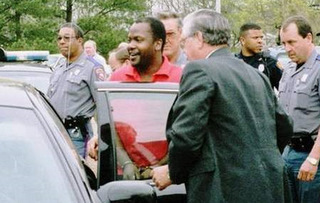
Why is the passage of moderate health care reform being denounced as socialism? Why is president Obama (a pragmatic centrist by all accounts) being called a Marxist?
It is beginning to dawn on our more astute columnists that this really isn’t about health care. In a weekend column, New York Times columnist Frank Rich had this to say:
If Obama’s first legislative priority had been immigration or financial reform or climate change, we would have seen the same trajectory. The conjunction of a black president and a female speaker of the House — topped off by a wise Latina on the Supreme Court and a powerful gay Congressional committee chairman — would sow fears of disenfranchisement among a dwindling and threatened minority in the country no matter what policies were in play. It’s not happenstance that Frank, Lewis and Cleaver — none of them major Democratic players in the health care push — received a major share of last weekend’s abuse. When you hear demonstrators chant the slogan “Take our country back!,” these are the people they want to take the country back from.
Rich is making essentially the same argument I made to a roomful of Baylor undergraduates last week.
Imagine, I said, that you are a white person living in Mississippi in 1964. Over the past decade, the Supreme Court of the United States under Earl Warren, the Department of Justice under Bobby Kennedy, and the White House under Lyndon Johnson have weighed “the Southern way of life” in the balance and declared it to be illegal, immoral and unconstitutional. Things you were taught as a child to see as good are being called evil and things you held to be evil are being called good.
Osler is a former US Attorney who teaches law at Baylor University. He provided valuable assistance to attorneys working with a notoriously corrupt narcotics operation in Hearne, Texas that was recently dramatized in the film American Violet. He has also played a vital role in the fight to minimize the crack-powder disparity in the federal system and was named Wacoan of the Year for 2009.
I was introduced to professor Osler when he sent me a copy of his groundbreaking book, Jesus on Death Row: The Trial of Jesus and American Capital Punishment. Osler is that rare writer with the experience, training and sensitivity to speak intelligently about the religious implications of our legal system.
Since January, Mark has been on the Friends of Justice board. Thanks largely to his interest and encouragement we now have four Baylor law students working with Friends of Justice.
If you want the gist of Jesus on Death Row I invite you to read this interview with professor Osler that appeared this morning in the web edition of the Dallas Morning News . . . Then order the book! (more…)
Last night Hank Skinner was a dead man walking. This morning, his life still hangs by a thread. An hour before his execution, the Supreme Court of the United States issued a stay of execution so they can decide whether or not they will consider the case.
Skinner has maintained his innocence since the 1993 murder of his girlfriend, Twila Busby, and two of her adult sons.
It could take several weeks for the court to turn its attention to the case.
State and federal appeals courts have repeatedly held that Skinner has no legal right to have DNA evidence from the crime scene tested because, seventeen years ago, his attorney at trial didn’t ask to have the evidence tested.
Skinner wants every piece of evidence taken from the crime scene tested including semen and skin samples, two bloody knives and a man’s windbreaker.
It is difficult to guess how the Supreme Court will rule. Last year, the court ruled 5 to 4 that defendants have no constitutional right to post-conviction DNA testing.
This is the way the legal system works. Once a jury has rendered a guilty verdict it becomes next to impossible for defense counsel to argue the evidence. You can bring up procedural issues (ineffective assistance of counsel, Brady violations (prosecutors withholding potentially exculpatory evidence from defense counsel) and the like, but the law assumes that the evidence points to guilt. As a practical matter, the law either assumes that jurors never misread the evidence or it doesn’t give a damn. You can argue that the evidence presented at trial was insufficient to warrant a conviction, but the argument is generally futile. The law assumes that jurors selected according to standard voir dire procedures are inherently reasonable. (more…)
This eulogy was written by Charles Kiker. It is followed by a press release from Pax Christi and the text of Bishop Matthiesen’s last article in The U.S. Catholic.
A Fine Fellow
Friends of Justice, and all friends of justice and peace, lost a good friend on Monday, March 22, when retired Bishop Leroy T. Matthiesen passed away at his home in Amarillo at the age of 88.
Bishop Matt, as he was affectionately known by his friends, gained fame, and infamy, by his opposition to nuclear weapons. For him it was a personal rather than simply theoretical issue. In 1981, when he was the active Bishop in Amarillo, he called upon Catholic workers at the Pantex plant to consider the morality of working in the production of nuclear weapons. At least one worker came into the Bishop’s office where they discussed the matter, and the worker quit his job and earned his living elsewhere. But Pantex was (and is) a major economic engine in the Amarillo area. Not everyone greeted the Bishop’s stance affirmatively. As his position became known nationwide, he gained the not so affectionate moniker of “the Red Bishop.”
Bishop Matt was a genuinely humble man, but his humility did not overrule his sense of humor. On one occasion in the airport at Dallas, a fellow traveler (no pun intended), asked him where he was going. “To Amarillo,” Bishop Matt responded. “Oh, do you know the Red Bishop up there?” “Yes, I know him very well. He’s a fine fellow.”
Bishop Matt was not a one issue Christian activist. He was a justice advocate for all peoples across the lines of ethnicity, sexual orientation, and economic standing. He was a true Vatican II Catholic Christian with open lines of communication to Christians of other persuasions, and indeed to all people regardless of religious conviction. He received the Teacher of Peace Award last year from Pax Christi, a Catholic organization that promotes nonviolence, disarmament, and human rights. (more…)
In its own defense, the Board could assert that the circumstantial case against Skinner is strong. So it is. But appearances can be deceiving, especially when public officials repeatedly refuse to balance the wisdom of prosecutors and jurors against scientific evidence.
Ambiguity is the great fear in the Skinner case. What if the evidence is tested and it simply muddies the waters? Would it not appear that the State of Texas is executing a possibly innocent man? Much better to passively accept the verdict cranked out by the justice system.
In the vast majority of criminal cases, the guilt of the defendant isn’t in question. Ninety percent of the time the legal wrangling, such as it is, centers on finding a charge and a sentence that is acceptable to both the prosecution and the defense. The state could make its case to a jury, but trials are expensive and time-consuming and that gives defense attorneys some bargaining power. Not much, but a little.
But in a sizable minority of criminal cases the facts are ambiguous and investigators and prosecutors can’t find a conclusive answer to the who-dun-it question. The best they can come up with is an educated guess. If we are talking about a crime that creates a gruesome crime scene and multiple deaths prosecutors become desperate for certainty. If no one qualifies as a credible suspect you follow the trail of evidence as far as it goes and give up.
But what if the crime is horrific and you’ve got a guy who might be guilty? Then things get really dicey. (more…)
I was talking about the Colomb case in which a parade of convicted drug dealers perjured themselves in exchange for precious time cuts (there is no parole in the federal system). Last month, I met with Ann Colomb and the attorneys who have agreed to file a civil rights case against AUSA Brett Grayson (it took me years to find an attorney with the requisite audacity).
But there is an important addendum to the Colomb story that has never appeared in print. Defendants in a similar case being prosecuted by the same federal prosecutors sent me copies of some letters written by federal inmates that demonstrate how the game works. As it turned out, the feds had enough evidence of tax evasion on the current crop of defendants to negotiate a plea agreement without resorting to the same snitch testimony used to convict Ann Colomb and her sons. But I would like to share a few bits and pieces from this correspondence because it shows how simple the game can be.
Consider this:
If your eyesight is less than stellar here’s the translation: “Honey, see if you can get Melba to get a picture of these people here. I hope she can do it with just they name (sic). If she do it send me their pictures ASAP. That my free flying tickets!! to the house.”
Inmates aren’t allowed to write one another directly, so they often work through their girlfriends on the outside. The girlfriends are often asked to take pictures of specific individuals standing in front of their vehicles in order to enhance the detail and particularity of manufactured testimony. This also allows the inmate to pick the right face out of a photo array.
Here is a detailed description of how the perjury business works: (more…)
DR. ALAN Bean is the executive director of Friends of Justice, a nonprofit organization that works to uphold due process in the criminal justice system. It was formed in response to the infamous Tulia, Texas, drug sting of 1999, in which forty-seven people, thirty-nine of them African Americans, were rounded up based on the false testimony of a corrupt and racist undercover agent. Bean, a local Baptist minister, played a key role in organizing to expose the Tulia travesty and working to free the defendants. The Texas legislature, in response to the work of the Friends of Justice, passed the Tulia Corroboration Bill, which has led to the exoneration of dozens of innocent people by raising the evidentiary standards for undercover testimony.
Learning from this victory, Friends of Justice established Operation Blind Justice, organizing in affected communities across Texas, Louisiana, Arkansas, and Mississippi to restore due process protections to poor people of color. Bean and Friends of Justice played an instrumental role in publicizing the Jena 6 case, where six African-American high school students faced long prison terms after a fight with white students following the hanging of nooses on campus to intimidate Black students. Over 30,000 people marched in Jena, Louisiana, in September 2007 to protest the prosecution of the Jena 6. The charges against five of them were expunged from their records.
Recently, Friends of Justice has turned its attention to Winona, Mississippi— a town not far from Philadelphia, where three civil rights workers were murdered in the early 1960s. There, Curtis Flowers faces his sixth trial for the same murder charge. So far, the case has received more attention in Great Britain than it has in the American press. A primer on the Curtis Flowers case can be found at the Friends of Justice Web site. See also an interview with Bean on the Jena 6 case in ISR issue 55, November–December 2007.
TELL US about the case of Curtis Flowers and its historical significance. (more…)
On Tuesday, March 22nd, attorneys representing Kelvin Kaigler and James Bishop will file motions for a new trial. As this article from the New Orleans Times Picayune suggests, one of the key issues will be the applicability of Louisiana’s majority verdict rule to this and similar cases. The issues are thorny, so I have reprinted the entire article for you.
But there will be far more than procedural issues discussed in Covington tomorrow. There is a strong possibility that new evidence will be presented. I wish I could be there in person, but the last minute nature of the hearing makes that impossible. I will be soliciting firsthand reports and will let you know how things go as soon as possible.
One recent day at the St. Tammany Parish courthouse in Covington, two first-degree murder defendants faced different standards of guilt and innocence.
On the third floor, state Judge William J. “Will” Crain determined a unanimous jury verdict would be necessary to decide Jody “Florida Boy” Swafford’s fate. Meanwhile, in the courtroom directly below him, state Judge Richard A. “Rick” Swartz had deemed a guilty vote by only 10 of 12 jurors sufficient to convict Ray “Rayray” Brooks of that same charge.
Both defendants faced the charge of non-capital first-degree murder, punishable by mandatory life imprisonment.
Until 2 1/2 years ago, state law required that all first-degree murder cases – regardless of whether the state pursued the death penalty – needed unanimous jury verdicts for convictions. In August 2007, however, the law changed to allow non-unanimous verdicts – 10 of 12 jurors – to convict defendants of first-degree murder charges in cases where district attorneys were not pursuing the death penalty.
The whole discussion highlights a generally unacknowledged fact: Louisiana and Oregon are the only two states that still allow individuals to be convicted of felonies by non-unanimous – often referred to as “majority” – jury verdicts. Oregon requires a unanimous vote only in first-degree murder cases, whereas Louisiana now only requires it in cases involving the death penalty.
The issue for state judges now is whether to apply the more lenient jury guidelines – non-unanimous verdicts – in cases where the murders occurred before the law was changed.
Sometimes the Legislature will specify whether a new law should be applied retroactively, but it left the question open in this case. The answer is not simple. It will likely depend on the state Supreme Court’s eventual interpretation, and could force district attorneys throughout the state to retry several high-profile first-degree murder cases, including the recent convictions in St. Tammany of James A. “Scarface” Bishop and Kelvin W. “Dreads” Kaigler on four counts of first-degree murder for the largest massacre in St. Tammany memory.
Recent unanimity in St. Tammany
Swafford, Brooks, Kaigler and Bishop committed their crimes before the amended law took effect on Aug. 15, 2007. In fact, all the murders occurred in 2006, long before the future legislation was even proffered to the state judiciary committee for possible passage.
The St. Tammany district attorney’s office initially planned to appeal Crain’s recent decision to the 1st Circuit Court of Appeal, the first step before a potential state Supreme Court run. But district attorney’s officials ended up not filing the writ, in part because Crain’s jury ended up unanimously convicting Swafford as charged.
The day after Crain’s jury returned its verdict, Swartz changed his own position mid-trial, deciding that he too would require a unanimous verdict for Brooks. His decision apparently came after Crain discussed the matter with him, according to authorities close to the matter.
And the next day, on March 12, Swartz’s jury also returned a unanimous verdict, finding Brooks guilty as charged of first-degree murder after less than two hours of deliberation.
With both verdicts coming down their way, St. Tammany district attorney’s officials have said they are now much less inclined to appeal Crain and Swartz’s decisions about unanimity, but they still acknowledge that the state Supreme Court should rule on the issue before too many more non-capital first-degree murder cases go to trial.
Crain and Swartz both played it safe, hedging their bets by requiring unanimity. In his decision, Crain even noted his ultimate uncertainty regarding the issue, saying that the fact both the St. Tammany district attorney’s office and St. Tammany public defenders “can have such clear positions on opposite sides tells you why for me it’s totally unclear.”
In public defense attorney Kevin McNary’s argument to the court, requesting unanimity, he added, “I think it’s reprehensible that the Supreme Court has not addressed this issue… but we have to work with what we have.”
Now, both Bishop’s defense attorney, John Lindner, and Kaiglers’ attorney, Martin Regan, have filed motions for a new trial, arguing that unanimity was needed and that the verdict against their clients therefore constitutes a mistrial.
On Tuesday, Coady is scheduled to hear both attorneys’ arguments for a new trial.
Lindner spearheaded the recent debate. Realizing a possible discrepancy in the law, he prepared his motion for a new trial, and then informed Regan and Swafford’s defense attorneys, who later discussed the issue with Brooks’ attorneys.
However Coady rules on Tuesday, his decision likely will be appealed to the 1st Circuit Court and then will make a state Supreme Court run. If he rules against a new trial, Lindner is prepared to appeal. If he rules for a new trial, the district attorney’s office will likely lead the charge.
The reasoning
Lindner is arguing that the 2007 legislative change cannot be retroactive for a variety of reason.
For one, he argues it cannot be applied retroactively because the legislative amendment was to Bishop’s disadvantage, and a law cannot be applied retroactively if it alters the situation of the accused to his disadvantage.
Requiring only 10 of 12 jurors to find Bishop guilty made it easier for a conviction to be obtained, Lindner says. In the Swafford case, Assistant District Attorney Nick Noriea Jr. argued the converse for the state in his plea against unanimity, saying that in fact a non-unanimous verdict also favors a defendant as it only requires 10 of 12 jurors to acquit.
Lindner also argues that regardless of the advantage or disadvantage to his client, the issue is whether the legislative change in 2007 was “substantive” or “procedural,” meaning whether the change only affected the procedures by which cases are tried, or where the change also affected the substance of the defendants’ rights.
That interpretation seems to depend on what side of the road you are on. St. Tammany district attorney’s officials contend it was procedural, whereas most defense attorney argue it was substantive.
Both sides ultimately agree that the state Supreme Court must make its two cents known, as several convictions rest in its hands.
A broader debate
Some defense attorneys argue that under current state law, district attorneys can hedge their bets by charging defendants with non-capital first-degree murder, knowing that even if juries return the lesser charge of second-degree murder, defendants still will receive an identical, mandatory punishment: life behind bars. In other words, since the 2007 legislative change, two murder charges now carry the same punishment and both only require the same burden – 10 of 12 jurors to concur – so why not pursue first-degree murder if possible?
The U.S. Supreme Court was poised to hear a case about the constitutionality of “majority” verdicts – in Louisiana and Oregon, the only two states that still allow them – last summer, but in October, the high court ultimately declined to hear it.
Proponents of majority verdicts contend they are more efficient, create fewer hung juries, save taxpayers money by not having to retry as many cases, and that 10-2 verdicts are as decisive but just prevent “rogue jurors” from creating unnecessary mistrials. Conversely, defense attorneys typically argue that, especially in districts like St. Tammany where only one or two ethnic minorities usually sit on any given jury, majority verdicts make it easier for the minority’s vote to be disregarded.
The American Bar Association is against “majority” verdicts, and the Louisiana Association of Criminal Defense Lawyers similarly has argued that the state’s system of allowing non-unanimous felony jury verdicts disenfranchises black jurors. Meanwhile, the Louisiana District Attorneys Association specifically asked the U.S. Supreme Court not to hear the 10-12 jury issue in October.

 Why is the passage of moderate health care reform being denounced as socialism? Why is president Obama (a pragmatic centrist by all accounts) being called a Marxist?
 Last night Hank Skinner was a dead man walking. This morning, his life still hangs by a thread. An hour before his execution, the Supreme Court of the United States issued a stay of execution so they can decide whether or not they will consider the case.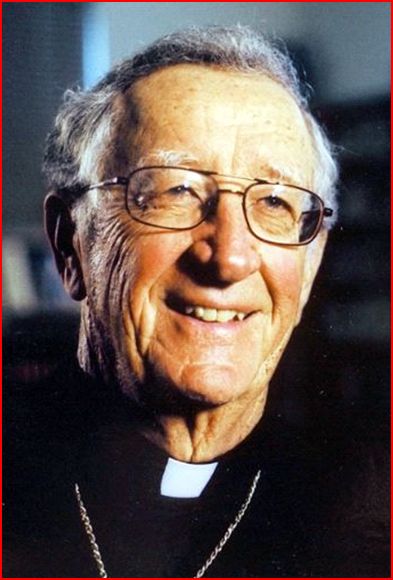
 By a 7-0 vote,
  John Pacenti called me a couple of weeks ago in connection with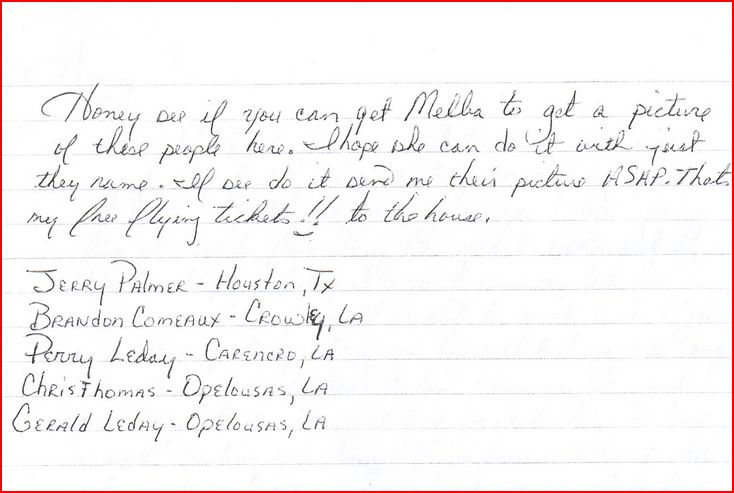

 Friends of Justice