Author: Alan Bean

The Dallas Justice Revival is Almost Here!

The Dallas Justice Revival kicks off two weeks from tomorrow at the Dallas Market Hall.  This three-day event will feature the preaching of Zan Holmes, Samuel Rodriguez and Sojourners founder, Jim Wallis (find bios here), and some of the best Christian music you will ever hear.  But the revival doesn’t end with final altar call; event participants are committed to long-term goals like advocating for the construction of 700 low-income homes and the creation of twenty-five partnerships between schools and area churches. 

In addition, IGNITE Greater Works, “A Best Practices Community Transformation Gathering” will feature practical social ministry workshops the morning and afternoon of Wednesday, November 11th and the morning of Thursday, November 12th.  Friends of Justice will have a booth in the Exhibit Hall beginning on Tuesday evening, so drop by and introduce yourself. 

This event is uniting Roman Catholic, Pentecostal, Evangelical and Mainline Protestant churches around the theme of Christian compassion and the call to put feet to our faith.  If you can get to Dallas for this event please make your plans now.  This is a free event, but participants are encouraged to register (it just takes a few seconds).

Donna Stites talks straight to kids

Last night Priscilla Hutton was telling the youth group at her Catholic church about her work in the prisons.  In the course of her presentation, Priscilla shared this letter from Donna Stites, an inmate at the Indiana Women’s Prison in Indianapolis.  A few weeks ago I introduced you to Donna’s amazing story after I visited her in prison.  Below, Donna tells her own story. 

P9144620
Priscilla Hutton with Donna Stites

To All Who Listen:

My name is Donna Kaye Stites and I have been incarcerated in the Indiana Department of corrections for over 25 years. I want to talk to you about my experience with going to school and the importance of getting an education.

When I was in grade school, I was considered a bully and I hated school. I acted out, for the most part, because I was ashamed of my being poor. I felt like I was not good enough. That hurt me and my anger came from those feelings. I was living with my father and his wife on a farm.

When I got to middle school, my financial circumstances changed. I was living with my mother and step-father, who was a wealthy business owner. However, I still hated school. I thought it was a waste of time. I had better things to do with my life, like selling drugs for my mother and hanging out with the older crowds.

I was doing drugs and drinking heavily by the time I entered high school. I was having sex and doing things like shoplifting and credit card theft throughout my high school years. I simply thought that school was not for me. I was in Girls’ School twice, did prison time and was in a work release center before being sent back prison for the final time. I have now been in prison, continuously, since I turned 21.

When I turned 30 years old, I decided things in my life needed to change. I made a list of six changes that I thought would help me. They are as follows:

• Stop doing drugs

• Stop smoking

• Resolve the issues between my mother and me

• Resolve a dysfunctional relationship

• Take better care of my health (I am a brittle diabetic)

• Go to college

I started my first year of college when I was 32 years old. I felt very intimidated and stupid. I felt like I was going to quit at least a hundred times, however, I stuck with it and at the end of my first semester, I had gotten all A’s and B’s on my report card. My GPA was 3.5. I was one point from making the Dean’s List and I couldn’t have been prouder of myself.   Even now I am smiling just thinking about it.

After that experience, I decided to make the Dean’s list (my seventh goal) every semester. I received an Associates Degree with academic distinction and I got my Bachelor’s degree with honors. I finished Ball State with having been on the Dean’s List every semester after the first.

I want to encourage you to do the best you can in school now and to continue your education after high school. I am not an old person, I am not someone’s mom, and I am not getting paid to tell you about getting educated. I am someone who has had their life changed for the better as a result of getting educated. Education opened doors for me that had never been opened before. I found out who I was. I don’t believe I could make the sound decisions that I make now without having been educated. I believe that formal education with a solid scriptural foundation is the best way for you to not get caught up in the distractions, like I was. I have a lot of regrets, but getting my college degrees is not one of them.

There’s nothing more important than you taking care of you: your mind, your body and your spirit. It is all you have in the end.

Let God bless you with all that has your name on it. Don’t cheat yourself out of what’s yours and what’s you.

Peace,

Donna Kaye Stites

Inmate at Indiana Women’s Prison

Indianapolis, Indiana

Border Walls—What Would Jesus Do?

A guest post by Friend of Justice, Charles Kiker 

“[God] has broken down the dividing wall.” St. Paul

“Something there is that doesn’t love a wall.” Robert Frost

“Mr. Gorbachev, tear down that wall.” Ronald Reagan

On the weekend of October 3-4, I was in El Paso attending my final meeting of the Board of Directors of the American Civil Liberties Union of Texas. Due to some health difficulties and to the increasing challenge of reaching meeting venues from my home in the Panhandle, I had been contemplating resigning my post for quite some time. My term was to expire in April 2010, so I decided to hold on through the October ’09 quarterly meeting, and get a chance for a brief visit to El Paso as part of the deal. I’m glad I did.

On Saturday afternoon we sat through the usual processes of approval of minutes of the former meeting and various reports, we loaded up in cars and went to Annunciation House, a shelter for undocumented people which operates openly and with at least tacit ICE (Immigration and Customs Enforcement) approval. In fact, from time to time ICE refers people to Annunciation House rather than putting them in detention.

People at Annunciation House come into direct contact with immigrants, both documented and undocumented. One documented worker in Colorado died with his surviving spouse living in Mexico. In order to get her Social Security survivor’s benefits she has to be legally in the United States for a thirty day period once every six months. We were told that this requirement does not apply to survivors in Europe or Canada, but I have not been able to verify this claim.

The situation at the border near El Paso is extremely serious due to the activities of the drug cartels. People with no involvement with the cartels are routinely slaughtered for no offense but being in the wrong place at the wrong time. The police, and increasingly the Mexican army, look the other way. Family member on the wrong side of a dispute are routinely threatened and frequently murdered. People whose lives are threatened are routinely denied asylum by ICE.

I asked the question there, I will ask it again in these paragraphs: ”What would happen to the drug cartels if we read in the morning paper that cannabis had been legalized or decriminalized in the United States?” The history of prohibition and repeal suggests it would deal a major body blow to the Mexican cartels and thus eliminate much of the suffering and violence associated with the drug trade between our countries.

Later in the day we visited the border fence between New Mexico and Mexico. When we got out of the van and approached the fence, children from the other side began flocking toward us. While I do not speak Spanish, I could understand that they were asking for “una dollare.”

What would Jesus do? I wondered if he recognizes that dividing wall of partition between us. I didn’t wonder long. My faith tells me emphatically that he does not!

That evening we dined sumptuously (and expensively) at a restaurant near the wall, bringing into stark contrast our abundance with the poverty of the children on the other side.

What would Jesus do?

Mr. Obama, tear down that wall!

Charles Kiker

October, 2009

Charles Kiker is a Baptist minister living in retirement in Tulia, Texas.  As charter members of Friends of Justice, Charles and Patricia Kiker were instrumental in the fight for justice in their home town.

We who darken counsel: playing God at the courthouse

Last night I heard Dr. Steve Langford, my Methodist pastor, talk about the God who answered Job “out of the whirlwind.”  Just when I thought I was too damn educated to learn anything from a preacher I ran into Langford.  This guy changes my thinking every time I listen to him–something I didn’t think was possible.

As I waited for the Bible Study to begin I was thinking about Scott Henson’s recent blog post on the Cameron Todd Willingham case.  Willingham’s ex-wife spent years telling reporters that Todd was an abusive husband, but no murderer.  But recently Stacy Kuykendall has been saying that her ex-husband confessed to the vile deed on the verge of his execution.  Henson (like the New Yorker’s David Grann)  thought this change of story was more than a little suspicious.

Then the Bible study began.  Pastor Steve had spent several weeks dissecting the tangled words of Job and his pious companions–tonight it was God’s turn to speak “out of the whirlwind”. 

“Who is this,” God asks, “who darkeneth counsel by words without knowledge?”

Then the Creator takes Job on a whirlwind tour of creation.

“Where were you when I laid the foundations of the earth?  Tell me, if you have understanding.  Who determined its measurements–surely you know!”  God asks Job about the birds of the air and the beasts of the field; about the wind and the waves; about the great Behemoth and the fearsome Leviathan. 

Pastor Langform told us that “the sea” is often used as a symbol for chaos in the Hebrew Scriptures.  Horrifying beasts like the Behemoth (described as an alligator in Job) and Leviathan (described as a crocodile) were also mythological symbols of death and destruction.  Yet all are creatures of God.

This means that evil, death and chaos are God’s creatures.  God let them loose in the world and set strict bounds beyond which they dare not roam.  We don’t know why God created the forces of chaos and the Book of Job, by design, doesn’t shed much light on the subject.  That’s the whole point.  If we could understand God’s life and death struggle with chaos we would be God

“What if you were in my position?” Yahweh asks Job.  “Do you think you could handle it?  Are you are up for a wrestling match with death and hell?”

Job thinks about it, bows his head, and succumbs.  “I had heard of you by the hearing of the ear,” he says, “but now my eye sees you; therefore I despise myself and repent in dust and ashes.”

All of which took me back to Scott Henson and Todd Cameron Willingham.  Scott hasn’t been arguing that the Corsicana native is innocent.  Perhaps Willingham did  intentionally set fire to the house in which his darling babies slept.  All Henson is saying (and all any of us can say) is that the folks with the best scientific tools don’t believe that, given the available evidence, a strong case can be made for arson. 

Rick Perry, the immaculately groomed governor of Texas, assures the electorate that Willingham is a guilty ‘monster’ (Leviathan?) the conclusions of pointy-headed pseudo-intellectuals notwithstanding. 

But if Perry is so confident that Texas executed a guilty man why is he so intent on blocking an objective investigation?  And why did he eliminate several members of the commission tasked with evaluating the work of the state’s forensic experts?  Does the governor protest overmuch?

No one is deriding the good men and women who listened to all the expert and eye-witness testimony in the Willingham case and made their decision.  The issues were exceedingly complex.  So much depended on the inner workings of the defendant’s mind.  Was this guy a dysfunctional slob with a gift for poetry or was he every bit the Behemoth Mr. Perry believes him to be?

The comment section at the end of Henson’s post was bristling with indignation.  Some said Scott had it dead right; others decried the blogger’s obdurate refusal to admit a self-evident truth.  Some thought Willingham was guilty as hell; others were convinced the state of Texas executed an innocent man.

Might it be that the facts of the Willingham case are too much for mortals.  We are too prone to error, fancy and blind prejudice to evaluate the guilt or innocence of Todd Willingham or hundreds of other people who have been dragged before the bar of justice in recent years.

I’m not saying that all murder cases are too complex for a human jury, or even that most of them are.  But the recent parade of DNA exonerations must give us pause.  How could well-intentioned juries have been so thoroughly bamboozled?  Why have so many prosecutors pressed ahead with bogus cases and withheld exculpatory material from defense counsel?  And why have so many eyewitnesses testified so convincingly of things that never were?  What were these people thinking? 

Were they thinking at all? 

Yes and no.  Juries, judges, police officers and prosecutors are rational creatures . . . so far as human rationality goes.  But sometimes it doesn’t go very far.  David Brooks, the staid NYT columnist, wrote an interesting piece last week on recent advances in the field of neuroscience.  Here are his cursory conclusions:

The work demonstrates that we are awash in social signals, and any social science that treats individuals as discrete decision-making creatures is nonsense. But it also suggests that even though most of our reactions are fast and automatic, we still have free will and control.

Many of the studies presented here concerned the way we divide people by in-group and out-group categories in as little as 170 milliseconds. The anterior cingulate cortices in American and Chinese brains activate when people see members of their own group endure pain, but they do so at much lower levels when they see members of another group enduring it. These effects may form the basis of prejudice.

The still-misty world of neuroscience should give us a renewed respect for the presumption of innocence.  The mere fact that a defendant has been arrested, indicted and formally charged should not be equated with guilt.  Yet how many jurors will vote “not guilty” just because the facts are fuzzy?  Not many.  What role does prejudice play in the courtroom?  What if we find that white and black jurors view the same facts in an entirely different light?  How often is sweet reason mugged by fear and anger?

And we haven’t even talked about blind ignorance.

Who are we who darken counsel with words without understanding?  When the criminal justice system casts mere mortals (jurors, prosecutors, judges) in the role of God, we have cause for worry.  Sure, somebody has to referee the game of life and death.  But when a frail human soul hangs in the balance, we must always err on the side of mercy.  Every few years we are called down to the courthouse to wrestle with chaos, death and hell.   Sometimes we’re just not up for the challenge.

Killing Karla Faye: the morality of the death penalty

A few days ago, the Dallas Morning News asked a number of priminent religious leaders from Texas to assess the morality of the death penalty.  Public discussion of criminal justice issues is rarely inspired by academic studies or cold statistics; discussion is prompted by specific stories.  In the last few weeks, especially in Texas, the newspapers have been filled with Cameron Todd Willingham stories crammed with quotations from both sides of the debate.  It’s a messy process, but we work things through in America one story at a time. 

Since the religious leaders selected for the DMN story were mostly selected from moderate-to-liberal “Mainline” denominations it comes as no surprise that most of them thought the death penalty was immoral.  But my eye was drawn to the only letter that eschewed complex theological arguments in favor of storytelling.  Cynthia Rigby (no relation to Eleanor), Professor of Theology at Austin Presbyterian Theological Seminary, began her resp0nse with a story about her preacher daddy who escorted condemned prisoners (some of whom he believed to be innocent) to their rendezvous with the Oklahoma hangman. 

Her second story hearkened back to strange story of Karla Faye Tucker, the drug-addled murderer whose broken life was redeemed by the grace of God.  Televangelist Pat Robertson thought Karla Faye’s contrition ought to buy her a pass from death row, but then-governor George W. Bush made cruel jokes about Karla Faye before giving the nod to the executioner.  Dr. Rigby’s story unfolds against that backdrop.

My second “scene” is from 11 years ago, shortly before the execution of Karla Faye Tucker. You might remember that the late ’90s was the time when the “WWJD?” (“What Would Jesus Do?”) movement was in full swing. In a class I was teaching, I asked my mainly-mainliner seminary students if they saw any value to “WWJD?,” and if they thought we should do what Jesus would do, if we were pretty clear on exactly what that was. Every student in the class (20+, as I recall) answered, emphatically, “yes!!”

Since the biggest issue in the news that week was that Tucker was asking for a stay of execution, I spontaneously asked: “Would JESUS execute Karla Faye Tucker?” “No!” all the students answered. Feeling like I was on a roll, I then asked, “Well, then: should WE execute Karla Faye Tucker?”

Silence in response to a question that I thought was a no-brainer, in light of the conversation. Suddenly, the mood of the class shifted. My students acted indignant; as though they had been betrayed. A senior student shot his hand in the air, declaring that he thought it would be “presumptuous for us to assume we could do what Jesus should do.” “We need a new question,” he said: “WWJWUTD?” “What would Jesus want us to do?” he asked, looking around at his classmates. And then he answered: “Jesus would want us to leave forgiveness to him, and to EXECUTE Karla Faye Tucker.”

We took another vote, and all but 2 of my students agreed with him.

Kinda makes your blood run cold, don’t it.

Twins Tragedy in Tulia

Landis Barrow went to prison back in 2000 on the twisted word of undercover agent Tom Coleman.  (In the mugshots to the left, Landis is #2; see if you can pick out his twin brother, Mandis.)  Now the Texas Court of Criminal Appeals has granted Mr. Barrow a re-do of the revocation hearing that put him in prison.  Landis and his twin brother Mandis were implicated in an Amarillo robbery in 1996 and given ten-year probated sentences.  Tom Coleman claimed to have purchased drugs from “the twins” in 1998 but the state had a problem: since no one, even their mother, could tell the twins apart, how could Coleman know which twin handed him the dope?

There were other problems.  Eliga “Man” Kelly was with Coleman at the time of the alleged sale and Kelly wasn’t backing up Coleman’s story.  “Mandis asked me why was I still riding around with that police,” Kelly said in a signed affidavit. Coleman walked up “and asked me were those the twins? I told him yes and he asked Mandis where could he get some smoke? Mandis told him that he didn’t sell dope and he didn’t know where to get any and furthermore don’t ever approach him about any dope. Then the twins drove off very mad.”

The simple solution was to drop the drug charges and use Coleman’s allegations to revoke the Twins’ probation. 

So why are you just hearing about Landis and Mandis Barrow now? 

I wrote an article about the Twins for the Texas Observer  and the Amarillo Globe-News in 2004 , but that’s the only press they ever received.  When Governor Rick Perry pardoned 35 of Coleman’s victims a few months later, the “Tulia 46” were presented to the world as the innocent victims of a racist plot.  No one could go to bat for Landis and Mandis without addressing that inconvenient theft charge from 1996.  Attorneys associated with the Tulia defendants felt they couldn’t risk the negative publicity, so the Twins were left to languish in prison.

Here’s the real irony: Landis and Mandis received their share of a $6 million legal settlement but could only spend their money on tooth paste and chocolate bars in the prison commissary.

Here’s what I had to say five years ago:

[Judge] Emerson nodded patiently as officer Coleman entangled himself in a bizarre web of deception. Coleman said he bought drugs from Mandis Barrow on June 23, then remembered it never happened. Coleman testified he had no idea which of the Barrow twins sold him the dope on September 3, then remembered that Eliga Kelly had cleared up his identification problem. Coleman said he had been suspended from active duty in May of 1998, then remembered that the suspension didn’t go into effect until August. Finally, the Texas Law Officer of the Year alleged a criminal conspiracy hatched by a vindictive sheriff. Judge Don Emerson must have been convinced by Coleman’s grotesque performance because he ruled for the state and sentenced Mandis Barrow to 20 years in prison.

The Texas Court of Criminal Appeals upheld the judge’s decision. The June 23 indictment had obviously been “mistakenly filed” but “an honest mistake does not rise to the level of perjury,” the court declared. Coleman may not have been able to distinguish Landis from Mandis, but it was conceivable that Eliga Kelly “had identified which twin passed the controlled substance to Coleman.” Finally, the Appeals Court argued, if Judge Emerson was convinced by Coleman’s testimony, no perjury had been committed by definition.

Now, almost five years after Tom Coleman was found guilty of aggravated perjury, the Texas Court of Criminal Appeals decided to change its mind.

I have stayed in touch with the Twins over the years.  They sent me a card every Father’s day and kept me apprised of their ongoing legal battle.  Mandis called me  when he was released from prison a few months ago.  Yesterday, I received the good news from Landis. 

Hopefully, we haven’t heard the end of this story.

Doug Evans and the Mississippi Mainstream

CitizenInformerVol22LateSummer1991No3Page5Bottom

Doug Evans, the prosecutor who will put Curtis Flowers on trial for a record sixth time in June of 2010, has close links to an organization that denounces the civil rights movement as a communist conspiracy and wishes it could reinstitute Jim Crow segregation. Don’t believe me? Read on.

The year was 1992. The place was the meeting room of the Regency Inn in Greenwood, Mississippi. The keynote speaker was Robert “Tut” Patterson, father of America’s White Citizens’ Council movement and a featured columnist with “The Informer”, a publication of the Council of Conservative Citizens. Patterson’s topic was the “historical background of the ‘civil rights’ movement.” Other speakers at the Council of Conservative Citizens seminar included District Attorney Doug Evans (D) of Grenada.

The Greenwood meeting wasn’t considered controversial. It was covered on the local ABC affiliate and the Jackson Clarion-Ledger and the Greenwood Commonwealth provided coverage and, if the write-up in the Informer is anything to go by, “Reports were carried by the news media across the South.”

And why not: the keynote speakers for the gala banquet later that evening were Kirk Fordice, the newly elected Mississippi Governor, and Senator Trent Lott. “The people in this room stand for the right principles and the right philosophy,” Lott told the gathering.

Ten years later, Senator Lott would be forced to resign his position as Senate leader after remarks he made at Strom Thurmond’s 100th birthday party. Lott reminded the gathering that Thurmond had run for president as a segregationist Dixiecrat in 1948 and recalled that Mississippi voters had supported his candidacy ”If the rest of the country had followed our lead,” Lott told the gathering, ”we wouldn’t have had all these problems over all these years either.”

Lott insisted that he didn’t mean to endorse the politics of segregation, but it was difficult to understand what else he might have had in mind.

But that was 2002 and Doug Evans’ speech in Greenwood took place a decade earlier, just a few years after the Council of Conservative Citizens rose from the ashes of the old Citizens’ Councils. In 1991 the Citizen Informer reported that “Thirty of the thirty-nine candidates for state and district offices” had addressed the Council of Conservative Citizen’s Black Hawk Rally. You can’t get more mainstream than that?

A 1991 edition of the Informer proudly reported that Doug Evans, then a Justice Court Judge running for District Attorney, gave the keynote address at the Council of Conservative Citizen’s Webster County meeting. The CCC might have looked like a tawdry pack of racists to most Americans but to an insider like Doug Evans it just looked like normal.

When Mississippi politicians like Trent Lott, State Senator Lydia Chassaniol (R-Winona), State Representative Bobby Howell (R-Kilmichael) or District Attorney Doug Evans (D-Grenada) are asked about their cozy relationship with the racist CCC they give a standard response: “Everybody was doing it and, besides, I didn’t know I was addressing a racist organization.”

Why does it matter anyway? Who on earth is this Doug Evans character I keep mentioning and why should you care who he talked to back in the day?

Doug Evans is the prosecutor who has made five (5) failed attempts to sentence a young gospel singer named Curtis Flowers to death for murdering four people in a Winona, Mississippi furniture store in 1996. This is the case that has divided Winona along racial lines. The jury in trial number four (the only jury with a substantial number of black residents) split 7-5: all seven white jurors voting guilty and all five black jurors voting for acquittal. Trial number three ended in a unanimous guilty verdict after Doug Evans moved heaven and earth to produce an all-white jury in a county that is half black. (The Mississippi Supreme Court ruled that Evans’ behavior in the jury selection process demonstrated clear racial bias.)

Recently, Doug Evans attempted to prosecute James Bibbs, a black juror who refused to find Curtis Flowers guilty. Judge Joey Loper accused Bibbs of lying to get on the jury. Last week the Mississippi Attorney General’s Office looked at the facts and dropped the charges.

What would happen if the Curtis Flowers case was dumped in the AG’s lap? What would happen if a fresh set of investigators went back to square one and re-interviewed all the witnesses and re-evaluated all the physical evidence? Would they proceed to a sixth trial, or would they drop the charges against Flowers for the same reason they refused to proceed against Bibbs?

It’s hard to say, but I think we need to find out. A man as racially biased as Doug Evans shouldn’t be in charge of a racially sensitive murder prosecution.

Moreover, a racially biased state senator and house representative shouldn’t be sponsoring legislation designed to get the racially biased Mr. Evans another all-white jury.

Return with me to the CCC event in 1992, four years before the tragic events in Winona. Doug Evans is sitting at the table of honor listening to Robert “Tut” Patterson place the “civil rights” movement in historical context. What did the founder of the White Citizens’ Councils have to say?
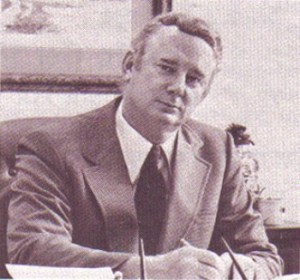
Robert-B.-Patterson-e1293416822793Fortunately, we don’t have to guess. In 2006, the CCC reprinted Patterson’s last column, written just a few months previously, in which, once again, he placed the civil rights movement in historical context. We might expect that the veteran segregationist, an old man weeks away from death, had little new to say on the subject and that his speech in 1992 closely resembled the column from 2006.

Patterson (pictured to the left in his prime) began his final column with a harrangue against the “liberal reporters” who covered the Emmett Till trial in 1955. Did they even once report that Louis Till, Emmett’s father, was executed by the US military following the second world war? According to Patterson, the media should have realized that the children of flawed parents can be murdered indiscriminately.

I suspect he made a similar case in 1992, with Doug Evans nodding his agreement.

Next, Patterson attacked George W. Bush for advocating the renewal of the 1965 Voting Rights Act–at the Rosa Parks memorial, no less. Rosa, as every Southern conservative knows, was a communist agitator. According to Bob Patterson, the Voting Rights Act has carried nothing but woe and pestilence in its wake. “The liberal media help to keep the blacks stirred so they will vote, usually Democrat, on election day by rehashing events that may have happened fifty years ago. How many times has Mississippi Burning been shown on TV?”

Patterson didn’t mention that he was one of Mississippi’s fanatical never-in-a-thousand-years boys who engineered events like the killing in Neshoba County or the brutal beating of Annell Ponder and Fannie Lou Hamer in Winona. Sheriff Earl Wayne Patridge may have orchestrated the violence in Winona, but the likes of Robert Patterson and Senator James Eastland shaped the context. The Citizens’ Councils preferred to starve out the opposition, but the rope, shotgun and blackjack were always kept in the trunk just in case.

Patterson’s next target was ”Black Monday” and the Supreme Court’s Brown vs. Board of Education decision in 1954. “These civil rights bills have forced white people to flee from their neighborhoods all over our nation,” Patterson lamented. ”The only defense against forced integration and government-controlled schools in the North, West and South is white flight and private schools.”

This last comment is fitting considering that the CCC was created to raise money for all-white segregation academies.

Finally, lest anyone question his commitment to the fundamental principles of democracy, Patterson provided a brief disclaimer. ”We all expect healthy dissent in our form of government,” he said, ”and there must always be a loyal opposition. We should expect, however, a reliable impartial news media that will give both sides of all issues so that the voters can vote intelligently.”

Did Patterson believe in “healthy dissent” in 1954 when he formed the Citizens’ Council, or in 1964 when he opposed the Civil Rights Act, or in 1965 when he used all means necessary to keep black people from voting in Mississippi? Hardly. Those who disagreed with the Jim Crow regime, white or black, were systematically persecuted, beaten or deprived of an occupation. If that didn’t work they were beaten or disappeared.

Strangely, men like Patterson and Eastland remained active in mainstream politics when the civil rights era ended. Nobody held them accountable for their actions back in the day. For a brief period between 1998 and 2002 southerners with links to the Council of Conservative Citizens were anathema. Then old patterns reasserted themselves. A rehabilitated Trent Lott had risen to the position of Republican Senate whip by the time he retired in 2006.

Here’s the problem: You couldn’t condemn Lott and company without taking on a wide swath of mainstream southern culture. You can’t critique Doug Evans for the same reason.

We can assume that in 1992 Robert Patterson gave the folks in the Greenwood Regency Inn his standard anti-civil rights speech and that an appreciative audience rose in a loud and lusty ovation.

Did Doug Evans, the newly minted prosecutor from Grenada, stomp out of the room in angry protest? Was he sitting on his hands while others rose to applaud?

Not at all. The prosecutor stood and clapped along with everyone else as he patiently waited his turn at the microphone. Civil rights bashing was part of the political culture the District Attorney was raised in. It was the only style of politics he knew. It is the only style of politics he knows. The Council of Conservative Citizens preaches a gospel of civil rights resentment. In this culture, “conservative” is code language for “white”.

You have to pity a guy like Doug Evans–what are the chances that a boy raised in a civil rights hating culture could emerge with a stout commitment to equal justice? But when we see the man prosecuting an evidence-free case against a black defendant we have the responsiblity to raise questions. I don’t wish to be disagreeable, but a man’s life is on the line here.

In 1992, the Citizens Informer billed itself as “The Voice of the No Longer Silent Majority”. Perhaps it was. Perhaps it still is. Which may explain why Lydia Chassaniol’s recent address to the annual conference of the CCC drew a collective yawn from the Mississippi press. And this may explain why everyone assumes that the five black jurors who voted to acquit Curtis Flowers in trial #4 were just trying to protect one of their own.

Could it be that black jurors, because they didn’t grow up under the spell of men like Eastland and Patterson, are in a better position to see through a desperately weak case?

Has anyone in the Mississippi media stopped to examine the “evidence” Evans has scraped together in the Flowers case? It appears not. Doug Evans, the duly elected protector of the Peace and Dignity of Mississippi, grew up on a steady diet of black-bashing like the following:

Nearly a third of all black men in their twenties have criminal records and 8% of all black men between the ages of 25 and 29 are behind bars. Although blacks are only 13 percent of our overall population in the U.S. they account for more than half of all new HIV infections. Black women account for an astonishing 72% of all new cases among women. Over two thirds of all black children are born out of wedlock.

That’s a straight quote from Bob Patterson’s final column in the Informer. It’s the same garbage you can read today on the CCC’s website. Patterson didn’t want his lilly white children going to school with a bunch of black thugs and welfare queens.

P9214842When Doug Evans sees Curtis Flowers in the courtroom he doesn’t see a gospel singer, he sees a cold-hearted super predator–the kind of guy Bob Patterson (and a thousand speakers of the same ilk) warned him about. Nothing could be more natural than for a guy like that to blow away four innocent people in cold blood. That’s just the way those people are.I may have the Honorable Doug Evans all wrong. For all I know he may be be a card carrying member of the liberal ACLU. If I have misread the man I ask his friends to set me straight. Show me the evidence and I will issue a sincere apology. But from where I sit, Fannie Lou Hamer and Curtis Flowers have more in common than a love for gospel music.


Mississippi Mandates K-12 Civil Rights Education

Photo: Mississippi mandates civil rights classes in schools: All students will study the nation's racial troubles and progress in US history courses.I have been following a surprising development that fills me with hope and, I confess, a measure of trepidation.  Next year, Mississippi will become the first state in the nation to mandate the teaching of the civil rights movements in its public schools.  This story in the Christian Science Monitor  focuses on the town of McComb, one of a handful of communities selected for participation in a pilot program. 

If the McComb experience is anything to go by Mississippi’s civil rights curriculum could be front page news when it is introduced state-wide next fall.  White Mississippians don’t like being regarded as racists–an identity they have been fighting since Reconstruction.   Mainstream America has been conditioned to think of the civil rights movement as the triumph of good over evil.  White Mississippians have a different take.  They have no problem with black people celebrating the fact that they can now vote and eat at the restaurant of their choice, so long as they can do it without dwelling on the past. 

Unfortunately, you can’t teach children about the civil rights movement without making white people look really, really bad.  We don’t like looking bad.  We’re not used to it.   We’ve spent half a century changing the subject when the conversation gets awkward and we’re very good at it.

The white reaction to the new civil rights curriculum in McComb, MS hasn’t always been positive:

“They just don’t talk about it,” says Jacquelyn Martin, a black civil rights organizer. “People don’t understand that part of the healing begins when you talk about it, so they just keep it to themselves.”

Making it a subject in school is “a pretty drastic change,” says state curriculum specialist Chauncey Spears. “But how can you have a strong education program when you have high-achieving grads who have such little understanding of their own history?”

Mississippi Senate Bill 2718, passed in 2006, mandates all kindergartners to 12th-graders to be exposed to civil rights education. In the younger grades, students will read books such as “I Love My Hair!” as a way to discuss concepts like racial differences in skin complexion and hair texture. Later grades will delve more deeply into how ordinary citizens shaped the civil rights movement and the long-term effects those changes had upon the nation.

This section is downright pignant:

Some days there are tears. For Sarah Rowley, 17, the class has been a watershed. Initially she saw it as “an easy grade,” but quickly realized she was wrong. Much of the class centers on gathering oral narratives from residents who grew up in a radically different McComb, a place where inequality and violence was a part of life. In the middle of one interview at the home of Lillie Mae Cartstarphen, Sarah asked an innocent question about the role of law enforcement during that time.

Sarah’s grandfather had been a McComb policeman and, later, chief of police during the 1960s. In her family’s eyes, he was a hero. But, says Sarah, her voice trembling as she recounts the answer: “[Ms. Cartstarphen] said you couldn’t trust policemen, that they were just as involved as the KKK. Even now, it makes me want to cry. I thought, ‘I have to regain my composure. I can’t let this interfere with what I’m here to do.’ But I felt like I was in a tug of war. Here is this woman telling me this, but my family … they’re such good people. What do I do?”

She talked to Malone and to her father. She prayed. Eventually, Sarah says, she made peace with the legacy of a man struggling to keep his job, feed his family, and survive in a troubled era. She’s certain he’d make different choices if he were alive today.

It’s more difficult to talk about things with her boyfriend, who attends Parklane Academy, which is 99 percent white. When Sarah reads books like “The Mississippi Trials, 1955” she’s overwhelmed by sadness. But he doesn’t want to hear about it, she says. “He thinks it’s over with and in the past. He gets up and walks out…. He’s growing up in this mind-set that’s so sheltered. It breaks my heart.”

Malone’s emphasis on seeing all perspectives makes it easier for Sarah to cope. “I have to remember that if I was in his shoes, I’d be the same way,” Sarah says. “In the South, it’s a very, very touchy subject.”

Congratulations to the Mississippi Legislature for passing this legislation; lets hope most of the civil rights resenters in the Magnolia State are attending Segregation Academies (now referred to, in many cases, as “Christian Schools”).  In that case, they have nothing to fear.  What they don’t know can’t hurt them.

Being Purple: the Justice Revival comes to Dallas

Jim Wallis picture
Lydia and Alan Bean with Jim Wallis

Can a three-day preaching event bring Dallas together?

Two years ago I would have been skeptical.  Friends of Justice was toying with a “Can we talk about race?” project designed to spark serious conversation across racial lines.  No one seemed interested.  Black and white pastors had the same reaction: “We tried that once and it didn’t work out.”

Dallas is a seriously divided city.  Relations between whites, blacks and Latinos are characterized by tension and mutual suspicion.  Wealthy North Dallas exists in splendid isolation from the poor folk in South Dallas.  The “white flight” phenomenon left a legacy of resentment in its wake.  Blacks vote Blue, whites vote Red and Latinos split the differernce  Even the Dallas Cowboys now play twenty miles to the west, in Arlington.

The city’s relational dysfunction has elicited little interest from scholars.  Michael Phillips’ White Metropolis notes that “Dallas does not merit  a single mention in Taylor Branch’s 1,064-page study of the civil rights movement, Parting the Waters . . . Robert Weisbrot, in his 1990 monograph Freedom Bound, A History of America’s Civil Rights Movement, tells the Dallas story in a paragraph . . . A photo of the famous Dallas Skyline graces the cover of John Boles’ 569-page The South through Time: A History of an American Region, but the city appears nowhere in the index.”

Phillips suggests that the virtual invisibility of Dallas “represents amnesia by design . . . Rather than dealing with the messiness of the past, many opinion makers in Dallas chose to pretend the city had no history.”  Apart from the tragedy of November 22, 1963, Dallas has been virtually invisible.  And there is nothing as powerful as a historical legacy no one talks about. 

Which explains why attempts to reach across racial, ethnic, political and ideological lines have rarely succeeded in Dallas, Texas.

And then Jim Wallis and Sojourners selected “The White Metropolis” as the site of the second “Justice Revival.”

A few years back, Lydia Bean (pictured above) came up with the idea of an old timey revival meeting centered on God’s call to social righteousness.  A Harvard grad student in the sociology of religion, Lydia was doing a comparative study of Canadian and American evangelicals.  The two groups shared a common theology but parted company on the issue of social justice.  Canadian evangelicals generally believed that governments have a responsibility to build a  just society and that churches should build on this work.  By contrast, most American evangelicals were suspicious of any attempt to make the world a better place that wasn’t nurtured in a conservative reading of the Christian Bible.  Conservative Protestants south of the border weren’t opposed to social righteousness; they just didn’t believe secular governments could deliver the goods unless born again politicians were at the helm.

While Lydia ruminated, Jim Wallis was doing an intensive study of the Second Great Awakening and its primary architect, Charles Grandison Finney.  While the great evangelist called men and women to accept Jesus Christ as Lord and Savior, he resisted neat lines between the natural and the supernatural.  “There is nothing in religion beyond the ordinary powers of nature,” he once said.  “It consists entirely in the right exercise of the powers of nature. It is just that, and nothing else. When mankind becomes truly religious, they are not enabled to put forth exertions which they were unable before to put forth. They only exert powers which they had before, in a different way, and use them for the glory of God.”

 “Back then,” Jim Wallis recently told an interviewer, Charles Finney, Lucy Stone, the Grimke sisters, Jonathan Blanchard — these preachers, revivalists were also abolitionists. They led the antislavery campaign. They fought for women’s suffrage. They fought for economic justice.  In fact, Charles Finney, who was the evangelist, the Billy Graham of to his day, really pioneered the altar call. And the reason he did was he wanted to sign his converts up for the antislavery campaign. So faith got directed right to justice.”

Wallis has been one of the few American evangelicals who believed that government and the religious community had complimentary roles to play in the common task of making justice roll down like the waters.”  I have been reading “Sojourners” (the magazine) ever since 1976 when Glen Stassen, then an ethics professor at the Southern Baptist Theological Seminary in Louisville, held up a copy in class and told us to subscribe. 

For decades, Wallis and his band of radical Christian zealots in Washington D.C. were an interesting anomaly.  Then a badly wounded politician named George W. Bush eked out a surprising electoral victory in 2004.  Everybody credited a resurgent Religious Right for the president’s political survival which elicited an obvious question: “If there is a Religious Right why isn’t there a Religious Left?” 

It turned out there was.  Nobody in the mainstream media was much interested in the usual suspects in liberal religion because (how do I say this gently?) while they had plenty of ideas about making the world a better place they didn’t have much to say about the intentions of a personal God.  Or, to put it another way, religious liberals are enamored of religious dialogue and reporters like to write about conflict. 

Then somebody said, “What about this Wallis fellow?  He’s a progressive evangelical.”

Disgruntled Democrats pricked up their ears and Jim Wallis suddenly had more big-time speaking invitations than he could handle. 

But Wallis wasn’t interested in being a shill for Blue America (the mirror image of the Religious Right); he wanted to introduce America to a God who, while neither a Red nor Blue, had big plans for the world and would work with everyone (preachers, politicians and pole vaulters) who believed in justice.

The Blue Team wasn’t hard to sell on this plan (what alternatives did they have?)  The Reds took a little more convincing.  Which explains Wallis’ description of Charles Finney as “the Billy Graham of his day.”  The founder of Sojourners was challenging mainstream American evangelicalism to stretch back behind the culture war to the roots of their movement.  “What about Wilberforce in England?” he asked, “didn’t he use his role as a Christian politician to outlaw the British slave trade?  And what about Finney?  Didn’t he call people to Jesus with one hand and sign them up for the prohibition movement with the other?”

As Wallis was reflecting on these things, he remembered meeting a Harvard graduate student the year before, who had earnestly pressed a “think-piece” into his hand.  Lydia Bean had cornered him during his year at Harvard, and handed him her five-page summary of what the “Religious Left” didn’t understand.  In short, they weren’t recognizably Christian, they were just dressing up progressive talking-points in flowery, religious language.  Wallis re-read this document, and called Bean up.  They discovered that both of them were thinking along the same lines: what America needed was not a “Christian Left,” but genuine revival.  Wallis asked her, “I want to read more–can you write me another think-piece?”    Bean wrote another think-piece called “New Wine in New Wineskins,” that laid out what it would mean to integrate justice into evangelism.   It was over fifty pages long.  Impressed, Wallis used this document to chart out the first Justice Revival, a pilot project held in Columbus, Ohio.  Bean flew out to observe and give some critical feedback.   “Talk more about the cross,” she told Wallis.  “This is for the church, we don’t have to be apologize for being explicitly Christian!”  The vision of “justice revival” was evolving.

I’m not sure why Sojourners selected Dallas for the second Justice Revival.  Maybe it’s because whether you’re white, black or Latino, evangelical religion rules this town.  We have plenty of Roman Catholics and a respectable sprinkling of Presbyterians and Episcopalians, of course, but the sheer size of the evangelical camp dwarfs the religious competition.  The revivalistic tradition with its fiery preaching and dramatic altar calls has shaped the religious culture of the community.  I have heard black preachers like Freddy Haynes at Friendship West Baptist Church issue a come-t0-Jesus invitation in one breath and a call to hop on the bus to Jena, Louisiana in the next.

A Justice Revival works in Dallas because it evokes a religious sensibility everyone is familiar with.  Even the liberals grew up evangelical.

Thus far, it appears to be working.  Jim Wallis and staffers like the indefatigable Aaron Graham were in town last week for a civic leaders luncheon (where the picture above was taken) and you could feel a distinct buzz in the room.  Leaders from every corner of the religious landscape were saying the same thing, “we’ve never come together like this before!”

Naturally, Wallis is conducting a delicate tight wire act in which a millimeter to the right or the left could spell disaster.  In an interview with the Dallas Morning News he laid out the game plan: “The idea is simple: Churches ought to get together around what Jesus said about ‘the least of these.’ We may disagree about abortion, church polity, all that. On this, we’re clear.”

Issues on which there is little consensus (like abortion, gay rights and the death penalty) have been pushed to the  back burner so we can talk about housing and educating the poor.  This has injected a measure of imprecision into the process but participants seem to be adjusting.  The key thing is to bring people together and we’re willing to sacrifice to make it happen.  Thus far, folks disinclined to cooperate are keeping their opinions to themselves.

Sojourners is used to living in the shell-scarred no-mans-land created by the culture war.   Last week Ryan Roderick Beiler, editor of Sojourners’ God’s Politics blog, got tired of biting his tongue:  

Every now and then someone to our right or left posts an article excoriating Sojourners or Jim Wallis for not being _____ enough, infuriated that we still claim to be _____ even though we’re really just _____. You may want to play along with this Mad Libs game at home. The comments on this blog often do, filling in those blanks with terms like “conservative,” “liberal,” “evangelical,” “progressive,” “pro-life,” “pro-abortion,” “anti-abortion,” “pro-gay,” “anti-gay,” “radical socialist,” “closet conservative,” “Obama shill,” and “White House hijacker” respectively, depending on whether it’s the right or left wing that’s doing the flapping.

While we don’t shy away from honest debate, we generally prefer not to respond to attacks that are unfair, inaccurate, or ad hominem. However, I’ve always had a tremendous desire to introduce our critics on the left to our critics on the right. I would love to be a fly on the wall as they debate which one of them is wrong about our position on hot button issues, of which abortion is the easiest example: “He’s anti-choice!” “He’s certainly not pro-life!”

The result was predictable.  Folks on the right criticized Beiler for being too liberal while the liberals critiqued his unthinking conservatism.

God may not be Red or Blue but we humans like to pick sides. 

It isn’t easy being purple.

Susan Klopfer’s Mississippi

Susan Klopfer, the leading authority on the historiy of the Mississippi civil rights movement is intrigued by the Curtis Flowers story.  “Dr. Bean’s group believes that the state’s theory of the murder “… doesn’t fit the actual evidence, and the state manufactured phoney evidence by manipulating, badgering and bribing witnesses,” she writes. 

Klopfer’s interest in the Flowers case flows from her fascination with Mississippi history.  In a recent interview the journalist and civil rights historian notes that, “In Mississippi, it’s said ‘the past is the present.’ And it was and still is.”

Klopfer is blogging on Friends of Justice and the Flowers case on her Mississippi Sovereignty Commission blog and on a blog inspired by a book she is writing on Emmett Till.  Thirty-three years separate the brutal beating of gospel-singing activist Fannie Lou Hamer and the arrest of another gospel-singing native of Montgomery County, Curtis Flowers.  Hamer created a national sensation at the 1964 Democratic national convention in Atlantic City by relating the horrific details of her cruel encounter with Winona law enforcement.  Lyndon Johnson scheduled an impromptu press conference at the time Hamer was scheduled to speak because he didn’t want “that illiterate woman” antagonizing southern Democrats.  But Hamer’s revelations were sp appalling and her delivery so intense that all three major networks carried her remarks in their entirety on the evening news.

I will be writing more about the links between Fannie Lou Hamer and the Flowers story in coming weeks.  If you would like a sneak preview check out Ms. Klopfer’s blogging.

Like me, Susan Klopfer is amazed by the culture of silence that persists in Mississippi.  

“I was most surprised when discovering the Mississippi Sovereignty Commission,” she recently told a reporter. “It was a spy agency funded by the state from 1955 to 1972 to halt integration. Former military intelligence and FBI agents were hired and they, in turn, used the services of the Klan as enforcers. I was able to go through these papers and trace a money trail to an East Coast foundation that gave money to Mississippi to fight the Civil Rights Act and to fund private, segregated academies in Mississippi. Even today, few Mississippians know this history. I feel very obligated to tell these stories, of true civil rights heroes who have lost their lives.”

The Iowa historian’s master work, Where Rebel’s Roost: Mississippi Civil Rights Revisited demonstrates how opposition to the Massive Resistance movement in Mississippi during the 1950s and 60s led inevitably to harassment and, in most cases, financial ruin.  One blessed exception to this rule was the publisher of the Petal Paper in Forest County, Mississippi.  When the Citizens’ Council tried to run him out of business, P.D. East published an article with the charming title: “Go to Hell in a Bucket!”  A 1958 spoof ad began: “Yes, You too can be Superior.  Join the Glorious Citizens Clans.”

According to Klopfer, “The ad went on to list various ‘freedoms’ that would accrue to members: ‘Freedom to yell ‘Nigger’ as much as you please without your conscience bothering you!  Freedom to wonder who is pocketing the five dollars you join to pay!  Freedom to take a profitable part in the South’s fastest growing business: Bigotry!  Freedom to be Superior Without a Brain, Character or Principle!’ . . . This Wonderful Offer Open to White Folk Only.'”

P.D. East survived because he had an ardent following outside Mississippi.  Few were so fortunate.

Klopfer has a particular interest in the funding behind the Massive Resistance movement.  Much of the money driving the Sovereignty Commission and the Citizens’ Councils, she discovered, came from Wycliffe Draper, a wealthy New York racist and anti-Semite.  Draper contributed copiously to Mississippi racist from politicians like Theodore G. Bilbo, the notoriously racist Mississippi governor and senator, his successor, Senator James Eastland to organizers like Robert Patterson, the twisted genius behind the Citizens’ Council movement (and, more recently, the Council of Conservative Citizens).

Klopfer’s 2004 interview with Robert Patterson suggests that the Citizens’ Councils didn’t die out when overt racism became unfashionable, they simply went underground. 

Mississippi can’t say “no” to racism without saying “no” to its past.  There is no operation that would allow a surgeon to cut away the cancer of officially endorsed public racism without killing the patient.  Mississippi wasn’t just a state with a lot of racists; Mississippi’s identity was inextricably tied to racism.   Opposition to integration was so widespread and entrenched that for generations it was impossible for Mississippians to stand against the juggernaut without courting financial ruin, physical injury, or even death.  The legacy is ghastly and has never been renounced, either formally or informally.  No Mississippi politician to this day could publicly confront the enormity of the state’s anti-civil rights record without committing political suicide.

In fact, state senator Lydia Chassaniol did no damage to her electoral prospects by openly revealing her membership in a neo-Nazi group like the Council of Conservative Citizens.  Until very recently, the groups’ annual event in Black Hawk, Mississippi was considered so mainstream and uncontroversial that leading politicians from both major parties were regular participants.  It has even been suggested that Chassaniol’s address to the CCC last summer was a test balloon designed to see if it was safe to get back in the racist water.  Apparently it is.  Among Mississippi newspapers, only the Greenwood Commonwealth even acknowledged the Senator’s address.  Outside Mississippi, the speech failed to stir a ripple of interest.

Thank God for enterprising historians like Susan Klopfer who have the courage to state the obvious.