Author: Alan Bean

False Testimony: How Prosecutors Sacrifice Justice to Win Drug War Convictions

Brian Wilbourn

Clarence Walker is a Houston based journalist and investigator with a primary focus on the criminal justice system.

By Clarence Walker

“Prosecutors are arguably the most powerful figures in the American Criminal Justice System,” according to a recent report by The Justice Project. Prosecutors decide which charges to bring, what plea bargains to offer, and what sentences to request. These decisions deeply impact the lives of defendants, victims, their respective families, and the general public.

“Given the special duties of prosecutors and the broad power they exercise in the criminal justice system, it is critical for prosecutors to discharge their duties responsibly and ethically,” writes the Justice Project.

Truth and justice shall always prevail in a court of law. Yet, at times, truth and justice seem shallow.

According to lawyers and criminal justice advocates, the intentional use of false testimony by prosecutors is rampant throughout the U.S. justice system. Law defines perjury as an instance when a person deliberately lies under oath. In drug cases or any other court proceedings, blatant “perjury can easily undermine a defendant’s right to a fair trial,” according to Chicago criminal defense attorney Leonard Goodman.
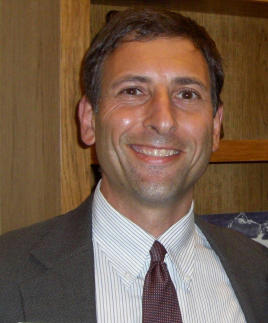
Attorney Len Goodman

Goodman should know.

In 2009, Goodman represented Brian Wilbourn in a federal narcotics case in which the prosecutors knowingly allowed an informant to testify that Wilbourn was slinging dope to addicts at a Penthouse Apartment rented by co-defendant Rondell Freeman. In reality, Wilbourn was not anywhere close to the specific location on the dates specified in the indictment.

Goodman had solid proof that his client was elsewhere. “Mr. Wilbourn was safely locked away in prison when the informant testified that Wilbourn was selling drugs at the Penthouse between 2002-2005,” Goodman said.

“Federal cases are based on the word of informants who understand the only way to get a lesser sentence is to help government prosecutors convict others,” Goodman now says after the Federal 7th Circuit overturned Wilbourn’s conviction.

In reversing Wilbourn’s conviction, Judge Daniel A. Manion stated, “When the government obtains a conviction through the knowing use of false testimony, it violates a defendant’s due process rights.”

Even if a person is absolutely guilty of a crime but convicted on perjury, this grave error violates the “Bill of Rights” and thus creates an unconstitutional conviction.

“It’s a result-oriented process today, fairness be damned,” says Robert

Merkle, a former U.S. Attorney in Florida.

“No trial is perfect and sometimes mistakes are made but for a prosecutor to put perjury on the witness stand, that is scary,” says Mark Vinson, a former Harris County (Houston Texas) Chief Prosecutor now in private practice as a criminal defense attorney.

Legal experts say that most prosecutors are dedicated to performing ethically and professionally, but many prosecutors repeatedly commit misconduct because they realize they most likely will never face serious punishment.

Prosecutorial misconduct has serious financial consequences. County governments spend “hundreds of millions” in taxpayer dollars to retry cases in which prosecutors contributed to faulty convictions.

Few statistics are available documenting nationwide prosecutorial misconduct,

and there have only been a handful of instances where prosecutors were actually sanctioned for such conduct.

Based on extensive research, the author of this report discovered the following information on prosecutorial misconduct:

(1) A study conducted by the Center of Public Integrity found 11,452 documented appeals alleging prosecutorial misconduct between 1970 and 2002. Approximately 2,012 appeals led to reversals or remanded indictments.

(2) Out of 4,000 cases reviewed in California from 1997-2009, 707 cases of prosecutorial misconduct were found. Only 6 prosecutors were disciplined.

(3) A study of Texas convictions indicated that 91 cases since 2004 illustrate a pattern of prosecutorial misconduct. None of the Texas prosecutors were disciplined.

“This lack of accountability promotes the problematic culture that plagues prosecutors’ offices and can easily contribute to wrongful convictions,” the Justice research concluded.

What it really boils down to is that there are prosecutors with a “win-at-all-costs” mentality.

The following story highlights part one of a two-part “Drug War” series detailing prosecutorial misconduct in U.S. drug trials.

Case File #1: Brian Wilbourn

Location: Chicago, Illinois

Case# 07-CR-00843 & No# 09-4043

Judge: Joan Lefkow

Timeline: December 2007-2009

Defendant Brian Wilbourn was charged along with 16 other defendants with possession and conspiracy to distribute crack cocaine, heroin and marijuana at the Cabrini Green Public Housing Development in Chicago Illinois.

The DEA alleged that Wilbourn was part of the Gangster Disciples drug-dealing street gang. Rondell “Nightfall” Freeman was pegged as the ringleader of this faction of the Gangster Disciples street gang.

Wilbourn and three co-defendants were convicted by a jury on “eight out of nine counts” including a charge of conspiracy that carried 20 years to life in prison.

When the DEA announced federal charges against the defendants in December

2007, an agent said, “they were upending the gang’s flagrant drug dealing at public housing projects and other apartments in the Chicago area.”

Making reference to the upcoming Christmas holiday, Andy Traver, an ATF special agent in charge, cracked, “It’s a season of giving, so our gift to the people is to let them live without constant fear of this drug organization all around them. And our gift to Rondell Freeman and his organization is 20 years to life.”

In a twist of ironic justice, Rondell Freeman and his co-defendants did in fact get a gift. The Illinois 7th Circuit reversed the convictions of Freeman, Wilbourn, Daniel Hill, Adam Sanders, and another defendant — the only five out of 16 to have their cases tried by a jury.

“This was a case where prosecutors allowed an informant to testify falsely against my client Brian Wilbourn,” says Chicago attorney Leonard Goodman.

“Prior to trial I informed the government that my client was in prison from 2002-2005– when the informant said he saw Mr. Wilbourn selling drugs in the company of co-defendant Rondell Freeman.”

Despite Goodman’s alert that Wilbourn was incarcerated during the time period described in the indictment, the government plowed ahead in order to convict Goodman’s client.

Prosecutors conceded that Goodman submitted the certified documents to them in December 2008, two months before the trial started. However, the prosecutors later argued before Judge Lefkow that they could not accurately verify the dates of Wilbourn’s incarceration.

At trial, the prosecutors relied in part on informant Senecca Williams. Williams made a deal with the Feds – he would testify against the defendants in exchange for 5 years off of his sentence.

Attorney Goodman told the Chicago Tribune, “Everybody knows these witnesses will lie, saying whatever the government wants them to say to get a deal. The only difference in this case is we happened to catch one.”

Senecca Williams testified at length about the Penthouse, claiming that Wilbourn discussed sales and bagged up the drugs for distribution with Freeman and other players in the group.

Although two other informants testified for the government, neither informant could tie Wilbourn to the Penthouse Apartment.

Attorney Goodman cross-examined Senecca Williams on March 4, 2009. Goodman confronted Williams with the fact that his client was in prison from 2002-2005 and could not have been at the Penthouse Apartment discussing drug business like Williams said.

“Now Mr. Williams, isn’t it true that Brian Wilbourn was in jail from April 23rd of 2002 until September 2005?” Goodman asked. “I don’t know it to be true,” Williams replied.

Suddenly, U.S. Attorney Kruti Trivedi, objected and said, “That’s not true.” Defense Goodman appealed to the judge. “It is true, your honor.”

Judge Lefkow overruled the prosecutor.

Under intense questioning by Goodman, Williams confessed other misdeeds. Williams admitted that he once lied under oath in State Court around 2005 or 2006 to help Rondell Freeman beat a drug case.

Goodman questioned Williams:

(Q) “You would lie at Rondell Freeman’s trial in State Court because if he got convicted you might not get to live at the car wash, correct?”

(A) “Yes.”

(Q) “But you wouldn’t lie to save yourself 15 years of your life?”

(A) “No.”

The government made no attempt to correct Williams’ false testimony. Instead, the government bolstered Williams’ glaringly inaccurate testimony:

(Q) “Have you been truthful and tried the best of your ability to give approximate dates as you remember them?”

(A) “Yes.”

Attorney Goodman informed Judge Lefkow that he filed a motion to dismiss the counts against Wilbourn due to Senecca Williams’ false testimony.

“The government had an obligation under Napue vs Illinois (360 U.S. 264, 269, 79) to correct the record,” Goodman told the judge.

U.S. Attorney Rachel Cannon stated, “the government stipulated as to the dates of Wilbourn’s incarceration and if Mr. Goodman wants to argue to the jury that Senecca Williams perjured himself, he’s absolutely free to do that. Our argument will be Williams was wrong about the dates, but the facts remain true.”

Judge Lefkow responded to Cannon’s argument, “You know, you as the representative of the United States have an obligation to make sure the evidence you are presenting is truthful and accurate.”

Surprisingly, Cannon replied, “We stand by everything that’s been presented, your honor.”

Judge Lefkow denied Goodman’s motion to dismiss the charges against

Wilbourn.

During closing, Assistant U.S.Attorney Rachel Cannon asked the jury

to find Brian Wilbourn and the other defendants guility: “Williams did not lie,” Cannon explained, “Don’t think what he testified to about Brian Wilbourn’s involvement with drugs never happened.”

Goodman implored the jury to find his client not guility: “They put a liar on the stand and he got caught and the government still [has] the nerve to ask you to rely on Senecca Williams’ testimony to convict. You should be offended.”

Unfortunately the jury sided with the government and convicted all four defendants including Wilbourn.

On appeal, the government argued they did not knowingly use false testimony to convict the defendants. In reversing the convictions, Judge Lefkow made a finding that when Assistant U.S. Attorney Rachel Cannon “bolstered William’s false testimony it constituted prosecutorial misconduct.”

“Under Napue vs Illinois, the government had a duty to correct false testimony,” Lefkow opined.

All four defendants still remain in custody at the Metropolitan Correctional Center in Illinois pending a court date to resolve the related lesser drug charges.

Attorney Goodman felt rejoiced that his client no longer faced a life sentence.

“It is an important opinion because it stands for the principle that federal prosecutors are not above the law and that telling the truth is more important than winning.”

Next installment: How a bulldog lawyer exposed the entire court as a liar in a major cocaine case with connections to a Mexican Drug Cartel.

Investigative journalist Clarence Walker can be reached by email, cwalkerinvestigate@gmail.com.

Study says tasers can kill

By Alan Bean

To taze or not to taze?  Here are a few common sense guidelines.  Never use a gun when a taser will suffice.  Never use a taser when physical restraint will do the job.  Never use physical restraint when verbal persuasion will calm the situation.

But can outcomes be anticipated with clinical precision?  Highly trained police personnel use better judgment than raw rookies, but when the smoke of danger hangs in the air the easy choice is to shoot first and ask questions later.  In that case, the logic suggested by my guidelines is reversed: never shoot a man in the chest if a head shot is available; never use a handgun with a semi-automatic is within reach.  Etc.

Taser fans note that tasers are less dangerous than guns, but is that always true?  According to the study cited by this New York Times piece, tasers can induce heart failure and death.  Frequently, the officer holding the taser had recourse to less drastic measures.  Too often, a combination of fear and anger led to repeated and prolonged tasing far out of proportion to the actual threat. 

There are no easy answers here, but there can be little doubt that some police departments are overly dependant on taser technology.  A skilled officer can defuse most situations with a calm but authoritative manner; the young hot-shot escalates the tension by displaying too much swagger and not enough respect.  Racial bias frequently plays into these scenarios, which is why so many tasing deaths are inflicted on minority suspects.

Tasing can be preferable to gun play, but the real issue here is professional police work.  Are we willing to invest in quality law enforcement?  If not, untrained rookies with itchy trigger fingers will continue to wreak havoc.

By

Published: April 30, 2012

The electrical shock delivered to the chest by a Taser can lead to cardiac arrest and sudden death, according to a new study, although it is unknown how frequently such deaths occur.

The study, which analyzed detailed records from the cases of eight people who went into cardiac arrest after receiving shocks from a Taser X26 fired at a distance, is likely to add to the debate about the safety of the weapons. Seven of the people in the study died; one survived.

Advocacy groups like Amnesty International have argued that Tasers, the most widely used of a class of weapons known as electrical control devices, are potentially lethal and that stricter rules should govern their use.

But proponents maintain that the devices — which are used by more than 16,700 law enforcement agencies in 107 countries, said Steve Tuttle, a spokesman for Taser — pose less risk to civilians than firearms and are safer for police officers than physically tackling a suspect. The results of studies of the devices’ safety in humans have been mixed.

Medical experts said on Monday that the new report, published online on Monday in the journal Circulation, makes clear that electrical shocks from Tasers, which shoot barbs into the clothes and skin, can in some cases set off irregular heart rhythms, leading to cardiac arrest.

“This is no longer arguable,” said Dr. Byron Lee, a cardiologist and director of the electrophysiology laboratory at the University of California, San Francisco. “This is a scientific fact. The national debate should now center on whether the risk of sudden death with Tasers is low enough to warrant widespread use by law enforcement.”

The author of the study, Dr. Douglas P. Zipes, a cardiologist and professor emeritus at Indiana University, has served as a witness for plaintiffs in lawsuits against Taser — a fact that Mr. Tuttle said tainted the findings. “Clearly, Dr. Zipes has a strong financial bias based on his career as an expert witness,” Mr. Tuttle said in an e-mail, adding that a 2011 National Institute of Justice report concluded there was no evidence that Tasers posed a significant risk of cardiac arrest “when deployed reasonably.”

However, Dr. Robert J. Myerburg, a professor of medicine in cardiology at the University of Miami Miller School of Medicine, said that Dr. Zipes’s role in litigation also gave him extensive access to data from medical records, police records and autopsy reports. The study, he said, had persuaded him that in at least some of the eight cases, the Taser shock was responsible for the cardiac arrests.

“I think when we put together the preponderance of what we know about electrical shocks with his observations, there’s enough to say that the phenomenon occurs,” he said. But he added, “I suspect the incidence of these fatal events is going to be low and can be minimized by the precautions.”

Police officers, he said, should take precautions when using the weapons and avoid multiple shocks, prolonged shocks and shocks to the chest.

“I’d rather see Tasers out there than bullets flying around,” Dr. Myerburg said. “But if you have a choice, if the circumstances allow you to avoid either, then physical restraint should be considered.”

Carter: it’s time to end the death penalty

By Alan Bean

The Associated Baptist Press is an excellent compendium of Baptist views from every conceivable point on the political and theological spectrum.  Jimmy Carter has been called the greatest living former president, and I agree with that assessment.  Most retired politicians adopt bland, predictable positions on controversial issues, I suspect for fear of ruining their precious legacies.  Carter calls ’em as he sees ’em, even when (as with the Palestinian issue) his views run counter to popular opinion.  In this piece he provides a compact and compelling version of the case against capital punishment. 

(ABP) — For many reasons, it is time for Georgia and other states to abolish the death penalty. A recent poll showed that 61 percent of Americans would choose a punishment other than the death penalty for murder.

Also, just 1 percent of police chiefs think that expanding the death penalty would reduce violent crime. This change in public opinion is steadily restricting capital punishment, both in state legislatures and in the federal courts.

As Georgia’s chief executive, I competed with other governors to reduce our prison populations. We classified all new inmates to prepare them for a productive time in prison, followed by carefully monitored early-release and work-release programs. We recruited volunteers from service clubs who acted as probation officers and “adopted” one prospective parolee for whom they found a job when parole was granted. At that time, in the 1970s, only one in 1,000 Americans was in prison.

Our nation’s focus is now on punishment, not rehabilitation. Although violent crimes have not increased, the United States has the highest incarceration rate in the world, with more than 7.43 per 1,000 adults imprisoned at the end of 2010. Our country is almost alone in our fascination with the death penalty. Ninety percent of all executions are carried out in China, Iran, Saudi Arabia and the United States.

One argument for the death penalty is that it is a strong deterrent to murder and other violent crimes. In fact, evidence shows just the opposite. The homicide rate is at least five times greater in the United States than in any Western European country, all without the death penalty.

Southern states carry out more than 80 percent of the executions but have a higher murder rate than any other region. Texas has by far the most executions, but its homicide rate is twice that of Wisconsin, the first state to abolish the death penalty. Look at similar adjacent states: There are more capital crimes in South Dakota, Connecticut and Virginia (with death sentences) than neighboring North Dakota, Massachusetts and West Virginia (without death penalties).

Furthermore, there has never been any evidence that the death penalty reduces capital crimes or that crimes increased when executions stopped. Tragic mistakes are prevalent. DNA testing and other factors have caused 138 death sentences to be reversed since I left the governor’s office.

The cost for prosecuting executed criminals is astronomical. Since 1973, California has spent roughly $4 billion in capital cases leading to only 13 executions, amounting to about $307 million each.

Some devout Christians are among the most fervent advocates of the death penalty, contradicting Jesus Christ and misinterpreting Holy Scriptures and numerous examples of mercy. We remember God’s forgiveness of Cain, who killed Abel, and the adulterer King David, who had Bathsheba’s husband killed. Jesus forgave an adulterous woman sentenced to be stoned to death and explained away the “eye for an eye” scripture.

There is a stark difference between Protestant and Catholic believers. Many Protestant leaders are in the forefront of demanding ultimate punishment. Official Catholic policy condemns the death penalty.

Perhaps the strongest argument against the death penalty is extreme bias against the poor, minorities or those with diminished mental capacity. Although homicide victims are six times more likely to be black rather than white, 77 percent of death penalty cases involve white victims. Also, it is hard to imagine a rich white person going to the death chamber after being defended by expensive lawyers. This demonstrates a higher value placed on the lives of white Americans.

It is clear that there are overwhelming ethical, financial, and religious reasons to abolish the death penalty.

Jimmy Carter was the 39th president and is founder of not-for-profit Carter Center in Atlanta, advancing peace and health worldwide.

Texas Baptist publication connects Christian faith and racial justice

The Rev. Michael Bell

Ken Camp with The Baptist Standard has an excellent discussion of the relationship between race and faith featuring faith leaders in the Dallas Fort Worth area and beyond.  My blogging on the subject is part of the mix, and some strong words from Fort Worth pastor Michael Bell figure in the discussion.  It is good to see the intersection of racial justice and Christian faith receive a thorough airing in the Baptist press.  Pictures from the civil rights movement of the 1960s demonstrate how far we have come; the typical response of white America to the Travon Martin story shows us how far we have to go. Alan Bean

Race & Faith

   
By Ken Camp, Managing Editor
Published: April 27, 2012
A neighborhood watchman in Florida shoots and kills a hoodie-wearing African-American teenager. Two white suspects in Tulsa, Okla., confess to the Easter weekend shooting of five people in a predominantly black neighborhood.

Trayvon Martin Million Hoodie March in New York City was one of many such protest marches conducted in reaction to the shooting of the teen by a neighborhood watchman in Florida. (Photo/Frank Daum)

Periodically, racial tensions that have simmered beneath the surface bubble up, some Christian leaders note, illustrating just how far-removed modern America is from the “beloved community” envisioned by Martin Luther King Jr.

“We can legislate fairness, but we cannot legislate love. That is up to us,” said Mark Croston, pastor of East End Baptist Church in Suffolk, Va., and president of the Baptist General Association of Virginia.

Christians must lead by example to improve race relations, he said.

“I believe that all truly Christian churches must be open to racial inclusion and human compassion. We sing, ‘Jesus loves the little children, all the children of the world. …” This is true, so we must, too,” said Croston, an African-American.

Croston points to the vision in the New Testament book of Revelation of people representing every nation, tribe and language worshipping Christ. If Christians are serious when they pray, “Thy kingdom come, thy will be done on earth as it is in heaven,” he said, they must “with intentionality work toward this reality.”

But the heavenly vision seems remote for many, and racial divisions remain a clear and present problem, some observers noted sadly.

Predictable pattern

When stories about racially inspired violence capture public attention, events follow a predictable pattern, said Alan Bean, executive director of Friends of Justice.

Inspired by preachers like Martin Luther King Jr., African-Americans in the early 1960s marched to secure civil rights. But some social observers note King’s dream of the “beloved community” still is far from reality, as evidenced by the recent rhetoric surrounding the Trayvon Martin shooting.

“When the status quo is threatened by systemic racial bias, the propaganda machine goes into overdrive. This normally involves the assertion that a liberal media is making excuses for thuggish behavior. If the folks on the receiving end of unjust treatment can be redefined as one of ‘those’ people, the horrific details no longer matter,” Bean, an American Baptist minister in Arlington, wrote in a recent column for Associated Baptist Press.

As the stories gain media attention, he continued, “America quickly divides into protestors claiming that the narrative du jour is a prime example of systemic racism, and debunkers insisting it is nothing of the kind.”

The church’s role

Historically, African-American churches have played a central role in providing a voice for people who have felt victimized and for exposing racism. In many cities, a particular church or a few churches continue to play a key role as ombudsman in the African-American community, said Michael Bell, pastor of Greater St. Stephen First Baptist Church in Fort Worth.

“It’s where people go for direction when they are seeking resolution of difficulties and solutions to their problems,” said Bell, a past-president of both the Baptist General Convention of Texas and the Texas African-American Fellowship.

More specifically, African-Americans know which churches are able to do something substantive about their problems, he noted.

“They go to a church where the pastor has a reputation as being a prophetic voice,” Bell said. “My church expects me to speak up. I have never received a negative email, text or letter from a church member complaining that I was too involved in community issues outside the church.”

Elizabeth Eckford, one of the Little Rock Nine, is pursued by a mob outside Little Rock’s Central High School. (UPI Photo/Library of Congress)

However, in many—perhaps most—predominantly white churches, pastors do not feel that same degree of freedom, he added.

The African-American church has become even more relevant and gained increasing influence as racial tensions have heightened in recent years, Bell insists.

“Distrust and suspicions that had been under the surface have bubbled up. Racism has become more overt and evident in in the last few years,” he said, comparing racists to “roaches so bold they don’t run from the light anymore.”

A cloud of suspicion

Relations between white and blacks, even among Christians, suffer from a failure to address deep-seated issues such as the way African-Americans often are viewed with suspicion—a matter brought to the forefront recently when George Zimmerman shot and killed Trayvon Martin in Sanford, Fla., he observed.

“It’s like putting cold cream on cancer. Unattended, the malady will intensify, because it hasn’t been addressed. We try to move on without really dealing with it,” Bell said.

“We (African-Americans) have a historical memory informed by a hermeneutic of suspicion. Periodically that will come to the surface, and the obvious issues will be addressed. The symptoms will be addressed without dealing with the disease. We won’t go beneath the surface. …We fear it will take too much out of us.”

Some African-American ministers note the fear young men in their communities feel about being stopped by police for “DWB—driving while black.”

White citizens rally at the Arkansas state capitol, protesting the integration of Central High School in Little Rock. (U.S. News & World Report Photo/Library of Congress)

In a video on the American Baptist Home Mission Societies website, Executive Director Aidsand Wright-Riggins appeared in a hoodie to tell stories from his own experience about the cloud of suspicion under which African-American young men live.

Wright-Riggins recalled how he was stopped by police officers—once while knocking on the door of a white church member and once while approaching his own home. He also told how his son was pulled over twice driving between his parents’ home and his university dormitory.

“I appeal to all of us, as we look at the millions of persons around us, and particularly those of color—particularly black boys—that we don’t make an automatic assessment because they might be dressed differently or look different or somehow feel that they are out of place in our society,” he said, “that we relegate them to the margins or, even worse, that we assign them to the morgue.”

A troubling divide

The Trayvon Martin case illustrates “a troubling divide in public perception,” Bean wrote in a recent blog on the Friends of Justice website.

“On one side of the fault line, people identify with George Zimmerman’s suspicion of young black males wearing hoodies. On the other side, folks identify with a victim of racial profiling and vigilante justice,” he wrote.

The 1963 March on Washington for civil rights featured blacks marching alongside Christians and Jews. But some social observers note the dream of the “beloved community” still is far from reality, as evidenced by the recent rhetoric surrounding the Trayvon Martin shooting. (RNS FILE PHOTO)

In his opinion column written for Associated Baptist Press, Bean noted: “Real-life narratives are messy because life is messy. Victims of injustice get caught up in the mess. They don’t play their roles with the disciplined panache of a Rosa Parks. They talk back; they fight back; they come out swinging. And that’s when bad things happen. That’s when the tragedy quotient gets high enough to catch the media’s attention.”

“Why did George Zimmerman feel called to defend his neighborhood from intruders?” Bean continued. “Why did he see Trayvon Martin as out of place, an anomaly. Because he was wearing a hoodie? Because he was walking with a particular gait? Because he appeared overly interested in his surroundings?

“Eliminate Martin’s blackness from the equation, and it is impossible to imagine Zimmerman reacting as he did. Zimmerman defined criminality in racial terms. Who, or what, taught him to think this way? … Our national conversation will continue to revolve around messy narratives.”

Slandered couple vindicated

Mark and Rhonda Lesher

By Alan Bean

This is a story about the limits of free speech on the internet, but it is goes much deeper than that.  This is also about what happens when a small town defense attorney challenges the local power structure.

Vergil Richardson, a basketball coach in nearby Texarkana, lost his job the moment charges were filed.  He hired Mark Lesher, a local attorney with a reputation for independent judgment, to represent him.

The following year, Robert Bridges, the man responsible for arresting the Richardsons, made a run for sheriff.  Mark and Rhonda Lesher supported Bridges’ opponent, Royce Abbot, and used the Richardson raid as an example of the cowboy tactics routinely employed by Bridges and the rest of the local law enforcement establishment.

That’s when the nasty emails began to appear on Red River County’s Topix site.  The Leshers were accused of every low down, nasty deed imaginable. The message was simple: Do you want to vote for Royce Abbott, the man who pals around with drug-dealing rapists? 

The tactic was as successful as it was vicious; Bridges won the election.

The Richardsons were vindicated almost exactly three years after their ordeal began.  The delay was created when Judge John Miller, a close friend of County Attorney Val Varley, refused to recuse himself from the case.  Only when the Texas Attorney General’s Office took over the prosecution from Mr. Varley was Miller forced to step aside.  Eventually, an obvious injustice was belatedly averted.  (more…)

Gonzalez: “There’s a Rapist in Lincoln Park!”

By Derek Gonzalez

There’s a rapist in Lincoln Park!

http://www.youtube.com/watch?v=aAXGzJuyMF0&feature=related

Here, we have a song that has permeated popular culture in the last year. This song has real emotion in it because it is an auto-tuned version of Antoine Dodson’s account of what happened. In Huntsville, AL, a man climbed through the window of Antoine’s 2nd story apartment to steal things, but then he turned into an opportunistic rapist and tried to rape Kelly Dodson in her bed. After she screamed, her brother Antoine came into the room and threw the guy off of his sister. (Gentle, 2010). The perpetrator then fled out of the window, leaving behind his shirt, fingerprints, and shoe prints on a trashcan. (“Antoine dodson warns,” 2010). Although the song was made by the Gregory Brothers to help get the message out on this family’s trauma, there was also some backlash; many people thought that it was fake when it first came out, myself included. There were even people commenting on the videos with such hateful remarks like “why would anyone rape this black monkey c–t? She wanted it”. In fact, the news reporters who reported this story were given pressure from the community of Huntsville not to broadcast this because they felt that Antoine speaking would give the community a bad image. The main issue here, though, was that Kelly Dodson was almost raped. This song really speaks to people because it’s catchy, full of emotion, and talks about something that has never been put into a song: rape. (more…)

Baptist conference on sexuality includes gay perspective

By Alan Bean

A conference on Christian sexuality in Decatur, Ga. has explicitly addressed the challenges and opportunities facing gay Christians.  What’s more, the conference was sponsored by Baptists!

In the interest of full disclosure, I should note that the divinity student featured in the lead portion of Bob Allen’s article in the Associated Baptist Press attends my home church, Broadway Baptist in Fort Worth, Texas. 

Here’s the crucial excerpt from Allen’s article:

Cody Sanders, a Ph.D. candidate at Brite Divinity School and member of Broadway Baptist Church in Fort Worth, Texas — a congregation kicked out of the Southern Baptist Convention for its full acceptance of openly gay members — said without homosexuality many Christians might never be forced to think about things like power inequalities in heterosexual relationships or how idolizing the traditional nuclear family marginalizes others like single-parent and extended-family configurations to a second class.

“Rather than a tolerable but undesirable ‘Plan B,’ LGBT relationships are stellar examples of covenant forged in the fires of oppression and marginalization,” Sanders said at a three-day [Baptist] Conference on Sexuality and Covenant co-sponsored by the Cooperative Baptist Fellowship and Mercer University’s Center for Theology and Public Life.

I’m not sure that Broadway has come to the point of fully accepting gay members, but we have decided not to adopt the default Baptist position on the issue, and we have been kicked out of the Southern Baptist Convention for our trouble.  Broadway is a moderate church comprising a full range of conservative, moderate and liberal members. 

I can’t tell you how liberating it is to hear my Baptist brothers and sisters facing these difficult questions in such a thoughtful setting, even if we remain far from agreement.  Avoiding the issue is not a long-term option.  Please read Allen’s full article and let us know what you think.


Mississippi Warden guilty of sex charges

By Alan Bean

Little Walnut Grove, MS is back in the news, and once again its private prisons are part of the story.  Recently, juvenile inmates were removed from the Walnut Grove Correctional Facility after charges that inmates had been sexually and physically abused by prison personnel were sustained by a formal inquiry. 

Now comes Grady Sims, the warden of the Walnut Grove Transitional Center, and the community’s former mayor.  Sims recently pled guilty to transporting a female inmate to a hotel in a nearby town, then threatening her with retribution if she spoke out.  Sims will be sentenced in federal court tomorrow.

Is there something sinister in the water in Walnut Grove, or are we dealing with yet another unintended consequences of the privatized prison phenomenon? 

Private prisons, by definition, easily flout the limited safeguards and ethical standards enforced by state and federal governments.  When responsibility for corrections is shifted to the private sector, an out-0f-sight-out-of-mind mentality takes hold. 

Grady Sims is both the embodiment and the victim of this mentality.

How many Black parents must straighten up?

By Alan Bean

Richard Land President of the Ethics and Religious Liberty Commission of Southern Baptist Convention, Dr. Richard Land, speaks on NBC's 'Meet the Press' November 28, 2004 during a taping at the NBC studio in Washington, DC. Land talked about the religion, politics and moral values that were affecting the 2004 U.S. presidential election.
Richard Land

Richard Land, the voice of the Southern Baptist Convention, is in hot water over a recent rant against the Black pastors in connection with the Trayvon Martin story.  Land’s comments have angered Baptists like Arlington’s William Dwight McKissic as much for what they implied as for what was clearly stated.

The following quote from Gerald Schumacher appears in the comments section of Pastor McKissic’s website.  I have corrected the spelling, but otherwise this verbatim:

I am not a great fan of Richard Land, but If Mr. McKissic thinks what Richard Land said was racist then this is going to knock his socks off.

Richard Land spoke the truth originally although he has back peddled because of pressure. For that I do fault him. The truth is that if the black community would start training their children to live a productive moral godly lives instead of what a large percentage become and stop living in the past using the race cards this nation could heal a lot faster. Blacks make up about 13.6 percent of the population but about 40.2 percent of those in prison are black. The problem is with the black community not racism and it is way past time for the black pastors to start dealing with it in their congregation as well as communities instead of pointing fingers.

How many Black parents would have to quit their lowdown ways before Black pastors get the right to address racial injustice?  If, say, the teen birth rate dropped by 15 percentage points, would that do it?  Or are Black pastors relegated to the social sidelines until Black and White incarceration rates are the same?

This argument is of ancient origin.  Slaves shouldn’t be freed because most of them can’t read and write and lack experience handling money.  Jim Crow laws should remain in force because crime rates in the Ghetto are higher than the national average.

Now the mass incarceration of young Black males precludes Black Southern Baptists from questioning their White betters. 

This was the kind of logic that put Tulia, Texas on the map.  It didn’t really matter whether undercover agent Tom Coleman was telling the truth, if his targets had kids outside of marriage they forfeited their civil rights. 

Tragically, this Alice in Wonderland logic drives the criminal justice system.  It is also one of the big reasons why the Black incarceration numbers are so skewed and why so many of the men and women exonerated by DNA evidence are African-American. 

Anthony Graves

This morning I had coffee with Anthony Graves, a Texan who spent 18 years in prison, twelve on death row, for a crime he didn’t commit.  The indignities didn’t end when Graves stepped back into the free world.  The following is from a Houston Chronicle article published a year ago:

After he was freed in October, the Texas comptroller’s office refused the compensation provided by law for those who are unjustly convicted.

Then the Texas Attorney General’s Office began garnisheeing his wages for child support that a judge decided Graves owed even though he was on death row at the time. But when they blocked payment of the $250 fee he earned for a presentation to students at Prairie View A&M University, it was too much.

Graves’ attorney accused Texas AG Greg Abbott of being a vindictive monster.  Maybe so.  But Abbott had little reason to fear a public backlash.  Most influential Texans think a lot like Gerald Schumacher, the guy who thinks Dwight McKissic should go mute on racial justice until every Black parent has his or her act together. 

Fortunately, the Schumacher doctrine doesn’t always win out.  Anthony Graves finally received restitution money for his near-death experience, the Tulia drug bust was overturned, and, massive White support notwithstanding, Richard Land still has some ‘splainin’ to do.

“Brooker’s Place” opens a window on Mississippi civil rights history

By Alan Bean

Those who felt “The Help” whitewashed the social realities of civil rights-era Mississippi will welcome “Booker’s Place” a new film that debuted on the film festival circuit over the weekend. 

In 1966, Booker Wright was a waiter at Lusco’s, a restaurant in Greenwood, Mississippi with an all-white clientele.  This brief quotation from theNew York Times gets to the heart of the matter:

His feat: He dropped his mask of servility in a 1966 television documentary about the state, admitting that he was “crying on the inside” as he kowtowed to customers who sometimes denied him tips and uttered racial slurs. “The meaner the man be, the more you smile,” he explains.

Booker Wright stood on the sidelines during the Greenwood Movement in 1962-63, but he spoke out when he had the opportunity, and paid dearly for it. 

Hodding CarterIII, the journalist and former member of the Carter administration, grew up and worked in Greenville, Miss., and said his first reaction upon seeing the documentary was that Mr. Wright was a dead man.

“In one person, in one interview, in one place, you have personified what it was black Mississippi was saying to white Mississippi after all these years,” he says in “Booker’s Place.”

The words uttered by Mr. Wright in that NBC broadcast led to a beating by a local police officer. He lost his waiter’s job at Lusco’s, which he had held since he was 14. His own restaurant was vandalized.

A beloved and respected figure in a town that was a major center for the segregationist Citizens’ Council, he reopened Booker’s Place and bought a school bus to transport children in the Head Start program. He was shot to death by a black customer in his restaurant in 1973, which raised some conspiracy theories.

How could such an innocuous comment spark consequences this dire?  If you have to ask the question you don’t know much about the social world of Mississippi during this period.  “The Help” was set in Jackson, MS, but was largely filmed in Greenwood, a town that has changed very little since the mid-60s.  If this project makes it to mainstream theaters I will be the first in line at the ticket window.