Author: Alan Bean

The day Dianna Freelon Foster refuses to forget

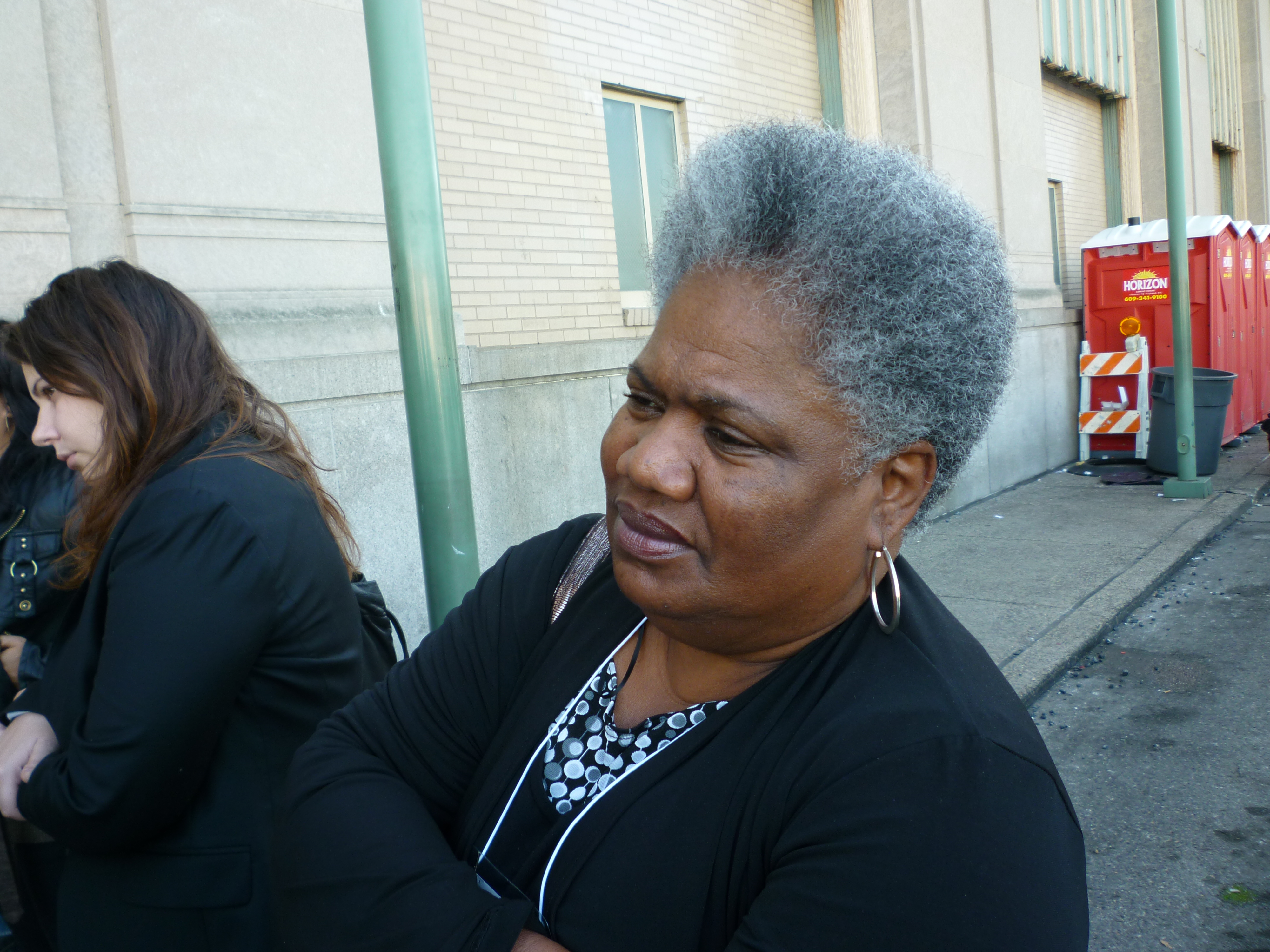
Dianna Freelon Foster

By Alan Bean

For the past few days, we have been attending a human rights conference in Philadelphia sponsored by the U.S. Human Rights Fund.  We have learned a lot and met so many inspiring individuals it is a bit overwhelming.  But the high point of the conference, for me, was a chance encounter with Dianna Freelon Foster of Grenada, Mississippi.

Grenada, you may recall from an earlier post, was the site of the most heroic, dreadful, awe-inspiring and anonymous civil rights campaigns in American history.  Nobody knows about Grenada.  Everybody should.

Dianna Freelon Foster was going into the eleventh grade in the fall of 1966 when the civil rights community decided it was time to integrate the public schools.  Every night, hundreds of people would gather at a church near the courthouse square to sing freedom songs, pray and preach.  Then, in the power of the Holy Ghost, they would march to the courthouse and take a stand for civil rights.  And when morning came, the first day of school, hundreds of black children had the audacity to show up at the all white schools of Granada, Mississippi.

“We walked into the school the first morning, ” Dianna remembers, “and the first thing I noticed was how beautiful it was–nothing at all like the black school I had been attending.  It was a very tense atmosphere and you had the feeling something was wrong.  Then, one by one, all the white girls were called to the office.  I remember thinking ‘there was no way all those white girls can fit in that tiny little office’.”

When all the white girls had left the building, the black girls were informed that the school was closing for the day.  “We walked out the door,” Dianna recalls, “and all I could see was a bunch of white men, some of them sitting in the branches of the trees, and they were all carrying weapons: baseball bats, tire irons, that sort of thing.  We tried to rush back into the school but the principal locked the door on us.  That’s the thing that really hurt me–that a human being could do something like that–locking us out when he knew we were in danger.”

“We were walking with a male student and we were trying to get to the church, because that’s where we felt safe and strong.  Then the men surrounded us.  They were pushing and prodding us girls, but it was the boy who received the real beating.  They would have left us pretty much alone, but every time we tried to help our friend who had been horribly beaten, they’d start beating us up too.  I guess I blocked it all out of my mind.  For a long time I didn’t remember much about it.  But then, years later, I talked to my mother and my brother, and they told me how awful it really was.”

The public schools of Grenada were not integrated in 1966.  Or 1967.  Or 1968 or 1969.

The Grenada movement has been forgotten because it did not achieve its objective; but nowhere in America did a community come together in such an emphatic and disciplined fashion behind a human rights agenda. 

Dianna Freelon Foster wants to talk about the past.  She made a successful run for mayor of Grenada a few years ago because she wanted to help her community come to terms with its painful history.  Most of the most prosperous majority white neighborhoods had formed separate municipalities for the usual reasons, but when Ms. Foster was elected mayor these communities were quickly re-annexed by the city of Grenada and Foster was defeated.

“I’m the racist because I want to talk about the past.  Well, I need to talk about it.  Everybody does, but they just want to forget and move forward.  Most of our black children have no idea what happened in our community.  Their parents don’t want to think about it.  We all just live as if all the ugliness never happened.  But it did; and we need to deal with it.”

The next time Friends of Justice sponsors a civil rights tour in Mississippi we’re going to Grenada and Dianna Freelon Foster will be our tour guide.
“Heaven on Earth”: Occupy Philly soldiers on

By Alan Bean

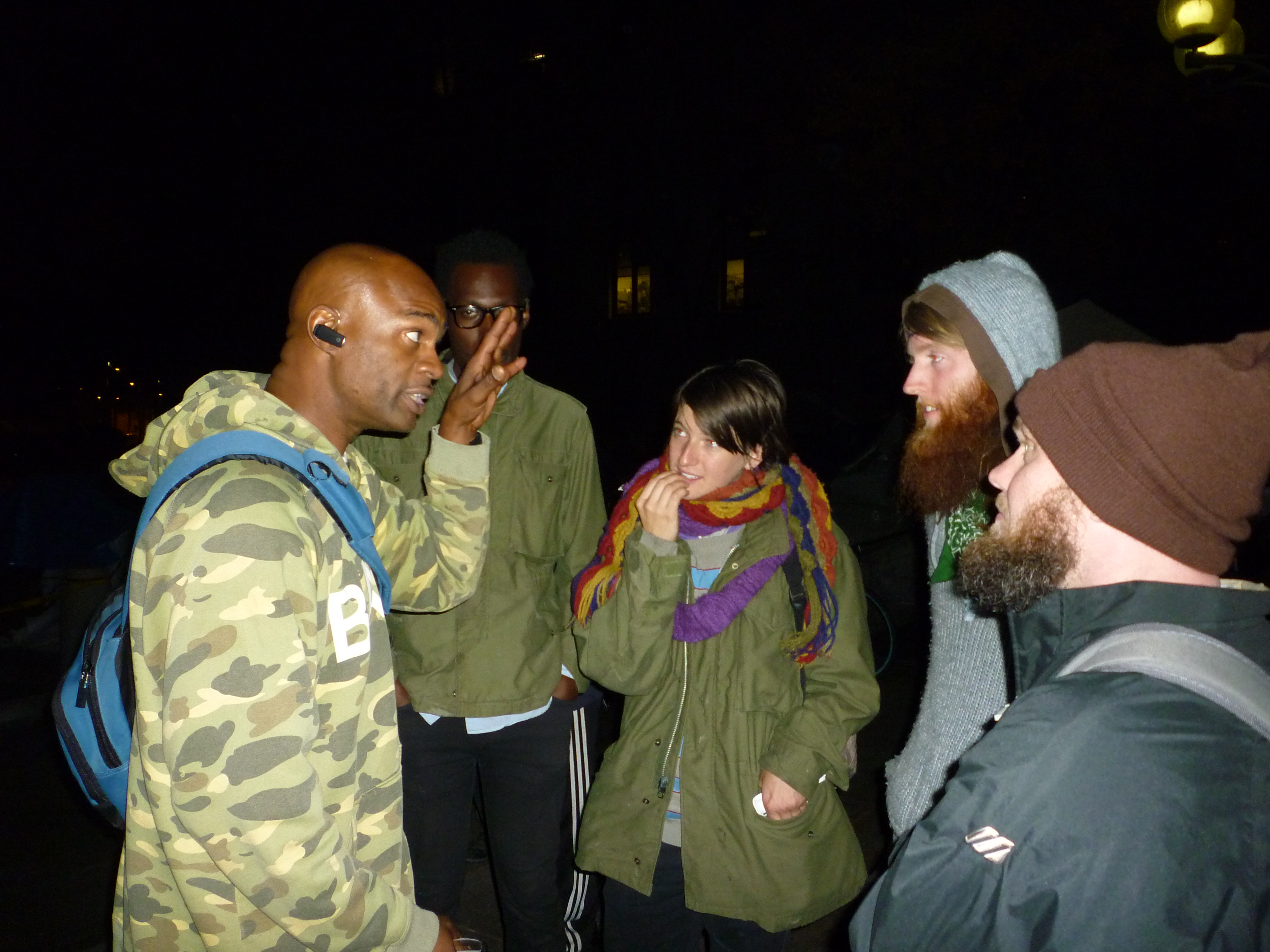
After a day of listening to people speaking earnestly about human rights, I meandered back to the site of Occupy Philly.  As I arrived this evening, an earnest forty-something black guy was informing a cluster of twenty-something young people that every good and perfect gift can be traced back to the hippies of the 1960s.  In his view, the occupy movement was a recreation of the hippy spirit. 

His big idea was shoes.  Old shoes.  If everybody hung a pair around their neck, people would get the message.  

“What is the message?” I asked dimly.

“That people is missing in action; that voices are not being heard,” the man explained.

As I moved closer to the action I could see dozens of little discussion groups spread across the courtyard in front of Philadelphia’s city hall.

The group I joined was discussing the relative merits of keeping the small tent city where it is or moving to a more suitable location.  Everyone in the group I joined was about my age, which may be why I joined it.  Everyone, it seemed, was either old enough to remember the hippies or in their mid-to-late twenties with little representation from intervening age brackets.  It was also clear that 10% (or so) of the folks engaged in the discussion groups were homeless people.  A few of these folk were taking part in the discussion; most were simply listening.

When everyone had their say the GA (General Assembly) began.  The format of the meeting appeared to have been imported from the Arab Spring movement (as opposed to the Soviet revolution, as Michael Gerson has it in a silly column in the Washington Post.)  “Mike Check” someone would say.  “Mike check,” the crowd hollered back.  Then the speaker would line out his message in short bursts of verbiage reminiscent of a sermon in a black church.

“Our group discussed . . .” a speaker would begin.

“Our group discussed . . . ” the crowd echoed.

“The advisability of checking with city officials . . .”

“The advisability of checking with city officials . . .”

“As to whether permits would be honored .  .  .”

“As to whether permits would be honored . . .”

You get the picture.

All the speakers were white, most were young, and all were clearly college educated.  (The phrase “in terms of” always denotes someone who has spent an inordinate amount of time in a classroom, and I heard a lot of it this evening.)

At least a dozen people spoke tonight.  If the crowd liked the message, fingers waved in the air; if they didn’t like what they were hearing, fingers waved downward.  This too is an Arab Spring import.

The big concerns appeared to be: a. should we change locations so the city can renovate the plaza in front of city hall?; b. what are we going to do in preparation for the first blizzard; and c. what can we do to capture the attention of the city?  The most prominent answer to the last question was the occupation of vacant city properties.   A veteran of the US infantry suggested that, like an army, the occupying group should find a way of symbolically signifying its ownership of the new property.

Several speakers advocated setting up a separate community with its own schools, living quarters and food supply.  That way, it was explained, “we don’t have to worry about what everybody else does.”

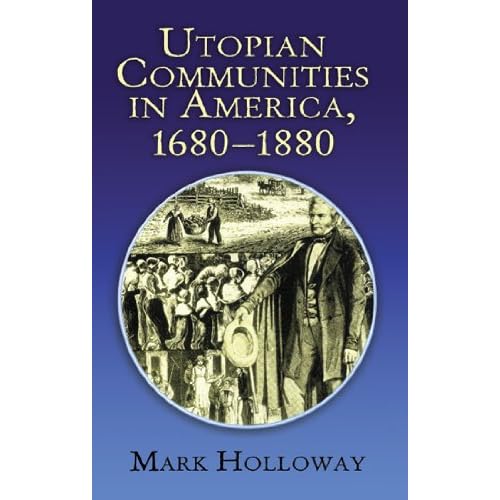
Listening to these speakers I was seized by an odd sense of deja vu.  Then it struck me.  I was recalling “The Church and American Utopianism,” a course church historian Bill Leonard taught at Southern Seminary in the late 1970s.  One of the primary texts came to mind, “Heavens on Earth:  Utopian Communities in America 1680-1880.”

This wasn’t Oneida, Amana or the Mormons–this was Philadelphia in 2011; but the basic spirit is the same.  Something new is happening here that will change everything. 

In that sense, the spirit of Woodstock is alive in the Occupy movement, but in a much more earnest, vital and focused way.  I haven’t seen young people this centered since I was young myself–and that was a long, long time ago.

Like all utopian communities, the occupy movement will enjoy a relatively brief life span.  It’s current form is glorious and inspiring, but it isn’t sustainable.  Still, it might evolve into a permanent social force far more influential than the fear-and-resentment-drivenTea Party.

As I was leaving, I passed a homeless woman who was ranting at Barack Obama.  “Pick a lane,” she told the President, “it’s time to decide whose side you’re on.”  (expletives deleted).  It mattered not whether anyone was within twenty feet of her, the diatribe continued.  She had been on the same topic twelve hours earlier when I visited the tent city after breakfast. 

A homeless man approached and promised to tell me five really funny jokes for a dollar.  Number five I had heard before (one through four were too crude to repeat in this family forum).  “What’s the greatest nation on earth?” he asked.  “A do-nation.”  Now he was asking for four dollars–five if I could spare it.  I gave him two and moved on.

Long after the Occupy people have packed up their tents the mentally ill woman and the panhandling comedian will remain at their posts.  But I’m glad the Occupy people are doing what they are doing and I hope they are still hanging on when the flowers of Spring are in bloom.

Occupy This!

By Alan Bean

Thus far, the Occupy movement has set up camp in parks and in front of symbolic centers of power.   Alec MacGillis of the New Republic has some excellent suggestions (in today’s Washington Post) for some other sites that are highly deserving of occupation; places like Wal Mart, the Bill Clinton library (Bill oversaw a massive reduction in the capital gains tax), Harvard University, and several other deserving targets. 

Melanie Wilmoth and I are in Philadelphia attending a human rights conference and our hotel is located just a few blocks from the city’s historic city hall.  There wasn’t a lot of life at 9:30 am, but Mike, the guy at the Information booth, told us things would be hopping if we came back at 7:00 this evening. 

I asked Mike about the demographics of the movement and he admitted that “we’re mainly white and college educated, so far.”  Mike is fifty and, like me, a trained theologian and pastor with Baptist roots.  “I’m mainly into house churches now,” he told me. 

But Occupy Philly is actively reaching out to the minority community. I asked about the digital divide and Mike smiled knowingly.  “This movement is driven by technology,” he admitted.  “That’s probably a big reason why most of us are so young.  I’m fifty, and I try hard to stay on top of the social networking innovations, but there’s something new out there every time you turn around.  We’re in constant contact with all the big Occupy operations across the country and we’ve got people working on all the big issues all the time.

If you go to the Occupy Philly website, you can see a video of Mike marrying a couple outside City Hall yesterday.  That’s something they’ll never forget! 

Now comes the big challenge; preparing for the onslaught of winter.  “We’ve got that covered,” Mike tells me. “We’ve got people working on tents that are 100% insulated.  People are already wearing four layers of clothing in Philly and it’s only November.  Occupy Philly hasn’t had a lot of press, largely because local law enforcement has been very open and flexible and political officials drop by occasionally to chat. 

We’ll try to get back to City Hall later this week and give you an update.


A movement at the crossroads

By Alan Bean

When New York Times editor Arthur Brisbane asked a few fellow journalists how they would cover Occupy Wall Street, the responses were mostly quizzical: Who are these people?  Why are they so angry and why did it take them so long to get that way?  Where is the money coming from?  Who are the leaders of this leaderless movement?  What are their demands?  And finally, how long can they keep it up?

As Miles Mogulescu notes in a Huffington Post article, the Occupy movement has spread with amazing rapidity because it is leaderless, radically democratic and “horizontal”.  You don’t need to register to join the party; just show up.

If the Occupy phenomenon fizzled tomorrow it would have one great accomplishment to its credit: a change in the national conversation.  Six weeks ago, politicians, pundits and pollsters were counting the days till the national debt destroyed us all.  Now we’re talking about income inequality, contemplating a tax on financial transactions and asking how we can hold the 1% responsible for wrecking the economy en route to windfall profits.

Everybody knows why the Occupy people are angry.  They’ve been angry for a long time, but only recently have they found a constructive and concerted way of channelling that anger.  That’s why many of them are flying cross-country to be part of the action.

Who is bankrolling the operation?  No one.  Hence the tents and the manifest ingenuity of the participants.  If you aren’t committed, you can’t hang with this bunch very long.

Still, the looseness of the organization comes with a price. (more…)

CEDP Convention in Austin, November 11-13

Register now for the CEDP’s 11th Annual Convention!

The Prison System is the New Jim Crow.

Date: November 11, 2011 8:15 pm
Location: Ventana Del Soul, Austin, Texas
This November, the Campaign to End the Death Penalty is headed straight to the belly of the beast – Texas – for a weekend of struggle and organizing!The murder of Troy Davis by the state of Georgia on September 21 horrified millions of people the world over – and has sparked a renewed national discussion of the death penalty in the United States.That discussion, in the media and among activists, is about innocence and the death penalty – but it is also about the racism in the criminal justice system. It shows the urgent need to strike a final blow to capital punishment and to challenge the whole INjustice system – the system that Michelle Alexander calls the New Jim Crow. As Troy has said:

“There are so many more Troy Davis’. This fight to end the death penalty is not won or lost through me but through our strength to move forward and save every innocent person in captivity around the globe. We need to dismantle this Unjust system city by city, state by state and country by country.”

Our annual national convention will take up questions on how to build a movement that combats racism in the criminal justice system, supports resistance behind bars, aims to end mass incarceration and harsh punishment and makes the death penalty history. (more…)

Balko: Hank Skinner one week away from execution despite untested evidence

In an update to this story, the Washington Post reports that “Judge Steven R. Emmert denied Skinner’s request in a brief order issued Wednesday and made public Thursday. The order did not explain the judge’s decision.”  Thus far, over 122,000 people have signed a petition asking Texas Governor Rick Perry to intervene.  Radley Balko’s article, written for the Huffington Post, appears below.  AGB

Hank Skinner, Texas Death Row Inmate, One Week From Execution Despite Untested Evidence

Radley Balko

A week from today, Texas death row inmate Henry “Hank” Skinner is scheduled to be executed for the 1995 murders of Twila Busby and her two adult sons. (more…)

“Don’t Shoot”: Ending violence in inner city America

David M. Kennedy is the director of the Center for Crime Prevention and Control, and professor of criminal justice at John Jay College of Criminal Justice in New York City.

“There’s a profit and a loss side on the public safety balance sheet,” he says. “And what we see in many places is that while you can bring crime down by occupying the neighborhood and stopping everybody, what you do in the process is lose that neighborhood. … You fuel the idea that the police are an occupying, inimical force in the neighborhood. You play into these real and toxic racial memories about what came before civil rights. And you can make it work in many places, but you can’t stop. You can’t ever say, ‘We’ve won. Things are good. Things are stable,’ because you have driven them into hiding.”

This story appeared on NPR’s Fresh Air November 1st.  David Kennedy is one of a growing cadre of reform advocates willing to tell the truth about violent crime without drawing the usual conclusions.  Please listen to the entire program.  A good summary appears below.

Interrupting Violence With The Message ‘Don’t Shoot’

In 1985, David M. Kennedy visited Nickerson Gardens, a public housing complex in south-central Los Angeles. It was the beginning of the crack epidemic, and Nickerson Gardens was located in what was then one of the most dangerous neighborhoods in America.

“It was like watching time-lapse photography of the end of the world,” he says. “There were drug crews on the corner, there were crack monsters and heroin addicts wandering around. … It was fantastically, almost-impossibly-to-take-in awful.”

Kennedy, a self-taught criminologist, had a visceral reaction to Nickerson Gardens. In his memoir Don’t Shoot, he writes that he thought: “This is not OK. People should not have to live like this. This is wrong. Somebody needs to do something.”

Kennedy has devoted his career to reducing gang and drug-related inner-city violence. He started going to drug markets all over the United States, met with police officials and attorney generals, and developed a program — first piloted in Boston — that dramatically reduced youth homicide rates by as much as 66 percent. That program, nicknamed the “Boston Miracle,” has been implemented in more than 70 cities nationwide.

Today, Kennedy directs the Center for Crime Prevention and Control at John Jay College of Criminal Justice in New York City, but he still regularly goes out into the field. The drug world he works in now, he says, is a little better than the one in which he worked in 1985 — but not by much.

“Still, it’s almost inconceivably awful in almost all of its dimensions,” he tells Fresh Air‘s Dave Davies. “And no one likes to say this stuff out loud, because it’s impolitic, but the facts are the facts. You get this kind of drug activity and violence only in historically distressed, minority neighborhoods. And it is far worse in poor, distressed African-American neighborhoods.”

Those neighborhoods are also more likely to be deadly for African-American men — and they’re getting worse, says Kennedy, citing grim statistics: Between 2000 and 2007, the gun homicide rate for black men between the ages of 14-17 increased by 40 percent. The rate for men over the age of 25 increased by 27 percent. In some neighborhoods, 1 in 200 black men are murdered every year.

“This is where the worst open-air drug markets are all concentrated,” he says. “And quite naturally, law enforcement pays an awful lot of attention to those neighborhoods. … And the shorthand that you get from cops when you look at these communities is that they look at you and say, ‘There is no community left.’ ”

But there are plenty of law-abiding residents in these neighborhoods that have been overtaken by drugs, says Kennedy. They outnumber the gang members and drug dealers by significant percentages.

“What matters is that these offenders are in the communities in groups,” he says. “They are in gangs, they are in drug crews, they are in chaotic groups. And those groups drive the action to a shocking degree.”

In Cincinnati, for example, there are about 60 defined gang groups with about 1,500 members.

“[The people] representing less than half a percentage point of the city’s population are associated with 75 percent of all of Cincinnati’s killings,” he says. “And no matter where you go, that’s the fact.”

The national homicide rate is now about 4 per 100,000, but the homicide rate for members of gangs and neighborhood turf groups is dramatically higher: as many as 3,000 per 100,000 a year.

“It is incredibly dangerous,” says Kennedy. “If you talk to these guys, what they say is, ‘I’m terrified … I got shot … My brother’s dead … I’ve been shot at … And they are trying to shoot me …’ That [is] their everyday world.”

Kennedy’s homicide-reduction program, called Operation Ceasefire, brought gang members into meetings with community members they respected, social services representatives who could help them, and law enforcement officials who told them that they didn’t want to make arrests — they wanted the gang members to stay alive, and that they planned to aggressively target people who retaliated. The interventions worked to reduce the homicide rates.

“In city after city, what we see is you may have to do it once or twice, but as soon as the streets believe that that’s what’s going to happen, they change,” says Kennedy. “In the summer of 1996, just a few months after we implemented this, the streets had quieted down dramatically, and they kept getting better.”

A variation of Operation Ceasefire was also implemented to shut down open-air drug markets. Instead of arresting drug dealers, the police officers and Kennedy set up meetings with drug dealers — and their mothers.

“We said, ‘Your son is at a turning point. He could be arrested right this minute, but we don’t want to do that. We understand how much that damages him and his community. There’s going to be a meeting in a week. Please come with your son to the meeting,'” he says.

Nearly everybody came. In the meeting, the police reiterated what they had said in previous meetings with gang members: that they wanted the drug dealers to stay alive and out of jail. They also warned that the consequences of not shutting down the drug markets would be severe. In High Point, N.C., where the program was piloted, the open-air drug market disappeared.

“You do one of these meetings … [and] you can break the cycle in these neighborhoods literally overnight,” he says. “All that craziness is gone.”

Programs that target specific geographic areas through car and pedestrian stops may also stop crime, but they come at a cost, says Kennedy.

“There’s a profit and a loss side on the public safety balance sheet,” he says. “And what we see in many places is that while you can bring crime down by occupying the neighborhood and stopping everybody, what you do in the process is lose that neighborhood. … You fuel the idea that the police are an occupying, inimical force in the neighborhood. You play into these real and toxic racial memories about what came before civil rights. And you can make it work in many places, but you can’t stop. You can’t ever say, ‘We’ve won. Things are good. Things are stable,’ because you have driven them into hiding.”

But in High Point, N.C., where Kennedy piloted his cease-fire program, talking directly to drug dealers appears to be working. He recalls a conversation he overheard, shortly after the open-air markets were shut down.

“You hear one kid say to the other, ‘Are you getting a ride home?’ and the other kid said, ‘No, I’m walking. Mom says it’s OK now.’ “

A few bad apples in the Big Apple, or is the NYPD out of control?

By Alan Bean

Check out the New York Times index of recent NYPD stories and you will be amazed (and hopefully troubled) by what you find.  Today, defendant, Jason Arbeeny, a 14-year Police Department veteran who worked in the Brooklyn South unit, was convicted for planting drugs on innocent people.  But it isn’t just one bad apple cop.  Trial testimony suggests that NYPD narcotics cops frequently resort to faking cases when the end of the month finds them under quota.  It’s called “flaking”.

In related cases, eight other narcotics officers have been arrested, hundreds of drug cases have been dismissed, and over $1million has been paid out to settle false arrest lawsuits.  If these officers were accused by their victims there would be no consequences (cop vs. accused swearing matches always end badly for the accused), but in this case, the perpetrators were unfortunate enough to get caught up in an internal investigation.

And then there’s the story about the sixteen NYPD cops recently indicted for allegedly fixing thousands of tickets for high-profile clients (for a fee, of course).  Apparently this too was standard practice and, if the allegations hold up in court, several officers appear to have spent most of their working hours tracking down tickets at the behest of well-heeled customers.  The practice is so widespread that over 100 fellow officers crowded the State Supreme Court in the Bronx to protest the sixteen indictments.  “Just following orders” the placards read.  Officers allegedly manhandled media people attempting to cover the story.  (more…)

Bigger than the Beatles?

By Alan Bean

In March of 1966, John Lennon made an offhand comment to a reporter with the London Evening Standard:

“Christianity will go. It will vanish and shrink. I needn’t argue with that; I’m right and I will be proved right. We’re more popular than Jesus now; I don’t know which will go first – rock ‘n’ roll or Christianity. Jesus was all right but his disciples were thick and ordinary. It’s them twisting it that ruins it for me.”

In England nobody noticed, but when the statement hit the American press, Beatle records were ceremonially crushed and burned all over this God-fearing nation.  Eventually, Lennon was forced to issue an apology:

“Well, originally I pointed out that fact in reference to England. That we meant more to kids than Jesus did, or religion at that time. I wasn’t knocking it or putting it down. I was just saying it as a fact and it’s true more for England than here. I’m not saying that we’re better or greater, or comparing us with Jesus Christ as a person or God as a thing or whatever it is. I just said what I said and it was wrong. Or it was taken wrong. And now it’s all this.”

Were the Beatles bigger than Jesus?  Does it matter? (more…)

The day Elizabeth and Hazel were dissed by Oprah

By Alan Bean

I have been inspired by the story about how Elizabeth Eckford (the black woman walking stoically into Little Rock’s Central High School in 1959) and Hazel Bryan (the white woman in the rear screaming, “Go home to Africa, nigger!”) had bridged the racial divide and become best friends.

Not surprisingly, it isn’t that simple.

Racial reconciliation comes hard.  Everybody needs to feel good about their people, their heritage, their roots.  At least Sir Walter Scott thought so:

Breathes there there the man with soul so dead

Who never to himself hath said,

This is my own, my native land!

Whose heart hath ne’er within him burned,

As home his footsteps he hath turned

From wandering on a foreign strand!

If such there breathe, go, mark him well;

For him no minstrel raptures swell . . .

African Americans and American whites, particularly in the South, have a hard time feeling good about their ethnic heritage.  Few Black Americans chose to come to this country.  In most cases, their ancestors were hunted down like dogs, manacled, separated from family, culture and religion, stowed into the hulls of slave ships, transported across the Atlantic ocean, and put to work under the lash beneath a blazing son.  The Emancipation Proclamation hardly improved their lot.  In its own strange way, Jim Crow was every bit as degrading as slavery.  (more…)