According to Radley Balko (now of the Huffington Post) 700,000 have signed a Change.org petition calling for a law that would require parents to immediately inform the authorities when a child dies. Balko thinks this is a really bad idea, and I agree. This introductory paragraph is particularly on-point:
High-profile trials are anomalies. They’re about as far from the day-to-day goings on in police precincts, courtrooms, and prisons as your typical TV crime drama (the other place Americans get most of their (bad) information about the criminal justice system). Despite what much of the public seems to have taken away from these sorts of trials in recent years, the average person wrongly accused of a crime isn’t a wealthy college lacrosse player with top-notch legal representation. Prosecutors who wrongly charge people aren’t usually stripped of their law license or criminally sanctioned. (In fact, they’re rarely sanctioned at all.) Black men accused of murder aren’t typically represented by “dream teams” of the country’s best defense attorneys. And, believe it or not, if there’s a problem in the criminal justice system when it comes to children, it’s that parents and caretakers are too often overcharged in accidental deaths or as a result of bogus allegations, not that they regularly get away with murder.
Diane Nash addresses crowd as Mayor Cheri Barry looks on
By Alan Bean
On Saturday, June 18th, Friends of Justice joined dozens of civil rights veterans in honoring the memory of James Earl Chaney, Andrew Goodman, and Michael Schwerner. For those who worked in Mississippi during the 1960s, the cruel and cowardly murder of three civil rights workers epitomizes a painful period.
The Mississippi phase of the civil rights movement doesn’t get nearly as much attention as corresponding events in nearby Alabama. There was plenty of terror in Alabama as well; but it was offset by triumph. Apart from the freedom rides of 1961, Mississippi didn’t produce a lot of victories. Passionate support for segregation was almost universal among white folks. In many counties, not a single black voter was registered when the Voting Rights Act was signed into law in 1965. In Mississippi, two armies, one dedicated to “state’s rights” (full-blown Jim Crow segregation), the other dedicated to Civil Rights (racial equality reinforced by racial justice) fought to a bitter standstill. (more…)
Washington Post columnist EJ Dionne understands that Humberto Leal committed a dreadful crime, but he can’t help wondering why five Supreme Court Justices (and Texas presidential aspirant, Rick Perry) were in such a rush to see him dead. Mexico has formally requested that Leal, a Mexican national, receive a sentence of life in prison in accordance with Mexican law.
“We need to start talking about a nation of broken people where broken people can be redeemed” (Alan Bean, Friends of Justice blog “Royal Visit . . .” July 8, 2011).
Amen, Alan.
I didn’t follow the Casey Anthony trial closely. I did watch some of the closing arguments. I fully expected that she would be convicted of at least a lesser charge than the first degree murder, and would not have been surprised if she had been convicted on all counts. After all, that’s what juries do 95% of the time. So I was mildly surprised, but not shocked and outraged, when she was acquitted of all felony charges. I was not at all surprised that she was convicted of four charges of lying to the investigators, nor was I outraged at the punishment meted out by the court for those misdemeanors.
I was not at all prepared for the vitriol directed toward the jury for the verdict. (more…)
It’s official. Well . . . almost. With the passing of the Fair Sentencing Act of 2010, which ultimately admitted how big of a FAIL the “War onDrugs” has been, the U.S. Sentencing Commission has decided to retroactively apply the law to inmates convicted of federal crack related crimes prior to 2010. Unless Congress intervenes by October, retroactively applying the law could potentially reduce sentences for some 12 thousand federal inmates, 85% ofwhom are African-American.
The average reduced sentence will cut off approximately 3 years of jail time for most inmates, although a judge and lawyer, most of whom are public defenders, will bear the brunt of pushing paperwork through thecourts for prisoners seeking reductions. And what about violent crack relatedoffenders? How will releasing convicts back into society effect the safety ofthe general public? What about recidivism rates of freshly released prisoners? Will most released prisoners end up back in jail? (more…)
This post is several years old, but as the day of vindication for Curtis Flowers approaches its important to remember what death row Mississippi style is all about
A few weeks ago, I visited Curtis Flowers in Parchman prison. I was in the midst of a nine-day civil rights tour, but I had arranged to meet Lola Flowers, Curtis’ mother, on a Tuesday morning. Rain clouds dominated the sky as I pulled into the parking lot at the visitors’ station but the rain was holding off. Lola and I entered the facility making sure to carry nothing with us but a driver’s license and our car keys.
The last time I had tried to visit Curtis I was refused entry–someone had forgotten to add my name to his visitation list; this time everything went smoothly. After going through the standard security screening (just a little bit more intrusive than what you encounter at the airport), we climbed into a mini-van with other visitors and drove deep into the massive expanse of Parchman prison.
Parchman had been created in 1903 Under the leadership of Governor James Vardman, the man they called “the White Chief”. It was essentially an old-time cotton plantation set on 20,000 acres in the Mississippi Delta. No walls surrounded the plantation because there was literally nowhere to run. Flat Delta cotton fields stretched for miles in every direction. It was Vardman’s intention that Parchman Farm be run “like an efficient slave plantation,” so as to equip young black men with the “proper discipline, strong work habits,and respect for white authority.” (more…)
I have been too busy to blog this week, but I couldn’t resist this story. You may ask what a royal tour has to do with criminal justice reform. Very little, I expect, although I am clever enough to come up with something if I had a mind to.
I am blogging about Kate and William’s royal tour because it pleases me.
For one thing, Queen Elizabeth ascended to the throne a few years before I was born and, though I am 58 years old, she has been the only British monarch I have known. When you grow up singing "God save our gracious Queen, long live our noble Queen, God save the Queen(to the tune of My Country ‘Tis of Thee) it gets into your bones (whether you like it or not).
This lovely photographic essay from the Washington Post shows the royal couple taking in a little calf roping at the Calgary Stampede and attending the Dene Games in Yellowknife, in the Northwest Territories. I was born in Calgary in 1953 and the Bean family moved to Yellowknife three years later. I remember my dad taking my sister and I to the Calgary Stampede during a summer vacation when I was a little kid. He wouldn’t spring for cowboy boots, but I did get a cowboy hat, and I wore it to bed that night.
I remember William’s grandfather, Prince Phillip, the Duke of Edinburgh, creating quite a stir a generation ago when he was presented with the inevitable cowboy hat during a visit to Calgary. “Thank you very much," said the Prince. “I think I have six or seven of these now. Perhaps I’ll use this one for a planter.”
That didn’t go down well in Cow Town.
There is another story about Prince Phillip dining at Calgary’s glorious Palicer Hotel back in the mid fifties (when he was about the age William is now). According to legend, a hotel waitress, while removing Phillip’s dinner plate, whispered, “Keep your fork, Prince, we’re havin’ pie.”
I don’t get back to Canada much these days. My parents are both long dead and my sister, Carol, spends half the year in Texas. But everyone needs a sense of home, and places like Calgary, Edmonton and Yellowknife are about as close as I can get. A return visit to Yellowknife after almost fifty years is high on my bucket list.
Calgary's Bow River Valley
Last year, while in Calgary for the funeral of my aunt, Iris Garner, I stopped by the old home of the now defunct Baptist Leadership Training School, an institution I attended in 1971. It had been fully forty years since I last walked to the nearby park overlooking the gorgeous Bow River valley. The view of the river hadn’t changed a bit, but I hardly resembled the callow youth who once looked out over the scene. I have rarely felt more orphaned and adrift.
So I guess, in the end, these rambling thoughts do relate to this blog’s primary theme. Everybody needs a sense of place, everybody needs to belong to a people. Friends of Justice works in the American South, a region occupied by rooted people with a strong sense of belonging. What happens when a proud people is made synonymous with bigotry and hate? Issues of culpability aside, how deep does the fear, loss and resentment go?
The spirit and spirituality of mass incarceration is a plant native to the southland that has been nourished for decades by the deepest kind of alienation and outrage. People felt as if the glorious narrative that had given them a sense of people and place had been desecrated. The sense of loss was palpable. This is why Ronald Reagan launched his election campaign in 1980 in Neshoba County, the place where, 16 years earlier, three civil rights leaders had been murdered. Reagan was opposed to the civil rights movement, but he was hardly a son of the South. His advisers knew, however, that a rich deposit of racial resentment was waiting to be mined in places like Neshoba County. People had lost their story and they desperately wanted it back. Reagan promised to deliver. The promise was kept.
Sign announcing the 2011 Neshoba County Fair
I understand these emotions. I grew up in one country and I live in another. Calgary, Alberta and Fort Worth Texas have a lot in common, but I never really feel at home in Texas. Nor would I feel at home if I returned to my native Canada. Like Thomas Wolfe said, “You can’t go home again.”
When Tea Partiers say they want their country back they are longing for an old, old story. They want to feel part of an exceptional, virtuous and boot-leather-tough nation where everyone shares the same values and pursues the same goals. That kind of America never existed in reality; but it lives in memory nonetheless. The nation people want to regain exists in the form of narrative mythology, and this story about restoring a noble, resolute and unified America is the most potent force in contemporary politics.
There is no sense decrying or endlessly deconstructing the narrative that animates our ideological opposites. We need a narrative of our own. We don’t need a story about the nation we once were; we need a story about the nation the better angels of our national nature have always aspired to be. We need to start talking about a country where there is no us and them; a nation where there are no surplus, throw-away people.
We need to start talking about a nation of broken people where broken people can be redeemed.
According to reporter Jeremy van Loon, Prince William characterized Canada as that kind of country.
Prince William praised Canada’s “extraordinary potential” and the nation’s values of “freedom and compassion” at the end of a nine-day tour of the country with his wife, the Duchess of Cambridge. “Canada is not just a great union of provinces and territories, it is a great union of peoples from many different backgrounds who have come together to make this a model — and a magnet — for those who value freedom, enterprise, tolerance and compassion,” he said today in Calgary.
I’m not sure Canada, or any other country, deserves such high praise. The prince was being complimentary. But don’t we want to live in that kind of country? When we tap into that desire, the movement to end mass incarceration will begin.
Members of the Santa Monica High School wrestling team in California may find themselves facing hate crime charges after an event that led to a noose being hung around a dummy and a black student tied up with a belt.
Although the event occurred on May 4th, the victim’s mother was not informed until several weeks later and only through other parents. To add insult to injury, the school had apparently known about the incident for a long time but had simply refused to tell the mother. (more…)
In a recent post, I suggested that Carrollton, Mississippi, a town that proudly flies the Conderate flag outside its courthouse, reflects the soul of America. Charles Kiker, my esteemed father-in-law, calls that an overstatement. This op-ed from Massachusetts governor Deval Patrick illuminates my audacious thesis. As Patrick notes, small government fundamentalism has captured the conservative movement and, to a large extent, the conservative movement has captured American politics.
True, a Democrat is in the White House and the Senate remains blue. But anyone who listened to President Obama trying to adopt a tough stance with Republicans the other day will realize that Grover Norquist’s intention has been realized: Democratic presidents can no longer govern as Democrats. Obama was trying to come on strong, but he sounded scared to death. Conservatives control the moral consensus of the nation and the President knows it. (more…)
 According to Radley Balko (now of the Huffington Post) 700,000 have signed a Change.org petition calling for a law that would require parents to immediately inform the authorities when a child dies. Balko thinks this is a really bad idea, and I agree. This introductory paragraph is particularly on-point: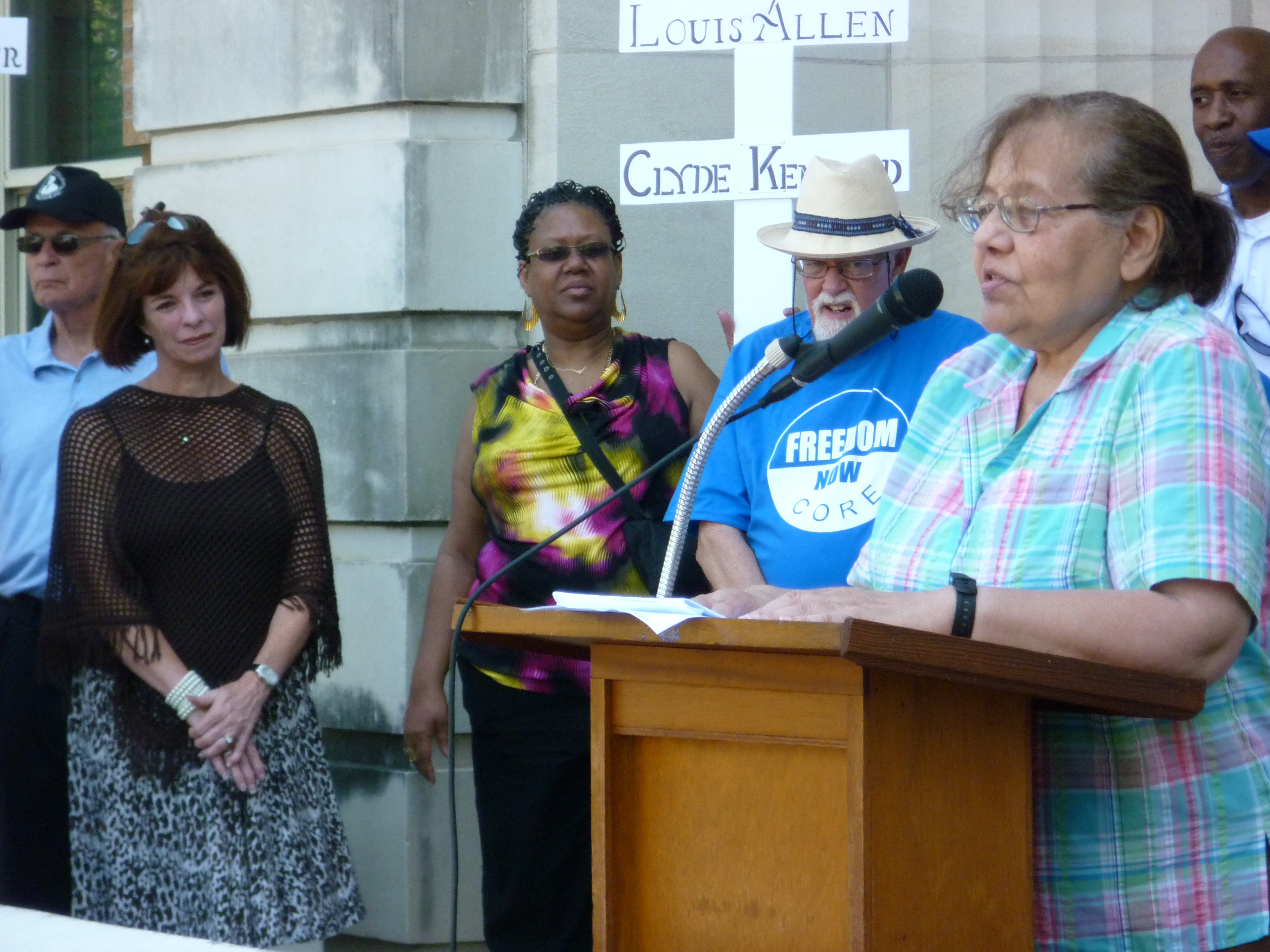
 By Charles Kiker
 By Victoria Frayre
 By Alan Bean


 By Alec Goodwin
 By Alan Bean
 Friends of Justice