Why is the passage of moderate health care reform being denounced as socialism? Why is president Obama (a pragmatic centrist by all accounts) being called a Marxist?
It is beginning to dawn on our more astute columnists that this really isn’t about health care. In a weekend column, New York Times columnist Frank Rich had this to say:
If Obama’s first legislative priority had been immigration or financial reform or climate change, we would have seen the same trajectory. The conjunction of a black president and a female speaker of the House — topped off by a wise Latina on the Supreme Court and a powerful gay Congressional committee chairman — would sow fears of disenfranchisement among a dwindling and threatened minority in the country no matter what policies were in play. It’s not happenstance that Frank, Lewis and Cleaver — none of them major Democratic players in the health care push — received a major share of last weekend’s abuse. When you hear demonstrators chant the slogan “Take our country back!,” these are the people they want to take the country back from.
Rich is making essentially the same argument I made to a roomful of Baylor undergraduates last week.
Imagine, I said, that you are a white person living in Mississippi in 1964. Over the past decade, the Supreme Court of the United States under Earl Warren, the Department of Justice under Bobby Kennedy, and the White House under Lyndon Johnson have weighed “the Southern way of life” in the balance and declared it to be illegal, immoral and unconstitutional. Things you were taught as a child to see as good are being called evil and things you held to be evil are being called good.
Osler is a former US Attorney who teaches law at Baylor University. He provided valuable assistance to attorneys working with a notoriously corrupt narcotics operation in Hearne, Texas that was recently dramatized in the film American Violet. He has also played a vital role in the fight to minimize the crack-powder disparity in the federal system and was named Wacoan of the Year for 2009.
I was introduced to professor Osler when he sent me a copy of his groundbreaking book, Jesus on Death Row: The Trial of Jesus and American Capital Punishment. Osler is that rare writer with the experience, training and sensitivity to speak intelligently about the religious implications of our legal system.
Since January, Mark has been on the Friends of Justice board. Thanks largely to his interest and encouragement we now have four Baylor law students working with Friends of Justice.
If you want the gist of Jesus on Death Row I invite you to read this interview with professor Osler that appeared this morning in the web edition of the Dallas Morning News . . . Then order the book! (more…)
Last night Hank Skinner was a dead man walking. This morning, his life still hangs by a thread. An hour before his execution, the Supreme Court of the United States issued a stay of execution so they can decide whether or not they will consider the case.
Skinner has maintained his innocence since the 1993 murder of his girlfriend, Twila Busby, and two of her adult sons.
It could take several weeks for the court to turn its attention to the case.
State and federal appeals courts have repeatedly held that Skinner has no legal right to have DNA evidence from the crime scene tested because, seventeen years ago, his attorney at trial didn’t ask to have the evidence tested.
Skinner wants every piece of evidence taken from the crime scene tested including semen and skin samples, two bloody knives and a man’s windbreaker.
It is difficult to guess how the Supreme Court will rule. Last year, the court ruled 5 to 4 that defendants have no constitutional right to post-conviction DNA testing.
This is the way the legal system works. Once a jury has rendered a guilty verdict it becomes next to impossible for defense counsel to argue the evidence. You can bring up procedural issues (ineffective assistance of counsel, Brady violations (prosecutors withholding potentially exculpatory evidence from defense counsel) and the like, but the law assumes that the evidence points to guilt. As a practical matter, the law either assumes that jurors never misread the evidence or it doesn’t give a damn. You can argue that the evidence presented at trial was insufficient to warrant a conviction, but the argument is generally futile. The law assumes that jurors selected according to standard voir dire procedures are inherently reasonable. (more…)
This eulogy was written by Charles Kiker. It is followed by a press release from Pax Christi and the text of Bishop Matthiesen’s last article in The U.S. Catholic.
A Fine Fellow
Friends of Justice, and all friends of justice and peace, lost a good friend on Monday, March 22, when retired Bishop Leroy T. Matthiesen passed away at his home in Amarillo at the age of 88.
Bishop Matt, as he was affectionately known by his friends, gained fame, and infamy, by his opposition to nuclear weapons. For him it was a personal rather than simply theoretical issue. In 1981, when he was the active Bishop in Amarillo, he called upon Catholic workers at the Pantex plant to consider the morality of working in the production of nuclear weapons. At least one worker came into the Bishop’s office where they discussed the matter, and the worker quit his job and earned his living elsewhere. But Pantex was (and is) a major economic engine in the Amarillo area. Not everyone greeted the Bishop’s stance affirmatively. As his position became known nationwide, he gained the not so affectionate moniker of “the Red Bishop.”
Bishop Matt was a genuinely humble man, but his humility did not overrule his sense of humor. On one occasion in the airport at Dallas, a fellow traveler (no pun intended), asked him where he was going. “To Amarillo,” Bishop Matt responded. “Oh, do you know the Red Bishop up there?” “Yes, I know him very well. He’s a fine fellow.”
Bishop Matt was not a one issue Christian activist. He was a justice advocate for all peoples across the lines of ethnicity, sexual orientation, and economic standing. He was a true Vatican II Catholic Christian with open lines of communication to Christians of other persuasions, and indeed to all people regardless of religious conviction. He received the Teacher of Peace Award last year from Pax Christi, a Catholic organization that promotes nonviolence, disarmament, and human rights. (more…)
In its own defense, the Board could assert that the circumstantial case against Skinner is strong. So it is. But appearances can be deceiving, especially when public officials repeatedly refuse to balance the wisdom of prosecutors and jurors against scientific evidence.
Ambiguity is the great fear in the Skinner case. What if the evidence is tested and it simply muddies the waters? Would it not appear that the State of Texas is executing a possibly innocent man? Much better to passively accept the verdict cranked out by the justice system.
In the vast majority of criminal cases, the guilt of the defendant isn’t in question. Ninety percent of the time the legal wrangling, such as it is, centers on finding a charge and a sentence that is acceptable to both the prosecution and the defense. The state could make its case to a jury, but trials are expensive and time-consuming and that gives defense attorneys some bargaining power. Not much, but a little.
But in a sizable minority of criminal cases the facts are ambiguous and investigators and prosecutors can’t find a conclusive answer to the who-dun-it question. The best they can come up with is an educated guess. If we are talking about a crime that creates a gruesome crime scene and multiple deaths prosecutors become desperate for certainty. If no one qualifies as a credible suspect you follow the trail of evidence as far as it goes and give up.
But what if the crime is horrific and you’ve got a guy who might be guilty? Then things get really dicey. (more…)
I was talking about the Colomb case in which a parade of convicted drug dealers perjured themselves in exchange for precious time cuts (there is no parole in the federal system). Last month, I met with Ann Colomb and the attorneys who have agreed to file a civil rights case against AUSA Brett Grayson (it took me years to find an attorney with the requisite audacity).
But there is an important addendum to the Colomb story that has never appeared in print. Defendants in a similar case being prosecuted by the same federal prosecutors sent me copies of some letters written by federal inmates that demonstrate how the game works. As it turned out, the feds had enough evidence of tax evasion on the current crop of defendants to negotiate a plea agreement without resorting to the same snitch testimony used to convict Ann Colomb and her sons. But I would like to share a few bits and pieces from this correspondence because it shows how simple the game can be.
Consider this:
If your eyesight is less than stellar here’s the translation: “Honey, see if you can get Melba to get a picture of these people here. I hope she can do it with just they name (sic). If she do it send me their pictures ASAP. That my free flying tickets!! to the house.”
Inmates aren’t allowed to write one another directly, so they often work through their girlfriends on the outside. The girlfriends are often asked to take pictures of specific individuals standing in front of their vehicles in order to enhance the detail and particularity of manufactured testimony. This also allows the inmate to pick the right face out of a photo array.
Here is a detailed description of how the perjury business works: (more…)
DR. ALAN Bean is the executive director of Friends of Justice, a nonprofit organization that works to uphold due process in the criminal justice system. It was formed in response to the infamous Tulia, Texas, drug sting of 1999, in which forty-seven people, thirty-nine of them African Americans, were rounded up based on the false testimony of a corrupt and racist undercover agent. Bean, a local Baptist minister, played a key role in organizing to expose the Tulia travesty and working to free the defendants. The Texas legislature, in response to the work of the Friends of Justice, passed the Tulia Corroboration Bill, which has led to the exoneration of dozens of innocent people by raising the evidentiary standards for undercover testimony.
Learning from this victory, Friends of Justice established Operation Blind Justice, organizing in affected communities across Texas, Louisiana, Arkansas, and Mississippi to restore due process protections to poor people of color. Bean and Friends of Justice played an instrumental role in publicizing the Jena 6 case, where six African-American high school students faced long prison terms after a fight with white students following the hanging of nooses on campus to intimidate Black students. Over 30,000 people marched in Jena, Louisiana, in September 2007 to protest the prosecution of the Jena 6. The charges against five of them were expunged from their records.
Recently, Friends of Justice has turned its attention to Winona, Mississippi— a town not far from Philadelphia, where three civil rights workers were murdered in the early 1960s. There, Curtis Flowers faces his sixth trial for the same murder charge. So far, the case has received more attention in Great Britain than it has in the American press. A primer on the Curtis Flowers case can be found at the Friends of Justice Web site. See also an interview with Bean on the Jena 6 case in ISR issue 55, November–December 2007.
TELL US about the case of Curtis Flowers and its historical significance. (more…)
On Tuesday, March 22nd, attorneys representing Kelvin Kaigler and James Bishop will file motions for a new trial. As this article from the New Orleans Times Picayune suggests, one of the key issues will be the applicability of Louisiana’s majority verdict rule to this and similar cases. The issues are thorny, so I have reprinted the entire article for you.
But there will be far more than procedural issues discussed in Covington tomorrow. There is a strong possibility that new evidence will be presented. I wish I could be there in person, but the last minute nature of the hearing makes that impossible. I will be soliciting firsthand reports and will let you know how things go as soon as possible.
One recent day at the St. Tammany Parish courthouse in Covington, two first-degree murder defendants faced different standards of guilt and innocence.
On the third floor, state Judge William J. “Will” Crain determined a unanimous jury verdict would be necessary to decide Jody “Florida Boy” Swafford’s fate. Meanwhile, in the courtroom directly below him, state Judge Richard A. “Rick” Swartz had deemed a guilty vote by only 10 of 12 jurors sufficient to convict Ray “Rayray” Brooks of that same charge.
Both defendants faced the charge of non-capital first-degree murder, punishable by mandatory life imprisonment.
Until 2 1/2 years ago, state law required that all first-degree murder cases – regardless of whether the state pursued the death penalty – needed unanimous jury verdicts for convictions. In August 2007, however, the law changed to allow non-unanimous verdicts – 10 of 12 jurors – to convict defendants of first-degree murder charges in cases where district attorneys were not pursuing the death penalty.
The whole discussion highlights a generally unacknowledged fact: Louisiana and Oregon are the only two states that still allow individuals to be convicted of felonies by non-unanimous – often referred to as “majority” – jury verdicts. Oregon requires a unanimous vote only in first-degree murder cases, whereas Louisiana now only requires it in cases involving the death penalty.
The issue for state judges now is whether to apply the more lenient jury guidelines – non-unanimous verdicts – in cases where the murders occurred before the law was changed.
Sometimes the Legislature will specify whether a new law should be applied retroactively, but it left the question open in this case. The answer is not simple. It will likely depend on the state Supreme Court’s eventual interpretation, and could force district attorneys throughout the state to retry several high-profile first-degree murder cases, including the recent convictions in St. Tammany of James A. “Scarface” Bishop and Kelvin W. “Dreads” Kaigler on four counts of first-degree murder for the largest massacre in St. Tammany memory.
Recent unanimity in St. Tammany
Swafford, Brooks, Kaigler and Bishop committed their crimes before the amended law took effect on Aug. 15, 2007. In fact, all the murders occurred in 2006, long before the future legislation was even proffered to the state judiciary committee for possible passage.
The St. Tammany district attorney’s office initially planned to appeal Crain’s recent decision to the 1st Circuit Court of Appeal, the first step before a potential state Supreme Court run. But district attorney’s officials ended up not filing the writ, in part because Crain’s jury ended up unanimously convicting Swafford as charged.
The day after Crain’s jury returned its verdict, Swartz changed his own position mid-trial, deciding that he too would require a unanimous verdict for Brooks. His decision apparently came after Crain discussed the matter with him, according to authorities close to the matter.
And the next day, on March 12, Swartz’s jury also returned a unanimous verdict, finding Brooks guilty as charged of first-degree murder after less than two hours of deliberation.
With both verdicts coming down their way, St. Tammany district attorney’s officials have said they are now much less inclined to appeal Crain and Swartz’s decisions about unanimity, but they still acknowledge that the state Supreme Court should rule on the issue before too many more non-capital first-degree murder cases go to trial.
Crain and Swartz both played it safe, hedging their bets by requiring unanimity. In his decision, Crain even noted his ultimate uncertainty regarding the issue, saying that the fact both the St. Tammany district attorney’s office and St. Tammany public defenders “can have such clear positions on opposite sides tells you why for me it’s totally unclear.”
In public defense attorney Kevin McNary’s argument to the court, requesting unanimity, he added, “I think it’s reprehensible that the Supreme Court has not addressed this issue… but we have to work with what we have.”
Now, both Bishop’s defense attorney, John Lindner, and Kaiglers’ attorney, Martin Regan, have filed motions for a new trial, arguing that unanimity was needed and that the verdict against their clients therefore constitutes a mistrial.
On Tuesday, Coady is scheduled to hear both attorneys’ arguments for a new trial.
Lindner spearheaded the recent debate. Realizing a possible discrepancy in the law, he prepared his motion for a new trial, and then informed Regan and Swafford’s defense attorneys, who later discussed the issue with Brooks’ attorneys.
However Coady rules on Tuesday, his decision likely will be appealed to the 1st Circuit Court and then will make a state Supreme Court run. If he rules against a new trial, Lindner is prepared to appeal. If he rules for a new trial, the district attorney’s office will likely lead the charge.
The reasoning
Lindner is arguing that the 2007 legislative change cannot be retroactive for a variety of reason.
For one, he argues it cannot be applied retroactively because the legislative amendment was to Bishop’s disadvantage, and a law cannot be applied retroactively if it alters the situation of the accused to his disadvantage.
Requiring only 10 of 12 jurors to find Bishop guilty made it easier for a conviction to be obtained, Lindner says. In the Swafford case, Assistant District Attorney Nick Noriea Jr. argued the converse for the state in his plea against unanimity, saying that in fact a non-unanimous verdict also favors a defendant as it only requires 10 of 12 jurors to acquit.
Lindner also argues that regardless of the advantage or disadvantage to his client, the issue is whether the legislative change in 2007 was “substantive” or “procedural,” meaning whether the change only affected the procedures by which cases are tried, or where the change also affected the substance of the defendants’ rights.
That interpretation seems to depend on what side of the road you are on. St. Tammany district attorney’s officials contend it was procedural, whereas most defense attorney argue it was substantive.
Both sides ultimately agree that the state Supreme Court must make its two cents known, as several convictions rest in its hands.
A broader debate
Some defense attorneys argue that under current state law, district attorneys can hedge their bets by charging defendants with non-capital first-degree murder, knowing that even if juries return the lesser charge of second-degree murder, defendants still will receive an identical, mandatory punishment: life behind bars. In other words, since the 2007 legislative change, two murder charges now carry the same punishment and both only require the same burden – 10 of 12 jurors to concur – so why not pursue first-degree murder if possible?
The U.S. Supreme Court was poised to hear a case about the constitutionality of “majority” verdicts – in Louisiana and Oregon, the only two states that still allow them – last summer, but in October, the high court ultimately declined to hear it.
Proponents of majority verdicts contend they are more efficient, create fewer hung juries, save taxpayers money by not having to retry as many cases, and that 10-2 verdicts are as decisive but just prevent “rogue jurors” from creating unnecessary mistrials. Conversely, defense attorneys typically argue that, especially in districts like St. Tammany where only one or two ethnic minorities usually sit on any given jury, majority verdicts make it easier for the minority’s vote to be disregarded.
The American Bar Association is against “majority” verdicts, and the Louisiana Association of Criminal Defense Lawyers similarly has argued that the state’s system of allowing non-unanimous felony jury verdicts disenfranchises black jurors. Meanwhile, the Louisiana District Attorneys Association specifically asked the U.S. Supreme Court not to hear the 10-12 jury issue in October.
Read the story of Jace Colby Washington and you will understand, perhaps for the first time, just how easy it is to convict an innocent man
Carlos Matinez-Carpio is dead and no one can bring him back to life. On the evening of April 29, 2007, two black males entered a trailer in Slidell, Louisiana where Martinez-Carpio and several other undocumented Latinos were living. The undocumented men were working construction and living on the cheap so they could send money back to their families. Carpio, a native of El Salvador, was talking to a family member on his cell phone when the two men burst through the door.
Court documents suggest the two black males were looking for drugs and money. Undocumented construction workers looked like an easy target; they wouldn’t dare report the crime to the authorities.
The language barrier created confusion. When the Latinos didn’t respond immediately to the demand for cash and drugs, the intruders had no plan B. Impulsively, one of the young black males started patting Mr. Martinez-Carpio down. The older man defended himself with a fork.
Shots rang out and Carpio was mortally wounded. As the assailants fled, random shots were fired in the direction of two other undocumented men but went wide of the mark. Friends raced to the nearest hospital in a pickup truck but Martinez-Carpio could not be saved.
A week later, Jace Colby Washington was arrested and held in solitary confinement for three months. A year-and-a-half later, the young man, now twenty years of age, went to trial charged second degree murder. On October 14, 2009 a jury found Washington guilty.
As I write, Jace has still not been sentenced.
The first break in the murder investigation came when a local resident saw two men emerge from a Chevrolet Tahoe and stash a gun under a pile of debris. Police quickly learned that a troubled young man named Glenn Carter sometimes drove a Tahoe. Carter was picked up and placed in “the birdcage”, a tiny cell so small he couldn’t even sit down. Forty-eight hours later, deprived of food and toilet privileges, Carter signed a confession. According to his statement, his buddy “E” (Carter wasn’t sure of his friend’s real name) had been eager to “hit a lick” (score some fast money). Carter said he’d come along, but only as a lookout.
According to Carter, no vehicle was involved; the two men walked to the trailer and left running. Carter carried a .380 handgun and “E” was packing a .45.
The following day, Edric Cooper was arrested. To hear Cooper tell it, Carter and Cooper had been accompanied by Jace Washington and Grant Gethers (former acquaintances from high school days) and everyone rode to the crime scene in Carter’s Tahoe. In Cooper’s story, Jace had the .380, Cooper had a 9mm semi-automatic and Carter used the .45.
On August 8, 2008, after fourteen hours of deliberation, Glenn Carter was convicted of second-degree murder, a charge that carries a mandatory sentence of life without parole in the state of Louisiana.
Two jurors voted not guilty; but in Louisiana it only takes ten guilty votes to convict. As King Alexander disclosed in a recent guest post, the “majority verdict” law was passed by the 1898 Louisiana constitutional convention “to assure the ascendancy of the Anglo-Saxon race in Louisiana.” It’s still working.
Edric Cooper
Four days after Glenn Carter’s conviction, Edric Cooper’s story changed dramatically. Carter, you will recall, had two men walking to the crime scene while Cooper had four men driving to the trailer in Carter’s Tahoe. Now, Carter and Cooper were in the Tahoe while Jace Washington and Grant Gethers rode in a separate vehicle.
In his original statement, Edric Cooper claimed that Jace Washington was armed with a .380 pistol; fifteen months later, Jace was packing the 9mm semi-automatic.
The changes are easily explained. DNA evidence taken from water bottles in Carter’s Tahoe proved Carter and Cooper had been in the vehicle, but there was no DNA from Washington and Gethers.
Secondly, when the police raided the home of Jace’s father, the Reverend Henry Washington, a 9mm pistol was seized. The weapon was never tested for DNA or fingerprints, but was used as evidence at Jace Washington’s trial.
With Glenn Carter’s trial out-of-the-way, the embarrassing fact that his confession mentioned no Tahoe, no 9mm weapon, and only two perpetrators had to be buried as swiftly and thoroughly as possible. When Jace Washington’s attorney tried to use Glenn Carter’s signed statements as evidence the document was declared inadmissible. Then the Assistant District Attorney asked the judge to rule that, if Jace Washington took the stand, he could make no mention of Glenn Carter’s statements. The judge sustained the motion.
In October of 2009, Jace Washington was convicted on the testimony of Edric Cooper.
The Latino witnesses had identified only two assailants while insisting that both men were five-foot-nine or shorter. Edric Cooper is five-foot-ten. Glenn Carter is also on the short side of average. Jace Washington is six-foot-four.
Glenn Carter escaped the death penalty by fingering Edric Cooper, but Cooper had no one to implicate. Necessity, as they say, is the mother of invention. If a 9mm handgun was taken from Jace Washington’s father, Jace had to be carrying a 9mm. If the evidence suggested that Grant Gethers and Jace Washington weren’t in the Tahoe, Cooper simply invented a second vehicle.
In exchange, Edric Cooper accepted a plea agreement and was sentenced to fifteen years in prison.
Why was it so difficult for the DA’s office to see through Edric Cooper’s desperate game?
Simple. Carter’s inventions provided an excuse for taking another young black male off the streets.
If you think I am exaggerating, consider these famous words from St. Tammany Sheriff Jack Strain.
St. Tammany Parish Sheriff, Jack Strain
“For some reason, New Orleans chooses to coddle criminals in that area that tend to get away with a great deal. We will not coddle that trash in St. Tammany Parish. If they come to St. Tammany Parish, we’re gonna pursue them, we’re gonna arrest them, our prosecutors are gonna prosecute them, and our judges are gonna convict them . . . If you’re gonna walk the streets of St. Tammany Parish with dreadlocks and chee wee hairstyles, then you can expect to be getting a visit from a sheriff’s deputy.”
Jack Strain doesn’t prosecute defendants, but the Jace Washington and Kelvin Kaigler cases suggest that law enforcement and the DA’s office are pretty much on the same page in St. Tammany Parish.
Jace Washington and Grant Gethers have been implicated in a crime they did not commit by a young man desperate to avoid a lifetime behind bars.
Kelvin Kaigler and James Bishop are suffering the same fate for the same reason. A young man named Frank Knight testified that he drove with Kaigler and Bishop to the trailer where four people were gunned down in the summer of 2006. Knight wasn’t present at the scene. Neither were Kaigler and Bishop. But issues of guilt and innocence are of little concern to man facing the prospect of life imprisonment.
I am confident that Frank Knight will eventually recant his testimony.
We don’t have to wait for Edric Cooper to confess his sins.
On March 4, 2010, Edric “E” Cooper signed a written affidavit in which he admitted that his various statements to the police have been a tissue of lies because “Jace Colby Washington was never with myself and Mr. Glenn Carter during the incident . . .”
“My reason for giving the satement as if Mr. Jace Colby Washington [was at the scene] is because he has never been in any kind of criminal trouble and I know that if I would have told the sheriffs that his participation . . . all the blame would (sic) taken off of me.”
“Glenn Carter and Jace Colby Washington do not know each other,” Cooper admitted, “but was made to know each other through my made up statement to the Sheriffs.”
“I am also giving this statement,” the affidavit concluded, “to prevent myself from disrespecting the court and to prevent of being (sic) charged with perjury while under oath during any proceeding in connection with Mr. Jace Colby Washington.”
I have copies of Cooper’s original written statement and his written recantation–the handwriting is identical.
Jace Washington made a copy of Edric Cooper’s affidavit and had the presence of mind to mail it to his parents.
He was just in time.
The following day, the inmates of the St. Tammany Parish Jail were taken from their cells and held for several hours in the courtyard outside the complex. When Jace Washington returned to his cell, all this personal belongings were missing. The legal documents Jace had carefully preserved had disappeared. When Jace’s father, Rev. Henry Washington, asked the Parish clerk for Jace’s file he was told that it was in the possession of the DA’s office. Prison officials have told Rev. Washington that his son’s paperwork appears to have been misplaced.
If Jace Washington wasn’t involved in the crime neither was Grant Gethers.
Tragically, Mr. Gethers, fearing that he would share Jace Washington’s fate if he took his chances with a St. Tammany Parish jury, accepted a plea agreement in early February, 2010.
On March 16, 2010, Edric Cooper signed a second affidavit that spells out what his original statement implied:
I, Edric Cooper, am writing this to let it be known that Jace Washington nor Grant Gethers (sic) took no part in the armed robbery/murder crime that took place on April 29th, 2007. Mr. Washington nor Mr. Gethers was not present nor aware of the crime. I falsely implicated (sic) Jace Washington and Grant Gethers because I was scared. On October 13, 2009, I also lied when called as a witness for the State of Louisiana against Jace Washington. I lied about his involvement and Mr. Gether’s involvement in the crime on April 29th 2007.
So who do we believe: the Edric Cooper of May 7, 2007, the Edric Cooper of August 12, 2008, or the Edric Cooper of March 16, 2009?
In 2007 and 2009, Mr. Cooper was telling the authorities what they wanted to hear to escape a life sentence.
In 2010, Mr. Cooper is telling a story so unacceptable to the authorities that they deprived Jace Washington of his constitutional right to legal documentation relevant to his case. Edric Cooper, it appears, would rather face the wrath of the State of Louisiana than the torments of his own conscience.
Whether Mr. Cooper’s bold recantation will help Jace Washington and Grant Gethers only time will tell. But this bizarre story shows yet again how easy it is to frame an innocent man with bribed testimony.
This guest post was submitted by King Alexander, District 7 Director of the Louisiana Association of Criminal Defense Lawyers and Co-Chair of its Amicus Committee.
Louisiana Gov. Bobby Jindal has recently toured the state making the case for increased criminal penalties for certain kinds of offenders. That might be a good idea, if we would just stop prosecuting and convicting innocent people.
Many Americans don’t think this happens. The occasional longsuffering prisoners exonerated by DNA are seen as rare, and maybe they are, partly because DNA plays no role pro or con in the vast majority of cases, so that all others wrongfully convicted have no magic key.
Professionals who defend criminal cases in Louisiana state courts, including former prosecutors, well understand that wrongful convictions not only happen in our state– they are commonplace, due in part to our combination of pro-prosecution laws that add up to a nuclear arsenal. The most peculiar such law, and perhaps the number one reason why we have substandard criminal justice in Louisiana, is our majority verdict law.
In Louisiana state courts, a unanimous jury is not necessary to convict a person of any crime except first-degree murder. In all other cases, a Louisiana criminal jury can convict a person of a serious felony by only ten out of twelve votes. What? That’s right: one or two jurors can vote to acquit, but the defendant is still convicted. Some of those felonies carry life without parole; in Louisiana sentencing, life means life. In forty-eight states (Oregon being the other oddball) and in all federal courts, only a unanimous jury can convict or acquit. In the realm of legal normalcy, a non-unanimous jury is a hung jury, and the state may retry the case if it so chooses.
Most Louisiana residents, like other Americans, get their criminal justice norms from television shows like Law and Order. Thus they assume that if one juror votes “not guilty” then there is no conviction. Not so in Louisiana. One or even two jurors can be fully convinced that the state has not met its burden of proof of guilt beyond a reasonable doubt. But if most of them are anxious to go home (or fishing) on a Friday afternoon after a tedious trial, and find that the judge will not dismiss them until they work more diligently to reach a verdict, then it is not unusual for some of the holdouts to be bullied or fatigued into joining the majority until only ten of them are willing to return a verdict of guilty. Then they can all leave the courthouse and forget about it, reasoning that they followed the law so their consciences should be clear.
Why does Louisiana have this unusual law that breaks with American heritage and the traditions of the common law of England? The answer should shock you: it was enacted for openly racist reasons. The official proceedings of the Louisiana Constitutional Convention of 1898 make that clear. That body, meeting in the wake of a bitter Reconstruction experience, declared a slate of measures touted as designed “to assure the ascendancy of the Anglo-Saxon race in Louisiana.” Among these 1898 measures was the first “majority verdict law” in Louisiana, the reasoning for which might be expressed thus: “Iff’n we do end up with one or two [non-whites] on a jury, why, we won’t need their cotton-pickin’ votes!” Louisiana has had two constitutional conventions since then, for the Constitutions of 1910 and 1974. But each time, the majority verdict law was kept, if not for openly racist reasons, then for the simple political expediency, favored by the powerful district attorneys’ and sheriffs’ lobbies, that such a law makes it much easier to get convictions. The effect is racially disparate regardless of the conscious motivation.
Isn’t this unconstitutional? After all, it’s the right to trial by jury, and a conviction destroys the right to vote, and the right to bear arms, and numerous other privileges and immunities, all fundamental constitutional rights. Scholars do believe that the majority verdict laws of Louisiana and Oregon are federally unconstitutional. However, the U.S. Supreme Court has yet to agree to hear the issue, having denied certiorari most recently in 2008 in Louisiana v. Lee and 2009 in Bowen v. Oregon. The Supreme Court is thought likely to invalidate these laws once it considers a case. The likeliest route to certiorari would be a panel of the U.S. Ninth Circuit hearing a post-conviction case from Oregon and finding that state’s version unconstitutional, thus creating a conflict with the U.S. Fifth Circuit which has upheld the Louisiana version. It is a fair argument, and not an original one, that excessive convictions amount to an extension of slavery, complete with denial of the right to vote, denial of the right to bear arms, and a way around the prohibition of involuntary servitude. The voting remainder of society becomes more and more homogenous and conviction-oriented. Has Louisiana been well-served by this, or could it be one reason why we find ourselves near the bottom of many good lists, and near the top of many bad ones?
Consider that we are presently in an age of societal hysteria over child sex offenses, as badly as colonial Salem was over witchcraft. Wags have said, “Rape is such a serious offense that innocence is no excuse.” Any offense against a juvenile is also a hot-button issue– what decent person does not feel outrage at an offense against a captive and defenseless child? The two accusations combined are positively dynamite. The problem snowballs in this fashion: All accused are perp-walked on the evening news. Legislators, prosecutors, and judges run scared of the mobs of their own creation, since they tend to demagogue these issues every time they run for office. They all want to retire in their positions. As Upton Sinclair put it, “It is difficult to get a man to understand something when his salary depends upon his not understanding it.” Dodgy cases are accepted for prosecution, the thought being that convictions are easy to obtain, and in any event, let juries take the political heat. In that environment, rejection of an inflammatory accusation, however suspect, or acquittal in a bench trial, is unthinkable. For this reason, often the only thing worse than facing trial by jury on a politically-sensitive accusation is facing trial by judge. So we have come to the topsy-turvy condition where sometimes the course of action morally required is politically impossible. Our “rape shield statute” prevents juries from hearing evidence about accusers that is true, relevant, and crucial to a fair defense, and the majority verdict law, requiring only ten out of twelve jurors to convict, delivers the coup de grâce.
Greased legislative skids plus societal hysteria equals the perfect storm. These kinds of accusations have been rendered all but indefensible. Even in the many cases involving no physical evidence, no corroborating witnesses, and an accused person who maintains his innocence and lacks any criminal record, defense attorneys find that they are losing, and they are losing 10 to 2. In other words, the result in any legally normal state would not be a conviction. No wonder Louisiana has the highest incarceration rate of all the states. There is very little to be done about setting such wrongful convictions right under existing law. Our courts of appeal hold that the uncorroborated testimony of the accuser is alone sufficient to uphold a conviction. Cynical accusers know this, and have all the power of the state jumping through their malicious hoops with full impunity. In fact, should any of them express a desire to recant, they are advised of their own potential criminal exposure for having made a false report, and so remain well-motivated to continue the charade.
With term limits, few remain in office long enough to see the ultimate destructive effects of our atypical, deck-stacking laws, and to make reforms. Here, then, is a bargain for Gov. Jindal and the Louisiana legislature: Go head and increase the penalties of the guilty if you wish, but stop prosecuting and convicting the innocent. Before you do anything else, repeal the majority verdict law conceived in racism and maintained in shameful derogation of our normal and traditional American ways.
 Why is the passage of moderate health care reform being denounced as socialism? Why is president Obama (a pragmatic centrist by all accounts) being called a Marxist?
 Last night Hank Skinner was a dead man walking. This morning, his life still hangs by a thread. An hour before his execution, the Supreme Court of the United States issued a stay of execution so they can decide whether or not they will consider the case.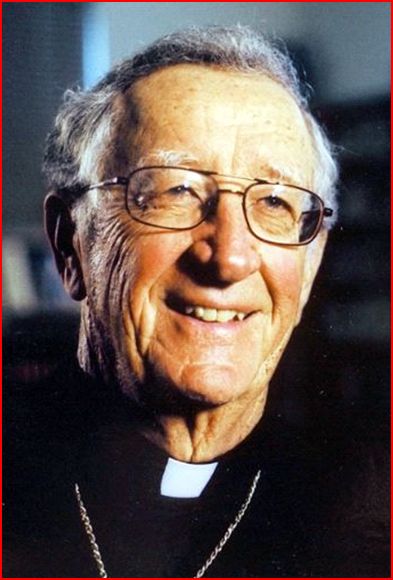
 By a 7-0 vote,
  John Pacenti called me a couple of weeks ago in connection with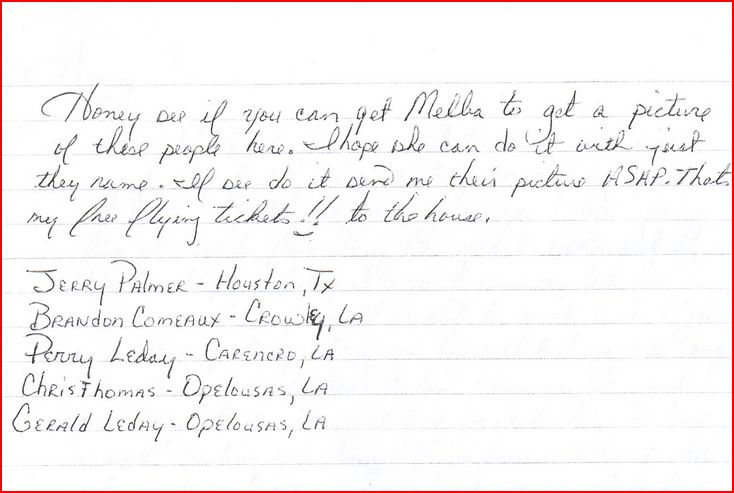




 Louisiana Gov. Bobby Jindal has recently toured the state making the case for increased criminal penalties for certain kinds of offenders. That might be a good idea, if we would just stop prosecuting and convicting innocent people.
 Friends of Justice