Give Kim Davis a break; she’s just a pawn in the Dominionist revolution

kim davisBy Alan Bean

Hey liberals, lay off of Kim Davis!

It’s not her fault.

Every authority figure in her moral universe is telling her the same thing: God hates gay marriage and God’s will trumps human law.

Kim believes it because everybody she respects is saying it.

There is something noble about the stand she’s taking.  Kim isn’t the moral equivalent of Rosa Parks or Dietrich Bonhoeffer; but she thinks she is because Mat Staver, the lead attorney with Liberty Counsel, tells her so.
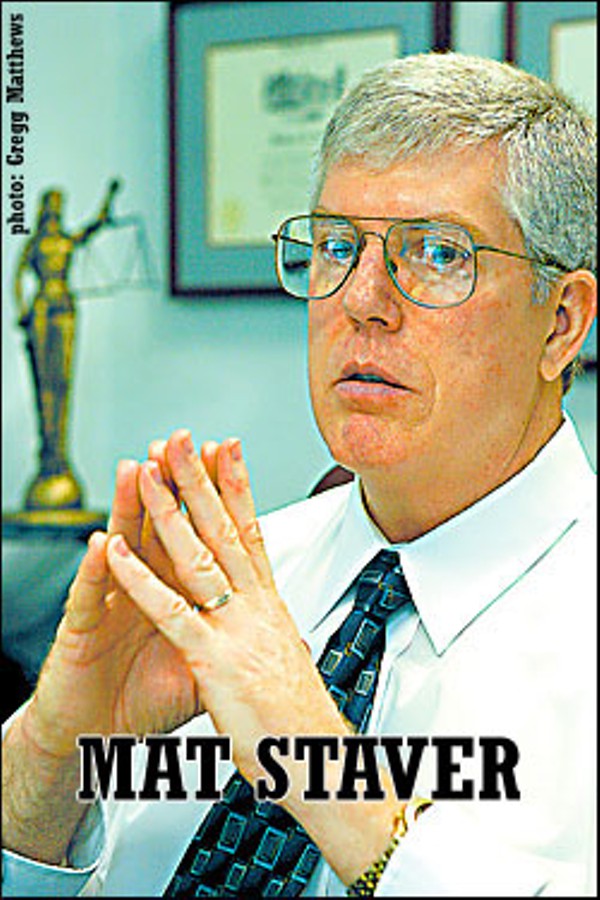
mattstaverjpgMat Staver isn’t a household name, unless your household lives on the fringes of the culture war.  Just prior to the Supreme Courts’ Obergefell decision that made marriage equality a guaranteed right under the US Constitution, Mat Staver was anticipating the worst . . . or, from his perspective, the best.

This would be the thing that revolutions are made of. This could split the country right in two. This could cause another civil war. I’m not talking about just people protesting in the streets, this could be that level because what would ultimately happen is a direct collision would immediately happen with pastors, with churches, with Christians, with Christian ministries, with other businesses, it would be an avalanche that would go across the country.

In Mat Staver’s imagination, the Kim Davis case is the snowball that will spark the avalanche he is praying for.  Mat would love nothing more than to split America in two, essentially reprising the Civil War.

Staver hails from a section of the country where most folks believe the world is 6,000 years old, that evolution is a myth, that the Bible is free from error or contradiction, that men should exercise their God-given authority over women, that gay marriage is the ultimate sin against God, and that states should be free to make and enforce laws in harmony with this Southern consensus.

That’s why Mat Staver is up to his elbows in the fight for teaching “intelligent design” in the nation’s public schools.  He will exploit any issue on the fault-line separating “pagan” and “Christian” values because his goal is to make the world safe for the conservative Southern consensus.

Kim Davis is often described as an “Apostolic Christian”.  Several branches of the Christian family that favor the term “apostolic”, but the reference is most likely to a form of Apostolic Pentecostalism that traces its origins to the New Testament apostles, believes the King James Version of the Bible is the final authority on every subject, and encourages modest clothing while discouraging women from wearing makeup or cutting their hair.  (This explains why Kim Davis doesn’t look like most of the women in your office and, while I’m on the subject, her domestic travails are irrelevant to this discussion.)

Kim’s religion explains her opposition to gay marriage, but does it account for her refusal to issue marriage licenses to gay couples on pain of incarceration?  Apostolic Christians have traditionally respected the authority of public officials and Davis would have faced no recrimination from her congregation if she had followed the law, especially if the marriage license business had been delegated to subordinates.

Kim is taking her stand because the authority figures in her world are guided by a revolutionary political-religious-legal philosophy.  While we’re focusing on Kim we are ignoring the folks behind the scenes who are driving the action.

Mike Huckabee is in on the game.  He calls Kim Davis a civil rights hero who understands the US Constitution better than most liberal politicians.

Marco Rubio says we should find a way to protect the right of public officials to hold true to their religious views.  What way might that be?

In fact, of the seventeen Republican presidential candidates, only two (Carly Fiorina and Lindsey Graham) believe that Kim Davis should do her job or resign.

Jeb Bush doesn’t like where his base is headed, but he can’t say so.  Instead, Jeb is praying for a via media to emerge:

“It seems to me there ought to be common ground, there ought to be big enough space for her to act on her conscience and for, now that the law is the law of the land, for a gay couple to be married in whatever jurisdiction that is.”

But there is no middle ground here.  The Supremacy Clause of the US Constitution states that when state and federal laws conflict, federal law prevails.  As James Madison argued, if the nation had tried to build a society without a supremacy clause of some kind, “it would have seen the authority of the whole society everywhere subordinate to the authority of the parts; it would have seen a monster, in which the head was under the direction of the members”.

Mat Staver disagrees.  So do most of the Republican candidates in the presidential race.  Although most people haven’t heard of “Dominionism” or “Christian Reconstruction”, or “The New Apostolic Reformation”, the basic assumption at the heart of this complicated movement is beginning to take hold in conservative America.

Dominionism, narrowly defined, has a limited following on the Right, but the basic tenets of this revolutionary worldview are leavening conservative America: the notion that there is a clearly definable “biblical worldview”, the conception of America as a nation founded by and for Christians; the demonization of the public school system; the assumption that free market capitalism is a biblical concept, a rejection of the theory of biological evolution; and a visceral antipathy to homosexuality and the gay rights movement.

(If you want to learn more about Christian Dominionism, read my primer on the subject, and check out Sarah Posner’s piece on how this philosophy is being taught at Liberty University Law School (Mat Staver’s home base).

Poor Kim Davis doesn’t understand much of this slice of recent history, but her attorney is on the cutting edge of the Dominionist movement and he understands it very, very well.  Mat Staver tells Kim that she is a Christian martyr; and Kim believes it.  She is a pawn in an enormous chess game that few Americans, conservative or liberal, appear to understand.

Ted Cruz, like his dear old dad, is a committed dominionist.  That’s why he is auditioning to be regarded as Kim Davis’s biggest fan.

“Today, judicial lawlessness crossed into judicial tyranny,” he said. “Today, for the first time ever, the government arrested a Christian woman for living according to her faith. . . . I stand with Kim Davis. Unequivocally.”

Ted is fully aware that none of this makes sense if we are playing by the secular interpretation of constitutional law that currently drives the American legal system.  But Ted is marching to a different drummer; talking and thinking as if the dominionist revolution was already over and the Supreme Court can be trumped by biblical teaching (as interpreted by people like Mat Staver).  If people like Cruz repeat their talking points loud enough and long enough, people like Kim Davis will begin to believe it.

Kim the County Clerk is surrounded by a great cloud of witnesses repeating the same talking points.

In the America described in political science classes and the America that prevails in the courtroom, Kim Davis doesn’t have a legal leg to stand on.  But Mat Staver doesn’t belong to that America.  Mat’s heart has been captured by an America that lives on the far side of the revolution.

But we’re not paying attention to Mat Staver, his friends at Liberty Counsel, and the dominionist movement that shapes their thinking.  We’re arguing about the merits and demerits of a simple county clerk who is being manipulated for ideological purposes.

“Pay no attention to that man behind the curtain!”
A Badge Stored in a Drawer: Jacob Furr Celebrates his Father

jacobfurr_therive

Jacob Furr is a Fort Worth musician who, frankly, doesn’t look like the son of a policeman.  But he is.  You can find more on Jacob’s music here (he’s terrific).  I wanted to post this recent Facebook post (with permission, naturally) because this blog is often critical of police officers and Jacob’s celebration of his father’s retirement reminded me that cops are normal people with lives and families who do difficult and dangerous work.

By Jacob Furr

My dad has been holding The Thin Blue Line for 30 years and is retiring tomorrow. Even though he’s not on facebook, I’d like to say something publicly about him.

I’ve been hugging my dad through a bullet proof vest for 30 years. The press of handcuffs, extra ammunition clips, mace on his belt against my stomach and the sharp edges of the badge with the sleeping panther on top digging into my cheeks is a sensation I’ll never forget. I have stood beside him in silence at two police funerals and cried thinking “that could have been him”. I will never forget hearing him come home late at night after we were all in bed and then hearing him leave again before the sun had risen day after day. I’m sure there were things that happened in that time away from us that we will never hear about. Moments when he wondered if he’d get home that night.

There were funny moments as well though.

Once when my family came to visit San Francisco, we were walking through the Haight-Ashbury and everyone except Dad entered one of the ridiculous tourist hippy stores. When we came back out into that cool SF air, Dad was standing on the corner with his arms crossed in his oh-so-police-like manner, but with a smile on his face. It seems that while we were inside, he had been standing on the street corner in his shorts, “Life Is Good” t-shirt, and Ranger cap when one of the folks that live on the street walked up and just said “Hello Officer”.

I guess you just can’t turn it off. The mustache must’ve given him away.

I had college professor once say, without knowing my dad was an officer, that “all cops are just violent pigs serving the interests of the rich.” That’s funny. I thought they were just like my dad. Working at midnight on Christmas. Standing on the side of a freeway after a fatal car wreck. Finding the jerk who stole your credit card information.

He has been serving all of Fort Worth and its citizens, no matter how rich or poor, for 30 years and it will all quietly end tomorrow. No parade. No mention from city hall. No articles in the Star Telegram. Just another Cop who has served his time hangs up the gun belt that used to sit beside the dinner table one last time.

The reality is that a good, honest man who has worked hard to raise a family on a tiny income will quietly exit the publics’ consciousness and service and put his blue uniform in the closet and his badge in a drawer. He will take a step back from the line between order and chaos and rejoin the citizen population. And nobody will really notice. Because he’s been really good at his job. Hopefully folks wont feel the need to complain to him about the ticket they got last week anymore. Hopefully he’ll learn how to cross his arms without looking like he’s running surveillance for a drug bust. I just hope he feels thanked for risking his life to keep us safe for 30 years.

I, for one, am grateful.

Congratulations dad.

Now go learn how to race rally cars or something fun.

(more…)

Sandra Bland isn’t going away

By Alan Bean

sandra-bland-be-my-voiceOver a month has passed since Sandra Bland died in a Waller County jail, the story shows no sign of disappearing.  The incident sparked national outrage when video of Bland’s arrest showed state trooper Brian Encinia intentionally escalating the drama with a justifiably angry Ms. Bland, threatening to “light you up” with his taser, then, once she steps out of her vehicle, throwing her to the ground with so much force that she temporarily lost her hearing.  Bland was then charged with assaulting an officer and hauled off to jail.  But none of this would have attracted much attention if Sandra Bland hadn’t turned up dead three days later.

Questions abound.  Why, a month after his bizarre display of criminally awful police work, has officer Encinia been returned to routine patrol work?  Why hasn’t he been fired and charged with assault?  Even Donald Trump was appalled by Encinia’s police work–and when the Donald thinks an officer’s behavior is appalling attention must be paid.  Trump is an international authority on awful behavior.

People are still asking what really happened inside Sandra Bland’s jail cell?  Did she really hang herself with a trash bag?  And if not, what alternative explanations are on offer?

Waller County Sheriff Glenn Smith

And questions have been raised about the men charged with investigating officer Encinia (District Attorney Elton Mathis) and Bland’s peculiar death (Waller County Sheriff, Glenn Smith).  Can DA Mathis watch the video of officer Encinia’s aggressive, unprofessional and ultimately criminal treatment of Ms. Bland and conclude the DPS officer did everything by the book?

And what are we to make of Glenn Smith, the bellicose sheriff who, just this week, told a United Methodist Pastor in town to investigate the case to “go back to your Church of Satan.”  Smith also had a tree cut down to ensure that protesters would feel the full force of triple digit heat.  Can this latter day Bull Conner be trusted with the investigation of the Bland case? (more…)

“We’re not Ferguson”: Arlington, Texas gets it right (for now)

Police Chief Will Johnson, Mayor Jeff Williams and Pastor Dwight McKissic greet the family of Christian Taylor.

By Alan Bean

According to the New York Times, Will Johnson’s swift decision to fire the officer responsible for shooting Christian Taylor represents the standard practice for police chiefs across America. Ever since Ferguson, Missouri was engulfed in months of controversy following the death of Michael Brown, police departments have been bending over backwards to avoid becoming “the next Ferguson”.

Maybe.  But, shortly after Ferguson became front page news, I was on a panel discussion with the Arlington police chief and he was talking about “procedural justice,” the idea that police departments function most effectively when they maintain a transparent dialogue with the communities they serve.  In the course of the discussion I said that in troubled police departments, the problems begin at the top.  Chief Johnson heartily agreed.

The problem in Ferguson (and thousands of other communities across the nation) is the deep mutual mistrust between law enforcement and poor communities of color.  As David Kennedy argues in his book Don’t Shoottoxic narratives, rooted in crude stereotype and broad-brush generalization, often persist within both police culture and poor black neighborhoods.  Both sides assume the worst about each other and that’s why a single tragic incident can set off a firestorm.

In Ferguson, law enforcement ratcheted up the tension by attempting to intimidate protesters into submission.  “Comply or die” was the implied message.  This approach, naturally, fans the flames of protest.  Activists respond by becoming even more confrontational, police officers respond in kind, and the situation spirals out of control.

Will Johnson wants to avoid this scenario, and this week his decisive action did just that.

No one knows why Christian Taylor stomped on cars at an Arlington car dealership, then drove his vehicle inside the dealership through a glass door.  When several police officers arrived at the scene the goal was to containment.  No one’s life was in danger, so the obvious strategy was to block all avenues of escape and give the perpetrator time to realize the hopelessness of his situation.

But Brad Miller, a 49 year old officer in training, didn’t grasp the logic of that strategy.  Seeing the broken glass where Christian Taylor had driven his Jeep into the dealership, Miller decided to enter the building alone with the goal.

Two big mistakes.  First, the officer acted without communicating with his fellow officers; secondly, he hadn’t thought things through, had no arrest strategy and wasn’t prepared for a confrontation.  Instead of deescalating a dangerous situation, he was putting a confused man in the kind of comply-or-die situation that never ends well for anyone.

According to his family, Christian Taylor was a good kid.  An ‘A’ Student at Angelo State University.  A gifted athlete.  A devout Christian who prayed for his community every day.  Taylor had no history of mental illness and, so far as anyone knows, wasn’t abusing drugs or abusing alcohol in the days prior to the incident.

Most likely, the young man was in the grips of a psychotic break.  Confronted by an armed officer, he held up a set of keys and announced that he was going to steal a car. Sane people don’t talk like that, nor do they drive their vehicles into car dealerships.  In short, Christian Taylor wasn’t in his right mind and was unlikely to respond positively to verbal commands.

And that is why Brad Miller had to be fired.

The officer’s pastor spoke at the community prayer service sponsored by Arlington’s Cornerstone Baptist Church, and had nothing but praise for Mr. Miller.  He had always wanted to be a police officer and decided that, even at 49, it wasn’t too late to realize that dream.  Now, that dream is as dead as Christian Taylor and Miller must live with self-doubt and remorse for the rest of his life.

Rushing into a building without communicating with your superiors is a classic rookie mistake.  Miller wanted to show his stuff.  He was willing to place himself in danger even though police protocol counseled otherwise.  He doesn’t have the temperament for police work (many officers don’t) and he showed it in the worst possible time in the worst possible way.  Chief Johnson made the right call.

But, handled poorly, this case could easily have become another Ferguson.  Initially, the Taylor family complained to the Manchester Guardian that police officials were giving them the silent treatment.  But there turned out to be a very good reason for the initial silence: Chief Johnson wasn’t going to speak publicly until he had his facts, and his talking points, straight.

Alan Bean (center) in conversation with Rev. Dwight McKissic (Left) and Arlington Police Chief, Will Johnson.

Pastor Dwight McKissic should be praised for pulling together a community service characterized by message discipline.

No one spoke substantively until a full hour of worship had set the emotional and theological foundation for the evening.

No one, in the absence of good information, tried to explain Mr. Taylor’s bizarre behavior.

No one, save Chief Johnson, described the tragic events and the chief;s performance was flawless.  He described how the operation should have been handled.  He explained the linkage between officer Miller’s poor judgement and the end result.  And then, for a full hour, he answered carefully vetted questions from the community.

Dwight McKissic traveled to Ferguson last year as an observer and, having spoken with him on several occasions, I know he is deeply concerned about racial justice.  But he didn’t want the frayed emotions of the moment to derail a meeting called for the purpose of unity and reconciliation.  McKissic and I both attended a similar event at a Dallas church last year where several families who had lost loved ones in police shootings hurled insults and curses at public officials.  The pastor of Cornerstone Baptist Church didn’t want any of that going on in his sanctuary and took effective steps to limit questions to the issue at hand.  Statements were not allowed, only questions, and questioners were briefly vetted before getting a turn at the mic.

Several questioners were representing their Sunday school classes, and their excellent questions, though pointed, were always respectful.

When the service was over, I asked the police chief if he thought the absurd American statistics on police shootings said as much about American society as they say about police culture.  In other words, is one of the reasons American cops are so much more likely to shoot civilians related, to a certain extent, to the violent and chaotic nature of American society?

Johnson agreed enthusiastically with my premise, although we didn’t have time to explore the matter in depth.

Having lived in both Canada (a country with strict gun controls) and the United States, I am painfully aware of the singular aspects of American culture.  The free availability of fire arms is a huge problem, especially in neighborhoods characterized by poverty, unemployment, and crime.

David Kennedy’s, Don’t Shoot is the best analysis of black-on-black violence I have come across.  The mayhem, he believes, is driven by a tiny group of psychopathic personalities who enjoy violence for its own sake.  Most gangs, and most gang members, secretly hate the violence and wish they could escape it; but the realities of street life make it difficult to lay your weapon down.

It should be noted that Christian Taylor, the young man who died in Arlington, didn’t come from the violent world I have just described.  In fact, he was committed to helping people trapped in violent sub-cultures, and he wasn’t armed the night he died.

But police officers don’t just fear violence from gang-bangers; with each passing year, mass killings of the Sandy Hook, and Charleston variety are becoming increasingly common.  Men in battle fatigues carrying semi-automatic weapons think its cool to parade through restaurants and department stores just because the law allows it.

Furthermore, much of the pro Second Amendment rhetoric in the nation is rooted in the insane notion that if everyone was armed, and prepared to spray bullets at the slightest provocation, we’d all be a lot safer.   Although crime rates have been plunging to record low levels, there remains a widespread belief, echoed recently by Donald Trump, that we are in the middle of an unprecedented crime wave.

Violent crime on a mass scale is limited to a small number of neighborhoods in a few American cities: Chicago, New Orleans, Detroit and Baltimore, for instance.  But we have become a nation characterized by fear and what theologians call the myth of redemptive violence.  Our movies, our television dramas and our video games are predicated on the allure of violence.

And the cumulative weight of all this madness makes it hard for police officers (and their significant others) to sleep at night.  You never know when somebody’s going to pull out a piece and start firing.  Police officers in countries like Britain, France, Germany, Australia and Canada have far less to worry about.  America is a wonderful nation in many ways; in fact, we’re are almost as exceptional as we think we are.  But we have sown the wind of violence and are reaping the whirlwind of fear.

Throughout the service at Cornerstone, participants insisted that the solidarity, unity and spirit of reconciliation on display that night must constitute a beginning, not an end.  But how, precisely, do we move forward?  Mayor Williams, Pastor McKissic, Chief Johnson, what’s the next move?

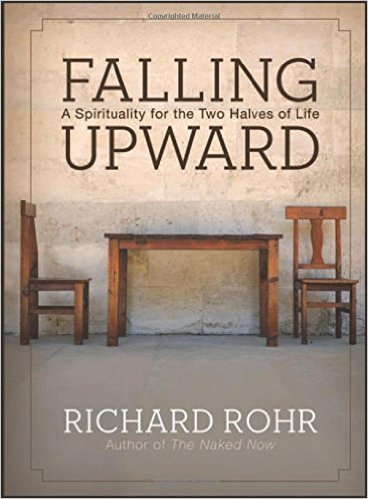
A Review of Richard Rohr’s “Falling Upward”

RohrBy Charles Kiker

I have just completed reading Falling Upward by Richard Rohr. I had never read anything by Rohr before, but kept seeing references to his work, and decided to go into by non-existent book budget and order this one. (My book budget is determined by whatever I decide to purchase at the time—and the time was right for me to order this one.

And I’m glad I ordered this one. So here are some random reflections for whatever they’re worth to whatever reader happens upon them and happens to read them.

The emphasis in the book is on the two halves of life, not necessarily chronologically but more morally and spiritually. But somewhat chronologically because the author feels that it is rare that a young person (say under 40, more likely under 50) can enter into the second half of life as he uses the term.
(more…)

Benefit of Clergy: what the Sandra Bland tragedy says about America

Sandra BlandBy Alan Bean

I don’t know how Sandra Bland died.

It’s hard to believe that a young woman anticipating a dream job at her Alma mater would hang herself in a prison cell.

Strong evidence has emerged that Ms. Bland had evidenced what psychologists call “suicidal ideation” in the past, but wouldn’t Bland have been determined to see justice prevail in this instance?  Suicide was the way of passive acquiescence, the complete opposite of the mental state Sandra exhibited in her confrontation with trooper Encinia.

It’s equally hard to believe that anyone would hate her enough to take her life and, thus far, there is no direct evidence suggesting foul play.  That could change, but for the moment the facts are too fuzzy to justify confident conclusions.

The temptation to speculate is strong with us, but we should all admit that we have more questions than answers.

But we do know enough to ask why Sandra Bland was arrested in the first place.  If you have been following this story, you know that the young woman from Illinois was in no mood to be messed with when state trooper Brian Encinia pulled her over.  Bland believed she was the victim of racial profiling and entrapment.  Her answers to the trooper’s questions were curt and defensive.

In the course of a prolonged verbal exchange, Brian Encinia admitted that he had initially intended to issue a warning and let the minor infraction pass.  But the trooper didn’t like Bland’s attitude so he intentionally escalated the tension by asking her to extinguish her cigarette.

And that’s when everything went south. (more…)

In Memoriam: Margaret Block

By Alan Bean

Margaret Block recites poetry in  Kosciusko, Mississippi
Margaret Block recites poetry in Kosciusko, Mississippi

Margaret Block died on June 20, 2015 in Cleveland, Mississippi, the little town where she was born and raised.  Margaret was a precocious teenager when she signed up as a disciple of Fannie Lou Hamer in the Mississippi Delta, but her heart had been in the justice struggle ever since Emmett Till was murdered and thrown in the Tallahatchie river in 1955.  Margaret worked with SNCC in Tallahatchie County during the darkest days of the civil rights movement in the Mississippi Delta.  Over fifty years later, Margaret would refuse to remain in Tallahatchie County after dark.  “I still don’t trust those people,” she would explain, “you don’t know ’em like I do.”

I got to know Margaret Block when I was trying to figure out why Curtis Flowers, a young man from Winona, Mississippi, could have been convicted of murder on manufactured and flimsy evidence.  Curtis was arrested in 1996, thirty-three years after Fannie Lou Hamer was beaten half to death in the County jail in Winona.  I wanted to know how Mississippi society had evolved in those intervening years and my search took me to Cleveland, Mississippi.  “If you want to learn about the civil rights fight in the Delta,” somebody told me, “you’ve got meet Margaret.”

Margaret Block lived in a modest home on the poor side of Cleveland; the same house where she was born and would eventually die.  But there was a long stretch when she lived in San Francisco, a city as far from the Delta geographically and culturally as you could get.  (You can find a tribute from an old friend from Margaret’s California period here.)  Margaret worked as a school teacher in the Bay area but returned to Mississippi in later life to care for her ailing mother.

Margaret Block was fearless; she didn’t give a damn what anyone thought of her.  She didn’t suffer fools gladly, but she was exceptionally forgiving.  Explaining the freedom struggle in the Mississippi Delta to a dozen college students wasn’t easy, but Margaret gave it her best shot.  Friends of Justice participated in several civil rights tours of the Delta with Margaret Block and our friends with the University of Florida’s Samuel Proctor Oral History Program.  (They have a lovely tribute to Margaret on their site.)

Singing freedom songs with Margaret in Cleveland, Mississippi

Margaret had a strong alto voice and loved to teach freedom songs to young people.  “These songs held the movement together,” she would explain.  “People loved to sing, so we’d take these church songs and just change the words around a little.  Instead of ‘I woke up this morning with my mind stayed on Jesus,’ we’d sing, ‘stayed on freedom.’  You can’t imagine what is was like to hear a church full of people singing these freedom songs at the top of their lungs.  It made us bold; and you had to be bold to survive ’cause we were living in dangerous times.

Jaws would drop when Margaret would tell us how she got out of Tallahatchie County with the Klan on her tail.  “They would search every car with a black driver coming and going,” she’d say, “but even the Klan had respect for a hearse, so that’s how we used to get people in and out of there when things got hot.”

Margaret was the champion of her brother, Sam Block, a man she clearly idolized, and her memories figured prominently in Sam’s New York Times obituary.  When Margaret told her civil rights stories, Sam was always in the forefront.  This excerpt from Taylor Branch’s Parting the Waters will give you a feel for Sam’s courage:

Block had acquired the reputation of a stubborn, lonely figure among the strange new breed of devout daredevils,” a reference to those activists who were unafraid to put themselves in jeopardy to register blacks to vote.

In one incident, a judge found Block guilty of making an incendiary public remark but said he would suspend Block’s sentence if he agreed to give up the voter registration project and leave town.

“Judge,” Block replied, “I ain’t gonna do none of that.”

So Block began a six-month sentence after paying a $500 fine. But his attitude and willingness to do the time galvanized local blacks. That night, according to Branch, more than 250 people gathered for a voting rights meeting.

But the most amazing Sam Block story came to light when I was filming with Margaret and a group of Friends of Justice interns at the LeFlore County courthouse in Greenwood. On Good Friday, in the spring of 1963, Margaret told me, her brother rode a mule into Greenwood on Good Friday morning.

“He told me about it one time as if it wasn’t anything important, but you’ve got to understand that Sam was sure he wasn’t going to survive the work he was doing in Greenwood–sooner or later, he believed, somebody was going to take him down.  So, by riding that mule into town he was saying, ‘Look, you did it to Jesus, so, come on now people, why don’t you just go ahead and do it to me.”

Margaret had a love-hate relationship with organized religion, but she said that if “Ms. Hamer” loved Jesus so much he must have something going for him.  Religion was one of the biggest impediments to the movement; but religion was also at the heart of the movement.  Civil Rights Christianity didn’t survive the social trauma of the 1960s, but Margaret treasured the memory of its glorious and all-too-brief brief flowering.

“I wish you could have heard Ms. Hamer sing these old songs,” Margaret would say.  “Now there was a true child of God.  Fannie Lou wasn’t afraid of nobody and it was her faith that made her that way.  Everybody remembers her for “This little light of mine,” but her favorite song was “I want Jesus to walk with me.”

Then Margaret would break into song as if channeling the spirit of Fannie Lou:

I want Jesus to walk with me;

I want Jesus to walk with me;
all along my pilgrim journey,
Lord, I want Jesus to walk with me.

And now Margaret is walking with Jesus, Fannie Lou, Sam, and that great cloud of witnesses on the freedom side of the river.  Hallelujah!

A Restorative Promise Inside a Prison

By Pierre Berastain

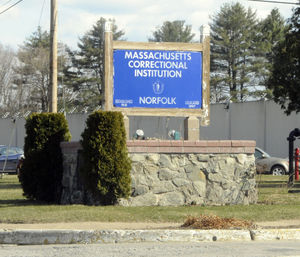
The Massachusetts Correctional Institution at Norfolk

When Howard Belding Gill became the first Superintendent of the Norfolk State Prison Colony, presently known as the Massachusetts Correctional Institution at Norfolk, he created what became known as the first community prison in the United States. Intended as an experiment to introduce a rehabilitative rather than solely punitive model, the prison held men like Malcolm X, who described the place with “no bars, only walls” as practicing “penal policies [that] sounded almost too good to be true.” The staff was conceived not as guards, but as educators and counselors, psychiatrists and mentors. Years after he left his position as Superintendent, Gill returned to MCI Norfolk to mentor young prisoners and visit old inmates turned friends.

Today, MCI Norfolk is a medium-security prison where bars have gone up, but where the commitment to rehabilitation and community remains an important pillar for the Department of Corrections. That is why, on June 13th and 14th, MCI Norfolk staff allowed Dr. Karen Lischinsky, Volunteer Coordinator for the Restorative Justice Group at Norfolk Prison, to work with the incarcerated men and put together a two-day Restorative Justice and Responsibility Retreat. During the retreat, over a hundred inmates were introduced to principles of rehabilitation, community responsibility, and personal introspection. Speaking to the large auditorium of men, Sister Ruth Raichle encouraged the men to think of their lives as interconnected, not just amongst themselves but also to the outside community. “Justice is not something done to us,” she said, “It’s something we build together.” She was speaking of the importance of making amends by publically recognizing the harm they had done and thus begin the process of finding their innate humanity and reconnecting with the outside community. Many inmates acknowledged, however, that responsibility extends past a one-time recognition of their crimes. Rather, responsibility comprises a life-long journey of personal healing and introspection. Reflecting on his own journey, and I heard an inmate say that healing rather than harm is the mark of a responsible life. He wanted to end the cycle of violence he had inherited and contributed to.

The restorative justice retreat at MCI Norfolk gives inmates an opportunity to begin a healing process so that they can live more responsible lives in hopes that one-day, they can return to society. Such commitment to rehabilitation and reintegration cannot be undervalued, especially when, according to the U.S. Bureau of Justice Statistics, 95 percent of state prisoners will be released from prison at some point. As a result, more and more prison administrators throughout the country are looking for new initiatives that prepare prisoners for re-entry upon leaving prison.

Yet, attending the retreat were also a number of men who would never leave Norfolk’s prison walls. Their promise to better themselves, to live more fulfilling lives, extended beyond personal gains. Inmates spoke of being fathers, grandfathers, or uncles who did not want their loved ones to show up in the cell next to them. I felt a sincere commitment from a number of men at the retreat who wanted to take responsibility for their crimes and learn better ways, as I understood from an inmate, of facing the nightmares in his closet.

Breaking the cycle: 189 years

In the small group discussions, the men showed emotional reactions as they heard victims of crime narrate the pain they felt from the absence of their murdered children. Kim and Ron Odom, whose 13-year-old son Steven was killed in 2007, asked the men to take responsibility for the harm they had done to parents and community. “You have left an indelible mark,” Kim Odom said, “but you can prevent more harm from being done. As a mother, I can tell you we don’t bring murderers into this world.” She and her husband asked the men to reflect and make a promise to change.

For the men of the restorative justice group, that promise has created a more peaceful community inside MCI-Norfolk. I think all of those of us present found it amazing when we heard an inmate say that collectively, the men of the restorative justice group have 189 years without any disciplinary tickets. That accomplishment was possible because of programs like the Restorative Justice Retreat, which brings together inmates and community members who remind the men of their promises. At this year’s retreat, Isaura Mendes spoke to the group about the murder of her two children, Bobby Mendes, 23, murdered in 1995 and Mathew Mendes, 22, murdered in 2006. As the men listened, they sank in their chairs and tried to keep tears inside. They were beginning to grasp for the first time how they are responsible for hurting so many in their own communities.

For many of the incarcerated men who attended the retreat, having mothers return every year and remind them of their commitment to live more peaceful lives reinforces the message that society has not forgotten them, that we remember and hold them accountable. During the retreat, I heard an inmate say he had never felt someone care about him, and that he was amazed to hear mothers speak and see the humanity in him. Many others echoed that feeling.

A number of inmates also spoke of loved ones — a brother, a mother, a close friend — who had been murdered. For them, the process of healing lied in the realization that retaliation does not bring back the smiles of those no longer with us. “That requires a paradigm shift in our culture,” said Ron Odom as he reflected on the need to disrupt the cycle of revenge. Mr. Odom urged the men to nourish their minds with new ideas. A prisoner agreed, telling his fellow inmates in the auditorium that Norfolk can hold their bodies, but it can’t control their minds. He urged them to think deeply about their responsibility, identity, and commitment to the larger community.

It can start at Norfolk

While most prisons in the United States do not operate under a restorative model, MCI Norfolk continues the legacy of Howard Gill to rehabilitate and reintegrate. For True See Allah, an ex-inmate who this past January received a pardon from then Governor Deval Patrick, his time at MCI Norfolk gave him the opportunity to change. “Norfolk is the wound that gave birth to me,” he told the men. We can only hope that more U.S. prisons provide space for inmates to understand the impact of their actions and make meaningful changes in their lives. Our criminal justice system ought to move past punishment and instead adopt a model of reform that helps those incarcerated understand the implications of their deeds. This takes time, but the results can be truly transformative both for individuals and entire communities.

(more…)