Why Jesus Loves the Little Children

Epiphany

By Alan Bean

I learned about the season of Epiphany from the book of Daily Office Bible readings I stole from the Episcopalians some thirty years ago.  First, I wondered why the advent readings focused on the end of the world; then I wondered why Matthew’s Magi stories didn’t show up until after Christmas.

In my Baptist upbringing, the three wise men were right there, with the shepherds and all, at the stable in Bethlehem.   (more…)

Selma, the ignorance of the wealthy, and why we don’t talk about “Christian terrorists”

By Alan Bean

My inbox doesn’t always give me anything worth reading, but today was an exception.

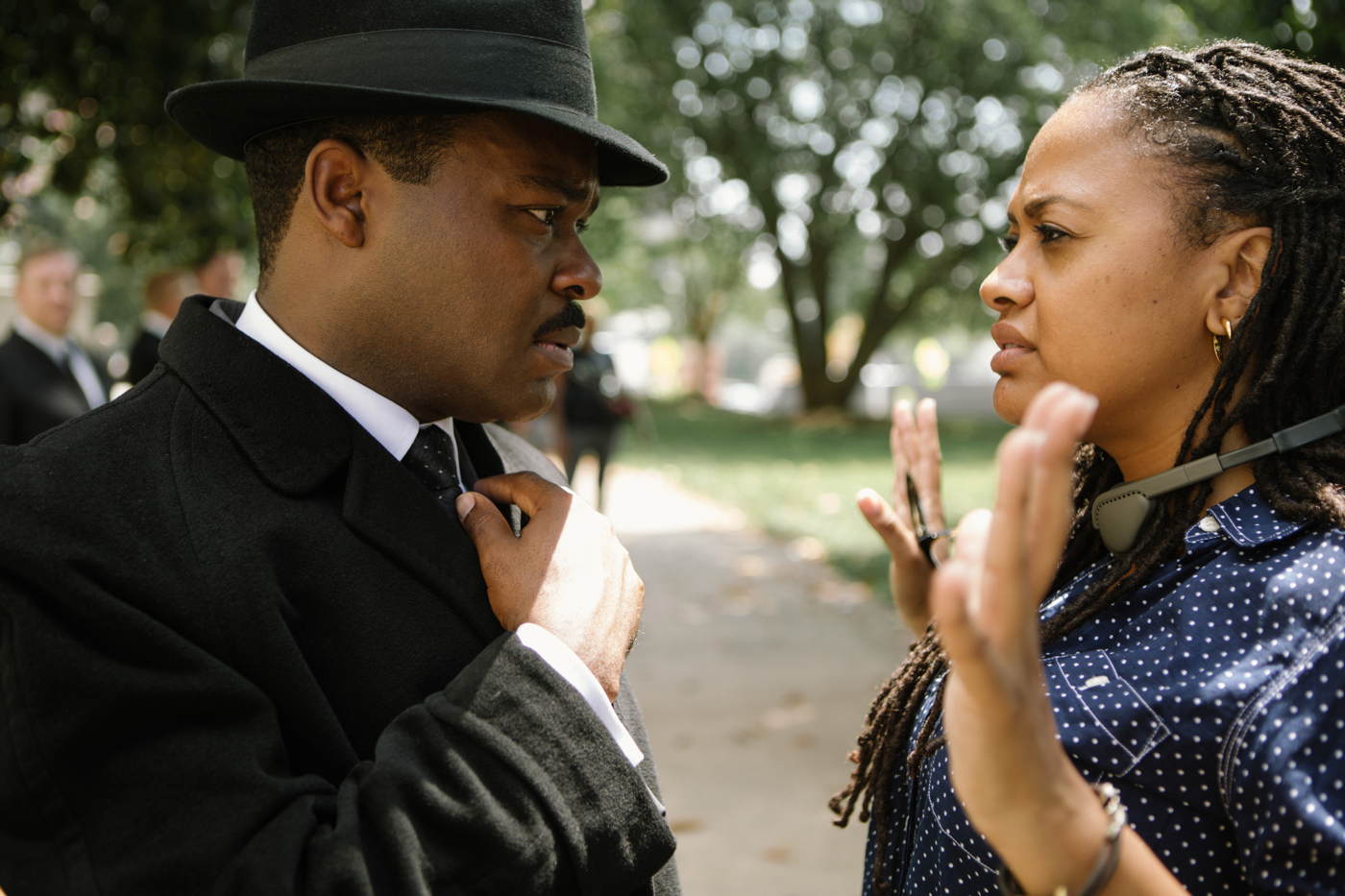
Actor David Oyelowo talks with director Ava DuVernay on the set of “Selma”.

First, you will want to read this interview with David Oyelowo, the British actor who plays Martin Luther King Jr. in the new film Selma.  I haven’t seen the film, but I have kept abreast of all the criticism from LBJ fans, and I listened yesterday to a delightful conversation between Terry Gross (Fresh Air) and director Ava DuVernay that explains why it has taken half a century for Hollywood to tackle MLK.  The interview with Oyelowo explains why, perhaps for the first time, a major film portrays authentic spirituality.  All of the major actors were either professing Christians or they had grown up in the Black Church and understood the context.  In other words, this isn’t a film made by secular white people who don’t understand genuine Christianity.

Views-of-the-Social-Safety-Net-By-Levels-of-Financial-SecuritySecondly, there is this disturbing post from Fred Clark, the Slacktivist, inspired by the surprising discovery that the more financially secure Americans become, the more they despise and “envy” poor people.  The study shows, Clark believes, that rich people have come what they pretended to be:

So the wealthy didn’t start out as genuinely ignorant, dumb and dull. They started out just pretending that’s what they were.  Alas, though, as Kurt Vonnegut warned us, “we must be careful about what we pretend to be,” because we become what we pretend to be.  And after decades of pretending to be stupid, it seems that a majority of the wealthiest Americans are no longer merely pretending.

1Finally, there is this post from The Boekstool asking why we don’t call misguided Christians who perform violent acts “Christian terrorists”.  An excellent question.  What is it like to grow up Muslim in America?  It ain’t easy, that’s for sure.

Enjoy!

Beware the devil’s Jesus

0474209_610_MC_Tx304By Alan Bean

The Christ child has been born of Mary, wrapped in swaddling clothes and laid to rest in a manger. The angelic host has winged its way back to highest heaven.  So, what do we do now?

The incarnation reveals a God who pitches his tent with the poor, the undocumented, the slave and the outcast.  Infinite power takes up residence in a helpless child.  And the child really is helpless.  Minus the loving care of its parents, this spark of life would quickly succumb to cold, thirst and hunger.  Perhaps this is why the parents-to-be were subjected to an extensive angelic interview.  The risk of birth, demanded parents who could hold up their end of the bargain.

The Bible doesn’t dwell on the Messiah’s formative years.  Mark and John introduce us to a fully grown Messiah, and Matthew and Luke restrict themselves to a few childhood glimpses.  Matthew reveals the subtle dance between the magi and mad king Herod ending with the slaughter of the innocents and the flight into Egypt.  Thanks to mad king Herod, the Christ-child retraces the steps of a slave people, living in Egypt as an undocumented immigrant.

Luke shows the most interest in Jesus’ childhood, but even he doesn’t tell us much.  No one sees the newborn king but a band of scruffy shepherds–the most despised caste in Jewish society.  Next, Jesus is presented at the temple in Jerusalem and an old man named Zechariah thanks God for allowing him to see the salvation of God in human form: “a light for revelation to the Gentiles and for glory to your people Israel.”

The old man grasped what no one else, even mother Mary, could grasp: still a nursing child, the claim of God was on the life of Jesus.  Only God would decide what sort of Messiah this baby would become.

The next time we see Jesus, he is a remarkably precocious twelve year-old posing theological questions to the leading Rabbis of the day and weighing their answers with rapt interest.  He is already wrestling with God’s claim on his life.

Luke and Matthew move swiftly from birth to baptism, then treat us to a blow-by-blow account of  what we call “the wilderness temptations”.  This is where Jesus decides what sort of Messiah God wants him to be.

The story reaches its dramatic high point when the devil takes Jesus to a high mountain and shows him all the kingdoms of the earth.  All this can fall under Jesus’ power.  The only catch is that the devil gets to decide what sort of Messiah Jesus will be.  His plan doesn’t seem half bad.  The devil desires a messiah who transforms the hard rock of suffering into the warm bread of blessing.  Just give the people what they want, become the savior they desire, the devil says, and all will be well.

Most of us would take this deal–the devil is an excellent salesman–but Jesus says no. As we quickly learn, God is calling his Messiah to a very different vocation.

In Matthew, Jesus leaves the wilderness, calls his disciples, and climbs a mountain. “Blessed are the poor in spirit,” he says, “for theirs is the kingdom of heaven.  Blessed are the meek. Blessed are the merciful.  Blessed are the peacemakers.  Blessed are those hunger and thirst for justice.”

The shape of Luke’s narrative is a bit different, but the message is pretty much the same.  After leaving the wilderness, Jesus reads the scroll of Isaiah in the very synagogue where he learned to read the Hebrew Scriptures as a young boy.  It was here, in the synagogue, poring over the precious scrolls, that Jesus first realized God’s claim on his life.  Having said no to the devil, Jesus says yes to the messianic role he learned from Isaiah the prophet:

The Spirit of the Lord is upon me,

Because he has anointed me

To preach good news to the poor.

He has sent me to proclaim release to the captives

and recovery of sight to the blind.

To set the captive free,

To proclaim the jubilee year of the Lord.

The kingdom gospel of Jesus is good news to the poor, release to the captives, sight to the blind, the kind of jubilee-liberation where all the slaves go free.

These themes were central to the life and preaching of the first generations of Christians, the people who gave us our New Testament.  The church was an egalitarian community of slaves and free people, men and women, rich and poor, a rag-tag assemblage drawn from every tribe and kindred on the face of the earth.  Their mission was to model the kingdom values that sent Jesus to a Roman cross: caring for the poor, welcoming the stranger, forgiving the enemy, breaking down the walls that fragment the human family.

Which brings us back to the child wrapped in swaddling clothes, lying in a manger.  The cute little tyke makes no demands.  According to the song, he doesn’t even cry.  He just lies there, cooing and looking adorable.  O come, let us adore him . . . before he grows up and makes demands of us.

In the Ballad of Ricky Bobby, the successful NASCAR veteran prefers the little baby Jesus to the grown up variety, and since he wins all the races and brings home the bacon, he figures he can pray to whatever kind of Jesus he likes.

“Dear, 8-pound, 6-ounce, newborn infant Jesus, don’t even know a word yet, just a little infant and so cuddly, but still omnipotent, we just thank you for all the races I’ve won and the 21.2 million dollars– Whoo!”

Taking their lead from Ricky Bobby, the other guests choose their favorite kind of Jesus:

Cal: “I like to picture Jesus in a Tuxedo T-shirt because it says, like, ‘I wanna be formal.  But I’m here to party too.’ ‘Cause I like to party, so I like my Jesus to party.”
Walker: “I like to picture Jesus as a ninja fighting off evil samurai.”
Cal: “I like to think of Jesus, like, with giant eagle’s wings.  And singing lead vocal for Lynyrd Skynyrd with, like, a angel band. And I’m in the front row and I’m hammered drunk.”

Can we select the Jesus that suits our style, or are we stuck with the guy in the Bible who preached good news to the poor and release to the captives?

The devil would give us a Jesus who turns hard stones into the warm bread; but the God of Christmas trades the security of heaven for the pungent hay of a feed trough.  In Matthew’s telling, incarnate God is hustled across the Egyptian border with the soldiers of a mad king baying at his heels.  The God of Christmas identifies himself with the poverty of shepherds and the early chapters of the salvation story “when Israel was in Egypt-land; oppressed so hard he could not stand.”

The devil couldn’t buy a Messiah of his own choosing, and we can’t either.

A Poem for Christmas

IN THE VISIONS OF THE NIGHT
December 12, 1993

Alan Bean

OGLE-2005-BLG-390L b is an uninhabitable ice ball stuck in a per

In the visions of the night
I saw this earth
Lost among the silent stars
I saw this earth lost among the stars.
No established date of birth;
No estimated time of arrival.
In the visions of the night
I saw this earth
Lost among the stars.

In the visions of the night
I saw this earth
Numbering her battle scars
I saw this earth
Numbering her scars.
No sword of retribution;
No tears of absolution.
In the visions of the night
I saw this earth
Numbering her scars.

In the visions of the night
I saw this earth
Cradling a mother’s child
I saw this earth
Cradling a child.
Lost among the silent stars;
Mid the noise of battle,
In the visions of the night
I saw this earth
Cradling a child.

Why (white) Millennials are leaving the church

exit (1)By Alan Bean

More white Millennials identify as “nones” than as Christians according  to a post originally published in On Faith.  

“Nones”, you may remember, are those who check the “none” box when asked to state their religious affiliation.

But there is no mass exodus afoot in the non-white Millennial segment of the American Church.  As a result, although people of color comprise only one-third of American Millennials, they represent over half of Millennial Christians.

By contrast, nearly 7 in 10 of older American Christians are white.  The On Faith article highlights the conclusion of Mark Silk, professor of Religion in Public Life at Trinity College in Hartford, CT:  “What you have in American religion today are the nonwhite Christians and the Nones.”

And it isn’t just the moderate-to-liberal Protestant mainline churches that are bleeding young people.  According to the article:

Among Americans 65 and older, nearly 3 in 10 (29 percent) are evangelicals. That number drops to 1 in 10 for younger Americans.

So, why are white Christians, conservative and liberal, in such a panic to leave the church while religious fervor among young people of color remains strong?

This difference is particularly surprising when you realize that most African American and Latino Christians take the rough outline of their theology from white Christians.  If you think non-white churches are bristling with liberation and civil rights theology you are mistaken.

There are three large tribes within white American Christianity: mainline Protestant, evangelical Protestant, and Roman Catholic, and all three are hemorrhaging young people.

Among white American evangelicals, Christianity largely overlaps with Republican political identification.  Although it is rare to hear blatantly partisan political preaching in white evangelical churches, even in the American South, the association between Christianity and Republicanism is widely assumed.

American evangelicalism loves Jesus and can’t pay him enough metaphysical compliments: Son of God, Lord of Lords, Coming King, etc.  But American evangelicals have a problem with the core teaching of Jesus recorded in the Gospels.

Jesus, to put it bluntly, makes liberal democrats look like Barry Goldwater.  His gospel is “good news to the poor”.

Jesus proclaimed an upside-down kingdom in which “the first will be last, and the last will be first.”

Jesus told his disciples to love everyone without reservation, to demolish us-them distinctions, to honor the dishonorable.

Jesus  loved and forgave his enemies, even while hanging in agony on the cross and, incredibly, insisted that his followers do the same.

It was once possible to ignore the content of Jesus’ teaching.  It didn’t get a lot of attention in sermons and Sunday school lessons and evangelical pastors evolved clever ways of explaining why Jesus almost never really meant what he said.

That is changing.  The radical shape of Jesus’ message is rapidly becoming public knowledge, forcing evangelical preachers and public theologians to ratchet up the machinery of denial.  Older evangelicals can live with the disconnect between revelation and proclamation; but the cognitive dissonance is proving too much for “the information generation”.

So, how do we explain the mass exodus of young people from the Protestant mainline and Roman Catholic churches of America?

While American evangelicals are overwhelmingly conservative in political ideology, the nation’s white mainline and Roman Catholic churches are evenly divided between ideological conservatives and liberals, people who primarily disagree about money, poor people, and the proper response to the enemy and the “other”; precisely the stuff Jesus talks about in the Bible.

Churches can’t wrestle openly with the alarming tenets Jesus-based morality without pouring oil on the polemical fire sizzling restlessly just beneath the surface of congregational life, so they ignore this stuff as much as possible.  Sure, you hear vague references to justice, caring for the poor and feeding the hungry in many white churches, but the systemic roots of injustice, poverty and hunger are rarely explored.

Here’s the big problem: You can’t apply the teaching of Jesus to the moral and public policy issues confronting American society without getting overtly political.  But the politics of Jesus transcends the party programs of Democrats ad Republicans.  The logic of Jesus-morality suggests a politics so radical and uncompromising that few elected officials in America would consider touching it.

As a consequence, the moral content of biblical Christianity, properly understood, is irrelevant to American politics.

Millennials love the Jesus portrayed in the Gospels and would love to learn more about them.  But in the white Christian churches of America they are confronted with silence or bizarre misrepresentations of the Master’s intent.

Are Christians of color more open to Jesus than their white counterparts?

If your congregation is directly impacted by American immigration policy, the Bible takes on a surprising relevance.  The Holy family was forced to live as refugees and illegal aliens.  The Old Testament insists, repeatedly, that the sojourner and the resident alien must receive just and humane treatment.  Jesus injunctions about “the least of these” take on a new relevance in a social context shaped by poverty and the constant threat of family separation, and this is true even if pulpit preaching is primarily about getting saved for heaven.

The same dynamic is alive in the Black church.  Only a small minority of Black churches participated in the civil rights movement, but that bold legacy has assumed a normative status in the Black church, even in churches where the preaching presents a Jesus who wants to make you rich.  The Black Church is overtly political because bad public policy has had a devastating impact in poor communities of color.

In short, there is just enough of the Jesus stuff in America’s Black and Latino churches to sustain the commitment of a restless Millennial generation.  Many of these young people are frustrated by much of what they see and hear in church, but there is a dash of genuine Jesus-religion in the religious stew, and that keeps the young folks coming.

Meanwhile, white American Christianity has a Jesus problem and it’s getting worse with each passing year.  The flight of the Millennials is primarily a white problem.  There’s something horribly wrong with white American spirituality and its driving our children to the exits.

Jesus is our problem.  Mercifully, Jesus is also the solution to our problem.

Review of “Racial Reckoning: Prosecuting America’s Civil Rights Murders”, by Renee C. Romano

Reviewed by Charles Kiker, Ph. D., American Baptist Minister (retired)

031785bef18dc3d12a464da8f6b90debUnless you can stand deep soul-searching, don’t read this book.

Emmett Till’s body was exhumed in Illinois almost a half century after his murder in Mississippi, to try to ascertain whether there might be evidence involving anyone other than Roy Bryant and J. W. Milam in the murder. Bryant and Milam had been acquitted in a trial in 1955 in which the jury deliberated only 67 minutes. Milam had died in 1980 and Bryant in 1994, so they could not be tried in federal court. But might there be someone else who could be?

Although it does not ascribe a starring role to Emmett Till, it is fitting that this book begins with a description of the exhumation of the body of Emmett Till in 2005, a half century after his murder.

Brown v. Board of Education in 1954 set the stage, but that day in December, 1955 when Rosa Parks refused to go to the back of the bus in Montgomery, Alabama could well be designated as the beginning of the civil rights struggles of the 1950s and 1960s. But America’s attention was riveted on Jim Crow by the murder of fourteen year old Emmett Till a few months earlier in August, 1955.  The murder and the rapid acquittal of the murderers reportedly stiffened the spine of Rosa Parks for her stand against segregation. The murder of Emmett Till was an important milestone in my own development regarding race relations. (more…)

Jesus on the water board: a Christian responds to the Senate Intelligence Committee’s report

004-0607015413-Jesus-Torture-786120By Alan Bean

The Senate Intelligence committee’s report on CIA torture begins with a little context:

It is worth remembering the pervasive fear in late 2001 and how immediate the threat felt.  Just as week after the September 11 attacks, powdered anthrax was sent to various news organizations and to two U.S. Senators.  The American public was shocked by news of new terrorist plots and elevations of the color-coded threat level of the Homeland Security Advisory System.  We expected further attacks against the nation.

The implication is clear: Although our report bristles with official lies, cover-ups, brutality, idiocy and systematic sadism, the Senator’s suggest, none of this should be seen as reflecting badly on the national character.  We were a traumatized and fearful nation and we just . . . well . . . we pushed the envelope a bit.  You will be appalled, disgusted, even outraged by what you read in these pages, but the folks responsible for the blatant misconduct described therein meant well.  They were good, honorable Americans like you and me: ordinary people living in extraordinary times.

The report argues, persuasively I believe, that no actionable intelligence was derived from the “enhanced interrogation techniques” (aka “torture”) employed by the CIA and other representatives of the United States of America.  The authors aren’t saying that the information produced by water boarding, rectal re-hydration (aka “anal rape”), sleep deprivation and all the rest produced information of dubious value.  They are saying that torture was completely useless as an intelligence-gathering tool.

I suspect they’re right about that.  But the insistence that torture produced nary a shred of good intelligence reflects the hidden fear that, if the American public thought sadistic brutality would make them even a tiny bit safer, they would condone it in a heartbeat. (more…)

Attention must be paid: this isn’t about race relations; it’s about racial justice

Attention must be paid.

By Alan Bean

Glancing at the paper this morning over breakfast, I noticed the headline, “Race relations arguably worse in ‘Age of Obama'”.

That banal conclusion is based on a recent poll suggesting that 43% of Americans believe that having an African-American president has not helped race relations, while only 34% believe it has helped.

This assumes that race relations–white folks and people of color getting along–is what we’re shooting for.  It isn’t. (more…)

The myth of Righteous America: Why white people defend Darren Wilson

JP-FERGUSON2-articleLargeBy Alan Bean

The shooting death of Michael Brown in Ferguson and the choking death of Eric Garner in Staten Island have dominated the news cycle for weeks, making it almost impossible to get any other issue onto the agenda.  Immigration, Ebola and ISIS have all been reduced to the status of warm-up acts.

The death of Eric Garner has riveted the nation because we have the video.  A few voices on the hard right are defending Daniel Pantaleo’s use of the choke hold, arguing that it was somehow Mr. Garner’s fault for being obese and having high blood pressure.  But most commentators, regardless of ideological persuasion, are baffled by the grand jury’s decision.  Even when the footage is grainy, the camera doesn’t lie.

The Michael Brown story has captured the lion’s share of media attention precisely because we don’t have the video.   (more…)