A white preacher celebrates the black church

By Alan Bean

Eddie Glaude, a professor of religion and African-American studies at Princeton, set off a fire storm last year when he performed last rites over the black church.  “The Black Church is dead,” Dr. Glaude announced.  I didn’t notice it at the time, but Joel Gregory, the dean of Texas Baptist preachers, wrote a spirited rebuttal to Eddie Glaude for the Huffington Post.

In the course of a post-worship lunch this Sunday at Fort Worth’s Broadway Baptist Church, Joel Gregory’s name came up.  I learned that he was teaching a Sunday School class at Broadway a few years back but was forced to withdraw (the story went) when the congregation decided to publish pictures of gay couples in the church directory. 

The repercussions of that decision were immediate.  The congregational infighting became so intense that the Rev. Brett Younger (a fine preacher in his own right), was forced to submit his resignation.  Broadway had already been expelled from the Southern Baptist Convention and withdrew from the Baptist General Conference of Texas to spare everyone an ugly fire fight on the convention floor.  Finally, I was told, Joel Gregory was asked to withdraw his membership at Broadway.  He was teaching homiletics at Truett Theological Seminary on the campus of Baylor University at the time and pressure was applied in high places.

Dr. Gregory is full of surprises.  I was surprised to learn that he had been a member at Broadway, one of the flagship “moderate” churches in Texas Baptist life.  There was a time when Gregory was the fundamentalist camp’s most articulate frontman.  I’m not sure his core theology has changed much over the years, but his spirit has softened considerably. (more…)

“Banking on bondage”: The rise of private prisons in the U.S.

by Melanie Wilmoth

A recent report by the ACLU, “Banking on Bondage: Private Prisons and Mass Incarceration,” details how the private prison industry feeds (and profits from) mass incarceration in the U.S.

As the ACLU points out, there are few who truly benefit from our country’s obsession with “tough-on crime” policies. With over 2.3 million people behind bars in the U.S, the punitive consensus driving mass incarceration has successfully shattered families and busted states’ budgets. However, there is one group that does benefits from locking up more and more people: the private prison industry.

Just as prison populations in public corrections facilities boomed over the last 30 years, the number of individuals in private prisons increased over 1600% between 1990 and 2009.

For private prisons, more crime equals more prisoners and more prisoners equals more profit. It’s no wonder that for-profit prisons support immigrant detention, mandatory minimum sentences, and “truth in sentencing” and “three strikes” laws. Large prison populations and harsh sentences result in greater profits. In fact, the success of the private prison industry relies on the country’s opposition to criminal justice reforms and fair sentencing laws:

“In a 2010 Annual Report filed with the Securities and Exchange Commission, Corrections Corporation of America (CCA), the largest private prison company, stated: ‘The demand for our facilities and services could be adversely affected by…leniency in conviction or parole standards and sentencing practices…’

The GEO Group, the second largest private prison operator, identified similar “Risks Related to Our Business and Industry” in SEC filings:

‘Our growth depends on our ability to secure contracts to develop and manage new correctional, detention and mental health facilities, the demand for which is outside our control …. [A]ny changes with respect to the decriminalization of drugs and controlled substances could affect the number of persons arrested, convicted, sentenced and incarcerated, thereby potentially reducing demand for correctional facilities to house them. Similarly, reductions in crime rates could lead to reductions in arrests, convictions and sentences requiring incarceration at correctional facilities. Immigration reform laws which are currently a focus for legislators and politicians at the federal, state and local level also could materially adversely impact us.’”

Moreover, when you’re in the business of locking people up, there is high incentive to cut costs and maximize profits and little incentive to rehabilitate inmates and reduce future crime. As a result of cost-cutting measures, research suggests prisoners in private facilities are more likely to experience violence and inhumane conditions. In addition, private prisons tend to have high staff turnover due to low wages. While corrections officers and staff are making close to minimum wage, top executives at GEO and CCA receive over $3 million each in annual compensation.

Also of concern, as Scott Henson at Grits for Breakfast points out, is the seldom mentioned “revolving door” between public and private corrections which the ACLU report highlights:

“Many in the private prison industry…once served in state corrections departments, and numerous state corrections officials formerly worked for private prison companies. In some cases, this revolving door between public corrections and private prisons may contribute to the ability of some companies to win contracts or to avoid sufficient scrutiny from the corrections departments charged with overseeing their operations.”

With high incentives to increase prison populations while cutting corrections costs and with little meaningful oversight due to the “revolving door,” the private prison industry is in a dangerously powerful position. In order to end mass incarceration, as the ACLU suggests, we must divest from private prisons and halt the expansion of “for-profit incarceration.”

To read the full ACLU report, click here.

Fetal personhood and civil rights

William Wilberforce as portrayed in "Amazing Grace"

By Alan Bean

Personhood USA, the group arguing that personhood begins the moment of conception, is promoting itself as a latter day embodiment of the civil rights movement.  Days after a “fetal personhood” amendment was rejected by 60% of Mississippi voters, Personhood Florida’s Bryan Longworth is undaunted.  William Wilberforce didn’t end slavery in England the first time he tried, Longworth says, and his group isn’t about to give up simply because voters in the most conservative state in America aren’t buying the fetal personhood argument.

The reference to Wilberforce caught my attention.  Nancy and I saw Amazing Grace in an Amarillo movie theatre in 2007.  We were weighing our options at the time.  Did we really want to stay in the criminal justice reform fight?  Sure, we had won some important victories, but when you live in the Texas Panhandle you have few illusions.  Every struggling rural community of any size is sustained by a state prison and there appears to be zero support for ending mass incarceration.  When you have repeatedly slammed your head into a brick wall you sometimes think how nice it would feel to stop. (more…)

Philly rejects criminal justice reform ad, NAACP files lawsuit

The NAACP and ACLU filed a lawsuit last month against the city of Philadelphia. The reason? The Philadelphia International Airport refused to accept a criminal justice reform ad sponsored by the NAACP. The ad (shown above) emphasizes mass incarceration in the U.S. and the need for smart criminal justice reforms. Although the Philadelphia airport claims that it does not accept ads “relating to political and social issues,” the NAACP argues that the decision to reject the ad violates freedom of speech. See the NAACP’s response below. MW

NAACP, ACLU file lawsuit against city of Philadelphia for rejecting criminal justice reform ad 

Refusal to Accept Ad Violates First Amendment Freedom of Speech

The NAACP, the American Civil Liberties Union (ACLU) and the ACLU of Pennsylvania filed a lawsuit on October 19 against the City of Philadelphia for violating the First Amendment, after Philadelphia International Airport refused to accept an advertisement promoting criminal justice reform. The ad highlights America’s high incarceration rate.

The city claimed that the ad had been rejected because it does not accept “issue” or “advocacy” advertisements at the airport. However, the airport has accepted numerous other ads relating to political and social issues.

“The walls of Philadelphia International Airport are public space, and city officials do not have the right to suppress any group’s viewpoint based on their own beliefs or political considerations,” stated NAACP General Counsel Kim Keenan. “Our First Amendment right to free speech is just as strong as that of the U.S.O., the World Wildlife Federation or any other advocacy group that has graced the walls of the airport,” Keenan said, referring to ads from other organizations that the city accepted.

The NAACP’s rejected advertising says, “Welcome to America, home to 5% of the world’s people & 25% of the world’s prisoners. Let’s build a better America together.” The ads are part of a public awareness campaign surrounding the NAACP’s “Misplaced Priorities” report, which explores the connection between high incarceration rates and poorly performing schools. (more…)

DNA leads police to new suspect in Morton case

Mark Alan Norwood, 57, was held Wednesday at the Williamson County Jail on a capital murder charge after his arrest at his Bastrop home.
Mark Alan Norwood

Five weeks ago, Michael Morton was released to the free world after DNA evidence made it clear that he hadn’t killed his wife, Christine, twenty-five years ago.  Now Williamson County police have arrested Mark Alan Norwood, a man linked to the killing by the same DNA evidence that cleared Morton.

Tests in 1986 could only confirm the presence of human blood on the bandanna. But forensic testing in June identified the blood and an attached hair as Christine Morton’s.

The lab also found cells that were soon matched to Norwood because his DNA profile was listed in a national felony database after his 2008 arrest in California for possessing narcotics, resisting arrest and possessing a dangerous weapon.

As Melanie Wilmoth noted in a recent post, this is a classic case of prosecutorial tunnel vision.  Convinced they had the right man, the district attorney withheld important evidence from defense counsel

Mark Osler’s excellent op-ed on the Hank Skinner case could easily be applied to the injustice perpetrated against Michael Morton.  Prosecutors live in an echo chamber.  Surrounded by people who share their zeal for justice and sealed off from meaningful contact with the defendant, district attorneys and AUSAs have their view of the world reinforced at every turn.  The thought that they may have everything wrong never occurs to them.  

It doesn’t help that the powers of the prosecutor have been growing steadily over the past thirty years while judicial discretion and the influence of jurors has receded.  DAs are widely seen as representatives of the people, and so they are.  But when the people are blinded by fear and ignorance, prosecutor must keep their wits about them.  Do these men and women who wield such incredible power understand the dynamics of tunnel vision well enough to safeguard themselves against it?  I have my doubts.

Man arrested in 1986 Morton slaying has long criminal history

By Chuck Lindell and Patrick George

AMERICAN-STATESMAN STAFF

GEORGETOWN — A former carpet layer now working as a dishwasher in Bastrop was arrested Wednesday in the brutal 1986 beating death of Christine Morton, a Williamson County mother whose husband was wrongly convicted of her murder.

Mark Alan Norwood, 57, was arrested without incident at his Bastrop duplex, Williamson County Sheriff James Wilson said. Charged with capital murder, Norwood was being held at the Williamson County Jail on $750,000 bail. (more…)

The passion of the prosecutor

The Texas Court of Criminal Appeals has issued a stay of execution in the Hank Skinner case so relevant DNA evidence can be tested.  The prosecutors in this case remain adamant that Skinner should die with the evidence untested.  Mark Osler (a Friends of Justice board member who teaches law at the University of Saint Thomas in Minnesota) says that what looks like baffling intransigence from the outside springs from the best of motives.  But then, so did the crucifixion of Jesus Christ. Osler’s insights originally appeared on the CNN site. AGB

Texas prosecutors won’t stop rush to execution

By Mark Osler, Special to CNN

Editor’s note: Mark Osler, a professor of law at the University of St. Thomas Law School in Minnesota, is a former federal prosecutor and the author of “Jesus on Death Row,” a book about capital punishment.

 As the nation and the world’s attention turned to the impending execution of Hank Skinner in Texas before a late stay by a Texas court, one question seemed paramount: “Why the rush?” The answer to that question is buried deep inside the psychology of prosecutors and the culture of Texas.

Skinner was scheduled for execution on Wednesday for the 1993 killing of his girlfriend, Twila Busby, and her two sons, until the Texas Court of Criminal Appeals (the top criminal court in that state) issued a stay late on Monday. (more…)

The day Dianna Freelon Foster refuses to forget

Dianna Freelon Foster

By Alan Bean

For the past few days, we have been attending a human rights conference in Philadelphia sponsored by the U.S. Human Rights Fund.  We have learned a lot and met so many inspiring individuals it is a bit overwhelming.  But the high point of the conference, for me, was a chance encounter with Dianna Freelon Foster of Grenada, Mississippi.

Grenada, you may recall from an earlier post, was the site of the most heroic, dreadful, awe-inspiring and anonymous civil rights campaigns in American history.  Nobody knows about Grenada.  Everybody should.

Dianna Freelon Foster was going into the eleventh grade in the fall of 1966 when the civil rights community decided it was time to integrate the public schools.  Every night, hundreds of people would gather at a church near the courthouse square to sing freedom songs, pray and preach.  Then, in the power of the Holy Ghost, they would march to the courthouse and take a stand for civil rights.  And when morning came, the first day of school, hundreds of black children had the audacity to show up at the all white schools of Granada, Mississippi.

“We walked into the school the first morning, ” Dianna remembers, “and the first thing I noticed was how beautiful it was–nothing at all like the black school I had been attending.  It was a very tense atmosphere and you had the feeling something was wrong.  Then, one by one, all the white girls were called to the office.  I remember thinking ‘there was no way all those white girls can fit in that tiny little office’.”

When all the white girls had left the building, the black girls were informed that the school was closing for the day.  “We walked out the door,” Dianna recalls, “and all I could see was a bunch of white men, some of them sitting in the branches of the trees, and they were all carrying weapons: baseball bats, tire irons, that sort of thing.  We tried to rush back into the school but the principal locked the door on us.  That’s the thing that really hurt me–that a human being could do something like that–locking us out when he knew we were in danger.”

“We were walking with a male student and we were trying to get to the church, because that’s where we felt safe and strong.  Then the men surrounded us.  They were pushing and prodding us girls, but it was the boy who received the real beating.  They would have left us pretty much alone, but every time we tried to help our friend who had been horribly beaten, they’d start beating us up too.  I guess I blocked it all out of my mind.  For a long time I didn’t remember much about it.  But then, years later, I talked to my mother and my brother, and they told me how awful it really was.”

The public schools of Grenada were not integrated in 1966.  Or 1967.  Or 1968 or 1969.

The Grenada movement has been forgotten because it did not achieve its objective; but nowhere in America did a community come together in such an emphatic and disciplined fashion behind a human rights agenda. 

Dianna Freelon Foster wants to talk about the past.  She made a successful run for mayor of Grenada a few years ago because she wanted to help her community come to terms with its painful history.  Most of the most prosperous majority white neighborhoods had formed separate municipalities for the usual reasons, but when Ms. Foster was elected mayor these communities were quickly re-annexed by the city of Grenada and Foster was defeated.

“I’m the racist because I want to talk about the past.  Well, I need to talk about it.  Everybody does, but they just want to forget and move forward.  Most of our black children have no idea what happened in our community.  Their parents don’t want to think about it.  We all just live as if all the ugliness never happened.  But it did; and we need to deal with it.”

The next time Friends of Justice sponsors a civil rights tour in Mississippi we’re going to Grenada and Dianna Freelon Foster will be our tour guide.

“Heaven on Earth”: Occupy Philly soldiers on

By Alan Bean

After a day of listening to people speaking earnestly about human rights, I meandered back to the site of Occupy Philly.  As I arrived this evening, an earnest forty-something black guy was informing a cluster of twenty-something young people that every good and perfect gift can be traced back to the hippies of the 1960s.  In his view, the occupy movement was a recreation of the hippy spirit. 

His big idea was shoes.  Old shoes.  If everybody hung a pair around their neck, people would get the message.  

“What is the message?” I asked dimly.

“That people is missing in action; that voices are not being heard,” the man explained.

As I moved closer to the action I could see dozens of little discussion groups spread across the courtyard in front of Philadelphia’s city hall.

The group I joined was discussing the relative merits of keeping the small tent city where it is or moving to a more suitable location.  Everyone in the group I joined was about my age, which may be why I joined it.  Everyone, it seemed, was either old enough to remember the hippies or in their mid-to-late twenties with little representation from intervening age brackets.  It was also clear that 10% (or so) of the folks engaged in the discussion groups were homeless people.  A few of these folk were taking part in the discussion; most were simply listening.

When everyone had their say the GA (General Assembly) began.  The format of the meeting appeared to have been imported from the Arab Spring movement (as opposed to the Soviet revolution, as Michael Gerson has it in a silly column in the Washington Post.)  “Mike Check” someone would say.  “Mike check,” the crowd hollered back.  Then the speaker would line out his message in short bursts of verbiage reminiscent of a sermon in a black church.

“Our group discussed . . .” a speaker would begin.

“Our group discussed . . . ” the crowd echoed.

“The advisability of checking with city officials . . .”

“The advisability of checking with city officials . . .”

“As to whether permits would be honored .  .  .”

“As to whether permits would be honored . . .”

You get the picture.

All the speakers were white, most were young, and all were clearly college educated.  (The phrase “in terms of” always denotes someone who has spent an inordinate amount of time in a classroom, and I heard a lot of it this evening.)

At least a dozen people spoke tonight.  If the crowd liked the message, fingers waved in the air; if they didn’t like what they were hearing, fingers waved downward.  This too is an Arab Spring import.

The big concerns appeared to be: a. should we change locations so the city can renovate the plaza in front of city hall?; b. what are we going to do in preparation for the first blizzard; and c. what can we do to capture the attention of the city?  The most prominent answer to the last question was the occupation of vacant city properties.   A veteran of the US infantry suggested that, like an army, the occupying group should find a way of symbolically signifying its ownership of the new property.

Several speakers advocated setting up a separate community with its own schools, living quarters and food supply.  That way, it was explained, “we don’t have to worry about what everybody else does.”

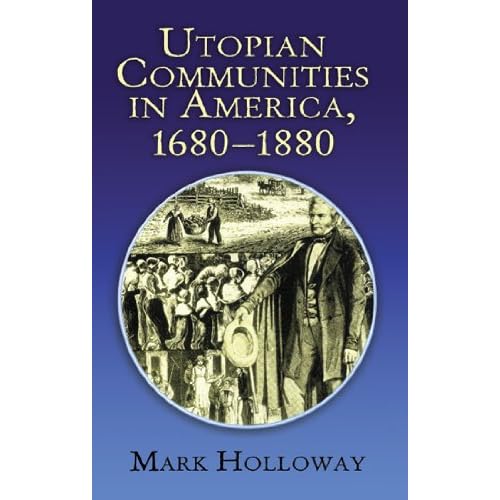
Listening to these speakers I was seized by an odd sense of deja vu.  Then it struck me.  I was recalling “The Church and American Utopianism,” a course church historian Bill Leonard taught at Southern Seminary in the late 1970s.  One of the primary texts came to mind, “Heavens on Earth:  Utopian Communities in America 1680-1880.”

This wasn’t Oneida, Amana or the Mormons–this was Philadelphia in 2011; but the basic spirit is the same.  Something new is happening here that will change everything. 

In that sense, the spirit of Woodstock is alive in the Occupy movement, but in a much more earnest, vital and focused way.  I haven’t seen young people this centered since I was young myself–and that was a long, long time ago.

Like all utopian communities, the occupy movement will enjoy a relatively brief life span.  It’s current form is glorious and inspiring, but it isn’t sustainable.  Still, it might evolve into a permanent social force far more influential than the fear-and-resentment-drivenTea Party.

As I was leaving, I passed a homeless woman who was ranting at Barack Obama.  “Pick a lane,” she told the President, “it’s time to decide whose side you’re on.”  (expletives deleted).  It mattered not whether anyone was within twenty feet of her, the diatribe continued.  She had been on the same topic twelve hours earlier when I visited the tent city after breakfast. 

A homeless man approached and promised to tell me five really funny jokes for a dollar.  Number five I had heard before (one through four were too crude to repeat in this family forum).  “What’s the greatest nation on earth?” he asked.  “A do-nation.”  Now he was asking for four dollars–five if I could spare it.  I gave him two and moved on.

Long after the Occupy people have packed up their tents the mentally ill woman and the panhandling comedian will remain at their posts.  But I’m glad the Occupy people are doing what they are doing and I hope they are still hanging on when the flowers of Spring are in bloom.

Occupy This!

By Alan Bean

Thus far, the Occupy movement has set up camp in parks and in front of symbolic centers of power.   Alec MacGillis of the New Republic has some excellent suggestions (in today’s Washington Post) for some other sites that are highly deserving of occupation; places like Wal Mart, the Bill Clinton library (Bill oversaw a massive reduction in the capital gains tax), Harvard University, and several other deserving targets. 

Melanie Wilmoth and I are in Philadelphia attending a human rights conference and our hotel is located just a few blocks from the city’s historic city hall.  There wasn’t a lot of life at 9:30 am, but Mike, the guy at the Information booth, told us things would be hopping if we came back at 7:00 this evening. 

I asked Mike about the demographics of the movement and he admitted that “we’re mainly white and college educated, so far.”  Mike is fifty and, like me, a trained theologian and pastor with Baptist roots.  “I’m mainly into house churches now,” he told me. 

But Occupy Philly is actively reaching out to the minority community. I asked about the digital divide and Mike smiled knowingly.  “This movement is driven by technology,” he admitted.  “That’s probably a big reason why most of us are so young.  I’m fifty, and I try hard to stay on top of the social networking innovations, but there’s something new out there every time you turn around.  We’re in constant contact with all the big Occupy operations across the country and we’ve got people working on all the big issues all the time.

If you go to the Occupy Philly website, you can see a video of Mike marrying a couple outside City Hall yesterday.  That’s something they’ll never forget! 

Now comes the big challenge; preparing for the onslaught of winter.  “We’ve got that covered,” Mike tells me. “We’ve got people working on tents that are 100% insulated.  People are already wearing four layers of clothing in Philly and it’s only November.  Occupy Philly hasn’t had a lot of press, largely because local law enforcement has been very open and flexible and political officials drop by occasionally to chat. 

We’ll try to get back to City Hall later this week and give you an update.


“Shattered families”: The intersection of immigration and child welfare

by Melanie Wilmoth

Earlier this week, the Applied Research Center (ARC) published a report exploring the effect of immigrant detention and deportation on the welfare of children and families.

Largely due to an increasingly anti-immigrant sentiment and aggressive enforcement of immigration laws, deportations are increasing at alarmingly high rates. ARC reports that “in 1992, the U.S. government [deported] 44,000 people, a historical number at the time. In less than two decades, that number has grown ninefold.” This year alone, the U.S. deported almost 400,000 people. Of those 400,000, 22% were parents of U.S.-citizen children.

In the U.S., 5.5 million children have an undocumented parent. According to ARC, “in the first six months of 2011, the federal government removed more than 46,000 mothers and fathers of U.S.-citizen children. These deportations shatter families and endanger the children left behind.” Shockingly, ICE (Immigration and Customs Enforcement) has no up-to-date policy or guideline that addresses family protection in immigration cases.

So, when parents are detained or deported, what happens to the children who are left behind?

Often, these children end up in the child welfare system. Once detained, parents are moved hundreds of miles from their homes and are isolated from their children and families. Therefore, detained parents are unable to participate in the case plans that are required by Child Protective Services (CPS) for family reunification. In addition, child welfare departments lack policies aimed at reunifying children and deported parents. It is the combination of these factors and aggressive immigration enforcement that results in shattered families.

Over 5,000 children are in foster care because their parents were detained or deported. If these trends continue, ARC estimates that 15,000 more children will be separated from their families in the next 5 years.

To read more about the intersection of immigration and child welfare, check out the ARC’s full report here.