Category: “civil rights”

Pardons in a punitive age

By Alan Bean

‘Tis the season for executive pardons–or at least it used to be. 

The editorial board of the Washington Post is criticizing President Obama for making nine trifling pardons, most of which involve small crimes that date back decades. 

In a slashing opinion piece in the Dallas Morning News, Scott Henson of Grits for Breakfast questions the prevailing practice of handing out a few scattered pardons like Christmas presents while ignoring entire categories of people who have fallen victim to ill-considered policies like putting non-violent citizens  in prison for simple pot possession.

Meanwhile, NYT columnist Bob Herbert takes a stripe out of Mississippi Governor Hailey Barbour and the political establishment of Mississippi for their shabby treatment of the Scott sisters. (more…)

Hailey Barbour suspends Scott sisters’ sentences

Governor Hailey Barbour has suspended the sentences of Gladys and Jamie Scott.  As the announcement appears below indicates, this was a political compromise.  According to the governor’s announcement, “The Mississippi Parole Board reviewed the sisters’ request for a pardon and recommended that I neither pardon them, nor commute their sentence.”  If no one in the wider world was paying attention, this would have been the end of the matter.  But thanks to Nancy Lockhart, the civil rights community is well aware of this egregious case and, with Mr. Barbour already on the hot seat for his racial tin ear he had good reason to look for a third way. (more…)

Georgia prisoners strike for human rights

By Alan Bean

On December 9, prisoners at six Georgia state prisons launched a coordinated strike.  The silence from the mainstream media has been thundering.

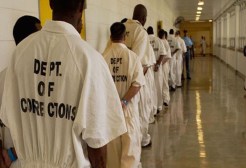
Across America, prison labor remains a vestige of the old convict leasing system that Robert Perkinson describes in great detail in Texas Tough.  Some inmates receive nominal wages–ranging from a dollar a day to a princely forty cents an hour; others, like the striking inmates in Georgia, work for nothing.

When discussing prison labor, it is important to avoid vague generalities.  Every state has its own laws and practices vary widely.  Sloppy references to the “prison industrial complex” can conjure images of multinational corporations earning massive profits from unreimbursed prison labor.  This happens, to be sure, but more prison labor involves chores related to prison life: preparing meals, doing laundry, cleaning floors, landscaping, gardening and, in some prisons, large-scale agriculture.  In most cases, private corporations aren’t involved, but there are plenty of exceptions.

It has been estimated that 80,000 inmates in America work directly for corporate interests, which suggests that only one-in-twenty-eight American inmates fall into this category.  Most inmate labor mitigates the cost of incarceration–one reason why, since the days of convict leasing, it has been so popular. (more…)

Glover verdict in New Orleans raises more questions than it answers

By Alan Bean

On December 9, a federal jury in New Orleans convicted two police officers for burning the corpse of Henry Glover, violating civil rights, obstructing justice, and misleading federal investigators.  The jury also convicted an ex-officer of shooting Glover with a .223 caliber assault rifle. 

Has justice been served, or does this verdict raise more questions about the New Orleans police force than it answers?

Writing for ProPublica, A.C. Thompson, prefaces his article with a troubling statement:

“I’ve been reporting in New Orleans for more than three years, and I can say I’ve never encountered more people who are terrified of the police. Looking at the sad and awful death of Henry Glover, it’s easy to see why.” (more…)

When the police knock down your door: more on the Richardson Raid

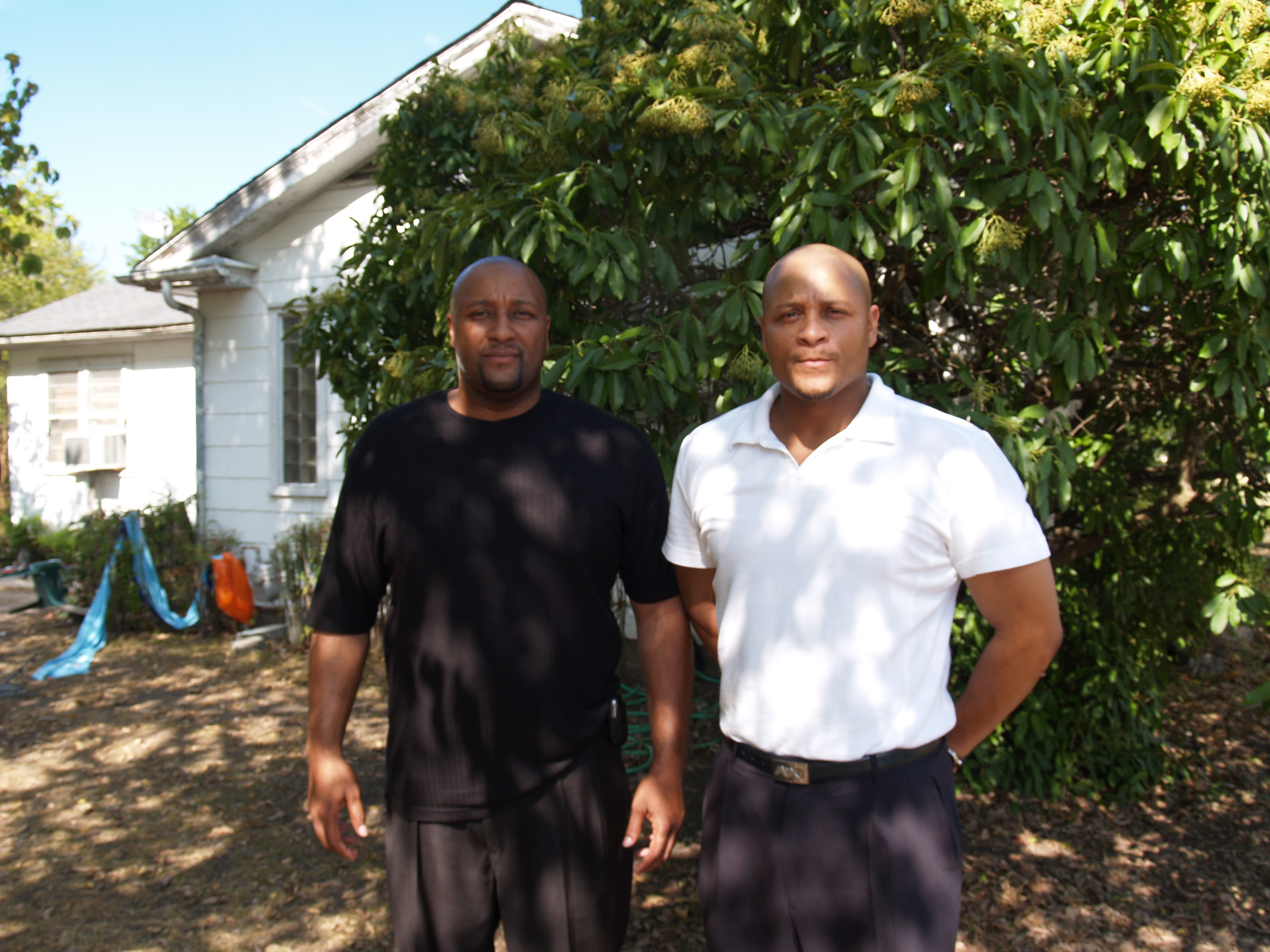
Vergil and Mark Richardson

By Alan Bean

Friends of Justice was first to bring you the troubling story of Mark and Vergil Richardson, but we certainly aren’t the last.  First we had Wade Goodwyn’s excellent story for NPR’s All Things Considered, and now Jordan Smith of the Austin Chronicle is using the Richardson story as an entre into the strange world of no-knock searches for The Crime Report.  Radley Balko, one of the experts interviewed for Smith’s story, reports that “the number of SWAT call-outs averaged 3,000 annual between the 1980s and 2005. Now the annual figure is roughly 50,000.”

When Police Break Down Your Door

Jordan Smith

December 15, 2010

An increase in the use of  ‘no-knock’ warrants around the country has alarmed civil liberties advocates.

On Nov. 17, 2007, Vergil Richardson was sitting at a table in the house he owns in the small northeast Texas town of Clarksville, playing dominoes with several relatives, including his half-brother Kevin Calloway, when the front door exploded inward and the living room was flooded with police.

“They just broke into the house,” Vergil recalled recently. “They had guns on us and threw me down on the floor.” (more…)

When schizophrenia became a black man’s disease

In the late 1960s, schizophrenia became a black man’s disease. 

In late 1963, Malcolm X was asked to comment on the assassination of president John Kennedy.  He called it a case of “America’s chickens coming home to roost.”  Outraged by this comment, the Nation of Islam prohibited their rising star from speaking publicly for 90 days.  When that period expired, Malcolm announced that he was severing ties with the nation.

 In August of 1965, rioting broke out in the Los Angeles neighborhood of Watts.  Before order was restored, 34 people were dead, 1,032 were injured, and 3,438 had been arrested.

At a civil rights rally in Greenwood, Mississippi on June 17, 1966, Stokely Carmichael the chairman of the Student Nonviolent Coordinating Committee (SNCC), introduced the term “black power” into the American lexicon.  

Four months later, Bobby Seale and Huey P. Newton organized the Black Panthers in Oakland. 

The mainstream civil rights movement, though seemingly triumphant, hadn’t addressed the economic misery and building anger within the black urban ghetto.  Martin Luther King achieved unparalleled success by adapting his protest language around the perceptions of middle class white moderates.  The Black Power movement got up in the face of white America, demanding radical and immediate change.

How did white folks respond to this challenge?   Not well.  Richard Nixon was elected in 1968 on the strength of a “law and order” message.  Everybody knew what the Republican candidate was talking about.  (more…)

Does Mississippi want a civil rights museum?

The Rev. Martin Luther King Jr. (front left) walked in the funeral procession for Medgar Evers in June 1963. Evers was shot and killed in the driveway of his home in Jackson, Miss.
The funeral procession of Medgar Evers

Does the state of Mississippi really want a civil rights museum?

 
State Senator David Jordan, a black Democrat from Greenwood in Leflore County, certainly isn’t convinced. “It comes to a point that I don’t think Mississippi wants her history clearly told,” he told Byrd.
 
State Senator Hillman Frazier, a Democrat from Jackson, also has his doubts.  Governor Hailey Barbour initially embraced the idea of building a civil rights museum, but has done little to make it happen.  “It’s very frustrating when you’re visiting Memphis and Birmingham,” Frazier told the WP, “and they’re telling Mississippi’s history when we’re ground zero for civil rights.” (more…)

Death penalty on trial in Harris County

Harris County Judge Kevin Fine

Harris County Judge Kevin Fine is presiding over a dramatic hearing that, in essence, has placed the Texas death penalty on trial.  (As the picture to the left suggests, Judge Fine is not your average jurist.  Do the tats suggest an affinity with the accused?)  

According to the Houston Chronicle, “Defense lawyers for John Edward Green are arguing that Texas has executed two innocent defendants, and the procedures surrounding the death penalty in Texas are unconstitutional because there are not enough safeguards.” (more…)

Greenwood’s black community questions suicide hypothesis


Senator David Jordan

Update: The Leflore County Coroner has officially concluded that Mr. Carter’s death was a suicide

The hanging death of Frederick Jermaine Carter is being interpreted as a suicide by local offials.  The civil rights community has problems with that theory.  According to Mississippi state senator, David Jordan, a resident of Greenwood, “There’s not a single black that’s talked to us who believes that he hanged himself.”  The USA Today story below does a good job of presenting both sides of the argument. (more…)