Category: Criminal justice reform

When schizophrenia became a black man’s disease

In the late 1960s, schizophrenia became a black man’s disease. 

In late 1963, Malcolm X was asked to comment on the assassination of president John Kennedy.  He called it a case of “America’s chickens coming home to roost.”  Outraged by this comment, the Nation of Islam prohibited their rising star from speaking publicly for 90 days.  When that period expired, Malcolm announced that he was severing ties with the nation.

 In August of 1965, rioting broke out in the Los Angeles neighborhood of Watts.  Before order was restored, 34 people were dead, 1,032 were injured, and 3,438 had been arrested.

At a civil rights rally in Greenwood, Mississippi on June 17, 1966, Stokely Carmichael the chairman of the Student Nonviolent Coordinating Committee (SNCC), introduced the term “black power” into the American lexicon.  

Four months later, Bobby Seale and Huey P. Newton organized the Black Panthers in Oakland. 

The mainstream civil rights movement, though seemingly triumphant, hadn’t addressed the economic misery and building anger within the black urban ghetto.  Martin Luther King achieved unparalleled success by adapting his protest language around the perceptions of middle class white moderates.  The Black Power movement got up in the face of white America, demanding radical and immediate change.

How did white folks respond to this challenge?   Not well.  Richard Nixon was elected in 1968 on the strength of a “law and order” message.  Everybody knew what the Republican candidate was talking about.  (more…)

Michelle Alexander: hard times won’t end the drug war

With America wrapped in the coils of a budget crunch, can we afford a drug war?  Shouldn’t the appalling cost of mass incarceration be giving us a terminal case of sticker shock? 

Many pundits are looking for modest cutbacks in prison populations and narcotics task forces in the years ahead.  No need to worry, they suggest, the new Jim Crow will soon collapse under its own weight.  It might be a slow process; but change is inevitable.

Michelle Alexander isn’t convinced.  Her article, “Obama’s drug war,” will appear in the December 27th edition of  The Nation along with several shorter pieces written by notable drug war critics like Bruce Western and Marc Mauer

Most of the articles in this series advance common sense public policy arguments construing the war on drugs as a misguided attempt at crime control.  Most of the writers know it ain’t that simple, but when you’re writing for the Nation you reach for arguments that click with white liberals.

Michelle Alexander comes bearing bad news.  The war on drugs and mass incarceration cannot be scaled back, she says, “in the absence of a large-scale movement—one that seeks to dismantle not only the system of mass incarceration and the drug war apparatus but also the habits of mind that allow us to view poor people of color trapped in ghettos as ‘others,’ unworthy of our collective care and concern.” (more…)

Death penalty on trial in Harris County

Harris County Judge Kevin Fine

Harris County Judge Kevin Fine is presiding over a dramatic hearing that, in essence, has placed the Texas death penalty on trial.  (As the picture to the left suggests, Judge Fine is not your average jurist.  Do the tats suggest an affinity with the accused?)  

According to the Houston Chronicle, “Defense lawyers for John Edward Green are arguing that Texas has executed two innocent defendants, and the procedures surrounding the death penalty in Texas are unconstitutional because there are not enough safeguards.” (more…)

Portraits of a Problem: the Jena 6 and Mass Incarceration

Robert Bailey working out with friends

Thanks to their participation in the nationally televised Bayou Classic, Mychal Bell and Robert Bailey Jr. have now been recognized for something unrelated to the Jena 6 phenomenon.  When their names were called, it was because they had made a contribution on the field.

But there is far more at stake here than simple athletic success.  Mychal and Robert are making a positive contribution to their teams under the tutelage of seasoned football men who care about their players’ moral and educational advancement more than they care about winning.  Mychal and Robert are getting a second chance.

That’s a big deal when you consider that, in the natural order of things, Mychal and Robert would now be institutionalized felons rotting away in obscure Louisiana prisons.  By the time the prison doors swung open, the road to higher education would be blocked by dozens of petty regulations designed to keep offenders from reintegrating into society.  (more…)

Challenging the new Jim Crow, part 2

This is the second excerpt from a speech recently delivered at the Campaign to End the Death Penalty conference on the campus of the University of Chicago.  The introduction can be found here. AGB

The new Jim Crow comes to Tulia, Texas

By Alan Bean

Sheriff Larry P. Stewart

To understand how radically our society has changed it is helpful to trace the life stories of the folks running the new Jim Crow machinery in small southern towns. The stories you are about to hear are taken from cases investigated by Friends of Justice, but they are symptomatic of a national disease.

I started talking about the new Jim Crow in Tulia, Texas when I realized that a drug bust that swept up half the adult black males in town was standard operating procedure.

There is a picture of Larry Stewart in an old copy of the Tulia Herald. It was Cowboy Day at the Tulia High School, circa 1960, and Larry came dressed as an old-time Texas Sheriff, badge and all. But Larry wasn’t supposed to grow up to be a lawman; like most local boys he wanted to farm like his daddy did before him. (more…)

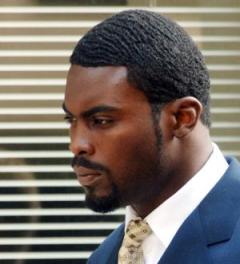
Michael Vick dodges the New Jim Crow

Michael Vick in court

Michael Vick’s performance against the Washington Redskins on Monday Night Football may constitute the most impressive single game by a quarterback in the history of the NFL.  Nicole Greenfield gives the religious backstory of Vick’s remarkable post-prison turnaround at Religious Dispatches this morning. 

But Washington Post columnist Courtland Milloy takes a different slant.  Quoting copiously from Michelle Alexander’s game-changing The New Jim Crow: Mass incarceration in an age of colorblindness, Milloy points out that Vick’s “prison was just what I needed” testimony may be sincere, but his experience is hardly typical.  The Eagle’s QB isn’t just adept at dodging would-be tacklers, his celebrity status and high-profile supporters allowed him to escape America’s new caste system.  Here’s the normal pattern:

“Once swept into the system, one’s chances of being truly free are slim, often to the vanishing point,” Alexander writes. “The fact that more than half of the young black men in any large American city are currently under the control of the criminal justice system [or saddled with criminal records] is not – as many argue – just a symptom of poverty or poor choices, but rather evidence of a new racial caste system at work.” (more…)

Goodwyn: Civil Rights, Judicial Bias Surround Texas Drug Case

Wade Goodwyn does his usual impeccable job of bringing an utterly outrageous story to national awareness.  If you follow this blog you are already familiar with the basic outline of this story, but Goodwyn inserts the human element that is typically missed by the mainstream media.  You can hear the original audio version at the All Things Considered Site.

At the end of the Richardsons’ story you will find brief summaries of three related Texas narcotics cases Wade Goodwyn has covered over the years, stories that provide some of the best New Jim Crow illustrations available anywhere in America.  Friends of Justice didn’t just bring the Richardson fiasco to public attention, we were also involved in the other three cases (see my comments below at the end of the NPR piece).

One last word.  Without the dogged determination and courage of the defendants (particularly Vergil and Mark Richardson) and attorney Mark Lesher, justice would never have been served in this case.

Alan Bean (more…)

J. Alfred Smith, Sr.: “Reclaiming our Prophetic Voice”

Rev. J. Alfred Smith, Sr.

I first met J. Alfred Smith, Sr in 1995 when he preached a series of prophetic-evangelistic sermons at First Baptist Church Kansas City, KS.  Charles Kiker (a founding member of Friends of Justice) was pastor of FBC at the time and I was there to provide the music.  Dr. Smith and I were chatting informally before the first service; he was telling me about the impact the war on drugs was having in his community.  To my utter astonishment, the man began to weep uncontrollably–something I had never seen a preacher do before.  He wasn’t the slightest bit embarrassed by his tears.  In fact, he behaved as if weeping was the normal and appropriate response to the circumstances in which he found himself.

J. Alfred Smith, Sr. was Senior Pastor of Oakland’s Allen Temple, one of the premier pulpits in America.  He is now Pastor Emeritus of that church; his son, J. Alfred Smith, Jr., has since taken over as Senior Pastor.

J. Alfred Smith, Sr. and several of his parishioners were tremendously supportive during our justice struggle in Tulia, Texas.  It was there I began to understand the tears I had witnessed several years earlier.  I last saw Dr. Smith at the New Baptist Covenant gathering in Atlanta a couple of years ago.

The sermon below addresses several issues regularly featured on this blog.  Dr. Smith talks about the betrayal of “the prosperity gospel”, the war on drugs, mass incarceration, Martin Luther King, Fannie Lou Hamer, Dorothy Day, the Rev. Jeremiah Wright, Dietrich Bonhoeffer, and the need for a new kind of Christianity, or, from an African American perspective, the recovery of the old prophetic gospel that once animated the civil rights movement. (more…)

Challenging the New Jim Crow, part 1

By Alan Bean

This post is the introduction to a keynote address I delivered at a Campaign to End the Death Penalty conference held recently on the campus of the University of Chicago.  Subsequent posts can be found here:

Sheriff Larry Stewart (Tulia, Texas)
DA J. Reed Walters (Jena, Louisiana)
 DA Doug Evans (Winona, Mississippi)
 Conclusion

Challenging the New Jim Crow  

I come bearing bad news.  Since the early 1980s, the fundamental structure of the American criminal justice system has changed.   It is less and less about preventing and punishing crime, and more and more about managing and controlling the surplus population.  Consider a few statistics:

  • The Texas prison population soared from 39,000 in 1988 to 151,000 in 1998—an increase of 387%.  Between 1980 and 2004, the prison population increased almost six-fold. 
  • Spending on corrections during this period increased by 1600 percent. 
  • Between 1980 and 2000, Texas spent seven times more on its prison system than on higher education.
  • In 1950 there was a 3% chance that an African American male born in Texas would do prison time; by 1996 there was a 29% chance. (more…)