My post on Bishop Eddie Long has been raising eyebrows. Many readers agree with my critique of the “prosperity gospel”; others find it offensive. One reader, who asked to be taken off my distribution list, was horrified by my perceived willingness to throw Bishop Eddie to the wolves before he has his day in court.
A few words of clarification are in order.
Eddie Long’s guilt or innocence is not my primary concern. The state of Georgia has filed no charges against the Bishop; this is a civil case. When the weak find themselves on a collision course with the strong, my sympathies are with the weak (the strong can take care of themselves). Eddie Long has always been the man with all the power. Having transformed himself into an authority figure of superhuman stature, the pastor assumed the mantle of responsibility.
Pastor Long has compared to himself as David up against Goliath. That image should be reversed. Yesterday, thirty-two pastors came to Long’s church to commiserate with him and show their support. Goliath received that kind of encouragement from the Philistines; David was on his own. (more…)
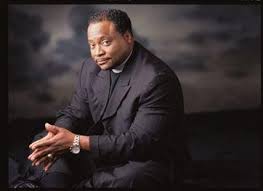
Bishop Eddie Long of New Birth Missionary Baptist Church in Lithonia, Georgia has been accused of using a mentoring program to lure gifted young male congregants into sexual relationships. Long, an adherent of the “prosperity gospel”, told his congregation this past Sunday that, although he has never advertised himself as “a perfect man”, he intends to fight the allegations in court.
Significantly, the bishop never claimed to be innocent. (more…)
I write this from Lola Flowers’ dining room table. Yesterday I travelled to the Mississippi State prison in Parchman, Mississippi to visit Curtis Flowers. The last time I saw Curtis he was pronounced guilty of murder and sentenced to death by lethal injection. Then they ushered the defendant out of the courtroom.
Curtis didn’t react to the verdict–it was the fourth time it had been pronounced over the past fourteen years. Two other trials ended in juries divided along racial lines.
Lola and Archie Flowers didn’t show much emotion either. They quietly went to the car to unload the special transparent television Curtis used the last time he was a Parchman resident.
But just beneath the surface, the emotion runs deep. I have been corresponding with Curtis since the June, 2010 trial. His faith is strong. Sooner or later, he fully expects to be exonerated. But life on Mississippi’s death row is a struggle at the best of times.
I didn’t see Curtis yesterday. After driving nine hours from Arlington, Texas, I was informed that my name had not been placed on his visiting list. Curtis had been told to send out visitation forms to everyone he wanted to be on his list. I got my form and returned it. But someone at Parchman decided to leave me off the visitation list. So, while Lola Flowers hopped on the visitation bus, I remained in the waiting room. (more…)
A single fact reveals the strength of the conservative movement in America: uncompromising liberal zealots like Dennis Kucinich become fodder for late night comedians (Jon Stewart of the Daily Show included) while uncompromising conservative zealots like Rush Limbaugh have taken control of the Grand Old Party.
Put another way, undiluted conservatism sells; straight up liberalism smells fishy to a majority of Americans.
True blue progressives like to think that, if the Democrats painted a glowing portrait of a fair, inclusive, compassionate America the electorate would tilt our way.
We aren’t likely to see that proposition tested any time soon. Our progressive President got elected by contrasting a good war (Afghanistan) with a bad war (Iraq). He offers a soft critique of the war on drugs but keeps pouring federal money down the same black hole. He caved in on the off shore drilling issue in advance of an unprecedented disaster that will become a big part of his political legacy. He let the public option die on the Senate floor without a word of protest.
I have observed these developments with dismay. But Barack Obama got where he is because he learned the primary lesson of the 20th century: conservatives flourish when they stick to a simple America-first, pro-business, limited government mantra; liberals survive by cleaving to the pragmatic (and intrinsically boring) center.
This should be the best of times for progressive politics. The big issues of the day, the health care crisis, the banking imbroglio, the mortgage mess and the BP oil disaster, are advertisements for federal regulation. So, why are Rush Limbaugh, Glenn Beck and the Tea Party Movement marching from glory to glory while progressives find themselves on the ropes?
It’s simple. The apocalyptic disasters befalling this country are scary. People are afraid. Fear creates an every-man-for-himself stampede to the life boats. Folks in the grip of a fight-flight complex snarl at moderation, balance, compassion and sacrifice.
Frightened people cling to old, familiar ways. They embrace the simple tenets they imbibed with their mother’s milk: unquestioning patriotism, biblical literalism, American exceptionalism and white hegemony.
Progressives are mystified by Glenn Beck’s quest for a lost golden age. In 1950, the freedom and professional aspirations of women and minorities were radically limited. Who’d want to go back there? Just look at the progress we have made!
Conservatives remember the sense of unity and common purpose created by World War II and the long, twilight struggle against international communism. Although they are loath to admit it in public, the architects of the conservative revival despise the civil rights movement for destroying the myth of national virtue. Rand Paul, fresh from his primary victory in Kentucky, told Rachel Maddow last night that he would have opposed laws designed to eliminate Jim Crow segregation in businesses. This concern was ostensibly rooted in Paul’s libertarian convictions, but there is a deep disdain on the hardcore Right for mushy words like “equality, justice, diversity and inclusion.”
Conservatives want to keep things simple: simple religion, simple economics, simple national mythology, simple moral standards and a simple system of social stratification in which everybody knows his place (and no one uses awkward phrases like “his or her”).
If Mexicans would go home, women would return to their traditional roles as primary parents and help meets, if the Bible returned to the classroom, if women and minorities would just be grateful we gave them the vote, if we could rebuild a common front against socialism, if little children could hear the glorious story of manifest destiny and American exceptionalism, and if entrepreneurs were free to make money and create jobs, America would once again control the world.
Old folks traumatized by rapid change, parents bringing children into the world, and suburbanites fleeing the crime and despair of the inner city are reassured by by the supermarket spirituality of the megachurch and by folks like Rush Limbaugh and Glenn Beck. Ultimately, the line between Beck-Limbaugh Americanism and Christian piety is hard to discern.
Can the simple tenets of American conservatism triumph perpetually?
Probably not.
Traditional Christianity, evangelical and mainline, has hit a wall: even the Southern Baptists are experiencing negative growth. This trend will continue.
The need for increased government regulation is now too obvious to ignore.
The political clout of ethnic minorities will continue to expand.
Women will continue to demand equality in the home, in religious communities, and in the workplace.
The war in Iraq has exposed the limitations of military power.
The banking industry and international corporations are no longer seen as engines of national prosperity.
The health care debacle wasn’t fixed by the half-measures that survived the political process.
The BP oil spill will spark a new environmental movement.
The price tag of mass incarceration is too high, the war on drugs is too futile, and the racial disparities in our legal system are too glaring to be ignored.
These factors will keep progressive politicians in the game. Just barely. But high levels of threat will generate a desire for simple religion, simple politics, simple history, simple economics and a simple social hierarchy.
Most liberals recoil in horror from the Religious Right. America would be better off, they say, if the Old Time Religion went the way of the Dodo. In the ivory towers of the American academy, this opinion has hardened into orthodoxy.
Folks can go secular if they choose, but millions of Americans have developed a hankering for a new kind of Christianity.
I am one of them.
The old evangelical verities are too captive to fear-based politics to be of much help to people who care about justice, equality and simple fairness.
Unfortunately, liberal religion is too amorphous, arid and academic to instruct the faithful or inspire the young.
We need a new kind of Christianity. A stout, unapologetically biblical, non-dogmatic, ecumenical, justice-loving, Jesus-centered, truth-celebrating version of the old, old story of Jesus and his love.
This kind of religion won’t appeal to everyone, and shouldn’t try to. But as things presently stand, educated young people growing up in the faith are generally forced to chose between a morally compromised and intellectually indefensible brand of evangelicalism and a sterile secularism that provides little foundation for ethical reflection and practical compassion.
Let’s be clear, I’m not looking for a new-and-improved Christianity to take the place of last year’s model. The churches currently in existence have compelling reasons for maintaining a steady-as-she-goes approach. Megachurches are in the mass marketing business. As such, they have to keep things simple, hip and uncontroversial. The Bible must be viewed as a perfect book that is utterly free of error or internal contradictions. That’s what I mean by simple. But megachurch religion must be limited to the perceived needs of the faithful, and the faithful aren’t overly concerned about issues like economic justice, criminal justice or the plight of poor people. Ergo, these subjects are pretty much off the table. A vague form of small government conservatism is embraced by most megachurch pastors because it allows preachers to sidestep all kinds of application issues. How does Christian piety relate to the social issues of the day? It doesn’t . . . unless we are talking about abortion or homosexuality.
I am arguing for an alternate version of Christianity that asks the hard questions and struggles to live out the answers. Can such a church get big enough to support a pastor? I’m not sure. This may sound like an odd question, but it explains why this new kind of Christianity generates a lot of talk and very little practical action. In religion, as elsewhere, money drives the game.
The new kind of Christianity I envision would NOT be in head-to-head competition with the established church, and it wouldn’t be interested in questioning or supplanting non-Christian religious traditions. Adherents of this new Christianity would have little interest in arguing with athiests and unbelievers. The goal would be spiritual growth coupled with an honest attempt to apply the teachings of Jesus to the challenges of the real world.
Brian McLaren
Tragically, as folks like Brian McClaren, Jim Wallis and Bishop NT Wright have learned from painful experience, attempts to reframe historical Christianity attract critics from both ends of the ideological spectum.
Furthermore, you can’t build a megachurch or a popular movement on this kind of religious foundation.
The religious awakening I have in mind won’t crave cultural hegemony. Let’s be honest, a viable religious counterculture dedicated to biblical justice won’t gain wide popular appeal.
Here’s the real test. Religious people, white Christians in particular, must come to the grips with the spiritual wickedness in the criminal justice system. Can we stand up for the victims of wrongful prosecution?
If we can, we’re beginning to get it.
If we can’t, we haven’t grasped the radicality of the Gospel Jesus died for.
Two bizarre murder investigations raise questions about the state of the American criminal justice system.
Who dat, who dat, who dat say gonna beat dem Saints?
If I had a dollar for every time I heard the Saints famous chant during a long and involved Super Bowl night I could fund Friends of Justice in perpetuity.
I was in Slidell, LA investigating the Kelvin Kaigler story (and a host of related complaints) when I got an invitation from Will Harrell to join him in New Orleans for the big game. I met Will back in the summer of 2000 when he called me in Tulia to see if there would be any more drug trials. I told him Kareem White was up on September 7 and a few days later Will, the newly minted Executive Director of the Texas ACLU was walking into the Swisher County Courtroom.
Although Will and I have spent a lot of time together over the years (he is a very bad influence on this preacher boy) I didn’t know his personal biography very well. Turns out he hails from Yazoo City, Mississippi and lived as a boy in New Orleans. He cheered for the Saints when Archie Manning (father of Payton and Eli) quarterbacked the team. With all the other Saints fans, Will invested most of his life, boy and man, watching the pride of New Orleans slinking off the field in disgrace.
Not surprisingly, Will was captivated by the football game; brimming with hope, bristling with dread. A few former neighbors from Austin had shown up to watch the game at his house, but they met some girls in a bar and never returned. That sort of thing happens a lot in New Orleans.
So it was just me and Will. He showed me the paper mache statue of San Simon he was given during his days in Guatemala, and lit the candles he had placed on either side of the icon. Maybe the patron saint of Latin American freedom could bring the Saints a victory.
With the Colts down by seven and plenty of time on the clock, Paton Manning trotted onto the field. “He thinks he’s gonna win,” Will told me. “There is no doubt in his mind; that’s what makes him so dangerous.”
But the future hall of famer felt the heat from his left side and fired the ball into first-down territoty a second earlier than he would have liked to. Tracy Porter, New Orleans fleet defensive back, cut in front of Manning’s receiver, picked off the pass and raced for the end zone. Forty-three years of frustration had ended. A triumphant Will Harrell, bowed to St. Simon, grabbed his double bongo drum, and headed out to the porch. A stream of jubilant humanity was already flowing down Rue Dauphine toward the French Quarter. I crossed the street to take a picture of costumed kids with “NOLA” scrawled across their foreheads in black marker. They grinned for the camera and tossed me some Mardi gras beads.
By the time I was back to Harrell’s porch he had a smaller bongo slung over his shoulder and was ready to hit the streets. It was only 10:00 pm so I figured I’d tag along for a while–this was history in the making. It never occurred to me that we wouldn’t get back to Will’s place until 5:00 am.
You don’t see real celebration up close very often. This wasn’t your run-of-the-mill championship celebration; this was Easter morning. This was redemption.
As Will and I followed the growing crowd I couldn’t stop thinking about Rodney (Jack) Strain and the anti-New Orleans rant he had delivered three years earlier, particularly the part I failed to quote in my recent Kelvin Kaigler post: “I don’t want to see temporary housing because of Katrina turn into long-term housing for a bunch of thugs and trash that don’t need to be in St. Tammany Parish. We don’t want to wake up one day and find out that New Orleans has been damn successful at running all of the trash out of the city and it end up roosting in St. Tammany.”
At a meeting earlier that day at the Holy Ghost and Fire World Outreach Center in Slidell, Prophetess Kathleen Bacon told me that the High Sheriff was likely referring to the FEMA trailers that sprouted north of Lake Ponchartrain in the wake of hurricane Katrina. Conservative white folk have been fleeing New Orleans for generations. First they fled to the suburbs of Metairie and when upwardly mobile blacks followed suit, folks started moving to the North Shore, settling in places like Covington and Slidell.
Thinking back on Sheriff Jack’s anti-New Orleans rant I was struck by the man’s confidence–it was as if he saw himself as the embodiment of a people scared to death that their righteous way of life was being contaminated from without. I had sensed the same paranoid spirit in a sermon delivered by a Baptist pastor in Jena Louisiana shortly after a white student was beaten senseless at the high school. After celebrating the glories of small town life, the pastor warned his flock that big city vice and violence had invaded their holy Zion in the piney woods. He was referring, of course, to the Jena 6.
But Strain’s revulsion for New Orleans transcended race. Every race under the sun was on the streets of the French Quarter Super Bowl night, but white folks predominated. But these were not your Grandma’s white people. As Will and I followed the joyful throng we passed by an old-time jug band that was sitting in the doorway of a neighborhood bar. Looking for all world like Charles Manson, the guitarist was strumming his Epiphone guitar and wailing that old Louie Armstrong standard, The Saint James Infirmary Blues: “I went down to the St. James Infirmary, saw my baby there, stretched out on a cold white table, so sweet, so cold, so fair.”
I wondered if Louie Armstrong had ever performed the song in that very establishment. If not, he had sung it within a stones’ throw of the place. St. James Infirmary is a song about the tragic death of a young woman. The song hints that the singer’s “baby” was the victim of foul play. That sort of thing happened in old New Orleans. You run into death on the streets of old New Orleans. A mad waltz between life and death drives the spirit of celebration for which the town is famous. Jack Strain’s St. Tammany Parish is all about light and life (to hear Jack tell it anyway); New Orleans lives in the shadowlands between the light of life and the dark shroud of death.
There is nothing subtle about this death dance. You see it on the walls of the little bars: skulls, skeletons and other harbingers of death. There is more than a hint of threat and intimidation in some of the costumes I saw on the street Super Bowl night. People were not trying to look pretty or sexy; they were trying to look grotesque and slightly dangerous. And they succeeded.
Still, most of the folks in the pink hair and garish costumes live relatively normal lives and are in little danger of driving over the cliff. Their regular celebrations of animal appetite are only one side of the picture; they are also parents with children to care for and employees with jobs to go to. Moreover, the rules to New Orleans Bacchanalia are solidly anchored in the history of the town–these folks know what to do and how to do it–even when dem Saints win de big game. What could be more reassuringly innocent than a sousaphone blaring out When the Saints go Marching in?
And then there is the traditional role of New Orleans religion. These sinners are also saints. Mardi gras provides one last celebration before Ash Wednesday ushers in the somber season of Lent. There is a rhythm to these things. New Orleans is far more than a party town–at least for those who live there long enough to soak in the history.
On the other hand, Sheriff Jack Strain has a point; a lot of people go off the rails in New Orleans. In fact, many were never on the rails in the first place. Take away the counterbalance of work, family and religion and big cities like New Orleans can get pretty bleak. Thousands of people are too captive to their addictions to celebrate anything. The demand for booze, marijuana and hard narcotics will always be supplied. In the booze category, a rough and ready set of local and state rules apply. For the illegal stuff, only the threat of violence keeps folks honest. When people don’t hold up their end of the contract you can’t take them to small claims court. Bones must be broken–and that’s just for starters.
Back in 1986, Clyde Simpson, a Mississippi boy, was asked to store bales of marijuana in his garage in exchange for $50,000. Clyde had a little painting business at the time and his brother Doyle had come down from Winona to help him. One day somebody broke into Clyde’s garage and stole a few bales of marijuana. That made things contractually complicated. Did the big boys still owe Doyle his $50,000, or did he now owe them? To settle the issue, the big boys decided to take out a hit on poor Clyde.
One morning in December, Doyle Simpson pulled up to Clyde’s place and waited in his car in the driveway for his brother to come out. Doyle didn’t know that a man with a knife and a gun was hiding behind the fence at the side of the house. When Clyde emerged, the man slit his throat like a watermelon and pushed him inside the house. Clyde was in shock. He rushed to the refrigerator to find ice for his throat, but two bullets put him on the floor. As a puddle of blood began to form on the kitchen floor, the man with the knife burst out the front door and caught sight of Doyle waiting in his car. Thinking on his feet, the man climbed into the car, held his gun to Doyle’s head, and told him to drive.
When Doyle had driven fifteen miles west, the man with the knife told him to stop the car. Doyle was handcuffed to a tree. His throat was cut. Two bullets were fired and both found their mark. The man went back to the car to reload his weapon, then, deciding Doyle was dead, climbed into the car and attempted to drive away. But the car was helplessly stuck in the mud, so the man ended up hitching a ride on the highway.
Doyle Simpson found a broken bottle and was able to saw off the limb that tethered him to the tree. He then staggered to the highway, collapsing on the roadway just as a trucker rounded the bend. The driver drove Doyle to the hospital just in time to save his life.
The killer, a hired thug named Horace Toppins Jr, was charged with several counts in two Louisiana parishes and eventually sentenced to 30 years. It looked for all the world like an paid hit, but the victims were low status so nobody traced the crime back to its source.
Ten years later, in 1996, Doyle was back in Winona, Mississippi when somebody sold him a gun. Two months later, four people were gunned down in Tardy’s Furniture Store in Winona, the very morning Doyle reported his gun had been stolen from the glove compartment of his car. Ballistics tests demonstated that whoever killed Bertha Tardy and three employees had used Doyle Simpson’s gun. Doyle was picked up and asked who sold him the gun. Doyle said he got the gun from his step-brother, Robert Campbell.
It was a lie.
Confronted by investigators, Doyle said he had purchased the gun from a friend named “Ike”, but Doyle didn’t know the man’s last name.
Surprisingly, no one has ever pressed Doyle on the Ike question, perhaps because everybody knows its pointless.
But Robert Campbell, Doyle’s half-brother, believes that the mystery man who placed the murder weapon in Doyle’s hands is connected to the Tardy murders. Moreover, Campbell argues that the folks that paid to have Clyde Simpson murdered in 1986 were behind the murders in Winona in 1996.
Independently, I have come to the same conclusion. I have no idea why anyone would want Bertha Tardy dead; but somebody did. Since its hard to find an experienced hitman in Montgomery County, Mississippi, it was natural to look to a big city like Memphis or New Orleans. And if you wanted access to hired killers in the Crescent City, Doyle Simpson (a man who had worked at Tardy Furniture in the past) would be the man to approach.
I am not suggesting that Doyle Simpson was the trigger man, or even that he anticipated the horrible crime. But anyone who has seen the man testify or, like me, read through the transcripts of all five trials, knows that Doyle Simpson makes a frightened witness.
Did anyone steal the murder weapon from Doyle Simpson’s car the morning of July 16, 1996? We have only Doyle’s word for it and, as we have seen, he is not a credible witness. Was the gun stolen at all, or did someone from Doyle’s New Orleans past make an offer the Winona boy couldn’t refuse?
There is little evidence that these questions have ever been asked. Certainly not by Doug Evans, the Mississippi prosecutor who decided the day Bertha Tardy died that an ex-employee named Curtis Flowers did the deed. No other options were ever considered. Evans didn’t want to ruffle feathers in Winona’s white community by suggesting that somebody held a grudge against a well-respected local merchant. Of course, prosecuting Curtis Flowers has ruffled plenty of feathers in Winona’s black community, but Mr. Evans can live with that.
As we have seen, the fabled dark side of New Orleans received national attention ten years after the Tardy murders. As in Winona, four people had been killed execution style in the North Shore town of Slidell. Investigators speculated that Roxy Agoglia, a heroin addict and heroin dealer with roots in New Orleans, had angered the kind of people that came after Clyde Simpson twenty years earlier. Jack Strain certainly thought so. St. Tammany Parish had never seen a quadruple murder. New Orleans trash, Sheriff Jack told the cameras, had invaded the fair precincts of St. Tammany Parish and somebody was going to pay. A young witness told investigators that one of the killers had a scar on one cheek, a tatoo on his arm, and wore dreadlocks. To Sheriff Jack, that description had New Orleans Trash written all over it.
This explains why the first year of the murder investigation into the quadruple murders in Slidell focused on New Orleans heroin dealers with a penchant for violence. An investigator named Scott Davis was focusing his attention on a white heroin dealer who used two black men for “muscle”, one of whom had dreads, a tatoo and a scar. This fit witness testimony perfectly: a white guy waiting in the car while two black assailants pulled off the hit.
Then Gus Bethea had a chat with a Slidell drug dealer named Frank Knight. Frank was one of those denizens of New Orleans who never had a shot at the straight life. His mother was shooting heroin and dealing on the streets when Frank was born. In fact, it was Frank’s mother who suggested that her darling boy should confess to the police.
I know this sounds odd. Why would anyone say they were party to a notoriously violent drug hit if they had nothing to do with the crime? Well, if you are looking at 60 hard years for a multitude of drug-related felonies and the nice man in the uniform is hinting that you might be on the streets in seven years if you sign a confession, you sign the paper. Then you ask what you are signing so you will know what to say on the witness stand.
The New Orleans connection disappeared and Scott Davis was busted from detective to street patrol. The DA’s office had a confession and they knew a St. Tammany jury would buy it. So what if Frank Knight was fabricating a story in exchange for a get-0ut-of-jail-free card; a difficult case would be closed.
Once again, investigators refused to ask the obvious questions. Why would a young man like Kelvin Kaigler murder Roxy Agoglia and three innocent relatives? True, in High School, Kelvin always told his friends that he was from New Orleans; Slidell sounded so uncool. He dropped out of High School, got a job on the riverfront in New Orleans, fell in with the sort of people Jack Strain rails about, and began experimenting with crack cocaine.
Debbie Callens and Gloria Kaigler
Then, about a year before the quadruple murders in Slidell, Kelvin Kaigler’s life underwent a dramatic reversal. He developed a love for Christian rap music and cut off all contact with his former friends in New Orleans. “Kelvin was working in New Orleans when he had a car accident,” neighbor Debbie Callens, told me. “He totalled his car and didn’t want to replace it. He was doing landscaping work aroun the neighborhood and my husband and I had him work in our yard. When that kid smiles, everything lights up. He has a very bkind spirit, very gentle. When you see Kelvin, you can see into his soul. He told me he didn’t want a car because it wanted to stay close to home.”
“We felt like he was turning the corner,” Kelvin’s brother Earl tells me. “The guys he had been hanging with in New Orleans were kind of sketchy; the kind of people that would make money and blow it. But once he settled down, every penny Kelvin made was going into his music and his CD.”
The lyrics on the CD Kelvin released prior to his arrest are an earnest testimony to the dramatic conversion playing out in his soul.
Kelvin Kaigler
“Something’s missing inside,” he sings. “I’m tryin’ to think of what it could be. All the pain that I’m feeling, all the death that’s all around me. Lookin’ at myself up in the mirror, thinking where I went wrong.”
“No more chains holding me down,” Kelvin declares in another song, “bustin’ loose, flying free. I’m so weak, but the Lord kept me by his side, and brought me through all the rain, no more pain, and from that day, my life could never be the same. No more chains.”
Then everything fell apart. “The first week in August, Mr. John (that’s my father) closes down his barber shop in New Orleans, rents a van, and drives the whole family to Cairo, Georgia, to pick up my mother’s 90 year-old mother. Then we all drive up to Gatlinburg. It’s mostly white tourists up there, but we always have a good time. In 2007, Kelvin came along for the first time in a long time, and that’s when he was arrested. He saw them coming and told Mr. John he might want to open the door. These deputies busted into the room witht their guns drawn the second night the family was up there. One of them said he knew Kelvin didn’t do it, but they thought he might know something. But in the papers they made it look as if Kelvin was a fugitive from justice.
Kelvin Kaigler and Curtis Flowers have a lot in common. Both men love gospel music: Kelvin likes rap and Curtis (a generation older) prefers the traditional sound. Curtis leads the singing at prison church services and Kelvin continues to write rap songs behind bars. When I talked to him in the company of his attorney, Martin Regan, Kelvin was radiant. Like Curtis Flowers, Kaigler has no doubt that he will one day be exonerated. Martin Regan agrees, but knows they face a difficult legal fight.
Kelvin and Curtis share more than a love for gospel music; neither man is capable of killing four people in cold blood and neither man possesses the slightest motive for doing so. Roxy Agoglia, the woman who was murdered in Slidell in 1996, was a heroin dealer murdered because she couldn’t pay her debts. Kelvin Kaigler has no connection to the heroin trade. Neither does James Bishop, the second man Frank Knight says was with him on the fateful night.
Curtis Flowers had no reason to wish any harm to Bertha Tardy. True, Tardy and Flowers had a disagreement over some damaged batteries. “I was with Curtis more than once when Miss Bertha called him,” Robert Campbell told me today. “She was begging him to come back to work, but he wasn’t interested. He told me, ‘I don’t want a job where I deliver a piece of furniture and then, three days later, I go out and haul it back to the store.'”
Curtis Flowers held no personal animus toward Bertha Tardy. The woman gave him an $30 advance on his salary so he could enjoy the Fourth of July Holiday and begged him to return when the work week resumed. But Curtis had already decided to move in with his sister in Dallas where he could make twice the minimum wage salary he was pulling in Winona. The idea that he would kill four innocent people (two of them personal acquaintances) over a minor salary dispute is simply preposterous.
While two innocent men languish in prison the real perpetrators of mass murders in Slidell, Louisiana and Winona, Mississippi continue to ply their dangerous trade, likely on the streets of New Orleans.
This sermon was preached at St. John the Apostle United Methodist Church in Arlington, Texas on January 10, 2009.
“There are no good people and bad people. No right people and wrong people. Just one big lost humanity dying for the glory of God.”
LOVING THE WORLD
January 10, 2010
Luke 3: 1-22
Let’s face it, John the Baptist is a hard guy to relate to. He was severe, demanding and more than a little scary. Even as a young boy, John was drawn to the desert to the east of the Dead Sea. As he matured, he spent more and more of his time in the wilderness until, finally, it became his home. According to the Bible, locusts and wild honey was his steady diet.
John was the classic abstainer. He didn’t eat rich food, he didn’t drink wine and, it appears, he even refused to live indoors.
But there was a method in all this madness. John was trying to free himself from the corrupting influence of Imperial Rome. God’s Messiah, the Christ, was at hand—John could feel it. The Holy One of Israel would be like a harvester who beats the wheat on the threshing floor, storing the good grain in his barn, and burning the chaff in the fire.
John didn’t suffer from a messiah complex; his marching orders came from the fortieth chapter of the prophet Isaiah. John was “The voice of him that crieth in the wilderness, ‘Prepare ye the Way of the Lord.”
John’s job was to get God’s people ready for the coming of Messiah when, Isaiah promised, “every valley will be exalted and every mountain and hill made low.”
John knew what that meant. A true and purified Israel would be lifted up and the corrupt forces of Roman power and domination would be cast down . . . and cast out.
And when that happened, John believed, “All flesh shall see the salvation of God.”
Considered against this backdrop, John’s lifestyle makes a weird kind of sense. He didn’t drink wine because wine was costly. As Jesus reminded his disciples, John didn’t wear fancy clothes or live in palatial splendor: nice clothes and palaces cost money. And you couldn’t earn money in first century Israel without getting wrapped up in the Roman system.
John didn’t expect his audience to adopt his radical lifestyle in every particular, but he wanted them to live as far from Roman corruption as circumstances allowed. Tax collectors could collect what the law prescribed, but not a shekel more. Soldiers had to stop shaking down the populace and learn to live on their meager wages. If poverty was the price of moral freedom, so be it.
In John’s mind, money and corruption were joined at the hip; purity and poverty were sisters.
People came to John asking how they could prepare themselves for the coming Day of the Lord, and he was ready with an answer: “Whoever has two coats must share with anyone who has none; and whoever has food must do likewise.”
Was John a subversive, a radical, a weirdo on the fringe?
King Herod certainly thought so. This isn’t the Herod we meet in Matthew—the one who tried to kill the baby Jesus. That was Herod the Great. When that Herod died, his kingdom was divided up between four of his sons, one of whom bore the name of Herod Antipas. This is the Herod we meet in today’s text.
“Antipas” is a short version of the Greek word “Antipatros” which means “Like the father.” Antipas had an older brother, Antipater (a name that means essentially the same thing). But Antipater and another brother named Aristobulus were killed by their paranoid father, Herod the great. As his name Antipas suggests, the apple didn’t fall far from the tree. Herod Antipas really was “like the father.”
Herod Antipas came to power as an adolescent and had been on his throne for over thirty years by the time John the Baptist appeared in the wilderness. In the eyes of Antipas, John was just another weirdo revolutionary who needed to be eliminated.
Do we agree?
Let’s be honest here. When you hear John say, “Whoever has two coats must share with anyone who has none; and whoever has food must do likewise,” don’t you get a little uncomfortable? Haven’t we been taught to view people who talk like that as the enemy?
Of course we have.
But if John was a wild-eyed radical, why did Jesus come to Jordan seeking his blessing?
If you are serious about the life of the Spirit (and you wouldn’t be here if you weren’t) you can’t escape John’s dilemma: How can we hang out in Rome without living like the Romans do? How can we honor God while living in a godless world?
Those of you who didn’t grow up Baptist may wonder what I mean by “the world”. Drain the glory of God from creation and you are left with the world. Creation is the coffee; the world is the grounds. We easily assume that we can shuffle through life with one foot in the world and the other foot in the kingdom of God.
That’s what Herod was trying to do. Like his daddy, Herod Antipas wanted to be known as “King of the Jews” and he worked hard to protect Jewish religious sensibilities. When Pontius Pilate displayed the Roman eagle in the temple in Jerusalem, Herod Antipas backed him down.
On the other hand, Antipas was a close friend of the great Tiberius, the man who, by this time, had reigned as Roman emperor for as long as anyone could remember. Paranoid and half crazy, Tiberius lived on the Mediterranean fortress island of Capri. Herod Antipas checked in on his emperor friend every now and then—it was good for business. Herod built a Roman town on the shores of the Sea of Galilee and named it “Tiberius”. Then, fearing that this might not be enough to cement his position in the Roman world, Antipas transformed the Sea of Galilee into the Sea of Tiberius. The mad emperor liked that sort of thing.
When John came preaching repentance in the wilderness, Herod Antipas was pushing fifty, teetering on the verge of the most disastrous midlife crisis in recorded history. The moment Herod saw Herodias, he had to have her.
But there were problems. For one thing, Herodias was the wife of Herod’s brother Philip and the sister of Herod’s step-brother Agrippa. When Philip was forced to divorce Herodias he was a little miffed. Agrippa was seething.
And then there was the fact that Herod was married to the daughter of a king, Aretas, the Arabian ruler of Nabataea. When his daughter fled home in tears, Aretas readied his army for war.
Herod was undeterred. Having spent much of his life in Rome, Antipas knew how to live as the Romans do. If Herod could convince the emperor that marrying Herodias was a good idea, it didn’t matter what anybody else thought.
In the Roman world, might made right. The Emperor Caligula once had his horse sworn in as a Roman senator to make precisely this point. No one dared challenge this bizarre move because Caligula had cornered the market on power.
Herod’s marriage to Herodias didn’t just enrage Herod’s brother Philip, his step-brother Agrippa and Aretas, his father-in-law; it earned the enmity of John the Baptist. Herod had John arrested and carted off to the lonely castle of Machaerus east of the Dead Sea.
Unlike John, King Aretas had a powerful army and was willing to use it. Herod was vanquished in battle (God only knows how many innocent men died in the process) and Herod and Herodias fled in terror to their good friend Tiberius. Predictably, Tiberius took Herod’s side, but before the imperial armies reached King Aretas, Tiberius was dead.
Now the power equation shifted dramatically. If might makes right, and you lose your might, right becomes wrong in a heartbeat. Herod’s step-brother Agrippa was a good friend of the new Emperor, a madman named Caligula. Herod Antipas soon found himself living in lonely exile in Gaul, modern France. (Pontius Pilate soon suffered the same fate.) Meanwhile, with the backing of his good friend Caligula, Agrippa claimed the mantel, King of the Jews.
John the Baptist never claimed to be the last word. “I baptize with water,” he told the people, “but the Christ will baptize you with the Holy Spirit and with fire.”
By all accounts, Jesus embraced John’s view of the world. As soon as Jesus was baptized by John, he retreated to the wilderness for forty days and forty nights to hammer out the shape of his ministry. Then we see him moving from town to town, calling disciples and preaching a gospel remarkably like John’s. Like John, Jesus was inspired by Isaiah: “The Spirit of the Lord is upon me, because he has anointed me, to preach good news to the poor.”
Throughout his ministry, Jesus withdrew to the wilderness to be alone with God . . . but, unlike John the Baptist, Jesus returned to a world dominated by the likes of Herod Antipas. Jesus didn’t wait for the tax collectors, the prostitutes and the soldiers to come to him—Jesus invaded their world with a holy enthusiasm that shocked his contemporaries.
Jesus didn’t condemn the world, like John, and he wasn’t conformed to the world, like Antipas; he embraced the world in the love of God and the power of the Spirit.
How could it have been any different? “God so loved the world,” the Bible says, “that he gave his only Son.” Far more than Herod Antipas, Jesus was truly “like the father”. Jesus found God’s glory in the wilderness and released that glory back into the world. As followers of the Son, we share this mission.
I told you the sad story of Herod Antipas for a reason. Remember, drain the glory of God from creation and you are left with the world. And as Herod Antipas learned to his sorrow, when you embrace the world, you make yourself and everyone you touch miserable. How can we live in Rome without living like the Romans do?
In the wilderness, Jesus drank in the glory of God. Returning to the world, Jesus poured out God’s glory. Drink in; pour out. Retreat; advance. Breathe in; breathe out.
This sanctuary is our wilderness. We enter this place as strangers to the glory of God. That’s why we bristle when John tells us to share what we have with those who have nothing. That’s why we flinch when Jesus squanders his good news on the poor.
We long for the Spirit. We long for the glory of God. We long for Jesus. But you can’t get to Jesus without going through John. Baptism in water, the baptism of repentance, comes first—then we’re ready for the good stuff. This is where we get the glory back. Confessing that we have fallen into the rhythm of the world, we enter the rhythm of the Spirit.
We enter this wilderness sanctuary feeling beat-up and betrayed, angry with the world. We hear the gospel, but it has an alien ring—like words in a foreign tongue. Then we remember the baptism that washes the world away. We remember the baptism of the Holy Spirit and fire. Suddenly, the world is ablaze with the glory of God.
Now, there are no good people and bad people. No right people and wrong people. Just one big lost humanity dying for the glory of God. The Love of God ignites a love for the world, in the name of Jesus, in the power of the Spirit, Amen.
Is it legally acceptable for the Supreme Court of the United States to tacitly endorce the execution of an innocent man? Antonin Scalia thinks it is. Consider this remark from his dissenting opinion in the Troy Davis case:
“This court has never held that the Constitution forbids the execution of a convicted defendant who has had a full and fair trial but is later able to convince a habeas court that he is ‘actually’ innocent. Quite to the contrary, we have repeatedly left that question unresolved, while expressing considerable doubt that any claim based on alleged ‘actual innocence’ is constitutionally cognizable.” (more…)
Sympathy means feeling sorry for another person; empathy means feeling another person’s pain as if it was your own. In a campaign speech in 2007, Obama spelled out the case for judicial empathy: “We need somebody who’s got the heart, the empathy, to recognize what it’s like to be a young teenage mom. The empathy to understand what it’s like to be poor, or African American, or gay, or disabled, or old. And that’s the criteria by which I’m going to be selecting my judges.”
So what could possibly be wrong with that?
Plenty, say the critics. As the image of a blindfolded Lady Justice suggests, the law is supposed to be blind. Judges are to rule strictly on the basis of the evidence before them and “settled law”. In theory, it shouldn’t matter whether the defendant is rich or poor, beautiful or ugly, famous or infamous, black or white, Christian or Muslim–the law treats all defendants and plaintiffs the same.
Judges who feel either empathy or revulsion for the poor wretch quivvering before the bar of justice are departing from the strict canons of judicial objectivity. A judge, the reasoning goes, is a referee who has no interest in the final score; he just wants the players to play by the rules.
So, Texas senator, John Cornyn says that Judge Sonia Sotomayor, Obama’s choice to fill the vacancy on the Supreme Court, “must prove her commitment to impartially deciding cases based on the law, rather than based on her own personal politics, feelings, and preferences”.
Is it just me, or does this line of reasoning reminiscent of Alice in Wonderland? The Queen of hearts (a spoof on Queen Victoria) is utterly lacking in empathy: “The Queen had only one way of settling all difficulties, great or small. ‘Off with his head!’ she said, without even looking round.”
Fortunately for Alice, the kind-hearted King of Hearts quietly commutes every death sentence his tyrannical wife imposes. In the real world, empathy and good judgement are sisters.
Does anyone really believe that Samuel Alito or John Roberts are never influenced by “personal politics or feelings”? Can anyone imagine John Cornyn showing the slightest concern that the two most recent additions to the Supreme Court might allow their conservative political opinions to influence their rulings? Of course not. The men were selected because they shared the president’s conservative values.
David Souter, the justice Sotomayor has been nominated to replace, has outraged ideological conservatives precisely because he refused to be guided by ideology.
Supreme Court justices certainly strive to leave subjective considerations out of the deliberative process; but the same apriori judgments and impulses that shape personal politics and ideological leanings bubble to the surface when legal issues are being weighed. If you believe abortion is always wrong you will ascribe relatively little constitutional weight to a woman’s right to choose. Why did the Supreme Court value the principal of equal access to education over “state’s rights” in 1954? For the same reason that the same court in earlier generations would have made the opposite call.
Empathy shades into bias only when jurists feel the pain of people like them while demonstrating utter disregard for folks on the opposite end of the social spectrum. The opposite of empathy is ignorance not objectivity. Who wants to be judged by a woman who has no sense of who you are, how you feel, how you have struggled and what you value?
In criminal cases built on circumstantial evidence much depends on how you view the defendant. Is this man capable of such a foul deed? This question must be answered, and a lack of empathy ensures a wrong answer.
Empathy generally fits hand-in-glove with the standards of due process. If you feel the humanity of a defendant you will want that person to get a fair, open and constitutional hearing. Corners are cut when nobody in the courtroom gives a damn.
G.K. Chesterton was known for blending morality with good humor (an unusual combination). Exactly 100 years ago, he served as a juror and was not impressed with the professionals in the courtroom. The problem: no empathy.
“Now, it is a terrible business to mark a man out for the vengeance of men,” Cheston observed. “But it is a thing to which a man can grow accustomed, as he can to other terrible things; he can even grow accustomed to the sun. And the horrible thing about all legal officials, even the best, about all judges, magistrates, barristers, detectives, and policemen, is not that they are wicked (some of them are good), not that they are stupid (several of them are quite intelligent), it is simply that they have got used to it. Strictly they do not see the prisoner in the dock; all they see is the usual man in the usual place. They do not see the awful court of judgment; they only see their own workshop.
Unlike legal professionals, Chesterton felt, a good juror empathizes with the victim, the alleged perpetrator and the families of both parties. This doesn’t make them biased. Biased jurors, like biased judges, feel the pain of the victim but give no thought to the humanity of the defendant. Jurors (and judges) get it wrong in capital cases precisely because the facts are so distressing. The blood of the victim calls out for justice with such urgency that no one bothers to ask if the right person has been summoned to the bar of justice. The thought of the crime going unpunished is so disturbing that the humanity of the accused vanishes. The accused must be guilty because the crime is so heinous.
Of course, the desire to punish must be held in abeyance until the guilt-innocence question has been decided. Judges who prejudge a case are tempted to rule for the state at every turn because it hastens the inevitable. Judges without empathy are bad judges.
The empathy debate pits reformers who believe life experience impacts judgement against traditionalists who believe nine white males would be perfectly capable of deciding any legal issue. Was it purely incidental that five of the nine justice who decided the Dred Scott case in 1857 were slave owners? Adding African Americans to the judicial mix would have changed nothing, traditionalists argue. In fact, black judges would have stripped the blindfold from Lady Justice because they identified personally with the travail of American slaves.
George Will dismisses Judge Sotomayor as a conventional liberal: “She embraces identity politics, including the idea of categorical representation: A person is what his or her race, ethnicity, gender or sexual preference is, and members of a particular category can be represented – understood, empathized with – only by persons of the same identity.”
Quite so. None of us are impartial. We enter the world as self-serving tyrants and only painful encounters with other people can change us; that’s why we need religion. Experience gives us the capacity for judgement. Despite the best of intentions and a world of good will, if we know only people who look and think like us we will have a cramped view of the world. As we strive to feel as others feel as others feel we make real moral progress, but our capacity for empathy is tragically limited.
In explaining his vote against John Roberts, then-Senator Barack Obama noted that the well-groomed jurist had “far more often used his formidable skills on behalf of the strong in opposition to the weak” and “seemed to have consistently sided with those who were dismissive of efforts to eradicate the remnants of racial discrimination in our political process.”
Men like George Will have no problem with “the remnants of racial discrimination”. They assume that standard-issue white American males will make the right call. They can be impartial because they lack empathy.
A new Pew Survey suggests that support for the use of torture is positively correlated with religious devotion. Not surprisingly, white mainline Christians (Episcopalians, Presbyterians, Methodists, etc.) are less inclined to support the use of torture than white evangelicals with white Catholics hovering somewhere in between.
But the non-religious are less likely to support the use of torture than the folks in any religious category.
As a person of faith, I find this disturbing.
Question: what about the Hispanic catholics and black evangelicals? Why did the Pew study leave them out, or did they simply drop them from the published summary? Either way, the ommission is disturbing.
Why are conservative Christians so enamored of torture, mass incarceration and capital punishment? Why are incarceration rates in the cluster of southern states to the east of Texas twice the national average? And why have over 80% of the executions perpetrated since the re-introduction of the death penalty in 1979 occurred in the South?
Conversely, why are incarceration rates relatively low in Yankee New England, a region that hardly ever resorts to the ultimate penalty?
The same torture divide is apparent between democrats and republicans, of course, but as the GOP lurches rightward, religious and political conservatives are becoming indistinguishable.
Jesus of Nazareth taught non-violence and provided no escape clause. The philosophical distance between the canonical Gospels and traditional “Just War” theory is astonishing. When learned evangelicals seek to justify their support for torture they eschew the words of their Master and cleave to the dictates of St. Augustine.
For better or worse, religious traditions take on a life of their own. Southern Baptists, like every other other religious group, have their own distinctive ethos. Established norms, not sacred scripture, shape beliefs and attitudes. Religious texts can be found in support of almost any position and are tacked on as an afterthought. This explains why Christians who love the Bible can trample on its core affirmations without a twinge of conscience.
CNN covers the story here; and Brian McLaren has some excellent thoughts here.
I was just reading this passage from Romans 12 this morning, and I was reminded of the Saddleback Civil Forum. Rick Warren asked both candidates if there was evil in the world, and if so, what should we do about it.
Both candidates gave lame answers–which reveal the weaknesses of each political party. McCain said that evil existed, and we should “defeat it!” The crowd ate it up. Republicans pride themselves on recognizing the need to defeat evil.
Obama gave a long rambling answer, that only fed into popular stereotypes about Democrats–conservatives often accuse liberals of refusing to name evil. (I don’t think that’s fair, but it’s true that many of the liberals I know are generally uncomfortable with good-and-evil rhetoric.)
Later, Tony Campolo told us what both candidates SHOULD have said. They should have quoted Romans 12:21 “Do not be overcome by evil, but overcome evil with good.” This morning, I found a great speech by John Paul II on this passage–I hope you find it as meaningful as I did.
And here’s the full passage from Romans 12:
14Bless those who persecute you; bless and do not curse. 15Rejoice with those who rejoice; mourn with those who mourn. 16Live in harmony with one another. Do not be proud, but be willing to associate with people of low position.[c] Do not be conceited.
17Do not repay anyone evil for evil. Be careful to do what is right in the eyes of everybody. 18If it is possible, as far as it depends on you, live at peace with everyone. 19Do not take revenge, my friends, but leave room for God’s wrath, for it is written: “It is mine to avenge; I will repay,”[d]says the Lord. 20On the contrary:
“If your enemy is hungry, feed him;
if he is thirsty, give him something to drink.
In doing this, you will heap burning coals on his head.”[e]21Do not be overcome by evil, but overcome evil with good.








 Is it legally acceptable for the Supreme Court of the United States to tacitly endorce the execution of an innocent man? Antonin Scalia thinks it is. Consider this remark from his dissenting opinion in the Troy Davis case:
 President Obama’s remarks about judicial empathy have inspired
 Is it just me, or does this line of reasoning reminiscent of Alice in Wonderland? The Queen of hearts (a spoof on Queen Victoria) is utterly lacking in empathy: “The Queen had only one way of settling all difficulties, great or small. ‘Off with his head!’ she said, without even looking round.”
 A new
A new  Friends of Justice