-Can a system that routinely gets it wrong justifiably execute anyone?-
Predictions are always dangerous, but I am quite confident about this one. The state of Georgia will NOT execute Troy Davis.
Why am I so sure about this? Because public officials are averse to embarrassment. Politicians will back away from a sinful decision for the same reason they generally adopt a tough-on-crime stance–it’s the easiest way to go. (more…)
The state of Georgia will soon be announcing an execution date for Troy Davis even though the state’s case has largely disintegrated.
Troy Davis with family members
Our Friends at Angola 3 News have published an informative interview with Laura Moye, director of the Amnesty International USA Death Penalty Abolition Campaign that addresses most of the questions this tragic case inspires and holds up the Davis case as a symbol of a broken system. You can sign an Amnesty International petition and a Color of Change petition calling on Georgia officials to back away from their date with death.
Laura Moye is director of the Amnesty International USA Death Penalty Abolition Campaign. In this interview, Moye talks about 42-year-old Troy Davis, an African American who has been on death row in Georgia for over 19 years—having already faced three execution dates. The continued railroading of Davis has sparked outrage around the world, and public pressure during the last few years of Davis’ appeals has been essential to his survival today. (more…)
Anthony Graves spent 18 years on Texas’ death row, the victim of a classic case of investigative and prosecutorial tunnel vision. You would think that would qualify Mr. Graves for the $80,000 a year the wrongfully convicted are due under the Tim Cole Act. But no. According to a Houston Chronicle Editorial, Anthony Graves was denied $1,440,000.00 the State of Texas owed him and then, as if to pour salt in the wound, garnished his wages for the child support he didn’t pay because he had been wrongfully accused and convicted.
According to the Chronicle editorial, Texas Attorney General, Greg Abbott, feels Anthony Graves’ story is “truly troubling and deeply compelling” but felt he had no choice but to deduct the child support money.
Scott Henson has a good post on this truly disgusting development at Grits for Breakfast.
This article by Amnesty International’s Brian Evans provides the most concise status report on the Troy Davis case I have encountered. According to judge William T. Moore, Mr. Davis failed to prove his innocence. Meanwhile, the essential features of the state’s case have crumbled to dust. Will the State of Georgia execute Troy Davis because he can’t prove his innocence to a legal certainty? Wouldn’t it make more sense to commute his sentence to life without parole so his attorney’s can continue the fight? (more…)
Law Professor Erwin Chemerinsky is dismayed by Supreme Court rulings that protect unscrupulous prosecutors from the consequences of their actions. The Friends of Justice share this concern. The pious doctrine that American citizens stand before the law as equals is a worthy aspirational goal, but it bears little relation to actual practice. The title of this post is taken from the title of professor Chemerinsky’s article in the National Law Journal.
In the real world, American citizens are scattered along a continuum stretching from low-status black males (who can be prosecuted and convicted on the basis of uncorroborated snitch testimony) all the way to prosecutors and judges whose professional behavior, no matter how flagrantly illegal, cannot be prosecuted at all. We cannot admit that some can be convicted without real evidence (ala Tulia) while others smoking-gun isn’t enough to put people like Terry McEarchern (Tulia, TX), Brett Grayson (AUSA, Western Louisiana) and Harry Connick Sr. (New Orleans) out of business. (more…)
The judicial system doesn’t like recantations. When a witness recants you know they are capable of lying. But when did they lie; at trial or after trial?
Motivation is always difficult to determine. Is the witness changing her story because of a guilty conscience, or is she merely succumbing to social pressure?
And then there’s the big issue: judicial credibility. The criminal justice system is only as credible as the state witnesses who take the stand. Prosecutors can’t acknowledge that a star witness lied under oath without calling the accuracy and finality of the judicial process into question. Lying witnesses don’t invalidate the system, of course; but they do undermine confidence in legal outcomes.
As Caiaphas told the Sanhedrin in John’s Gospel: “It is expedient for us, that one man should die for the people, and that the whole nation perish not.”
The tragic story of John Kinsel illustrates how easily finality can trump fairness when the integrity of the legal system is on the line. The witness who accused Kinsel of rape and molestation in 1996 now insists she invented her testimony. A judge granted a new trial only to be overruled by the conservative Fifth Circuit Court of Appeals. (more…)
Sometimes innocent people go to prison even though everyone in the legal system behaves with integrity. But what happens when a wrongful conviction results from a prosecutor sitting on a pile of exculpatory evidence? Shouldn’t the man we pay to represent the state be held accountable?
I wish this was a hypothetical question; it isn’t. In this gripping op-ed for the New York Times, John Thompson tells us how it feels to come within a whisker of the electric chair. He also explains the prosecutorial misconduct that placed him in that situation and wonders aloud why the Supreme Court of the United States thinks its okay for prosecutors to withhold evidence.
I SPENT 18 years in prison for robbery and murder, 14 of them on death row. I’ve been free since 2003, exonerated after evidence covered up by prosecutors surfaced just weeks before my execution date. Those prosecutors were never punished. Last month, the Supreme Court decided 5-4 to overturn a case I’d won against them and the district attorney who oversaw my case, ruling that they were not liable for the failure to turn over that evidence — which included proof that blood at the robbery scene wasn’t mine. (more…)
Laura Moye of Amnesty International and Kathryn Hamoudah of Georgians For Alternatives to the Death Penalty address a Troy Davis rally in Atlanta
By deciding not to hear further appeals in the Troy Davis case, the Supreme Court of the United States has given Georgia officials a green light to proceed to execution. But nothing is simple when issues of life and death are on the line.
Georgia won’t be able to proceed directly with an execution because their supply of sodium thiopental, a powerful anesthetic that is the first of three shots administered during lethal injection in Georgia and dozens of other states, was recently seized by federal authorities. The producer of sodium thiopental announced that it would no longer be exporting the drug to the United States because their product was intended to cure, not kill. Georgia is one of several states that appears to have procured quantities of the drug illegally from a sketchy outfit in the United Kingdom. (more…)
Pat Quinn did it! The death penalty is dead in Illinois! (If you would like to congratulate the Illinois governor, Amnesty International has a nifty little form to fill out.)
Illinois becomes the fourth state to abolish the death penalty–the others are New York, New Jersey and New Mexico.
This was a tough call for a governor who has been aggressively lobbied by folks on both sides of the death penalty debate. The tipping point appears to have been the 20 innocent defendants convicted in the state of Illinois. “To have a consistent, perfect death penalty system … that’s impossible in our state,” Quinn explained. “I think it’s the right and just thing to abolish the death penalty and punish those who commit heinous crimes — evil people — with life in prison without parole and no chance of release.” (more…)
Eighteen months ago, Texas Governor Rick Perry appointed Williamson County DA John Bradley to head up the Texas Forensic Science Commission. It was like turning over the Vatican to Richard Dawkins. Bradley, like most Texas prosecutors, thinks forensic scientists have one role: helping the state convict bad guys; Perry’s atheist pope likes forensic testimony crafted to the needs of the prosecution.
Governor Perry put Bradley in charge of the TFSC to keep the Cameron Todd Willingham debacle out of the headlines during his primary fight with Kay Bailey Hutchinson. Perry also tried to stack the commission with people who share Bradley’s worldview, but things haven’t worked out to the governor’s liking. As Rick Casey demonstrates in this informative column in the Houston Chronicle, Bradley is unlikely to receive Senate confirmation. (more…)
 By Alan Bean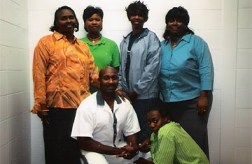

 By Alan Bean
 Law Professor Erwin Chemerinsky is dismayed by Supreme Court rulings that protect unscrupulous prosecutors from the consequences of their actions. The Friends of Justice
 By Alan Bean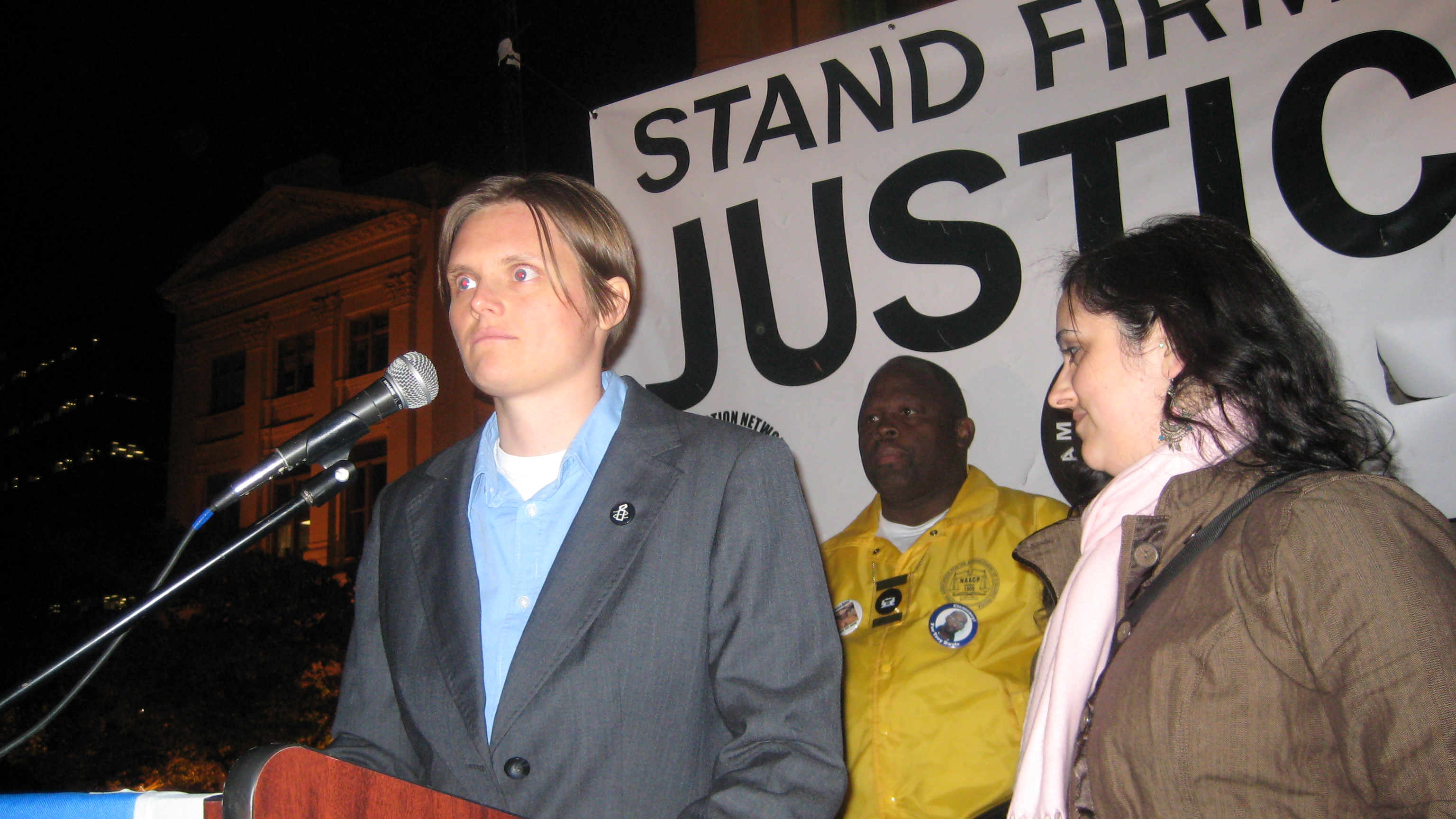
 Pat Quinn did it! The death penalty is dead in Illinois! (If you would like to congratulate the Illinois governor, Amnesty International has a
  Eighteen months ago, Texas Governor Rick Perry appointed Williamson County DA John Bradley to head up the Texas Forensic Science Commission. It was like turning over the Vatican to Richard Dawkins. Bradley, like most Texas prosecutors, thinks forensic scientists have one role: helping the state convict bad guys; Perry’s atheist pope likes forensic testimony crafted to the needs of the prosecution.
 Friends of Justice