Category: Jesus

Marcus Borg’s Radical Christianity

Marcus Borg

Nancy Bean didn’t have a wish list for her birthday this year; she issued a birthday decree.  All five Beans were to purchase a copy of Marcus Borg’s The Heart of Christianity: Rediscovering a Life of Faith and read at least the first five chapters.  We would then meet at our daughter Lydia’s home in Waco to discuss the book over birthday cake.

The discussion was loud, lively and long.  Sons Adam and Amos suspected that Borg’s version of Christianity existed primarily inside his own head.  Lydia gave the book thumbs up, but said she favored the more evangelical theology of NT Wright. 

Marcus Borg is part of an emerging cadre of Christian intellectuals calling for a new understanding of Christian theology, spirituality and ethics.  Anglican Bishop NT Wright, Old Testament scholar Walter Brueggemann, Roman Catholic theologian John Dominic Crossan and the “emerging church” writer Brian McLaren have also contributed to this project. 

They don’t agree on all points, of course, but Borg’s The Heart of Christianity comes as close to a consensus statement as you are likely to find.  Conservative scholars may quibble with Borg’s assertion that the Bible is “a human product;” but, increasingly, leading Christian thinkers are being drawn to similar conclusions. (more…)

From Jena 6 to Law School: Theo Shaw

Theo Shaw

Theo Shaw had already spent a month in the Lasalle Parish Jail when Friends of Justice first arrived in Jena.  Seven months would pass before he returned to the free world.  Last week, I sat down with Theo across the street from the University of Louisiana, Monroe campus.  He had been a bewildered High School kid the last time we had spoken; he is now a confident young man.  Theo politely answered my questions about the Jena 6 experience; but his eyes didn’t sparkle until the conversation shifted to the future.  Theo Shaw is a man on a mission.  (more…)

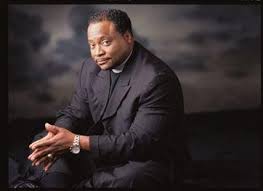
Eddie Long’s Gospel

Bishop Eddie Long

My post on Bishop Eddie Long has been raising eyebrows. Many readers agree with my critique of the “prosperity gospel”; others find it offensive. One reader, who asked to be taken off my distribution list, was horrified by my perceived willingness to throw Bishop Eddie to the wolves before he has his day in court.

A few words of clarification are in order.

Eddie Long’s guilt or innocence is not my primary concern. The state of Georgia has filed no charges against the Bishop; this is a civil case. When the weak find themselves on a collision course with the strong, my sympathies are with the weak (the strong can take care of themselves). Eddie Long has always been the man with all the power. Having transformed himself into an authority figure of superhuman stature, the pastor assumed the mantle of responsibility.

Pastor Long has compared to himself as David up against Goliath. That image should be reversed. Yesterday, thirty-two pastors came to Long’s church to commiserate with him and show their support. Goliath received that kind of encouragement from the Philistines; David was on his own. (more…)

Putting butts in the seats: the rise and fall of Bishop Eddie Long

Bishop Eddie Long

 Bishop Eddie Long of New Birth Missionary Baptist Church in Lithonia, Georgia has been accused of using a mentoring program to lure gifted young male congregants into sexual relationships.  Long, an adherent of the “prosperity gospel”, told his congregation this past Sunday that, although he has never advertised himself as “a perfect man”, he intends to fight the allegations in court. 

Significantly, the bishop never claimed to be innocent. (more…)

A new kind of Christianity

rush_limbaugh
Rush Limbaugh

A single fact reveals the strength of the conservative movement in America: uncompromising liberal zealots like Dennis Kucinich become fodder for late night comedians (Jon Stewart of the Daily Show included) while uncompromising conservative zealots like Rush Limbaugh have taken control of the Grand Old Party.

Put another way, undiluted conservatism sells; straight up liberalism smells fishy to a majority of Americans. 

True blue progressives like to think that, if the Democrats painted a glowing portrait of a fair, inclusive, compassionate America the electorate would tilt our way. 

We aren’t likely to see that proposition tested any time soon.  Our progressive President got elected by contrasting a good war (Afghanistan) with a bad war (Iraq).  He offers a soft critique of the war on drugs but keeps pouring federal money down the same black hole.  He caved in on the off shore drilling issue in advance of an unprecedented disaster that will become a big part of his political legacy.  He let the public option die on the Senate floor without a word of protest.

I have observed these developments with dismay.  But Barack Obama got where he is because he learned the primary lesson of the 20th century: conservatives flourish when they stick to a simple America-first, pro-business, limited government mantra; liberals survive by cleaving to the pragmatic (and intrinsically boring) center.

This should be the best of times for progressive politics.  The big issues of the day, the health care crisis, the banking imbroglio, the mortgage mess and the BP oil disaster, are advertisements for federal regulation.  So, why are Rush Limbaugh, Glenn Beck and the Tea Party Movement marching from glory to glory while progressives find themselves on the ropes?

It’s simple.  The apocalyptic disasters befalling this country are scary.  People are afraid.  Fear creates an every-man-for-himself stampede to the life boats.  Folks in the grip of a fight-flight complex snarl at moderation, balance, compassion and sacrifice.

Frightened people cling to old, familiar ways.  They embrace the simple tenets they imbibed with their mother’s milk: unquestioning patriotism, biblical literalism, American exceptionalism and white hegemony.

Progressives are mystified by Glenn Beck’s quest for a lost golden age.  In 1950, the freedom and professional aspirations of women and minorities were radically limited.  Who’d want to go back there?  Just look at the progress we have made!

Conservatives remember the sense of unity and common purpose created by World War II and the long, twilight  struggle against international communism.  Although they are loath to admit it in public, the architects of the conservative revival despise the civil rights movement for destroying the myth of national virtue.  Rand Paul, fresh from his primary victory in Kentucky, told Rachel Maddow last night that he would have opposed laws designed to eliminate Jim Crow segregation in businesses.  This concern was ostensibly rooted in Paul’s libertarian convictions, but there is a deep disdain on the hardcore Right for mushy words like “equality, justice, diversity and inclusion.”   

Conservatives want to keep things simple: simple religion, simple economics, simple national mythology, simple moral standards and a simple system of social stratification in which everybody knows his place (and no one uses awkward phrases like “his or her”).

If Mexicans would go home, women would return to their traditional roles as primary parents and help meets, if the Bible returned to the classroom, if women and minorities would just be grateful we gave them the vote, if we could rebuild a common front against socialism, if little children could hear the glorious story of manifest destiny and American exceptionalism, and if entrepreneurs were free to make money and create jobs, America would once again control the world.

Old folks traumatized by rapid change, parents bringing children into the world, and suburbanites fleeing the crime and despair of the inner city are reassured by by the supermarket spirituality of the megachurch and by folks like Rush Limbaugh and Glenn Beck.  Ultimately, the line between Beck-Limbaugh Americanism and Christian piety is hard to discern.

Can the simple tenets of American conservatism triumph perpetually?

Probably not. 

Traditional Christianity, evangelical and mainline, has hit a wall: even the Southern Baptists are experiencing negative growth.  This trend will continue.

The need for increased government regulation is now too obvious to ignore. 

The political clout of ethnic minorities will continue to expand. 

Women will continue to demand equality in the home, in religious communities, and in the workplace. 

The war in Iraq has exposed the limitations of military power. 

The banking industry and international corporations are no longer seen as engines of national prosperity. 

The health care debacle wasn’t fixed by the half-measures that survived the political process. 

The BP oil spill will spark a new environmental movement. 

The price tag of mass incarceration is too high, the war on drugs is too futile, and the racial disparities in our legal system are too glaring to be ignored. 

These factors will keep progressive politicians in the game.  Just barely.  But high levels of threat will generate a desire for simple religion, simple politics, simple history, simple economics and a simple social hierarchy. 

Most liberals recoil in horror from the Religious Right.  America would be better off, they say, if the Old Time Religion went the way of the Dodo.  In the ivory towers of the American academy, this opinion has hardened into orthodoxy.

Folks can go secular if they choose, but millions of Americans have developed a hankering for a new kind of Christianity. 

I am one of them.

The old evangelical verities are too captive to fear-based politics to be of much help to people who care about justice, equality and simple fairness. 

Unfortunately, liberal religion is too amorphous, arid and academic to instruct the faithful or inspire the young. 

We need a new kind of Christianity.  A stout, unapologetically biblical, non-dogmatic, ecumenical, justice-loving, Jesus-centered, truth-celebrating version of the old, old story of Jesus and his love. 

This kind of religion won’t appeal to everyone, and shouldn’t try to.  But as things presently stand, educated young people growing up in the faith are generally forced to chose between a morally compromised and intellectually indefensible brand of evangelicalism and a sterile secularism that provides little foundation for ethical reflection and practical compassion. 

Let’s be clear, I’m not looking for a new-and-improved Christianity to take the place of last year’s model.  The churches currently in existence have compelling reasons for maintaining a steady-as-she-goes approach.  Megachurches are in the mass marketing business.  As such, they have to keep things simple, hip and uncontroversial.  The Bible must be viewed as a perfect book that is utterly free of error or internal contradictions.  That’s what I mean by simple.  But megachurch religion must be limited to the perceived needs of the faithful, and the faithful aren’t overly concerned about issues like economic justice, criminal justice or the plight of poor people.  Ergo, these subjects are pretty much off the table.  A vague form of small government conservatism is embraced by most megachurch pastors because it allows preachers to sidestep all kinds of application issues.   How does Christian piety relate to the social issues of the day?  It doesn’t . . . unless we are talking about abortion or homosexuality.

I am arguing for an alternate version of Christianity that asks the hard questions and struggles to live out the answers.  Can such a church get big enough to support a pastor?  I’m not sure.   This may sound like an odd question, but it explains why this new kind of Christianity generates a lot of talk and very little practical action.  In religion, as elsewhere, money drives the game.

The new kind of Christianity I envision would NOT be in head-to-head competition with the established church, and it wouldn’t be interested in questioning or supplanting non-Christian religious traditions.   Adherents of this new Christianity would have little interest in arguing with athiests and unbelievers.  The goal would be spiritual growth coupled with an honest attempt to apply the teachings of Jesus to the challenges of the real world. 

Brian McLaren

Tragically, as folks like Brian McClaren, Jim Wallis and Bishop NT Wright  have learned from painful experience, attempts to reframe historical Christianity attract critics from both ends of the ideological spectum.  

 Furthermore, you can’t build a megachurch or a popular movement on this kind of religious foundation.    

The religious awakening I have in mind won’t crave cultural hegemony.  Let’s be honest, a viable religious counterculture dedicated to biblical justice won’t gain wide popular appeal.

Here’s the real test.  Religious people, white Christians in particular, must come to the grips with the spiritual wickedness in the criminal justice system.  Can we stand up for the victims of wrongful prosecution? 

If we can, we’re beginning to get it. 

If we can’t, we haven’t grasped the radicality of the Gospel Jesus died for.

Loving the World

This sermon was preached at St. John the Apostle United Methodist Church in Arlington, Texas on January 10, 2009. 

“There are no good people and bad people. No right people and wrong people.  Just one big lost humanity dying for the glory of God.”

LOVING THE WORLD

January 10, 2010

Luke 3: 1-22

Let’s face it, John the Baptist is a hard guy to relate to. He was severe, demanding and more than a little scary. Even as a young boy, John was drawn to the desert to the east of the Dead Sea. As he matured, he spent more and more of his time in the wilderness until, finally, it became his home. According to the Bible, locusts and wild honey was his steady diet.

John was the classic abstainer. He didn’t eat rich food, he didn’t drink wine and, it appears, he even refused to live indoors.

But there was a method in all this madness. John was trying to free himself from the corrupting influence of Imperial Rome. God’s Messiah, the Christ, was at hand—John could feel it. The Holy One of Israel would be like a harvester who beats the wheat on the threshing floor, storing the good grain in his barn, and burning the chaff in the fire.

John didn’t suffer from a messiah complex; his marching orders came from the fortieth chapter of the prophet Isaiah. John was “The voice of him that crieth in the wilderness, ‘Prepare ye the Way of the Lord.”

John’s job was to get God’s people ready for the coming of Messiah when, Isaiah promised, “every valley will be exalted and every mountain and hill made low.”

John knew what that meant. A true and purified Israel would be lifted up and the corrupt forces of Roman power and domination would be cast down . . . and cast out.

And when that happened, John believed, “All flesh shall see the salvation of God.”

Considered against this backdrop, John’s lifestyle makes a weird kind of sense. He didn’t drink wine because wine was costly. As Jesus reminded his disciples, John didn’t wear fancy clothes or live in palatial splendor: nice clothes and palaces cost money. And you couldn’t earn money in first century Israel without getting wrapped up in the Roman system.

John didn’t expect his audience to adopt his radical lifestyle in every particular, but he wanted them to live as far from Roman corruption as circumstances allowed. Tax collectors could collect what the law prescribed, but not a shekel more. Soldiers had to stop shaking down the populace and learn to live on their meager wages. If poverty was the price of moral freedom, so be it.

In John’s mind, money and corruption were joined at the hip; purity and poverty were sisters.

People came to John asking how they could prepare themselves for the coming Day of the Lord, and he was ready with an answer: “Whoever has two coats must share with anyone who has none; and whoever has food must do likewise.”

Was John a subversive, a radical, a weirdo on the fringe?

King Herod certainly thought so. This isn’t the Herod we meet in Matthew—the one who tried to kill the baby Jesus. That was Herod the Great. When that Herod died, his kingdom was divided up between four of his sons, one of whom bore the name of Herod Antipas. This is the Herod we meet in today’s text.

“Antipas” is a short version of the Greek word “Antipatros” which means “Like the father.” Antipas had an older brother, Antipater (a name that means essentially the same thing). But Antipater and another brother named Aristobulus were killed by their paranoid father, Herod the great. As his name Antipas suggests, the apple didn’t fall far from the tree. Herod Antipas really was “like the father.”

Herod Antipas came to power as an adolescent and had been on his throne for over thirty years by the time John the Baptist appeared in the wilderness. In the eyes of Antipas, John was just another weirdo revolutionary who needed to be eliminated.

Do we agree?

Let’s be honest here. When you hear John say, “Whoever has two coats must share with anyone who has none; and whoever has food must do likewise,” don’t you get a little uncomfortable? Haven’t we been taught to view people who talk like that as the enemy?

Of course we have.

But if John was a wild-eyed radical, why did Jesus come to Jordan seeking his blessing?

If you are serious about the life of the Spirit (and you wouldn’t be here if you weren’t) you can’t escape John’s dilemma: How can we hang out in Rome without living like the Romans do? How can we honor God while living in a godless world?

Those of you who didn’t grow up Baptist may wonder what I mean by “the world”. Drain the glory of God from creation and you are left with the world. Creation is the coffee; the world is the grounds. We easily assume that we can shuffle through life with one foot in the world and the other foot in the kingdom of God.

That’s what Herod was trying to do. Like his daddy, Herod Antipas wanted to be known as “King of the Jews” and he worked hard to protect Jewish religious sensibilities. When Pontius Pilate displayed the Roman eagle in the temple in Jerusalem, Herod Antipas backed him down.

On the other hand, Antipas was a close friend of the great Tiberius, the man who, by this time, had reigned as Roman emperor for as long as anyone could remember. Paranoid and half crazy, Tiberius lived on the Mediterranean fortress island of Capri. Herod Antipas checked in on his emperor friend every now and then—it was good for business. Herod built a Roman town on the shores of the Sea of Galilee and named it “Tiberius”. Then, fearing that this might not be enough to cement his position in the Roman world, Antipas transformed the Sea of Galilee into the Sea of Tiberius. The mad emperor liked that sort of thing.

When John came preaching repentance in the wilderness, Herod Antipas was pushing fifty, teetering on the verge of the most disastrous midlife crisis in recorded history. The moment Herod saw Herodias, he had to have her.

But there were problems. For one thing, Herodias was the wife of Herod’s brother Philip and the sister of Herod’s step-brother Agrippa. When Philip was forced to divorce Herodias he was a little miffed. Agrippa was seething.

And then there was the fact that Herod was married to the daughter of a king, Aretas, the Arabian ruler of Nabataea. When his daughter fled home in tears, Aretas readied his army for war.

Herod was undeterred. Having spent much of his life in Rome, Antipas knew how to live as the Romans do. If Herod could convince the emperor that marrying Herodias was a good idea, it didn’t matter what anybody else thought.

In the Roman world, might made right. The Emperor Caligula once had his horse sworn in as a Roman senator to make precisely this point. No one dared challenge this bizarre move because Caligula had cornered the market on power.

Herod’s marriage to Herodias didn’t just enrage Herod’s brother Philip, his step-brother Agrippa and Aretas, his father-in-law; it earned the enmity of John the Baptist. Herod had John arrested and carted off to the lonely castle of Machaerus east of the Dead Sea.

Unlike John, King Aretas had a powerful army and was willing to use it. Herod was vanquished in battle (God only knows how many innocent men died in the process) and Herod and Herodias fled in terror to their good friend Tiberius. Predictably, Tiberius took Herod’s side, but before the imperial armies reached King Aretas, Tiberius was dead.

Now the power equation shifted dramatically. If might makes right, and you lose your might, right becomes wrong in a heartbeat. Herod’s step-brother Agrippa was a good friend of the new Emperor, a madman named Caligula. Herod Antipas soon found himself living in lonely exile in Gaul, modern France. (Pontius Pilate soon suffered the same fate.) Meanwhile, with the backing of his good friend Caligula, Agrippa claimed the mantel, King of the Jews.

John the Baptist never claimed to be the last word. “I baptize with water,” he told the people, “but the Christ will baptize you with the Holy Spirit and with fire.”

By all accounts, Jesus embraced John’s view of the world. As soon as Jesus was baptized by John, he retreated to the wilderness for forty days and forty nights to hammer out the shape of his ministry. Then we see him moving from town to town, calling disciples and preaching a gospel remarkably like John’s. Like John, Jesus was inspired by Isaiah: “The Spirit of the Lord is upon me, because he has anointed me, to preach good news to the poor.”

Throughout his ministry, Jesus withdrew to the wilderness to be alone with God . . . but, unlike John the Baptist, Jesus returned to a world dominated by the likes of Herod Antipas. Jesus didn’t wait for the tax collectors, the prostitutes and the soldiers to come to him—Jesus invaded their world with a holy enthusiasm that shocked his contemporaries.

Jesus didn’t condemn the world, like John, and he wasn’t conformed to the world, like Antipas; he embraced the world in the love of God and the power of the Spirit.

How could it have been any different? “God so loved the world,” the Bible says, “that he gave his only Son.” Far more than Herod Antipas, Jesus was truly “like the father”. Jesus found God’s glory in the wilderness and released that glory back into the world. As followers of the Son, we share this mission.

I told you the sad story of Herod Antipas for a reason. Remember, drain the glory of God from creation and you are left with the world. And as Herod Antipas learned to his sorrow, when you embrace the world, you make yourself and everyone you touch miserable. How can we live in Rome without living like the Romans do?

In the wilderness, Jesus drank in the glory of God. Returning to the world, Jesus poured out God’s glory. Drink in; pour out. Retreat; advance. Breathe in; breathe out.

This sanctuary is our wilderness. We enter this place as strangers to the glory of God. That’s why we bristle when John tells us to share what we have with those who have nothing. That’s why we flinch when Jesus squanders his good news on the poor.

We long for the Spirit. We long for the glory of God. We long for Jesus. But you can’t get to Jesus without going through John. Baptism in water, the baptism of repentance, comes first—then we’re ready for the good stuff. This is where we get the glory back. Confessing that we have fallen into the rhythm of the world, we enter the rhythm of the Spirit.

We enter this wilderness sanctuary feeling beat-up and betrayed, angry with the world. We hear the gospel, but it has an alien ring—like words in a foreign tongue. Then we remember the baptism that washes the world away. We remember the baptism of the Holy Spirit and fire. Suddenly, the world is ablaze with the glory of God.

Now, there are no good people and bad people. No right people and wrong people. Just one big lost humanity dying for the glory of God. The Love of God ignites a love for the world, in the name of Jesus, in the power of the Spirit, Amen.

Alan Bean

Torture and Religion


A new Pew Survey suggests that support for the use of torture is positively correlated with religious devotion.  Not surprisingly, white mainline Christians (Episcopalians, Presbyterians, Methodists, etc.) are less inclined to support the use of torture than white evangelicals with white Catholics hovering somewhere in between.

But the non-religious are less likely to support the use of torture than the folks in any religious category.

As a person of faith, I find this disturbing.

Question: what about the Hispanic catholics and black evangelicals?  Why did the Pew study leave them out, or did they simply drop them from the published summary?  Either way, the ommission is disturbing.

This is a subject we have dealt with in this space before.  In “Who would Jesus torture?”  Lydia Bean interacted with the views of a conservative Christian blogger.  But the torture issue also relates to my “The religious roots of Southern punitiveness”.  

Why are conservative Christians so enamored of torture, mass incarceration and capital punishment?  Why are incarceration rates in the cluster of southern states to the east of Texas twice the national average?  And why have over 80% of the executions perpetrated since the re-introduction of the death penalty in 1979 occurred in the South? 

Conversely, why are incarceration rates relatively low in Yankee New England, a region that hardly ever resorts to the ultimate penalty?

The same torture divide is apparent between democrats and republicans, of course, but as the GOP lurches rightward, religious and political conservatives are becoming indistinguishable.

Jesus of Nazareth taught non-violence and provided no escape clause.  The philosophical distance between the canonical Gospels and traditional “Just War” theory is astonishing.  When learned evangelicals seek to justify their support for torture they eschew the words of their Master and cleave to the dictates of St. Augustine. 

For better or worse, religious traditions take on a life of their own.  Southern Baptists, like every other other religious group, have their own distinctive ethos.  Established norms, not sacred scripture, shape beliefs and attitudes.  Religious texts can be found in support of almost any position and are tacked on as an afterthought.  This explains why Christians who love the Bible can trample on its core affirmations without a twinge of conscience.

CNN covers the story here; and Brian McLaren has some excellent thoughts here.

Overcome evil with good

from Lydia:

I was just reading this passage from Romans 12 this morning, and I was reminded of the Saddleback Civil Forum.  Rick Warren asked both candidates if there was evil in the world, and if so, what should we do about it.

Both candidates gave lame answers–which reveal the weaknesses of each political party.  McCain said that evil existed, and we should “defeat it!”  The crowd ate it up.  Republicans pride themselves on recognizing the need to defeat evil.

Obama gave a long rambling answer, that only fed into popular stereotypes about Democrats–conservatives often accuse liberals of refusing to name evil.  (I don’t think that’s fair, but it’s true that many of the liberals I know are generally uncomfortable with good-and-evil rhetoric.)

Later, Tony Campolo told us what both candidates SHOULD have said.  They should have quoted Romans 12:21 “Do not be overcome by evil, but overcome evil with good.”  This morning, I found a great speech by John Paul II on this passage–I hope you find it as meaningful as I did.

And here’s the full passage from Romans 12:

14Bless those who persecute you; bless and do not curse. 15Rejoice with those who rejoice; mourn with those who mourn. 16Live in harmony with one another. Do not be proud, but be willing to associate with people of low position.[c] Do not be conceited.

17Do not repay anyone evil for evil. Be careful to do what is right in the eyes of everybody. 18If it is possible, as far as it depends on you, live at peace with everyone. 19Do not take revenge, my friends, but leave room for God’s wrath, for it is written: “It is mine to avenge; I will repay,”[d]says the Lord. 20On the contrary:
“If your enemy is hungry, feed him;
if he is thirsty, give him something to drink.
In doing this, you will heap burning coals on his head.”[e] 21Do not be overcome by evil, but overcome evil with good.

Who Would Jesus Torture?

Lydia here.

Conservative Christian blogger, Rod Dreher, alerted me to this Christian conversation about torture.  In her RNC speech, Sarah Palin attacked Obama for worrying about such niceties.  I’m glad more Christians are challenging Palin’s comments–shouldn’t Christians be the first ones to oppose torture?  That’s not the message of the cross.  Or maybe I’m misreading the New Testament–I’m forgetting that part when Jesus rises from the grave and says, “Ha–now it’s my turn to torture Y’ALL!”

Then again, there’s my favorite Bible verse: “Greater love hath no man, than he that tortures the living daylights out of his enemies to make Americans feel safer.”

Or that chapter when Jesus tells his disciples, “Torture your enemies, and hunt down those that persecute you.  Lo, I send you out like wolves among sheep.  Truly truly, I say unto you, bomb their village into the stone age, so that all the nations may know that the kingdom of God is at hand.”

Yes, that’s right, those godless liberals can’t pick and choose the parts of the Bible that they want to follow.  Clearly, Jesus wants us to torture our enemies.  That’s why I’m wearing a band around my wrist that says “Who Would Jesus Torture?”  When someone asks me what it means, it gives me a chance to share the gospel with them…and then subject them to a good waterboarding!

Alright, enough of my sarcasm.  Seriously, parodying the gospel takes me to a very, very bad place…because it’s so close to what some politicians are actually saying.  Here’s Rod Dreher:

If you’re not reading Culture 11 daily, you’re really missing out. One of today’s best offerings there is Joe Carter’s “Open Letter to the Religious Right.” The whole thing is great, but this passage really caught my eye:

We religious conservatives must take a firm stand against the practice of torture. Yes, there is a legitimate debate to be had about what exactly is meant by that term. Let’s have that debate. Let’s define the term in a way that consistent with our belief in human dignity. And then let’s hold every politician in the country to that standard. As John Mark Reynolds notes, “Like slavery, it debases two people and one culture: the tortured loses his soul liberty, the torturer claims to be a god, and the culture condones an ugly and wicked act.” Our silence on this issue has become embarrassing; our apologies for such practices has become disgraceful.

Palin really should be pressed hard on this. In her convention speech, she had this line:

Al Qaeda terrorists still plot to inflict catastrophic harm on America … [Obama’s] worried that someone won’t read them their rights?

What did she mean by that? Does this indicate that she cares nothing for legal principles designed to protect individuals from the state? Does this mean that she supports waterboarding? What is her thinking on this matter? More importantly, what’s John McCain’s thinking these days? I thought he was against torture once. This is an issue that Christian voters can’t afford to be unconcerned about.

Anyway, please do read all of the letter from Joe, a religious conservative of the Evangelical persuasion, and a Marine Corps veteran. There’s lots of wisdom there. If you’re a religious conservative, tell me in the comboxes which parts of Joe’s letter you found resonates most.

L.A. Times on Mychal Bell’s release on bail

This L.A. Times article gives us a rare sympathetic image of a young black defendant, Mychal Bell, smiling bashfully for the cameras as he goes home to his relieved parents. Yes, jail is a bad place to raise a teenager, whether they’re black or white, rich or poor. It also quotes Reed Walter’s bizarre statement that only intervention by the Lord Jesus Christ prevented the protesters from erupting into violence.

It’s interesting that Walters fails to notice that most of the protesters were devoted Christians, who felt the Lord Jesus Christ was the one who compelled them to be there in the first place. Maybe he should watch that video we posted last week, filmed by a Jena protester, who declared that God was with them, and that we can do all things through Christ who strengthens us. Or shoot, Reed Walters could read what the Bible has to say to government leaders about upholding justice for the poor and marginalized. Friends of Justice is quoted at the end of this article:

http://www.latimes.com/news/printedition/asection/la-na-jena28sep28,1,5340911.story?coll=la-news-a_section&ctrack=1&cset=true