The policies of the drug war failed, but ignoring the problem certainly won’t make it go away. Here are four steps we need to take:
By MARK OSLER
October 11, 2010
Mark Osler
Though it is out of the spotlight in a bad economy, the United States still has a drug problem, and it may be getting worse. The use of methamphetamine, a particularly pernicious narcotic, is increasing again. Few things can harm a family or community like meth.
It shouldn’t be surprising that drug use is on the rise. The federal government, in particular, has turned its attention to something else: immigration. Just 14 years ago, about 40 percent of federal defendants who received a sentence were charged with drug crimes, while just 12 percent were up on immigration charges. For the 2009 fiscal year, 32 percent of federal defendants faced immigration charges, while only 30 percent were narcotics violators.
In highlighting this shift, I am not arguing that we go back to what we did at the height of the drug war. Those policies largely failed. If we choose to take drug interdiction seriously, we must try new approaches and take real-world facts into account, including four hard truths: (more…)
Ann Coulter says that Barack Obama isn’t a Muslim; he’s an atheist.
How does she know that? Because Obama is a liberal, and all liberals are atheists.
Glenn Beck says Jim Wallis of Sojourners is a Marxist. How does he know that? Because Wallis believes in economic justice, liberation theologians talk about economic justice, and liberation theologians have been influenced by Marxist thought.
Beck’s real target isn’t Jim Wallis, it’s Barack Obama. Jim Wallis is Jeremiah Wright and Jeremiah Wright is Barack Obama, hence, the president is a Marxist.
Are Beck and Coulter serious? Do they believe their own rhetoric?
Yes and no. Yes, because their most bizarre statements “feel” right. No, because Beck and Coulter are so concerned about getting the fans on the red side of the stadium cheering and the fans in the blue seats leaping in alarm that they don’t really care about the rightness or wrongness of their statements. Or, to put it another way, a remark that gets the fans up and hollering is a good statement, and if the fans are sitting on their hands the message needs to be tweaked.
According to the New York Times, Ann Coulter recently shifted in a more gay-friendly direction (conservatives love gays; we just don’t like gay marriage) because she couldn’t compete with conservatives who are even more extreme than she is.
The culture war is a marketing gimmick designed to keep the contributions rolling in. It’s like one of those funny mirrors on the circus midway; what you see shouldn’t be mistaken for reality. (more…)
This is something of a response to and expansion of Alan Bean’s recent post, “Marcus Borg’s radical Christianity.” In this post Dr. Bean mentioned Walter Brueggemann and John Dominic Crossan in passing. I respond by expanding on the thought of those two scholars, and relate their perspectives to the issue of mass incarceration.
Walter Brueggemann
Walter Brueggemann is the author of The Prophetic Imagination. The second edition was copyrighted in 2001, so it does not qualify as a recent contribution. But it only recently came to my attention.
Brueggemann presents the Hebrew culture as represented by Moses as an alternative community to the royal, person negating culture of Egypt. The culture of Egypt was anti-freedom not only for humanity, but also for God. This counterculture to royalty and the perks of royalty persisted in Hebrew life for a couple of centuries or so before a new royalty, a counter-counterculture, took root under David and thrived under Solomon and his successors in both Hebrew kingdoms. The prophets beginning in the 8th century BCE, some of them at least, broke free from tradition to provide a new counter voice to the royal consciousness of privilege and power that had arisen in the Hebrew kingdoms.
Jeremiah was the prophet of pain; Deutero-Isaiah the prophet of hope. Pain is a necessary predecessor to hope, lament a predecessor to praise in the confrontation between the royal consciousness of privilege and power and the radical freedom of and in God. I have this quote from Brueggemann written in the margin of my Bible at Psalm 23, “It is precisely those who know death most painfully who can speak hope most vigorously” (The Prophetic Imagination, p. 67). Brueggemann cautions that social policy is not necessarily in the purview of the prophet, and that anguish is more fitting than anger as prophetic attitude. (more…)
Nancy Bean didn’t have a wish list for her birthday this year; she issued a birthday decree. All five Beans were to purchase a copy of Marcus Borg’s The Heart of Christianity: Rediscovering a Life of Faith and read at least the first five chapters. We would then meet at our daughter Lydia’s home in Waco to discuss the book over birthday cake.
The discussion was loud, lively and long. Sons Adam and Amos suspected that Borg’s version of Christianity existed primarily inside his own head. Lydia gave the book thumbs up, but said she favored the more evangelical theology of NT Wright.
Marcus Borg is part of an emerging cadre of Christian intellectuals calling for a new understanding of Christian theology, spirituality and ethics. Anglican Bishop NT Wright, Old Testament scholar Walter Brueggemann, Roman Catholic theologian John Dominic Crossan and the “emerging church” writer Brian McLaren have also contributed to this project.
They don’t agree on all points, of course, but Borg’s The Heart of Christianity comes as close to a consensus statement as you are likely to find. Conservative scholars may quibble with Borg’s assertion that the Bible is “a human product;” but, increasingly, leading Christian thinkers are being drawn to similar conclusions. (more…)
This opinion piece was published in the Houston Chronicle under the names of several authors, but the Amarillo Globe-News version simply mentions Jeff Blackburn, so I am assuming he is the author. “Stop presenting ‘junk science’ in capital trials” Blackburn says. You can find the heart of his argument pasted at the end of my remarks.
The focus here is on Texas, but the problem is nationwide. In the most recent Curtis Flowers trial, one ballistics expert testified that he could say with 100% certainty that the gun stolen from Doyle Simpson’s car was the murder weapon. A second expert restricted himself to the obvious: the evidence didn’t lend itself to 100% certainty about anything. All any competent ballistics expert could say for sure was that the evidence found at the crime scene was consistent with the .380 pistol allegedly stolen from Mr. Simpson’s car, but the shell casings could also have come from a similar weapon.
Blackburn concentrates on expert witnesses who don’t know what they are talking about; but a lot of expert testimony is biased in favor of the prosecution because that’s where the money is. Indigent defendants rarely have the money to hire their own experts and most capital defendants are indigent.
In Blackburn’s opinion, the Cameron Todd Willingham case isn’t primarily about the execution of an innocent man; it’s about junk science.
My post on Bishop Eddie Long has been raising eyebrows. Many readers agree with my critique of the “prosperity gospel”; others find it offensive. One reader, who asked to be taken off my distribution list, was horrified by my perceived willingness to throw Bishop Eddie to the wolves before he has his day in court.
A few words of clarification are in order.
Eddie Long’s guilt or innocence is not my primary concern. The state of Georgia has filed no charges against the Bishop; this is a civil case. When the weak find themselves on a collision course with the strong, my sympathies are with the weak (the strong can take care of themselves). Eddie Long has always been the man with all the power. Having transformed himself into an authority figure of superhuman stature, the pastor assumed the mantle of responsibility.
Pastor Long has compared to himself as David up against Goliath. That image should be reversed. Yesterday, thirty-two pastors came to Long’s church to commiserate with him and show their support. Goliath received that kind of encouragement from the Philistines; David was on his own. (more…)
Jeffrey Miron’s op-ed in the Los Angeles Times argues that the drug war is just another big government boondoggle. If you aren’t familiar with the libertarian critique of the war on drugs, Miron’s column will give you the basic outline of the argument.
Libertarians are consistent conservatives. They aren’t fussy about wars of any kind (domestic or foreign) because they are obscenely expensive and never produce the desired results.
American conservatives are successful because they don’t worry about consistentency. Conservatives are a fearless lot. They aren’t afraid of poverty or unemployment because they have secure jobs; they aren’t afraid of sickness because they have great health care; they aren’t afraid of bigotry or discrimination because they are normal (white) Americans; they aren’t afraid of civil rights violations because their civil rights are rarely infringed. (more…)
Bishop Eddie Long of New Birth Missionary Baptist Church in Lithonia, Georgia has been accused of using a mentoring program to lure gifted young male congregants into sexual relationships. Long, an adherent of the “prosperity gospel”, told his congregation this past Sunday that, although he has never advertised himself as “a perfect man”, he intends to fight the allegations in court.
Significantly, the bishop never claimed to be innocent. (more…)
I write this from Lola Flowers’ dining room table. Yesterday I travelled to the Mississippi State prison in Parchman, Mississippi to visit Curtis Flowers. The last time I saw Curtis he was pronounced guilty of murder and sentenced to death by lethal injection. Then they ushered the defendant out of the courtroom.
Curtis didn’t react to the verdict–it was the fourth time it had been pronounced over the past fourteen years. Two other trials ended in juries divided along racial lines.
Lola and Archie Flowers didn’t show much emotion either. They quietly went to the car to unload the special transparent television Curtis used the last time he was a Parchman resident.
But just beneath the surface, the emotion runs deep. I have been corresponding with Curtis since the June, 2010 trial. His faith is strong. Sooner or later, he fully expects to be exonerated. But life on Mississippi’s death row is a struggle at the best of times.
I didn’t see Curtis yesterday. After driving nine hours from Arlington, Texas, I was informed that my name had not been placed on his visiting list. Curtis had been told to send out visitation forms to everyone he wanted to be on his list. I got my form and returned it. But someone at Parchman decided to leave me off the visitation list. So, while Lola Flowers hopped on the visitation bus, I remained in the waiting room. (more…)


.jpg&t=1) Jeffrey Miron’s op-ed in the Los Angeles Times
Jeffrey Miron’s op-ed in the Los Angeles Times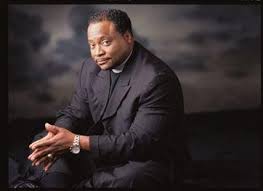

 Friends of Justice