Category: “Social Justice”

Stories we believe in: learning from Walter Fisher’s narrative paradigm

By Alan Bean

American liberals can’t fathom the appeal of the Tea Party phenomenon.  Here we are, struggling to recover from a recession created by massive tax cuts, military adventurism, and an under-regulated financial sector and what are they asking for: more tax cuts, even less government regulation, and more military spending.

Moreover, this message sells in the heartland, big-time.

By every standard of rationality, progressive politics should be enjoying a renaissance.  The alternative has been weighed in the balance and found wanting.  And yet politicians aligned with Tea Party rhetoric are winning elections and shaping the political agenda.  How can these things be? (more…)

“To save money, let’s all quit our jobs and drop out of school!”

A week ago, Gerald Britt wrote a column for the Dallas Morning News questioning the sanity of the program-cutting frenzy in Washington (see below).  In his blog, Rev. Britt updates his crique.  The striking conclusion to the blog post sums things up nicely:

The Rev. Gerald Britt

“In order to rebuild the economy, we must cut education spending, cut job training, cut supports for the low-income and elderly, cut access to health care for those who can least afford it AND give tax cuts to those who have no track record of utilizing tax cuts for 10 years to provide jobs to stimulate the economy?! And, after we have enacted all of these cuts, the poor and low income, the untrained, the elderly, the homeless, the hungry, the incarcerated, the sick and the poorly educated and the inadequately educated will provide the foundation for a new and revived economy?

Seriously?

It’s the equivalent of a family deciding that, in order to save money on gas, we will all quit our jobs and drop out of school.” (more…)

Was the Moynihan Report racist?

By Alan Bean

A recent post touched on Daniel Patrick Moynihan’s 1965 report, “The Negro Family: The Case for National Action.”  (You can read Moynihan’s report here.)  A New York Times article celebrating the political incorrectness of Jonathan Haidt suggested that many prominent sociologists now agreed with Moynihan’s controversial ideas.  Below I have pasted two examples of this phenomenon, one by Harvard’s William Julius Wilson, the other by James T. Patterson, a Brown University history professor.

First, let me share a few of my own thoughts.  We must distinguish between Moynihan’s actual report and the version of that report reflected in contemporary media accounts.  Moynihan, a trained sociologist, touched on a wide variety of issues, but the media chose to focus on his “tangle of pathology” in the black family.  In Moynihan’s defense, he didn’t actually say that all black families were disintegrating.  Middle class blacks were doing just fine, he acknowledged; it was the folks in the urban slums he worried about.  (more…)

Is civil rights morality blinding social scientists?

By Alan Bean

Two articles in recent editions of the New York Times caught my eye.

Although the scientific community is nearly unanimous in backing biological evolution, a new study shows that only 28% of high school biology teachers teach a strong version of evolutionary science, 13% teach straight creationism and the rest are noncommittal. 

The second article highlighted (with apparent approval) University of Virginia social psychologist Jonathan Haidt’s belief that his profession is riddled with liberal bias.  While at least 80% of social scientists report being politically liberal, studies show that 40 percent of Americans report being conservative while only 20 percent are liberal.   

Haidt says social psychologists comprise a “tribal-moral community” united by “sacred values” (rooted in the civil rights movement) that hinder research and damage their credibility — and blind them to the hostile climate they’ve created for non-liberals. (more…)

Can we end mass incarceration without mentioning race?

By Alan Bean

The criminal justice reform movement has two distinct branches that may have trouble sharing a common message or strategy.

The first branch of reformers is best represented by Michelle Alexander’s “New Jim Crow” thesis.  Alexander sees the war on drugs as primarily an assault on poor people of color.  Reformers, she argues, have either avoided racial arguments altogether, or have focused on Rosa Parks-type defendants who transcend racial stereotypes.  Consider this quote from her book, The New Jim Crow: Mass Incarceration in the Age of Colorblindness:

Challenging mass incarceration requires something civil rights advocates have long been reluctant to do: advocacy on behalf of criminals. Even at the height of Jim Crow segregation—when black men were more likely to be lynched than to receive a fair trial in the South—NAACP lawyers were reluctant to advocate on behalf of blacks accused of crimes unless the lawyers were convinced of the men’s innocence . . . outside of the death penalty arena, civil rights advocates have long been reluctant to leap to the defense of accused criminals. Advocates have found they are most successful when they draw attention to certain types of black people (those who are easily understood by mainstream whites as ‘good’ and ‘respectable’) and tell certain types of stories about them. Since the days when abolitionists struggled to eradicate slavery, racial justice advocates have gone to great lengths to identify black people who defy racial stereotypes, and they have exercised considerable message discipline, telling only those stories of racial injustice that will evoke sympathy among whites. (more…)

Does banning the noose change anything?

For the fourth straight year, Texas congresswoman Sheila Jackson Lee has introduced an anti-noose bill.  The Noose Hate Crime Act of 201 stipulates that “Whoever, with intent to harass or intimidate any person because of that person’s race, color, religion, or national origin, displays a noose in public shall be fined under this title or imprisoned not more than 2 years, or both.”

Hate crimes legislation, though admirable at first glance, raises serious First Amendment issues.  In practice, it will be difficult to prove that a specific noose hanger was motivated by a desire to “harass or intimidate”. 

Jackson Lee’s bill was first introduced as a response to the noose hanging in Jena Louisiana, but I’m not sure it would (or should) apply to that kind of situation.  What would have been gained by locking up the Jena noose hangers for two years?  Would this teach them a lesson they would never forget, or would it simply harden the racial resentment that motivated their act in the first place? (more…)

Why the Arizona Murders Should Trouble Christians

By Mark Osler*

This post originally appeared in the Huffington Post

A troubled loner with a gun decided to kill his Democratic Congresswoman outside a Tucson grocery store, and now six people are dead. As a former prosecutor who now trains future prosecutors, I grieve with a heavy heart. As a Christian, I am troubled. The blood in the desert will re-open two debates in which we Christians have strayed too far from the very teachings of Christ.

First, I am troubled because I know that this will re-open the discussion over whether incendiary political rhetoric, mere words, can inspire such violent acts. For Christians, there should be no debate on this subject. Our faith, like so many others, is built on the thesis that words do inspire action. (more…)

Georgia prisoners strike for human rights

By Alan Bean

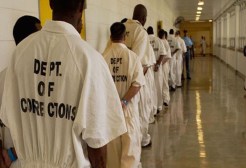
On December 9, prisoners at six Georgia state prisons launched a coordinated strike.  The silence from the mainstream media has been thundering.

Across America, prison labor remains a vestige of the old convict leasing system that Robert Perkinson describes in great detail in Texas Tough.  Some inmates receive nominal wages–ranging from a dollar a day to a princely forty cents an hour; others, like the striking inmates in Georgia, work for nothing.

When discussing prison labor, it is important to avoid vague generalities.  Every state has its own laws and practices vary widely.  Sloppy references to the “prison industrial complex” can conjure images of multinational corporations earning massive profits from unreimbursed prison labor.  This happens, to be sure, but more prison labor involves chores related to prison life: preparing meals, doing laundry, cleaning floors, landscaping, gardening and, in some prisons, large-scale agriculture.  In most cases, private corporations aren’t involved, but there are plenty of exceptions.

It has been estimated that 80,000 inmates in America work directly for corporate interests, which suggests that only one-in-twenty-eight American inmates fall into this category.  Most inmate labor mitigates the cost of incarceration–one reason why, since the days of convict leasing, it has been so popular. (more…)

Glover verdict in New Orleans raises more questions than it answers

By Alan Bean

On December 9, a federal jury in New Orleans convicted two police officers for burning the corpse of Henry Glover, violating civil rights, obstructing justice, and misleading federal investigators.  The jury also convicted an ex-officer of shooting Glover with a .223 caliber assault rifle. 

Has justice been served, or does this verdict raise more questions about the New Orleans police force than it answers?

Writing for ProPublica, A.C. Thompson, prefaces his article with a troubling statement:

“I’ve been reporting in New Orleans for more than three years, and I can say I’ve never encountered more people who are terrified of the police. Looking at the sad and awful death of Henry Glover, it’s easy to see why.” (more…)

The Advent Spirit in a Detroit Courtroom

This reflection originally appeared in the Huffington Post

The Advent Spirit in a Detroit Courtroom

By Mark Osler

Twelve years ago, it was a particularly bad day in Detroit. A storm came through as the temperature hovered just below freezing, and the precipitation switched between freezing rain and snow, making any outdoor movement treacherous.

At the time, I was a federal prosecutor. Ours was a tight office, and when something interesting happened in the courts, we all found out about it almost instantaneously. We were fascinated by the judges we appeared before, so any rumors about them were especially flammable.

On the day of that storm, a particularly intriguing story blasted through our offices. As I heard it, one of the magistrate judges had presided over a detention hearing, in which he considered whether a defendant should be held in jail or released prior to trial. The magistrate heard evidence and argument, and finally ruled against us: He held that the defendant should be released on bond. The man likely was not a big-time criminal, but a drug addict involved in low-level crime to support his habit.

That was not the end of the story, though. (more…)