Category: Uncategorized

Alvin Clay 6: Straining Gnats and Swallowing Camels


 Woe to you, scribes and Pharisees, hypocrites!  For you tithe mint and dill and cumin, and have neglected the weightier matters of the law, justice and mercy and faith . . . You blind guides, straining out a gnat and swallowing a camel! (Matthew 23: 23, 24)

On May 25, 2007, federal prosecutor Bob Govar was questioned by Alvin Clay’s attorney, George Hairston.

Q.  The last time we talked you were chief of the criminal division?

A.  That’s correct.

Q.  You’re no longer chief?

 A.  No, sir.

Q.  Were you demoted, sir?

Federal prosecutor Steven Snyder had heard enough.  “Your Honor, I object.  I don’t think that has any relevance to this particular proceeding.  He wasn’t demoted for anything having to do with this case or this trial.”

“We don’t know that, Your Honor,” Hairston fired back.  “What we do know is there are reports and information which I would like to explore that he was demoted for a threat to a newspaper, using his office stationery.  I think that goes to credibility.”

Judge Leon Holmes wasn’t impressed–Bob Govar’s demotion was ruled out of bounds.

Unbound by the arcane rules of courtroom etiquette, I am free to explore the circumstances surrounding Bob Govar’s demotion.

Our inquiry begins in 1990, the year Bob Govar was asked to investigate allegations that District Attorney Don Harmon, a prominent drug war crusader, was a tax evader, a recreational drug user, and a drug dealer who traded cocaine for sexual favors. 

The federal government had been ignoring these allegations for years, but the ostrich approach was no longer feasible.  A prominent candidate was running for Sheriff of Saline County on the promise that Dan Harmon would be investigated. 

Jean Duffey, head of the 7th judicial narcotics task force, had been sending Govar information on Harmon for years.  “We began to realize,” Duffy told a reporter in 1996, “that we were not ever going to be able to bring drug dealers’ cases to court without involving the public officials with whom they appeared to be involved.”

In other words, Dan Harmon was just an egregious case of business as usual.  Like the informant and the state trooper involved in the infamous Operation Wholesale, a long list of public officials learned how to supplement their modest incomes by feeding off the drug war. 

In June of 1991, U.S. Attorney Chuck Banks announced the results of Bob Govar’s investigation.  “Quite frankly,” Banks told reporters, “we found no evidence of any drug-related misconduct by public officials in Saline County.”

Exactly six years later, The Wall Street Journal made a sobering announcement:

“On Wednesday, the jury in Chief U.S. District Judge Stephen Reasoner’s Little Rock courtroom convicted former county prosecuting attorney Dan Harmon of using his office as a criminal enterprise to extort narcotics and cash, handing in guilty verdicts on five counts of racketeering, extortion and drug distribution.”

In the course of the trial, drug dealers testified that Harmon dismissed charges in exchange for large cash payouts. 

Women testified that charges had been dropped in exchange for sex. 

Harmon and Roger Walls (head of the 7th Judicial District Drug Task Force) were charged with conspiring with a “cook” named Ronnie Joe Knight to manufacture methamphetamine.

Tina Davis testified that Harmon snorted a line of cocaine in front of her in his office.

Harmon’s ex-wife, Patricia Vaughn, testified that both she and Harmon were regular meth users.  “We smoked it,” she told jurors, “we used the needle . . . sometimes 10 or 12 times a day.”

Released on bail following the trial, Dan Harmon was re-arrested after he attempted to bring methamphetamine to a girlfriend’s apartment.  According to a report in the Arkansas Democrat-Gazette: “Confronted by the FBI, Harmon ran though the apartment complex and jumped into a pond with his clothes on.”

Methamphetamine is water soluble.

Oddly, the criminal acts alleged against Dan Harmon began a few months after Bob Govar’s initial inquiry absolved the prosecutor of all wrongdoing.  Can we really believe that Harmon went bad within days of receiving a clean bill of health?  Or was Govar’s investigation a pathetic cover-up?

Bob Govar pretended to see no evil in the Harmon case for the same reason he pretended to believe a thoroughly discredited state trooper named Clayton Richardson–it was about controlling public perception.

Dan Harmon’s credibility was first called into question in the late 1980s when he took over the investigation of the mysterious deaths of two young men near the Pulaski-Saline county line.  Tragically, the Train Deaths (as they came to be known) are so wrapped up in anti-Clinton conspiracy theory that it has become virtually impossible to distinguish fact from fiction. 

Some believed that Dan Harmon was responsible for the train deaths; some accused two police officers, Jay Campbell and Kirk Lane.  Others believed that all three men had a hand in the murders. 

While Harmon was investigating Campbell and Lane, Campbell and Lane were investigating Harmon.  Not surprisingly, both investigations came up empty.

When Pat Mastriciana, a Clinton-loathing conspiracy nut, linked Campbell and Lane to the train deaths, Campbell filed a libel suit.  Bob Govar joined a long list of police officers in singing Jay Campbell’s praises.  Govar and Campbell had been working narcotics cases together for years.

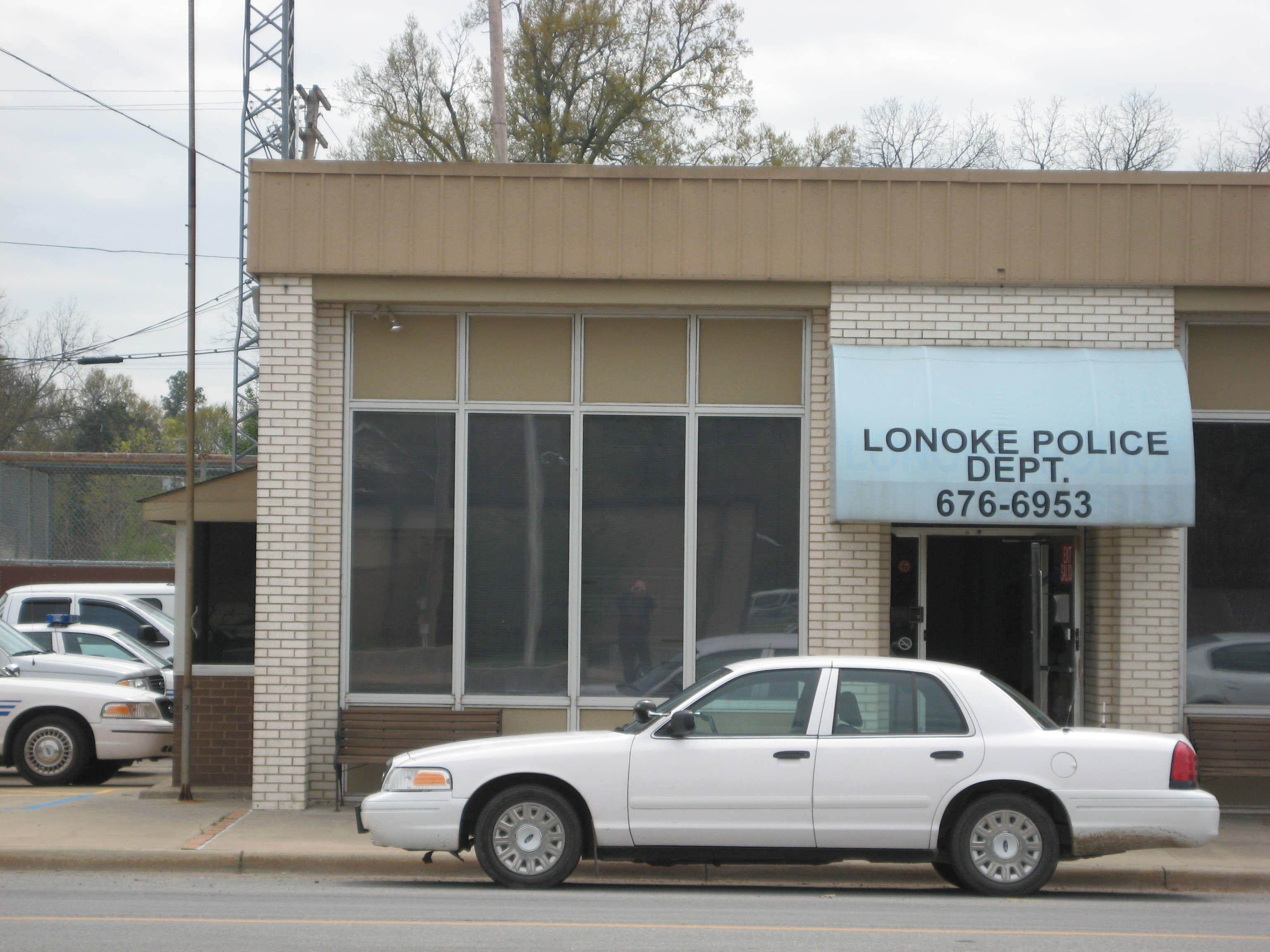
Govar went to bat for Campbell again in 2006 when his old friend was indicted for behavior that might have shocked Dan Harmon.  Campbell had served as Lonoke County police chief after being fired by the Pulaski County Sheriff’s Department in 2000.

When Charles McLemore, an officer with the Arkansas State Police, started investigating in Lonoke County, the allegations just kept multiplying.  McLemore reported “Irregularities, including drug use, sex, and personal use of prisoners to perform personal services for various individuals.”

Jay Campbell, it turned out, was using state prisoners to perform odd jobs on his own property and hiring them out to local residents, including the mayor of Lonoke and his own friend Bob Govar.

“Prisoner Andrew Baker disclosed that Chief Jay Campbell’s wife had a very close relationship with at least two of the [inmates],” McLemore reported.  “Baker disclosed that the chief’s wife, Kelly Campbell, had brought a fifth of vodka, a fifth of gin, and a fifth of Royal Crown” to the jail and shared it with inmates.

Prisoners who preferred marijuana to alcohol, Baker reported, were accommodated. 

According to a number of inmates, Kelly Campbell allowed pictures of herself to be taken in provocative poses with inmates and had engaged in sexual activity with her favorites “ten to twenty times” in and around Lonoke including “the Holiday Inn Express, the press box at the ballpark, the Campbell’s home on Cherry Street, and the chief’s office at the Lonoke Police Department.”

A long list of local residents reported that, after visits from Jay and Kelly Campbell, money, valuables and prescription medication turned up missing.  The natural explanation was that Jay and Kelly Campbell were addicted to pain killers.

Lonoke County District Attorney, Lona McCastlain knew she was in over her head when all this information was dumped on her desk

                                                   Lona McCastlain

Handsome and intense, McCastlain is a Republican, a rarity in Democratic Arkansas.  When I told her I worked with a criminal justice reform organization that intervenes in cases of official corruption, she smiled.

“If you’re looking for corruption,” she said, “you’ve come to the right place.”

“This was an appropriate case for the feds,” McCastlain told me.  “I handed it to the U.S. Attorney’s office on a silver platter. I took all the files I had and gave them to [U.S. Attorney] Bud Cummins.  He knew at that point that Govar was involved with the misappropriation of labor.”

Cummins seemed interested, but he told McCastlain she needed to talk to the FBI.  “They told me they’d get back to me,” she recalls.  “The next Monday morning they called and said that they couldn’t take the case.”

The reason: “The State Police had taped interviews and the FBI didn’t do that.”

McCastlain had no choice but to try the cases herself.  Big name lawyers had signed on to represent Campbell and his co-defendants and Campbell’s old friend, Judge John Cole of Saline County, was coming out of retirement to try the case.

“Judge Cole and Jay were backslapping the first day of trial,” McCastlain recalls.

Moreover, as had been true when the feds prosecuted Dan Harmon, most of the potential witnesses were alleged drug dealers and prison inmates.  “You can’t win cases like this when you have that kind of witnesses,” McCastlain told me.  “I am glad I tried this case; but I shouldn’t have done it.  It was too much for me.”

                                                   Jay and Kelly Campbell

Shortly after the Campbell’s were convicted, Garrick Feldman, editor of The Arkansas Leader, wondered aloud why the outgunned prosecutor had being forced to go it alone.

                                                                   Garrick Feldman

In an editorial called “Why didn’t the feds take this case?” Feldman posed the obvious questions.  “Did the Campbell’s have friends in high places who protected them from federal indictments–specifically, a good friend in the U.S. attorney’s office  who has received favors from Campbell, and an FBI agent who knows him well?”

“Two law enforcement officials have told us,” Feldman continued, “it was improper for a deputy U.S. attorney named Robert Govar to let Lonoke prisoners clear his land before he built his house in Lonoke.”

But what really bothered Feldman was Govar’s testimony at trial: “He in effect became a character witness when he testified that Campbell had a wonderful family.  The jury wasn’t impressed.”

An enraged Govar tapped out a strange email on government stationary.

“I just wanted you to know that I will be engaging the services of the best libel lawyers I can find to sue you,” Govar said.  “Your article, ‘Why didn’t the feds take this case?’, in the April 25, 2007 issue of The Leader contains lies which damage my professional reputation. 

“You will be receiving a letter from them soon which will provide more details.  I hope you and some of your ‘sources’ have fifty million dollars but, if you don’t, take good care of my newspaper.”

Feldman forwarded Govar’s email to U.S. Attorney, Tim Griffin and Bob Govar was summarily demoted.

“My parents survived the holocaust,” Feldman told me when we chatted in his office.  “The communists put my family in jail before I came to this country.  And he thinks he’s going to intimidate me with that nonsense?  That was a drunk writing an email at 11:30 in the morning when he’s already drunk; and then he sobers up and wishes he hadn’t written it.”

Govar’s ill-fated email, naturally, became the subject of Feldman’s next column.

“Robert Govar of Lonoke–formerly chief of the criminal division in the U.S. attorney’s office in Little Rock who’s now been demoted–threatened to sue me last week over a column I wrote about him and his buddy Jay Campbell, the crooked cop who was sentenced to 40 years in prison, along with his wife Kelly, who received a 20-year sentence.”

“He thinks we’ve ruined his reputation because we wrote he’d been hanging out with Campbell too long,” Feldman wrote.  “A lot of people think Govar sullied his reputation long before we wrote about him.”

“In their heyday, Campbell and Govar were both known as bullies as they worked together on various criminal investigations.  ‘Two peas in a pod’–that’s how a law-enforcement official characterized the pair when he heard about Govar’s ridiculous email.”

Feldman ended the column with high praise for Tim Griffin.  “But Griffin hasn’t gone far enough,” Feldman opined, “he should fire Govar if he hopes to bring back respect to the U.S. attorney’s office.”

Six days later, Greg Palast, a British journalist covering American politics, accused Tim Griffin of producing “caging” lists during the 2004 election in which Griffin played a prominent role in George W. Bush’s re-election effort.

“The Griffin scheme was sickly brilliant,” Palast wrote.  “We learned that the Republican National Committee sent first-class letters to new voters in minority precincts marked, ‘Do not forward.’  Several sheets contained nothing but soldiers; other sheets, homeless shelters.  Targets included the Jacksonville Naval Air Station in Florida and that city’s State Street Rescue Mission.  Another target: Edward Waters College, a school for African-Americans.”

If the letters came back as undeliverable, the names were challenged when the recipients tried to vote on residency grounds.  Tim Griffin resigned in disgrace.

Two weeks later, George Hairston was asking Bob Govar why he had been demoted and Judge Leon Holmes was ruling the question irrelevant.

Govar’s history is relevant to the Alvin Clay case in three ways.

First, Govar’s ill-considered letter to Garrick Feldman exposes the prosecutor’s mean and vindictive side.  The prosecutor relishes the singular power he wields as a U.S. attorney.  If he possessed the authority to crush Feldman he would have done so.  Govar takes professional criticism personally and takes revenge when he can.

Only a vindictive prosecutor would have launched a witch hunt against a fellow attorney before the slightest hint of wrongdoing had emerged.  Only George Vena resented Alvin Clay enough to open such a case at Bob Govar’s behest. 

George Vena’s threat to Alvin Clay was similar in style and spirit to Govar’s threat to Garrick Feldman.  Both men are capable of cooking up a vindictive prosecution if they think they can get away with it.

Secondly, Bob Govar’s enthusiastic pursuit of Alvin Clay contrasts strangely with the shelter he has afforded to men like Dan Harmon and Jay Campbell.  Govar has been straining out gnats and swallowing camels. 

Compared to the Bonnie and Clyde exploits of Harmon and Campbell, the accusations against Ray Nealy and Alvin Clay evoke the antics of Eddie Haskell and Beaver Cleaver.  Beaver got in trouble for hanging out with the street savvy Haskell.  Alvin Clay has shown equally poor social judgment, but does this qualify as a federal case?


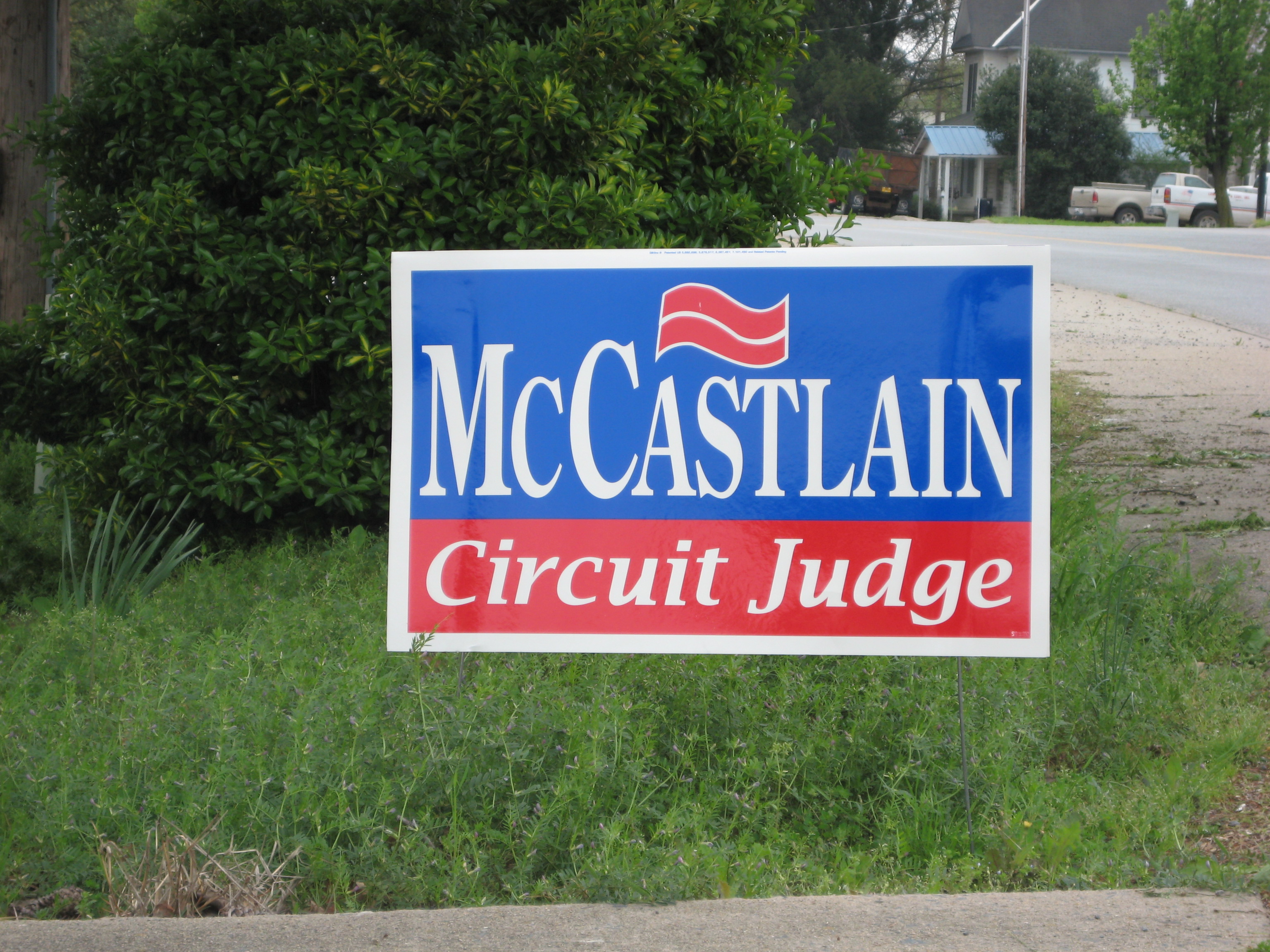
If so, why did the feds force Lana McCastlain to prosecute Jay Campbell and company when her office lacked the requisite resources?  (McCastlain, buoyed by popular support for her prosecution of Campbell, is running for judge).

Finally, Bob Govar’s quarter-century friendship with Jay Campbell demonstrates the perils of guilt by association prosecutions. 

Can we really believe that Bob Govar didn’t know that his buddy had extreme addiction issues, or that Campbell could use, manufacture and sell drugs without Govar being aware of it?

Are we expected to believe that a federal prosecutor with thirty years experience took advantage of Campbell’s felon-for-hire scam without knowing it was illegal?

The guilt-by-association case I have just sketched out against Bob Govar is far more compelling than the case Govar has built against Alvin Clay.

Am I suggesting that Bob Govar should be prosecuted as an accomplice to the comically corrupt Campbell?

Not for a moment. 

Govar’s 1990 investigation of the obviously guilty Dan Harmon should be investigated.

Govar’s 2000 prosecution of almost two dozen defendants on the perjured testimony of Clayton Richardson should be the stuff of scandal.

Did Govar discourage the FBI from taking the Jay Campbell case?  Is anybody but Garrick Feldman even asking the question?

Govar’s role in suborning perjury and withholding exculpatory evidence in the Alvin Clay warrants a stiff rebuke from somebody.

But none of these sins, egregious as they are, offer proof beyond a reasonable doubt that Govar was entangled in the manifold sins of Jay Campbell. 

Nonetheless, if Govar was indicted for conspiring with Jay Campbell, a jury would probably convict.  That’s what scares me about the May 27th trial of Alvin Clay.


Alvin Clay, 5: Who Judges the Judges?

The Honorable Leon Holmes 

Federal Judge Leon Holmes, the magistrate presiding over the Alvin Clay case, is admired by those who know him best.  Reading over the transcripts from this case, I was struck by Judge Holmes’ gracious and respectful manner. 

So why did the Honorable Mr. Holmes barely survive the federal confirmation process.

In 2004, critics like Patrick Leahy and Barbara Feinstein were brutal in their evaluation of the Arkansas jurist.  Senator Kay Bailey Hutchison, a conservative partisan from Texas, voted against Holmes because “He doesn’t have the fundamental commitment to the total equality of women in our society.  


           Patrick Leahy

    Kay Bailey Hutchison

Leon Holmes is a highly traditional Roman Catholic.  He has been criticized for asserting that wives should be subordinate to their husbands (an idea he borrowed from the book of Ephesians), that pro choice Americans are the moral equivalent of Nazis, and that the woman’s movement should be lamented for bringing us abortion, artificial contraception, and the gay rights movement.


“I have said some things that were openly harsh and unduly strident,” Holmes admits.  “If I could go back and change some of those things, I would speak more softly.”

But that doesn’t mean George Bush’s nominee is retracting anything he has written.  He doesn’t mean to give offense, but he believes what he believes.

Most of what you can learn about Leon Holmes on the internet comes from his political enemies.  Like Alvin Clay, Judge Holmes has been subjected to unwarranted allegations.  In fact, he had just emerged from his fiery ordeal on Capitol Hill when he was appointed to the Clay case.

Judge Holmes is no fool.  He understands that his personal beliefs must not guide his rulings from the bench.  “I think of a district judge as a humble position,” Holmes says.  His job is to determine what congress wants.  “I do not look on it as my job to make policy in the event that the statute is not what I want it to be or in the event that it is ambiguous.”

While the most strident criticism of Judge Holmes has come from pro choice and feminist circles, I am much more concerned about his views on racial justice.

Let me be clear, I am not accusing Holmes of being an old-school racist.  His doctoral dissertation at Duke focused on the views of Booker T. Washington and W.E.B. DuBois, noting how these seminal thinkers influenced Martin Luther King, Jr.  The Arkansas jurist is deeply concerned about race relations.  If you asked him if all American citizens should be equal in the eyes of the law I’m sure his head would nod in vigorous affirmation.  That’s not the problem.


Booker T. Washington believed that improvements in the lot of “the Negro” could only come through self-discipline and education in the manual trades while DuBois advocated swift and decisive change that was guaranteed to upset white folks.  Judge Holmes sides with Booker T. Washington.  That’s the problem.

The difference between Washington and DuBois is well illustrated by a fascinating recollection DuBois shared with The Atlantic Monthly in 1965. 

“I remember once I went with him to call on Andrew Carnegie — with whom he had a warm and financially rewarding relationship. On the way there Washington said to me:

‘Have you read Mr. Carnegie’s book?’

‘No,’ I replied, ‘I haven’t.’

‘You ought to,’ he said; ‘Mr. Carnegie likes it.’

DuBois chuckled softly. “When we got to Mr. Carnegie’s office,” he said, “he left me to wait downstairs. I never knew whether Mr. Carnegie had expressed an opinion about me or whether Washington didn’t trust me to be meek. It probably was the latter. I never read the book.”

Booker T. Washington taught that movements for racial equality are counter-productive if they deepen racial tension.  Judge Holmes agrees.


Consistent with this belief, Judge Holmes has argued that, in the wake of Brown vs. Board of Education, the federal government lacked the authority to desegregate public schools by judicial fiat. 

This suggests that when Judge Ronald Davies ordered Little Rock’s central High School to admit black students in 1957 he was overstepping his bounds.  Leon Holmes likely believes that integrated High Schools are desirable, but if the white majority objects, black folks should back off. 


George W. Bush’s controversial nominee doesn’t share the racial animus of Orval Faubus, the Arkansas governor who defied President Eisenhower in 1957, but he appears to sympathize with the governor’s stand.

Leon Holme wasn’t old enough for elementary school when the fight over Central High School erupted, but that event left an indelible mark on every white person in the state of Arkansas.  Popular opinion was solidly on the side of Governor Faubus; the paratroopers sent in to protect the Little Rock Nine were deeply resented.


Everybody needs a sense of place.  We want to honor our ancestors and venerate the traditions passed down from our grandmothers and grandfathers.  What do we do when Jim Crow segregation is part of the package?  How do we deal with the fact that our grandmothers and grandfathers intentionally and systematically reduced people of color to the level of animals?

I love my dog.  I treat him better than I treat most people.  But in my eyes, H.O. is still a dog.

Many southern whites loved their black servants.  They treated them better than they treated most white people.  But in their eyes, black people were still on the level of a dog.

The suggestion that the Jim Crow system was morally evil was deeply resented by southerners. 


The issue is complicated-intellectually and emotionally.

On the one hand, most white southerners (especially highly educated people like Leon Holmes) embrace the idea of racial equality.  On the other hand, these men and women need to celebrate their roots.

Against this background, Judge Holmes’ abiding interest in Booker T. Washington makes sense.  Washington taught that slavery, despite its horrors, was an expression of divine providence. 

In an article written in 1981 for Christianity Today (a journal for egghead evangelicals) Holmes wrote approvingly of Booker T. Washington’s approach to the race issue.  “He taught that God placed the Negro in America so it could teach the white race by example what it means to be Christ-like.  Moreover, he believed that God could use the Negroes’ situation to uplift the white race spiritually.”

But what if the Negroes don’t like being called Negroes?  What if they start calling themselves African Americans and taking to the streets in protest?  Is that spiritually uplifting to the white race?  Is it even tolerable?


And what if a black man named Alvin Clay, through his equally black attorneys, accuses two white federal prosecutors and a white FBI agent of perjury, withholding exculpatory evidence and pursuing a meritless and vindictive prosecution? 

What if the evidence supporting these allegations is overwhelming?

What do you do?

Here’s what Judge Holmes did (in the most dignified and gracious manner imaginable).

At the first pre-trial hearing, federal prosecutor Bob Govar testified that he played no role in presenting the Clay case to the grand jury.

On the basis of this testimony, Judge Holmes denied the defense motion alleging vindictive prosecution.  Govar denied the claim and Holmes took the federal prosecutor at his word.

Then, thanks to an oversight by Agent Hayes, grand jury transcripts fell into the hands of defense counsel.  These documents proved conclusively that Bob Govar had participated actively and enthusiastically in presenting the Clay case to the grand jury. 

The legal term is perjury.

George Hairston, Alvin Clay’s lead attorney, filed a motion for reconsideration based on Govar’s false statements and newly revealed evidence that FBI agent Hayes and federal prosecutors had lied to the grand jury, repeatedly, knowingly and blatantly.

Judge Holmes admitted that his original ruling had been mistaken, not because Govar had perjured himself but because the judge misunderstood Govar’s testimony.  The government, Holmes suggested, had made a few minor and innocent errors, but nothing serious. 

The fact that virtually every crime alleged against Clay in the original indictment has since been withdrawn, didn’t suggest there was a problem.  Grand jurors were not misled, Judge Holmes concluded, by the presentation of a few false “facts”. 

We have a very good reason to believe that jurors were misled by the testimony of bizarre witnesses like Rodney Hayes–they handed down an indictment.

Perhaps Judge Holmes comforts himself with the knowledge that Bob Govar and the entire Eastern Division of the Arkansas US Attorney’s Office have now been recused from the Clay case. 

If felonies are committed by the first set of prosecutors, we just bring in a new set.  Problem solved.

Assistant US Attorney Steven Snyder, the new prosecutor, has dropped all the unsustainable allegations from Alvin Clay’s indictment–Clay is now accused of assenting to Ray Nealy’s fraudulent acts. 

So all is well, right?

Not hardly. 

Steven Snyder knows he should drop the case against Alvin Clay, but that might suggest that the charges leveled by the Clay camp are legitimate.  That being unacceptable, Mr. Snyder soldiers on.

Judge Holmes let Bob Govar off the hook for the same reason Mr. Govar let State Trooper Clayton Richardson off the hook in Operation Wholesale–the reputation of the federal government was at stake. 

Every thinking person knew that Trooper Richardson was committing perjury every time he opened his mouth. 

Everyone who reviews the transcripts in the Clay case knows that Bob Govar, Rodney Hayes et al are guilty of vindictive prosecution, flagrant perjury and withholding exculpatory evidence.

They did it.  They knew what they were doing.  And they knew why they were doing it.

But not every felonious act can be punished; sometimes you’ve got to cut the system a little slack.

A federal judge who squeaked into his job by the slimmest of margins doesn’t want to ruffle any more feathers.  Forced to choose between a veteran of three decades like Bob Govar and an unheralded black defense attorney like Alvin Clay, Leon Holmes knew what to do. 

Holmes didn’t give these people a pass because he is a traditionalist Roman Catholic; he did it because he works within a dysfunctional system. 

How dysfunctional? 

Stay tuned.

Obama and America’s dirty laundry

The Farmers for Obama headquarters in Vincennes, Ind., was vandalized on the eve of that state's May 6 primary.

With the Alvin Clay trial just two weeks away, I haven’t had much time for topical blogging.  But this story in the Washington Post is too important to pass over. 

Barack Obama has done everything in his power to sidestep the race issue, but it keeps tracking him down.  The more overt acts of racial hatred cited in this illuminating piece are symptomatic of a much deeper problem. 

Many have attributed Obama’s difficulties with certain sectors of the white electorate to the emergence of Rev. Jeremiah Wright or to the candidates unfortunate allusion to bitter voters clinging to guns and religion.  But why have so many white voters latched onto side issues that have generally been pushed aside by black Americans and suburban whites?

Barack Obama doesn’t stand a chance in little towns like Tulia, Texas and Jena, Louisiana; and for precisely the same reason that black defendants face an uphill struggle in these communities.  Call it racism, bigotry, or merely a problem stepping out of America’s racist shadow–it’s real.  You just feel the ambivalence to people of color in these places.

America has come a long way in the past forty years, true enough.  Mr. Obama is right to criticize his former pastor for suggesting otherwise.  But we aren’t even half way toward the goal of full racial equality.  That Barack Obama could win thirty of the fifty contests held thus far shows how far we have traveled.  That his field workers confront gross racism on a daily basis demonstrates how far we have to go.

When Alvin Clay goes to trial on May 27th, the composition of the jury will be all-important.  Jurors who see Barack Obama as a radical, America-hating Muslim will convict Mr. Clay no matter how shoddy the evidence.  I’ve seen it done.  That’s why I will be in Little Rock when the deal goes down.

Alan Bean

Alvin Clay Part 4: “Who prosecutes the prosecutors?”

If Alvin Clay is convicted by a Little Rock jury it will have a chilling effect on aggressive defense attorneys across the nation.  This will be especially true for minority lawyers.  If the government can cook up a bogus prosecution against any attorney it dislikes we are unlikely to see the kind of open and honest clash of ideas that justice demands.  Defense counsel will be pulling their punches, fearful that the government might take offense and retaliate.

The government of the United States of America is making an example of Alvin Clay, a black Little Rock attorney who holds the prosecution to a high ethical standard.  He was investigated by the Department of Justice and the FBI before there was the slightest hint of illegal activity.  Gross misrepresentations of perjured testimony were used to obtain a search warrant and a grand jury indictment.  Federal prosecutors Bob Govar and George Vena have repeatedly lied under oath in order to minimize their involvement in the prosecution of Mr. Clay. 

Bob Govar handed the Clay case to George Vena because no other Assistant US Attorney was motivated to pursue a fishing expedition with no evidence of wrongdoing.  Vena had that motivation.

In August of 2002, Alvin Clay was leaving the federal courthouse in Little Rock when a slender blonde woman in her mid-forties approached him and asked for his business card.   Her name was Mary K. Edelmann.

Like Roy Lee Russell, Mary Edelmann was a troubled soul with a closet full of skeletons.  She had already served one stretch in prison for fraud and was now facing federal charges.  Edelmann was accused of having created a letter on the bogus letterhead of a high-profile bank stating that she had hundreds of thousands of dollars in assets to which she had no immediate access.  The letter, the indictment said, had been used to induce a loan from a private individual.

It was quickly clear that Ms. Edelmann had a pathological streak.  In prison she was a notoriously brilliant jailhouse lawyer who had helped several inmates with their cases.  In the free world, Edelmann was drawn to larceny like iron filings to a magnet.  A pathological liar, she lived for the game.  When she wasn’t running a scam she was filing lawsuits against every authority figure that entered her world.

“Mary is a very gifted person in many ways,” Clay tells me.  “She’s a talented legal researcher and has even done some work for the Rose law firm.   She could have made legitimate money.”

Mary Edelmann had already fired two attorneys when she hired Clay.  She was feeling abused and resentful.  The last lawyer to work on her case had talked her into talking to US attorney Dan Stripling and FBI agent Sharon Dawkins.  The theory was that playing snitch for the federal government was the only way Edelmann could avoid a stiff federal sentence.

Clay understood the strategy, but exposing a compulsive liar to agents of the federal government was a reckless plan.  “These people take notes,” Clay explains, “and anything she said to them could be used against her in court.”

In the course of one meeting with the feds, Edelmann’s attorney accused her of lying.  The allegation was likely true, but it placed Edelmann in legal jeopardy.

Clay filed an ineffective assistance of counsel motion against Edelmann’s former attorney.  Next, he accused AUSA Stripling of prosecutorial misconduct.  “They had wired Ms. Edelmann up in an attempt to get incriminating evidence on the man she had scammed with the bank letter.  For the federal government that’s pretty standard practice, but they did it without talking to Mary’s attorney.  You can’t do that.”

Mary Edelmann was now insisting that the government had offered her a deal in return for working as an informant and then reneged on the deal.

Dan Stripling and the FBI officer insisted that they had worked in concert with Edelmann’s attorney.  But in the course of a rancorous hearing, Alvin Clay forced her attorney to admit that this wasn’t true.   

Three days later, Dan Stripling was replaced by USA George Vena.

“The tension in the courtroom during the Russell trial was intense,” Clay tells me; “but things really got nasty in the Edelmann case.  I’m always professional and courteous in my dealings with the prosecution, but if I see prosecutorial misconduct I’ll file the motion every time; I don’t care who my client is.  The government needs to be accountable for its behavior.”

Clay filed a pre-trial motion to have the case dismissed.

Shortly after coming onto the case, George Vena approached Clay’s co-counsel, Darrell Brown and told him that Alvin Clay was getting too close to his client and needed to be careful in his representation of her.

The implication was that Ms. Edelman’s accusations were embarrassing the government and Clay was making no attempt to discourage her.

At a hearing in 2006, Darrell Brown was asked how he interpreted Mr. Vena’s message. 

“Ms. Edelmann had made some very serious allegations concerning the US Attorney’s office and other persons who were investigating the case,” Brown testified.  “And needless to say, some of those allegations were disturbing to the US Attorney’s Office, to Mr. Vena and others who were involved in that case.  And I took that to mean that those allegations, if they were coming from Mr. Clay, he felt perhaps were either unfounded and that it could lead to other things.”

Asked to elaborate, Brown said that that the allegations Clay was making against the government in the Edelmann case made even Brown, Clay’s co-counsel cringe because, “If those allegations were true, then there needed to be some further investigation undertaken.” 

With these concerns in mind, Brown talked to Clay about the aggressive nature of his representation.  “I frankly felt some obligation to also alert Mr. Clay that this was ground that he needed to be very careful about for his own well-being,” Brown testified.  “If you ask me whether or not I had some concerns that Mr. Clay and his profession was in jeopardy, I could say yes.”

It didn’t take long for US Attorneys George Vena and Bob Govar to prove Darrell Brown right.  Alvin Clay had played a minor role in a real estate deal in which Ray Nealy had been defrauded by a man in New Jersey.  Nealy immediately contacted the FBI and asked them to investigate. 

It wasn’t long before Rodney Hayes, a freshly minted FBI agent out of Oklahoma, contacted Nealy.  Hayes and the FBI weren’t interested in helping Nealy recoup his business losses; but they were very interested in his association with the notorious Alvin Clay. 

The FBI had been embarrassed by the Roy Lee Russell fiasco even more than the US Attorney’s office. 

When questions are raised about an officer of the court, the normal procedure is to call in the attorney in question, lay out the concerns and ask for an explanation.  Govar and Vena didn’t do that.  Instead, they contacted Kenny Wright, the roly-poly accountant who had written1099s for subcontractor Donny McCuien a few weeks earlier. 

Kenny Wright immediately contacted his attorney, Mark Leverett who accompanied his terrified client to the US Attorney’s office on July 1, 2003.  Wright could only tell his lawyer that the feds had questions about “Ray Nealy and something involving mortgages.”

George Vena assured Leverett that Wright wasn’t under investigation.  So long as he proved cooperative he would be immune from prosecution.

When Alvin Clay’s name entered the conversation, Leverett informed Wright that, as a friend of Clay, he wouldn’t be able to represent him further in the matter. 

Kenny Wright wasn’t sure what the government was looking for, but he did his level best to give it to them.  There was just one hitch: Wright knew practically nothing about the five real estate deals in question.  Everything he thought he knew was based on inaccurate second-hand information that would eventually force the government to drop most of the charges against Clay.

Wright told George Vena that Clay Construction wasn’t a real company, that no rehab work had been done on any of the five properties, that the value of all the properties had been inflated and that Donny McCuien hadn’t received anywhere near the amounts reflected in the 1099s.  None of this was true.  McCuien didn’t tell the government that he was responsible for recruiting buyers and sellers and for doing rehab work on the properties. 

On the other hand, no one ever asked. 

A quick phone call to the appropriate state office would have informed the FBI that Clay Construction was a real company.  Unfortunately, the government made no attempt to verify the accuracy of Wright’s testimony.  Less than 72 hours after providing false information to the government, Kenny Wright entered Alvin Clay’s office accompanied a plain-clothes FBI agent wearing a wire. 

In mid-January, 2004 the FBI raided Alvin Clay’s office confiscating business records and computers.  Only then did George Vena hand Clay’s case over to another prosecutor.

In other words, while George Vena was prosecuting the Edelmann case, he was digging up dirt on his legal opponent.  Asked why he didn’t recuse himself from the case, Vena testified that it was his responsibility to “look into the matter.”

Vena then testified that he and Bob Govar had never addressed the propriety of investigating a legal opponent.

Judges rarely ask questions in the course of hearings, but Judge Leon Holmes couldn’t let this one go.  “Did you say there is no impropriety whatsoever in doing it?” he asked.

“No impropriety,” Vena replied.

At the behest of Govar and Vena, FBI agent Rodney Hayes began interviewing everyone associated with the five real estate deals Donny McCuien and Ray Nealy had arranged.  He talked to buyers, sellers and employees who had worked with either Nealy or Clay.

Donny McCuien consistently minimized his role in the real estate deals, suggesting that he had entered the process only toward the very end.  Rodney Hayes told the grand jury that Alvin Clay had written checks to Donny McCuien but suggested that McCuien received only a small portion of the almost $80,000 cited in the 1099s.  Hayes didn’t get that from McCuien.  In fact, Hayes knew that McCuien had received every penny of the money he was owed and Hayes knew it–he had the checks.

Grand jurors were led to believe that Clay had received over $133,000 when he had really received only $55,000.  After paying off an outstanding debt to Ray Nealy, Clay realized a modest return of $35,000 on five real estate deals. 

Agent Hayes’ perjury was blatant and unrelenting.  He knew what he was doing.  More importantly, Bob Govar knew that his star witness was lying and made no effort to challenge his testimony or to correct the record.

This was Rodney Hayes’ first big case.  He knew what the government was looking for, and he was determined to give it to them.

 On March 16, 2004, the government forced Alvin Clay to resign as Mary K. Edelmann’s attorney.  When Clay attended a hearing in the Edelmann case, the government attempted (unsuccessfully) to have him barred from the courtroom.  The animus was obvious. 

Two years later, testifying at a hearing related to the Clay case, US Attorney Bob Govar admitted that he could recall only one other case in twenty-six years on the job in which a defense attorney was conflicted out of a case because he was under investigation.

On June 1, 2004, five months after Alvin Clay’s office was raided, a grand jury began hearing testimony and five months later, Alvin Clay and Ray Nealy were indicted.  His work done, George Vena finally turned the case over to another prosecutor. 

In 2007, with the Clay-Nealy case scheduled for trial, Rodney Hayes told George Hairston, Clay’s lead defense attorney, that discovery materials were ready for review.  Hayes didn’t realize that he had inadvertently given the defense access to the grand jury transcripts from 2004. 

These documents demonstrated that Bob Govar had played a major role in presenting the case to the grand jury, repeatedly asking questions designed to help jurors connect the dots. 

On one occasion, Govar asked Hayes a series of questions designed to convince grand jurors that Alvin Clay couldn’t possibly have done the rehab work he was hired to do.  Did Clay Construction have any equipment, Govar asked.  Did Clay Construction have any employees?

Both men knew that Clay had subcontracted the work to Donnie McCuien, but they kept that critical piece of information from the grand jury.

In fact, Hayes, Govar and Vena shielded grand jurors from any evidence inconsistent with their unsustainable theory.  The grand jury process was one long perjury pageant.  Virtually every allegation against Clay named in the indictment has since been withdrawn.  Had Hayes, Govar and Vena restricted themselves to provable fact it is doubtful that an indictment could have been obtained against Alvin Clay.

The grand jury transcripts contained the field notes Rodney Hayes had taken during his initial interviews along with the summaries of these notes US attorneys had assembled.  A comparison of the two documents revealed that prosecutors had frequently twisted witness comments to sinister effect.

Shortly after raiding Alvin Clay’s office, Rodney Hayes interviewed his former secretary Jeron Marshall.  “Alvin is a good attorney,” Marshall said. “If he felt it was questionable, he would do something about it.  He worked hard for his license.”

The grand jury heard a slightly different version of this remark: “Clay is a good attorney and if he felt that he was doing something questionable, he would do something about it.  Clay worked hard for his law license.” 

At a pre-trial hearing, defense attorney George Hairston instructed agent Hayes on the difference between the statements.  The first statement would have suggested to the grand jury that Marshall “knew nothing about Alvin being involved in any of the stuff that she had told you about, she was being interviewed about, the allegations in this case?”

The second statement suggested that Clay did know what was going on and was troubled by it. 

Jeron Marshall had already admitted to the government that she was aware that Ray Nealy was falsifying information on mortgage applications.  She was trying to tell Hayes that Alvin wasn’t party to this wrongdoing, but Hayes didn’t want to listen, nor did he want the grand jury to be privy to this critical fact.

 Jeron Marshall has always made it clear that Alvin subcontracted the rehab work to Donny McCuien and that Clay was unaware of anything illegal.  Waiting to testify at a hearing, a member of Clay’s legal team struck up a conversation with Clay’s former secretary.  Marshall was upset that Clay had fired her and she thought it was his responsibility to take care of her legal bills.  Still, she insisted that her former employer had been kept in the dark.

 Marshall told the attorney that she had been terrified when federal agents raided the office.  She was alone at the time and was afraid that she would be arrested.  “Jeron and I sat in the foyer and talked for more than 2 hours,” the attorney tells me.  “She said she didn’t believe that Alvin knew anything about the deals because he didn’t handle the paperwork.”

To date, not a single witness has testified that Clay had any direct involvement in preparing fraudulent mortgage applications.

When George Vena and Bob Govar received a list of questions defense counsel wished to ask them under oath, they dodged the bullet by recusing the entire Eastern Division of Arkansas and turning the prosecution over to the Western Division. 

It wasn’t long before Steven Snyder, the federal prosecutor assigned to the case in 2007, had issued a superseding indictment scaling back the government’s allegations considerably.  Clay was no longer accused of filing false invoices, inflating the value of properties or even of splitting up the proceeds with Ray Nealy.  The indictment made it clear that Ray Nealy was the primary actor.  Alvin Clay’s primary crime had been scaled back to consenting to the filing of fraudulent loan applications. 

Although the government’s original allegations against Clay have been reduced to rubble, the Little Rock attorney is still in deep legal jeopardy.  If the government can convince the jury that Clay knew what Nealy was up to, the Little Rock attorney will be convicted of fraud.

In the five year trajectory of this case, Bob Govar, George Vena and FBI agent Rodney Hayes have repeatedly lied to magistrates, grand juries, and a federal judge without serious consequence.  A big part of the reason is the federal judge assigned to the Clay case.  Prepare to be amazed.

Alvin Clay, Part 3: “Who polices the police?”

Alvin Clay and Roy Lee Russell

                                              Alvin Clay and Roy Lee Russell

Alvin Clay, Part 3: “Who Polices the Police?”

Alvin Clay knew he was facing a steep climb.  His client, Roy Lee Russell, was guilty as charged.  Russell had testified that Steve Block sold him drugs.  Later, also under oath, he recanted that testimony.  On one of these occasions he was lying.

Clay had two choices: he could go through the motions like a sensible attorney, or he could put the Arkansas State Police, the FBI and the Department of Justice on trial.  The only way to win was to argue that everybody involved in Operation Wholesale was either lying or protecting a liar.

The fancy term for Clay’s strategy is jury nullification-the theory that a higher justice demands that, in some instances, the law should not be followed.  When you’ve got a street hustler going up against the American government, it was a hard argument to make.

The best option was to cut Russell the best deal possible.  Assistant US Attorney, Bob Govar was interested.  Like everyone associated with Operation Wholesale, Govar was furious with Russell, but the veteran prosecutor knew that the Russell-Richardson fiasco was a national scandal in the making.  A conviction was a near certainty; but the Government didn’t want Roy Lee Russell on the stand.  Only God knew what the guy might say or who might believe him.

On the verge of trial, Govar offered Russell eight months in exchange for a guilty plea-a clear sign of desperation.  Clay was overjoyed.  He was prepared to go to the wall for his client, but eight months for perjury and obstruction was an unimaginably good deal.    

Clay huddled with his client.  Russell nodded his approval.  Clay sighed with relief.

Then things got bizarre. Perjury and obstruction of justice are serious charges, Judge Howard reminded Govar-why was the government so reluctant to move to trial.  Then, to show he hadn’t prejudged the case at bar, Howard told Russell that if he was innocent he should make his case to a jury.


Judge George Howard as a young man

When Judge Howard was appointed to the Eastern District of Arkansas in 1980, he was the first black federal judge to serve in the state.  Not until his death in 2007 was another black federal judge appointed in Arkansas.  In his early years, Howard had been an aggressive civil rights attorney famous for his cooperative relationship with the NAACP. 

Judge Howard was in his mid-seventies when Roy Lee Russell went to trial.  Five months earlier, he had presided over a high profile case in which special prosecutor Kenneth Starr had accused Susan McDougal, a close friend of Bill and Hillary Clinton, of criminal contempt after she refused to testify to two grand juries.  Howard had provided defense counsel with ample opportunity to accuse Starr of mounting a malicious prosecution. 

McDougal’s attorneys were using the same jury nullification strategy Alvin Clay contemplated.  Like Russell, McDougal was technically guilty.  Nonetheless, defense attorneys were able to convince the jury that their client was more sinned against than sinning and their client was acquitted.

 Alvin Clay faced a far stiffer challenge.  In drug cases, Howard (like most judges) displayed a clear pro-prosecution bias.  In his later years, he was inclined to wrap himself in the American flag by lecturing juries on the glories of American Democracy-a clear assist to the government, especially in drug cases. 


Susan McDougal                                               


Kenneth Starr and his Nemesis


Conservatives had criticized Judge Howard for allowing the defense to put the government on trial during the McDougal case.   Roy Lee Russell provided the perfect opportunity for Howard to reassert his law-and-order credentials and he intended to make the most of it.

When Judge Howard challenged Roy Lee Russell to fight like a man, Alvin Clay could feel his client stiffen.  Russell announced that he was no longer comfortable with the eight month plea deal; he wanted to fight.  Clay took his client aside and tried to reason with him.  “This is a great deal for you,” Clay remembers saying.  “I’ll do my best if we go to trial, but your chances aren’t good.”

Russell was adamant.  He’d rather serve ten years in the federal penitentiary than take the fall for Clayton Richardson, the Arkansas State Police and the FBI.  “I told all them people this wasn’t a good operation and they know I’m telling the truth.  I want everybody to hear my side of this thing.”

“All right, Roy,” Clay conceded with a shrug of resignation.  “If that’s what you want; that’s what you’ll get.”

Clay filed a pre-trial motion to have the case dismissed on procedural grounds.  Judge Howard glared at the young attorney in amazement and asked him if he was serious.

An article in the Arkansas Democrat-Gazette revealed just how daunting Clay’s task had become.  The Little Rock attorney spent the first day of trial making a simple point: the Arkansas State Police received little baggies of crack cocaine from Clayton Richardson, but only Richardson knew the source of the evidence he turned in.

It followed logically that endless testimony about “chains of custody” and “checks and balances” was meaningless.  Only Richardson knew what was going on.

These arguments were utterly lost on the Democrat-Gazette reporter.  She reduced Clay’s nuanced argument to a vague notion that “some of the defendants were being framed by police who pocketed money set aside for drug buys.”

No matter how hard Clay worked to show the jury how easy it would have been for Clayton Richardson to fake cases, the media coverage didn’t improve.  Roy Lee Russell remained a “turncoat” and a deceiver who was making it hard for the government to rid the streets of drug dealers.

Prosecutor Bob Govar’s assured the jury that Operation Wholesale had been a pristine operation until Russell started lying.  The media ate it up.  No one could understand the simple fact that neither Bob Govar, FBI agent Steven Pinkstone or Sgt. Michael Hall of the Arkansas State Police could tell if Roy Lee Russell was lying.  Perhaps the implications of getting this simple point were too troubling. 

Russell’s trial showed that Russell had no idea where Clayton Richardson was getting the buy money and that he never read Richardson’s sketchy field reports.  Russell wasn’t aware that innocent people were being charged until he was asked to testify to the grand jury. In the Steven Block case, Russell admitted, he had caved to pressure from Richardson, the FBI and federal prosecutors.  After that, he told it straight.

In his testimony, Russell kept referring to the legitimate sting operation he had worked with Officer Lloyd Franklin a decade earlier.  “I have no remorse for the people that they arrested or got convicted in the first operation,” he said, “but this operation was quite some different and I just couldn’t live with myself so I know I’m not going to be on this earth forever, and I want-I got to meet my maker one day and I want to have a good understanding with him.”

A stream of defense attorneys testified that, contrary to the government’s claim, they had never discussed giving Roy Lee Russell a nickel in exchange for his testimony.

Most of the people targeted by Operation Wholesale were street hustlers suspected of dealing drugs.  Few of them, Russell said, were personal acquaintances.

“Wasn’t nobody familiar with Trooper Richardson,” Russell explained, “so they would not sell us any drugs.  And Trooper Richardson said, well, that’s okay . . . I’ll just give them a charge.”

When the two men arrived in a new town, Russell testified, they would make numerous buys from one or two conspicuous dealers.  Russell had no problems identifying these people or testifying against them.  All the drugs turned into the authorities (after being broken down into smaller units) came from these initial buys.  In other words, most of the people charged in any given community hadn’t sold drugs to either Clayton Richardson or Roy Lee Russell.

“Mr. Russell, you knew that was wrong?” Clay said.

“Yes sir,” Russell admitted.  “But like I say, I’m not going to dispute no state police.  I’ll be in more trouble than I’m in now if I resist that man . . . He said he’s not fixing to lose his career over nothing like this.  He said they are going to take his word over mine anyway.”

The tension in the courtroom soared when Alvin Clay addressed the racial elephant in the room.  “Mr. Russell, what did all of the people that Clayton Richardson falsely accused of selling drugs have in common?”

“They all was suspected drug dealers,” Russell said.

“What else?  Were they all males?”

“They was all black males,” Russell answered.

Everybody got the point.  Operation Wholesale was designed from the outset to incarcerate poor black males.  No one else was arrested because no one else was targeted.

“There is no way I can overstate just how acrimonious things got in the courtroom,” Clay tells me.  “The only way I could defend my client was to make everybody involved in this case look bad.  I knew this would displease everybody on the government’s side; but I didn’t know how much.”

In his closing remarks, Clay argued that Operation Wholesale provided Clayton Richardson with the motive and opportunity to defraud the government.  This wasn’t about one bad cop; it was about a fundamental lack of democratic accountability in the war on drugs. 

“Who polices the police?” Clay asked the jury.  Then, in case they didn’t get the point, he answered his own question.  “You, the men and women of the jury, you police the police.”

The Democrat-Gazette reporter covering the trial made light of Clay’s question.  “Richardson’s supervisors,” she assured her readers, proved that “‘every penny’ of the drug-buy money was accounted for, and that it was monitored through a stringent system of checks and balances.”

Clay could only shake his head in wonderment.  Hadn’t he proven conclusively that the government’s system of checks and balances was useless so long as nobody was monitoring Russell and Richardson?  If the reporter couldn’t understand that, the jury wasn’t likely to do any better.

In the end, Roy Lee Russell was convicted of perjury and obstruction of justice.  That didn’t mean Russell was lying.  The government couldn’t prove that point and didn’t have to.

This issue surfaced in a bizarre fashion at the conclusion of Russell’s sentencing hearing.  On that occasion, Russell was defended by two attorneys with only a superficial grasp of the facts, but the trial transcript convinced them that Russell was taking the fall for the FBI and the department of justice. 

The government argued that, for the purposes of sentencing, all the drugs from all the cases that had been dismissed should be applied to Roy Lee Russell.  This assumed that the cases were legitimate even though the jury had never been asked to address that issue. 

FBI agent Steven Pinkstone insisted that Russell was lying.  He had no evidence to support this claim: he just knew it.

To everyone’s surprise Bob Govar appeared to argue that Russell, not Richardson, had faked drug cases on innocent people.

“I can’t even begin to estimate, Your Honor, the harm that this has done to the reputation of the FBI or the Arkansas State Police,” Govar began.  But Govar also defended “All these people that Mr. Russell had falsely arrested and indicted.  I mean, I can’t imagine a more clear and cogent case of violating other people’s civil rights than that right there; having them arrested, having them indicted, when all he had to do was tell the truth and say these people didn’t sell drugs, I didn’t buy drugs from them.  But he didn’t do that.”

The reporter for the Democrat-Gazette understood Govar’s comment to be hypothetical: even if Russell was telling the truth he was still guilty.  But a careful study of the hearing transcript rules out this reading.  Bob Govar was arguing that Russell’s lies had led to the arrest of innocent people.

 No matter how you parse Govar’s statement it makes no sense.  Russell had refused to testify against the innocent.  If Russell was telling the truth about Operation Wholesale, the State Trooper was lying.  But that didn’t deter Mr. Govar from taking dozens of Operation Wholesale cases to trial on Richardson’s uncorroborated testimony.

Asked if he had anything to say to the Court before the sentence was handed down, Roy Lee Russell launched into a rambling appeal.  Trooper Richardson “didn’t have no idea who these people was,” Russell asserted, “merely because he wasn’t never there, and it’s quite natural that he’s not going to admit to the court, because I assume it would be some kind of action took against him, like it was against me.”

But things hadn’t worked that way and Russell was wondering why.  “I feel like it really ain’t been investigated by the FBI,” he told Judge Howard. 

The Judge wasn’t about to order an investigation for an informant and a posse of accused drug dealers.  Russell was sentenced to ten years.  “I think it will take Mr. Russell out of circulation for a reasonable period of time,” Howard concluded, “thus affording him an opportunity to do some reflective thinking and become rehabilitated.”

From Bob Govar’s perspective, it didn’t matter whether Russell was lying or telling the truth.  Russell had raised serious doubts about the credibility of Bob Govar’s line of work.  All the people targeted in the sting were suspected of drug trafficking.  These were bad apples and they didn’t deserve protection from Alvin Clay or anybody else.  From Govar’s perspective, this was war and people like Alvin Clay needed to decide whose side they were on. 

It was one thing to accuse a small town police department of corruption; but you don’t aim that accusation at the federal government.

It was one thing for a lawyer to go to the wall for someone like Susan McDougal-she was a well-connected woman of means.  Roy Lee Russell was just a street hustler hired to finger other street hustlers.  So what if the defendants didn’t sell to Russell?  If they were truly innocent they wouldn’t have been on the government’s list.

Alvin Clay was dangerous for the same reason Susan McDougal and Roy Lee Russell were dangerous-they weren’t motivated by naked self-interest.  By refusing to testify against the Clintons, McDougal had destroyed Kenneth Starr’s credibility.  Thanks largely to the hard-charging Alvin Clay, Operation Wholesale had done serious damage to the reputation of the FBI and the federal government.  

Thanks to a compliant media and the complete absence of advocacy organizations, the government had dodged a bullet . . . this time.  But Bob Govar knew how easily the government’s house of cards could come crashing down. 

This was a sin Bob Govar could not forgive.  Nor could he forget.


Alvin Clay Part 2: “Everybody’s Got Standards”

Part 1 of this series can be found here.

Roy Lee Russell in Dumas, Arkansas

By Alan Bean

Alvin Clay Part 2: “Everybody’s Got Standards”

Why did the federal government investigate Little Rock Attorney Alvin Clay when there was no evidence of wrongdoing? 

 Why has the FBI unleashed a campaign of dirty tricks against Clay? 

 Why is the Department of Justice trying to link the black attorney to illegal drugs? 

 Why have FBI agents and federal prosecutors repeatedly lied to magistrates, judges and grand juries in order to obtain search warrants and indictments?

Why did the government withhold evidence from Clay’s defense team?

Why have a federal prosecutor and an FBI agent committed perjury in this case; and why did a federal judge give them a pass?

 Why is Assistant US Attorney Bob Govar so desperate to distance himself from the Clay case?

 It all began with Operation Wholesale, a spectacularly corrupt undercover drug bust that should have become a national scandal, but didn’t.  I may appear off topic here, I admit.  But you can’t understand what’s happening to Alvin Clay in May of 2008 until you understand what happened to Roy Lee Russell in March of 1999.

Operation Wholesale got rolling when Russell, a black farm worker who had done time on drug charges, ran into a black Arkansas State Trooper named Lloyd Franklin at the Exxon station in Dumas, Arkansas.

 “Roy Lee, you remember how we kicked ass down in Pine Bluff?” Franklin asked.  “Well, we’re doing another undercover operation and we need a good informant.”  Franklin told Russell to drop by his office if he was interested.

 Russell was interested.  He had enjoyed the few months he had spent working under cover with Franklin ten years earlier.  “Lloyd Franklin is a straight up kind of guy that does everything by the book,” Russell told me when I spoke to him in Little Rock.  “He’d take forever writing out his police reports; he wanted to get every little detail right.” 

Franklin had been a stabilizing influence in Russell’s often chaotic life.  During the few months the men spent making cases together in Pine Bluff, Russell took pride in being part of a class act–something straight and good.

 Operation Wholesale didn’t work that way.  This time, Russell was paired with a black State Trooper named Clayton Richardson, Lloyd Franklin’s opposite number–a pathetic character driven by greed, fear and appetite.

 “After we made a few buys,” Russell told me, “the FBI come in and said they wanted to prosecute the cases.  The feds said they could get me $900 a month on top of the $250 per case the state was already paying me.”

 It is hardly surprising that the Arkansas State Police and the FBI used a black cop and a black confidential informant (CI) to run a drug sting–the operation was aimed at poor black males and nobody else.  Roy Lee Russell’s job was to introduce Clayton Richardson to the poor side of the hardscrabble Arkansas farming towns he knew so well.

 Operation Wholesale wasn’t racist in the overt sense.  Drug warriors, state and federal, are judged by the statistics they accumulate (and by little else).  You get one point for bringing down a major drug supplier.  You get one point for nailing a crack addict who sells for buy money.  Kingpins rarely touch the dope they sell, they are protected by a small army of underlings, and they can afford high dollar lawyers.  Crack addicts and mentally challenged street hustlers are easy to nail and even easier to prosecute.  As one narcotics agent put it to me, “It’s like shooting fish in a barrel.”

 Young black males are disproportionately impacted by the drug war because they are disproportionately targeted.  As the prisons fill up with black guys, the public is taught to associate drug dealing with black skin. 

But that’s just the beginning.  Precisely because the targets of the typical drug bust fit the dealer profile (young, poor and black) and can’t afford good lawyers, it doesn’t take real evidence to secure a conviction.  Defendants frequently go down on the uncorroborated word of an undercover police officer or confidential informant.

 Narcotics operations, no matter how shoddy or corrupt, pass unnoticed by the public unless somebody raises a fuss.  The system is adept at rewarding those who embrace the status quo and punishing those who ask too many questions. 

The three most corrupt narcotics operations on record all happened in Texas.  In Tulia, it was a white undercover cop making uncorroborated cases on poor blacks.  In Hearne, it was a black informant making uncorroborated cases on his friends.  In Dallas, it was a couple of Hispanic cops teaming up with Hispanic informants to make cases on Mexican nationals. 

The Tulia drug sting, though the least egregious case, garnered by far the most publicity.  It was widely assumed that Tom Coleman, the white cop, faked cases on black defendants because he was a racist.  The Coleman operation came to grief because Tom Coleman was given the motive and the opportunity to line his own pockets by defrauding the government.

The Tulia sting unraveled because Friends of Justice stood up and said no.  The Hearne case fell apart because local residents, inspired by the stand we were making in Tulia, stood up to a corrupt prosecutor.  The Dallas scam was exposed because the Texas Legislature passed a Tulia-Hearne bill granting defense attorneys the right to ask for corroboration in drug cases made by confidential informants.

Operation Wholesale combined the worst elements of Tulia, Hearne, and Dallas.  A rookie cop with no experience in narcotics work was placed on the street with a convicted felon.   Had an advocacy group like Friends of Justice been paying attention, Operation Wholesale would have become another Tulia. 

When you give money to unsupervised individuals and ask for no corroboration you are courting disaster.    

Although Clayton Richardson was unfamiliar with narcotics work, he quickly learned that the more drugs you buy, the lower the price.  By breaking a large drug buy (purchased at wholesale prices) into several smaller units you could make a healthy profit every time you drove to Little Rock to turn in “evidence”.

“You could pay $450 for the drugs and tell the feds you paid $600 or even $650 and nobody asked any questions,” Russell told me.  “That’s $150 or $200 straight profit every time you make a case.”

As we drove through rural Arkansas, Roy Lee Russell pointed to a mileage sign.  “Things really started to come apart when we made a buy in McGehee,” he said.  “Some of my old friends figured Clayton for a cop and told me I shouldn’t be hanging with him.  When I told that to Richardson he completely freaked out, like somebody was gonna kill him or something.  From that day on, he wouldn’t stay at the apartment the state police rented for us in Monticello.  And he wouldn’t go out on the streets with me to make buys.”

 Instead, Russell claims, Trooper Richardson shacked up with a woman he met at Wal Mart and spent most of his weekends gambling in Greenville, Mississippi.  “Clayton was playing the slot machines and drinking, and he’d be giving the women a little money to gamble with.  He was married at the time-had a wife and kids back in Camden.”

 “When it came time to prosecute these cases Donnie Robinson and Stephen Pinkstone of the FBI started showing me pictures,” Roy Lee remembers.  “They’d be asking, ‘Who is this?’ and ‘Who is that?’  They never asked me specifically if me and Clayton Richardson made a buy from these people.  You see, I never looked at Clayton’s reports so I had no idea who he was making cases on.”

The first defendant, Steve Block, went to trial in January.  “They put me in a room with Clayton Richardson,” Russell says.  “Now, I been knowin’ Steve Block since I was a kid, so I told Clayton Richardson, ‘We didn’t make no case on Steve Block'”.

According to Russell, Richardson asked him why he was ****ing up the operation.  Unsure what to do, Russell perjured himself by claiming that Mr. Block sold them drugs.  When the case ended in a mistrial, Russell knew he couldn’t provide the government with a repeat performance. 

“I didn’t have no trouble putting dope dealers away,” Russell told me.  “We did that ten years earlier with Lloyd Franklin and I never lost a minute’s sleep over it.  And even in this deal here, we made some good cases now and then and, if a deal really happened, I had no problem getting up on that stand and telling the truth.  But to go along with Clayton Richardson’s lies was too much.  I couldn’t do it.  I ain’t no angel, but everybody’s got standards.”

Roy Lee Russell figured the feds would be relieved to learn that they were in the process of sending innocent people to prison.  Not so!

“Some of these cases they just wouldn’t drop,” Russell told me.  “Pinkstone kept coming to my house asking me to testify.  But I said, ‘I ain’t goin’ down there [to the federal courthouse in Little Rock].’  Pinkstone told me, ‘We can lock you up and hold you for contempt if we want to.’ And I told him, “You just do what you gotta do!”

In the end, Steven Block was convicted on the uncorroborated testimony of Clayton Richardson.  Cases dependent on Russell’s testimony were dropped, but if the field report had Richardson on the scene, the federal government, under the direction of Assistant US Attorney Bob Govar, continued to prosecute.

In March of 1999, a defendant named Johnny Patrick proved that he was locked up in the state prison in Dermott, Arkansas when Clayton Richardson said Patrick was selling drugs in the parking lot of Church’s Chicken in Eudora.

“Maybe if he were at a church meeting and had 50 nuns to verify his story it might be a better alibi,” Patrick’s lawyer told the Arkansas Democrat Gazette.  “But this is about as good as it gets.”

Defendants unable to prove innocence beyond a reasonable doubt weren’t so lucky.

Michael James Evans was convicted even though Roy Lee Russell signed an affidavit stating that the narcotics transaction described in Clayton Richardson’s police report was pure fantasy.  In addition, Richardson’s report had the deal going down in front of a house trailer.  Sales receipts proved that the trailer wasn’t moved to that site until long after the alleged crime.  (In the photograph at the top of this post, Roy Lee Russell is standing in front of the trailer.)

Trooper Richardson’s uncorroborated testimony was enough to rob an innocent man of seven years of freedom.  When the trial was over, a confused juror asked the presiding judge to change her verdict to ‘not guilty’.  She had voted to convict, she said, because Evans didn’t have an airtight alibi and his attorney never produced any character witnesses. 

This is typical juror reasoning.  In narcotics cases the presumption of innocence is replaced by a presumption of guilt.  If the defendant fits the dealer profile (young, poor and black) innocence must be demonstrated beyond a reasonable doubt.  Johnny Patrick could meet the standard; Michael Evans could not.

The US Eighth Circuit Court of Appeals upheld the verdict, reasoning that Richardson might have witnessed the buy in front of another house trailer.  The jurors’ recantation, the court ruled, came too late.

Roy Lee Russell was arrested in March of 1999 and charged with perjury and obstruction of justice.  By that time he had signed affidavits for a long list of defendants claiming that neither he nor Richardson had purchased drugs from them.  “I never said none of these cases didn’t happen-just that most of them didn’t,” Roy says.

Assistant US Attorney, Bob Govar, cooked up a bizarre explanation for Russell’s recantation.  The confidential informant, he said, was angered when his monthly stipend dropped from $900 to $700 a month.  According to Govar’s curious theory, Russell decided to supplement his flagging salary by writing affidavits in exchange for cash. 

The media gobbled up this story without asking a single defense attorney if it was true.  If they had asked the question, they would have learned that Russell wrote his affidavits without discussing remuneration with a single attorney. 

Not only did Roy Lee Russell have nothing to gain by testifying that Operation Wholesale was a fraud against the government, he had everything to lose.  From the moment he refused to sign off on Clayton Richardson’s narrative, Russell was threatened with prison time.   Instead of forfeiting $200 a month in salary, Russell surrendered every nickel of the $700 monthly stipend the feds were paying him to provide testimony in Little Rock.  The only upside for Mr. Russell was a clean conscience.

Clayton Richardson was rewarded handsomely for defrauding the American tax payer. 

The media swallowed the government’s suggestion that the State Trooper’s field reports were the gospel truth.  Bob Govar, the federal prosecutor, was a trusted source; Roy Lee Russell, the convicted felon, was not.  In the media, Russell was derided as a “turncoat”.

Government officials like Bob Govar and Steve Pinkstone lied to themselves, then they lied to one another, and finally they lied to the press.  How do we account for such unconscionable behavior? 

Once you understand the Alice in Wonderland world men like Govar and Pinkstone inhabit, their strange reasoning begins to make a weird sort of sense.  The government knew that Russell was telling the truth-it was as elementary and obvious as 1+1=2.  Unfortunately, if you couldn’t trust Operation Wholesale, you couldn’t trust any narcotics operation based on uncorroborated testimony.  Ergo, the public had to trust Operation Wholesale.

Roy Lee Russell was Toto pulling back the curtain on the Wizard of Oz.  He was the little boy declaiming that the Emperor has no clothes.

The best analogy I have come up with is from “The Third Man,” a 1948 movie based on a Graham Greene story.  The hero, a bumbling investigator named Holly Martins, learns that the villainous Harry Lime has stolen a vast supply of penicillin, drastically diluted it, then sold it back to medical practitioners.  As a result, dozens of innocent people have died.

In the climactic scene, Martins and Lime are at the apex of a giant Farris Wheel, looking down on the Vienna fairground below.  From that great height, people are reduced to the size of tiny ants.

“Have you ever seen any of your victims?” Martins asked.

“You know, I never feel comfortable on these sort of things,” Lime answered with a sardonic shrug.  “Victims?  Don’t be melodramatic.  Look down there.  Tell me.  Would you really feel any pity if one of those dots stopped moving forever?  If I offered you twenty thousand pounds for every dot that stopped, would you really, old man, tell me to keep my money, or would you calculate how many dots you could afford to spare?”

Holly Martins confronts Harry Lime

That’s the way men like Bob Govar and Steven Pinkstone have been forced to think.  From the lofty perch of a federal prosecutor or an FBI enclave, men like Steve Block, Michael Evans and Roy Lee Russell look more like tiny dots than real, flesh and blood people.  The only question is how many of these guys must be sacrificed to preserve the illusion.

The Third Man analogy isn’t a perfect fit, of course.  Maybe the testimony Bob Govar gets from narcotics cops and confidential informants is legitimate — there are officers out there like Lloyd Franklin, after all.  True, these guys have a motive and an opportunity to lie to the government, but that doesn’t mean they all take advantage.  And if some of them lie, a few dots like Michael Evans stop moving. 

But it’s not forever.  It’s only seven years, or perhaps twenty-five or thirty years, tops.  

Besides, most of them are guilty, right?  If they didn’t do this one, they probably did something just as bad, or worse.

So the rationalizing goes.

Into this sordid world stepped a young black attorney with shoulders so broad he couldn’t buy his suits off the rack.  His name was Alvin Clay and he had been tapped to defend Roy Lee Russell.  It was Clay’s first federal case.


Alvin Clay Part 1: Guilt by Association

The Alvin Clay case is eye-opening and jaw dropping, but it sure ain’t simple.  Friends of Justice begins each new intervention with a narrative.  In this case, the story will unfold in a series of posts designed to place a deeply flawed prosecution in its full and natural context.  This is the first installment.

On May 27th, Alvin Clay goes to trial at the federal courthouse in Little Rock, Arkansas, a small city made famous by two incidents: the turbulent integration of Central High School in the fall of 1957, and the tumultuous events surrounding the presidency of Bill Clinton, in particular the Whitewater Scandal.


Both Central High School and the Rose Law Firm lie just over a mile from the federal courthouse where Alvin Clay will be tried on mortgage fraud charges.  The Clinton Presidential Library is within quick walking distance of the Rose Law Firm. These intimate geographical relationships are fitting; the Alvin Clay story has much in common with the two staggering events that made Little Rock famous.


In September of 2007, just a day or two after the historic march on Jena, Louisiana, I was on a Canadian radio program  with Billie Jean Brown Trickey, a member of the Little Rock Nine.  We were discussing the changing face of the civil rights movement.  In 1957, if you were looking for the cutting edge of the civil rights movement, you wanted to be at Central High School.  In the wake of Brown vs. Board of Education, the integration of public education was the hot button issue.

But fifty years after Billie Jean Brown and her black classmates completed their first year at Central High School, the primary locus of the civil rights movement has shifted from the schoolroom to the courtroom.  If you are trying to find the pulse of the civil rights movement today, you need to be at the Federal Courthouse in Little Rock at the end of May.

Alvin Clay stands accused of real estate fraud-charges strikingly similar to the allegations dogging Bill and Hillary Clinton for over two decades.  No one could make a direct connection between the Clintons and a specific criminal act.  But with all that smoke, there had to be some fire.  Or did there?

 There was certainly plenty of smoke.  Before the Whitewater saga ground to its exhausted conclusion, fourteen former associates of the Clintons (most of them high-ranking officials) had been convicted of a laundry list of crimes ranging from embezzlement to mortgage fraud. 

Whitewater was a case of guilt by association.  Republican partisans said the Clintons were getting away with murder.  Democratic partisans dismissed the entire affair as a baseless witch hunt.  The vast majority of Americans listened to Whitewater commentary on the evening news and said, “Huh?”   The mortgage deals at issue were so tangled and murky that normal people had no idea what it was all about.

The government is hoping the Alvin Clay case has that effect on you. The Devil hides in the details knowing that few have the patience for the kind of mind-numbing minutiae a mortgage fraud case entails. As a result, injustice flows like the waters and nobody knows.

We like simple pictures: nooses swinging from trees, grim-faced black students walking through the doors of a schoolhouse with their clothes drenched in spit, or a determined Rosa Parks refusing to give up her seat on the bus.  But the contemporary civil rights movement, if there is one, must learn to deal with Alvin Clay complexity. 

The federal government accuses Clay of sending fraudulent mortgage applications to lending companies.  That’s the primary contention.  He also stands accused of having accepted money for rehab work that was never performed. 

The government hasn’t got a single witness able to connect Mr. Clay with the mortgage fraud.  Moreover, Clay argues that he subbed out the rehab to a second party and was repeatedly assured that the work was being completed.  In other words we’ve got an old fashioned, he-said-she-said standoff.  My money’s with Alvin Clay.  To learn why, just keep reading.

What Alvin Clay knew and didn’t know is impossible to prove beyond a reasonable doubt.  But the record clearly shows that the federal government, represented by federal prosecutors and FBI agents, repeatedly and knowingly lied to grand jurors in order to secure an indictment. 

It got so bad, in fact, that assistant US attorneys with the Eastern Division of Arkansas recused themselves rather than face questioning from defense counsel. 

Evidence abounds that government officials have been engaged in a dirty-tricks harassment campaign against Alvin Clay and several of his close friends and business associates (more on that later).  In fact, realizing that their guilt-by-association case may not impress a jury, federal officials have been pressuring every drug client Mr. Clay ever represented in a desperate search for a cheap and easy path to conviction. 

 Thus far, no one has responded to the government’s crude attempts to suborn perjury; but it is just a matter of time before some pathetic soul gives federal agents what they are looking for.

 This tawdry quest for a narcotics case, though morally indefensible, is strangely appropriate.  As unlikely as it may appear at first glance, the government’s prosecution of Mr. Clay is a product of our nation’s counterproductive war on drugs.

For three decades, Alvin Clay was a poster child for the success of the civil rights movement.  Growing up in Blytheville, a predominantly African American community of 18,000 in northeastern Arkansas, Clay led a charmed life.  His mother was a schoolteacher and his father was a high school vice principal.  Alvin was always big, athletic, friendly, academically gifted and popular. 

“Everybody always loved Derrel (Alvin’s family name),” his father told me on the ride from the airport.  “He kind of grew up with the idea that you could trust people; that folks would look out for him.  I guess that’s why he bought himself so much trouble.”

An outstanding student, Clay was student body president in his Senior year.  No one was surprised when he won a football scholarship to Austin Peay University in Clarkesville, Tennessee.  Alvin weighed 245 pounds and could bench press almost twice his weight when he graduated in 1990.  He had also been a member of the university debating team, earned an advanced commission with ROTC and lettered in football four years running.  After giving brief consideration to an NFL career, Clay opted for law school, enrolling in the University of Arkansas in 1991.

“Football is a rough game, and an injury can end everything in a heartbeat,” Alvin told me when I sat down with him over a beer in Little Rock last month.  “My parents had always wanted me to be a doctor or a lawyer-something like that.  Academics came natural to me, so I decided I’d be an attorney.”

Clay passed the Arkansas bar in 1995 and was licensed a year later.  “But I never wanted to limit myself,” he says.  “I got a real estate license while I was still in law school, then I became a broker.  Finally, just to keep all my options open, I picked up a contractor’s license in 2000.” 

The government can make one valid claim,” Clay admits.  “To get a contractor’s license you needed to pass a test (which I passed easily), but you also needed to document some experience.  If you were new to the business, the experience of people in your company could be imputed to you.  But I wasn’t working for a company.  I was told that the experience of people I intended to employ could be credited to me, as well, and I used that as a way to get around the requirement.”

“At the time, I was serious about starting a construction company,” Clay explains.  “I used the experience of a gentleman that agreed to assist me with construction projects.  We had talked to several individuals about building homes.  And I used the experience of a gentleman that I intended to hire once I actually had work for him to do.  But at the time I filled out the application I didn’t have anyone working for Clay Construction.  The application was completed a year and a half before I met Nealy and over two years before the first real estate transaction.  So the government can’t link that application to the furtherance of a conspiracy.”

“If I had just stuck to my law practice I’d be a millionaire by now, for sure,” Clay says.  “But I wouldn’t settle for base hits; I was always going for the grand slam.  High reward come with high risk; I understand that now.”

In 2001, Clay promoted a fight featuring a promising Arkansas middle weight, Jermain “Bad Intentions” Taylor  at the Alltel Arena in Little Rock.  “It was supposed to bring me a big payday, but it ended up destroying me financially,” Clay says.  “For a while there I let my law practice go-all my energy went into the fight.”

That’s when Clay met the man who would change his life dramatically.  “Kevin Howard, one of my real estate agents, introduced me to Ray Nealy because we needed an investor for the fight,” Clay recalls.  “HBO required us to have a $150,000 escrow account that would only be used if debts weren’t covered.  At the conclusion of the fight we were short $9,000 and Nealy had to cover that because it was his escrow account.”

In the late 1990s, Ray Nealy made good money riding the bench as a little-utilized running back with the Miami Dolphins.  When an injury ended his football career, Nealy launched a more promising career as a show-me-the-money entrepreneur. 

“Ray didn’t come up like I did, with all the advantages,” Alvin remembers.  “He was street smart and kind of rough around the edges, but he was full of business ideas and he helped me out a lot, giving me the money for the fight.  From the outside, the Jermain Taylor fight was a big success.  It played on HBO and everybody got paid.  But, financially, it set off a downward spiral that cost me my home and both my cars.  I was using public transportation and living with friends-it was a hard time.”

Clay was eager to revive his law practice and his real estate business.  He had six realtors working under him when Ray Nealy asked him if he’d like to put his contractor’s license to work.  As Nealy explained it, little real work would be required.  He had a few houses that needed some rehab work.  Clay would be the official contractor, but the actual labor would be subbed out to a former Burger King Manager named Donny McCuien.

Between August 2nd of 2002 and February of 2003, Alvin Clay received five separate checks from title companies.  “Ray and I worked it so that I got most of my portion of the money on the first deal and small amounts after that.  Ray wanted to put some money in my pocket so I could pay him back. After I got that first check I cut a business check to Donny McQuien, I cut a check to Clay Construction, I bought a car, and I repaid the money I owed Ray.”

Alvin was a little surprised when he was asked to make the checks payable to Nealy’s mother, but he figured his friend knew what he was doing.  “It was a debt I owed,” Alvin explains.  “If he had asked for the money in nickels, I would have paid it in nickels.  It was his call.”

By this time, Clay’s law practice was picking back up and he was having a hard time keeping up with six real estate agents.  “I delegate too much,” he admits.  “I’m a big picture guy who leaves the details to other people.  No one had ever violated my trust before and that made me naïve.  Ray would stick his head in the door and say, ‘another house closed.’  I’d say, ‘great,’ and that was that.”

Clay was careful to have his accountant file a 1099 with the IRS after each transaction.  “I’m a working attorney and I know that what you put on paper is forever.  There is no way I would knowingly stipulate to something that wasn’t true.  It’s not just wrong, it’s stupid.  I thought I would be covered with the government if I made a full disclosure of every transaction.”

Ray Nealy had no such scruples.  He was working in the midst of a sub-prime bubble and lax oversight was the order of the day.  Lending institutions were accepting applications from sketchy applicants, then bundling several mortgages together and selling them to the highest bidder.   The buyer bought the risk along with the mortgage.  The system encouraged fraud and Ray Nealy, like thousands of other real estate hustlers across the nation, couldn’t resist cashing in.

Nealy worked the lowest rungs of the real estate ladder, hooking up buyers with bad credit and sellers with homes that only people with bad credit would want to buy.  Buyers knew how much they wanted to pay and sellers knew how much cash they wanted out of the deal–apart from that, neither party had much interest in the details. 

This scheme, though unscrupulous, was legal as far as it went.  Buyers, sellers and lenders all signed off on the particulars.  Apart from allowing Nealy and McCuien to use his contractors license, Clay had no involvement in the real estate deals.  He had no time for anything beyond law and his own real estate enterprise.  

“I honestly believed that the work was being done,” Clay insists.  “I had a guy coming into my office with his overalls covered with paint and grass stains assuring me that everything was fine.  Ray Nealy and Donny McCuien both told me everything was above board.”

From a strictly legal perspective, it didn’t matter.  The loans were all made on an as-is basis–the lending institutions never heard about Clay Construction.  Nealy was working with sellers eager to sell; buyers eager to buy and lenders eager to lend-nobody was asking questions.

Unbeknown to Alvin Clay, none of the loan applicants came close to qualifying for a mortgage. Nealy was doing whatever it took to overcome the buyers’ deficiencies: placing money in applicant bank accounts and withdrawing it the same day, inflating incomes, entering fake Social Security numbers and, on at least one occasion, forging signatures. 

“You accuse me of being a bad businessman, I’ll have to plead guilty,” Clay says.  “I have been very naïve in my dealings with other people.  I have made very bad decisions in business and in my personal relationships, and I have lived to regret my mistakes.  But the government’s charges against me simply aren’t true; I didn’t break any laws, and that’s a fact.”

Like Bill and Hillary Clinton, Alvin Clay finds himself in the crosshairs of a guilt-by-association inquisition.  How likely is it, the government will ask at trial, that Alvin Clay didn’t know what Ray Nealy and Donny McCuien were up to?  After all, prosecutors will point out, Nealy and Clay worked on the same floor of the same office building.

Bill and Hillary Clinton were never indicted by the federal government.  It takes real, hard evidence to convict a former governor or a sitting president.  Smoke alone doesn’t cut it; you need real fire.

But Alvin Clay isn’t Hillary Clinton.  He has no friends in high places.  If he did, the government’s illegal actions against him would be the stuff of raw scandal. 

It is difficult to know if the Department of Justice asked the FBI to investigate Clay, or whether it worked the other way around.  But one thing is certain: the investigation was launched without any evidence that the Little Rock attorney had broken the law. 

The case against Alvin Clay began as a fishing expedition.

Why was the United States Government so desperate to dig up dirt on a relatively obscure defense attorney?

 When you learn the answer you will understand why I want a standing-room-only crowd in the federal courtroom in Little Rock for Alvin Clay’s trial, and why I am calling for a solemn march from Central High School to the federal court house on morning of May 27th.

Go to Alvin Clay, Part 2: “Everybody’s Got Standards”


In Memoriam

Joe Moore on the farm

 Joe Welton Moore of Tulia, Texas is dead at sixty-five. 

Known as “Bootie Wootie” (or just “Bootie”) by his friends, Mr. Moore was a longtime fixture in Tulia’s black community.  Joe came to Tulia in the early 1950s when his father, an east Texas share cropper, decided to relocate to the Texas panhandle after the advent of irrigation made the semi-desert of Swisher County bloom like a rose.  The family settled into the Sunset Addition, a segregation-era shantytown across the tracks from the white folks in Tulia.

Joe Moore was a man of many talents.  During the high points of the agricultural calendar, Joe would organize hay hauling and cotton picking crews.  As the unofficial mayor of Sunset, the big man ran a bootleg bar in dry Swisher County and served as an unoffical bank, loaning money at interest.  People would gather in Funz-a-Poppin’ in the evening to shoot pool, play dominoes and poker, and drink beer. 

The authorities knew what Joe was up to but they learned to look the other way.  Joe tells me that he was pulled over now and then just for show.   A Tulia cop once said, “Joe, you gotta start moving a better brand of whiskey.  That rot gut we took off you last time tasted like horse piss.”

“I always felt like Joe was performing a public service,” a former Tulia mayor once told me.  “Tulia was officially dry, but everybody knew where to go for a drink if they wanted one.”

Joe Moore will be remembered as the big hog farmer who received 90 years after being accused of selling dope to Tom Coleman, a white undercover officer.  Joe was the first of 47 defendants to go to trial and his conviction at the end of a lightning-fast trial sent a cold wave of dread shuddering through Tulia’s black community.  Before long, younger defendants were lining up to accept plea agreements.  Only a few defendants were willing to roll the dice with Tulia juries.  They were all found guilty in day-long trials and sentenced to between 20 and 99 years. 

Friends of Justice was organized as an alliance of sting defendants, their families and a small group of white residents who didn’t think a dog should be convicted on Tom Coleman’s uncorroborated testimony.

About the time the Tulia story first made the pages of the New York Times and the Washington Post, a white farmer named Gary Gardner decided he wanted to write a writ of habeas corpus for Joe Moore.  Gary and Joe had little in common beyond the fact that both men were well over three hundred pounds and the stout wheat farmer had used the Mayor of Sunset on his farm a time or two.  But Gary was convinced that if all the pertinent facts surrounding Tulia’s notorious drug bust could be gathered into a single document the dominoes would begin to fall.

Gary Gardiner was no lawyer, but he had written dozens of cartoonish legal briefs in the course of a long fight with the Tulia school board.  I offered to proof read Gary’s writ, offering the occasional suggestions as the document progressed.  Generally, however, I didn’t mess with Gary’s legal arguments and he didn’t question my radical modifications of his prose.  By the time we set to work, the Tulia drug bust had faded from public attention.

Joe Moore was thrilled to learn that somebody on the outside was trying to help.  By this time, Friends of Justice was corresponding with two dozen inmates locked up on Tom Coleman’s word, but the only legal action in the works was a futile attempt to make lawyers a quick buck through civil law suits.  I kept getting letters from prisoners wondering what was being done to help them.  The answer, unfortunately, was nothing . . . apart from our Quixotic writ written on Joe Moore’s behalf.

Even though Gary and I were the only real legal game in town, the real lawyers of the world were horrified by our amateur writ.  “Do you want Joe Moore to die in prison?” one attorney asked me. 

Frankly, I didn’t think our massive document would convince a Texas appeals court.  But by forging all the damning facts about Tom Coleman and his employers into one extended arguement, our writ served as an excellent foundation for genuine attorneys to build on.

Joe Moore wasn’t deterred by our critics.  When I visited him with his old friend, Thelma Johnson, he told me that he would take any help that was offered.  “You couldn’t do worse for me than the lawyer I had at trial,” he said.  “At least you’re on my side.”

Just when the drama between Friends of Justice and the legal community had reached a crisis point, a young attorney from New York named Vanita Gupta arrived in Tulia.  Although she was warned to avoid Bean and Gardner, Vanita was willing to accept help from any quarter.  Returning to New York with her suitcase crammed with legal documents (including a copy of our 200-page writ) Vanita flogged the Tulia story to the Legal Defense Fund and some of the best silk-tie law firms in New York and Washington DC.

For Joe Moore, the involvement of Yankee lawyers came not a moment too soon.  Transferred from one Abilene, Texas prison to another, Joe found himself under the care of an underpaid quack who thought he might save the Texas treasury a few bucks by taking Joe off his insulin.  Joe was blind, delerious and on the point of death when the prison warden got a call from Elaine Jones, Lead Counsel for the Legal Defense and Joe’s New York legal team. 

In a panic, the warden had Joe transferred to a real hospital in Abilene where his problem was quickly diagnosed and dealt with.  Joe’s health had recovered considerably when the good news arrived three years after his 1999 conviction–the Texas Court of Criminal Appeals had called for an evidentiary hearing into the first four Tulia cases to go to trial.

No one was expecting much.  Judge Ed Self had presided over most of the Tulia drug trials and he was still in charge of the evidentiary process and he was requesting legal briefs from both sides instead of an actual hearing.  Fortunately, the daughter of the Swisher County Sheriff wrote a letter to the Tulia Herald pointing out that Charles Kiker and Alan Bean of the hated Friends of Justice had contributed money to the campaign of Mr. Self’s opponent. 

I responded with a letter arguing that the sheriff’s daughter had it right: a vote for Ed Self was a vote for the ethically challenged Tom Coleman.

Judge Self rose to the bait.  Alan Bean and Gary Gardner, as non-lawyers, were incapable of commenting intelligently on the Tulia cases, he wrote to the Tulia Herald.  Besides, the legal process in the Coleman cases had been immaculate from first to last.

Self had pre-judged the issue at bar.  Within days of writing his fateful letter he was forced to recuse himself.  In the spring of 2003, Joe Moore and three youthful co-defendants were on their way back to the Swisher County courtroom where they had been tried and convicted.  An army of top-drawer legal talent under the generalship of Vanita Gupta was also headed to Tulia.  Coleman’s erstwhile supporters were in panic mode.

One of Joe Moore’s attorneys later told me that writing Joe’s writ had been relatively simple.  “You and Gary laid out all the facts,” he said, “we just had to put your arguments into standard legal form.”

Joe Moore and his young friends sat in the jury box during the week long evidentiary hearing that exposed Tom Coleman as a lying, racist fool.  “I really enjoyed myself in there,” Joe told me at the time.  “Just watching old Tom Coleman get all tangled up in his lies was a real treat.”

Joe Moore could have been released a few days after the hearing if he had insisted.  But for the eventual deal to have universal application Joe and his friends had to remain behind bars a few more months.  Joe desperately desired his freedom–but he wanted justice more.

By June of 2003, Joe Moore was back in the free world after spending three-and-a-half years behind bars.  His diabetes was still bad, his knees were shot, and he was suffering from the heart disease that would eventually take him down; but he was alive and he was free. 

A year later, at the conclusion of a mammoth civil rights suit, Joe received over a quarter million dollars from the people who had put him in prison.  He bought a used Ford Expedition that has carried dozens of black children to Friends of Justice sponsored events all over the panhandle.  Then, with the kind assistance of friend of justice Charles Kiker, a retired preacher and former real estate man, Joe bought a little hog farm (see picture above).

Joe Moore was in and out of the hospital for the last couple of years as his heart gradually gave out.  He had lived a long and good life that veered off into tragedy and ended in triumph.  Bootie will be remembered fondly by all who knew him.

Jena 6 Lawyers demand that the DA and the Judge step aside

Last Friday I participated in a panel discussion of race and the legal system at a legal conference in New Orleans.  Two of the Jena 6 attorneys, Jim Boren (representing Robert Bailey) and John Digiulio (representing Carwin Jones) were part of the panel, and they graciously brought me up to speed on legal developments. 

Not much has been accomplished in recent months, largely because District Attorney Reed Walters has been trying to decide whether to run for Judge or to stay on as DA.  Walters has many detractors in LaSalle Parish, but his defense of Jena’s honor last year has redounded to his glory (as he knew it would).  The community wagons have circled around Walters and he has apparently decided to stay on as DA.

As a result, the legal plight of the five remaining Jena defendants can now be addressed.

Walters’ first shot across the bow was an attempt to revoke the probation of Jesse Ray Beard.  Jesse Ray had been placed on juvenile probation for minor offenses prior to the Justin Barker incident.  Walters doesn’t want to step into the courtroom against the host of skilled attorneys now representing the Jena 6 defendants.  So he decided to send Jesse Ray to juvenile prison for a couple of years without having to mess with Mr. Beard’s legal team.

Jesse Ray’s attorneys (led by David Utter, an authority in juvenile law) responded by filing motions to recuse both DA Reed Walters and Judge JP Mauffray.  In non-legal terms, that means Jesse Ray is demanding, through his attorneys, that Walters and Mauffray have no further dealings with these cases because they have surrendered every vestige of objectivity.

I have posted the relevant portions of the motion to recuse Reed Walters below (minus footnotes and arcane legal discussions). 

The motion will give you a good feel for the arguments that will be made in the courtroom if any of the remaining defendants go to trial. 

Walters’ defenders, led by the redoubtable editors of the Jena Times, have done an excellent job of presenting their version of the facts.  With the assistance of the Christian Science Monitor and the editorial page of the New York Times, a carefully crafted myth has been spun for an audience (including many white progressives) desperate to believe that Jena was no big deal.

This tapestry of half-truth and outright fabrication will stand until it is rebutted in open court.  Mauffray, Walters and the good people of Jena are hoping to avoid a legal showdown.  They know their cherished mythology is indefensible, so they are waiting for America to forget about the Jena 6 so LaSalle Parish law can proceed without interference. 

That ain’t gonna happen.

The motion posted below has been denied by Judge Mauffray.  A motion to reconsider that decision, however, has been granted.  David Utter is driving to Jena as I write in an attempt to negotiate a hearing in which Mr. Beard’s attorneys can argue for a full recusal hearing.  Walters and Mauffray don’t want to see that happen because an independent judge would preside.  So long as the DA and the judge are playing on home court they will win every time. 

If you want to know how Jena 6 attorneys will argue in court, read on:

MOTION TO RECUSE THE DISTRICT ATTORNEY

             NOW INTO COURT, through undersigned counsel, comes JESSE RAY BEARD, a juvenile, who moves the Court as follows:

1.

           Jesse Ray Beard (Jesse Ray) has been charged with a delinquent act.

2.

The District Attorney prosecuting the case is J. Reed Walters (“Walters”).

3.

Walters has shown on numerous occasions that he is so prejudiced and harbors such personal bias against Jesse Ray and the other five African American youths now known as the Jena 6, that he is incapable of fairly and impartially performing his duties as the district attorney.

4.

            During the relevant time period, Walters also served as attorney for the LaSalle Parish School Board.  In this capacity, Walters provided counsel to the School Board of a nature which created an irreparable conflict of interest with his duties as the district attorney, thereby impairing his ability to perform his duties as the district attorney fairly and impartially.

5.

A district attorney must be recused when his bias, prejudice, or personal interest in a case impairs his ability to fairly and impartially perform his duties.

WHEREFORE, JESSE RAY BEARD PRAYS that after due proceedings, District Attorney J. Reed Walters be recused from this and all other matters involving Jesse Ray. 

 MEMORANDUM IN SUPPORT OF

MOTION TO RECUSE THE DISTRICT ATTORNEY

JESSE RAY BEARD, by and through counsel, respectfully moves this Court to recuse District Attorney J. Reed Walters and his office from prosecuting this case.[1]  Jesse Ray Beard (“Jesse Ray”) submits this motion to recuse pursuant to Louisiana Code of Criminal Procedure Article 680, Article I Section 2 of the Louisiana Constitution (Due Process), Article I Section 3 of the Louisiana Constitution (Right to Individual Dignity), and the 5th and the 14th Amendments to the United States Constitution.  See La. C. Cr. P. art. 680; La. const. art. I §2; La. const. art. I §3; U.S. const. amend. V; U.S. const. amend. XIV.

As grounds, Jesse Ray states the following:

INTRODUCTION

            On August 31, 2006 African-American students arrived at school to find “two hangman’s nooses hanging from the tree that sits in the center of the Jena High School square tree . . . where most students assemble during recess and lunch breaks.”[2]  “Incident More Hype than Reality”, Jena Times, p. 1A (Sept. 13, 2006).  Disregarding the 4,863 recorded lynchings over the past 125 years, almost all in the Deep South and almost all hangings of African-Americans, officials reported to the local media that “most of the ‘racial tensions’ were more media hype than reality.”  “In reality, the nooses had nothing to do with racial bigotry, but rather an ignorant prank taken from the mini-series, ‘Lonesome Dove.'”  Id.  In spite of a recommendation by the school principal that the 3 noose hangers be expelled, the expulsion hearing committee of the LaSalle Parish School Board voted to suspend the students instead.  Id.  The attorney representing the school board (both in the noose-hangers’ cases and also with regard to the expulsions of six African-American students including Jesse Ray) was, and remains, District Attorney J. Reed Walters (Walters): the very person who refused to prosecute these white students but charged Jessie Ray with attempted murder for allegedly hitting a fellow student.[3]

On December 4, 2006, after 3 months of racial tension at the school, including but not limited to: 1) protests and a sit-in by African-American students; 2) a meeting of African-American parents and students in response to the nooses; 3) African-American parents’ efforts to discuss their opposition to the light punishment of the noose-hangers with the School Board; 4) numerous fights between African-American and white youth that spilled off school grounds; 5) at least one day of the entire school being placed on “lockdown;”[4]and 6) an arsonist’s fire that destroyed the main school building, Justin Barker (Justin), a white student, was injured in a battery, allegedly by six African-American students.[5]   Shortly after the incident, sheriff’s deputies arrested the young men, now known as the Jena 6, and charged them with aggravated second degree battery.  Even though Justin was well enough to attend a school function hours later, Mr. Walters increased the charges against the Jena 6 to attempted second degree murder, and conspiracy to commit attempted second degree murder, and transferred one of the young men – Mychal Bell – to adult court.[6] 

Since that fateful day when three white students placed hangman’s nooses on a tree in the center of the square at Jena High School, Mr. Walters has repeatedly demonstrated his bias and inability to fairly and impartially perform his duties as the prosecutor in the Jena 6 cases.  As will be shown at a hearing on this motion, his personal bias in this case and conflict of interests as prosecutor and school board attorney make him unfit to proceed as prosecutor herein.

Our nation’s ugly history of lynching African-Americans and the symbol of the noose as a deadly threat to African-Americans made the hanging of those nooses from the school yard tree an undeniable crime in the circumstances of this case.  Mr. Walter’s manifest unwillingness to prosecute this crime is the clearest sign of his bias and his inability to fairly and impartially prosecute Jesse Ray.  This impartiality is further highlighted when one compares the leniency with which Mr. Walters treated the white noose hangers juxtaposed against his treatment of the Jena 6.  Finally, Mr. Walters’ behavior in this and other cases involving Jesse Ray show a willingness to abuse his power as the chief law enforcement officer in LaSalle Parish to secure convictions, disregarding his primary duty to justice.    

•I.                   The Law of Recusal

District attorneys are given broad power and discretion in prosecuting cases.  However, the United States Constitution and the Louisiana Constitution require that prosecutors’ broad discretion and power is limited to ensure that prosecutors are always seeking justice and that every prosecution is conducted fairly and impartially.  If a prosecutor cannot conduct a prosecution fairly and impartially, he must be recused.

Louisiana Code of Criminal Procedure Article 680(1) (“Article 680”) limits prosecutors’ power by providing that a district attorney shall be recused when he “[h]as a personal interest in the cause or grand jury proceeding which is in conflict with the fair and impartial administration of justice.”  Article 680’s recusal provision is not only provided for but is required by constitutional guarantees of the fair and impartial administration of justice.  Plaquemines Parish Comm’n Council v. Perez, 379 So.2d 1373, 1377 (La. 1980).  Article 1 § 2 of the Louisiana Constitution provides that “no person shall be deprived of life, liberty, or property, except by due process of law.”  The Louisiana Supreme Court has defined the essence of due process as “protection from arbitrary and unreasonable action.”  Plaquemines, 379 So.2d at 1377.  Furthermore, due process itself requires impartiality.  See Id.  Additionally, Article I Section 3 of the Louisiana Constitution commands that: “No person shall be denied the equal protection of the laws.  No law shall discriminate against a person because of race or religious ideas, beliefs, or affiliations.”[7] 

The Louisiana Supreme Court has interpreted Article 680 (1) to require courts to recuse a district attorney “when the situation presented raises questions as to whether the district attorney’s ability to fairly and impartially perform his duties has been impaired.”  State v. King, 956 So.2d 562, 567 (La. 2007).  Recusal is required even where the district attorney is not aware of his partiality and despite his earnest assertions that he is impartial.  Id.  Furthermore, a defendant need not prove that a district attorney will benefit personally or economically from prosecuting the defendant.  The Louisiana Legislature and courts in Louisiana have made clear that a district attorney must be recused if he is involved or interested in any extrinsic matters which might, consciously or unconsciously, impair or destroy his power to conduct the accused’s trial fairly and impartially.  Id.; State v. Tate, 171 So. 108 (La. 1936).  In fact, when the Louisiana Legislature passed Article 680, it changed the grounds for recusal from requiring a showing of a “personal interest adverse to that of the prosecution” to any “personal interest in the cause which is in conflict with fair and impartial administration of justice.”  See, State v. Bailey, NO. 2007-KK-1922 (La. 2007) (writ denied) (dissent) (discussing change in language and requirements for recusal); See also La. C. Cr. P. art. 680.

The proponent of recusal must prove by a preponderance of the evidence that the district attorney has a personal interest which conflicts with the fair and impartial administration of justice.  King, 956 So. 2d 562 at 566; State v. Snyder, 237 So.2d 392, 395 (La. 1970).  However, courts must apply an objective standard in making its recusal determination.  That is, the proponent of recusal needs only to produce evidence that would lead a reasonable person to question whether the district attorney can conduct the trial fairly and impartially.  King, 956 So. 2d at 570. 

What is more, if there is a “close” case, courts must err on the side of recusal to promote the fair and impartial administration of justice.  Id., at 570.  Furthermore, courts have found that district attorneys had personal interests in cases and ordered their recusal based on broad and varied factual situations.•II.                The Grounds for Recusal

Because of his bias and conflict, Mr. Walters fails to see what any fair and unbiased individual would see:  A “hangman’s noose” hung in a tree previously utilized by whites only is not, and can never be, a prank.[9]  This failure, shown in his actions both as counsel to the school board and as District Attorney, indicate a bias and conflict of interest that, while shared with influential parts of the white community, make it impossible to fairly and impartially prosecute Jessie Ray.  As legal counsel to the LaSalle Parish School Board, Mr. Walters was ultimately responsible for the legal opinion to his clients that ensured that the noose-hangers’ school term was only interrupted with suspension and weekend detentions, while guiding the system to a full academic year expulsion for the Jena 6.  After African-American students reacted in protest and outrage to the noose-hanging and racial unrest engulfed the school, Mr. Walters threatened the African-American students with ruining their lives with a “stroke of his pen” if they did not behave, while ignoring any responsibility the white students had in the unrest. 

As District Attorney, Mr. Walters refused to consider charging the three white students who admitted to hanging the nooses, even though he could have proceeded under not one, but  four possible statutes: i.e. terrorizing, institutional vandalism, violating Louisiana’s hate crime statute, and assault.  After refusing to prosecute the white noose-hangers, Mr. Walters then made good on his threat to African-Americans, in particular the Jena 6 and Jesse Ray, by overcharging the Jena 6, and arguing for high bonds (thus guaranteeing that they all spent time incarcerated before trial).  Based on the facts alleged herein, in addition to what will be adduced at a hearing on the matter, it is clear that Mr. Walters has a personal interest and bias in the cause which is in conflict with the fair and impartial administration of justice.

Pursuant to the standards set forth in Article 680 of the Louisiana Code of Criminal Procedure, State v. Tate, 171 So. 108, and other Louisiana case law, the office of the LaSalle Parish District Attorney, J. Reed Walters, must be recused from this case. 

•A.                            Mr. Walters in His Capacity as School Board Counsel: Slapping the Wrists of White Students and Hammering African-Americans.

More than any other image from African-American history, a hangman’s noose is a tangible, visual, silent and deliberate threat intended to instill fear and intimidation.  African-Americans suffered death at the hands of white vigilantes for all of their history in our nation, but nothing like the spectacle associated with public lynching.[10]  Lynching was a prominent component of the late 19th and 20th century American political landscape, and was utilized as a tool for the systematic intimidation of African-Americans.[11]  Between 1882 (when reliable statistics are first available) and 1968, the vast majority of the 4,863 recorded people lynched in the United States were southern, African-American men.[12]

“Lynch mobs” enforced extralegal and barbarous death sentences of hanging and mutilation on thousands of African-Americans in the southern United States.[13]  From the 1890’s through the early decades of the 20th century, state and federal lawmakers effectively sanctioned the violence by allowing it to go unchecked and consistently turned a blind eye to the thousands of lynchings.[14]  “Lynchings were concentrated in a swath running through Georgia, Alabama, Mississippi and Louisiana.”[15]  It is inconceivable that an experienced Louisiana prosecutor would be unaware of this history.  Community institutions were also complicit in condoning lynching and in protecting perpetrators.  Some local newspapers refused to report lynchings in their communities, and others wrote stories advertising coming lynchings and guaranteeing huge crowds.  Local law enforcement, prosecutors, and even judges often abdicated their obligation to find and punish lynchers.  For example, police directed traffic at the 1931 lynching of Matthew Williams in Salisbury, Maryland.  The conspiracy of silence extended to the white townspeople as well.  Whites often closed ranks to protect their friends and neighbors while fear kept most African-Americans silent.  Some elderly African-Americans are still unwilling to talk openly about lynching today, even within their own families.[16]

            Mr. Walters’ bias became clear when he ignored this history[17] and either supported or failed to intervene when the LaSalle Parish School Board expulsion hearing committee overrode school Principal Scott Windham’s recommendation that the noose-hangers be expelled.  Instead, the students received suspensions.[18]  The obvious nature and significance of this history was highlighted when CNN recently aired “The Noose – An American Nightmare.”  The program also showed how important it is for unbiased prosecutors to quell potential violence by prosecuting such crimes before they lead to a spiral of violence.  Yet, bias can prevent a prosecutor from carrying out his most basic duties.

            Principal Windham knew and was willing to act on what the expulsion hearing committee and Mr. Walters failed to recognize because of an overriding bias.  The nooses were an overt, racist threat to the African-American students who dared ask school officials if they could sit with white students at lunch under a tree that had long been associated as a gathering place exclusively for white students.  We cannot assume Mr. Walters is ignorant of this background.  Were Mr. Walters not biased, he would recognize that in the context described and considering the history of race, racism, and lynchings in the United States (especially in the South), nooses hanging from a tree are a threat to the entire African-American community.  They are a powerful, unequivocal statement to any African-American that he dare not upset the dominant social order.  Rather than acknowledge the noose-hanging as the assault and/or hate crime that it was, Mr. Walters’ bias allowed him to accept the dominant view, seemingly held by some white citizens in Jena, that the act was merely an “ignorant prank” and thus he supported his client’s (the school board’s) minor disciplining of the three perpetrators of this racist act.[19] 

His treatment of the noose-hangers is in stark contrast with the swift expulsions of the Jena 6.[20]  All six were arrested and locked in jails – four in the squalid LaSalle Parish Jail and two in juvenile detention – immediately after the Dec. 4, 2006 battery on Justin Barker.  By January 29, 2007, the LaSalle Parish School Board upheld the year-long expulsions of four of the students, with a fifth student apparently not appealing his expulsion.  Jena Times, p. 1A (Jan. 31, 2007).  As counsel to the school board, Mr. Walters ensured that the underlying facts of the incidents and possible racial bias were not explored as part of the process, admonishing the school board members that “[w]e’re not here to discuss the investigation or any other students, we’re here to make sure the expulsion process was conducted in accordance to Louisiana Statutes.”  Id., at p. 3A.  The vote to uphold the expulsions was seven-one, with the lone dissent coming from the Board’s sole African-American member.  Id. 

Having acted as counsel to the school board with the result he directed, Mr. Walters could not then turn around and prosecute the noose cases in an unbiased way.  Furthermore, he put himself in the untenable position, through his conflict of interest in representing the school board, of being seen as unfairly acting to expel the Jena 6 and not those who hung the nooses.  He cannot now deny his bias and his personal stake in prosecuting Jesse Ray.  Mr. Walters’ bias and his interest in validating his advice to the school board is a basis for this Court to recuse him.  Contrary to the trial judge’s decision in Bailey, a defendant moving for recusal is not required to prove that the district attorney would receive some personal benefit from prosecuting the defendant.  The proper standard, as announced in Tate, only requires that a defendant show that the district attorney is involved or is interested in an extrinsic matter which might consciously or unconsciously impair or destroy his power to fairly and impartially conduct the defendant’s prosecution.  Furthermore, even if the standard was as the Bailey court suggested (i.e., that a defendant must show that the district attorney received some personal benefit), the facts in this case would still require a court to recuse Mr. Walters.  The benefit that Mr. Walters receives from prosecuting Jesse Ray is a professional benefit.  By prosecuting Jesse Ray, Mr. Walters validates his advice to the school board to expel Jesse Ray and his co-defendants.  Concomitantly by not prosecuting the noose hangers he validates his advice to the school board not to expel the noose-hangers.  It would be professionally embarrassing to Mr. Walters to take any other course.  Clearly this “conflict” made it impossible for Mr. Walters to be objective in his duties as prosecutor.

In addition, a further conflict of interest for Mr. Walters arises out of the civil litigation filed by the Barkers against the Jena 6 defendants and the school board.  It is very likely that Mr. Walters will be a witness in that litigation since he was counsel for the school board at the time of the incident and remains its counsel today.  It would be highly improper for him to continue as the prosecutor of the individual Jena 6 defendants in such circumstances.  Criminal convictions of the Jena 6 would be advantageous to Walters’ client the school board because a civil jury would be more likely to allocate more of the blame and damages to the Jena 6 defendants if they have been convicted of a crime.  The school board could also argue that they cannot be expected to prevent criminal behavior.  Alternatively, if the remaining Jena 6 defendants are acquitted (or if Walters would drop the charges — as may well be mandated by the lack of credible evidence against at least some of the defendants), the school board would be left as the primary focus of blame in the civil case.  Finally, should there be a claim against the Jena 6 by the school board (or even a defense grounded in alleged untoward action of the Jena 6) Mr. Walters could be seen as using his position as District Attorney to augment and support the interests of his client, the school board.  Such a conflict of interest is simply inappropriate.


•B.                            Mr. Walters’ Bias Allows Him to Make Good on his Threat to African-Americans Students and to Abuse his Prosecutorial Power by Refusing to Charge the White Students and Improperly Charging the African-American Students.

Days after the nooses were hung, Mr. Walters was called to Jena High School by Detective Paul Smith[21] to address the students at a hastily called assembly.  In a recent “chronology” of events disseminated by the Jena Times, Mr. Smith claims the precipitating incident was a fight involving one of the Jena 6.  There is no way the fight stemmed from racial tension and the nooses, the Jena Times assures us, because according to them, from Sept. 9 (the day after Jena High was on “lockdown” after someone reported a gun on campus) to Nov. 30, 2006 (the night an arson’s fire burned the school’s main building down) “there were no such reports of any violence or destruction during this time period.”  “Disruptions at school were only those of typical disruptions, nothing related to any racial divide, thus, putting to rest any speculation that there was true racial tensions [sic] in town.”  See Appendix D, p.7  (“Chronological Order of Events Concerning the `Jena 6′”). 

            As with most versions of events surrounding the Jena 6, Jena’s African-Americans recall things differently.  Indeed, even the Jena Times’ “Chronology”, which contains lengthy narratives editorializing on facts critical to the events and questions whether the nooses were “racial”, notes an impassioned speech by an African-American mother about the nooses at a school board meeting on Sept. 18, 2006 – nine days after the time of supposed racial “peace” noted above.  Id., at pp. 6-7.  It was Det. Smith, the lead detective in the Jena 6 case, not the school principal who called the assembly.  Id., at p. 8.  African-American students remember Mr. Walters harshly admonishing students to behave and obey school rules, saying, “I can be your best friend or your worst enemy.  I could take your lives away with the stroke of my pen.”[22]

Unfortunately, this is precisely what Mr. Walters proceeded to do to the Jena 6.  After Det. Smith’s investigation of the battery on Justin, which included a statement by one of the admitted noose-hangers implicating three of the Jena 6 in the attack, all six African-American students were arrested and incarcerated.  Bonds were set between $70,000 and $138,000, much too high for most to secure bail and release.  Although the Jena 6 were charged with second degree battery at the time of their arrest, Mr. Walters increased the charges to attempted second degree murder and conspiracy to commit attempted second degree murder. 

In an unusually public comment on a criminal case, especially one with an on-going investigation, Mr. Walters noted in the front page of the local paper that he “will do whatever is in my authority and power to bring justice to those charged with criminal actions and help restore the schools to a place where the teachers can teach and the children can learn free from the threat of criminals.”  See Jena Times 12/13/2007, p. 1A.  In fact, in the only conviction to date, Mr. Walters was found by a reviewing court to have exceeded his authority.  As noted earlier, this included overcharging 16 year old Mychal Bell in order to transfer the case to adult court and incarcerate him with grown men in a squalid jail for 10 months, only to drop the charges to aggravated second degree battery (a charge not transferable to adult court) after the selection of an all-white jury, and securing a conviction forthwith.  An appellate court determined Mr. Walters’ actions exceeded his authority, reversed Mychal’s conviction, and remanded the case back to juvenile court.[23]  See, e.g., Appendix C (State v. Bell opinion).

In contrast, Mr. Walters was unable to identify a crime committed by the three white students who admitted to hanging the nooses on schools grounds the day after African-American students asked to sit with white students at lunch under a tree long noted as a gathering place for whites.  On September 19, 2007, in a statement to the press, Mr. Walters claimed that he “researched state law and came to the conclusion that there is no state criminal statute prohibiting the conduct [of hanging nooses on school grounds].”  Jena Times, p. 2A (Sept. 19, 2007).  Undersigned counsel’s research found a number of possible criminal statutes applicable to the crimes committed by the white students.

First, Mr. Walters had grounds to initiate criminal proceedings against the individual(s) that hung the nooses on the grounds of Jena’s high school under Louisiana’s terrorizing or institutional vandalism statutes.  In light of the facts surrounding the noose hanging, Mr. Walters also could have prosecuted such individual(s) for violation of Louisiana’s hate crimes statute.  Louisiana’s hate crime statute provides:

It shall be unlawful for any person to select the victim of the following offenses against person and property because of actual or perceived race, age, gender, religion, color, creed disability, sexual orientation, national origin, or ancestry of that person or the owner or occupant of that property or because of actual or perceived membership or service in, or employment with, an organization: first or second degree murder; manslaughter; battery; aggravated battery; second degree battery; aggravated assault with a firearm; terrorizing; mingling harmful substances; simple, forcible, or aggravated rape; sexual battery, second degree sexual battery; oral sexual battery; carnal knowledge of a juvenile; indecent behavior with juveniles; molestation of a juvenile; simple, second degree, or aggravated kidnapping; simple or aggravated arson; placing combustible materials; communicating of false information of planned arson; simple or aggravated criminal damage to property; contamination of water supplies; simple or aggravated burglary; criminal trespass; simple, first degree, or armed robbery; purse snatching; extortion; theft; desecration of graves; institutional vandalism; or assault by drive-by shooting.

La. Rev. Stat. ann. § 14:107.2(A).  In order to be guilty of violating Louisiana’s hate crime statute, a defendant must be guilty of one of the underlying offenses set forth in section 14:107.2(A).  Hanging a noose constitutes not one but two of the specified underlying offenses: terrorizing[24] and institutional vandalism.”[25]  Terrorizing was one of the goals of lynchings in the American South.  “Lynchings …had three intertwined functions.  [The] first goal, [was] to maintain social order over the black population through terrorism…”[26]   Those nooses hanging from a tree (perceived by many as a white only tree) represent that terrorism.

In addition, Mr. Walters could have prosecuted such individual(s) for assault[27] if he had simply overcome his bias and recognized that a hanging noose, in light of the facts herein and its historical meaning in Louisiana, conveys a substantially similar message as that of a burning cross, and then relied on precedent establishing that a burning cross causes the person to whom it is directed to be in reasonable apprehension of receiving violence to his or her person.  See, e.g., Virginia v. Black, 538 U.S. 343 (U.S. 2002) (Supreme Court held that a state may prohibit intimidating cross-burning without violating the First Amendment’s prohibition on regulating free speech because burning a cross falls under the “true threat” exception to free speech.); Florida v. T.B.D., 656 So.2d 479, 481 (Fl. 1995) (Supreme Court of Florida held that a statute prohibiting cross burnings on another’s property without written permission is constitutional, and holds that burning a cross is a threat. The Court stated that “an unauthorized cross-burning by intruders constitutes a direct affront to one’s privacy and security and has been inextricably linked in the state’s history, to sudden and precipitous violence – lynchings, shootings, whippings, mutilations, and home-burnings. The connection between a flaming cross in the yard and forthcoming violence is clear and direct.”).  Additionally, in T.B.D., the dissenting opinion noted that the state could have prosecuted the cross-burner for assault: “the issue in this case is not whether the state can prohibit the contemptible act of cross-burning.  Clearly, it can. . . . The defendant in T.B.D. could have been charged with any number of offenses other than the one at issue, including assault.”  Id. at 483. 

Although he was unable to find a law to prosecute the noose-hangers, Mr. Walters’ creativity knew no bounds when it came to charging and prosecuting the Jena 6.  He charged the African-American youth with attempted murder, even though Justin walked out of the hospital and attended a school party hours after the incident.  He convinced the all-white Mychal Bell jury that a tennis shoe was a dangerous weapon in order to qualify for aggravated second degree battery.[28]  But he could not find a law to prosecute the white boys who hung nooses from a tree on public school grounds.  As will be made clear at a hearing on the matter, his failure to do so had little to do with the Louisiana criminal code’s shortcomings and everything to do with his personal bias and interest in the case. 

•C.                            Mr. Walters Has Abused His Authority in Other, Confidential Matters  

At a hearing on this motion, Jesse Ray will seek a public trial on matters that have heretofore been confidential, juvenile proceedings.  Under our state’s juvenile code he apparently is not free to discuss the proceedings or release documents related to those proceedings.  Jesse Ray will waive the confidentiality and protection it was supposed to provide and seek a full and open discussion of prosecutorial misconduct that occurred therein and in this proceeding that prove that Mr. Walters is unable to fairly and impartially perform his duties in this case. 

As will be shown at a hearing on this matter, it is clear that Mr. Walters’ behavior in this and other cases involving Jesse Ray is not about justice, but instead has been about securing convictions in a patently unfair and abusive manner.

Conclusion

Mr. Walters is incapable of fairly and impartially prosecuting Jesse Ray Beard.  His bias and conflict of interest in this matter is made clear by his disparate treatment of the students at both the school board level and as prosecutor.  In addition, his actions at the school board created a conflict of interest and made it impossible for him to fairly and impartially act as a prosecutor herein.  Finally, Mr. Walters’ actions in this and other cases abused his authority as a prosecutor and prove his bias and prejudice toward Jesse Ray.  Therefore, this Court should recuse Mr. Walters and his office from this prosecution.

Adam Liptak on Mass Incarceration

I write this afternoon from Tulia, Texas, the panhandle community that gave a healthy bump to a number of journalists.  I met Adam Liptak of the New York Times in the Swisher County courthouse in Tulia in the course of the weeklong evidentiary hearing in 2003 that exposed undercover agent Tom Coleman as a racist idiot.  Liptak works the legal beat for the Times and has recently taken an interest in the uniquely American problem of mass incarceration.
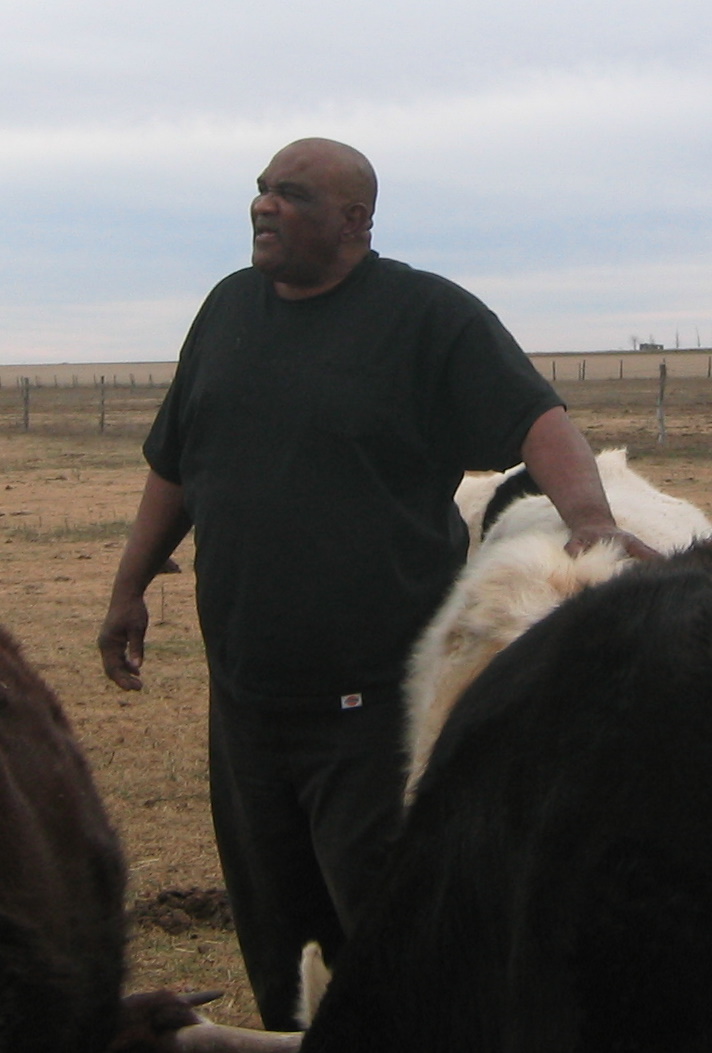
Liptak’s “Inmate Count in U.S. Dwarfs Other Nations'” touches all the bases in three pages of tight prose.  Foreign criminologists, Liptak observes, stand aghast at the American proclivity for long prison sentences.   The war on drugs is the chief culprit: we locked up 40,000 people for drug crime in 1980, a number that has risen to a staggering 500,000.

Liptak observes that, unlike other developed nations, America elects its judges, prosecutors, sheriffs and police chiefs.  In other countries, criminal justice functionaries are trained professionals who are relatively immune from the popular appetite for tough on crime policies.

Liptak remains convinced that mass incarceration has made Americans safer.  This is an open question among criminologists, and Liptak’s own statistics demonstrate why.  In recent years the British crime rate rose while America’s rate was falling, a fact that many use as proof that our tough criminal justice system is working.  On the other hand, Canada’s crime rate has generally risen and fallen with America’s.  Both Canada and Great Britain incarcerate only a fraction of the people locked up in America.  Statistics, as always, can be used by folks who think mass incarceration enhances public safety and by those, like me, who believe mass incarceration makes us all less safe by undermining our most dysfunctional families and communities.

Liptak is right, democracy is the big culprit.  I am an ardent democrat, but some matters are best left to the experts: medical diagnosis is one of them, the criminal justice system is another.

The average person believes that locking up drug dealers lowers the demand for illegal drugs thereby enhancing public health and public safety.  It ain’t so, and every working cop knows it. 

Unfortunately, our leading criminal justice people (US Attorneys and the federal Attorney General) are appointed by politicians who are frequently (almost universally) guilty of tough-on-crime pandering of the crudest sort.   Mass incarceration is no answer to the drug plague, but few elected politicians have the guts to say so. 

This isn’t Mr. Liptak’s last word on a critically important subject.  He notes, in passing, that America’s fragile social safety net is part of the problem.  This piece of the puzzle deserves more careful attention than it generally receives.  Hopefully, the Times’ legal editor will have more to say on the subject down the road.