‘But Billy,’ Templeton interjected, “You cannot do that. You don’t dare stop thinking about the most important question in life. Do it and you begin to die. It’s intellectual suicide.’”
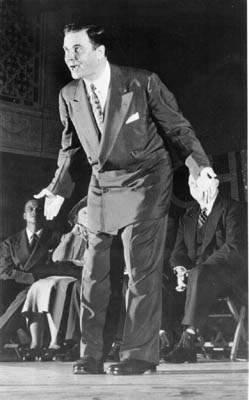
‘But Billy,’ Templeton interjected, “You cannot do that. You don’t dare stop thinking about the most important question in life. Do it and you begin to die. It’s intellectual suicide.’”
 By Alan Bean
I don’t know how Sandra Bland died.
It’s hard to believe that a young woman anticipating a dream job at her Alma mater would hang herself in a prison cell.
Strong evidence has emerged that Ms. Bland had evidenced what psychologists call “suicidal ideation” in the past, but wouldn’t Bland have been determined to see justice prevail in this instance? Suicide was the way of passive acquiescence, the complete opposite of the mental state Sandra exhibited in her confrontation with trooper Encinia.
It’s equally hard to believe that anyone would hate her enough to take her life and, thus far, there is no direct evidence suggesting foul play. That could change, but for the moment the facts are too fuzzy to justify confident conclusions.
The temptation to speculate is strong with us, but we should all admit that we have more questions than answers.
But we do know enough to ask why Sandra Bland was arrested in the first place. If you have been following this story, you know that the young woman from Illinois was in no mood to be messed with when state trooper Brian Encinia pulled her over. Bland believed she was the victim of racial profiling and entrapment. Her answers to the trooper’s questions were curt and defensive.
In the course of a prolonged verbal exchange, Brian Encinia admitted that he had initially intended to issue a warning and let the minor infraction pass. But the trooper didn’t like Bland’s attitude so he intentionally escalated the tension by asking her to extinguish her cigarette.
And that’s when everything went south. (more…)
By Alan Bean

Margaret Block died on June 20, 2015 in Cleveland, Mississippi, the little town where she was born and raised. Margaret was a precocious teenager when she signed up as a disciple of Fannie Lou Hamer in the Mississippi Delta, but her heart had been in the justice struggle ever since Emmett Till was murdered and thrown in the Tallahatchie river in 1955. Margaret worked with SNCC in Tallahatchie County during the darkest days of the civil rights movement in the Mississippi Delta. Over fifty years later, Margaret would refuse to remain in Tallahatchie County after dark. “I still don’t trust those people,” she would explain, “you don’t know ’em like I do.”
I got to know Margaret Block when I was trying to figure out why Curtis Flowers, a young man from Winona, Mississippi, could have been convicted of murder on manufactured and flimsy evidence. Curtis was arrested in 1996, thirty-three years after Fannie Lou Hamer was beaten half to death in the County jail in Winona. I wanted to know how Mississippi society had evolved in those intervening years and my search took me to Cleveland, Mississippi. “If you want to learn about the civil rights fight in the Delta,” somebody told me, “you’ve got meet Margaret.”
Margaret Block lived in a modest home on the poor side of Cleveland; the same house where she was born and would eventually die. But there was a long stretch when she lived in San Francisco, a city as far from the Delta geographically and culturally as you could get. (You can find a tribute from an old friend from Margaret’s California period here.) Margaret worked as a school teacher in the Bay area but returned to Mississippi in later life to care for her ailing mother.
Margaret Block was fearless; she didn’t give a damn what anyone thought of her. She didn’t suffer fools gladly, but she was exceptionally forgiving. Explaining the freedom struggle in the Mississippi Delta to a dozen college students wasn’t easy, but Margaret gave it her best shot. Friends of Justice participated in several civil rights tours of the Delta with Margaret Block and our friends with the University of Florida’s Samuel Proctor Oral History Program. (They have a lovely tribute to Margaret on their site.)

Margaret had a strong alto voice and loved to teach freedom songs to young people. “These songs held the movement together,” she would explain. “People loved to sing, so we’d take these church songs and just change the words around a little. Instead of ‘I woke up this morning with my mind stayed on Jesus,’ we’d sing, ‘stayed on freedom.’ You can’t imagine what is was like to hear a church full of people singing these freedom songs at the top of their lungs. It made us bold; and you had to be bold to survive ’cause we were living in dangerous times.
Jaws would drop when Margaret would tell us how she got out of Tallahatchie County with the Klan on her tail. “They would search every car with a black driver coming and going,” she’d say, “but even the Klan had respect for a hearse, so that’s how we used to get people in and out of there when things got hot.”
Margaret was the champion of her brother, Sam Block, a man she clearly idolized, and her memories figured prominently in Sam’s New York Times obituary. When Margaret told her civil rights stories, Sam was always in the forefront. This excerpt from Taylor Branch’s Parting the Waters will give you a feel for Sam’s courage:
Block had acquired the reputation of a stubborn, lonely figure among the strange new breed of devout daredevils,” a reference to those activists who were unafraid to put themselves in jeopardy to register blacks to vote.
In one incident, a judge found Block guilty of making an incendiary public remark but said he would suspend Block’s sentence if he agreed to give up the voter registration project and leave town.
“Judge,” Block replied, “I ain’t gonna do none of that.”
So Block began a six-month sentence after paying a $500 fine. But his attitude and willingness to do the time galvanized local blacks. That night, according to Branch, more than 250 people gathered for a voting rights meeting.
But the most amazing Sam Block story came to light when I was filming with Margaret and a group of Friends of Justice interns at the LeFlore County courthouse in Greenwood. On Good Friday, in the spring of 1963, Margaret told me, her brother rode a mule into Greenwood on Good Friday morning.
“He told me about it one time as if it wasn’t anything important, but you’ve got to understand that Sam was sure he wasn’t going to survive the work he was doing in Greenwood–sooner or later, he believed, somebody was going to take him down. So, by riding that mule into town he was saying, ‘Look, you did it to Jesus, so, come on now people, why don’t you just go ahead and do it to me.”
Margaret had a love-hate relationship with organized religion, but she said that if “Ms. Hamer” loved Jesus so much he must have something going for him. Religion was one of the biggest impediments to the movement; but religion was also at the heart of the movement. Civil Rights Christianity didn’t survive the social trauma of the 1960s, but Margaret treasured the memory of its glorious and all-too-brief brief flowering.
“I wish you could have heard Ms. Hamer sing these old songs,” Margaret would say. “Now there was a true child of God. Fannie Lou wasn’t afraid of nobody and it was her faith that made her that way. Everybody remembers her for “This little light of mine,” but her favorite song was “I want Jesus to walk with me.”
Then Margaret would break into song as if channeling the spirit of Fannie Lou:
I want Jesus to walk with me;
I want Jesus to walk with me;
all along my pilgrim journey,
Lord, I want Jesus to walk with me.
And now Margaret is walking with Jesus, Fannie Lou, Sam, and that great cloud of witnesses on the freedom side of the river. Hallelujah!
By Pierre Berastain

When Howard Belding Gill became the first Superintendent of the Norfolk State Prison Colony, presently known as the Massachusetts Correctional Institution at Norfolk, he created what became known as the first community prison in the United States. Intended as an experiment to introduce a rehabilitative rather than solely punitive model, the prison held men like Malcolm X, who described the place with “no bars, only walls” as practicing “penal policies [that] sounded almost too good to be true.” The staff was conceived not as guards, but as educators and counselors, psychiatrists and mentors. Years after he left his position as Superintendent, Gill returned to MCI Norfolk to mentor young prisoners and visit old inmates turned friends.
Today, MCI Norfolk is a medium-security prison where bars have gone up, but where the commitment to rehabilitation and community remains an important pillar for the Department of Corrections. That is why, on June 13th and 14th, MCI Norfolk staff allowed Dr. Karen Lischinsky, Volunteer Coordinator for the Restorative Justice Group at Norfolk Prison, to work with the incarcerated men and put together a two-day Restorative Justice and Responsibility Retreat. During the retreat, over a hundred inmates were introduced to principles of rehabilitation, community responsibility, and personal introspection. Speaking to the large auditorium of men, Sister Ruth Raichle encouraged the men to think of their lives as interconnected, not just amongst themselves but also to the outside community. “Justice is not something done to us,” she said, “It’s something we build together.” She was speaking of the importance of making amends by publically recognizing the harm they had done and thus begin the process of finding their innate humanity and reconnecting with the outside community. Many inmates acknowledged, however, that responsibility extends past a one-time recognition of their crimes. Rather, responsibility comprises a life-long journey of personal healing and introspection. Reflecting on his own journey, and I heard an inmate say that healing rather than harm is the mark of a responsible life. He wanted to end the cycle of violence he had inherited and contributed to.
The restorative justice retreat at MCI Norfolk gives inmates an opportunity to begin a healing process so that they can live more responsible lives in hopes that one-day, they can return to society. Such commitment to rehabilitation and reintegration cannot be undervalued, especially when, according to the U.S. Bureau of Justice Statistics, 95 percent of state prisoners will be released from prison at some point. As a result, more and more prison administrators throughout the country are looking for new initiatives that prepare prisoners for re-entry upon leaving prison.
Yet, attending the retreat were also a number of men who would never leave Norfolk’s prison walls. Their promise to better themselves, to live more fulfilling lives, extended beyond personal gains. Inmates spoke of being fathers, grandfathers, or uncles who did not want their loved ones to show up in the cell next to them. I felt a sincere commitment from a number of men at the retreat who wanted to take responsibility for their crimes and learn better ways, as I understood from an inmate, of facing the nightmares in his closet.
Breaking the cycle: 189 years
In the small group discussions, the men showed emotional reactions as they heard victims of crime narrate the pain they felt from the absence of their murdered children. Kim and Ron Odom, whose 13-year-old son Steven was killed in 2007, asked the men to take responsibility for the harm they had done to parents and community. “You have left an indelible mark,” Kim Odom said, “but you can prevent more harm from being done. As a mother, I can tell you we don’t bring murderers into this world.” She and her husband asked the men to reflect and make a promise to change.
For the men of the restorative justice group, that promise has created a more peaceful community inside MCI-Norfolk. I think all of those of us present found it amazing when we heard an inmate say that collectively, the men of the restorative justice group have 189 years without any disciplinary tickets. That accomplishment was possible because of programs like the Restorative Justice Retreat, which brings together inmates and community members who remind the men of their promises. At this year’s retreat, Isaura Mendes spoke to the group about the murder of her two children, Bobby Mendes, 23, murdered in 1995 and Mathew Mendes, 22, murdered in 2006. As the men listened, they sank in their chairs and tried to keep tears inside. They were beginning to grasp for the first time how they are responsible for hurting so many in their own communities.
For many of the incarcerated men who attended the retreat, having mothers return every year and remind them of their commitment to live more peaceful lives reinforces the message that society has not forgotten them, that we remember and hold them accountable. During the retreat, I heard an inmate say he had never felt someone care about him, and that he was amazed to hear mothers speak and see the humanity in him. Many others echoed that feeling.
A number of inmates also spoke of loved ones — a brother, a mother, a close friend — who had been murdered. For them, the process of healing lied in the realization that retaliation does not bring back the smiles of those no longer with us. “That requires a paradigm shift in our culture,” said Ron Odom as he reflected on the need to disrupt the cycle of revenge. Mr. Odom urged the men to nourish their minds with new ideas. A prisoner agreed, telling his fellow inmates in the auditorium that Norfolk can hold their bodies, but it can’t control their minds. He urged them to think deeply about their responsibility, identity, and commitment to the larger community.
It can start at Norfolk
While most prisons in the United States do not operate under a restorative model, MCI Norfolk continues the legacy of Howard Gill to rehabilitate and reintegrate. For True See Allah, an ex-inmate who this past January received a pardon from then Governor Deval Patrick, his time at MCI Norfolk gave him the opportunity to change. “Norfolk is the wound that gave birth to me,” he told the men. We can only hope that more U.S. prisons provide space for inmates to understand the impact of their actions and make meaningful changes in their lives. Our criminal justice system ought to move past punishment and instead adopt a model of reform that helps those incarcerated understand the implications of their deeds. This takes time, but the results can be truly transformative both for individuals and entire communities.
This article by Lydia Bean (my daughter) and Danielle Ayers dominates the cover of this month’s Sojourner’s Magazine.

By July 2015
IF YOU’RE A Christian who cares about social justice, you can’t afford to ignore Texas.
In his book Rough Country, Princeton sociologist Robert Wuthnow puts it bluntly: “Texas is America’s most powerful Bible-Belt state.” Texas has the second largest population in the country, home to more than 26 million people. In 2014, Texans led six out of 21 congressional committees. And more than half of Texans attend church at least twice monthly.
No other state has more evangelical Christians than Texas. Many national Christian media companies, parachurch ministries, and influential megachurches are based in Texas. That’s why Texas is called the Buckle of the Bible Belt: It’s the most populous, wealthy, and politically powerful part of the country where evangelical churchgoing is still a dominant force.
But what if we reimagine the Bible Belt? In 2005, Texas officially became a “majority-minority” state, where traditional minority racial or ethnic groups represent more than half of the population. A majority of Texans under 40 in the pews are people of color. This creates an opportunity: Demographic change could lead to cultural change. What if we cast a new vision for faith in Texas public life that puts working families and people of color at the center?
But demographic change will not translate automatically into cultural change. The dominant historical Bible Belt narrative has influenced and shaped the identities of all Texas Christians, including in the African-American and Latino faith communities.
Christians and white supremacy
In Texas and most of the South, the dominant form of evangelical Christianity has been deeply complicit with white supremacy. During the ascendency of the Ku Klux Klan, many white Christians acted as if lynching was a legitimate defense of their white Christian civilization. In the 1920s, J. Frank Norris, pastor of a 10,000-member fundamentalist megachurch in Fort Worth, kept close ties with the Klan, according to author David R. Stokes. Norris, a powerful fundamentalist leader, even invited the Texas Klan’s Grand Dragon to lead prayer from the church’s pulpit one Sunday morning and later hired him to teach at the church.
In the 1950s and ’60s, the most powerful leaders in the Southern Baptist Convention—including W.A. Criswell, pastor of First Baptist Church of Dallas, the nation’s largest Southern Baptist church at the time—opposed the civil rights movement. In 1956, Criswell denounced the Supreme Court’s Brown vs. Board of Education decision that ruled racial segregation unconstitutional. “Let them integrate,” Criswell shouted before the South Carolina legislature, according to historian Andrew M. Manis. “Let them sit up there in their dirty shirts and make all their fine speeches. But they are all a bunch of infidels, dying from the neck up.”
By Alan Bean
This sermon was originally preached at Springcreek Community Church in Garland, Texas.
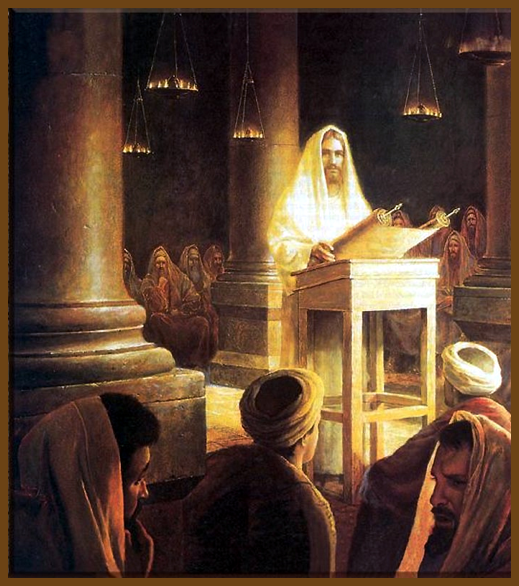
Fresh from wrestling with the Devil through forty days and forty nights, Jesus shows up in his home church of Nazareth and uses the ancient words of the prophet Isaiah to lay down his manifesto:
The Spirit of the Lord is upon me
because he has anointed me
to preach good news to the poor.
He has sent me to proclaim release to the captives
and recovery of sight to the blind;
to set at liberty those that are oppressed,
to proclaim the Lord’s jubilee when all debts are cancelled
and all the slaves go free.
The Spirit of the Lord is upon me, because he has anointed me . . .” What does that mean?
The word “Messiah” means “the anointed one”. Anointing was a big deal in ancient Israel: somebody took a hollowed out horn filled with oil and poured it over your head. Psalm 133 gives us a graphic portrait of an anointing:
How good and pleasant it is
when brothers and sisters live together in unity!
It is like the precious oil on the head,
running down upon the beard,
on the beard of Aaron,
running down over the collar of his robes.
“Isaiah was talking about me,” Jesus is saying, “The Holy Spirit of God has anointed me to preach good news to the poor.”
In ancient Israel the thrill of anointing was reserved for prophets, priests and kings.
Which is why, from the fourth century on, theologians have talked about the “three-fold office of Jesus”: prophet, priest and king.
You don’t find this talk in the Gospels, however, and that’s largely because the priests and princes in Jesus’ world were always trying to kill him. In the Gospel narratives, Jesus appears as a prophet. Not just any prophet, mind you. Jesus is THE prophet who completes, fulfills and perfects the prophetic task.
As the gospel story unfolds, the prophetic work of Jesus puts him in continual conflict with priests and princes. Finally, in the fullness of time, Jesus heads south to the Holy City:
Jerusalem, Jerusalem, the city that kills the prophets and stones those who are sent to it! How often have I desired to gather your children together as a hen gathers her brood under her wings, and you were not willing!”
Days later, Jesus rides into Jerusalem, “humble and riding on the foal of a donkey.” (That’s Zechariah). He enters the temple, overturns the tables of the money changers and cries,
‘My house shall be called a house of prayer’ (that’s Isaiah)
but you are making it a den of robbers. (that’s Jeremiah).
Jesus begins his public ministry by preaching good news to the poor; he ends his public ministry on the same note.
Verily, verily I say unto thee, when you won’t feed the hungry, provide water for the thirsty, clothe the naked, care for the sick, visit the prisoner or welcome the stranger, you are leaving me out in the cold, alone and hungry.
Having said that, Jesus takes his disciples aside and says, “You know that after two days the Passover is coming, and the Son of Man will be handed over to be crucified.”
Then, as if on cue, we find “the chief priests and the elders of the law” retreating to the palace of Caiaphas the high priest where they “conspired to arrest Jesus by stealth and kill him.”
 Meanwhile, Jesus is in Bethany, reclining at supper in the home of Simon the leper. A woman bursts onto the scene with an alabaster jar of expensive perfume. In seconds, the sweet ointment is running down his face, dripping onto his robes and puddling on the floor.
Apart from Jesus himself, this woman is the only person in Jerusalem who understands what’s going on. She isn’t just anointing his body for burial; she is anointing “the anointed one” for spiritual warfare; she is commissioning him for the cross.
Jesus always knew his life story would end on a Roman cross, and he repeatedly said so. But the death of the Anointed One was not random, it was carefully orchestrated. Jesus arrived in Jerusalem at Passover for many reasons, theological and practical. The big practical reason was that, during Passover, the population of Jerusalem swelled to four times its normal size and everybody would be there, including princes like Pilate and Herod Antipas, and priests like Caiaphas.
Herod the prince and Caiaphas the priest plot his downfall, but Jesus drives the action, declaring the good news of the kingdom with parable and prophetic action until his enemies are driven to a murderous frenzy.
All the hatred, fear, confusion, greed, envy and rage festering in the hearts of priests and princes rises to the surface in one dreadful moment. Jesus is falsely accused, he is spat upon; he is beaten, he is whipped, he is humiliated and, finally, he is nailed to a Roman cross outside the walls of Jerusalem.
Then comes the miracle. Gazing down on a mob of sneering, sarcastic, mockers, Jesus raises his eyes to heaven and utters the words that broke the devil’s back:
Father, forgive them, for they know not what they do.
And with these words everything changed.
The curtain in the temple, walling off the holy of holies from everyone but the High Priest, was torn from top to bottom.
A Roman centurion, standing guard for Caesar, hears these words and says, “Surely, this man was the Son of God.” “Jesus is Lord; and Caesar is not.”
Finally, and this is only in Matthew, an earthquake shakes the countryside, and the tombs of the saints are opened. This relates to Luke 11 where Jesus says
You build tombs for the prophets whom your ancestors killed . . . so this generation may be charged with the blood of all the prophets shed since the foundation of the world.
When you kill me, Jesus was saying, you slay the prophets all over again. And then Matthew gives us the flip side, when Jesus is raised, all the prophets come back to life.
Jesus forgave the priests and the princes who put him on the cross. He forgave the disciples who left him to die alone. He forgave the devil himself. The Cruel Spirit can withstand any weapon formed against him—except forgiveness.
 In recent days, we have seen demonic rage snuff out the lives of nine good people; and we have seen the miracle of forgiveness wring unity and reconciliation out of a senseless and tragic act.
Forgiveness is hard. Miracles don’t come easy. But because the Anointed One forgave; so can we. We are called to the work of prophets, and prophetic action invites backlash. Always. Sneering back at the haters is easy; forgiving the hate is hard.
I learned how hard forgiveness can be in Tulia, Texas, a Panhandle community halfway between Amarillo and Lubbock.
 In the early morning hours of July 23rd, 1999, 47 alleged drug kingpins were arrested on the poor side of Tulia and paraded in front of waiting television cameras in their underwear.
The defendants were all from the poorest echelons of Tulia’s black community or married to someone who was.
These people were all charged with selling little baggies of powdered cocaine to a single undercover agent.
Tom Coleman, had no evidence to corroborate his stories; you either trusted him, or you didn’t.
Everybody did. The churches of Tulia backed the Coleman operation to the hilt. They didn’t know anything about the officer, but they trusted the Sheriff who hired him.
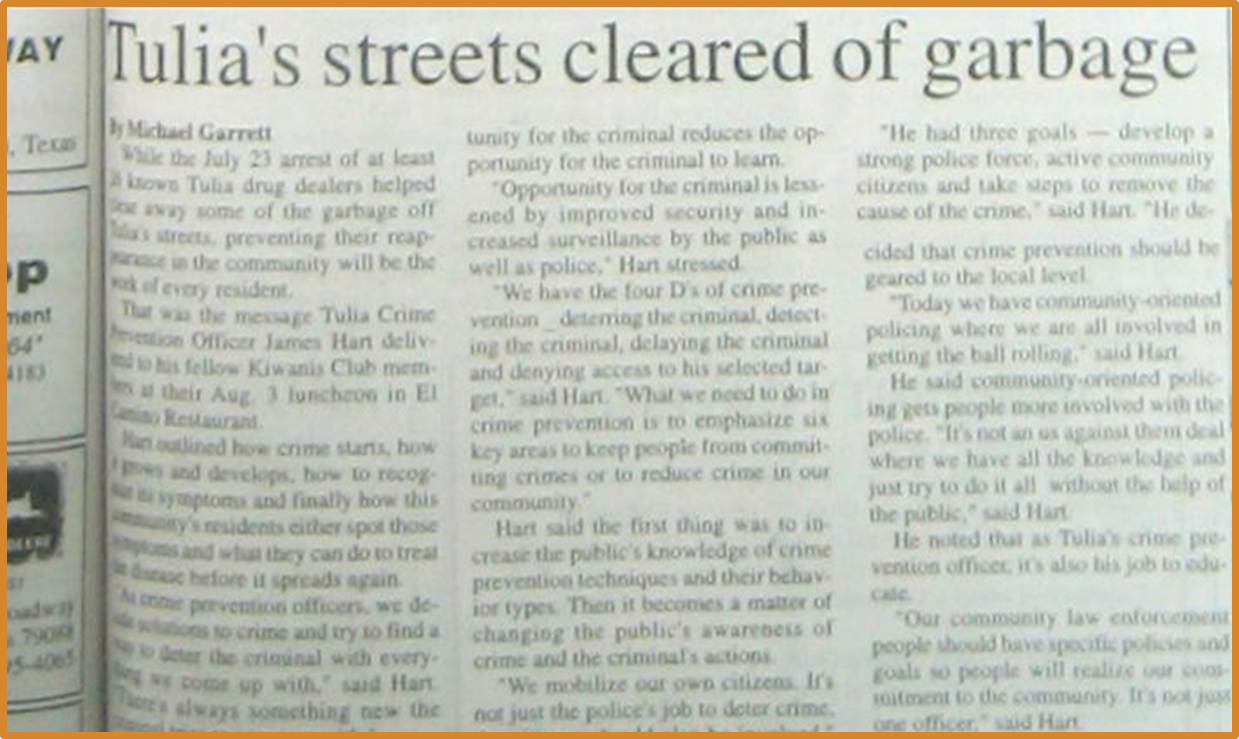
The headline in the local paper summed up the general attitude: “Tulia’s streets cleared of garbage.”
When I told my Sunday school class how disturbed I was by this headline, I was told that the defendants “are all guilty, and they’re all going to jail.”
The sting robbed at least fifty young children of the only parents they knew. Nancy and I ended up taking three of these children into our home.
When the first cases went to trial, local juries handed down the stiffest sentences allowed by law: 45 years. Sixty years. Ninety years. One young man received six 99-year sentences, to be served consecutively.
Then we learned that Tom Coleman had been arrested on theft charges in the middle of the eighteen-month undercover operation. Before taking the Tulia job, Coleman worked as a deputy in another West Texas town, leaving in the dead of night owing local merchants $10,000.
That was Coleman’s MO.
I called another West Texas Sheriff who hired Coleman even further back. “If I had people in my jail on that man’s uncorroborated word,” the man told me, “I wouldn’t be able to sleep at night.”
Nancy and I stood at a crossroads. We could pretend nothing was happening and get on with our lives; or we could take a prophet’s stand. With a choice that stark, the decision made itself. We started holding Sunday night meetings in our living room where the children, parents and loved ones of the sting defendants gathered to sing gospel songs, dance, read letters from prison and plot strategy.
We packaged the story for journalists. We reached out to advocacy groups across the nation. We got in touch with the governor’s office and made repeated trips to Austin to visit with legislators, handing out brochures that read: Moses, the Apostle Paul and Jesus agree: no one should be convicted on the word of a single witness.
Gradually, our efforts were rewarded.
Two sisters from New York produced a documentary on the story.
Two international law firms saw the documentary and signed on to represent the defendants on a pro bono basis.
A recent journalism graduate wrote a 16-page story for a Texas magazine.
ABC’s 20-20 sent a team to investigate.
Bill O’Reilly covered the story on Fox.
Then the backlash began . . . at least for those of us who lived in Tulia.
A congregation refused membership to our family.
Nancy was shunned at work by her fellow teachers.
Denominational officials told me I was too radical to recommend to their churches.
The brake lines on our Oldsmobile Silhouette were cut.
Our phones were tapped.
Then, as the story gained national traction, we started taking flak from our allies:
Lawyers who had once shunned the defendants as small-town losers were now queuing up to join the fight.
Some attorneys complained about our public singing and praying.
Defendants were told not to associate with “the local white people” because we couldn’t be trusted. Not everyone listened; but many did.
A local black Baptist mission asked us to work with their young people, but dropped the idea when the white mother church complained.
Finally, after four years of struggle, a judge ruled that Tom Coleman lacked credibility under oath.
All charges were dropped, prisoners were released from prison and eventually pardoned by Governor Perry.
Tom Coleman was found guilty of aggravated perjury and the defendants (and their lawyers) received millions of dollars in reparation payments.
A law was passed by the Texas legislature demanding corroboration for single-witness testimony.
The Department of Public Safety took replaced unaccountable, and often corrupt, narcotics task forces.
But Nancy and I were too beaten up and betrayed to celebrate.
Here’s the saving grace: we knew our Bibles well enough to realize that our experience in Tulia followed a familiar pattern, a gospel pattern.
We had taken a prophet’s stand so the blowback from the priests and princes came as no surprise. Even the opposition and betrayal of friends and allies followed the biblical story line. Take up the cross of the Anointed One and these things happen.
Forgiveness kept us in the Tulia fight and has sustained us through fifteen years of ministry with the group we formed in Tulia, Friends of Justice.
I have written a book, “Taking out the Trash in Tulia, Texas.”
Recently, we have produced a six-week Bible study we call Breaking the Silence.
Forgiveness doesn’t come quickly, and it doesn’t come easily, but we knew the Old, Old Story of Jesus and his love, so we mouth the words, “Father, forgive them” until we meant it.
And every now and then, in the heart of the struggle, we feel the amazing grace of God welling up and we know we have chosen the right path.
We see it in the Bible.
We have seen it in Charleston, South Carolina.
And as we follow Jesus through the Valley of the Shadow of Death, we feel it in the deep places of the soul.
Forgiveness makes the difference. Forgiveness breaks the devil’s back.

When the Supreme Court justices fail to side with my convictions (as they frequently do) I am outraged, just as I was when a fool in pinstripes ruled that Dez Bryant didn’t make a catch in last years playoff game against the Packers.
This old post has been getting a lot of attention (for obvious reasons ), so I thought I’d throw it up again.
 By Alan Bean
A monument to “The memory of Carroll’s Confederate Soldiers who fought in defense of our constitutional rights from Bethel to Appomattox” stands in front of the Carroll County courthouse in Carrollton Mississippi. No surprise there; virtually every county courthouse in Mississippi constructed before 1920 sports a civil war memorial. But few of these monuments are accompanied by the Confederate flag. We’re not talking about the Mississippi state flag that incorporates the stars and bars–this is the genuine article.
View original post 1,239 more words
By Alan Bean
 The slaughter of nine innocent people gathered for prayer at a historic Black church in Charleston, South Carolina was horrific, deplorable, sickening, cruel and heartless. It was not senseless.
In the mind of Dylann Storm Roof the act made perfect sense. He was trying to spark a race war and he thought killing innocent people in a place of worship linked to the civil rights movement and an ancient slave revolt was a good way, a sensible way, to light the fuse.
If you think like Dylann Roof, his brazen act made perfect sense.
The carnage looks senseless because we don’t think like Dylann Roof. Hardly any of us do.
Perhaps the young man is crazy. But why did his craziness veer in this particular direction? (more…)
 Now that Eric Casebolt has resigned from the McKinney police department his bizarre actions will gradually fade from the headlines. We can all be thankful that police chief Greg Conley got out in front of the story (and not a moment too soon) by admitting that his officer was “out of control” when he climbed out of his police car and remained out of control throughout the entire episode.
The back-and-forth about what brought police officers to the scene will continue, but I’m not really interested. Suffice it to say that some of the African American kids at the pool party were from the neighborhood and had pool passes while others did not. White parents, seeing all the Black children as equally alien, made racist comments like “go back to your section 8 neighborhood” or “go back to the plantation”. Some Black kids grew incensed and an altercation ensued.
But, whether or not you agree with this summary, none of that really matters. If the McKinney police department had handled this incident professionally we wouldn’t know that things got a bit out of hand on the rich side of McKinney, Texas last Friday. If the officers had calmly taken statements from all parties at the scene, and calmly encouraged the combatants to calm down, this would have gone into the books as just another minor incident unworthy of media attention.
And, for the most part, that is exactly what was happening before Eric Casebolt arrived on the scene. The chief had it right–the man was out of control. Moreover, as the senior officer, it was difficult for his fellow officers to shut him down. Pushing, shoving, cursing like a drunken sailor, waving his gun in the direction of horrified young people, and finally sexually assaulting a young girl less than half his size, Casebolt’s performance was a jaw-dropper.
I am troubled by the conservative white folks who used social media to honor and valorize Casebolt, suggesting his actions were justified, professional and necessary.
How could any sane person view the viral video and draw that conclusion?
Eric Casebolt is a troubled man, but we can only guess at the source of his trouble.
After ten years of military service, was he the victim of a delayed PTSD reaction?
Was Casebolt driven by the kind of insane racial animus that leads otherwise sensible people to curse whenever our president appears on television without being able to articulate what inspires their hate?
Was the ex-officer high on drugs?
I have no idea. But his behavior cries out for some kind of explanation.
And that’s why the momentary adulation the man received is so troubling. I fear that even if Casebolt had actually gunned down two or three of the young black men he threatened with his firearm, thousands of white people in North Texas would have backed him to the hilt. The simple fact that young black children (and, yes, they are legally children) refused to satisfy the man’s appetite for submission, in the eyes of far too many people, would have justified any action designed to break their will.
And that’s just flat scary.
The Casebolt saga reminds me of the Gadarene demoniac in the Bible. Asked for his name, the broken man replied “legion”, suggesting that more than one kind of demon was oppressing him.
But the word “legion” would have had a second meaning in first century Palestine that no one could miss. Was the man saying that his madness channeled the crazed cruelty of the Roman Empire? Had the man served as a Roman soldier and seen things no one should see? Or had he been so brutalized by the forces of empire that his mind coped by splintering into a thousand pieces?
The Bible suggests these questions but provides no answer save the healing touch of the Master.
But the same questions must be asked with reference to Mr. Casebolt. This is NOT a story about one bad apple spoiling the reputation of an otherwise pristine community. Whatever infected this rogue McKinney police officer is rampant within our society. His name is legion.
The madness must be named before it can be healed. Once again, the touch of the Master is needed. I leave you with the words of Archbishop Oscar Romero:
No one wants to have a sore spot touched, and therefore a society with so many sores twitches when someone has the courage to touch it and say: ‘You have to treat that. You have to get rid of that. Believe in Christ. Be converted.’
 Friends of Justice