Category: Uncategorized

Ignoring Jon and Oscar: Explaining a curious endorsement by the Fort Worth Star-Telegram

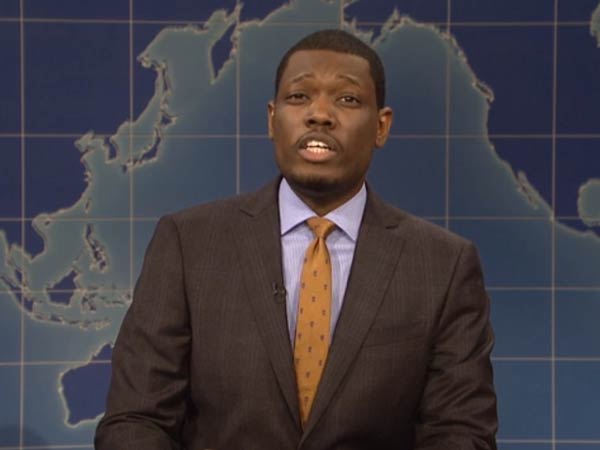
Michael Che on Saturday Night Live

By Alan Bean

The Texas State Board of Education just took another hit from the late night comedians, this time on Saturday Night Live.

“You know who I feel bad for?” Michael Che asked during the shows fake news segment, “Texas schoolteachers. I mean, it’s hard enough going to school and teaching kids that God created the world in like, 1942, and the first two people were John Wayne and Barbara Bush. But now you gotta deal with 6 foot country boys coughing up a monkey disease.”

The heart of the bit, of course, was Dallas becoming home to America’s first ebola patient; but the caricature of the Texas school curriculum was a swipe at the state’s Board of Education.

For years now, the Texas State Board of Education has been grabbing headlines as its more conservative members (on the advice of their friends on the Religious Right) press the “just-a-theory” approach to evolutionary biology, support the rehabilitation of Senator Joe McCarthy, the elevation of social conservatives like Newt Gingrich and Phyllis Schlafly to rock star status, the devaluation of progressive heroes like Archbishop Oscar Romero, Caesar Chavez and Thurgood Marshall, the positive re-evaluation of the Moral Majority and the thoroughly unhistorical notion that the founding fathers were strongly influenced by Moses and the “Christian or Biblical tradition” when they framed the U.S. Constitution.

ThrowBackTexas-300x226In this memorable piece, Jon Stewart explains how “Oscar Romero got disappeared by right wingers for the second time.”  Stewart reminds his audience that what happens in Texas matters to the rest of the country because textbook companies operate with the huge Texas market in mind.  For this reason, when Texas gets it wrong, the entire country follows right behind us. (more…)

Saving the Bible by damning God

Samuel Hopkins
Samuel Hopkins


By Alan Bean

“Young man,” a grizzled Presbyterian cleric asked a harried candidate for ordination, “would you be willing to be damned for the greater glory of God?”

Uncertain how to respond, the young man blurted out , “Yes, and I’d be even more willing to see the entire Presbytery damned for God’s glory.”

The story (no doubt apocryphal) was inspired by the theology of Samuel Hopkins (d. 1803), the New England divine who attempted to systematize the theological musings of Jonathan (Sinners in the hands of an angry God) Edwards.

The bit about willing to be damned for the greater glory of God was hotly debated in eighteenth century America. Thomas Jefferson opined to John Adams that Hopkins belonged in a straight jacket.  The reformed theologian was either an atheist or he was preaching the religion of “Daemonism”.

“It would be more pardonable to believe in no god at all,” Jefferson asserted than to worship such an atrocious deity.

523107_483857488299505_596856095_n
Victoria Osteen

Hopkins stands at the opposite end of the theological spectrum from Victoria Osteen, the contemporary American theologian who sparked a firestorm of indignation by opining that:

“When you come to church when you worship him, you’re not doing it for God, really. You’re doing it for yourself, because that’s what makes God happy.”

Hopkins saw the kind of self-love Ms. Osteen has in mind as the very essence of sin.  Coming to God with the selfish ambition of escaping hell, Hopkins taught, is to get hold of the wrong end of the stick.  Instead, we should be willing (following Paul’s argument in Romans 9) to be damned if that’s what it takes to further God’s gracious work in the world.

It should be noted that Hopkins applied his logic of damnation to the slave trade.  American Christians who endorse human bondage while pretending to seek the blessing of a holy God are deluding themselves, he said.

William Blake's rendering of Lucifer in hell.
William Blake’s rendering of Lucifer in hell.

In other words, Hopkins wanted Christians to do the right thing for the right reason with no regard for personal advancement.

John Milton (d. 1674), was getting at a similar point when he probed Lucifer’s motivation for wreaking chaos in God’s good creation. Cast out of heaven with a rabble of reprobate angels, Lucifer told his comrades to pick themselves up and make the most of a bad situation:

Here we may reign secure, and in my choice
To reign is worth ambition, though in Hell:
Better to reign in Hell than serve in Heaven.

Samuel Hopkins was reversing this logic, “Better to serve in hell than to reign in heaven.”

American evangelicals have more in common with Milton’s Lucifer than we would like to admit. (more…)

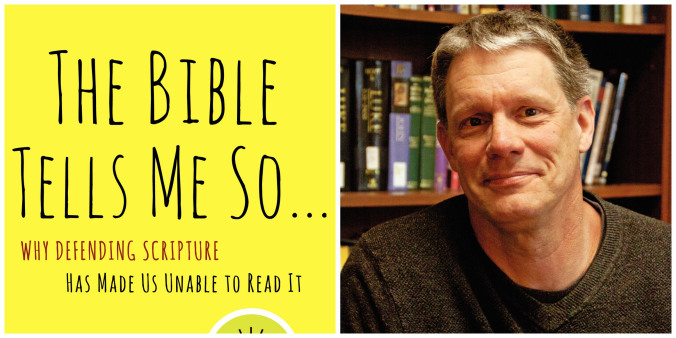
“Losing our religion”: a review of “The Bible Tells Me So” by Peter Enns

ennsreview (1)

By Alan Bean

Peter Enns wants to work with the Bible God gave us instead of the Bible we think God should have given us.  He wants a messy Bible that refuses to behave because that’s the only Bible we have.  The Bible isn’t history–in the modern sense of the word–it’s a book of stories written by ordinary people trying to make sense of God and the world.

And the stories in the Bible kept changing over the one thousand or so years during which the book was being compiled.

Narratives that worked for people during the reign of Old King David didn’t work after that kingdom split in two.  Stories that worked during the divided kingdom proved inadequate when the Assyrians “disappeared” the ten northern tribes.  Stories told when the southern tribes of Judah and Benjamin were keeping the dynastic dream of David alive failed to deliver the goods when the Babylonians carried God’s people into exile.

We shouldn’t be surprised that this diverse assemblage of stories produced contradictory portraits of God, dueling theologies and inconsistent moral codes.

Like most biblical scholars, Enns thinks the biblical writers were free to re-craft traditional texts to meet their own needs.  Sometimes these stories give us valuable historical information; sometimes they are pure inventions, usually they are literary inventions rooted in a smattering of historical knowledge.  For the storytellers who gave us the Bible, the issue was never what happened back then; it was always about what’s happening now. (more…)

Republican Lite or Moral Vision, Texas Democrats Must Choose

Nobody is excited by Republican Lite (especially Republicans)

By Alan Bean

Texas Democrats are confused.  For generations we were the party of Dixiecrat populists; defending the interests of the little guy from corporate elites, while beating the drum for white supremacy.  But when the Democratic Party became associated with civil rights, Texas politics shifted from Blue to Red.  A handful of urban districts remained dependably Blue, but the suburbs, small towns and rural sections of the Lone Star State are decidedly, triumphantly, Republican.

As a consequence, the Texas Democratic Party now consists of educated white liberals, African Americans, Latinos, and an aging cadre of white “Yeller-dogs” longing for the return of Dixiecrat hegemony.

Texas Democrats have identity issues.  We all want to “turn Texas blue”, but that’s where the agreement ends.  In the interest of party unity, we kick the vision question down the road, defining ourselves negatively, in terms of what we aren’t.

Specifically, we aren’t Tea Party conservatives.

That ain’t good enough.

There are two conflicting strategies for turning Texas Blue: we can get out the minority vote; or we can persuade moderate Republicans to abandon a party dominated by Tea Party extremists.  But we can’t pursue both strategies at the same time without garbling our message and blurring our vision.  Here’s why.

(more…)

Why Canadian evangelicals are different: A review of Lydia Bean’s “The Politics of Evangelical Identity”

Lydia's bookBy Alan Bean

Since the presidential election of 2004, when the Christian Right was widely credited for handing George W. Bush a narrow victory, moderate and liberal religious leaders have been fussing about the “God-Gap” that gives the religious right a leg up on the secular left. Why can’t the Christian Left energize liberal politics?  Why haven’t more progressive expressions of evangelicalism taken root in America?

George Lakoff teaches progressive politicians to learn the language of moral values so they can appeal to religious voters.

Since the 2004 election, a cadre of young, post-partisan evangelicals has been challenging the marriage of evangelical theology and small-government conservatism that passes for mainstream Christian piety in America.  Christians should stand in solidarity with the poor, the new evangelicals say, they should embrace “creation care” and work for racial reconciliation.

Dr. Lydia Bean, a former Baylor sociology professor who is now organizing Black and Latino evangelicals in Texas, sympathizes with this quest to close the God-Gap, but her intense study of evangelicalism in the United States and Canada makes her wary.  Her new book, The Politics of Evangelical Identity: Local Churches and Partisan Divides in the United States and Canada (Princeton University Press) explains why American evangelicals became so closely aligned with the Republican Party.

“Partisanship and political attitudes are anchored in social group memberships and networks,” Bean says.

When Christian Right frames resonate, it is because they are woven into everyday religious practice, reinforcing a powerful connection between religious identity and partisanship.

Therefore,

if other movements want to challenge the Christian Right for their own constituency, it will not be enough to engage in top-down messaging about faith and values.  New moral issues will only take on a sacred quality if they become part of the lived religion of rank-and-file evangelicals, who are embedded in local congregations.

Liberals may be doing a poor job of translating their message into the language of faith and moral values, but that isn’t the real problem.  Until we can create new forms of religious community in which solidarity with the poor, creation care and racial reconciliation become sacred through integration into the everyday community life of real congregations, we can’t compete with the Christian Right.

Dr. Lydia Bean
Dr. Lydia Bean

Dr. Bean returns again and again to a simple affirmation: the close association between religious piety and political partisanship is a carefully cultivated phenomenon that doesn’t flow from the core tenets of evangelical theology.

When she compared evangelical congregations in the United States and Canada, Bean discovered a stark contrast.  Let’s begin south of the border. (more…)

Al Mohler decries the Gungor heresy

Michael Gungo
Michael Gungor

By Alan Bean

Al Mohler has adapted nicely to our twenty-first century media revolution.  He even does podcasts.

Al isn’t hip.  Not even a little bit.  But he talks about hip people, albeit with disapproval.

I can’t imagine the venerable Roy Lee Honeycutt or Duke McCall (Al’s predecessors at the helm of the Southern Baptist Theological Seminary in Louisville, Kentucky) dissecting the theological errors of pop artists, but Al is willing to have a go.

Take Gungor, for instance.

Who, or what, is “Gungor” you ask.

First, Gungor is a guy (Michael Gungor) and second, Gungor is the musical ensemble Michael formed with his wife, Lisa, and a few others.  The couple moved to Denver in 2007 and started a church for creative types like themselves.  If you want a taste of their music, here’s a taste:

According to Wikipedia, the album and the song “Beautiful things” (released in 2011) “were nominated for the Grammy categories Best Rock or Rap Gospel Album and Best Gospel Song, respectively.”  Relevant, a magazine for hip young Christians, has produced a number of YouTube videos if you want to hear more. (more…)

The Day Fannie Lou Hamer Shocked America

By Alan Bean

I am re-posting this piece in honor of the 50th anniversary of Ms. Hamer’s celebrated speech to the credentials committee of the Democratic Convention in 1964.  AGB

“If the freedom Democratic Party is not seated now, I question America.  Is this America, the land of the free and the home of the brave, where we have to sleep with our telephones off of the hooks because our lives be threatened daily because we want to live as decent human beings, in America?”  Fannie Lou Hamer

The summer of 1964 was a watershed moment for the civil right movement and for America.  Never before had black and white Americans worked together with such common purpose.  And yet, by the end of August, black civil rights leaders were vowing never to work with white people again.   Meanwhile, white civil rights activists realized they didn’t have a home in either of the major political parties.
The voting rights movement had been building momentum in Mississippi since the Freedom Rides of 1961.  The work was dangerous, beatings were commonplace and martyrs were plentiful.  What better way to win protection and attention than to issue a call to idealistic young white people from across America to come to Mississippi for the summer of 1964?  John Kennedy had been assassinated half a year earlier and a still-grieving nation was desperate for healing.

Across the southern states, only 40% of eligible African Americans were registered to vote; in Mississippi it was 6.4%.  As we have seen, civic leaders in the Magnolia State were determined to keep Negroes out of the courthouse.  For the most part, they were successful.  To outsiders this looked like blatant injustice, but the good people of Mississippi felt they were simply preserving a cherished way of life.  Throughout the spring and early summer the young people kept coming, just as they had at the high water mark of the Freedom Ride movement.  They were young, idealistic, dedicated and often remarkably naive.  Fannie Lou Hamer had to take the white girls aside and explain why it was a bad idea to be seen in public with a young black male–no matter how good looking and entertaining he might be. (more…)

“Jesus is my savior, but I’m a killer”

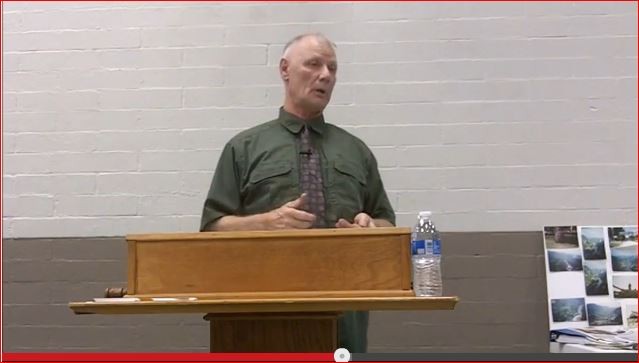
Dan Page addresses the Oath Keepers

By Alan Bean

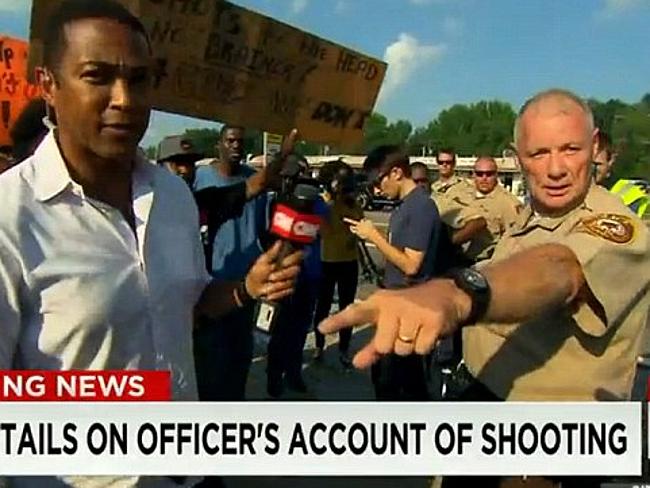
Dan Page, the St. Louis police officer who famously pushed CNN anchor Don Lemon, has been relieved of duty.  Pushing Lemon in front of a national television audience had nothing to do with it.  It was Page’s bizarre speech, delivered in April of 2012 to the “Oath Keepers” of St. Louis and Lake Charles, a group that describes itself as “a non-partisan association of current and formerly serving military, police, and first responders who pledge to fulfill the oath all military and police take to ‘defend the Constitution against all enemies, foreign and domestic.”

Here are a few highlights from Page’s screed:

“Policemen are very cynical. I know I am.  I hate everybody. I’m into diversity. I kill everybody.”

“We have no business passing hate crime laws. None. Because we’re setting aside a group of people special.  We got a Supreme Court out of control with laws on sodomy.”  (Page then refers to the “four sodomites” sitting on the Supreme Court.)

Page says he left the army because he refused to serve under “that illegal alien who claims to be our president.”

John Belmar, the St. Louis County police chief, has suspended Mr. Page pending an internal investigation and psychiatric evaluation. “(I) apologize to the community and anybody who is offended by these remarks,” Belmar said, “and understand from me that he … does not represent the rank-and-file of the St. Louis County Police Department.”

Dan Page and CNN anchor Don Lemon

I doubt Dan Page reflects mainstream opinion within the police department or the military. (more…)