Category: Uncategorized

A Reversal of Fortune

Isaiah 61:1-4, 8-11
Broadway Baptist Church
Third Sunday of Advent
December 11, 2011
Brent Beasley

“We know that not to believe it would be to live in that cold, joyless place where it is always winter but never Christmas.”

Young William—or “Trey” as his family called him—was a bit of an under-achiever. He enjoyed being the class clown in school and being a bit of a goof-off.

It got to a point where eventually Trey’s parents felt it necessary to send him off to a private school that would provide a more strict and structured environment for him. They sent him to a psychiatrist for a while to help him better understand how to focus his concentration so that he would work harder.

When Trey was 13 he met a friend who had similar interests. As these two kind of “nerdy” guys grew older, they went off to college but quit after a couple of years to form their own company.

They had some interesting ideas and a little money—about $15,000. But Trey made the right business decisions with his first simple product, and received the attention of a business giant, which paid him to develop something they needed.

He did so successfully and then continued to build on his successes. About 10 years later at the age of 35, he became the youngest person in America ever to reach billionaire status. Now in his mid 50’s, he is the richest individual in the entire world with a net worth of 56 billion dollars.

For young Trey (or William H. Gates III or BGIII or Bill Gates, the founder of Microsoft) it didn’t start off so promising. And yet, his story is one of a reversal of fortune.

Just the kind of story we enjoy hearing, isn’t it? We like to read books and watch movies about people who in some way or another, either through hard work or just dumb luck, have their lives turned around. We love these rags to riches tales, and countless rags to riches books and movies have been big sellers. Cinderella stories, we sometimes call them. We like stories about a reversal of fortune. (more…)
“Both sides are us”: Stuntz and Kennedy unpack the spirituality of criminal justice reform

By Alan Bean

In 2010, Michelle Alexander’s The New Jim Crow: Mass Incarceration in an Age of Colorblindness, rocked the civil rights community back on its heels.  Alexander accused the criminal justice reform movement of seeking legal solutions to a moral problem, of fighting for affirmative action while abandoning the victims of a brutal and counter-productive drug war, of telling pretty stories about wrongfully convicted poster-boys while ignoring the social nightmares unfolding in poor communities of color.

 If the way we pursue reforms does not contribute to the building of a movement to dismantle the system of mass incarceration, and if our advocacy does not upset the prevailing public consensus that supports the new caste system, none of the reforms, even if won, will successfully disrupt the nation’s racial equilibrium.  Challenges to the system will be easily absorbed or deflected, and the accommodations made will serve primarily to legitimate the system, not undermine it.  We run the risk of winning isolated battles but losing the larger war.

In 2011, two books by white males revealed that Michelle Alexander is not the only American scholar in search of a new moral consensus for ending mass incarceration.   The Collapse of American Criminal Justice by William J. Stuntz, and Don’t Shoot: One Man, A Street Fellowship, and the End of Violence in Inner-City America by David M. Kennedy are not books written in response to Alexander’s The New Jim Crow.  Stuntz and Kennedy are white male academics who see mass incarceration and the war on drugs as unmitigated disasters.  These authors tackle America’s racial history head on.  Most importantly, they agree with Alexander that a movement to end mass incarceration must begin with a new moral consensus.    (more…)

Report from New Orleans

Enrique Salazar, Irma Muniz, Ramsey Muniz, Alan Bean and Ernesto Fraga

By Alan Bean

Friends of Justice is on the road again.  Thus far we’ve held sit-down meetings with folks in Waco and Houston, Texas, and the Louisiana towns of Crowley, Lafayette and New Orleans.  The agenda is broad.  Over the next year we plan to engage every advocacy organization in TX, LA and MS working on indigent defense, juvenile justice and immigrant rights issues.  The long-range goal is to create a collaborative platform that makes it possible for a number of diverse groups to participate in a single narrative campaign.  The big goal is to allow advocacy organizations to pursue their distinct (and limited) agendas while addressing the larger issue of mass incarceration.  

At this point, we’re mostly listening.  We want to learn more about how our natural allies see the world, what worries and excites them, and how they feel about working with organizations that focus on a different piece of the mass incarceration pie. 

While Melanie Wilmoth and I are on the road we’re also spending time with the families of Jace Washington and Kelvin Kaigler, two young men from Slidell, Louisiana who, in unrelated cases, were framed by jailhouse snitches. 

On Friday, we will be visiting with Ramsey Muniz, an icon in the Texas Latino community who is serving a life sentence for a crime he did not commit.  Over the past few months we have been working through all the legal documents related to this bizarre case and will soon be releasing a narrative summary. 

While we’re on the road, three families with heart breaking stories have reached out to us.  The patterns are familiar.  Little or no investigation.  Over-investment in snitch testimony.  Overworked defense counsel.  Prosecutorial tunnel vision.  In virtually every case, legal remedies have been exhausted, but the power of story in inexhaustible. 

We spend a lot of time with the affected community for a number of very practical reasons, but brushing up against the human consequences of mass incarceration heads the list.  We need to remember why we do what we do.


Arlington ISD turns thumbs down on Cesar Chavez holiday (yet again)

By Alan Bean

To the surprise of no one, the students of Arlington were once again denied a May holiday honoring civil rights legend Cesar Chavez. 

Last night’s meeting of the Arlington ISD school board reminded me of the climactic scene in To Kill a Mockingbird.  An all-white jury convicts the black defendant even though the case against him has crumbled to dust.  As the article below suggests, last night’s decision was a foregone conclusion.

Last year, the statements of support for a Chavez holiday, mine included, were polite and deferential.  This year was different.  

I used my five minutes to address the elephant in the room.  The school board trustees are both politicians and public servants, I said.  There is no political upside to voting to rename a generic “May holiday” in honor of Chavez.  The majority of voters in Arlington have little interest in honoring a Latino icon, and many would staunchly oppose the move.  This is, after all, one of the most conservative demographics in America. 

On the other hand, 65% of the students (and therefore a solid majority of the parents) are people of color who would love to see Chavez honored.  There is a disconnect between the political imperative to please the voters and the moral imperative to do what’s best for the children.  The heart sides with the kids; the head craves political security. (more…)

Will Harrell marries Simone Levine (and vice versa)

Will Harrell and Simone Levine

By Alan Bean

If you have read Taking out the Trash (and shame on you if you haven’t) you are already familiar with Will Harrell–he figures prominently in the story.  

The civil rights activist had just arrived in Austin to assume his new duties as ED of the Texas affiliate of the ACLU when he saw Nate Blakeslee’s article The Color of Change in the Austin Chronicle.  It was August of 2000 and the trial of Kareem Abdul Jabar White was just days away.  When Will and Jeff Frazier walked into the Swisher County courtroom all eyes were on them.  Prior to this moment, undercover agent Tom Coleman (and the occasional no-account defendant) were the only pony tail-sporting males to have ever set foot in this hallowed hall.  D.A. Terry McEachern knew he was in trouble.

Will and his ACLU associates used the Tulia story, and the equally compelling Hearne case (think American Violet), to dramatize the egregious failings of the Texas criminal justice system.  Working in the media and the state legislature, they made significant changes in Texas law while playing a vital role in the unwieldy coalition assembled to fight the injustice in Tulia. 

Will Harrell can work with anyone (even preachers and Republicans) if it gets the ball over the goal line.

A few years ago, I spent a couple of evenings bar hopping with Will in wicked New York.  He had just seen his old flame, Simone Levine, at a gala for the Kunstler Fund for Racial Justice, and he couldn’t stop talking about her.  “If I ever get married,” he told me, “she’ll be the one.”

And now she is.  (more…)

Wallis: Invite the 99ers to church

A church sanctuary for the Occupiers

Jim Wallis

Originally published on Sojourners site.

It’s time to invite the Occupy Movement to church!

And  Thanksgiving is the perfect occasion. Have some of the young protesters —  the “99ers” as they’re becoming known — from this rapidly growing  movement over for a big holiday dinner!

Our faith communities and  organizations should swing their doors wide and greet the Occupiers  with open arms, offering them a feast to say “thank you” for having the  courage to raise the very religious and biblical issue of growing  inequality in our society. (more…)

Terrifying love: TheCall comes to Detroit

By Alan Bean

 Leave it to TheCall to make love sound alarming, even terrifying.

 there is only one Messiah in Islam, and it’s Jesus.

All the passionate music, jubilation, and spiritual energy cannot hide the meanness of spirit that would perpetrate this kind of fraud.

TheCall hit Detroit last week.  Lou Engle’s format set the template for Rick Perry’s The Response event earlier this year and the message is straight out of the New Apostolic Reformation playbook.

On the surface, it’s all about love, compassion, and reconciliation; but, as the quotations above suggest, the vision behind the carefully choreographed emotion is dark indeed.  Especially if you’re gay . . . or Muslim.

Haroon Moghul, a Sunni Muslim from New England, flew to Detroit to experience TheCall from the inside.  His report, originally published in Religion Dispatches, appears below.

Jesus, Carpet Bomb My Heart: An Undercover Muslim in Detroit

By Haroon Moghul

I’m the one they’re after. I’m “the enemy,” the believer in the “false idol,” “the darkness” Jesus needs to cast out of America, the reason they’re spending all night in Detroit’s Ford Field, sending prayers over Michigan mosques “like sending special forces into Afghanistan.” And there are thousands of them, come because Pastor Lou Engle asked them to.

Founder of TheCall, Engle warns that an Islamic movement is rising in Dearborn, Michigan—“Ground Zero” for America’s spiritual future (and site of a new TLC reality show, All-American Muslim). When I heard the goals for TheCall Detroit—healing America in a time of crisis, accomplishing racial reconciliation, and (here’s where I come in) bringing Jesus to Muslim hearts—I figured a Muslim in the crowd could be a nice twist. (more…)

Bloomberg evicts Occupy Wall Street Protesters

Last night, the NYPD, at the bidding of New York mayor Michael Bloomberg, ordered the evacuation of the Occupy Wall Street protesters from Zuccotti Park.  The NYT story provides most of the pertinent details, but the more than 1,000 comments that follow tell the real story.

One reader asked why the Occupy protesters couldn’t hold nice, orderly gatherings like the Tea Party.  If the Koch brothers would fork over a few millions dollars (as they did for the Tea Party organizers) that might happen.  In fact, money from the ultra-right organizations created and sustained the Tea Party movement; Occupy Wall Street runs on the conviction of the occupiers plus nothing.

This op-ed, published in the Washington Post, tells the story from the protester’s perspective: (more…)

Psychopaths and gun violence

By Alan Bean

Fifteen years ago, David Kennedy decided to do something about street violence in Boston.  The first step was to discern who was doing most of the shooting and why.  “When it came to any particular shooting,” he says in his new book Don’t Shoot, “it was practically obligatory to tack on ‘senseless,’ ‘inexplicable,’ ‘irrational.'”  But when Kennedy analyzed the data he discovered that the most of the gun violence could be traced to “a small number of very exceptional kids whose names we know doing things we understand pretty damned clearly.”

Gun violence isn’t spread evenly across communities, it’s concentrated in a handful of neighborhoods.  In Boston, the mayhem was largely relegated to “sixty-one crews (gangs), with between 1,100 and 1,300 members” living in six sections of the city.  The problem is driven by “3 percent of the right age group in those neighborhoods, 1 percent of the right age group citywide,” Kennedy writes.  “All the gang turf put together was less than 4 percent of the city; it generated nearly a quarter of Boston’s serious crime.” (more…)

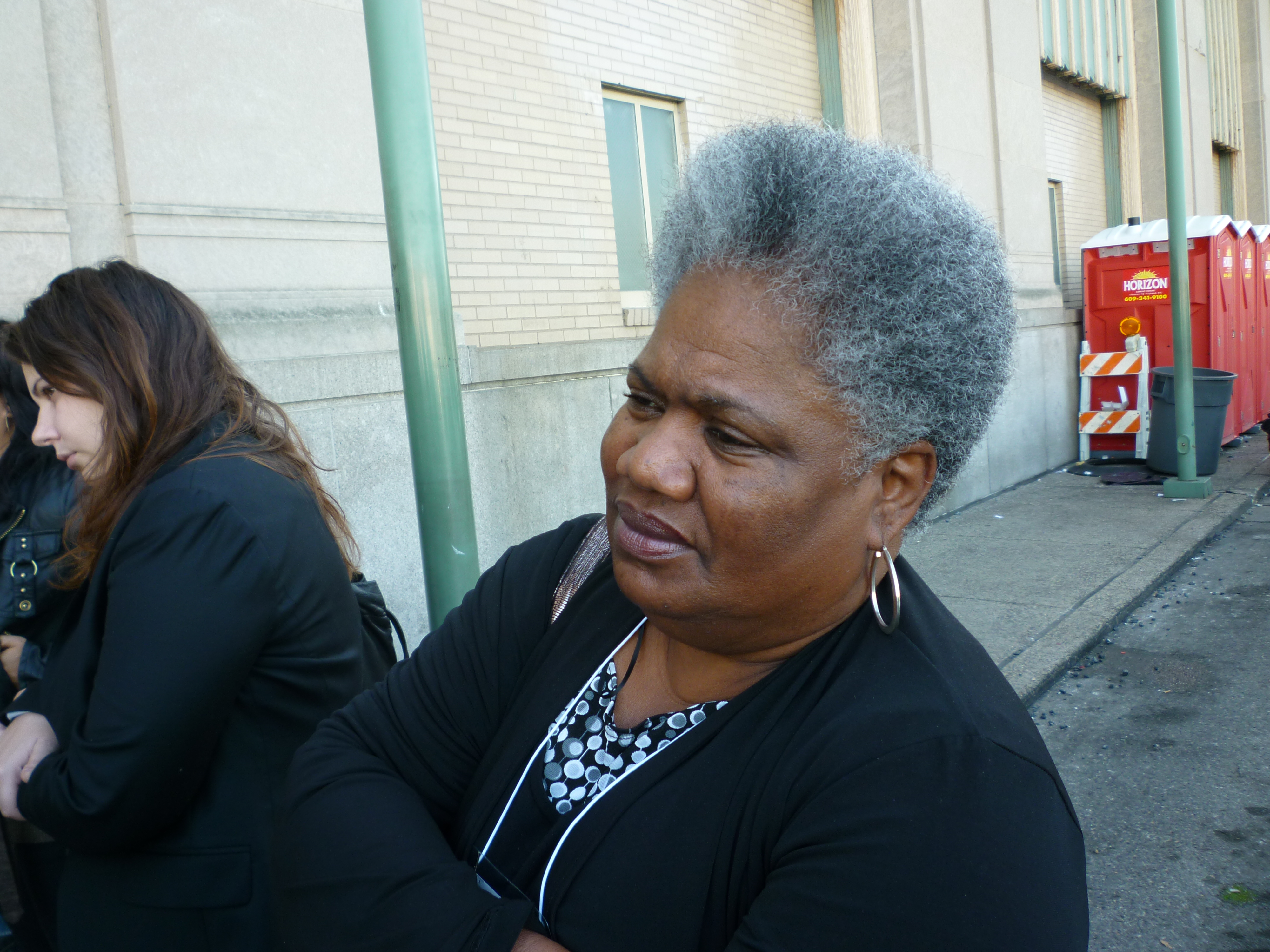
The day Dianna Freelon Foster refuses to forget

Dianna Freelon Foster

By Alan Bean

For the past few days, we have been attending a human rights conference in Philadelphia sponsored by the U.S. Human Rights Fund.  We have learned a lot and met so many inspiring individuals it is a bit overwhelming.  But the high point of the conference, for me, was a chance encounter with Dianna Freelon Foster of Grenada, Mississippi.

Grenada, you may recall from an earlier post, was the site of the most heroic, dreadful, awe-inspiring and anonymous civil rights campaigns in American history.  Nobody knows about Grenada.  Everybody should.

Dianna Freelon Foster was going into the eleventh grade in the fall of 1966 when the civil rights community decided it was time to integrate the public schools.  Every night, hundreds of people would gather at a church near the courthouse square to sing freedom songs, pray and preach.  Then, in the power of the Holy Ghost, they would march to the courthouse and take a stand for civil rights.  And when morning came, the first day of school, hundreds of black children had the audacity to show up at the all white schools of Granada, Mississippi.

“We walked into the school the first morning, ” Dianna remembers, “and the first thing I noticed was how beautiful it was–nothing at all like the black school I had been attending.  It was a very tense atmosphere and you had the feeling something was wrong.  Then, one by one, all the white girls were called to the office.  I remember thinking ‘there was no way all those white girls can fit in that tiny little office’.”

When all the white girls had left the building, the black girls were informed that the school was closing for the day.  “We walked out the door,” Dianna recalls, “and all I could see was a bunch of white men, some of them sitting in the branches of the trees, and they were all carrying weapons: baseball bats, tire irons, that sort of thing.  We tried to rush back into the school but the principal locked the door on us.  That’s the thing that really hurt me–that a human being could do something like that–locking us out when he knew we were in danger.”

“We were walking with a male student and we were trying to get to the church, because that’s where we felt safe and strong.  Then the men surrounded us.  They were pushing and prodding us girls, but it was the boy who received the real beating.  They would have left us pretty much alone, but every time we tried to help our friend who had been horribly beaten, they’d start beating us up too.  I guess I blocked it all out of my mind.  For a long time I didn’t remember much about it.  But then, years later, I talked to my mother and my brother, and they told me how awful it really was.”

The public schools of Grenada were not integrated in 1966.  Or 1967.  Or 1968 or 1969.

The Grenada movement has been forgotten because it did not achieve its objective; but nowhere in America did a community come together in such an emphatic and disciplined fashion behind a human rights agenda. 

Dianna Freelon Foster wants to talk about the past.  She made a successful run for mayor of Grenada a few years ago because she wanted to help her community come to terms with its painful history.  Most of the most prosperous majority white neighborhoods had formed separate municipalities for the usual reasons, but when Ms. Foster was elected mayor these communities were quickly re-annexed by the city of Grenada and Foster was defeated.

“I’m the racist because I want to talk about the past.  Well, I need to talk about it.  Everybody does, but they just want to forget and move forward.  Most of our black children have no idea what happened in our community.  Their parents don’t want to think about it.  We all just live as if all the ugliness never happened.  But it did; and we need to deal with it.”

The next time Friends of Justice sponsors a civil rights tour in Mississippi we’re going to Grenada and Dianna Freelon Foster will be our tour guide.