Category: Uncategorized

The curse of conformity

Frank Rich’s latest column on the unwillingness of American leaders to take personal responsibility for anything has the ring of familiarity.  A lot of prominent people have made disastrous decisions in recent years (invading Iraq, stoking a speculative stock bubble) but no one wants to ‘fess up.  As the body count rises and the ranks of the unemployed swell, the closest we ever seem to get to an apology is the generic “no one saw the meltdown coming” or “everyone thought we’d find WMD” explanations.

Actually, a whole lot of economists predicted the bursting of the Wall Street bubble and a holy host of prophets warned against going after Saddam and his WMD.  There was just one problem, none of the experts stalking the corridors of power made the right call.  This is not a matter of bad luck.  Bad advice will be embraced with an unholy passion if it suits the needs of the moment.  Neo-cons had been itching to invade Iraq since Bush the elder resisted the temptation to march on Baghdad.  Expert willing to sign off on the invasion idea flourished in an administration riddled with neo-cons. 

Similarly, those benefiting from the steady expansion of the speculative bubble on Wall Street heaped praise and money on economists willing to give madness the name of sound economic policy.  Economists, for the most part, rise in the ranks of their profession by keeping rich people happy.  Hence, they are frequently wrong.

Politicians were unable to sound a warning because, red or blue, they survive by keeping their finger on the pulse of popular opinion. 

Smart, informed, intellectually honest people quickly discover how hard it is to make a living shouting “the emperor has no clothes.”  So long as the emperor is doling out the big bucks to scam artists, knaves and fools will prosper.

Besides, it feels to good to strike camp with the majority, to lose yourself in the happy horde of normalcy.

To be out of step is to be alienated.  Alienation is painful, even if the majority is blissfully marching off a cliff.

As Rich suggests, conformists rarely have to pay the price for their mistaken augery because, hey, everyone else was wrong too so, even though my projections led to disaster they were throughly mainstream.  Better to be wrong and in the mainstream than right and on the fringes. 

That is why Friends of Justice refuses to stop talking about the mass incarceration, the death penalty, the mechanics of wrongful conviction and the racial dynamics driving this madness.  This isn’t a popular message.  We want to believe in the basic fairness of a criminal justice system that rarely impacts anyone in middle class suburbia.  We want to believe the war on drugs is winnable.  We like to think that insitutional racism went out with Bull Conner and the boys.  But when you spend quality time with folks on the poor side of places like Tulia, Jena, Church Point, Bunkie and Winona the glaring inequities of the system stand out like a bishop in a brothel.

We don’t speak from ivory tower isolation or from the cloistered halls of a well-financed think tank; we speak from a personal experience too ugly to be ignored.

A noble confederacy without slaves

Newsweek editor Jon Meacham isn’t impressed with Virginia governor Robert McDonnell’s proclamation recognizing April as Confederate History Month.  Here’s the relevant quote:

“The governor originally chose not to mention slavery in the proclamation, saying he “focused on the ones I thought were most significant for Virginia.” It seems to follow that, at least for Mr. McDonnell, the plight of Virginia’s slaves does not rank among the most significant aspects of the war.”

Meacham’s short column in the New York Times is pasted below.

Southern Discomfort

IN 1956, nearly a century after Fort Sumter, Robert Penn Warren went on assignment for Life magazine, traveling throughout the South after the Supreme Court’s school desegregation decisions. Racism was thick, hope thin. Progress, Warren reported, was going to take a while — a long while. “History, like nature, knows no jumps,” he wrote, “except the jump backward, maybe.” (more…)

What makes the South so punitive?

When you feel compelled to voice minority opinions, it’s always nice to find somebody who agrees with you.  Robert Perkinson, a history professor and activist from Hawaii, has just published “Texas Tough: The Rise of America’s Prison Empire”.    Perkinson recently spoke with Adam Culbreath, program officer for the Soros Justice Fellowships and their conversation was published on the Open Societies Blog.

Texas Tough: An Interview with Robert Perkinson

Your new book, Texas Tough: The Rise of a Prison Empire, paints a pretty dismal and disturbing picture of the history of incarceration in the state.

There’s not much happiness in the history of imprisonment—an inmate who had done forty-three years once wrote to me, “prison is always bad, sometimes worse”—but there is even less in Texas.

In the South, the ethic of rehabilitation never really took hold. Prisons were built not to educate or cure but to impose vengeance and extract labor. So even though good intentions have gone awry in Northern prisons, bad intentions have gone to even worse places in the South. (more…)

Thirty pieces of silver: fear and avarice in a Mississippi town

(This post is part of a series concerning Curtis Flowers, an innocent man convicted of a horrific crime that has divided a small Mississippi town.  Information on the Flowers case can be found here.)

Back in the days of Jim Crow, black people experienced few pleasures and were highly vulnerable to pain.  It wasn’t that hard to bribe people who had nothing or to coerce people who knew they could be beaten or killed with impunity.  A few brave souls bucked the system, but we can’t blame the overwhelming majority who didn’t.

The five (soon to be six) Curtis Flowers murder trials are all about the crude manipulation of ignorant poor folks willing to betray the truth for thirty pieces of silver.

In 1996 Winona, the street value of thirty pieces of silver was $30,000.  That’s how much people on the poor side of Winona were offered for information leading to the conviction of Curtis Flowers.  The man’s name didn’t appear on the posters that were stapled to every street post on the black side of town, but everybody knew who the law was after. (more…)

Weenie roasting and white resentment


Why is the passage of moderate health care reform being denounced as socialism?  Why is president Obama (a pragmatic centrist by all accounts) being called a Marxist?

It is beginning to dawn on our more astute columnists that this really isn’t about health care.  In a weekend column, New York Times columnist Frank Rich had this to say:

If Obama’s first legislative priority had been immigration or financial reform or climate change, we would have seen the same trajectory. The conjunction of a black president and a female speaker of the House — topped off by a wise Latina on the Supreme Court and a powerful gay Congressional committee chairman — would sow fears of disenfranchisement among a dwindling and threatened minority in the country no matter what policies were in play. It’s not happenstance that Frank, Lewis and Cleaver — none of them major Democratic players in the health care push — received a major share of last weekend’s abuse. When you hear demonstrators chant the slogan “Take our country back!,” these are the people they want to take the country back from.

Rich is making essentially the same argument I made to a roomful of Baylor undergraduates last week.  

Imagine, I said, that you are a white person living in Mississippi in 1964.  Over the past decade, the Supreme Court of the United States under Earl Warren, the Department of Justice under Bobby Kennedy, and the White House under Lyndon Johnson have weighed “the Southern way of life” in the balance and declared it to be illegal, immoral and unconstitutional. Things you were taught as a child to see as good are being called evil and things you held to be evil are being called good.

What do you do? (more…)

Jesus and Texas Law: An interview with Mark Osler

Friends of Justice board member, Mark Osler, was featured in the Sunday edition of the Dallas Morning News.

Osler is a former US Attorney who teaches law at Baylor University.  He provided valuable assistance to attorneys working with a notoriously corrupt narcotics operation in Hearne, Texas that was recently dramatized in the film American Violet.  He has also played a vital role in the fight to minimize the crack-powder disparity in the federal system and was named Wacoan of the Year for 2009.

 Mark and I did a joint presentation on the death penalty at a well-attended meeting at Baylor on Wednesday evening where he made many of the points that appear in the article I have pasted below.

I was introduced to professor Osler when he sent me a copy of his groundbreaking book, Jesus on Death Row: The Trial of Jesus and American Capital Punishment.   Osler is that rare writer with the experience, training and sensitivity to speak intelligently about the religious implications of our legal system.  

Since January, Mark has been on the Friends of Justice board.  Thanks largely to his interest and encouragement we now have four Baylor law students working with Friends of Justice.

If you want the gist of Jesus on Death Row  I invite you to read this interview with professor Osler that appeared this morning in the web edition of the Dallas Morning News . . . Then order the book! (more…)

Skinner forces Supreme Court into a tight corner

Hank SkinnerLast night Hank Skinner was a dead man walking.  This morning, his life still hangs by a thread.  An hour before his execution, the Supreme Court of the United States issued a stay of execution so they can decide whether or not they will consider the case.
Skinner has maintained his innocence since the 1993 murder of his girlfriend, Twila Busby, and two of her adult sons. 

It could take several weeks for the court to turn its attention to the case.

State and federal appeals courts have repeatedly held that Skinner has no legal right to have DNA evidence from the crime scene tested because, seventeen years ago, his attorney at trial didn’t ask to have the evidence tested.  

Skinner wants every piece of evidence taken from the crime scene tested including semen and skin samples, two bloody knives and a man’s windbreaker.

It is difficult to guess how the Supreme Court will rule.  Last year, the court ruled 5 to 4 that defendants have no constitutional right to post-conviction DNA testing. 

This is the way the legal system works.  Once a jury has rendered a guilty verdict it becomes next to impossible for defense counsel to argue the evidence.  You can bring up procedural issues (ineffective assistance of counsel, Brady violations (prosecutors withholding potentially exculpatory evidence from defense counsel) and the like, but the law assumes that the evidence points to guilt.  As a practical matter, the law either assumes that jurors never misread the evidence or it doesn’t give a damn.  You can argue that the evidence presented at trial was insufficient to warrant a conviction, but the argument is generally futile.  The law assumes that jurors selected according to standard voir dire procedures are inherently reasonable. (more…)

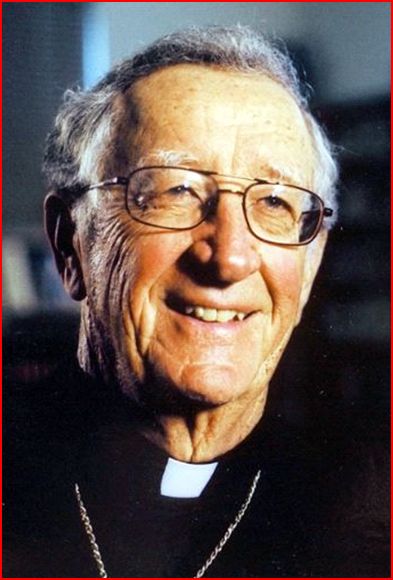
Friends of Justice mourns the passing of Bishop Leroy Matthiesen

Bishop Leroy T. Matthiesen

This eulogy was written by Charles Kiker.  It is followed by a press release from Pax Christi and the text of Bishop Matthiesen’s last article in The U.S. Catholic.

A Fine Fellow

Friends of Justice, and all friends of justice and peace, lost a good friend on Monday, March 22, when retired Bishop Leroy T. Matthiesen passed away at his home in Amarillo at the age of 88.

Bishop Matt, as he was affectionately known by his friends, gained fame, and infamy, by his opposition to nuclear weapons. For him it was a personal rather than simply theoretical issue. In 1981, when he was the active Bishop in Amarillo, he called upon Catholic workers at the Pantex plant to consider the morality of working in the production of nuclear weapons. At least one worker came into the Bishop’s office where they discussed the matter, and the worker quit his job and earned his living elsewhere. But Pantex was (and is) a major economic engine in the Amarillo area. Not everyone greeted the Bishop’s stance affirmatively. As his position became known nationwide, he gained the not so affectionate moniker of “the Red Bishop.”

Bishop Matt was a genuinely humble man, but his humility did not overrule his sense of humor. On one occasion in the airport at Dallas, a fellow traveler (no pun intended), asked him where he was going. “To Amarillo,” Bishop Matt responded. “Oh, do you know the Red Bishop up there?” “Yes, I know him very well. He’s a fine fellow.” 

Bishop Matt was not a one issue Christian activist. He was a justice advocate for all peoples across the lines of ethnicity, sexual orientation, and economic standing. He was a true Vatican II Catholic Christian with open lines of communication to Christians of other persuasions, and indeed to all people regardless of religious conviction. He received the Teacher of Peace Award last year from Pax Christi, a Catholic organization that promotes nonviolence, disarmament, and human rights. (more…)

Hank Skinner loses another round

By a 7-0 vote, the Texas Board of Pardons and Paroles rejected Hank Skinner’s request for a stay of execution so that DNA evidence related to the case can be tested.

In its own defense, the Board could assert that the circumstantial case against Skinner is strong.  So it is.  But appearances can be deceiving, especially when public officials repeatedly refuse to balance the wisdom of prosecutors and jurors against scientific evidence. 

Ambiguity is the great fear in the Skinner case.  What if the evidence is tested and it simply muddies the waters?  Would it not appear that the State of Texas is executing a possibly innocent man?  Much better to passively accept the verdict cranked out by the justice system. 

In the vast majority of criminal cases, the guilt of the defendant isn’t in question.  Ninety percent of the time the legal wrangling, such as it is, centers on finding a charge and a sentence that is acceptable to both the prosecution and the defense.  The state could make its case to a jury, but trials are expensive and time-consuming and that gives defense attorneys some bargaining power.  Not much, but a little.

But in a sizable minority of criminal cases the facts are ambiguous and investigators and prosecutors can’t find a conclusive answer to the who-dun-it question.  The best they can come up with is an educated guess.  If we are talking about a crime that creates a gruesome crime scene and multiple deaths prosecutors become desperate for certainty.  If no one qualifies as a credible suspect you follow the trail of evidence as far as it goes and give up. 

But what if the crime is horrific and you’ve got a guy who might be guilty?  Then things get really dicey.  (more…)

Prosecutorial misconduct in the federal system

John Pacenti called me a couple of weeks ago in connection with this article about prosecutorial misconduct in the federal system in the Daily Business Review.  I should elaborate on the article’s passing reference to a case I discussed with Pacenti in which “inmates were passing around details about a defendant so that they could contact the prosecutor and testify.”
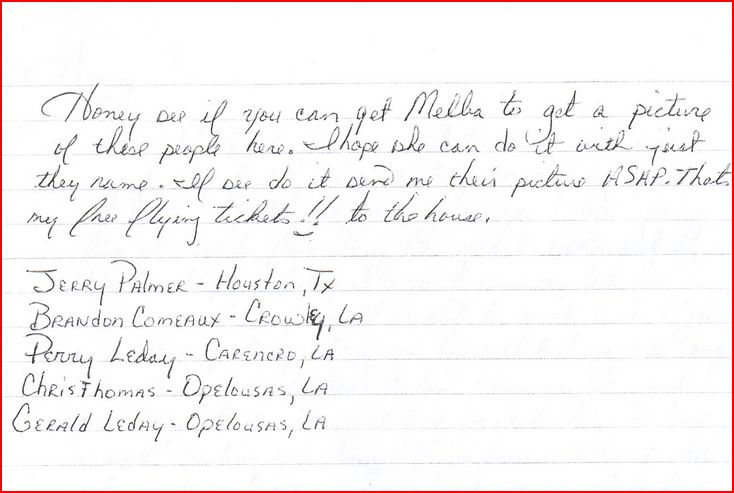
I was talking about the Colomb case in which a parade of convicted drug dealers perjured themselves in exchange for precious time cuts (there is no parole in the federal system).  Last month, I met with Ann Colomb and the attorneys who have agreed to file a civil rights case against AUSA Brett Grayson (it took me years to find an attorney with the requisite audacity). 

But there is an important addendum to the Colomb story that has never appeared in print.  Defendants in a similar case being prosecuted by the same federal prosecutors sent me copies of some letters written by federal inmates that demonstrate how the game works.  As it turned out, the feds had enough evidence of tax evasion on the current crop of defendants to negotiate a plea agreement without resorting to the same snitch testimony used to convict Ann Colomb and her sons.  But I would like to share a few bits and pieces from this correspondence because it shows how simple the game can be.

Consider this:

If your eyesight is less than stellar here’s the translation: “Honey, see if you can get Melba to get a picture of these people here.  I hope she can do it with just they name (sic).  If she do it send me their pictures ASAP.  That my free flying tickets!! to the house.”

Inmates aren’t allowed to write one another directly, so they often work through their girlfriends on the outside.  The girlfriends are often asked to take pictures of specific individuals standing in front of their vehicles in order to enhance the detail and particularity of manufactured testimony.  This also allows the inmate to pick the right face out of a photo array.

Here is a detailed description of how the perjury business works: (more…)