 Time Magizine’s David Von Drehle sheds some much-needed light on the Troy Davis story. Von Drehle projects a world-weary and slightly cynical view of the legal world. You don’t get the impression that he would shed a tear if Davis met his death at the hands of a Georgia executioner. Consider this, for instance:
Like most death-penalty cases, this story is maddening and convoluted. Davis was convicted in 1991 of a tawdry and pathetic 1989 murder. On a hot Savannah night almost exactly 20 years ago, Davis and two acquaintances were hassling a homeless man at a Burger King parking lot next to the bus station. They wanted his beer, and one of the bullies — either Davis or a fellow known as Red Coles — clubbed the victim with a handgun. As it happened, an off-duty police officer, Mark MacPhail, was providing security at the restaurant. When he came running to the scene, the man with the gun shot the officer to death.
Coles pointed the finger at Davis; Davis pointed the finger back at Coles. The state of Georgia had to side with one story and provide witnesses to back it up.
Investigators built a case from the available materials: ambiguous ballistics, jailhouse snitches, witnesses with grudges and the often unreliable observations of the sort of folks who need a burger at 1 a.m. The amalgam was enough to persuade 12 jurors that Davis was guilty, and because the dead man wore a badge, the sentence was death.
Nobody was really sure about anything in this case, but a police officer was dead and somebody had to pay the price. Then, one by one, the trial witnesses started recanting their original stories. Witness recantation isn’t unusual, especially when the state twists arms and brokers sweetheart deals to get people singing in harmony with the official story. But you rarely see the kind of recantation avalanche that has transformed the Coles case into a cause celebre.
How does the state of Georgia respond? Thanks to strict new federal laws they didn’t have to. Five years after the McPhail killing, “Congress, exasperated by the seemingly endless nature of death-penalty appeals, passed a law intended to speed the death-row journeys of prisoners like Davis. Optimistically called the Antiterrorism and Effective Death Penalty Act (AEDPA), the new law attempted to limit death-row prisoners to one set of appeals in federal court.”
The practical result of AEDPA was that you get one bite ofthe federal apple. Which is why Judge Antonin Scalia can’t understand why his judicial colleagues decided to send the Davis case back to a federal district court. Davis already had one apple bite and AEDPA rules out bite number two. Scalia isn’t arguing that Davis is guilty; he’s saying that, innocent or not, federal law has deprived Troy Davis of further appeals and that means the State of Georgia has the right to execute Troy Davis at a time of its choosing. It may be immoral or unethical to execute an innocent man; but it’s perfectly legal.
Legal and constitutional. There is nothing in the US Constitution barring the states from executing innocent people if that is their desire.
If you believe that Troy Davis deserves a federal evididentiary hearing you are declaring AEDPA null and void. Even if the hearing finds the evidence for evidence to be compelling, Scalia asserts, there are no legal provisions for doing anything about it. That’s why he calls the hearing “a fool’s errand”.
Here’s the conclusion of the Time piece:
The court’s August eruption highlights once again the fundamental screwiness of America’s death penalty. In the marble halls of our rational humanity, we demand absolute clarity and justice. As one of the many judges who has reviewed Davis’ case puts it, “I do not believe that any member of a civilized society could disagree that executing an innocent person would be an atrocious violation of our Constitution and the principles upon which it is based.”
But most murders don’t happen in the precincts of the rational or the just. They happen on the late-night mean streets, where truth is often a figment, and memory is as slippery as the greasy pavement.
In other words, we frequently send people to death row on the basis of hopelessly muddled facts. Nothing is nailed down. Nothing is certain. But a police officer is dead and somebody has to pay. Then we pass a law (AEDPA) restricting Davis’s right, even after a recantation avalanche, to take his innocence argument to the federal level.
The Supreme Court’s decision in the Davis case is just one more indication that AEDPA went way too far and needs to be revised.
 Since the Fort Worth Police Department started using Taser stun guns in 2001, four people have died. One of them was Michael Patrick Jacobs Jr, a 24 year-old black man suffering from schizophrenia and bipolar disorder. On April 18th Michael’s family called 911 after he started acting out at home. A Fort Worth police officer arrived at the Jacob’s home, finding Michael combative, pulled out his Taser and hit the five-foot-five, 150 pound man with 50,000 volts for a full 49 seconds.
 Early in 1961, Mississippi Sovereignty Commission Director, Albert Jones, sent agent Tom Scarborough to Winona on urgent business. A Montgomery County Negro named Johnny Frazier was telling the US Attorney in Oxford Mississippi that Montgomery County Sheriff Earl Wayne Patridge and his deputies had arrested him at the bus station and “whipped” him in the County jail.
  Is it legally acceptable for the Supreme Court of the United States to tacitly endorce the execution of an innocent man? Antonin Scalia thinks it is. Consider this remark from his dissenting opinion in the Troy Davis case: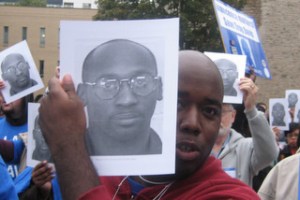
 “The poor can’t afford diamonds either.”
 David Scott, a moderate black Democratic congressman from Georgia, has been getting hate mail laced with swastikas the n-word. Recently,
  On December 19, 2007, Grace Head, a 66 year-old resident of Arlington, Texas, set her Doberman Pinscher on two black neighbors, Silk Littlejohn and Broderick Gamble after telling them they had to abandon their home. Then, while Gamble was fending off the dog, Grace Head struck Ms. Littlejohn across the head with a 2-by-4. Not satisfied with this atrocity, Head jumped onto the hood of Gamble’s Toyota Camry and started stomping.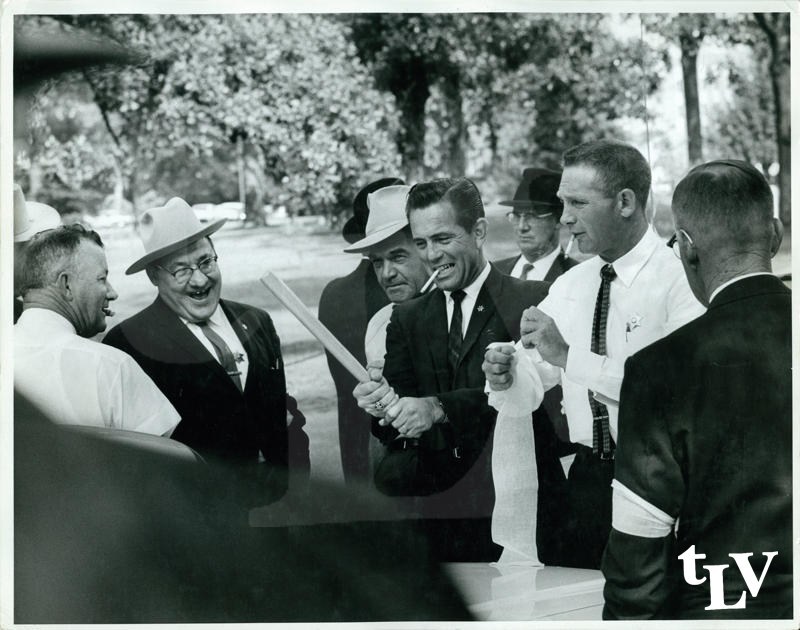
 Friends of Justice