Category: Uncategorized

Jousting narratives in Jonesboro, Arkansas

Channel 7 News - Eight Arrested at Impromptu Obama Celebration

Across America, African Americans are still trying to fathom the unfathomable: a black man is president of the United States.   At the celebration I attended in Fort Worth on election night, the crowd was majority-minority and the emotion was palpable.  A new species of patriotism was in the air.

Of course, almost half of America (and a majority of white folks) didn’t vote for the black candidate.  Most McCain supporters are willing to give Obama a reasonable chance.  In fact, Republican reaction to the work of the Democratic transition team has generally been positive.  In a crisis, fear trumps ideology. 

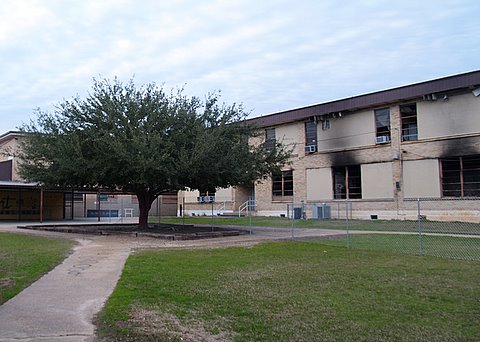
But there are places where Obama’s election is deeply resented.  How many white voters, for instance, supported the Democratic candidate in Jonesboro, Arkansas?  I’m not sure.  But the report below raises a troubling question: did race and ideology influence the behavior of white police officers responding to an exuberant election-night celebration by black college students?   Did a display of black pride hook a crude manifestation of white power?

David Koon’s “A Night from hell” appears in the most recent edition of the Arkansas Times, a left-of-center publication that occupies a similar place in the journalistic landscape as the Texas Observer (the paper that, at the invitation of Friends of Justice. broke the Tulia story eight years ago). 

Much depends on the decisions the prosecutor handling these cases makes in the next few days.  Will the defendants be charged as felons?  Will this  story devolve into a swearing match between white police officers who say they were assaulted by an angry mob and black students insisting they were harassed by belligerent police officers? 

If so, how do we adjudicate the conflict? 

All we know at present appears below, but I suspect we haven’t heard the last of this story

‘A night from hell’

Students: Police overly aggressive during Jonesboro ‘riot.’
David Koon
Updated: 12/4/2008

Jena Cases on Hold

Jenatree

I declined to be interviewed for this article, but I don’t mind telling you what I told Sherrell Stewart when she called me.  

Reed Walters doesn’t want to take any of the Jena cases to trial.  He doesn’t want to risk the media flare-up that a trial would inevitably bring, and he doesn’t want to give defense attorneys a chance to tell the story from the defendants’ perspective. 

On the other hand, reducing the charges to something that would be acceptable to the defendants would smack of defeat.

So Walters does nothing, the media lets this sleeping dog lie, and the Jena 5 do their best to live beneath a cloud of doubt.

Complicating everything is the fact that Mr. Walters has appealed the recusal of Judge JP Mauffray and the appeals court is in no rush to rule on the issue.

Two Years Later, Jena Six Youths Still Await Day in Court

Friday, December 05, 2008, 2:29 pm
By: Denise Stewart, BlackAmericaWeb.com

Two years after a fight with a white schoolmate landed six black youths in Jena, Louisiana in jail, most of the young men have not had their day in court, and chances are that day will not happen this year, lawyers say.

Only one of the youths known as the Jena Six, Mychal Bell, has been sentenced and is currently in the custody of the Louisiana juvenile system. Others involved in the Dec. 4, 2006 fight in the small town are moving on with their lives, but haunted by a cloud of prosecution.

Earlier this year, attorneys for the remaining five youths were successful in getting Judge J.P. Mauffrey removed from the case. But LaSalle Parish District Attorney Reed Walters appealed that decision, attorneys said, and that matter is yet to be settled by a Louisiana appellate court.

In Jena, and in other parts of the country, there is little talk of the case that, in September 2007, stirred one the largest civil rights protests in recent history. Five of the six students charged, including Bell, originally faced attempted murder charges. Bell was convicted in adult court and could have received 15 years in prison, but the conviction was thrown out by an appellate court that said he should have been tried as a juvenile.

“A lot of people are no longer concerned about the Jena Six,” says Tony Brown, a radio talk show host in Alexandria, La. “A majority of the people on the legal side and on the public side want this thing to go away,” Brown told BlackAmericaweb.com. “It’s been a public relations nightmare for the state.”

In addition to the huge march and rally in 2007, where tens of thousands bused in to Jena to protest, the House Judiciary Committee last year convened a hearing on the case, and it captured headlines around the world.

Through his show, Brown helped turn the spotlight on the plight of Bell, Carwin Jones, Jesse Ray Beard, Theo Shaw, Bryant Purvis and Robert Bailey Jr. The youths were arrested and charged with felonies following a fight with a classmate, Justin Barker. The prosecutor in the case said the fight was a vicious assault that sent Barker to the hospital. That fight followed several other incidents in and around Jena High School, including the hanging of a noose. No charges were brought against white youths who hung the noose.

Last December, Bell agreed to a plea bargain. He’s been attending Carroll High School in Monroe, La., and will graduate this month, said Louis Scott, Bell’s attorney.

“He has better than a 3.0 average, and he’s looking to go the college and play football,” Scott told BlackAmericaweb.com.

Still there are hurdles. Because Bell still is technically in the custody of the juvenile system, lawyers may have to get approval for him to attend a college in a different area, Scott said.

When he was at Jena High School, Bell was a standout on the football team and had been considered a prospect for college. He had petitioned the Louisiana State High School Athletic Association to play this fall. That request was denied, so his chances of playing one more season to try to impress college recruiters were wiped out.

“Even though he wasn’t on the team at Carroll High School, he helped with team, sort of as an assistant,” Scott said. “The team still gave him an award.”

Two of the other Jena Six youths were able to play football this year.

Bailey played at Shaw High School in Georgia, and Beard played ball at a prep school in the Northeast, their attorneys said.

“We’re proud of the way Robert has handled himself. Either moving to Georgia has changed him or living in Jena didn’t help him,” his attorney Jim Boren told BlackAmericaweb.com.
Bailey is getting offers from some small colleges to play ball, and he’s kept his grades up, Boren said.

Beard, now 17, is in his junior year of high school. “His goal is to finish high school and go on and play college ball,” his attorney David Utter told BlackAmericaweb.com.

Efforts to reach Purvis, Jones, Shaw or their attorneys were unsuccessful.

Boren, the attorney for Bailey, said the case is complicated by the situation with the judge and the district attorney.

First, a decision must be made on who will hear the case. Also, a decision must be made on another request lawyers have made to have the district attorney removed from the case, Boren said.

Lawyers for the defendants have argued that their clients can not get a fair trial in LaSalle Parish with Walters and Mauffrey because of the established network between the judge and the district attorney’s office.

The case has moved along at glacier speed, Boren said, “but it does me no good to be bothered over the speed of the judicial process. It’s the best system we have at this time.”

Reed Walters, the district attorney is out of the office this week.

“Because of the number of motions that have been filed, the number of lawyers involved and the fact that LaSalle Parish has only one court, it has been very difficult to schedule the case for trial,” his spokesman, Bill Furlow, told BlackAmericaweb.com in an email. “The district attorney is eager to move forward as rapidly as is possible.”

Brown said he too looks forward to the day when the youths’ cases are settled. He predicts that the remaining five will not have to go to court.

“The D.A. is just prolonging the inevitable. I don’t think any of the remaining cases will ever see a courtroom,” Brown said. “Change is coming to America. I’m just waiting on them to get the memo in Jena.”

Alvin Clay shreds the government’s case

Eight days after his June trial, Alvin Clay and his attorneys filed a motion for a new trial.  On Monday, November 24th, a hearing on that motion was held in the federal courthouse in Little Rock.   Judge Leon Holmes was presented with a massive stack of evidence backing up claims made in this blog that Donny McCuien, the only witness tying Clay to the alleged conspiracy, repeatedly perjured himself on the witness stand.

The perjury was so blatant and so obvious that federal prosecutors either knew or should have known that their star witness was mangling the truth.  Unless a prosecutor is unaware that perjury is being perpetrated, it is illegal to let a witness feed lies to a jury. 

Prior to trial, the government sifted through hundreds of real estate deals handled by Clay Real Estate.  Only the cases associated with Ray Nealy and Donny McCuien were even remotely tainted.  The government also knew that dozens of Nealy-McCuien cases not involving Clay were clearly fraudulent.  Finally, the government knew, or should have known, that their star witness, Donny McCuien, had been doing real estate deals involving rehab work prior to meeting Ray Nealy and long after Nealy, McCuien and Clay were indicted. 

And yet, when McCuien testified that he had never performed rehab work on a single piece property, that he knew nothing about doing rehab work, that he never owned the tools of the rehab trade, and that, apart from one owner-financed transaction, he had never owned a single piece of property, Assistant US Attorney Steven Snyder sat grim-faced and silent.

In fact, AUSA Snyder consistently presented Donny McCuien to the jury as a hapless burger flipper.

The argument went something like this: Alvin Clay had to have known that Donny McCuien wasn’t doing rehab work on the properties in question.  Only a fool could believe that a hapless burger flipper like McCuien was capable of buying and selling properties and doing rehab work.  Alvin Clay is not a fool.   Ergo, Clay was in on the scam.

The records Alvin Clay and his attorneys presented in federal court on November 24 demonstrate beyond a reasonable doubt that McCuien bought and sold dozens of properties, many of which were rehabbed before being flipped.  He did this in association with Ray Nealy, he did it before he met Nealy, and he continued to do it after his relationship with Nealy was terminated.

In fact, McCuien was buying and selling properties at the very time he took the stand in 2008 and conned an all-white jury into believing he was an ignorant, unlettered burger flipper who couldn’t flip a property if his life depended on it.

If jurors had realized that Donny McCuien had been selling rehabbed homes, legitimately and fraudulently, for over a decade, would they have found it so hard to believe that Alvin Clay, like scores of other people, had sincerely believed that McCuien was doing the rehab work he promised to do.

True, Mr. Clay and a number of out-of-state lending institutions should have done more to convince themselves that McCuien and Nealy were acting in good faith.  But neither Clay nor the bankers involved in these deals have been accused of negligence . . . at least not by the federal government.  This morning, NYT columnist Thomas Friedman expressed his outrage at “some of our country’s best-paid bankers” who were “overrated dopes who had no idea what they were selling, or greedy cynics who did know and turned a blind eye. But it wasn’t only the bankers. This financial meltdown involved a broad national breakdown in personal responsibility, government regulation and financial ethics.”

Ultimately, “this financial meltdown” created Ray Nealy and Donny McCuin and seduced the federal government into one of the most ill-considered prosecutions on record.  With so many knaves and fools to choose from, how did the federal government end up with Alvin Clay?

A second hearing is scheduled for the Little Rock courtroom of federal Judge Leon Holmes on January 6, 2009.  How will Judge Holmes respond to these startling revelations?  Will he grant Alvin Clay a new trial?  Will he order the government to dismiss the charges against Clay?  Will he discipline the government for suborning perjury?

We can only wait and watch.  Judge Holmes appears to be a sincere person of faith eager to uphold the integrity of the judiciary.  During Clay’s trial, Leon Holmes acquitted himself responsibly.  Whether he will acquit Alvin Clay remains to be seen. 

So why didn’t Alvin Clay bring these facts to the intention of the jury at the time of trial. 

Clay repeatedly asked George Hairston, his lead attorney, to research McCuien’s professional history.  To a limited extent, the avuncular attorney complied.  Once he had enough evidence to show that McCuien was perjuring himself, however, Hairston lost interest in McCuien’s past.  If he could prove that McCuien had done rehab work on a couple of properties, the Tennessee lawyer reasoned, the jury would see through McCuien’s pretense.

Unfortunately, it didn’t work that way.  The all-white jury assumed that the government wouldn’t be prosecuting Clay if his hands were clean.  In the absence of overwhelming proof of perjury, the jury would side with the government.

George Hairston was on the stand at Monday’s hearing, complaining about my blogging and suggesting that jurors (and possibly Judge Holmes himself) had been prejudiced against his client by my incendiary prose and by street demonstrations held in the course of the trial. 

Federal judges don’t follow the dictates of bloggers.  More importantly, Holmes was in the room when Hairston presented singularly inept closing arguments at the conclusion of a two-week trial.  Holmes knows effective representation when he sees it, and Alvin Clay didn’t receive it.

I hestitate to criticize Mr. Hairston.  He is a nice guy.  The briefs he composed prior to trial were professional and well presented.  Back in the day, Hairston was undoubtedly a fine attorney, and I am sure he has worked wonders for his clients on many occasions.  But every fighter needs to know when its time to hang up the gloves, and George Hairston stayed in the ring one fight too many.

Thus far, I have received over a dozen faxes from Alvin Clay laden with gratuitous evidence of Donny McCuien’s criminal and professional past.  More faxes will follow.  But the evidence at bar is now quite sufficient to prove, to the whitest of all-white juries, that the United States has no case against Alvin Clay.

Woodfox to be released on bail after 37 years!

Below, you will find excerpts from the official press release followed by the salient portions of Judge Brady’s ruling.

“Angola 3” Member to Be Released On Bail After 37 Years

Conviction Overturned, Judge Rules Albert Woodfox Must be Free During Appeals or Re-trial

Lawyers: Ruling Brings Hope for Remaining Prisoner, Also Spent 36 Years in Solitary for Guard’s Murder

Albert Woodfox, who has spent 37 years in prison at Angola Penitentiary, must be released on bail, according to a ruling issued today by United States District Judge James Brady. On September 25th, Judge Brady overturned Woodfox’s conviction for the 1972 murder of prison guard Brent Miller. Though the State has announced its intention to appeal that decision, until such an appeal is successful, according to today’s ruling, there is no conviction on which to hold Woodfox.

Herman Wallace, who was also convicted in the murder, remains in prison at Angola. He has an appeal pending with the Supreme Court of Louisiana, which is similar in content to Woodfox’s successful appeal. The two men were wrongly convicted based largely on the testimony of a fellow prisoner, Hezekiah Brown, a serial rapist who was promised and received a pardon in exchange for his testimony against them. Brown was the sole professed eyewitness to the murder, and none of the physical evidence put Herman or Albert at the crime scene. (more…)

Justice in time of war: Holy Land defendants guilty on all counts

Five defendants accused of channeling at least $12 million to Hamas after the organization went on America’s list of terrorist groups in 1995 have been convicted by a federal jury in Dallas on all 108 counts named in the indictment.  The Dallas Morning News provides a good summary of the history of the federal prosecution, the key elements of the case, reactions from a crowd of 150 well-wishers, and dozens of conflicting comments from interested readers.  Bob Ray Sanders, a columnist with the Fort Worth Star-Telegram, has interviewed Greg Westfall, one of the attorneys representing the Holy Land defendants.  Sanders’ conclusion is reflected in his column’s title: “Holy Land Five convictions mark sad day for American justice system.”

I have been following the “Holy land Foundation for Relief and Development” case for several weeks because it raises fundamental questions about the American system of justice.  I don’t know enough about the guilt-inncence issues to comment intelligently, but it appears the government has made a strong case that the Holy Land Foundation channeled money to Hamas in the full knowledge that the organization had been declared a terrorist organization by the United States government.

Unresolved is the question of intent. 

All five defendants grew up in the West Bank and were well acquainted with the crushing poverty and squalid living conditions for which Palestine refugee camps are infamous. 

In addition, these men were intimately related to a variety of Hamas-friendly clerics and aid workers in Palestine.  The Holyland Foundation was clearly pro-Palestinian and anti-Israeli, to the point that they may have supported the terror campaign Hamas has been waging against Israel for decades.   

Although most of the money donated through the auspices of the Foundation was used to provide food, schools and hospitals, it appears that a portion of the donated money went to support the families of suicide bombers and may have supported the terrorist campaign in more direct ways. 

Finally, it is entirely possible that the five defendants are every bit the kind-hearted, gentle, family-oriented people their supporters make them out to be.

Much depends on who is allowed to tell the story.

Told from the government’s perspective, the facts are damning.  Giving money to Hamas has been a crime in the United States since 1995.  According to the Clinton and Bush administrations, every dollar donated to Hamas, regardless of the intent of the donor, was legally considered to have supported terrorism. 

In post-9-11 America no one wants to stand up for accused terrorists. 

The government’s first bite at this apple ended in a mistrial, but that was largely because prosecutors confused jurors by inserting too much weak evidence into the prosecutorial mix and by indicting too many defendants with only peripheral involvement.  This time, prosecutors went with their strongest evidence and prosecuted only the central players.

I approach this case with extreme caution.  Although I write in my own name, I am also the primary mouthpiece for Friends of Justice.  I have pro-Palestinian activists on my board and I also have Jewish members who are pro-Israel without being anti-Palestinian.  These people understand the issues far better than I do, and I don’t want to place them in a difficult position by speaking hastily and in ignorance.  As an evangelical Christian, I have my own baggage and biases.  For the record, I have been heavily influenced by Jimmy Carter’s take on the issue. 

Simple justice demands that we look at criminal cases from the perspective of the prosecution and the accused.  We need good prosecutors and reform activists should be thankful for the good men and women who protect society by holding bad guys accountable. 

But what do we do when convicted defendants are good people guided by a worldview that diverges widely from the American mainstream?

It appears that the Holyland Foundation folks were sincerely distressed by the poverty and despair in which they were raised.  Their desire to help the suffering was genuine.  If you want to help poor Palestinians in the West Bank, Hamas is pretty much the only game in town–who else ya gonna call? 

When Hamas was placed on the American list of terrorist organizations, the Holyland people faced a moral dilemma: do we stop giving aid to our people (thus abiding by the law), or do we continue chanelling money to the Palestinians (thus breaking the law)?

This case is riddeled with moral ambiguity.  According to the New York Times account, the first witness to reveal the link between the Holy Land Foundation and Hamas had been tortured by Israeli officials.  Fortunately, the government’s case wasn’t built on the testimony of a single witness with severe credibility issues (as in the Alvin Clay case); still, does torture have a legitimate role in the war on terrorism?  The Bush administration thinks it does; I strongly disagree.

Nancy Hollander, one of the defense attorneys representing the defendants, told the New York Times that the convictions will be aggressively appealed. 

“Our clients were not even allowed to review their own statements because they were classified – statements that they made over the course of many years that the government wiretapped,” Ms. Hollander said. “They were not allowed to go back and review them. There were statements from alleged co-conspirators that included handwritten notes. Nobody knew who wrote them; nobody knew when they were written. There are a plethora of issues.”

 The Holyland Foundation case has been hailed as one of the few success stories in the American government’s legal war on terrorism.  We need to follow this case carefully as it moves through the appeal stage; it could well end up before the Supreme Court.

I am also curious to see how the court handles sentencing issues.  Most of the defendants could die behind bars if maximum sentences are handed down.  Is this just? 

That depends on whether  or not you are sympathetic with the defendants.  If national security is the only issue, we should lock up every person accused of terrorism, no matter how weak the evidence, just to be on the safe side.  In fact, it wouldn’t hurt to lock up people like me who take issue with the criminal justice system.  And while we’re at it, we might as well lock up every Muslim in America–after all, you never know.

But, in America, public safety is never the only issue.  Some people belong behind bars.  Do these defendants fit the profile?  If so, how much prison time is appropriate?  Should the federal judge take the intentions of the defendants into consideration, or should the matter be settled on the basis of simple guilt-innocence determinations? 

I will be re-visiting this case as the appeals process unfolds.

Inside the thin skin of a black DA

 Craig Watkins, elected in 2006, is the first black district attorney in Texas. Eleven wrongfully convicted men have been freed during his time in office.   S-T/MAX FAULKNER     *

Craig Watkin’s picture dominated the front page of Sunday’s Fort Worth Star Telegram.  I doubt the Dallas County District Attorney was pleased with a story that presented him as a thin-skinned whiner with a penchant for playing the race card. 

“I’m consumed with anger all the time,” Watkins told the Star-Telegram. “I really have to think twice when I wake up in the morning not to be angry because of all the things that people have thrown at us.  . . . I could invent a cure for cancer and would be somewhat vilified because I’m black.”

You can’t blame Scott “Grits” Henson for concluding that Watkins needs to develop a thicker skin.

Henson doesn’t think the criticism Watkins has received from his fellow prosecutors, police officers and FOX news has anything to do with racism.  The Dallas DA is telling the truth about our broken system of criminal justice and his critics don’t like it.  Simple as that!

A Wall Street Journal article on Watkins gives equal time to Watkins’ detractors and champions, but you don’t hear the Dallas prosecutor fulminating against white racism in the WSJ.  Either the reporter didn’t ask the right questions or he didn’t think Watkins emotional life was relevant.

I would have to talk to Mr. Watkins personally before commenting on the fairness of the Star-Telegram piece or evaluating his visceral response to the criticism he has received.

One thing is clear; despite all the adulation his reforms have generated, the last two years have been a purgatorial experience for the rookie DA.  Part of the problem is simple inexperience.  Instead of moving up through the District Attorney’s office over a period of decades, Craig Watkins made an enormous leap from the office of a solo defense attorney to the big time.  The emotional adjustment was bound to be rough, especially for a reformer like Watkins.

In a brief companion piece in the Star-Telegram, Watkins discusses his personal opposition to the death penalty.  He isn’t just the only African American District Attorney in Texas; he’s probably the only prosecutor in the state who is philosophically opposed to the death penalty.

As a Baptist pastor who stands up for accused drug dealers, I may have a unique window into Watkins’ soul.  My views diverge sharply from most of my professional colleagues.  Not only am I intellectually aware of that distance; I feel it.  It’s personal.  Professional alienation is hard to handle.  When you are the only person in your profession who isn’t white, the social strain is multiplied. 

It is hard for white people like me to appreciate the travails of our black and brown counterparts.  Watkins feels the havoc the criminal justice system is wreaking in minority communities; his white colleagues generally don’t.  There is a racial element to all of this; just not the one Watkins has identified.

That said, Craig Watkins isn’t drawing fire because he’s black but because he’s a prophet.  The media has treated the Dallas DA very favorably for the most part.  FOX news, the only media outlet to take a serious run at embarrassing Watkins, is just being FOX news.  You can’t invite the Innocence Project to set up shop in the DA’s office without raising the ire of the legal establishment.

I hope Craig Watkins develops a thicker skin before the next election.  We need him, and we need a new generation of prosecutors inspired by his example.  If Watkins wasn’t so emotionally sensitive he probably wouldn’t be taking such courageous stands.  Prophets, by definition, are complicated people.

Dallas Prosecutor Craig Watkins says he's been called a 'hug-a-thug D.A.'

White evangelicals take stock

Since the creation of the Republican “Southern strategy” in 1968, white southern evangelicals have controlled electoral politics in America.  But on the morning of November 5th, 2008, southern whites woke up to a harsh new reality. 

Adam Nossiter of the New York Times wonders if southern whites are now marginalized and politically irrelevant.  “Less than a third of Southern whites voted for Mr. Obama,” Nossiter observes, “compared with 43 percent of whites nationally. By leaving the mainstream so decisively, the Deep South and Appalachia will no longer be able to dictate that winning Democrats have Southern accents or adhere to conservative policies on issues like welfare and tax policy, experts say.”

Nossiter’s analysis is pretty standard issue.  With increasingly educated and culturally diverse states like Virginia, North Carolina and Florida trending to the left, the “Solid South” of yesteryear is dead.  These increasingly Blue states contrast sharply with Arkansas, Alabama, Louisiana, Oklahoma, Mississippi and Texas, red states that, if anything, are getting redder.  In many parts of the Deep South (particularly Arkansas and most of Appalachia) Southern whites cast more votes for John McCain this year than they gave George W. Bush in either 2000 or 2004.

The Deep South no longer provides a big enough foundation for a presidential candidate to build on.  The Republicans have become a regional party with little support in the Northeast or on either coastline.   

Some white evangelicals are celebrating the impending divorce between the Religious Right and the Republican establishment.  Cal Thomas, a syndicated columnist who worked with Jerry Falwell back in the 1980s, is cautiously upbeat.

“Too many conservative Evangelicals have put too much faith in the power of government to transform culture,” Thomas recently told his readers. The futility inherent in such misplaced faith can be demonstrated by asking these activists a simple question: Does the secular left, when it holds power, persuade conservatives to live by their standards? Of course they do not. Why, then, would conservative Evangelicals expect people who do not share their worldview and view of God to accept their beliefs when they control government?”

This is the same Cal Thomas who said Barack Obama couldn’t be a Christian because he won’t say non-Chrisians are bound for hell.  In the worldview of evangelicals like Thomas, America is divided between the Christian right and the secular left.  No other options are allowed.

Thomas is perfectly willing to cede the fight to the secular left.  Christians should eschew political ambition in favor of something truly radical. “If results are what conservative Evangelicals want, they already have a model. It is contained in the life and commands of Jesus of Nazareth. Suppose millions of conservative Evangelicals engaged in an old and proven type of radical behavior. Suppose they followed the admonition of Jesus to ‘love your enemies, pray for those who persecute you, feed the hungry, clothe the naked, visit those in prison and care for widows and orphans,’ not as ends, as so many liberals do by using government, but as a means of demonstrating God’s love for the whole person in order that people might seek Him?”

I am tempted to quibble with Thomas.  There is no suggestion that Jesus called his disciples to minister to the poor simply as a means to a spiritual end.  Because God is love, love is an end in itself.  But forget all of that.  How wonderful to hear a conservative evangelical suggesting that Christians should follow the religious model Jesus laid down 2,000 years ago!

Still more amazing, Thomas seems to understand what Jesus had in mind.  “Scripture teaches that God’s power (if that is what conservative Evangelicals want and not their puny attempts at grabbing earthly power) is made perfect in weakness. He speaks of the tiny mustard seed, the seemingly worthless widow’s mite, of taking the last place at the table and the humbling of one’s self, the washing of feet and similar acts and attitudes; the still, small voice. How did conservative Evangelicals miss this and instead settle for a lesser power, which in reality is no power at all? When did they settle for an inferior ‘kingdom’?”

Tragically, white southern evangelicals settled for an inferior kingdom when the original planters in places like Virginia and North Carolina decided to import African slaves. 

This devilish development forced a crisis upon southern white Christians that we are still dragging behind us in the 21st century.  Although most whites in the antebellum South owned no slaves, southern culture was shaped and molded by “the peculiar institution”.  By the 1840s, southern opinion leaders questioned the goodness of slavery on pain of death.  In 1845, the Baptists, Methodists and Presbyterians all split north-and-south over the issue. 

This Monday, I attended the annual conference of the Baptist General Conference of Texas.  One bold preacher told the assembly that, although we differ in political preference, we are all celebrating the election of America’s first African American president. 

This assertion was greeted with tepid applause. 

The speaker regretted that Texas Baptists hadn’t formed the vanguard of the abolition movement.  He wished we had been more supportive of the civil rights movement.

I leaned over to the woman beside me and whispered, “we were in the vanguard of opposition to the civil rights movement–that ought to count for something.”

Baptists in the South have a hard time coming to terms with the legacy of slavery, Jim Crow and grudging support for integration.  As Jim Wallis argues in his recent book, The Great Awakening: Reviving Faith & Politics in a Post–Religious Right America, American revivals were typically accompanied by social reform movements like abolition and women’s suffrage.  But this was a feature of evangelical life in the northern states; in the South, every progressive movement has been resisted and demonized.  You start messing with one evil and sooner or later you’ll be messing with the capstone of southern economic, social and religious life. 

At first, slaves were taught to read the Bible, but even that tiny reform was abandoned.  There was no guarantee that slaves wouldn’t move from the Bible to more incendiary literature.  And who could guarantee that the ignorant wretches wouldn’t read passages like “Blessed are you poor, for yours is the Kingdom of God” (Luke 6: 20) and get the wrong idea.

Southern evangelicals have always practiced an odd form of hyper-spirituality in which the saving of souls was the only mission of the church.  [I realize that I am dealing with highly complex matters in a few broad strokes.  Take issue with my stance in the comments section below and I’ll respond in greater detail.]

Southern evangelicals were flummoxed by preachers like Martin Luther King.  Although the Baptist preacher was generally dismissed as a rabble rouser and radical communist, evangelical denominations like the Southern Baptist Convention rarely condemned the civil rights movement in public statements or in denominational literature.  At the local church level, howevert, vocal support for civil rights was a one-way ticket to the bread lines. 

Southerners responded to Lyndon Johnson’s Great Society by shifting their allegiance to the Republican Party.  When groups like the Silent Majority and the Christian Coalition rose to prominence with the Reagan Revolution, the race issue was never addressed directly.  Still, southern blacks had little difficulty reading between the lines.

In 1994, the newly-minted president of the Southern Baptist Theological Seminary handed me a doctoral diploma.  Albert Mohler quickly emerged as a prominent voice within Southern Baptist life and a stalwart of the religious right.  Mohler and his fellow Southern Baptists have apologized for slavery.  Mohler says he rejoices at the election of an African American president even though he is deeply troubled by Barack Obama’s politics.  Al would have loved to vote for an African American candidate, but he takes issues like abortion and homosexuality too seriously. 

Like most southern evangelicals, Mohler is nervous.  In an article written a few days after the presidential election, he pondered the possible demise of evangelical influence.  “Will the Republican Party decide that conservative Christians are just too troublesome for the party and see the pro-life movement as a liability? There is the real danger that the Republicans, stung by this defeat, will adopt a libertarian approach to divisive moral issues and show conservative Christians the door.”

But Dr. Mohler hasn’t abandoned all hope. “We must pray that God would change President-Elect Obama’s mind and heart on issues of our crucial concern. May God change his heart and open his eyes to see abortion as the murder of the innocent unborn, to see marriage as an institution to be defended, and to see a host of issues in a new light.”

So this explains why only 14% of white voters in Louisiana pulled the lever for Obama.  The racial makeup of LaSalle Parish (home of Jena) is 86.13% White and 12.20% African American; the vote in the election was 85.5% McCain, 13.1% Obama.  How many white Baptists in LaSalle Parish voted for the Democrat?  One?  Five?Twenty? 

Does Al Mohler really expect us to believe that, but for his pro choice, pro gay rights politics, Southern Baptists would have considered voting for the black presidential candidate?  He may be right.  I can see white southern evangelicals voting for a conservative African American candidate with no progressive notions.  The big problem today is history, not skin color.  A black candidate would be acceptable in the South so long as there is no call for the kind of progressive reform that hooks Southern white defensiveness.  No black candidate who celebrates the civil rights movement legacy would could do better in the Deep South than Obama.

Black and Latino voters are generally culturally conservative, evangelical Christians.  Yet two-thirds of Latino voters and almost 100% of black voters sided with Obama.  Why aren’t hot button issues like abortion and gay rights deal breakers for minority voters?  Why are white catholics (outside the Deep South) evenly split between McCain and Obama?

The temporary demolition of the Republican coalition gives white evangelicals an opportunity to re-evaluate their knee-jerk opposition to all things progressive.  Perhaps, as Cal Thomas anticipates, white evangelicals will read the words of Jesus with new eyes.  If they do, mass incarceration might lose some of its allure and public works programs for the unemployed might look like a good idea whose time has come.

Nothing good will happen without repentance.  White evangelicals like me must own up to the demonic toxins infecting our spiritual heritage.  Even at its highest and best, our religion has been distorted by America’s original sin.  The problem didn’t end with the Civil War or the demise of Jim Crow.  Overtly racist rhetoric may have been silenced in the public square; but our hearts have not changed. 

Calling slavery a sin was a good start.  But we need to apply that confession to Jim Crow and our spiteful rejection of the civil rights movement.  We must confess that our religion has been deformed by hatred, pride and hardness of heart. 

Few preachers in white evangelical pulpits, even today, could issue such a call to repentance without losing their livelihood.  I have said these hard things because I can.  Many (most?) of you will disagree.  Fine by me. That’s how genuine conversations get started.

Funny election letters

Letters praising or denouncing the election of Barack Obama are popping up in newspapers across America.  Two of the epistles below were culled from this morning’s Fort Worth Star Telegram

Both are written by self-described evangelicals. 

One thinks Barack Obama is the Son of Perdition; the other fears somebody is spiking the communion juice around election time (I’ve got to hook up with this Dale Littlerood character; not many people can be funny and insightful at the same time).

Finally, I include a letter to Santa Claus from Friends of Justice founding member, Charles Kiker of Tulia, Texas.  Charles spent the majority of his working years as a Baptist preacher and professor of Old Testament.

Enjoy!

Evangelicals and politics

We evangelicals are not inherently stupid. We mainly get that way during election time. Push the scare button, give us a choice, and we’ll choose Barabbas, the people’s criminal, nine times out of 10. Nonetheless, even our political gullibility has its limits.

Evangelicals share in the national, indeed the global, post-GOP trauma – the unbearable fatigue, frazzled nerves and real losses inflicted by the Bush-McCain-Cheney-Palin-Rove party, with their penchant for perpetual war, pathological deceit, social irresponsibility and destructive economic policies.

Informed benevolence and faith is the hallmark of authentic Christianity, not belligerent invectives. Supporting mean-spirited, hawkish, unyielding ideologues who abuse their power and spew out misinformation is not the path my Sunday school teachers taught me.

Barack Obama may not prove to be the absolutely perfect, heaven-come-down package. But as it happens, I’ve already got a Messiah; I’m just hoping for a decent president. And thank God, I think we’ve just elected one.

– Dale Littlerood, Fort Worth

Consider consequences

Well America, you got what you think you wanted: Barack Obama. As soon as you calm down from your frenzy, think about what you really got and what you will be losing in short order.

When you lose your freedom of speech and cannot utter even the slightest disdain for another person regardless of its validity, remember it was your vote. When you lose your religious freedom because it conflicts with the values of other religions, remember it was your vote. When you lose your job because your employer cannot afford to pay you because of taxes, remember it was your vote. When terrorists send bombs into our cities with no fear of retribution, remember it was your vote. When your Christian radio and television programs are removed from the airways because they are “controversial” because they teach about Jesus, remember it was your vote.

There are so many more bad things to come that I’m betting you did not take into account before you voted. When they happen, you know who is to blame – not the Democrats, not the Republicans. The blame will be on you. It was your greed, selfishness, ignorance and vote.

– Beverly Linton, Hurst

Yes Santa, there really is a Virginia

Dear Santa Claus,

Yes, Santa Claus, there is a Virginia.

Oh yes, there’s also a North Carolina, Florida, Ohio, Indiana, Iowa, Colorado, New Mexico, and Nevada.

But Santa Claus, I want to thank you especially for Virginia.

I’m sure you’re old enough to remember this, Santa, because it was only about 100 years ago that Republican Theodore Roosevelt invited Booker T. Washington to the White House, and what a stink that caused. Old Teddy also integrated the White House dining room. But that didn’t last long. Good Southern Democrat Woodrow Wilson, from Virginia, resegregated it. Virginia, the cradle of the confederacy, the home of Robert E. Lee. Virginia, a state that had not voted Democratic in a presidential election since Landslide Lyndon lived up to his nickname in 1964, Virginia, the one state of the old deep South who could not even vote for fellow Southerner Jimmy Carter.

Now Virginia has voted for a Democrat for President once again, an African-American no less.

Yes, Santa Claus, there is a Virginia.

Thanks Santa.

Your friend,

Charles Kiker
Tulia, Texas

The end of racism?

Prayer on Election Night

Howard Witt wonders if the election of Barack Obama will bring lean times to the civil rights movement.  The appeal for help we recently posted on our blog caught his attention. 

Isn’t it ironic, he asked me, that the organization responsible for breaking two of the biggest criminal justice horror stories of the 21st century might have to shut down for lack of financial support? 

Ironic it is!  Friends of Justice set up shop in Jena shortly after Barack Obama announced his presidential campaign.  How strange is was that we should be talking about nooses hanging from trees with America on the verge of electing its first black president.

We have come so far.  We have so far to go.

Witt is aware that advocacy organizations, large and small, raise money by identifying a bogeyman and presenting themselves as the only thing standing between the public and certain disaster.  Conservatives and liberals both play this game.  Reverend Dobson’s wacky letter from the future is an extreme example of the genre–his purple prose inspired by the desperation of the Christian Right.

So what happens when a progressive black man is elected president and you don’t have George W. Bush to kick around any more? 

“For many Americans,” Witt writes, the election of America’s first black president on the same day that Nebraska banned all affirmative action laws “add up to one conclusion when it comes to the long and bitter struggle over civil rights: Problem solved. Everyone’s equal now. Let’s move on.”

I told Witt that Friends of Justice doesn’t assault straw man antagonists, so I doubt much will change.  In Jena, for instance, it was tempting to suggest that the problem was a racist DA.  But Reed Walters is just one symptom of a broken system.

Al Sharpton’s comments are encouraging:  “The issue now is not racism in terms of a guy with a Klan hood,” he told Witt.  “The issue is inequality and bringing about the change we have voted for. With a strongly Democratic Congress and a black president, if we can’t pass legislation now to fix the education system and the criminal justice system, then we are simply incompetent.”

I doubt it will be that easy, but it’s good to see Rev. Sharpton focusing on systemic issues.

In wake of Obama’s victory, civil rights leaders make adjustments

By Howard Witt | Tribune correspondent
November 6, 2008

HOUSTON-On the very day that the rest of America elected the first black president in the nation’s history, voters in Nebraska approved a referendum banning all government affirmative action programs in the state.

For many Americans, those two developments add up to one conclusion when it comes to the long and bitter struggle over civil rights: Problem solved. Everyone’s equal now. Let’s move on.

Or, as Ward Connerly, the black conservative activist from California who has led a national crusade against race-based affirmative action programs, put it: “We have overcome the scourge of race.”

Civil rights leaders across the country scarcely had time to savor Sen. Barack Obama’s unprecedented election victory before grappling with an ironic new dilemma Wednesday: How to keep the nation’s focus on the continuing racial injustices they see when an African-American will be occupying the White House.

“Now that we’ve got a black person in the most powerful and most highly symbolic place, I do expect many white Americans will consider it one less reason for black Americans to whine,” said James Rucker, founder of Color of Change, an Internet-based civil rights group with more than 400,000 members. “The problem with that is, we still have housing discrimination, hate crimes, the overrepresentation of African-Americans in prison and inequities in education. One election doesn’t make all that go away.”

Obama’s election feels historically cleansing to Americans of all races who know that when the nation was founded more than 200 years ago, blacks were not even regarded as fully human. But even though the most overt forms of institutional discrimination, like segregation and bans on interracial marriage, were purged from the nation’s lawbooks a generation ago, profound social and economic disparities still divide blacks from whites in America.

For example, the income gap between blacks and whites has been slowly closing since the 1968 assassination of Rev. Martin Luther King Jr. But at its current rate, it still would take five centuries for blacks to reach income equality with whites, according to a study earlier this year by the Institute for Policy Studies in Washington.

To address such enduring inequalities in the new age of the Obama presidency, Rev. Al Sharpton, a leader of some of the nation’s largest and most visible civil rights protests over the last decade, already was contemplating how to recalibrate his approach.

“The movement has to go from confrontation to accountability,” Sharpton said. “The issue now is not racism in terms of a guy with a Klan hood. The issue is inequality and bringing about the change we have voted for. With a strongly Democratic Congress and a black president, if we can’t pass legislation now to fix the education system and the criminal justice system, then we are simply incompetent.”

At the NAACP, the nation’s oldest and best known civil rights organization, joy over Obama’s election was mixed with caution.

“We now will have a former civil rights lawyer and community organizer in the White House, so that should mean on certain issues we will have to do less convincing,” said Benjamin Jealous, the organization’s president. “But at the same time, we have to remind Americans that racism still exists. The man referred to as President Barack Hussein Obama would still have a hard time catching a cab in Chicago.”

Other civil rights leaders noted that, long before Obama rose to national prominence, many whites had already grown weary of hearing about racial justice issues.

Alan Bean, a Baptist preacher who directs a small Texas-based civil rights group called Friends of Justice, has worked to expose several cases of alleged racial bias in small-town criminal courts, including last year’s Jena 6 case that drew more than 20,000 civil rights protesters to the small Louisiana town.

This week, he issued a plaintive fundraising appeal to his supporters warning that his group is nearly out of money and may soon have to close its doors.

“When we send out these appeals, the response is usually minimal,” Bean said. “I don’t think there are a lot of people in America who understand just how broken the criminal justice system is and how important it is that there are organizations like us standing up for victims of wrongful prosecution and conviction.”

Bean is hopeful that Obama will elevate the importance of civil rights cases in the U.S. Justice Department. And the president-elect has already a signaled an interest in expanding the definition of civil rights to encompass economic as well as racial disparities.

But just in case the new administration were to falter, Sharpton said he’s prepared to stage one of his signature civil rights protests outside the Obama White House.

“I don’t think that would happen, because Obama’s commitment to civil rights is basically there,” Sharpton said. “But if we had to protest, we would. If the issue is accountability on change, that’s where we’ll go.”

hwitt@tribune.com

First, Mr. Obama, do no harm!

 Will Barack Obama make our self-destructive criminal justice system the primary focus of his first term in office?

 Not a chance.

 Will he quietly inject criminal justice reform into the political debate?

 Even that is asking too much.

 Barack Obama won the election by refusing to defend liberalism.  He had to support a good war in Afghanistan to pass the commander in chief test, and he had to talk tough on crime (capital punishment) to appear presidential.  By feigning a conservative stance on hot button issues Obama focused a two-year campaign on Iraq and a faltering economy. 

 In short, Obama won by avoiding issues that are losers for progressive politicians.  Unfortunately, the failure of the criminal justice system is one of these issues. 

The Blue team won by a less-than-jaw-dropping majority even though everything broke in its direction: a protracted and unpopular war in Iraq; widespread dissatisfaction with the Bush administration, and an economy in full meltdown.  What if things had worked out better in Iraq and the economy was still showing modest growth?  Could a democratic candidate still have pulled out a victory? 

 Maybe, but only by a razor-thin margin. 

 And this after Obama’s team executed a virtually flawless campaign strategy.

 We are witnessing the death spasms of a conservative revolution inaugurated by Barry Goldwater’s agenda-setting run for the White House in 1964; but that doesn’t justify talk of a new liberal Camelot.  Barack Obama can only succeed by showing the same cagy deference to mainstream American conservatism that secured a path to the White House. 

The criminal justice system impacts black Americans in grossly disproportionate numbers. Obama can’t issue a clarion call for reform without creating the impression that poor black people are his primary constituency.  That way lies political death.

Nonetheless, positive change is coming.  As California’s current budget crisis demonstrates, America can’t afford its bloated prison system any more than it can afford a cold war era standing army. 

 Unlike Bill Clinton, the president-elect won’t be tempted to protect his conservative flank by making the criminal justice system even more unfair and dysfunctional.  When Clinton was first elected, conservatism was resurgent.  Uncanny political acumen and the fortuitous candidacy of Ross Perot allowed the Arkansas governor to prevail.  Only the brilliant strategy of triangulation made the political virtuoso from Arkansas a viable candidate. 

Bill Clinton kept his right wing critics at bay by funneling huge amounts of money to police departments and multijurisdictional narcotics task forces across the nation.  So long as these agencies could demonstrate that they were locking up lots of bad guys, the money kept flowing.  Clinton’s largesse helped to federalize the war on drugs, setting the stage for the overt racial profiling and procedural sloppiness on display in the infamous Tulia drug sting.

Just because the conservative movement is in complete disarray doesn’t mean America is ready for a progressive revolution.  John McCain’s campaign ruthlessly exploited the fears and delusions of a fearful populace.  The good news: these tactics failed; the bad news: John McCain believed he couldn’t win without them.

 There is a legend that bluesman Robert Johnson sold his soul to the devil in exchange for a supernatural way with the guitar.  John McCain sold his soul to the devil by embracing the silly slash-and-burn tactics he once derided . . . and he still can’t play the political guitar worth a lick.

 The president-elect knows that a political over-reach will send him back to the Windy City.  Therefore, he will proceed like a seasoned quarterback; taking only what the defense gives him.

Fortunately, Barack Obama can improve the criminal justice system in small ways without making waves.

The Justice Department was deeply politicized by the Clinton and Bush administrations.  By selecting a fair-minded and independent attorney general, Obama can put an end to sixteen years of institutional turmoil. 

Secondly, by appointing one or two moderate Supreme Court Justices, Obama will arrest the rightward tilt of the judiciary.  James Dobson’s apocalyptic vision of a liberal Supreme Court run riot is delusional; all Obama can do is swing the ideological pendulum back to the center.

It took a staggering degree of across-the-aisle bipartisanship to thoroughly mangle our criminal justice system.  Republicans were outnumbered in both houses at the beginning of Clinton’s first term, but Reagan conservatism remained the ascendant political philosophy.  Bill Clinton couldn’t make any headway with health care reform, so he shifted his focus to welfare reform and mass incarceration.  Democrats eager to flash their conservative credentials jumped on the bandwagon with tough-on-crime Republicans. 

 Barack Obama won’t attempt a reversal of the disastrous legislation that produced mass incarceration.  Still, he understands that American racism is on display in our criminal justice system.  There is a broad consensus on these issues within the academic world Obama has inhabited throughout most of his adult life and the savvy Harvard constitutional scholar certainly got the memo.

 Obama can’t lead the reform charge, but he can quietly encourage an open and frank examination of urban poverty and mass incarceration. 

As a governor and a president George W. Bush used the courts to score political points.  Conservative appeals judges were appointed.  “Tort reform” made it increasingly difficult for trial lawyers to sue bad actors in the corporate world.  Bush un leashed an orgy of prison building in rural Texas.  During his single term as governor, Texas became famous for executing more people than the rest of the free world combined.

Then W. moved to 1600 Pennsylvania Avenue and picked up where Bill Clinton had left off.  Nothing reassures frightened voters more than three-strikes laws, conservative judicial appointments, mandatory minimum sentences and massive prison construction. 

Barack Obama won’t move aggressively to roll back these maladaptive policies, but I would be shocked to see him play the demagogue.

The criminal justice system can be reformed indirectly, through a renewed war on poverty.  Mass incarceration is a maladaptive response to social despair, high levels of unemployment, slave wages, and a flowering underground trade in illegal drugs.  By providing real alternatives to the streets, Obama can slow the steady stream of petty felons flooding our prisons.

A WPA-style works project aimed at long-neglected inner city and rural communities could provide an alternative to the fatalism of the streets.  It will take billions of dollars and a lot of drill sergeant discipline to make hardened bangers pick up a hammer; but it beats the hell out of sending non-violent street kids to the crime schools known as prisons.

 The much-heralded demise of conservatism hasn’t created a mandate for compassion and common sense.  The next president can’t let his rivals frame him as the friend of thugs and drug dealers.  In confronting
America’s criminal justice mess, the Hippocratic Oath should be the watchword for an Obama administration: “First, do no harm.”