Author: Alan Bean

Challenging the New Jim Crow, conclusion

This is the concluding segment in a five-part series.  Earlier posts can be found here, here, here, and here.
Larry P. Stewart

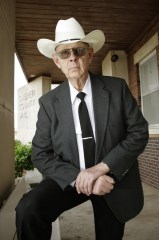
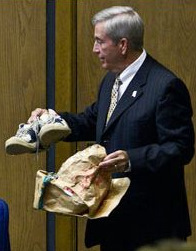
Swisher County Sheriff Larry Stewart, Jena District Attorney Reed Walters and Mississippi prosecutor Doug Evans were raised in a culture that wore its racism like a badge of honor. As young children, Stewart, Walters and Evans were exposed to ideas, attitudes and experiences that left them deeply scarred. There is no sense condemning such men as if their adult behavior was exceptional or uncharacteristic of the larger society; it was not. Stewart, Walters and Evans were grown men with fully formed opinions when, suddenly and without warning, the racial rules changed. By 1991, the year all three men ascended to positions of power, public officials were officially colorblind. Now, two decades later, only those who use the n-word and publicly and embrace the principle of white supremacy are deemed worthy of the epithet “racist”.

Welcome to the colorblind world of the new Jim Crow, where nobody, black or white, Democrat or Republican can “see color”. The policy of mass incarceration is now too firmly entrenched to be questioned inside the American mainstream. Seven million Americans are “in the system” (prison, jail, probation and parole) another seven million Americans benefit, directly or indirectly, from the mass incarceration of American citizens.

J. Reed Walters

If other western democracies are anything to go by, America should be incarcerating just over 380,000 people; but we’re locking up six times that number. Either we have a lot more criminals than other countries, or something sinister is afoot.

Tragically, the criminal justice reform movement is splintered into hundreds of single-issue advocacy groups pressing for piecemeal and incremental “best practice” reforms. Some of us focus on juvenile justice, mandatory minimum sentences, the war on drugs, the death penalty or a dozen other worthy issues.

We have won a few isolated battles, but we are losing the war. Until we understand and expose the dynamics of the new Jim Crow, positive change is impossible. Our challenge is to change the way American thinks about race, crime and justice. With a goal that daunting, only a unified movement with a clear message can prevail.
Doug Evans

The mass incarceration of poor people of color is strictly hush-hush. You will rarely hear it mentioned on the evening news or by hip comedians like Jon Stewart on the Daily Show. But this isn’t somebody else’s nightmare; it belongs to you, and it belongs to me. Mass incarceration must end, brothers and sisters; the new Jim Crow has got to go.
Making a stand in Grenada

Making a stand in Granada, MS

This is the 4th installment of a series.  The first three segments can be found here, here and here

By Alan Bean

In 1962, when Doug Evans was attending junior high school in Grenada, Mississippi, a black man named James Meredith enrolled at the University of Mississippi sparking days of riots aided and abetted by Mississippi State Troopers. Four years later, when Doug Evans was in high school in Grenada, James Meredith launched a march against fear, heading south from Memphis to Jackson. Shortly after setting out, Meredith was shot in the leg by a sniper and was unable to continue. Civil Rights leaders like Martin Luther King and Stokely Carmichael rushed to Mississippi to pick up where Meredith had left off.

When the marchers arrived in Grenada on June 15, 1966, City Manager John McEachin explained the situation to a reporter: “All we want is to get these people through town and out of here. Good niggers don’t want anything to do with this march. And there are more good niggers than sorry niggers.” (more…)

90 year-old jurist gives up on the death penalty

Justice John Paul Stevens

By Alan Bean

Retired Supreme Court justice John Paul Stevens was never enthusiastic about the death penalty.  Like a lot of Americans, he believed that some violent crimes are so horrific that capital punishment is the only appropriate response.  This abstract support for ultimate penalty was rooted in the assumption that the American criminal justice system is capable, first, of restricting capital prosecution to the very worst sort of crime, and, second, that with a man’s life at stake, jurors would hold prosecutors to the highest evidentiary standard: proof beyond a reasonable doubt.

Justice Stevens is still outraged by egregious acts of wanton violence, but he no longer trusts prosecutors to single out the very worst crimes for capital prosecution.  Moreover, he realizes that, in far too many cases, the more shocking the details of a crime, the lower the evidentiary standard becomes.  The intense desire to see justice done in a particular case easily trumps human reason and the principle of equal justice under law.  This is particularly true, Stevens discovered, when the defendant is black and the murder victim is white. (more…)

Challenging the New Jim Crow, Part 3

By Alan Bean

This is the third excerpt from a speech delivered on the campus of the University of Chicago.  Part one can be found here two can be found here.

The New Jim Crow comes to Jena, Louisiana

In 1991, the same year Larry Stewart was elected Sheriff of Swisher County, Texas,  J. Reed Walters became District Attorney of LaSalle Parish in north central Louisiana, winning 52% of the vote.  David Duke, the former Ku Klux Klan Grand Dragon who ran for governor that year, carried 70% of the vote in the parish, his best showing in Louisiana.  Since the LaSalle Parish electorate is 86% white, this suggests that an unapologetic racist won over 80% of the white vote that year. 

In 2008, 85.5% of LaSalle Parish voters supported John McCain; a likely indication that Barack Obama received zero support from white voters. 

When Reed Walters passed his bar exams in 1980, Speedy O. Long was still District Attorney.  Long took the young attorney under his wing and taught him the ropes.  When Speedy went to his reward in 2005, Reed Walters called him a friend and mentor. (more…)

Portraits of a Problem: the Jena 6 and Mass Incarceration

Robert Bailey working out with friends

Thanks to their participation in the nationally televised Bayou Classic, Mychal Bell and Robert Bailey Jr. have now been recognized for something unrelated to the Jena 6 phenomenon.  When their names were called, it was because they had made a contribution on the field.

But there is far more at stake here than simple athletic success.  Mychal and Robert are making a positive contribution to their teams under the tutelage of seasoned football men who care about their players’ moral and educational advancement more than they care about winning.  Mychal and Robert are getting a second chance.

That’s a big deal when you consider that, in the natural order of things, Mychal and Robert would now be institutionalized felons rotting away in obscure Louisiana prisons.  By the time the prison doors swung open, the road to higher education would be blocked by dozens of petty regulations designed to keep offenders from reintegrating into society.  (more…)

Former Jena 6 Defendants, Bailey and Smith, play in Bayou Classic

You can find an update on this post here.

By Alan Bean

When the Grambling Tigers and the Southern Jaguars meet tomorrow in the New Orleans Superdome to play their annual Bayou Classic, two members of the Jena 6 will be on the field.  Robert Bailey Jr. is number 85 for the Tigers and Mychal Bell is number 26 for the Jaguars.  The game is being broadcast Saturday, November 27 at 1:00 (C).  Robert and Mychal are both working hard and maturing into fine young men. 

Two other former Jena 6 defendants are also involved in college sports, Corwin Jones is playing football with Tyler Jr. College in Texas and Bryant Purvis is playing basketball with Southern Louisiana University in Hammond, Louisiana.   Theo Shaw is enjoying his studies at the University of Louisiana, Monroe, and Jesse Ray Bear  graduated from high school in 2009. (more…)

Challenging the new Jim Crow, part 2

This is the second excerpt from a speech recently delivered at the Campaign to End the Death Penalty conference on the campus of the University of Chicago.  The introduction can be found here. AGB

The new Jim Crow comes to Tulia, Texas

By Alan Bean

Sheriff Larry P. Stewart

To understand how radically our society has changed it is helpful to trace the life stories of the folks running the new Jim Crow machinery in small southern towns. The stories you are about to hear are taken from cases investigated by Friends of Justice, but they are symptomatic of a national disease.

I started talking about the new Jim Crow in Tulia, Texas when I realized that a drug bust that swept up half the adult black males in town was standard operating procedure.

There is a picture of Larry Stewart in an old copy of the Tulia Herald. It was Cowboy Day at the Tulia High School, circa 1960, and Larry came dressed as an old-time Texas Sheriff, badge and all. But Larry wasn’t supposed to grow up to be a lawman; like most local boys he wanted to farm like his daddy did before him. (more…)

Goodwyn: The price of speaking out


Wade Goodwyn

Wade Goodwyn’s “Reporter’s Notebook” on the NPR site deals with a curious encounter with the black principal of Clarksville High School.  I urge you to give Wade’s account your careful attention because it highlights a tension that exists within the African American community, especially in small southern towns where it is incumbent upon black professionals to remain in the good graces of the white establishment.  I could relate similar stories from my work in places like Tulia and Hearne, Texas; Jena and Church Point, Louisiana; and Winona Mississippi. 

It is easy to write off people like the principal described below as an Uncle Tom, and doubtless the shoe fits.  But the economic and social consequences of denouncing injustice can be catastrophic.    (more…)

Michael Vick dodges the New Jim Crow

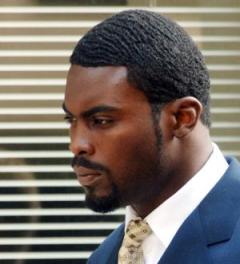
Michael Vick in court

Michael Vick’s performance against the Washington Redskins on Monday Night Football may constitute the most impressive single game by a quarterback in the history of the NFL.  Nicole Greenfield gives the religious backstory of Vick’s remarkable post-prison turnaround at Religious Dispatches this morning. 

But Washington Post columnist Courtland Milloy takes a different slant.  Quoting copiously from Michelle Alexander’s game-changing The New Jim Crow: Mass incarceration in an age of colorblindness, Milloy points out that Vick’s “prison was just what I needed” testimony may be sincere, but his experience is hardly typical.  The Eagle’s QB isn’t just adept at dodging would-be tacklers, his celebrity status and high-profile supporters allowed him to escape America’s new caste system.  Here’s the normal pattern:

“Once swept into the system, one’s chances of being truly free are slim, often to the vanishing point,” Alexander writes. “The fact that more than half of the young black men in any large American city are currently under the control of the criminal justice system [or saddled with criminal records] is not – as many argue – just a symptom of poverty or poor choices, but rather evidence of a new racial caste system at work.” (more…)