Author: Alan Bean

The defense begins its case: Curtis Flowers Trial, Day Nine

(This post is part of a series concerning Curtis Flowers, an innocent man convicted of a horrific crime that has divided a small Mississippi town.  Information on the Flowers case can be found here.)

On Tuesday morning, the Winona perjury parade ground to a halt.  Bonita Henry is one of several witnesses in this legal marathon who are no longer capable of testifying.  She appeared courtesy of a brief excerpt from the 2004 trial transcript.  Ms. Henry said she was sitting on her porch between 9:00 and 9:30 on the morning of the murders when she saw Curtis Flowers walk by.  He was wearing white shorts and a T-shirt.

I was hoping the defense attorney in the transcript would ask if Curtis had a .380 automatic stuck inside the elastic waist band of his shorts–but the question never came. (more…)

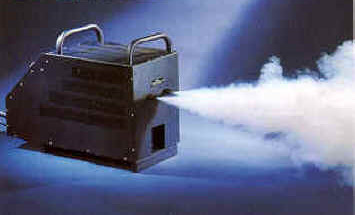
Smoke or fog: Curtis Flowers Trial, Day Eight

(This post is part of a series concerning Curtis Flowers, an innocent man convicted of a horrific crime that has divided a small Mississippi town.  Information on the Flowers case can be found here.)

“Where there’s smoke, there’s fire.”  The prosecution of Curtis Flowers rests on this bit of folk wisdom.  Curtis told investigators he never strayed onto the east side of Highway 51 on the morning in 1996 when four innocent people were murdered execution-style at the Tardy furniture store.  One witness seeing Curtis Flowers on the east side of the highway might be mistaken, but the state has half- a-dozen witnesses making this claim.

With that much smoke there must be a fire some place.  Right?

Or are we all being duped by an elaborate fog machine?

Strip the eye-witness testimony from this case and nothing remains but junk science. (more…)

Bibbs fallout explains lack of black representation on Flowers’ jury

(This post is part of a series concerning Curtis Flowers, an innocent man convicted of a horrific crime that has divided a small Mississippi town.  Information on the Flowers case can be found here.)

Lacey McLaughlin of the Jackson Free Press addresses the elephant in the Montgomery County Courtroom.  The article pasted below gets at the real reason there is only one black juror on the jury in Curtis Flowers’ sixth trial.

Majority White Jury in Flowers Trial

by Lacey McLaughlin

June 10, 2010

The fate of Curtis Flowers, a man on trial for the sixth time, is now in the hands of a jury consisting of 11 whites and one African American in Montgomery County where the racial make up is 54 percent white and 44 percent African American. (more…)

From the rabbit side of the room: Curtis Flowers Trial, Day 6

(This post is part of a series concerning Curtis Flowers, an innocent man convicted of a horrific crime that has divided a small Mississippi town.  Information on the Flowers case can be found here.)

Criminal cases built on circumstantial evidence and questionable eye-witness testimony encourage what I call the “duck-rabbit syndrome”.  You can see a duck, you can see a rabbit; but you can’t see both at the same time.  Faced with spotty evidence, the human mind fills in the gaps.  Nature, as they say, abhors a vacuum.

The analogy isn’t perfect.  You can look at the duck-rabbit and see the duck, then the rabbit, then the duck again.  With a circumstantial case like State of Mississippi vs. Curtis Giovanni Flowers, the duck people can’t see the rabbit and vice versa.

Those sitting on right side of the Montgomery County courtroom see a guilty duck; the folks on the left see an innocent rabbit.  I write from the rabbit side of the room.

Late Saturday afternoon, in a surreal duck-rabbit confrontation, several Friends of Justice representatives were surrounded by a dozen family members of the four people who were senselessly murdered at Winona’s Tardy Furniture store on July 16, 1996.

The confrontation began with an ostensibly sincere question about the mission of Friends of Justice.  The man asking the question, I soon learned, was a son of Carmen Rigby, the Tardy Furniture business manager who died in the most heinous crime in Winona’s history.  He wanted to know how we could possibly look at the evidence in this case and think Curtis Flowers was anything but stone-cold guilty.     (more…)

Horror Show: Curtis Flowers Trial, Day Five

(This post is part of a series concerning Curtis Flowers, an innocent man convicted of a horrific crime that has divided a small Mississippi town.  Information on the Flowers case can be found here.)

Curtis Flowers is almost certainly innocent and will almost certainly be sentenced to death.

The resentful glares are growing more intense in the Winona courtroom as people figure out who we are and what we represent.  There is a strong sense that this case is a local matter and should be dealt with locally.

If you have lived in a small town you understand what is happening.  Any person, black or white, who holds out for acquittal in this case will never be forgiven and will never be welcome in the community.  It was true in Tulia, Texas; it was true in Jena, Louisiana; it is true in Winona, Mississippi.

In the courtroom, things are not going well.  Testimony yesterday centered on the crime scene.  The testimony of Sam Jones, the black octogenarian who stumbled on the bodies of four innocent murder victims on the morning of July 16, 1996 was read to the jury.  Police Chief Johnny Hargrove, the second person on the scene, testified, as did a representative of the emergency medical team that arrived shortly thereafter.

The final three-and-a-half hours of court time was devoted to Melissa Schoene (pronounced Shay-knee), the forensic scientist who examined the crime scene.  The evidentiary significance of Ms. Schoene’s testimony could have been elicited in ten minutes of examination and cross.  She arrived in Winona shortly after 1:00 pm.

The body of Bobo Stewart had been removed by EMT personnel because he was still clinging to life.

The bodies of Robert Golden and Carmen Rigby lay in front of the main counter.

Bertha Tardy lay face down in an aisle at the back of the store.

She photographed the pool of blood that had formed near Bobo Stewart’s head because his heart and lungs were still functional.   She took a picture of a partial footprint in the blood. (more…)

Our readers respond

(This post is part of a series concerning Curtis Flowers, an innocent man convicted of a horrific crime that has divided a small Mississippi town.  Information on the Flowers case can be found here.)

Not everyone in Winona, Mississippi is a big fan of Friends of Justice.  Our presence has generated some angry feedback in the comments section.  Since we have been critical of people like Judge Joseph Loper and District Attorney Doug Evans, it is only fair to give our critics a little airtime.  Below, in no particular order, are some of the strongly worded comments we have received in the last few days.

“Shirley” writes:

I was at trial Tuesday for continuing the selecting of the jurors. You couldn’t ask for a better judge. Judge Loper is doing his job, going exactly by what the law says to do and what he is suppose to do. So you young interns need to learn from Judge Loper or you won’t get very far with your life. Your telling all of these lies about the District Attorney, Winona Law Enforcement and Judge Loper, well honey, you have to answer to only one person…. and guess who that person is ….. Jesus!!!! You should get to know him and then you will see things a lot different.

The only people who are making this a racist thing is the blacks. It has always been that way. We had nothing to do with the past. We weren’t even born then, were you???? You are white, does that make you a racist?? Just because we are white, doesn’t mean we are racists. If you are a christian, it doesn’t matter what color you skin is.

“Justice” says, “You all are in winona and all you’re doing is causing termoil….stop thinking of yourselves and think about all the families (both sides)..stop trying to make it a racial issue…you are the ones holding this town up..not us.”

“Not your business” weighs in:

This is seriously the most pathetic website I’ve ever seen. The story about the young african american woman being pulled over and treated like that by law enforcement in winona is nothing but a made up LIE!! I’ve lived around Winona my whole life and law enforcement around here is nothing but nice. Its pretty sad that a lie like this was made up and brought into the courtroom. The people of this website should get a life and report the TRUTH if they’re going to report anything at all. For the record, I AM BLACK!!!!!

Tylert speaks his mind:

Alan bein you are a dumbass.

Holly says her piece:

I realize a person is innocent until proven guilty, but Curtis Flowers has been PROVEN GUILTY TWICE!! I don’t really believe it is a race issue. I believe this trial has become a race issue in the media, but the crime is that FIVE families have suffered for way too long – 14 years without closure. I have not sat on this jury, nor would I be so inclined, but it appears to me that justice has been robbed of all family members in this case. My prayers are that this will be the FINAL FLOWERS (Tardy Furniture Murder) TRIAL.

TCostilow says:

If it is so hard to find Blacks that are willing to serve on the jury, why doesn’t Curtis Flowers’ attorney request a change of venue? I believe that it is impossible to prove Curtis Flowers innocent, because he is not. His attorney knows that if he can get some Blacks on the jury, then it will probably be a hung jury again. I read your postings and other articles about the trial and it makes me believe that these are all tactics that the defense is using to manipulate the judicial system. As far as “Fear stalks a Mississippi Town”…the only fear that will stalk this town is if a murderer is set free just because he is successful in using his race to manipulate the system. There has been very little mention of Robert Golden, the one black victim. I met his wife soon after the murders and I hope that she and her family are not being isolated or discriminated against by the Black community.

L. Jones contributes this opinion:

If it were a white man being accused of these crimes, he would either be on death row at this point or already executed.

Finally, “Shirley” shares these thoughts:

There wasn’t even a $30,000 reward for years. There wasn’t even a reward at first. So don’t say the witnesses are doing it for the money and the district attorney offered them money. It took time to raise that reward. Curtis Flowers is the only one that had a reason to kill those people, which was a bad reason to kill 4 people. People are in the choir and churches claiming to be real Christians and are hypocrites. Only God knows who killed those innocent people and that person will pay some day.

He was found guilty the first time tried and the Supreme Court threw it out, what an embarrassment to our state. To have people in office like this is costing us tax payers a lot of money. If it wasn’t for the Supreme Court, this trial would have been over years ago and the family of the victims could move on with their lives, instead they have to relive this nightmare over again. The victims and families are the ones suffering and the killer is living it up.

The blacks are the only ones making this a racial thing, not the whites. A black man was killed too, one of their own. Whoever did this crime will answer to God and Thou shall not kill is what he will probably say to the one person who did kill more than once.

African American Mississippi Man Starts Record Sixth Murder Trial

(This post is part of a series concerning Curtis Flowers, an innocent man convicted of a horrific crime that has divided a small Mississippi town.  Information on the Flowers case can be found here.)

by Bill Quigley, Audrey Stewart and Davida Finger

An African American man, Curtis Flowers, made history this week when he became the first person in U.S. history to ever go on trial for murder six times for the same crime. Mr. Flowers has been in jail in Mississippi since 1996, accused of the murder of four people at a furniture store. Jury selection started this week in tiny Winona Mississippi, population 5,482. (more…)

Lili Ibara reports from Mississippi

(This post is part of a series concerning Curtis Flowers, an innocent man convicted of a horrific crime that has divided a small Mississippi town.  Information on the Flowers case can be found here.)
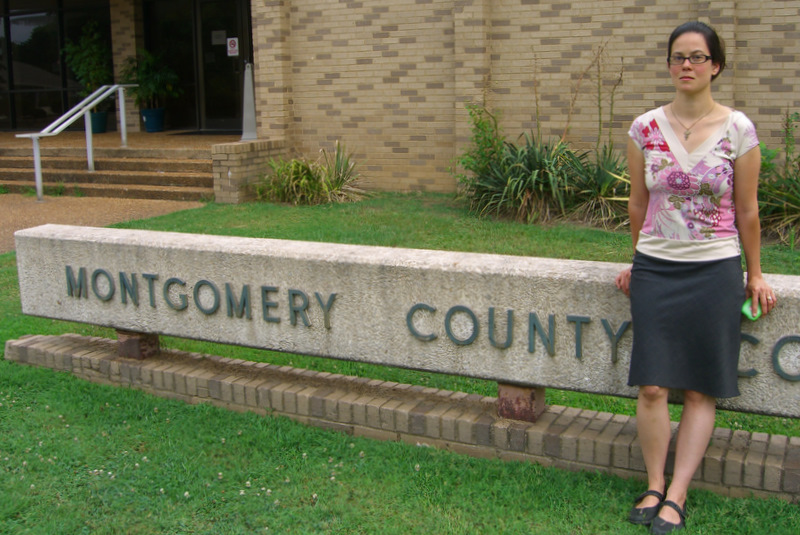
Lili Ibara has been working with Friends of Justice since January 16, 2000, the day we met her in Plainview, Texas.  Lili got the ball rolling in Tulia by alerting the Texas Observer to the grave injustice unfolding in our community.  This week she flew down to Winona to join the Friends of Justice contingent at the Curtis Flowers trial.  Tomorrow, Lili flies back to her husband, Jeremy, and her 10-month-old baby, Iris.  Here’s her account of her first three days in Winona.
Lili Ibara in front of the Montgomery County Courthouse
Lili Ibara outside the Montgomery County Courthouse during the sixth trial

Things aren’t looking so good in Mississippi. Here’s a quick update.

It’s been really draining to be in the courtroom, to realize people are talking about killing a man who is sitting right there at the defense table; to know his parents are sitting next to me watching as people say they would consider killing their son. It would be hard enough if I thought Curtis had killed four people. I really believe he is innocent though, and I know he’s already spent 14 years in jail (where, by the way, he’s been a model prisoner–no disciplinary write-ups, a lot of respect from the guards, and a leader of church services).

The whole thing is making me physically sick. I keep waking up in the middle of the night thinking about what it would be like if a courtroom full of people were talking about killing my baby.

It’s also incredibly sad to know the victims’ families are right there too. They really believe we’re here to free the person who killed their family members. The husband of one victim angrily confronted Friends of Justice director Alan Bean in the courtroom yesterday, calling him a “sapsuck’n liar” and told him he “wasn’t going to get away with this.” Alan was angry but could sympathize with him too. These people really believe they are right.

Unfortunately they also have a lot of supporters who seem to be wheedling their way onto the jury.

There are so many details that show Curtis isn’t getting a fair trial, that potential black jury members are afraid to be on the jury (one already formally asked to be excused because he was afraid of being arrested if he misspoke, as happened to this black juror from Curtis’s last trial who held out for an acquittal) and that the judge is favoring the prosecution (he’s allowing close friends of the victims to be on the jury, including one who admitted to attending two of the previous trials).

Wait, I need to repeat that bit, the judge thought there was no cause to dismiss a juror who had actually WATCHED two of the previous trials.

There’s also the inherent craziness of our criminal system, where the only people who can be on the jury are people who say they would consider imposing the death penalty. In this case the jurors are interviewed individually for this part, so potential jurors have to be willing to look right at Curtis and his family and say that yes, they could consider killing him. Most of the black jurors interviewed yesterday couldn’t do it, while most of the white ones, including close family friends of the victims, said yes, and also noted they could be absolutely fair and impartial to Curtis.

It’s my understanding that Curtis decided not to change venues because local people might know him and because he could not control where in Mississippi the trial was moved (the judge, the one who tried him last time, would get to decide that).

Yesterday the defense tried to present evidence that black jury members were afraid to be on the jury. In describing a climate of racial intimidation, the defense attorney pointed out that her African-American intern was stopped while driving into town. The intern was told to keep her hands on the wheel and her eyes on the road. She was asked what she was doing in town and told not to make any trouble. There was no answer when she asked what law she had broken. The judge was visibly outraged by this story, saying it was preposterous and the intern was probably speeding or otherwise breaking the law. The intern told me it took everything she had to keep quiet while the judge called her a liar.

There are also a lot of ridiculous details about the case itself that make me crazy. For example, the state’s big piece of physical evidence is the gunpowder residue found on Curtis’s hand hours after the shooting. It makes you at least seriously question Curtis’s innocence, right? But Alan Bean explained the police had found only a single micron of residue on his hand, and that the FBI doesn’t use this kind of evidence any more because small amounts of residue can easily be picked up by doing things like say, touching handcuff or furniture at a police station or, even during the testing process itself.

The eyewitness testimony would also seem to reasonably place Curtis at the crime scene, or at least not preclude the possibility, until you learn there were no willing witnesses until the state posted a $30,000 reward and went knocking on doors to ask people to testify. Once you know that, you understand why the physical descriptions by eyewitnesses are contradictory. One said he was wearing long pants and a jacket. A JACKET . . . IN MISSISSIPPI . . . IN JULY. Another said it was shorts and a t-shirt).

I don’t know if the prosecutor and judge really believe Curtis is guilty, or if they both just want to satisfy the victims’ families that the murderer has been found.

I do believe what we’re doing here is helpful though. When I worked on a Friends of Justice case in Tulia, Texas ten years ago I really sort of thought all the time we spent getting media attention and the time Alan later spent reviving media interest was pretty futile, but then miraculously the media attention turned into pressure on the legal system which turned into, um, justice. It’s also what Alan did with Jena – took a story local people told him and made it into a national story and now the kids arrested in Jena are in college, not prison. So, I’m trying to be hopeful.

Thanks for everyone for the donations to Friends of Justice and the babysitting help and covering my cases at work. It means so much for me that I get to be here and try to help.

Come to Jesus Time: Curtis Flowers trial, day four


(This post is part of a series concerning Curtis Flowers, an innocent man convicted of a horrific crime that has divided a small Mississippi town.  Information on the Flowers case can be found here.)

The record-setting sixth trial of Curtis Flowers will be tried by eleven white jurors and one African-American juror.

It could have been worse.  At the conclusion of the jury selection process, only ten black jurors remained standing.  The state had fifteen peremptory strikes.  Had DA Doug Evans so chosen, we could have had an all-white jury.

Doug Evans did not so choose.  A jury bereft of black jurors in a county that is 45% black would have looked . . . tacky.  When the prosecutor in question has a well-earned reputation for racial bias you need at least one African-American in the judicial mix.

In Flowers 3, Evans had to use all fifteen peremptory strikes on African-Americans to get eleven white jurors.  This time, Winona’s black community did Evans’ work for him by stampeding, lemming-like, over a cliff.  They claimed they were too convinced of Flowers’ innocence to be fair and impartial.  They said they couldn’t consider the death penalty under any circumstances.  They couldn’t judge a fellow human being under any circumstances.

Several of the ten black jurors left standing at the end of voir dire were barely rescued by skillful rehabilitation work from defense attorney Ray Carter.  “You don’t have to commit to the death penalty,” Carter explained, “you must simply be willing to consider it, to think about it, to weigh it as an option.  Do you think you could do that?”

More often than not, black jurors answered in the negative.  They simply didn’t want to be on a jury with ten or eleven white-people-on-a-mission.

There was an eloquent sadness in Carter’s eyes as he returned to his chair.

Black jurors have been reluctant to serve in previous trials held in Montgomery County–but nothing like this.

Don’t get me wrong, most black jurors are perfectly sincere in their disavowal of the death penalty.  In Flowers 4, the state didn’t ask for capital punishment and five black jurors were seated.  All five held out for acquittal.

But something new is in the works in Flowers 6.  The brutal treatment of Flowers 5 juror, James Bibbs sent a tidal wave of fear through Winona’s black community.  Judge Joey Loper pitched a conniption-fit when Bibbs held out for acquittal.

The judge has a nasty temper.  He doesn’t just overrule defense motions; he buries defense counsel under a great heap of pejoratives, as in:  “That has to be the most bizarre motion I have ever heard.”

But the honorable Mr. Loper has nothing but praise for the perspicacity and prudence of his legal tag team partner Doug Evans, as in: “Once again, I find myself concurring entirely with the state of Mississippi”.

Ideologically, Loper and Evans are joined at the hip.  Defense counsel was uncomfortable with a juror who had an opinion regarding the guilt or innocence of Mr. Flowers and had Googled the case the moment she received her summons.

“I don’t see a problem with that,” Evans said.  “I mean there are liberal blogs out there and then there are legitimate blogs.”  Judge Loper beamed appreciatively.

I got the feeling that the Friends of Justice blog was being consigned to the illegitimate category.

With eleven white jurors and an unabashedly pro-prosecution judge is a conviction inevitable?

Precedent isn’t promising.

Not a single white juror in five prior trials has voted to acquit Curtis Flowers.

Juries in trials with a single black juror have convicted and imposed the death penalty.

But there are positive signs.  Defense counsel was able to strike most of the people with intimate ties to murder victims and a firm conviction that Curtis Flowers is a mass murderer.  Again and again, jurors of this type swore they could “set aside” their feelings and opinions if the judge asked them to.  This emotional naïvete was stunning.

William James, the nineteenth century American philosopher, explained why “older truths” are rarely abandoned. “Their influence is absolutely controlling,” he wrote. “Loyalty to them is the first principle – in most cases it is the only principle; for by far the most usual way of handling phenomena so novel that they would make for a serious rearrangement of our preconceptions is to ignore them altogether, or to abuse those who bear witness for them.”

Defense counsel in the Flowers is trying to convert eleven white jurors to a novel reassessment of long-accepted fact.  In Winona’s respectable white community, the guilt of Curtis Flowers is an “old truth”, a maxim so well established that it passes for common sense.  Getting a single juror to re-evaluate the state’s case  is like trying to convert a Baptist to Islam.  The new idea, if accepted, would impact an entire web of social relationships.  Friendships would be lost.  Business opportunities would vanish.  The doors and windows of polite society would slam shut.

How much easier to ignore this new truth while abusing those who bear witness to it.  This explains the contempt Judge Loper has been heaping on Ray Carter and Alison Steiner this week.  They represent a new truth which, if accepted, would reduce Winona’s white civilization to ruins.

In the next few days we will be witnessing a form of spiritual warfare in the courtroom.  Loper and Evans will be reassuring the jurors that the old truth deserves their continued trust.  Carter and Steiner will be preaching a new truth. At least one juror must experience a Damascus Road conversion in the next few days.

The challenge is formidable but not hopeless.  Several of the jurors in this case were children back in 1996 when four people were killed execution-style in Winona Mississippi.  Several other jurors are relatively new to Montgomery County.  One juror is African American.  Half the jury lives outside the comforting rhythms of the white mainstream.   If we see a come-to-Jesus moment, it will likely come from this half of the jury.

If opening arguments are any indication, Curtis Flowers’ attorneys will be preaching for conversions.

White Answers: Curtis Flowers Trial, Day Three

(More information on the case of Curtis Flowers can be found here.)

Nationally, only 40% of African Americans support the death penalty, compared to 68% of whites.  In Mississippi the racial divide is even greater: only 25% of black adults in Mississippi favor capital punishment compared with over 70% of white adults.

When you understand the history of lynching in the South this discrepancy isn’t surprising, but it works to the disadvantage of black defendants like Curtis Flowers.  Curtis is currently on trial for the sixth time on the same evidence—the first time that has happened in the history of American jurisprudence.  Today, fifteen black jurors were asked if they could consider the death penalty in the event that Curtis is convicted; six said they could and nine said they could not.

In these United States, opponents of capital punishment are excluded from juries if the prosecution is asking for the death penalty.

Black jurors were also far more likely to admit that they had a fixed opinion on the guilt or innocence of the defendant.  Were black jurors sincere in their answers, or were they simply frightened by the prospect of serving on a majority white jury?  I don’t know.  Perhaps they don’t know themselves.

James Bibbs, the retired school teacher who hung the jury in trial five, was prosecuted for perjury.  Fortunately, attorney Rob McDuff was able to get both Loper and DA Doug Evans recused from the case, but the message got through to Winona’s black community.

Today, as if to drive home the point, Mr. Evans accused a black juror of lying about how often she sees Curtis Flowers’ sister at work.  The juror reported that she works at the opposite end of the assembly line and rarely speaks to the defendant’s sister.  Evans brought in a white woman who works at the plant to testify that the two women work nine inches apart.

Message: another black person is lying to get on the jury.

Ironically, the juror in question had already eliminated herself from contention by stating her opposition to the death penalty.

Later today, I called up Charita Flowers and asked her who had it right.  The woman Evans dragged into the courtroom, Charita told me, works in another part of the building and rarely observes the work arrangement on the line.  “Most of the time we [Charita and the juror] are at opposite ends of the line,” she explained, “but every once in a while we will be standing right next to each other, so both sides are telling a part of the truth.”

A trivial point in a trial of such moment, I know.  But Evans was making a not-so-subtle point.  Any black person who ends up on this jury can expect to be accused of perjury.

For the past two days, jurors have been entering the courtroom alone to be asked if they could consider the death penalty as a “punishment option”, if they could leave everything they had heard about the Tardy murders at the courtroom door, and if they could be fair and impartial.

A solid majority of white jurors have been giving the right answers.  They all know practically nothing about the Tardy murders, they can consider either capital punishment of life without parole in the case of a conviction, and they can be completely fair and impartial.

Again, it’s hard to know if these people believe their own statements.  A relative of sheriff Earl Wayne Patridge (the man who had Fannie Lou Hamer beaten half to death in 1963) swore up and down that even though he goes to church with Benny Rigby (husband of murder victim Carmen Rigby) he could be entirely fair and objective.

He was followed by the best friend of the slain baseball standout Bobo Stewart.  He too could give Curtis Flowers a fair shake.

Then came an old friend of Carmen Rigby who got teary-eyed on the witness stand whenever the vicious crimes of 1996 were mentioned.  She too swore that she could be fair to every last person on earth . . . even Curtis Flowers.

Some of these claims strained the credulity of even Judge Loper (Loperland, it seems, has its limits).  He agreed that Bobo Stewart’s best friend and the woman who got emotional on the stand, though undoubtedly well-intentioned, would probably have a hard time seeing past their grief and loyalty.

But the rest of the folks giving what I started calling “white answers” to the judge’s questions were left on the jury.  Defense counsel can use their peremptory strikes on them if they choose, but there are dozens and dozens of these people—you can’t strike them all.

African American jurors, on the other hand, are becoming a rare breed.  Eight black jurors and only two white jurors eliminated themselves from consideration by claiming that they couldn’t sit in judgment under any circumstances.  Nine black jurors and only two white jurors disqualified themselves on the death penalty question.  Four black jurors and only one white juror admitted that they have a fixed opinion on the guilt or innocence of Curtis Flowers too strong to be altered.

Plenty of the white jurors (mostly men) freely admitted to having an opinion on the guilt-innocence question (just guess what that opinion might be).  But they all smiled sweet Southern smiles and promised that they could set those opinions aside and just consider the evidence presented in the courtroom.  If they said it, Doug Evans was prepared to believe them.

Are white jurors trying to get on the jury so they can send Curtis Flowers to death row?

Some undoubtedly are.  They have adapted to the rules of Loperland.  So long as they say the magic words they are in (it’s a lot like getting saved at revival time).

But a lot of these people are completely sincere.  They truly believe that Curtis Flowers murdered Bertha Tardy, Carmen Rigby, Robert Golden and Bobo Stewart in cold blood because he believed, wrongly, that $82 had been deducted from his pay check.  They also believe that they can wipe this belief (and the bitterness it naturally inspires) from their minds if the judge tells them to.

You can’t help but like these people–many of them are delightful–but this is madness.  In the wrong hands, the legal system takes on a perverse Alice-in-Wonderland quality.  And believe me, folks, the legal system in Montgomery County is in the wrong hands.

If you’re the praying kind, please say a prayer for Curtis Flowers and his family.

If you’re not the praying kind, swallow your pride and say a prayer anyway.  The situation is that desperate.