Author: Alan Bean

The Original Friends of Justice Jena Narrative

    P1291347

RESPONDING TO THE CRISIS IN JENA, LOUISIANA

 The Jena Case in Brief

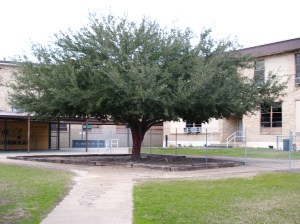
 On the morning of September 1, 2006, three nooses dangled from a tree in the High School square in Jena, Louisiana.  The day before, at a school assembly, black students had asked the vice principal if they could sit under that tree. 

 Characterizing the noose incident as an innocent prank, a discipline committee meted out a few days of in-school suspension and declared the matter settled.

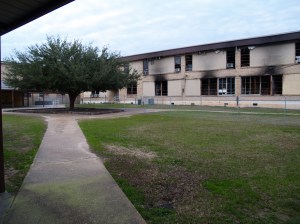
 At the end of November, the central academic wing of Jena High School was destroyed by fire (the smoke damage is evident in the picture above).  Over the weekend, a stream of white-initiated racial violence swept over the tiny community, adding to the trauma and tension. The following Monday, a white student was punched and kicked following a lunch-hour taunting match.  Six black athletes were arrested and charged with conspiracy to attempt second-degree murder.  If convicted, some defendants are facing sentences of between twenty-five and 100 years in prison without parole. (more…)

Supreme Court Delays Decision on Troy Davis Case

IMG_0686-1

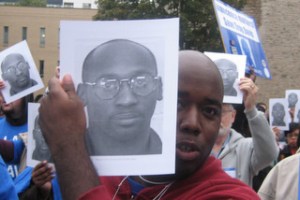
Chances that the Supreme Court will address the Troy Davis case improved markedly when the court took its summer break without making a decision on the vexing case. 

The Davis case demonstrates the weakness of circumstantial murder prosecutions based largely on eyewitness testimony.  A series of crucial eye witnesses have recanted earlier testimony, often complaining that they were pressured by the authorities. 

What do we make of a juror who swears to one thing on the witness stand then, years later, reverses course?  Spencer Lawton, the prosecutor who convicted Troy Davis eighteen years ago, called the recanted testimony “suspicious”.  But will Larry Chisolm, the new Chatham County DA take the same view?

Common sense suggests that witnesses were more likely to get it right eighteen years ago because memory fades over time.  On the other hand, investigators desperate for a conviction in a high-profile case can shape testimony by abusing the power of suggestion.  Memory isn’t like photography; you don’t capture a pristine and timeless image that can be taken out and re-examined at a later date.  Initial impressions fade with remarkable rapidity.  At best, memory is a jigsaw puzzle with most of the pieces missing.  The mind creates a coherent memory by filling in the missing pieces, often drawing on fragments of unrelated memory and personal prejudice (wishful thinking) to connect the dots.  (more…)

The Jena 6 are Free!

P6264470-1

(An update of this story can be found here.)

The Jena 6 and Justin Barker are now free to move ahead with their lives.  The terms of the plea agreement were revealed in the course of a two-hour court hearing at the LaSalle Parish courthouse.  Each of the five remaining defendants in this case pleaded “no contest” to the misdemeanor charge of simple battery.  Each will be placed on non-supervised probation for one week and must pay a $500 fine and in most cases an additional $500 in court costs.  In addition, a civil suit filed by the family of Justin Barker was settled when the Jena 6 defendants (including Mychal Bell) agreed to pay the Barker family an undisclosed settlement.  Attorneys are not allowed to reveal the details of the settlement but a reliable source has disclosed that the payment was approximately $24,000.

The picture above was taken on the LaSalle courthouse steps moments after the settlement brought a two-and-a-half year legal fight to a satisfying conclusion.  Pictured (left to right) are Corwin Jones, 20, Jesse Ray Beard, 18, Bryant Purvis (20), Robert Bailey (19) and Theo Shaw (20) and, in the second row, yours truly (56).  Judge Thomas Yeager was clearly impressed that all five of the defendants who appeared before him today are enrolled in college.  Two of them tell me they are considering law school. (more…)

Praying for Death: Mercy, Malice and the Word of God


           Wiley Drake                                       Dwight McKissic

A Southern Baptist pastor raised eyebrows earlier this month when he told an interviewer that he is praying for the death of president Barack Obama

Wiley Drake, a California pastor who once served as second vice president of the Southern Baptist Convention, has biblical support for his death prayers.  The Book of Psalms contains a number of furious polemics against evil men who prey upon the weak and the innocent.  Here’s an example from Psalm 109:

May his days be few; may another seize his goods!  May his children be fatherless, and his wife a widow!  May his children wander about and beg, may they be driven out of the ruins they inhabit!  May the creditor seize all that he has; may strangers plunder the fruits of his toil!  Let there be none to extend kindness to him, not any to pity his fatherless children!

That’s just a brief excerpt; there’s lot’s more.  (more…)

Calling Eric Holder!

If anyone knows how to get the attention of Attorney General Eric Holder please give me a shout.

Federal judge Leon Holmes has rejected Alvin Clay’s motion for a new trial.  If you have no idea what I am talking about you can find a brief summary here.

In his motion for a new trial, Clay argued that the government’s case was based entirely on the testimony of Donny McCuien, a witness who lied repeatedly under oath.  Holmes didn’t deny that the egregious McCuien lacked credibility.  At trial, McCuien was eager to please his puppet masters and his lies were blatant, constant and frequently bizarre.  McCuien insisted that he had no experience buying or selling homes bought or sold homes or doing rehab work.  When Clay did his own investigation post-trial he turned up a long list of McCuien’s victims eager to testify that the seasoned con man had scammed them on real estate deals and had spent most of his professional life doing rehab work.

The government could easily have discerned that their main man was an ignorant psychopath—but that would have meant dropping their case against Clay.  So they crossed their fingers and hoped the truth wouldn’t come to light.

Judge Leon Holmes also rejected Clay’s argument that his attorneys were derelict for not discovering the truth about McCuien pre-trial.

You may be asking how a federal judge can refuse to grant a defendant a new trial when the credibility of the government’s only meaningful witness disintegrates utterly.  Holmes dodged the bullet by arguing that, even without McCuien, a reasonable jury might have convicted Clay simply because he was peripherally involved in transactions that were clearly illegal.  (more…)

Troy Davis has new friends

Rep. Hank JohnsonThis feature story from the Los Angeles Times will be of interest to all those concerned about the plight of Troy Davis.  With the Supreme Court unlikely to give Davis his day in court attention is shifting to Larry Chisolm, the fledgling District Attorney who may soon have a politically volatile decision to make.  Should he anger black Georgians by letting Davis die, or should he anger the (largely white) political and legal establishments by calling for a new hearing?  (See story pasted below).

In another development, the NAACP and the Black Congressional Caucus have thrown their support behind Mr. Davis, making it virtually impossible, in my opinion, for the state to carry out an execution.  Once a case achieves a critical mass of media attention and official concern the rules of the legal game change fundamentally.

You may be wondering why the NAACP has been so slow to come to Troy Davis’s defense.  When the state has lots and lots of witnesses (however dubious the quality) no one is willing to support the defendant. 

So, why is the legal establishment so opposed to re-opening this case now that most of the witnesses have recanted their original testimony?  The system sees recantations as inherently suspect.  The rule is simple: eye witnesses are to believed when they are singing in harmony with the state and become suspect when they stray off tune.  Got that? (more…)

A cautionary tale for civil rights activists

 Shannon Finley leaves the Lamar County Jail late Thursday after charges against him were dropped. Finley was jailed almost nine months in the death of Brandon McClelland.   The Paris News/George Strawn via AP    The tragic story of Brandon McLelland took a much-anticipated twist on Friday.  McLelland was run over on a lonely highway outside Paris, Texas last September and, pinned against the undercarriage of the vehicle and apparently dragged down the highway. 

But who was driving the vehicle that struck McClelland and was his death intentional?  That was a question for investigators to answer.  Shannon Finley became the prime suspect after law enforcement examined the undercarriage of his Dodge Dakota pickup.   Ryan Crostley, a white passenger in Finley’s truck, was indicted as an accomplice.

 Although law enforcement accused Finley of attempting to destroy evidence by hosing down the vehicle, no evidence of skin and blood was discovered.

 The McClelland story is a cautionary tale for the civil rights community

Due process is designed to protect defendants from a rush to judgment.  Purported white racists are just as vulnerable to sloppy investigation and overly aggressive prosecution as purported black thugs.  In both cases, criminal justice professionals reach a conclusion before all the evidence is in then twist the facts to support their pet theory.  Had Shannon Finley been a member of a prominent Paris family the authorities would have been much more circumspect.  Had Brandon McClelland been a highly respected businessman the DPS trooper who initially investigated the incident would have searched the death scene far more carefully. 

It is always a bad sign when prosecutors try a case in the papers.  Toby Shook didn’t get incriminating evidence from Finley’s truck but he made the press believe otherwise.  You can’t blame the media for reporting what they are told–that’s their job.  Shook was trying to job the system and civil rights folks like me let him get away with it. 

Activists who have spoken out against Mr. Shook’s decision to drop the charges need to re-think their position.  There is no case.

Friends of Justice works to restore due process protections to all Americans.  The fact that poor African Americans are disproportionately victimized by a broken system doesn’t mean they are the only victims.  Racial justice is equal justice.

Friends of Justice was reluctant to join the protests in Paris.  We have seen the wheels come off too many bogus investigations.  Instead, we opened this page to people on both sides of the controversy.

Americans who care about judicial fairness need to look beyond the Mississippi Burning narrative with its innocent black victims and its virulent white racists.  Crude racial hatred hasn’t disappeared, but the species of racism that afflicts the criminal justice system is far more subtle and, as yet, ill-defined.  The New Jim Crow inflicts a world of hurt because it doesn’t conform to the Hollywood paradigm or racial injustice. 

In contemporary America, status drives the hate game far more than skin color. 

Hate groups are proliferating in America and I’m glad organizations like the Southern Poverty Law Center are monitoring their activities.  But that is rarely the species of racism that sends poor people of color to prison.  Low status black people are wrongfully convicted because they fit the thug paradigm.  Skin color factors into the equation to be sure; but it isn’t the primary cause of wrongful prosecutions. 

Shannon Finley is as white as they come, but he was easily stigmatized by his lack of education, his well-documented abuse of alcohol, his criminal record and his spotty work history.  In short, Finley fit the profile of the southern white racist, the only type in America more despised than the dangerous black thug. 

When I talk about racism I don’t have Shannon Finley in mind; I’m talking about people who vote, people attend church regularly, people who serve on juries.  These folks don’t wear their racism on their sleeves, but they take a dim view of poor people and are willing to believe the worst about every poor soul the authorities hall into court.  There is more continuity between the Old Jim Crow and the New Jim Crow than is commonly realized, but the social landscape has changed markedly (although not always for the better).

I’m not saying Shannon Finley is innocent.  If he hadn’t been driving drunk, Brandon McClelland would have remained in the vehicle and the sad saga could have been averted.  But Finley doesn’t have to prove his innocence; the state has to prove his guilt.  The state couldn’t make its case so the charges were dropped.  That’s the way the system is supposed to work. 

But what if a truck driver hadn’t stepped forward with a story about hitting something on the road?  What if a crooked forensics expert had decided to cooperate with the state’s story about blood and skin?  Under those conditions, Shannon Finley would have been convicted. 

He fits the profile.

The civil rights community needs to stop combing the Southland for Old Jim Crow stories.  Sure, these narratives can still be dredged up here and there, but they don’t explain why so many poor people of color are going to prison.  So long as we are chasing ghosts, flesh-and-blood inequities go unaddressed.

Texas drops the ball on innocence

Over at Grits for Breakfast, Scott Henson offers a damning assessment of the now-extinct legislative sessionin Austin, Texas.  The spate of DNA exonerations in Dallas has embarrassed state legislators and hopes were high that meaningful reform was waiting in the wings.  Unfortunately, Democrats and Republicans wasted valuable time sparring over voter registration issues.  As a result, the session ended before a promising list of innocence-related proposals could be considered. 

The one positive note, Scott reports, is the passage of a bill requiring corroboration for inmate snitch testimony.  Let’s hope other states follow our lead on that one.  As is often the case, the discussion in the comments section is almost as revealing as Scott’s informative post.

65 years for feeding the hungry

A federal judge has sentenced five representatives of the Holy Land Foundation for Relief and Development to as much as 65 years in prison for raising money for impoverished Palestinians.  

The facts of the case are relatively simple.  In 1995, the Clinton administration placed the Palestinian group, Hamas on a list of terrorist organizations; a decision that was ratified by the Bush administration.  The money channeled to Palestine through the Holy Land Foundation (headquartered in the Dallas suburb of Richardson, Texas) was given to Zakats, local charitable organizations providing food, schooling and emergency relief to Muslims in the West Bank and Gaza.   Zakats are generally under the control of Hamas.

The government has argued that, although the bulk of donated funds went directly to relief work, Hamas could easily have diverted some of the money to terrorist activity. 

In 2007, the federal government’s first attempt to prosecute the Holy Land Foundation defendatns ended in a mistrial when a federal jury acquitted the defendants of many of the charges against them and deadlocked on others.  This legal setback was viewed by many as a profound humiliation at the time and many critics accused the federal government of overreaching and overreacting

In 2008, the government took a second bite at the Holy Land Foundation apple, focusing on the 108 counts on which the 2007 jury reached no verdict. 

Federal Judge Jorge Solis appears to have been deeply offended by the lack of contrition exhibited by the defendants.  At yesterday’s sentencing hearing, Solis handed down what amount to life sentences (there is no parole in the federal system), repeatedly accusing the defendants of intentionally and consciously funding acts of terrorism. 

That charge is difficult to sustain.  How can anyone possibly know whether the defendants in this case wanted a portion of the donated money to fund terrorist acts or if they sincerely believed that every penny raised was going directly to humanitarian relief.

Legally, it doesn’t matter.  The government only had to prove that the Holy Land defendants knew that Hamas would have access to the donated money.  Since the American government considers Hamas to be a terrorist organization, the defendants were guilty if they knew, or if they should have known, that the donated money might be under the control of Hamas.

Still, 65 years in prison for trying to help the poor, the sick and the hungry?  Can such a draconian sentence be justified?  Do these sentences reflect a measure of paranoia?  Can anyone imagine the leaders of a Jewish humanitarian organization being charged with aiding the building of illegal settlements on the West Bank?

There is a critical difference of course: Hamas is a terrorist organization even when it is relieving suffering; the Israelis are strong American allies even when they reduce Gaza to rubble killing hundreds of innocents in the process. 

 The real crime perpetrated by the Holy Land Foundation was viewing the Israelis are terrorists and the Palestinians as noble freedom fighters. 

Both the Israelis and the Palestinians are proud peoples fighting for survival.  Tactical differences are largely a function of the immense power differential between the two sides.  From the perspective of the British, the American colonists were terrorists in 1776. 

I am not trying to defend Hamas.  I am not a Palestinian and, like most Westerners, I have been raised to view Islam in a negative light.  Moreover, I have always been inspired by the Israeli struggle for national survival. 

On the other hand, Palestinians too are creatures of God.  Perspective in these matters is largely driven by the circumstances of birth. 

The moral ambiguities of the case explain the marked difference between the 2007 and 2008 verdicts.  Linda Moron, one of the defense attorneys representing the defendants made this statement yesterday: “Twelve good American citizens in the first trial didn’t convict anyone of anything; and 12 good American citizens in the second trial convicted everyone of everything. If you can make sense of that … explain it to me.”

  LULAC (The League of Latin American Citizens) has published a statement decrying yesterday’s harsh sentences and a number of African American opinion leaders in the DFW region have also been critical of the government’s handling of this case.

Meanwhile, the American Muslim community has been divided over the Holy Land prosecution; some see the government’s aggressive stance as evidence of anti-Muslim bigotry, others suspect that Holy Land should have been more circumspect.  Nationwide, Muslims who wish to provide aid to the Middle East have been unsure where to send their donations.  As a result, all Muslim charities have been suffering.

Laurie Goodstein’s article in the New York Times places yesterday’s events in wider perspective:

“Following the Sept. 11 attacks, the government designated dozens of Muslim charities, mostly international relief agencies, as financiers of terrorism. Muslim groups struggled for years to persuade the Treasury Department to produce some kind of seal of approval for legitimate charities that adhered strictly to humanitarian work. For Muslims, giving to charity is a religious obligation.”

These verdicts may hold up, but I would be very surprised if the unspeakably harsh sentences handed down yesterday will stand.  Ten years from now this incident will be viewed as an embarrassing overreaction to a morally complex situation.