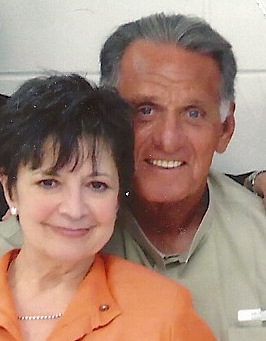
The government targeted Ramsey Muñiz on the uncorroborated word of a major narcotic importer. Then, by withholding this information, they made it impossible for the sharpest defense attorney in Texas to challenge their case until it was too late.
By Alan Bean,
Friends of Justice
“People want me to express remorse,” Ramsey Muñiz once told me. “How do you express remorse for something you didn’t do?”
In the eyes of the law, Ramiro “Ramsey” Muñiz is a convicted drug dealer who refuses to take responsibility for his actions.
In a federal trial in 1994, a Texas jury found Muñiz guilty of participating in a narcotics conspiracy. Because he had two prior convictions, federal law dictated a life sentence without possibility of parole.
A growing community of supporters is asking President Barack Obama to commute Ramsey’s sentence on humanitarian grounds. Ramsey Muñiz is approaching his seventieth birthday and, after a serious fall, he can no longer walk without the assistance of a cane. What good is accomplished, they ask, by keeping such a man in federal custody?

Others believe Muñiz was targeted as part of a political vendetta. Twice in the early 1970s, Ramsey was a gubernatorial candidate on the La Raza Unida ticket. Following a college football career with the Baylor Bears, Muñiz graduated from the university’s law school. Handsome, charismatic and tireless, Ramsey’s political campaigns galvanized the Latino community, especially in the Rio Grande Valley. According to some of his stalwart supporters, Ramsey’s Anglo opponents used the war on drugs to humiliate a Latino icon.
So, who is Ramsey Muñiz?
Is he the civil rights leader who shook up Texas politics? This is how Ramsey is remembered by his old friends from the halcyon days of La Raza Unida.
Is he the well-connected legal professional with a passion for defending young marijuana defendants? This is how his colleagues in the legal community remember him.
Is he a mystic-in-chains whose suffering has drawn him into deep communion with the crucified Christ? This is the Ramsey who greets a steady stream of visitors at the Beaumont Medium prison.
Or is Muñiz just an unprincipled opportunist who used his professional standing as a front for get-rich-quick drug deals? This is how Muñiz was portrayed in a federal courtroom in 1994, and it is how he is still regarded in the eyes of the law.
When a man is driving a car with 40 kilos of powdered cocaine in the trunk he certainly looks guilty. But who put the drugs in the car, and did Ramsey know the drugs were there?
This wasn’t the first time the hero of the Chicano movement was associated with the drug business. In 1976, Ramsey was accused of participating in a conspiracy to import marijuana into the United States. A young co-defendant negotiated a dramatic sentence reduction by agreeing to name every person who had been present when the importation of marijuana was discussed. Ramsey Muñiz was one of the names.
Like most Latinos in South Texas, Muñiz regarded marijuana as the moral equivalent of beer or wine; a common feature of social life that posed no moral problems when used in moderation. But when the Nixon administration associated the prolific plant with hippies, Mexicans and radical war protesters, the war on drugs was born.
Many former supporters were dismayed when Muñiz entered a guilty plea. He was a lawyer, not a drug dealer, so why was he going down without a fight?
Muñiz was uniquely vulnerable to federal narcotics conspiracy charges. Many of the leading marijuana importers in the Rio Grande Valley came from socially prominent families who had supported La Raza Unida in the early 1970s and regarded Ramsey Muñiz as a celebrity figure. According to federal law, a defendant can participate in a conspiracy without knowing all of his co-conspirators and with only scant information about the nature of the conspiracy. You don’t even have to profit personally. If you know illegal transactions are taking place and you fail to blow the whistle, you are part of the conspiracy.
Muñiz freely admits that he was privy to conversations related to marijuana importation. He thought he was protected from prosecution by attorney-client privilege. He was wrong.
Humiliated by his dramatic fall from grace, Muñiz wanted to disappear as quickly, quietly and completely as possible. Two virtually identical cases had been filed on the basis of the same conspiracy allegations, one in San Antonio, the other in Corpus Christi. After taking a plea offer to avoid the humiliation of trial, Ramsey was sentenced to two consecutive five-year terms and shipped off to McNeil Island, a prison on the Washington State coast commonly reserved for gang members.
After serving half his term, Ramsey Muñiz returned to the free world and, having forfeited his law license, began a new career as a paralegal. His specialty was helping Anglo attorneys communicate with Latino clients. To his great surprise, his time in prison had given him instant credibility with drug defendants and their families. They assumed that a man who had done time would understand the fear and confusion they were feeling.
They were right. Ramsey knew too much about the routine horror of prison life to be blasé about the consequences of a narcotics conviction. Wherever he went, Muñiz was surrounded by the relatives of drug defendants desperate for effective legal assistance. If his clients had money, Ramsey hooked them up with a good attorney. But he frequently went to bat for indigent defendants as well, even when the cases he sponsored were sure to lose money for the law firms he represented. Attorneys shook their heads in bewilderment, but often yielded to Ramsey’s zealous advocacy.
Muñiz was in Dallas visiting with the families of marijuana defendants when he was arrested in March of 1994. When he went to trial a few months later, the attorneys he once worked for painted a composite portrait of a morally driven crusader; a man determined to weave some justice out of his own suffering.
In the eighteen years since he was arrested in the parking lot of a La Quinta motel in Dallas, Ramsey’s spiritual education has continued. His first teacher was Diego Duran, a sixteenth-century Spanish missionary whose writings preserved much of what we know of traditional Mexican religion. Connecting with the religious roots of the Mexico’s indigenous people strengthened his commitment to the Roman Catholic piety of his childhood.
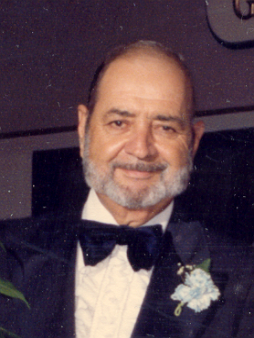
In 2009, Ramsey experienced the first of many vivid night visitations from significant people from his past. These visions lack the disconnected and logically bizarre quality of normal dream. The conversation is natural, Ramsey says, “just like you were sitting across from me and we were talking. I can reach out and touch my visitors, and they can touch me. In every respect, it is just like real life. Most nights I have normal dreams or no dreams at all; but in the hours before a visitation, I can feel the Spirit growing inside me, and I know that tonight will be one of those nights.”
The most frequent night visitor is Ramsey’s father-in-law, Dr. Salvador Alvarez. “We were very close while he was still alive,” Ramsey told me, “we were tight.”
Ramsey’s nocturnal encounters, especially with Alvarez, have been life-transforming. “Ramsey, do you love?” his father-in-law asked one night. Confused, Ramsey said, “Yes, I love. Why do you ask?”
“When you speak of love,” Alvarez replied, “it is always for your own people, la raza. Nuestra gente. Have you no love for the rest of the world?”
“I realized he was right,” Ramsey says. “It isn’t enough to love your own people, it is also necessary to love people who are not like you. That’s why I now sign all my letters, ‘Freedom, justice, and love for all the world.”
Muñiz would be an excellent candidate for a presidential commutation if he would express remorse for his crimes and many wonder why he is so adamant on this point when, at first glance, the government’s case against him seems airtight.
Consider the facts the government presented to the jury in the summer of 1994:
On the evening of March 10th, 1994, agents with Drug Enforcement Administration in Dallas saw Muñiz pick up an unidentified man at the Love Field airport in Dallas, Texas.
The following morning, Muñiz had breakfast with an associate named Juan Gonzales and the unidentified man he met at the airport. In the course of conversation, the unidentified man referenced a deal scheduled for ten o’clock.
After breakfast, Muñiz and Gonzales dropped off the unidentified man at Love Field and returned to the Ramada Inn.
Muñiz got behind the wheel of a white Mercury Topaz and followed Gonzales to a La Quinta motel one mile south on Interstate 35.
When agents from the Dallas office of the Drug Enforcement Administration questioned Muñiz moments after he exited the Topaz, he concealed the keys and denied any association with the car.
The trunk was opened, revealing 40 kilograms of powder cocaine with a street value of $800,000.
That’s all the government wanted the jury to know about Ramsey Muñiz. It was then up to Dick DeGuerin, Ramsey’s high profile defense attorney, to muddy the waters as much as he could. A string of attorneys who had employed Ramsey as a legal assistant talked about his passion for helping indigent defendants. Testimony showed that Ramsey was in Dallas in March of 1994 because several families were desperate for his assistance.
As civil rights attorney Michelle Alexander recently told Stephen Colbert, “During the 1990s, the period of the greatest escalation in the drug war, nearly 80% of the increase in drug arrests were for marijuana possession, saddling these young people with criminal records for life that will authorize legal discrimination against them in employment, housing, access to education and public benefits.”
Ramsey Muñiz was in Dallas, testimony suggested, trying to minimize the impact of the government’s war on marijuana.
The jury also learned a little bit about the mystery man Muñiz picked up at the Dallas airport on Thursday night and deposited at the same airport Friday morning. Donacio Medina was a Mexican businessman who came to Texas seeking legal representation for two brothers, one in Texas, the other in California, who were awaiting trial on federal drug charges.
Testimony suggested that Donacio Medina was introduced to Ramsey Muñiz by Moises Andrade, a businessman who owned camera shops on both sides of the Texas-Mexico border. When Medina mentioned his brothers’ legal troubles, Andrade directed him to Ramsey Muñiz.
Medina wanted his brothers sentenced to as little time as possible and then, after they were sentenced, he was hoping to have them transferred to prisons in Mexico—a little-known feature of the recently adopted NAFTA agreement made this kind of prisoner swap possible. Well-connected and fully bilingual, Muñiz was the ideal person to help Medina negotiate with a high-profile Texas attorney.
Finally, defense counsel used motel phone logs to prove that virtually every call Ramsey made while in Dallas was either to his wife or a long list of prospective clients. The implication was that Muñiz came to North Texas on a legitimate business trip; doing a drug deal with a virtual stranger wasn’t on the agenda.
The jury also learned that Muñiz drove from Houston to Dallas in a red Toyota Camry driven by Juan Gonzales, a laborer from the Rio Grande Valley who frequently served as Ramsey’s chauffeur. Muñiz explained that he got more work done when he paid someone else to do the driving. Due to a medical emergency, Gonzales made a hurried dash to his home in South Texas and, for most of his time in the Dallas area, Muñiz was picked up and dropped off by potential clients.
Finally, the jury was told that the white Topaz Muñiz was driving just prior to his arrest had been rented in Houston by Donacio Medina using Juan Gonzales’ Sears credit card. Gonzales told Medina that he couldn’t use his card because his account for $300 in arrears, so Medina paid off the balance with cash so Gonzales could rent the car. This happened short days before Muñiz and Gonzales drove to Dallas.
Dick DeGuerin did some sleuthing while the trial was underway and the results were stunning. Prior to trial, the prosecution had portrayed the Muñiz prosecution as an in-house job. DEA agents in Dallas got a call from suspicious employees of the Ramada Inn, put Muñiz and Gonzales under surveillance, and the rest is history.
But when DeGuerin ran the official scenario past motel personnel he sparked a chorus of denials. No one associated with the Ramada Inn thought their courteous and professionally-dressed guests were the least bit suspicious, and no one had called the DEA office in Dallas. The government’s story was a complete fabrication.
There was more. Phone records showed that on March 9th, Donacio Medina called Ramsey Muñiz from the Classic Inn, a low-end motel in Fort Worth. This meant that Medina had travelled to Fort Worth prior to March 9, 1994, returned to Houston on March 9th, and flew back to Dallas the following day. This meant that Medina was in Houston on parts of March 9th, 10th and 11th (the day Muñiz was arrested).
The weird revelations kept coming. On the last day of trial, DeGuerin got a DEA agent to admit that Danny Hernandez, a criminal informant working with the DEA, had booked into Fort Worth’s Classic Inn on March 6th and maintained a room at the motel during all of Medina’s shuttle diplomacy between Houston and Dallas. The DEA agent insisted that Hernandez was working a completely different case. The agent insisted that Hernandez had no association with Medina and that no records suggested that Medina had ever stayed at the Classic Inn.
But if that was true, why did Medina call Muñiz from the Classic Inn on March 9th, and why, as trial testimony suggests, did Medina pay Danny Gallardo, an off duty FedEx driver, to transport him to the Classic Inn shortly after arriving at Love Field the following day?
Furthermore, why did the mysterious Danny Hernandez book into the Fort Worth motel claiming that he had no identification because his wallet had been stolen? If that was true, where did Hernandez get the money for the room, and why did he give the motel a fake address? Did Medina and Hernandez drive to Fort Worth in the white Topaz Medina rented with Juan Gonzales’ Sears card so that Medina could enjoy a base of operations without leaving a paper trail?
The final revelation arrived just as Dick DeGuerin was putting the finishing touches on his closing argument. Newly revealed government records showed that Donacio Medina had been “negotiating” with the DEA office in Houston. DeGuerin referenced this fact during his close, but with no time to think through all the implications, he didn’t know what to do with the information. It is likely that the prosecution revealed this information to the defense as soon as they learned about it. If so, both the prosecution and the defense went to trial knowing next to nothing about the man at the heart of the story.
What does this shocking piece of information imply?
First, it meant that the Muñiz operation originated in Houston and that DEA agents in Dallas joined the investigation late and only at the request of the Houston office.
Secondly, it means that, shortly after arriving in Houston from Mexico, Medina was arrested and “debriefed” by the DEA. What probable cause did the Houston DEA have for picking up Donacio Medina?
We can only speculate. Shortly after being convicted, Muñiz learned through the prison grapevine that an undercover DEA agent overheard Medina bragging about the size of his cocaine operation at a Houston party. Obviously, this theory can’t be documented.
It is also possible that Medina was picked up because two of his brothers were sitting in federal prisons awaiting trial on charges involving enormous amounts of powdered cocaine. One brother was found with almost $5 million in his possession. Two brothers facing narcotics charges suggested that Donacio had a stake in the family business.
Here’s what can be said for certain: Medina agreed to help the feds build a narcotics case against Ramsey Muñiz in exchange for free passage back to Mexico. Trial testimony shows that Medina was held at Love Field by DEA agents until 40 kilos of powdered cocaine were discovered in the trunk of the white Topaz. The moment the drugs were discovered, Medina was released.
Was the federal government targeting Ramsey Muñiz? This question cannot be answered with certainty. Ramsey’s name may have come up when the DEA asked Medina what he was doing in the country. If Medina claimed to be in Houston looking for legal representation for his brothers, Ramsey’s name would have dropped and a quick check would have revealed his prior narcotics conviction.
This would have suggested that, his cover story notwithstanding, Medina had entered the country to do a narcotics deal with an underworld figure named Ramsey Muñiz. It is possible that the DEA officials who targeted Muñiz knew nothing of his political history.
Confronted with the government’s suspicions, Medina faced a simple choice: deny that he and Muniz had a drug deal in the mix and join his brothers in a federal prison awaiting trial, or give the feds Muñiz in exchange for a one-way ticket to Mexico City.
It is possible, of course, that the Houston DEA got it right. The fact that Muñiz drove a narcotics-laden car down a one-mile stretch of I-35 is entirely consistent with the government’s theory. The prosecution had no burden to show who placed the drugs in the Topaz or who the prospective buyers might have been. Prior to trial, the government wasn’t even required to inform defense counsel of their relationship to Donacio Medina or any other criminal informant. In fact, the prosecution likely went to trial knowing very little (and caring even less) about Medina’s association to the Houston DEA.
With the striking exception of a single country, testimony from criminal informants is viewed with grave suspicion in the free world, and for obvious reasons. Alexandra Natapoff is America’s foremost authority on the use and abuse of “snitch” testimony.
“Criminal informants are an important piece of the wrongful conviction puzzle,” she says, “because informants have such predictable and powerful inducements to lie, because law enforcement relies heavily on their information, and because the system is not well designed to check that information.”
There are two enormous problems with the government’s case against Ramsey Muñiz (and virtually every other federal case built on snitch testimony). First, the government targeted Muñiz on the uncorroborated word of a man they believed to be a major narcotic importer. Second, by withholding this information, the government made it impossible for the sharpest defense attorney in Texas to challenge the government’s theory of the crime.
Did Ramsey Muñiz know he was transporting narcotics? That’s the only question that matters. The government shaped the evidence to make it appear that he did, while making it impossible for defense counsel to argue that he didn’t. In a nutshell, that’s what’s wrong with this case.
The government argued that Muñiz got behind the wheel of the white Topaz because it was his prearranged role in a narcotics conspiracy. That’s a nice simple story and, deprived of an alternative explanation, the jury was sure to buy it. But there are plenty of alternative explanations.
Consider this scenario. Confronted with DEA suspicions, Medina “confesses” that he came to Texas to do a drug deal with Ramsey Muñiz. Knowing that Juan Gonzales would soon be driving Muniz to Dallas, Medina rents a car for two days in Gonzales’ name and Gonzales goes along with the plan because it restores his credit and places $250 of free money in his pocket.
Next, the DEA gives Medina and Danny Hernandez 40 kilos of cocaine, the two men place the drugs in the trunk of the rented Mercury Topaz and drive to the Classic Inn in Fort Worth. Hernandez, rents a room without identification so there will be no record of Medina’s stay.
Medina flies back to Houston, at the request of the DEA (while Hernandez guards the stash), then Medina arranges to have Ramsey Muñiz pick him up at Love Field on the evening of March 10th so the Dallas DEA can witness the two men together.
The next step can be reconstructed from trial testimony. Medina approaches Danny Gallardo, an off-duty Fed Ex driver, and asks him to drive to the Classic Inn in Fort Worth on the evening of March 10th so Medina could pick up his car. After arriving at the motel, Medina tells Gallardo that the car isn’t there and asks to be driven to the Ramada Inn in Lewisville. Seeing Muñiz in the Ramada parking lot, Medina exits the car and Gallardo drives off.
Medina then gets into a car driven by an unidentified man and disappears until the following morning.
Trial testimony suggests that, on the morning of March 11th, Ramsey Muñiz, Donacio Medina and Juan Gonzales (recently returned from a whirlwind trip to the Rio Grande Valley) meet for breakfast at the Evans restaurant across the street from the motel. At some point, Medina slips Gonzales the keys to the rented white Topaz and asks him to return the vehicle for him.
The three men drive to Love Field shortly before 11:00 am the morning of March 11th, Medina gets out of the car and disappears inside the terminal. According to trial testimony, Gonzales stops en route to the Ramada Inn to call a relative from a pay phone. Only then does Gonzales inform Muñiz that he plans to spend the night at the La Quinta that evening, and asks his boss to help him move Medina’s rented car from the Ramada to the La Quinta. Although Ramsey doesn’t have a driver’s license, he agrees to make the one-mile trip as a favor to Gonzales.
Trial testimony suggests that Gonzales, learning that Muñiz intended to fly back to Houston after a noon meeting with prospective clients, decided to remain in the DFW area to look for work. The details remain sketchy, however, because Gonzales didn’t discuss his plans with Muñiz prior to arrest and because Gonzales didn’t testify at trial.
Was Ramsey Muñiz innocently moving a car for a friend, or was he engaged in an illegal narcotics deal? The answer depends on whether you believe Denacio Medina or Ramsey Muñiz.
This recreation of the story involves considerable speculation, but so does the government’s theory of the crime. Both reconstructions may be wildly off base. The real story may be buried somewhere in an obscure DEA file folder, but given the slim corpus of facts at our disposal, partisans on either side of the story are reduced to playing a guessing game.
Several questions may never be answered. Did Medina supply the drugs in the trunk of the Topaz or did the 40 kilos of cocaine come from a DEA evidence locker? Both theories are possible.
The more you know about this case the more troubling it becomes. Let’s begin with Donacio Medina. If DEA suspicions are justified (and I suspect they are) we are dealing with a man with an established narcotics distribution network trained and equipped to do his dirty business for him. Why would such a man travel to Texas to do a drug deal with Ramsey Muñiz when he could do this kind of transaction from the safety of his arm chair?
And if Medina came to Texas to do a narcotics transaction with Muñiz, why didn’t the deal go down in Houston or in the Rio Grande Valley where illegal narcotics are cheaper and more readily available? Why jump through all the logistical hoops a Dallas deal demanded? The most likely scenario is that Medina flew to Dallas because that’s where Muniz was doing business. But if Ramsey had a million dollar drug deal in the works, why was he spending so much time with piss ant marijuana defendants?
Here’s the simplest explanation: Medina planted the drugs in the Topaz and, working through Gonzales, placed Muñiz behind the wheel because that’s what his deal with the Houston DEA demanded.
Is an innocent and deeply spiritual man living behind bars because a Mexican drug lord was desperate to save his own skin? Of all the theories on the table, this one makes the most sense.
So why doesn’t the Department of Justice release Ramsey Muñiz because, innocent or not, he has paid his debt to society?
Two reasons. First, Ramsey’s innocence, however likely, cannot be proven. Since there is no parole in the federal legal system, the life sentence stands.
Second, the government can’t back away from the Muñiz fiasco without admitting that America’s war on drugs has thoroughly corrupted the federal justice system. Cases based on the uncorroborated testimony of drug dealers are guaranteed to convict the innocent along with the guilty. A morally flawed criminal with a gun to his head will say whatever the triggerman wants him to say.
Snitch testimony is inherently unreliable, that’s why the United States is the only nation in the free world that builds criminal cases on such a flimsy foundation. Unfortunately, America’s war on drugs cannot be waged without criminal informants.
Without the drug war, we are told, all hell would break loose. If a few thousand innocent Americans get locked up in the process, that’s just the price we have to pay. The Roman orator Cicero summed it up nicely a century before Jesus was crucified, “In time of war, the law falls silent.”
It is appropriate that Ramsey Muñiz identifies so closely with the suffering of Christ Crucified. Like his Savior, Ramsey has been sacrificed for the greater good. “You do not understand,” Caiaphas told the religious leaders of his day, “that it is better for you to have one man die for the people than to have the whole nation destroyed.”
This perverse but powerful logic keeps men like Ramsey Muñiz in bondage. If he would only admit guilt and feign contrition, Muñiz might have been released long ago. But like he says, “How do you express remorse for something you didn’t do?” If you are willing to abandon your last shred of self-respect, it’s easy. But men like Ramsey Muñiz can’t walk through that door.
There is only one way to resolve this dilemma. Barack Obama could issue a presidential commutation on humanitarian grounds. But the president can’t make this bold move unless we move first. Abraham Lincoln got it right, “With public sentiment, nothing can fail; without it, nothing can succeed. Consequently he who molds public sentiment goes deeper than he who enacts statutes or pronounces decisions. He makes statutes and decisions possible or impossible to be executed.”
What Franklin Roosevelt told a group of depression era reformers, Barack Obama says to us, “I agree with you, I want to do it . . . now make me do it.”

 By Alan Bean
 By Alan Bean
 By Alan Bean
 By Alan Bean
 By Alan Bean
 By Aaron Graham
 Friends of Justice