Author: Alan Bean

Does it take courage to be pro-life and anti-gay in Baptist Alabama?

Confessing Church Pastors in Germany

Timothy George had recently departed Southern Seminary in Louisville when I arrived as a doctoral student in the summer of 1989, but people still spoke of him in hushed tones of respect.  At the time, George was a leading member of a new breed of Southern Baptist Calvinists who believed, among other things, that we are all born destined for heaven or hell and there ain’t a damn thing we (or God, it appears) can do about it.

Calvinism appeals to egghead evangelicals in search of a rigorously intellectual theological system draped in the mists of history.  And John Calvin, like the judgin’ exam in Peter Cooks Coal Miner sketch, is noted for his rigor.

Timothy George stirred a bit of excitement in 2009, when, in collaboration with luminaries like Charles Colson, he published a Manhattan Declaration, subtitled as “a call of Christian conscience”.  With a prison reformer like Colson on board, you might expect the declaration to touch, however briefly, on the shame of mass incarceration.  But no, the only topics deemed worthy of discussion were (you guessed it) abortion, gay marriage, and the purported persecution of the American Church.

Now, professor George is claiming that the 500,000 signatories to his bold confession are akin to the German churchmen who signed the Barmen Declaration opposing Hitler in the darkest days of the Third Reich.

Pardon me if I wince in embarrassment. (more…)

Defining “Evangelical” and Other Unsolved Mysteries

Over at the Sojourner’s God’s Politics Blog, New Media Director Cathleen Falsani struggles to define the word “evangelical”.  A recent conclave of purported “evangelical leaders” met in Texas over the weekend to ordain an alternative to Mitt Romney (they settled, after three contentious ballots, on Rick Santorum).  Does it matter?  Was anybody listening?  Or is “evangelical” too elastic a term to work as demographic shorthand?   AGB

Defining “Evangelical” and Other Unsolved Mysteries

By Cathleen Falsani

As someone who self-identifies as an evangelical Christian, I often begin to feel like the subject of a Discovery Channel documentary, particularly in the midst of a heated presidential election cycle.

It’s Evangelical Week here on Discovery! Travel with us as our explorers track the elusive evangelical in its native habitats. Watch as evangelicals worship, work and play, all captured on film with the latest high definition technology. And follow our intrepid documentary team members as they bravely venture into the most dangerous of exotic evangelical locations — the voting booth!

I understand the interest in us evangelicals, I really do. The way much of the mainstream media covers our communities in the news can make us seem like a puzzling subspecies of the American population, not unlike the Rocky Mountain long-haired yeti.

Are we really that difficult to comprehend?

In a word, yes. (more…)

Why Religion Should Matter When We Vote

By Mark Osler

Should we consider a candidate’s religion when we vote? For many of us, the instinctive answer is “of course not!” To do so seems somehow contrary to the idea of separation of church and state, or prejudiced, or something like that. Examined more closely, though, that instinctive reaction may not be the best answer. Faith influences action, and there is no reason to pretend otherwise when we go to the polls.

The American repulsion to considering faith when voting is in large part rooted in a famous speech given by John F. Kennedy when he was running for President in 1960. Addressing a convention of Baptist ministers in Houston, he defended himself from the accusation that his Catholic faith would lead him to “take orders from the Pope.” There is no doubt that what Kennedy was addressing was prejudice against Catholics. It was a masterful speech, of the sort that makes one wistful for that time. However, it is important to recognize what Kennedy did and did not say.

What he did say, forcefully, was that he would not take orders from the Church, and that he would make his decisions “in accordance with what my conscience tells me to be the national interest, and without regard to outside religious pressures or dictates.” (more…)

Newt plays the race card

By Alan Bean

When Newt Gingrich calls Barack Obama the “food stamp president,” is he making a crude appeal to white racial resentment, or is he taking a race-neutral stand on economic policy?

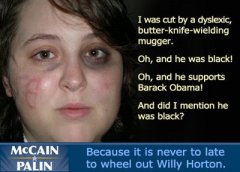
To put the question another way, are we witnessing a return to the racially coded Willy Horton ads that brought George H. W. Bush back from the political grave? 

The NPR story below gives both sides of the debate but, like most news coverage, substitutes he-said-she-said quotations for a nuanced discussion of the issue.  Tali Mendelberg’s The Race Card is the definitive work on racial coding.  Mendelberg notes that American politicians are no longer able to use race in an overt fashion.  Since the civil rights era, he says, the idea of equality is too firmly established in American social life for overt appeals to white supremacy to work.  This creates the impression that racism has no meaningful place in the political game, but such is not the case.  White Americans are racially biased, but they also embrace the ideal of full racial equality.  This is why racial coding can be highly effective. (more…)

America’s enemies: the experts weigh in

“Can someone explain to me if there is supposed to be a scandal that someone pees on the corpse of a Taliban fighter — someone who as part of an organization murdered over 3,000 Americans?  I’d drop trou and do it too. That’s me, though…Come on people this is a war.” CNN contributor Dana Loesch

 “A dead body is just, you know a f—— body that’s dead and it just doesn’t bother me.”  It all depends on “what the people they were pissing on did.  If they were real Taliban, if they were people who burned down girls’ schools, and, you know, do honor rapes and throw acid in people’s faces, I’m not that upset about pissing on them.” HBO comedian Bill Maher

“When you’re in war — and history kind of backs up. There’s a picture of General Patton doing basically the same thing in the Rhine river. Although there’s not a picture, Churchill did the same thing on the Siegfried line . . . Going after them as a criminal act, I think [is] really a bad message.” Texas governor Rick Perry 

“Andrew Jackson had a clear cut idea about Americas enemies…kill them!” Newt Gingrich

“You have heard that it was said, ‘You shall love your neighbor and hate your enemy.’  But I say to you, Love your enemies and pray for those who persecute you, so that you may be children of your Father in heaven.”  Jesus, Matthew 5:43-45

Learning Justice from Dr. King

By Alan Bean

This talk was originally delivered as an address at an MLK program at the Department of Veterans Affairs Dallas Campus on January 12, 2012

I was thrilled to be asked to speak to you today. For one thing, it gave me a chance to reflect on what Martin Luther King’s understanding of justice can teach us about leadership in the twenty-first century. There is a big picture of King in my office. “The ultimate measure of a man,” the caption reads, “is not where he stands in moments of comfort and convenience, but where he stands at times of challenge and controversy.”

As we will see, Dr. King knew whereof he spoke.

When I arrived at the Southern Baptist Theological Seminary in the summer of 1975, I entered a new world. There were more Baptists in a single Dallas church than in all of Western Canada. I had come south because my denomination was too small to support a seminary. There were 3,000 men and women enrolled at Southern, and there were five other Southern Baptist seminaries stretched across the southern half of America.

I can still remember waking up my first morning in the dorm. “Gol-ly!” a preacher boy down the hall was bellowing. He sounded exactly like Gomer Pyle. I had never reckoned with the possibility that real people sounded like Gomer Pyle.

“I want to preach so bad I can taste it,” a young seminarian told me later that day. Then, he asked what struck me as an odd question: “Who’s your favorite preacher?” I had been asked about my favorite football team or my favorite rock group; no one had ever inquired about my favorite preacher.

I had never given the matter a moment’s thought, but when I did, the answer was readily apparent. “Martin Luther King,” I said. (more…)

Immigration: rhetoric vs. reality

Although incarceration rates in the United States remain near historic highs, anti-immigration fervor has replaced tough-on-crime rhetoric as the primary expression of America’s punitive consensus.  As Chris Kromm notes in this incisive piece of analysis (originally published in Facing South), the current orgy of anti-immigrant hysteria has nothing to do with demographic reality and everything to do with a perceived political opportunity.  AGB

Immigration: Rhetoric vs. Reality

By Chris Kromm

Just as immigration is growing as a hot political topic in the South and country, the number of immigrants is in steep decline.

A new study from Princeton’s Mexican Migration Project finds that, for the first time in 60 years, net migration has fallen to zero — and is probably “a little bit negative.” That’s in line with analysis by groups like the Pew Hispanic Center, which have found that births in U.S.-based families has overtaken immigration as the chief driver in Latino community growth.

In fact, immigration has been tapering off since its 2000 peak; theories for decline include increased prosperity in Mexico, shrinking Latino families and criminal activity along the border.

One factor that likely hasn’t had any effect: Get-tough immigration policies, from stepped-up federal deportations to controversial new state-level initiatives, which are too recent to explain the decade-long decline.

That hasn’t stopped the push for strict new immigration measures, especially in Southern states which have seen dramatic demographic shifts in recent years. This month, new laws requiring that employers cross-check the eligibility of jobseekers using the troubled E-Verify system go into effect in Alabama, Georgia, Louisiana, South Carolina and Tennessee.

But portions of the laws are now hung up in court after lawsuits from activist groups and, in Alabama’s case, a challenge from the Obama administration. (more…)

Haley Barbour’s selective compassion condemned in Mississippi

Haley Barbour has put his foot in it again; this time for pardoning more than 200 Mississippi inmates as one of his final acts as governor.  Please understand that most of these people had served their sentences; Barbour issued full pardons so they could vote, buy fishing licenses and live a normal life in the free world.  As Michelle Alexander argues with chilling clarity in her book The New Jim Crow, ex-cons don’t return to the free world when they leave prison, they are condemned to restricted and truncated lives in which the pursuit of an education or a decent job is largely a waste of time.  In short, they have been excommunicated from the American dream.  Governor Barbour felt that a few former inmates, selected with capricious randomness, deserve better.

It should also be noted that this is not the first time Haley Barbour has shown his compassionate side.  Until 2008, the Mississippi Governor refused to pardon anyone for any reason, then, as Radley Balko discovered when he checked the records two years ago, Barbour suddenly went soft.  The five men pardoned on Barbour’s way out the door are remarkably similar to the kind of people Barbour has pardoned in recent years.  Here’s Balko’s list from late 2009:

Bobby Hays Clark, who in 1996 shot his ex-girlfriend in the neck and beat her boyfriend with a broom handle. Clark, who had a previous aggravated assault conviction, was sentenced to 38 years. Barbour pardoned him last year without notifying the family of Clark’s victim.

Michael David Graham, who in 1989 shot his ex-wife point-blank with a shotgun while she waited at a traffic light. Barbour suspended Graham’s life sentence, and he was released.

Clarence Jones, who stabbed his ex-girlfriend 22 times in 1992. She had previously filed multiple assault and trespassing charges against him. He was sentenced to life in prison. Barbour pardoned him last year.

Paul Joseph Warnock, who in 1989 shot his girlfriend in the back of the head as she slept. He was sentenced to life in prison in 1993. Barbour pardoned him last year.

William James Kimble, convicted and sentenced to life for robbing and murdering an elderly man in 1991. (more…)

Pat Buchanan may be finished at MSNBC

Conservative icon Pat Buchanan may be losing his pulpit at left-leaning MSNBC.  Reports in the Washington Post, Slate, and the HuffPost indicate that MSNBC president Pat Griffin is on the verge of cutting his network’s ties to Buchanan.  Color of Change has been insisting that the conservative pundit be fired since the publication of Buchanan’s Suicide of a Superpower: Will America Survive to 2025.  The book contains a chapter called “The end of white America” in which it is argued that the loss of a shared European culture and a common Christian heritage is robbing the nation of its traditional character.

This quote, recently aired on NPR’s The Diane Rehm Show, provides a good synopsis of Buchanan’s position

For what is a nation?

Is it not a people of a common ancestry, culture, and language who worship the same God, revere the same heroes, cherish the same history, celebrate the same holidays, share the same music, poetry, art, literature, held together, in Lincoln’s words, by “bonds of affection … mystic chords of memory, stretching from every battle-field, and patriot grave, to every living heart and hearth-stone”?

If that is what a nation is, can we truly say America is still a nation? The European and Christian core of our country is shrinking. The birth rate of our native born has been below replacement level for decades. By 2020, deaths among white Americans will exceed births, while mass immigration is altering forever the face of America.

Buchanan says he took the controversial chapter title from an article in the Atlantic written by Vassar professor Hua Hsu.  Hsu’s lengthy piece traces a perceived white identity crisis through the 1990s and the first decade of the twenty-first century.  The article features the work of Temple sociologist Matt Wray who is paying close attention to the impact the academy’s critique of white supremacy is having on his students. (more…)

A Life Not Lived

By Olivia Lennox

A Life Not Lived

On January 3rd the campaigning organisation Human Rights Watch (HRW) issued a report entitled ‘Against All Odds: Prison Conditions for Youth Offenders Serving Life without Parole Sentences in the United States’.  It is based on research conducted over a six year period, and it makes interesting and sometimes shocking reading.

The report deals with the plight of children incarcerated in adult prisons who due to the sentence they have received have no or at least very little prospect of ever seeing the outside world again.  They estimate there to be 2570 such young offenders in this position at the present time. HRW does not question the fact that the people their report deals with are offenders and that they should be punished for their crimes, but they do question the imposition of a life without parole sentence on such young people, and they also highlight the treatment and experiences those young people face.

Physical Violence

Building on previous studies it is established that under-eighteens in adult prison are, “twice as likely to be beaten by staff and fifty percent more likely to be attacked with a weapon than minors in juvenile facilities.”  Numerous examples are given of evidence provided by inmates that puts such statistics into a personal context.  Amongst them is that of Michael S., who was seventeen when he entered prison.  He wrote that:  ‘On several occasions I have been physically assaulted. I reported the first assault, but from that point forward I deduced that it was best to remain silent as I cannot afford to be labeled [an informant] in my current circumstances.’    (more…)