 By Alan Bean
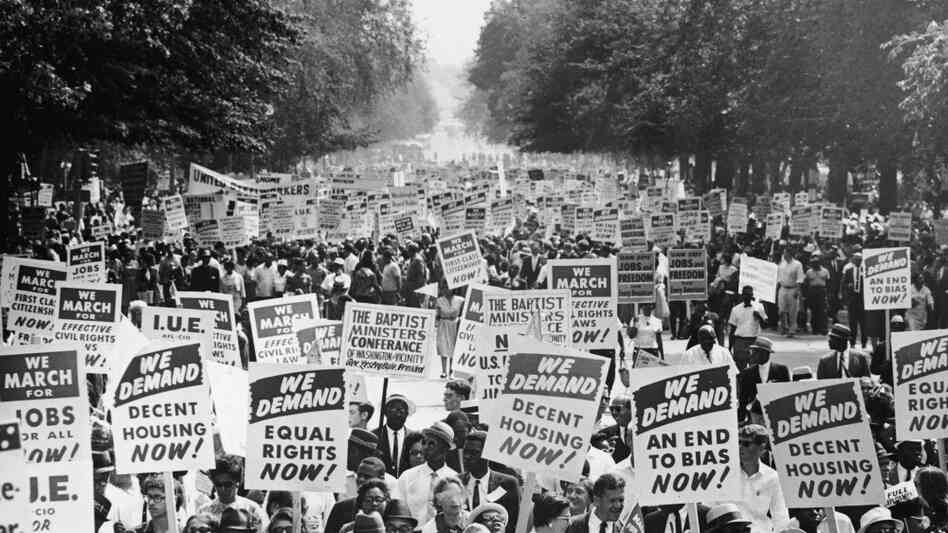
Casey Sigal is an unsentimental Englishman who worked the civil rights beat in the early 1960s. This piece in The Guardian touches on themes often ignored in mainstream reporting of this week’s commemoration of the March on Washington.
The march, Sigal reminds us, unfolded against a backdrop of fear bordering on dread. Prisons had been emptied to make room for the scores of people sure to be arrested. This is the way official Washington still looked at Negroes in the summer of 1963.
Moreover, the movement itself was sadly divided over tactics. If Martin Luther King Jr. is the man most of us associate with the March on Washington it was probably because of his unique ability to maintain dialogue with the old civil rights establishment, the young firebrands associated with SNCC, and the incendiary leadership of Malcolm X. All sides grudgingly agreed to let King take center stage because they knew he understood where they were coming from even if he couldn’t always agree with their conclusions.
King was a feared man in 1963. He came preaching peace and forgiveness, but John and Bobby Kennedy knew they couldn’t embrace King’s message without kissing the Dixiecrat South goodbye. John Kennedy died a few weeks later because his heart, if not his head, was with the civil rights movement and everyone in the South knew it. King was willing to whittle down white fear to a manageable size, but he made no attempt to placate it altogether. White racism was, and remains, an irrational, some would say demonic reality that must be rejected without reservation.
It is the question that introduces and concludes this piece that really intrigues me: what would MLK make of president Barack Obama? Sigal doesn’t think the civil rights giant would be too impressed. What do you think?
Remembering my time at the 1963 March on Washington
As we celebrate the 50th anniversary, we must ask: what would the Rev Martin Luther King think of Obama’s presidency?
By Casey Sigal
Saturday 24 August 2013 07.00 EDT

In 1963, a teenage woman civil rights worker in Albany, Georgia, said, “If you’re not prepared to die here then you’re not facing reality”.
Any of us who participated in the 1963 March on Washington for Jobs and Freedom will celebrate its 50th anniversary with a combination of sweet nostalgia and mixed feelings about its “legacy”. For me, and so many others, the event itself was redemptive and personally transforming. It had been a terrible year for African Americans and civil rights activists, a blood-drenched inventory of violence that included the jail beating of Fannie Lou Hamer and assassination of Medgar Evers. So on that Wednesday, 28 August, when 300,000 Americans from right across what I call the “decency spectrum” descended on an almost deserted Washington, it was as if a Norman Rockwell painting had come alive. (more…)


 Victor Hugo’s theory for why the rich resent the poor
 By Alan Bean


 By Alan Bean
 By Alan Bean
 People who talk about the “liberal” media reference a specific fact set:
 Friends of Justice