In Memoriam: Charles Workman

Slain Hearne civil rights leader Charles Workman

By Alan Bean

News reports describing the tragic murder of Charles Workman invariably point out that he was a former city councilman, an active member of the Democratic party, a leading member of the Hearne NAACP and president of the Columbus Village Residents’ Council.  But Workman was also a key figure in the fight to reverse a bogus drug sting in the central Texas community of Hearne that became the inspiration for the film American Violet.  

Those who were intimately involved in the fight for justice in Tulia, Texas (the event that sparked the creation of Friends of Justice) will know that the Tulia and Hearne stories were linked as twin examples of drug war injustice.  Mark Osler, now a Friends of Justice board member, worked closely with defense counsel representing key Hearne defendant Regina Kelly.

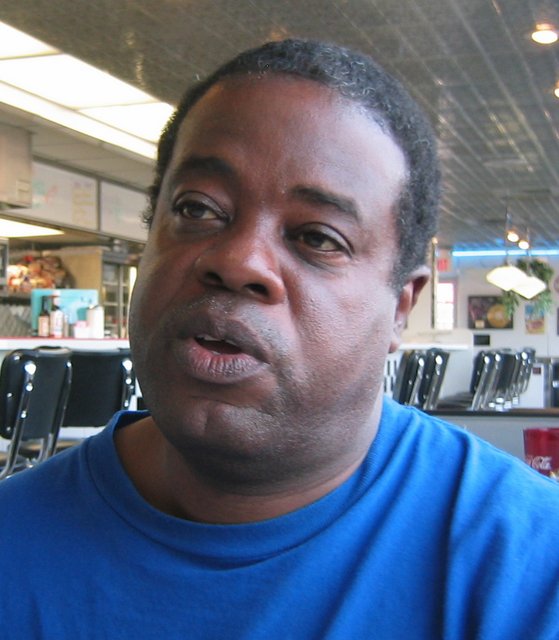
The picture above was taken in January of 2005 when I met Charles in a Hearne diner.  Friends of Justice made five separate trips to Hearne between 2000 and 2005, most recently in support of the ACLU’s successful civil suit filed on behalf of the Hearne defendants and their families.

The poor African American community in Hearne had been victimized by seasonal drug busts that usually targeted public housing developments.  Charles Workman’s son was one of the people swept up in the 2000 version of this dismal process.  Each of twenty odd defendants had been arrested on the uncorroborated word of Derrick Megress, a self-confessed crack addict who agreed to cooperate with the local Sheriff and DA in return for a sweetheart deal.  Megress eventually admitted that he had faked all of the drug buys he had allegedly made over a period of weeks.

John Paschall, the Robertson County District Attorney, threatened Megress with an arranged prison rape if he failed to cooperate.  When Megress confessed, Paschall was initially unwilling to drop charges on defendants who had already taken plea deals.  Scott Henson at Grits for Breakfast was working for the ACLU during the Hearne-Tulia fight.  Scott doubts that John Paschall can be trusted to investigate the murder of a man associated with a case that subjected the DA to national ridicule.

Persons of interest have emerged in connection with this case, but no clear motive has surfaced.  A young man allegedly burned Workman’s 2000 Jaguar after a failed attempt to sell the vehicle, but the strength of the evidence is uncertain at this point.

I distinctly remember going door-to-door with Mr. Workman in Hearne’s housing projects trying to whip up support for a church meeting planned for later that evening.  Everyone said they’d be there, but almost no one from the affected community showed up.  How tragic it would be if the assailant turns out to be one of the beneficiaries of Charles Workman’s advocacy.  We will keep you posted as this story develops.

Private prisons for immigrants attacked by advocacy groups

By Alan Bean

This Texas Tribune article touches on a topic dear to all Friends of Justice, the use of underfunded and inept private prisons to house immigrants.  We have had long conversations with many of the people quoted below in recent weeks because they are the experts on this distressing topic.

The private prison industry notes, correctly, that the real issue here is American immigration policy.  But the assertion that companies like CCA and Geo Group have no interest in the immigration policy debate is absurd.  As a National Public Radio investigation discovered, the private prison industry leans heavily on The American Legislative Exchange Council (ALEC).  ALEC is a shadowy organization that drafts legislation for state legislators and then hosts lavish conferences where state politicians are encouraged to back these bills.  For instance, SB 1070, the controversial Arizona anti-immigration legislation, was drafted by ALEC.  While the link between ALEC and the private prison industry is difficult to document (this is a highly secretive organization), private prisons, and the anti-immigration movement that sustains them, are central to the punitive, anti-government legislative policy of this powerful legislation-drafting organization.  ALEC is the voice of the corporate world (I was going to say “corporate America”, but that phrase is becoming an anachronism), and private prisons are just one more way for private investors to feed at the government trough.  First you foment a paranoid anti-immigration panic through the dissemination of misleading propaganda; then you sell the politicians a cheap way of getting tough on immigrants.  The private prison industry doesn’t have to lean on ALEC; the industry is ALEC’s brainchild.

Private prisons are cheap because, as Krystal Gomez argues below, they cut corners on staff, medical care, maintenance, food and every other budgetary item.  Immigration prisons are heavily privatized and the consequences for inmates have been horrendous.  Gomez has interviewed scores of inmates in these prisons so she knows whereof she speaks. (more…)

A shocking report targets Operation Streamline

By Alan Bean

What is Operation Streamline, you ask.  A post from a couple of months ago described our heart-rending encounter with Streamline in a federal courtroom McAllen, Texas.   Until 2005, undocumented immigrants detained at the US-Mexico border were simply deported; now they are tried in federal court for the crime of illegal entry.  If they have crossed the border more than once, the undocumented can be prosecuted for illegal re-entry, a felony charge carrying a maximum sentence of twenty years in prison.

When reformers speak of “crimmigration,” Operation Streamline heads the list of abuses.

Operation Streamline cases are clogging dockets in federal courtrooms along the border, detracting prosecutors from crimes involving massive fraud and violence.  But for the poorest members of the Latino community, the consequences of this wrongheaded policy have been devastating.

Recently, Grassroots Leadership, an immigration reform organization, released a report called Operation Streamline: Costs and Consequences that will tell you everything you need to know about the criminalization of immigration.  Not only is Operation Streamline ineffective as a deterrent, the report concludes, it is obscenely expensive and socially destructive.

In addition to draining resources and burdening the courts system, Operation Streamline imposes a devastating human cost, especially upon the Latino community. Latinos now represent more than half
of all individuals sentenced to federal prison despite making up only 16% of the total U.S. population. Increased enforcement measures also drive migrants to employ the services of professional smugglers and to attempt crossings in more obscure and dangerous areas.  As a result, immigrant fatalities along the border have become increasingly common, reaching totals more than four times those in 1995.
 Friends of Justice is designing a narrative campaign that will illuminate the abuses highlighted in the Grassroots Leadership report.  Our goal is to humanize and personalize the plight of the men and women who continue to cross and recross the border without documentation.  We will be asking who these people are, where do they come from, and why are they willing to repeatedly violate the laws of a sovereign nation?  The answers will shake you up.

Would you vote for Jesus?

By Alan Bean

Richard Cohen asks why the GOP is beating up on Mitt Romney.  Sure, the Republican candidate “espouses extreme positions he does not for a moment believe.”  But what are his options?  Republicans who hope to survive the Iowa caucuses are forced so far to the right that they surrender mainstream appeal.  If they win Iowa, their feet are nailed to the floor.

Cohen thinks this explains why GOP politicians with talent and intelligence refused to enter the 2012 presidential follies–they saw the train wreck coming.  Romney won, in Cohen’s view, because he was the most competent navigator on a ship of fools.

I suspect the Washington Post columnist is right, but how do we account for an electorate that forces Republican candidates to deny climate change, suggest that the US Constitution is a Christian document and kiss off the scientific community while systematically alienating Latinos, African Americans and women?  How do we explain the strength of the Tea Party?  Yeah, I know the Koch brothers have backed these insurgents with their megabucks, but it takes more than money to make a movement.  There is some genuine outrage simmering in the heartland.

And why, despite Mitt Romney’s lackluster campaigning and embarrassing gaffes, is this race still close?  Why is Barack Obama, a reputed radical socialist Muslim extremist, afraid to reference mass incarceration, mass deportation, pardons and commutations, Guantanamo, global warming, NAFTA, single payer health care, the rapid disappearance of American manufacturing, labor’s right to organize, a crumbling infrastructure, the tragedy of Iraq or the utter futility of Afghanistan? (more…)

The girl from the garbage dump

Mike Seiffert with the Equal Voice Network lives just across the river from Matamoros, Mexico.  In this story he explains what this means: Paloma, a girl who lives in a garbage dump, just won a national prize in mathematics.  If anyone belongs to Mitt Romney’s 47%  it is Paloma.  She is poorer than any American citizen, however destitute, can even imagine; yet she has much more to offer the world than the world has offered her.  Please read Mike’s post.

Mitt, Moochers, and Mormonism

Mary Barker is a professor of political science at Syracuse University’s campus in Madrid, Spain as well as at the Universidad Pontificia Comillas.  She is also a product of Utah’s Mormon culture, a socio-religious world she understands intimately.

In this piece written for Religion Dispatches she explains how Mitt Romney’s Mormonism shaped his “severe conservatism” but why his faith also provides a foundation for a merciful vision of American community.  The two sides of Mormon spirituality help explain why Utah backed the New Deal and voted Democrat up until the 1950s when the civil rights movement and fear of international communism sparked a retreat into the world of John Birch paranoia that is still evident in the rantings of Glenn Beck.

Mitt, Moochers, and Mormonism’s “Other” Legacy

Growing up with Mormon narratives—a two-part memoir and reflection on the good, the very bad, and a dreamed-for future.

By Mary Barker

There are many stories on which a Mormon is raised: narratives of the elect, America and the Constitution, the latter days, and free agency—all of which play a role in Mitt Romney’s “severe” conservatism. The bombshell release of video in which he trumpets his disdain for moochers, and reveals a remarkably casual approach to Middle East politics, all resonate with the Calvinist heritage of Mormon theology, as well as with principal Mormon narratives. But Mormonism also holds the seeds of a decidedly progressive politics—a possible Mormon liberation theology.

Does Romney’s religion matter? It’s a question that has been asked many times this election season. My answer, below, is in two parts, as I journey from End Times theology (the “latter days”) through Mormonism’s radical social and political past.

I.

I grew up at the end of the world. As a Latter-day Saint, I made my debut just before the final curtain. During my youth, rumors circulated about neighbors and boyfriends whose special “patriarchal blessings” prophesied that they would never taste of death. That fairly clearly set the limit on time. The rebellious Sixties just confirmed what the Cold War had already shown us—that we were in a final showdown with evil that would only get worse until the second coming of Jesus which is now. (more…)

Osler: “A Biblical Value in the Constitution”

Barack Obama has rarely used his power to pardon offenders and to commute sentences.  Most likely, he sees little political upside to a public show of mercy to persons who have been defined as criminals.  This issue matters to Friends of Justice in a personal way because we work with death row inmates like Curtis Flowers and Ramsey Muniz, a seventy year-old Latino leader serving a life sentence for a non-existent narcotics conspiracy.

Professor Mark Osler, a Friends of Justice board member who teaches law at the University of St. Thomas, is a leading authority on pardon and commutation issues.  Like me, he wonders why Barack Obama has been so stingy with his pardon pen.

Osler has recently addressed this pressing issue in two articles, a brief Huffington Post piece and a journal-length essay, “A Biblical Value in the Constitution: Mercy, Clemency, Faith, and History” which can be downloaded here.  The longer piece is the best introduction to the “Is America a Christian nation?” debate I have seen.  Here’s his conclusion:

America may not be a “Christian nation,” in the way that some would like, but it remains a “nation of Christians,” where a substantial majority of citizens look to Christian principles and teaching to inform their morality. The effort to see the Constitution as an expressly religious document is doomed by the text of the thing itself. However, that does not mean that Christians such as myself cannot celebrate and promote those parts of the Constitution that reflect and embrace our central values.  Of all the Constitution, the part that most clearly reflects the values of Christ is the pardon clause. It enables a person, the president, to grant mercy. Seen properly as not only a tool of the executive but a lever of God’s will, clemency should be embraced as a profound, important, and regularly used power of the man or woman in whom we invest so much trust.

“I will no longer have to hide”: Pierre Berastain in the Dallas Morning News

This story on Friends of Justice intern, Pierre Berastain, appeared on the front page of Saturday’s Dallas Morning News.  Pierre is a frequent contributor to this blog and also sends out our weekly updates.  AGB

Young illegal immigrant redefines his life in Carrollton and at Harvard

By DIANNE SOLÍS

Staff Writer

dsolis@dallasnews.com

Published: 21 September 2012

CARROLLTON — Pierre Berastain didn’t embrace the role of mediator when thousands of high school students walked out of classes in 2006 in Dallas and other cities to protest U.S. immigration policies.

He wanted a change in federal immigration policies as much as the protesters.

But his high school principal wanted him to calm students to prevent a walkout at R.L. Turner High School. So he got on the public address system and took several students aside in the hallways.

“Do we want to be recognized for negative behavior or for our accomplishments?” he asked his classmates.

In five years of occasional conversations with a reporter at The Dallas Morning News, Berastain anonymously spoke about his journey through college and his social justice crusades. He’s gone public with his story in recent weeks because of a new policy initiative by the Obama administration that halts deportation and grants temporary work permits to young immigrants. (more…)

Friends of Justice brings it all back home

Robert E. Lee iconography in Jackson MS

By Alan Bean

This is Day 6 of our Friends of Justice Reunion Tour.  We started off in Houston, Texas at a vigil for Ramsey Muniz.  Nancy Bean opened and closed the event with prayer while I explained how, back in 1994, Ramsey Muniz was framed by the Drug Enforcement Administration.

Then it was on to Church Point, Louisiana, where we visited with Ann and James Colomb, their children and grandchildren.  Six years ago, Nancy and I were in Lafayette when Ann and three of her sons were released from prison.  At their trial, thirty-one convicted drug dealers testified that they had sold millions of dollars to the Colomb family.  I had been arguing that this testimony was the product of perjury parties behind bars produced and directed by Brett Grayson, the ethically challenged Assistant US Attorney.  Three months after the Colombs were convicted, the truth finally emerged in all its sleazy glory and federal judge Tucker Melancon ordered that Ann and her sons be released immediately and that a full-scale investigation of the federal prison system be launched.  It was the Department of Justice that should have been investigated, but that would have landed a bit too close to home.

The next day we drove to Jackson, MS where we visited with attorneys associated with Curtis Flowers, the native of Winona, MS who has been tried six (6) times on the same murder charges.  The Office for Capital Defense is now located in the Robert E. Lee building in Jackson, an elegant art nouveau building constructed in the 1920s as an homage to the iconic Confederate general. (more…)

NPR exposes the immigration industrial complex

A Border Patrol agent offers water to two men caught after illegally entering the U.S. through the Arizona desert. Roughly 80,000 federal workers have jobs related to immigration enforcement.

NPR’s Morning Edition story on September 12 is the first mainstream mention of the immigration industrial complex I have encountered.  Hopefully, it won’t be the last.  As the story suggests, the United States has poured over 200 billion dollars into the border war since 1986 with nothing to show for it but broken lives.  Actually, that’s not quite accurate.  Thousands of men and women owe their jobs to the anti-immigration boom and a long list of corporations (and politicians) are profiting from an insane policy.  Removing the little piggies in their starched white shirts from their trough won’t be easy.  AGB
September 12, 2012

The United States’ southern border bristles with technology and manpower designed to catch illegal immigrants and drug smugglers. Since 1986, the government has spent hundreds of billions of dollars on fences, aircraft, detention centers and agents.

But even as federal budgets shrink and illegal immigration ebbs, experts say that there’s no end in sight for the growth of the border-industrial complex.

A Growing Investment On The Border

Stocked with equipment like Blackhawk helicopters — hundreds of aircraft fly daily missions — much of the southern border has grown into an industrial complex that is fed by the government and supplied by defense contractors and construction companies.

The infrastructure includes a border fence that in some places has been built and rebuilt several times. And up to 25 miles north of the border, towers, sensors and permanent checkpoints spread across the landscape. (more…)