Molly Worthen’s NYT essay on the social cleavage between white and black evangelicals is a statement of the obvious and a work of art.
Worthen teaches history at the University of North Carolina, Chapel Hill and her writing reflects a deep understanding of evangelicals black and white.
The term “evangelical”, in its common usage, refers exclusively to white folks. This may be the best explanation for a curious fact: only 35% of Americans in a recent Barna poll correctly identified Barack Obama’s religious faith as Christian. Ask African-Americans about Obama’s religion and I suspect over 95% would get it right. So I can’t help but wonder about the results from Caucasian respondents. My guess is that fewer than 25% of white people know that Obama is a Christian.
If we use political affiliation as a rough proxy for race (which, tragically, it is) the figures are interesting. 52% of Democrats know that Obama is a Christian (African-American respondents likely skewed this figure upward); but only 29% of Independents and 24% of Republicans believe that Obama is a Christian (with 18% believing he is a Muslim). (more…)
The Southern Baptist Convention is poised to elect its first African-American president. Is this a big deal, or a cynical ploy?
Neither, really.
As this Morning Edition article makes clear, Fred Luter isn’t just a prominent African-American preacher; he’s a transformational figure who stuck with his New Orleans congregation when the sanctuary washed away with Hurricane Katrina. Luter is that rarest of preachers, a man who rose from the streets, understands poverty, and spikes his call to conversion with a strong dose of compassion.
In other words, the Southern Baptist Convention isn’t just placing a token black man in an honorary position to deflect attention from the denomination’s racist past; Luter rose to prominence the hard way and deserves all the accolades he is receiving.
But there is another side to the story embodied in the passionate minority report filed by Dwight McKissic, pastor of Cornerstone Baptist Church in Arlington, Texas. McKissic is as theologically conservative as a Southern Baptist can be. He preaches against “the gay lifestyle” with notorious gusto, but he is even more passionate about racial injustice.
Fred Luter notwithstanding, Rev. McKissic sees little evidence that the moral fervor of the overwhelmingly white SBC “messengers” who will attend this year’s convention extends to civil rights.
This impression was reinforced in a particularly painful way when Richard Land, head of the SBC’s Ethics and Religious Liberty Commission, launched into a racially tinged radio rant that made him sound like the reincarnation of George Wallace circa 1962.
Land lost his radio program over his diatribe (largely because his racist comments turned out to be an unacknowledged quote from an obscure right-wing zealot), but he kept his post with the Ethics and Religious Liberty Commission. Land has apologized for dismissing prominent civil rights preachers as “race hustlers” and suggesting that Barack Obama only addressed the Trayvon Martin case in a desperate attempt to improve his standing with black voters.
Is Richard Land truly repentant? McKissic is hedging his bets. And for good reason.
As law professor Michelle Alexander points out, New Jim Crow racism differs markedly from Old Jim Crow bigotry. Richard Land has renounced his denomination’s support for Old Jim Crow segregation and the overt commitment to white supremacy that was part of that package. But when it comes to the New Jim Crow realities associated with mass incarceration and the creation of a black male undercaste, the high-profile Baptist preacher is essentially clueless.
As Michelle Alexander points out, you can’t understand the dynamics of the New Jim Crow unless you are willing to sympathize with the plight of poor young black men who are making all the mistakes Fred Luter made as a young man on the mean streets of New Orleans. Luter loves these guys, even as he laments key features of their lifestyle. So does Dwight McKissic. White Baptists like Richard Land has come to terms with a long-dead Martin Luther King Jr., but isn’t ready to acknowledge the full human dignity of the pre-conversion Fred Luter.
For savvy black Baptists in the SBC like Dwight McKissic, that’s a big problem.
The Southern Baptist Convention is expected to elect its first black president on Tuesday: Fred Luter, a former street preacher who turned a dying New Orleans church into a powerhouse. His election is a milestone for the 167-year-old denomination at a time when minorities make up a growing share of a shrinking membership.
Luter, who is running unopposed for president of the nation’s largest Protestant body, is a departure from his predecessors. He was the middle child of a divorced mother, and until a motorcycle accident landed him in the hospital at age 20, he had little interest in God.
Then God changed him, he told NPR earlier this year.
“I grew up in the ‘hood, and my mom worked two or three jobs. So I hung out with a lot of bad guys, did a lot of crazy things I should not have done,” Luter said. “And so, when I gave my life to the Lord and saw what God did in my life, then I wanted all those guys I ran the street with to experience what I was experiencing.”
Soon, Luter was preaching on the streets in New Orleans. In 1986, he was invited to take over Franklin Avenue Baptist Church. Under him, its congregation grew from a couple of dozen people to 7,000 — the largest Southern Baptist church in Louisiana. Then Hurricane Katrina struck in 2005, destroying the sanctuary.
“It would have been easy for Fred Luter to have said, ‘I think God’s calling me elsewhere,’ ” says Russell Moore, dean of the Southern Baptist Theological Seminary in Louisville, Ky. “And he could have gone to a very comfortable pastorate anywhere in the country.
“And yet, he stayed,” Moore says. “And he stood with the people of New Orleans and said, ‘We’ll be back, we’ll rebuild’ — and became a spiritual anchor.”
‘The Future Of The Country Is Urban’
Luter’s decision to stay, and his personal charisma, propelled him to national prominence in the Southern Baptist Convention, says pastor David Crosby.
Crosby leads First Baptist of New Orleans, which shared its space with Luter’s congregation while they rebuilt. He adds that Luter brings something else desperately needed to this denomination, which has seen its numbers drop: He understands how to reach the only growth area of religion.
“The future of the country is urban; the future of the Southern Baptist Convention is also urban,” Crosby says. “We’ve got to learn how to operate and do our mission and thrive in the urban environment. And Fred brings that. He knows it instinctively.”
The SBC has made some progress in that area. Two decades ago, the denomination was “as white as a tractor pull,” as one critic put it. Now it’s 20 percent minority. Richard Land, who heads the SBC’s Ethics and Religious Liberty Commission, says Luter’s election shows how far the Southern Baptists have come from the days when they supported slavery.
“It’s as historic a moment as Southern Baptists have had,” Land says, “because the president of SBC is not just an honorific — it is a position of real power.”
Maybe — and maybe not, says Dwight McKissic, senior pastor of the largely African-American Cornerstone Baptist Church in Arlington, Texas.
‘A Historic Moment’
“This is a great job, but it’s somewhat symbolic and ceremonial,” he says.
McKissic says the two-year presidency is a good first step. But he says African-Americans are absent from all the real positions of power.
Some say there’s a latent racism in the denomination. And many were troubled by a recent broadcast on Land’s radio program in which he said President Obama and black leaders were using the death of Trayvon Martin for political purposes.
“This is being done to try to gin up the black vote for an African-American president who is in deep, deep, deep trouble for re-election,” Land said on the air.
“It was like someone took a knife and stuck it in my heart,” McKissic says. “It validated suspicions that many black Baptists have had all along, that this is how a good number, if not the majority, of Southern Baptists felt.”
Land has apologized and asked for forgiveness.
“I don’t want anything I’ve said, or any mistakes I’ve made, to detract from — in any way — from what is going to be a truly historic moment — a historic moment in which I rejoice,” he says.
Luter has forgiven Land; he says it’s time to look forward. He notes that if he’s elected, it will be because white Baptists voted for him.
“It won’t be because of the handful of black folk that’s going to be there,” Luter says. “So, it will say something to the country and to the world — that the Southern Baptist Convention is not just talking this thing, we’re actually walking this thing.”
After news spread about the killing of 17-year old Trayvon Martin, many began comparing Martin’s case to the 1955 murder of 14-year old Emmett Till. Although some are critical of the comparison, arguing that comparing Martin to Till suggests nothing has changed since the 1950s, Ibram Rogers argues that we must look at the context of their deaths and what their murders symbolized. Till’s death was a symbol of racism in the Jim Crow South. Martin’s death is a symbol of racial profiling and the criminalization of black men in 2012. Just as the death of Emmett Till galvanized the civil rights movement, Ibram wonders: “Will the anger over Martin’s death spark the New Abolitionist Movement against mass incarceration?” MWN
Protests are blooming this spring. Black Americans are enraged and emboldened, shouting entreaties for justice, justice, justice.
Stoking even more rage—or rather placing the rage in historical context—has been the continuous comparisons made between the unarmed 17-year-old Trayvon Martin, murdered recently by a neighborhood watchman of a majority White gated community in Florida who is claiming self-defense, and Emmett Till, a 14-year-old Chicago native murdered by Mississippi segregationists in 1955 for speaking “inappropriately” to a White woman.
A blog in The New Yorker on the Martin tragedy was entitled “Emmett Till in Sanford.” Hundreds of protesters gathered at a park in Sanford, Fla., on March 22, and dozens of them sported t-shirts with Martin’s photo next to a Till photo. These Martin-Till shirts have become widely popular among activists around the nation.
Syracuse professor Boyce Watkins wrote that Martin “has become a modern day Emmett Till.” University of Maryland law professor Sherrilyn A. Ifill insightfully compared Martin’s mother, Sybrina Fulton, to Mamie Mae Till, who courageously allowed an open casket funeral and circulated pictures of her son’s tattered face around the world. Mamie Till’s public fight to get justice for her son is one of the untold sparks of the Civil Rights Movement.
Washington Post columnist Eugene Robinson dismissed the “facile comparison” as “a disservice to history—and the memory of both young men. It is ridiculous to imply that nothing has changed.”
Robinson is correct and incorrect. The link is a service and disserve to history. The widely touted comparison of Martin to Till is profound and “facile.” (more…)
Until I read this article in the Chicago Tribune, I had never heard of the Rev. Addie Wyatt. That’s a pity. Wyatt was a Christian pastor, a champion of women’s rights, a civil rights activist, and a union organizer. Quite a package. I’m not sure a single person could wear all four hats in the 21st century.
Some might see this as a good thing. Last week I posted an article from the Associated Baptist Press on the silence of white pastors regarding the Trayvon Martin case. This prompted a curt response from a reader: “There is nothing in Scripture,” he said, “that supports the claim that pastors are to serve as prophets or politicians.”
I suspect the reader also believes there is no biblical support for women pastors.
The Reverend Addie Wyatt would have been our reader’s worst nightmare: a politically active prophet with an iron in every fire. I hope we see more women like her; but I fear we will not.
Often when people think of black women activists who were deep in the trenches, they recall Ella Baker and Fannie Lou Hamer. Chicago’s Rev. Addie Wyatt, who died last week at 88, should also come to mind.
Wyatt stood a modest 5 feet, 4 inches tall. She was often impeccably dressed — though not overly fancy — and when she spoke it was with such precision that you’d have to listen closely to detect a hint of her native Mississippi.
What made Wyatt a giant is that she was one of the few people who had a tremendous influence on three of the most important movements of the 20th century — the struggles for labor, civil and women’s rights. She was a fervent believer that the three were interconnected and that everyone’s fate rose and fell on the same tide.
As a union representative, she was fearless and didn’t mind entering the offices of white male management officials in 1950s Chicago and challenging them about discriminatory practices against women and blacks.
As a civil rights activist, she helpedMartin Luther King Jr.organize events in Chicago and in the South. But she wasn’t shy about reminding the male-dominated standard-bearers that women weren’t just window dressing and needed to be included in leadership roles. (more…)
Southern Baptists have walked a long and winding road on the subject of race. In the 1950s, SBC conservatives like WA Criswell, pastor of the 20,000 member First Baptist Church Dallas, denounced the civil rights movement as a communist enterprise. Criswell denounced the Suprme Court as a “bunch of infidels” following the Brown v. Board of Education ruling in 1954.
But by the mid-1960s, Criswell was confessing to a “colossal mistake” and admitting that his take on race relations had been deeply flawed. This bold admission made it possible for other conservative Southern Baptists to hop on the racial harmony express by denouncing racial prejudice and inviting black pastors to speak in their churches once a year.
Every year, Southern Baptists passed high-sounding pro civil rights decrees drafted by the denomination’s Christian Life Commission. At the congregational level, conditions were far more complicated, of course. Pastors and leading lay leaders didn’t shift from animosity to embrace in a mere decade. On the other hand, they didn’t oppose the denominational rush to the center on the race issue. Colorblind orthodoxy was too void of content to warrant strenuous opposition.
One might have expected that the SBC enthusiasm for civil rights would cool significantly after the nation’s largest Protestant denomination sent its moderate minority into wilderness exile in the 1980s and 90s. Nothing of the sort. In fact, the denomination’s new opinion leaders have made a point of apologizing for slavery and speaking appreciatively of civil rights leaders like Martin Luther King.
Bob Allen’s piece on Richard Land, president of the SBC Ethics and Religious Liberty Commission, helps us understand this perspective. Instead of denouncing civil rights leaders as crypto-communists, Southern Baptist leaders are arguing that they are facing essentially the same oppressive forces men like King confronted half a century ago.
Land makes much of the fact that King’s famous letter to southern white clergy was composed from a prison cell. If Barack Obama’s opposition to religious liberty continues unabated, Land suggests, Christian men and women of Christian conscience may soon be dragged off to prison for refusing to bend the knee to Caesar.
This is a very clever argument, especially in the wake of the Obama administration’s tone-deaf decision to force Catholic hospitals to provide contraceptive services. This is a tough issue. Catholic hospitals, after all, service non-Catholics. On the other hand, common sense militates against forcing anyone to go against conscience in order to stay in business. Men like Richard Land can argue that his Catholic friends are being oppressed for their faith just as King et al faced discrimination because of their race.
I’m not buying. Barack Obama believes in religious freedom as much as Richard Land. The difference is that Obama, speaking and acting as the president of all Americans, believes in religious freedom for Muslims and secularists as well as Protestant and Catholic Christians.
If Richard Land wants to claim the likes of Deitrich Bonhoeffer and MLK as his spiritual forebears, there isn’t much either man can do about it. The dead have no opinions. (more…)
(This post is part of a series concerning Curtis Flowers, an innocent man convicted of a horrific crime that has divided a small Mississippi town. Information on the Flowers case can be found here.)
By Alan Bean
I had always assumed that the confederate memorial in Winona, Mississippi had been destroyed in 1978 along with the courthouse. It seemed a bit counter-intuitive, but there was no sign of Civil War nostalgia on the grounds of the new courthouse where Curtis Flowers was convicted of murder in the summer of 2010.
Curtis has been tried for the murder of four people in a Winona furniture store in July, 1996. He has been convicted four times. Two trials ended in hung juries. Three convictions were overturned by the Mississippi Supreme Court, which is currently reviewing his most recent conviction.
Meanwhile, Curtis sits on Parchman prison’s death row.
Friends of Justice is convinced that Curtis Flowers is innocent, but you would be hard pressed to find a white resident of Winona, Mississippi who agrees with us. At Flower’s 2010 trial, it became apparent, perhaps for the first time, that District Attorney Doug Evans and his investigator, John Johnson, had decided Curtis Flowers was the killer less than three hours after the murder scene was discovered. The only evidence connecting Curtis with the crime at that time was a check for three days wages found on the desk of the slain Bertha Tardy. The check was made out to Curtis Flowers. Though this hardly constituted evidence of wrongdoing, Evans and Johnson centered their investigation on Flowers from the beginning; no other suspects or alternative theories of the crime were ever considered.
The former site of the Montgomery County Jail in Winona, Mississippi
Melanie Wilmoth and I were in Winona this Monday to visit with Archie and Lola Flowers, Curtis’s parents. We were driving home from a local restaurant when I asked about the location of the old county jail and courthouse.
In June of 1963, Fannie Lou Hamer, Annell Ponder, Sue Johnson and Lawrence Guyot were savagely beaten by several local police officers and a state trooper at the county jail. A few days later, they were arraigned at the county courthouse. Their crime: demanding to be served in the white-only restaurant of Winona’s segregated bus depot two years after the federal government integrated bus depots, train stations and airports across the South.
Archie Flowers didn’t answer my question about the old courthouse, he just guided the car in the direction of downtown Winona. “The courthouse used to be right here,” Lola told me, pointing to the Montgomery County library.
There it stood, the conferate memorial that graces virtually every courthouse in the old South. This one had been erected in 1909, just 44 years after they drove old Dixie down. Southern pride still burned strong. The monument was dedicated “To the Confederacy President Jefferson Davis and the soldiers who fought for state rights.”
Even in 1909, southerners embraced the historical fiction that the War of Northern Aggression had nothing to do with the South’s “peculiar institution.”
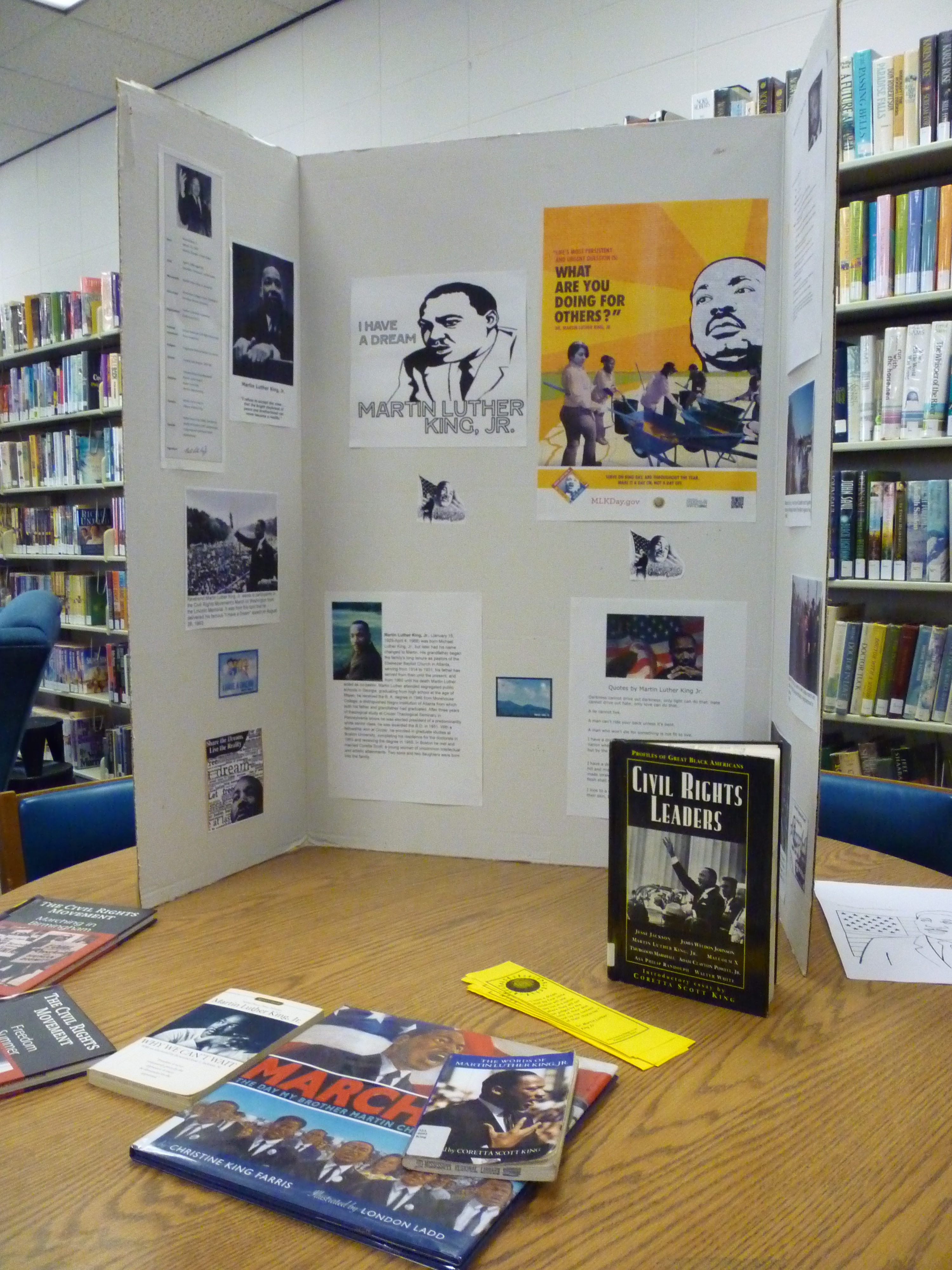
The next morning, Melanie and I returned to the library. A Civil Rights display featuring pictures of Martin Luther King Jr. greeted us as we entered the room. I was impressed. Mississippi is one of three southern states where citizens can choose to celebrate Martin Luther King Day or Robert E. Lee Day, whichever floats your boat. A Civil Rights display was above and beyond the call of civic duty.
I moved to the desk and asked if the library had any information about the old courthouse and county jail. “I’m not sure,” the librarian told me. “If we have anything it will be in the book we’ve got on Montgomery County history.”
She plucked an imposing tome from the library shelves. It was one of those local histories that most rural counties produce every half century or so. This one had been published in 1994, three decades after Fannie Lou Hamer and friends were savagely beaten at the county jail and three years before Curtis Flowers went on trial the first time.
Like most county histories, the book began with a section on local history. Although there was an extensive section on the Native American people who occupied the county before the arrival of white settlers, there was no discussion of slavery.
The book featured articles on every white family with roots in the county and several hundred pictures, but although Montgomery County is 45% African-American, not a single black face appeared anywhere. Melanie and I weren’t the first readers to notice this. One reader had scrawled his disgust on the table of contents page. “Sorry people,” the message read, “us black folks are not listed in family histories. Apparently we don’t exist though the copyright is 1994. Go figure racist white folks. Go Obama!”
The book’s extensive section on the Civil War merely reproduced documents from the war era with not even a passing reference to slavery. The war was all about Abraham Lincoln’s desire to “destroy all the institutions of the South and withdraw from her people the constitutional guarantees for the protection to property and the right to enjoy the same.”
A visitor to Montgomery County would have no idea that black people had ever lived there or that slavery and Jim Crow segregation were integral to the county’s legacy. No wonder the note writer was confused and angry.
But that was 1994 and this is 2012. I doubt you would have seen a civil rights display in the Winona library back when Curtis Flowers was first arrested in 1997.
At first blush, historical myopia and denial have little relevance to the fairness of the Montgomery County criminal justice system. Fannie Lou Hamer, Annell Ponder, June Johnson and the other civil rights leaders arrested at Winona’s bus depot in 1963 weren’t simply denied justice; their captives took sadistic pleasure in their ability to beat and sexually humiliate the men and women in their control. Thanks to pressure from the Kennedy White House, the officers were tried in federal court, but an all white, all-male jury acquitted them after deliberating for a matter of minutes. The law of the land did not apply to black people (especially black civil rights activists) in 1963.
How much had changed when Curtis Flowers went to trial for the first time 34 years later?
A lot. When Doug Evans illegally kept black residents off the jury, the Mississippi Supreme Court reversed the verdict. When, at a subsequent trial, five black jurors were selected, all five voted to acquit Mr. Flowers while all seven white voted to acquit.
These facts suggest radical change mixed with a disturbing degree of historical continuity. Things have changed for the better; but not nearly enough. That is why the case of Curtis Flowers and hundreds of other Mississippi defendants must be viewed through the lens of the Magnolia State’s troubled racial history. Did Curtis Flowers get a fair trial in 1997, in 2010, or at any time in between? You be the judge.
There is a lot to like about Ron Paul. He opposes the war on drugs; he is anti-war, and he doesn’t like the Patriot Act. Who could ask for anything more?
If you believe Adele M. Stan, progressives should be asking for much, much more. Ron Paul’s libertarianism may overlap with the progressive agenda at important points, but it flows from a entirely different source. Stan associates Paul with the anti-civil rights John Birch Society as well as the modern Reconstruction movement. My research has reached similar conclusions.
Progressives contend that we’re all in this thing together; Libertarians say we’re all on our own. Progressivism is consistent with religious altruism; libertarianism logically tends toward the moral nihilism of Ayn Rand. A philosophical difference that great can’t be mended with duct tape and baling wire. Friends of Justice endorses a Common Peace Agenda that embraces the legitimate rights and needs of all people. We aren’t satisfied with simply ending the war on drugs or reducing the size of the prison population; we seek what Martin Luther King Jr. called The Beloved Community.
Those in search of the common good must choose their coalition partners with great care. We don’t have to agree on every point, but we must be working toward the same broad goal. What kind of America are we trying to create? AGB (more…)
William Wilberforce as portrayed in "Amazing Grace"
By Alan Bean
Personhood USA, the group arguing that personhood begins the moment of conception, is promoting itself as a latter day embodiment of the civil rights movement. Days after a “fetal personhood” amendment was rejected by 60% of Mississippi voters, Personhood Florida’s Bryan Longworth is undaunted. William Wilberforce didn’t end slavery in England the first time he tried, Longworth says, and his group isn’t about to give up simply because voters in the most conservative state in America aren’t buying the fetal personhood argument.
The reference to Wilberforce caught my attention. Nancy and I saw Amazing Grace in an Amarillo movie theatre in 2007. We were weighing our options at the time. Did we really want to stay in the criminal justice reform fight? Sure, we had won some important victories, but when you live in the Texas Panhandle you have few illusions. Every struggling rural community of any size is sustained by a state prison and there appears to be zero support for ending mass incarceration. When you have repeatedly slammed your head into a brick wall you sometimes think how nice it would feel to stop. (more…)
Below is an interesting article detailing a lawsuit filed against a Georgia Girl Scouts organization. The lawsuit, filed last week, was a result of the expulsion of two sisters from their Girl Scout troop after they gave a presentation on the civil rights movement.
The audience and other troop leaders did not respond well to the civil rights presentation. According to the suit, “The only applause [the presenters] received was from the other two African American girls and one Indian girl in attendance.”
The response to the young girls’ presentation is not surprising coming from a largely white audience. In fact, this reaction is all too common. The civil rights movement does not reflect favorably on most Southern whites and, therefore, discussion of the movement is often met with resistance and resentment from white audiences. It will be interesting to watch the suit unfold and hear the response (if any) from the Girls Scouts of America . MW
ATLANTA — An Atlanta-area mother has filed a lawsuit against a Girl Scouts organization alleging that her twin daughters were expelled from their troop after they gave a presentation on their family’s involvement in the civil rights movement.Angela Johnson filed the suit last week in Gwinnett County State Court, claiming intentional infliction of emotional distress and negligence. The suit says the troop leaders knew an expulsion would cause the girls harm and that the organization had a responsibility to repair the situation.
In a statement, the Girl Scouts of Greater Atlanta says the girls weren’t expelled and calls the incident a “disagreement between well-intentioned moms,” referring to Johnson and the troop leaders. (more…)
“He was the soul and heart of the Birmingham movement. Fred Shuttlesworth had the vision, the determination never to give up, never to give in. He led an unbelievable children’s crusade. It was the children who faced dogs, fire hoses, police billy clubs that moved and shook the nation.” John Lewis
Fred Shuttlesworth is dead at 89. He never thought he would survive the civil rights struggle in Birmingham. Far less protective of his personal safety than men like Martin Luther King and Medgar Evers, Shuttlesworth attributed his survival to the grace of God. He couldn’t think of any other explanation.
Frankly, neither can I.
It was Shuttlesworth that convinced MLK to come to Birmingham in 1956, the year his home was fire-bombed by the Ku Klux Klan, and it was Shuttleworth’s courage that sustained the movement. As the quote above suggests, the Birmingham preacher drafted children into the movement when most of the able-bodied adults were already in prison. In 1961, when a mob of white segregationists surrounded his Birmingham church, it was Shuttlesworth who calmed the crowd.
Shuttlesworth had been sparring with Police Chief Bull Conner for seven years before the Birmingham campaign reached its peak. It was during these years of relative anonymity that Shuttlesworth was the most vulnerable. Not nearly as erudite as the silver-tongued Martin Luther King, Shuttlesworth was an old-time “hooping” preacher. While King struggled to win the support of progressive and moderate whites, Shuttlesworth inspired the foot soldiers.
When he came to preach at the Southern Baptist Theological Seminary in October of 1978, I had never heard of Fred Shuttlesworth. The civil rights narrative trumpeted in the mainstream media had ony a few hero slots available, and Rev. Fred never made the cut. Shuttlesworth had been invited to speak at Southern by Andrew Manis, then an M.Div student. A decade later, Manis would write the acclaimed biography, A Fire You Can’t Put Out: The Civil Rights Life of Birmingham’s Reverend Fred Shuttlesworth.
Old School black preachers are often unnerved by predominantly white audiences. There is a interactive cadence to black preaching that washes back and forth between the preacher and the congregation. Preaching to an unresponsive audience, it’s hard to get your rhythm. So it was for Shuttlesworth at Southern. His voice was almost inaudible at first, and his delivery seemed forced.
But something he said struck a chord with my wife, Nancy. “Amen,” she shouted, as loudly as she dared.
“I’ll take that amen!” Shuttlesworth roared back, and suddenly, he was a man transformed. When the sermon ended, we were all on our feet whooping and hollering.
You had to look hard to find a mention of Shuttlesworth’s death in America’s flagship newspapers. The death of Steve Jobs and Sarah Palins’ political career grabbed the headlines. But no one did more to kill Jim Crow than the Rev. Fred Shuttlesworth. (more…)


 Southern Baptists have walked a long and winding road on the subject of race. In the 1950s, SBC conservatives like WA Criswell, pastor of the 20,000 member First Baptist Church Dallas, denounced the civil rights movement as a communist enterprise. Criswell denounced the Suprme Court as a “bunch of infidels” following the Brown v. Board of Education ruling in 1954.



 Shuttlesworth had been sparring with Police Chief Bull Conner for seven years before the Birmingham campaign reached its peak. It was during these years of relative anonymity that Shuttlesworth was the most vulnerable. Not nearly as erudite as the silver-tongued Martin Luther King, Shuttlesworth was an old-time “hooping” preacher. While King struggled to win the support of progressive and moderate whites, Shuttlesworth inspired the foot soldiers.
 Friends of Justice