Category: Jesus

My Kind of Patriotic Sermon

Brent Beasley
Brent Beasley

I didn’t go to church this July 4th weekend.  I couldn’t bear the thought of singing odes to American Exceptionalism.   America is exceptional, of course, but our national history is such a mix of glory and gloom, triumph and tragedy, that flag waving triumphalism is rarely appropriate–especially in a Christian sanctuary.

Mercifully, not all patriotic sermons are created equal.  Brent Beasley, pastor of Fort Worth’s Broadway Baptist Church, loves America.  He doesn’t love everything the American people have done or everything we presently represent in the eyes of the world; but he loves our better angels; he loves our dreams.  

In this sermon, Dr. Beasley contemplates the familiar words “Give me your tired, your poor, Your huddled masses yearning to breathe free”, and is reminded of the words of our Savior, “Come unto me, all ye who are weary and are heavy laden, and I will give you rest.”

It doesn’t always get ugly when patriotic longing and religious aspiration join hands; sometimes it can be beautiful.

The political implications of this message are obvious and unstated–that too is a splendid combination. AGB (more…)

Rethinking Hell

By Alan Bean

Hell has always been a hot topic in America.  Rob Bell’s Love Wins created such a pre-publication stir that the book debuted at number 2 on the New York Times best-seller list and remains on Amazon’s top 10. 

Bell’s take on heaven and hell rests on the recent scholarship of folks like NT Wright (on the evangelical side) and Marcus Borg and John Dominic Crossan (writing from a more liberal perspective).  (Brian McLaren offers a slightly more cerebral, and original, popularization of this new scholarship.)  The big idea is that salvation isn’t about going to heaven (or hell) when you die; eternal life (for better or worse) begins now. 

In a recent chat with Welton Gaddy, Rob Bell offered this typically folksy summary of his perspective.

I start with the first century world of Jesus. Jesus spoke very clearly and forthrightly about this world: that the scriptural story and the Jewish story that he was living in was about the reclaiming of this world, the restoration and the renewal of this world. So, Jesus comes, He teaches his disciples to pray “Your will be done on earth as it is in heaven.” The action for Jesus was here on earth, about renewing this earth, about standing in solidarity with those who are suffering in this world. And he spoke of a kingdom of God, which is here and now: upon you, among you, around you, within you.

So in the book, I talk about this urgent, immediate invitation of Jesus to trust him, that God is good, that God is generous, that God is loving, that God is forgiving… And to enter into a new kind of quality of life with God right here, right now. So let’s bring some heaven to earth, let’s work to get rid of the hells on earth right now, let’s become the kind of people who love our neighbor… And that, for Him, it was immediate and urgent about this world. What happens when you die? He talks a little bit about that, but He’s mostly talking about this world. I think, for a lot of people, the Christian faith doesn’t have, for them, much to say about this world; that it seems to be all about what happens when you die. And so, the book, in some ways, flips it around and says: “I think this is actually what Jesus was doing.” (My emphasis, along with a few quick edits) (more…)

Jesus, Ayn Rand and the art of the impossible

Maybe Jesus didn't really mean it

By Alan Bean

My wife Nancy and I are teaching a confirmation class at our Methodist church in Arlington, Texas.  While we are stuffing our students’ heads with information about the Bible, God, Jesus, the Church and Christian discipleship, we thought we should also let the Bible speak on its own terms.  We decided to work through an entire book of the Bible in the course of nine months and settled on the Gospel of Mark; it’s the shortest and most succinct of the Gospels. 

Mark is also the most brutal document in the Christian New Testament, in the sense of assaulting modern sensibilities.  It isn’t just that Jesus performs miracles of healing every time he turns around (we moderns could attribute that to the power of suggestion); it’s the bits about money and power that sting the most. (more…)

Why the Arizona Murders Should Trouble Christians

By Mark Osler*

This post originally appeared in the Huffington Post

A troubled loner with a gun decided to kill his Democratic Congresswoman outside a Tucson grocery store, and now six people are dead. As a former prosecutor who now trains future prosecutors, I grieve with a heavy heart. As a Christian, I am troubled. The blood in the desert will re-open two debates in which we Christians have strayed too far from the very teachings of Christ.

First, I am troubled because I know that this will re-open the discussion over whether incendiary political rhetoric, mere words, can inspire such violent acts. For Christians, there should be no debate on this subject. Our faith, like so many others, is built on the thesis that words do inspire action. (more…)

Faith and Mass Incarceration

By Dr. Charles Kiker

Faith played a major role in the Civil Rights movement of the 1950’s and 1960’s, and the concomitant dismantling of the old Jim Crow. To be sure, not all people of faith, maybe not even a majority and certainly not a majority in the South, held the Civil Rights movement in high regard. I remember hearing one active Baptist layman say shortly after the assassination of Martin Luther King, “He was a dadblamed communist, and somebody should have killed him a long time ago.”

But the faith and the liberation songs inspired by the Exodus from Egypt helped to sustain the civil rights movement through fire hoses, police dogs, beatings, and murders. And the civil rights movement insured the demise of Jim Crow I. The progress of the mid-twentieth century civil rights movement created an officially color blind society. (more…)

Where real Christians are Republicans and real Republicans are Christians

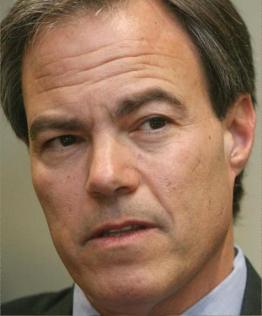
Joe Straus

We’re talking Texas, of course.

As the old saying goes, “When three different people tell you you’re drunk, it’s time to sit down.” 

Or, When Fox News suggests you’re a bigot, it’s time for some honest reflection.

It helps, of course, that Joe Straus, the embattled Speaker of the Texas House, is a Jewish Republican as opposed to being a black Democrat.  But the principle applies.

“Over the past month,” the article notes, “in a spate of e-mails and political pitches, conservative opponents of incumbent Speaker Joe Straus have said they want him replaced not because of his Jewish religion, but because of his betrayal of Republican principles.”

But in a November 30th email, John Cook of the Texas Republican Executive Committee reminded his readers that, “We elected a house with Christian, conservative values. We now want a true Christian, conservative running it.”

If you read enough of these statements, you will notice that the words “Republican,” “conservative,” and “Christian” are used more or less interchangeably.  In Texas it is generally assumed that orthodox Christianity teaches conservative economic and social principles.  It thus follows, as the night the day, that real conservatives are Christians who vote Republican. (more…)

Clenched Fists and Open Hands: McLaren and Rohr get real about religion

By Alan Bean
 
I spent last weekend attending a conference on “the Emerging Church” held on the campus of  Texas Christian University.  Below, I have reproduced my noted from three talks, two by Brian McLaren, a clear-sighted Protestant, and one by Father Richard Rohr, a Roman Catholic priest dedicated to the contemplative life.  These three talks complement one another and inform our struggle with mass incarceration, but I will leave it to you to make the connections.  My summary is taken from my notes, so, gentlemen, if you read this and think I misrepresented your ideas, I am open to correction. 

Brian McLaren 1: Clenched Fists and Open Hands

Brian McLaren

The world runs on stories, McLaren says. It is the role of religion to provide us with our stories; but what happens when these stories no longer help us address the big issues: poverty, peace and the planet?

The primary religious narrative in Western culture, McLaren suggests, has been the domination story: stories of the clenched fist which could also be called conflict narratives, warrior narratives or sword narratives. Typically, empires appear as the heroes of domination narratives. (more…)

J. Alfred Smith, Sr.: “Reclaiming our Prophetic Voice”

Rev. J. Alfred Smith, Sr.

I first met J. Alfred Smith, Sr in 1995 when he preached a series of prophetic-evangelistic sermons at First Baptist Church Kansas City, KS.  Charles Kiker (a founding member of Friends of Justice) was pastor of FBC at the time and I was there to provide the music.  Dr. Smith and I were chatting informally before the first service; he was telling me about the impact the war on drugs was having in his community.  To my utter astonishment, the man began to weep uncontrollably–something I had never seen a preacher do before.  He wasn’t the slightest bit embarrassed by his tears.  In fact, he behaved as if weeping was the normal and appropriate response to the circumstances in which he found himself.

J. Alfred Smith, Sr. was Senior Pastor of Oakland’s Allen Temple, one of the premier pulpits in America.  He is now Pastor Emeritus of that church; his son, J. Alfred Smith, Jr., has since taken over as Senior Pastor.

J. Alfred Smith, Sr. and several of his parishioners were tremendously supportive during our justice struggle in Tulia, Texas.  It was there I began to understand the tears I had witnessed several years earlier.  I last saw Dr. Smith at the New Baptist Covenant gathering in Atlanta a couple of years ago.

The sermon below addresses several issues regularly featured on this blog.  Dr. Smith talks about the betrayal of “the prosperity gospel”, the war on drugs, mass incarceration, Martin Luther King, Fannie Lou Hamer, Dorothy Day, the Rev. Jeremiah Wright, Dietrich Bonhoeffer, and the need for a new kind of Christianity, or, from an African American perspective, the recovery of the old prophetic gospel that once animated the civil rights movement. (more…)

Prophetic Imagination, The Greatest Prayer, and Mass Incarceration

By Charles Kiker

This is something of a response to and expansion of Alan Bean’s recent post, “Marcus Borg’s radical Christianity.” In this post Dr. Bean mentioned Walter Brueggemann and John Dominic Crossan in passing. I respond by expanding on the thought of those two scholars, and relate their perspectives to the issue of mass incarceration.

Walter Brueggemann

Walter Brueggemann is the author of The Prophetic Imagination. The second edition was copyrighted in 2001, so it does not qualify as a recent contribution. But it only recently came to my attention.

Brueggemann presents the Hebrew culture as represented by Moses as an alternative community to the royal, person negating culture of Egypt. The culture of Egypt was anti-freedom not only for humanity, but also for God. This counterculture to royalty and the perks of royalty persisted in Hebrew life for a couple of centuries or so before a new royalty, a counter-counterculture, took root under David and thrived under Solomon and his successors in both Hebrew kingdoms. The prophets beginning in the 8th century BCE, some of them at least, broke free from tradition to provide a new counter voice to the royal consciousness of privilege and power that had arisen in the Hebrew kingdoms.

Jeremiah was the prophet of pain; Deutero-Isaiah the prophet of hope. Pain is a necessary predecessor to hope, lament a predecessor to praise in the confrontation between the royal consciousness of privilege and power and the radical freedom of and in God.  I have this quote from Brueggemann written in the margin of my Bible at Psalm 23, “It is precisely those who know death most painfully who can speak hope most vigorously” (The Prophetic Imagination, p. 67). Brueggemann cautions that social policy is not necessarily in the purview of the prophet, and that anguish is more fitting than anger as prophetic attitude. (more…)