Last month, a 28-year-old man shot a 17-year-old high school student in Florida. The teen, Trayvon Martin, was unarmed. He was walking back to his dad’s home where he’d been watching basketball with his family. He’d run out to buy some candy for his brother.
George Zimmerman, the 28-year-old who considered himself a neighborhood watchman, was driving along when he spotted Trayvon. Some 20 minutes later, Trayvon was dead. Zimmerman admitted to police that he had shot and killed Trayvon. The police readily accepted Zimmerman’s claim that he acted in self-defense saying they had no evidence to dispute Zimmerman’s statement.
So, what can people of conscience do? We can mourn for Trayvon, pray that his soul rests in peace, and pray for his family in their time of grief. And we must do more.
We must also press for justice in this case. We can sign the Change.org petition calling for an investigation and prosecution in this case. And we must do more.
In less than half an hour, Mr. Stevenson eloquently and compellingly discusses the problem of mass incarceration, its impact on poor communities of color, and our nation’s resistance to honestly examining our history and our present.
He offers painful data and asks hard questions. Why are we comfortable with a justice system in which “wealth not culpability shapes outcomes.”
Why are we the only country in the world in which children as young as 13 can be sentenced to live their natural lives and die in prison? How have we allowed the disenfranchisement of vast numbers of men of color?
We allow it because we don’t think this is “our problem.” Mr. Stevenson reminds us that none of us is free until all of us are free and that our society will be judged by our treatment of the marginalized. He asks us to start talking about these justice issues and to commit ourselves to truth and reconciliation.
There is no time like the present. Will you commit to thinking and talking about injustice today? I will.
I have never met Lisa Sharon Harper, but she’s been reading my mail.
Why, she asks, was Franklin Graham unwilling to apply the term “Christian” to president Obama?
Graham has trouble seeing the president as a fellow believer, Sharon Harper argues, because white Christians are rarely forced to wrestle with systemic injustice and are therefore uncomfortable with Christians who make this issue front and center.
I have a few minor quibbles with the argument below.
Many, perhaps most, black evangelical churches are just as fixated on personal salvation as white evangelicals. Martin Luther King didn’t enjoy the enthusiastic support of most black Baptist churches in the South, and his social gospel remains suspect in many corners of the black church.
Secondly, Franklin Graham’s daddy, the iconic American evangelist Billy Graham, wasn’t quite as racially advanced as this post suggests. True, he did open his crusades to black worshippers before most white evangelicals were comfortable with integrated evangelism, but as Darren Dochuk points out in his excellent study of California evangelicalism, Graham realized that segregation was becoming an embarrassment in America and thus an impediment to evangelism. (more…)
Charles Murray took so much flak for controversial The Bell Curve that he decided to write a book about white people rooted in much the same argument.
Coming Apart, a book about the diverging fortunes of upper and lower class white Americans, begins where The Bell Curve ended. The big factor driving the growing gap between the educated and the uneducated, Murray suggests, is “cognitive homogamy”, the fact that individuals with similar cognitive ability are having children.
In the old world, Murray says, most people lived and died in rural communities and small towns. The smartest males might have left home for a few years of college, but they generally returned to marry the prettiest (not necessarily the smartest) girl in town. The result, kids of normal cognitive ability. Wealth was distributed largely on the basis of inheritance, not ability and the kids at Harvard weren’t much smarter than the kids at a good state school.
Since the early 1960s, however, smart people have been marrying other smart people and having smart kids. The sons and daughters of these blessed unions have increasingly clustered in segregated neighborhoods in which “everybody has a bachelor’s or graduate degree and works in high-prestige professions or management or is married to such a person.” Among this new elite, wealth is distributed on the basis of merit, the elite colleges compete for the brightest and the best and lesser institutions make do with students who will never be ready for prime time. (more…)
I recently heard Heather McGhee speak at the Samuel Dewitt Proctor conference in Chicago. She began with the obvious fact that America was not created to be one people, or one public. Some folks were clearly part of the culture; others were not. The primary dividing line was skin color. Up until 1965, she reminded us, American immigration policy was built around strict racial quotas. People of African descent were practically excluded altogether. People from Eastern Europe were also subject to severe restrictions because they were considered ‘ethnic’.
That all changed in 1965. In the wake of the civil rights movement, mainstream America was embarrassed by the undisguised racism implicit in the nation’s immigration policy. The rules changed in fundamental ways. Now, when you walk through an airport, you see every conceivable shade of skin color and you hear a wide variety of accents. We have become, in a few brief decades, the world’s most audacious experiment in cultural diversity.
Three Friends of Justice people are attending the Samuel DeWitt Proctor Conference at the Drake Hotel in Chicago this week. Melanie Wilmoth and I are here, as is the Rev. L. Charles Stovall, Friends of Justice board member and associate pastor at St Luke United Methodist Church in Dallas. Speaking of Methodists, a contingent of 40 United Methodists from across the nation, led by the indefatigable Rev. Laura Markle Downton, are in Chicago for the conference. These are the folks who recently convinced their denomination to divest from for profit prisons.
I was bone weary when we entered the old fashioned elegance of the Drake Room for evening worship, but I left pumped and inspired. The highlight of the evening was a stunning sermon on the familiar story of Daniel in the lion’s den from the Rev. Dr. Lance Watson, pastor of St. Paul’s Baptist Church in Richmond, Virginia. Watson preaches in the traditional black style. In the final ten minutes, brief bolts of organ music punctuated every phrase. “I know it’s late,” he assured us, “and I ain’t gonna keep you long. And I hope you know that, coming from a Baptist preacher, that don’t mean nothing.”
Dr. Watson didn’t just preach in the old time fashion, he interpreted the scriptures in the old time style, literally. If God could deliver Daniel, the preacher told us, God can deliver you.
Normally, this would bother me. Isn’t this Daniel in the lion’s den thing just a folk story? I mean, it didn’t really happen, did it? And didn’t the author of the story refer to King Darius when it should have been Cyrus? And can I really believe that if somebody threw me into a den of hungry lions I would emerge unscathed?
I wasn’t the least bit bothered by Dr. Watson’s straightforward exegesis, and I’ll tell you why. So long as the preacher gets the application right, I don’t really care what school of biblical interpretation he follows. Watson talked about the lions of mass incarceration and felon disenfranchisement. He compared the steadfast obedience of Daniel to the grace Barack Obama has shown when the lions in his world insisted he produce a birth certificate. When Watson came to the part where knaves use flattery to appeal to a king’s vanity, Watson talked about black politicians who don’t realize they are being used until the game is over.
The story of Daniel, like so many stories from the Bible, is about remaining faithful in the face of oppression. Black America understands that message. Earlier in the day, Susan Taylor, Editor Emeritus of Essence Magazine and the founder of a nationwide mentoring program for at-risk children, told us about her visit to one of the fortresses on the African coast where, for centuries, men, women and children waited for the slave ship to come. In graphic detail, she described the horrors of the middle passage. She said African Americans need to teach these things to our children and, if we have forgotten, to ourselves.
This is precisely the kind of stuff that makes white Americans profoundly uncomfortable. All of that stuff happened so very long ago. It was awful, to be sure, but why talk about it in polite company; it’s divisive, it just stirs things up. I didn’t own any slaves and none of you have a personal experience with slavery so . . . let’s call the whole thing off.
Black America needs to talk about the stuff white America needs to forget. Or maybe we too need to remember, we just don’t know it yet.
Dr. Jeremiah Wright gave the benediction tonight. Yes, that Jeremiah Wright. Barack Obama’s former pastor. The guy who enraged white America by suggesting that America’s chickens might be coming home to roost. I was riding in a van with several black passengers when the towers fell in Manhattan. Their reaction mirrored Wright’s. Black and white Americans live in two different worlds, experientially and religiously.
There are plenty of white folks who share the ethical commitments of the Samuel DeWitt Proctor Conference. We oppose the war on drugs, we think mass incarceration has been a disaster, and we want to address the conditions that foster violence and joblessness in poor urban neighborhoods. But you would never hear a white person who believes these things preaching like the Rev. Dr. Lance Watson. Most white progressives would be offended by biblical preaching. If religion must be referenced at all, let it be generic religion, devoid of narrative content. None of that Jesus stuff.
White progressives (with a few blessed exceptions) associate words like Jesus, Bible, prayer, salvation and deliverence with the religious Right. And, to be fair, the religious folk you see on the television and hear on the radio rarely reflect the kingdom priorities of Jesus.
Unlike their white counterparts, black progressives can, to paraphrase the Rev. Dr. Freddie Haynes, think and shout at the same time. “If you think,” he told us, “you will thank. Think about how great our God is and you can’t help but get your shout on.”
Why do white Christians have such a hard time mixing kingdom ethics with shouts of praise. I’m not sure, but the world would be a better place if we got over it.
I received a copy of Darren Dochuk’s From Bible Belt to Sun Belt as a birthday present from my daughter, Dr. Lydia Bean. She said I’d love it, and she was right.
Like me, Dochuk hails from Edmonton, Alberta, and, like me, his doctoral dissertation focused on Southern religion. But while I was primarily interested in progressive Christians struggling for social survival in the Deep South, Dochuk turned his attention to evangelicals from states like Arkansas, Louisiana, Oklahoma and Texas who migrated in droves to southern California between the dust bowl thirties to the post-war period when the counties surrounding Los Angeles were booming as a result of massive government spending on military and aeronautical projects.
As a child, Darren Dochuk was driven to the vacation spots of Southern California every summer. I dreamed of visiting Disneyland, but I never got there. Still, the brand of Christian Right spirituality described in his book impacted my life in significant, sometimes painful ways. The California-inspired Jesus People movement was in full flower when I attended the Baptist Leadership Training School in 1972. It was around that time that my traditionally Baptist parents were attracted to the charismatic movement. My father repeatedly invited me to luncheon meetings of the Full Gospel Business Men’s International, a loose affiliation of tongue-speaking, prophesying, faith healing neo-Pentecostals founded in Southern California by a layman named Demos Shakarian.
For me, these were bewildering experiences I had largely forgotten until I read From Bible Belt to Sun Belt. Though I never understood the appeal of this style of religion, my parents informed me that my life would be transformed if I submitted to “the baptism” and received the “gift of tongues.” I tried my best, but it didn’t take. (more…)
Southern Baptists have walked a long and winding road on the subject of race. In the 1950s, SBC conservatives like WA Criswell, pastor of the 20,000 member First Baptist Church Dallas, denounced the civil rights movement as a communist enterprise. Criswell denounced the Suprme Court as a “bunch of infidels” following the Brown v. Board of Education ruling in 1954.
But by the mid-1960s, Criswell was confessing to a “colossal mistake” and admitting that his take on race relations had been deeply flawed. This bold admission made it possible for other conservative Southern Baptists to hop on the racial harmony express by denouncing racial prejudice and inviting black pastors to speak in their churches once a year.
Every year, Southern Baptists passed high-sounding pro civil rights decrees drafted by the denomination’s Christian Life Commission. At the congregational level, conditions were far more complicated, of course. Pastors and leading lay leaders didn’t shift from animosity to embrace in a mere decade. On the other hand, they didn’t oppose the denominational rush to the center on the race issue. Colorblind orthodoxy was too void of content to warrant strenuous opposition.
One might have expected that the SBC enthusiasm for civil rights would cool significantly after the nation’s largest Protestant denomination sent its moderate minority into wilderness exile in the 1980s and 90s. Nothing of the sort. In fact, the denomination’s new opinion leaders have made a point of apologizing for slavery and speaking appreciatively of civil rights leaders like Martin Luther King.
Bob Allen’s piece on Richard Land, president of the SBC Ethics and Religious Liberty Commission, helps us understand this perspective. Instead of denouncing civil rights leaders as crypto-communists, Southern Baptist leaders are arguing that they are facing essentially the same oppressive forces men like King confronted half a century ago.
Land makes much of the fact that King’s famous letter to southern white clergy was composed from a prison cell. If Barack Obama’s opposition to religious liberty continues unabated, Land suggests, Christian men and women of Christian conscience may soon be dragged off to prison for refusing to bend the knee to Caesar.
This is a very clever argument, especially in the wake of the Obama administration’s tone-deaf decision to force Catholic hospitals to provide contraceptive services. This is a tough issue. Catholic hospitals, after all, service non-Catholics. On the other hand, common sense militates against forcing anyone to go against conscience in order to stay in business. Men like Richard Land can argue that his Catholic friends are being oppressed for their faith just as King et al faced discrimination because of their race.
I’m not buying. Barack Obama believes in religious freedom as much as Richard Land. The difference is that Obama, speaking and acting as the president of all Americans, believes in religious freedom for Muslims and secularists as well as Protestant and Catholic Christians.
If Richard Land wants to claim the likes of Deitrich Bonhoeffer and MLK as his spiritual forebears, there isn’t much either man can do about it. The dead have no opinions. (more…)
(This post is part of a series concerning Curtis Flowers, an innocent man convicted of a horrific crime that has divided a small Mississippi town. Information on the Flowers case can be found here.)
By Alan Bean
I had always assumed that the confederate memorial in Winona, Mississippi had been destroyed in 1978 along with the courthouse. It seemed a bit counter-intuitive, but there was no sign of Civil War nostalgia on the grounds of the new courthouse where Curtis Flowers was convicted of murder in the summer of 2010.
Curtis has been tried for the murder of four people in a Winona furniture store in July, 1996. He has been convicted four times. Two trials ended in hung juries. Three convictions were overturned by the Mississippi Supreme Court, which is currently reviewing his most recent conviction.
Meanwhile, Curtis sits on Parchman prison’s death row.
Friends of Justice is convinced that Curtis Flowers is innocent, but you would be hard pressed to find a white resident of Winona, Mississippi who agrees with us. At Flower’s 2010 trial, it became apparent, perhaps for the first time, that District Attorney Doug Evans and his investigator, John Johnson, had decided Curtis Flowers was the killer less than three hours after the murder scene was discovered. The only evidence connecting Curtis with the crime at that time was a check for three days wages found on the desk of the slain Bertha Tardy. The check was made out to Curtis Flowers. Though this hardly constituted evidence of wrongdoing, Evans and Johnson centered their investigation on Flowers from the beginning; no other suspects or alternative theories of the crime were ever considered.
The former site of the Montgomery County Jail in Winona, Mississippi
Melanie Wilmoth and I were in Winona this Monday to visit with Archie and Lola Flowers, Curtis’s parents. We were driving home from a local restaurant when I asked about the location of the old county jail and courthouse.
In June of 1963, Fannie Lou Hamer, Annell Ponder, Sue Johnson and Lawrence Guyot were savagely beaten by several local police officers and a state trooper at the county jail. A few days later, they were arraigned at the county courthouse. Their crime: demanding to be served in the white-only restaurant of Winona’s segregated bus depot two years after the federal government integrated bus depots, train stations and airports across the South.
Archie Flowers didn’t answer my question about the old courthouse, he just guided the car in the direction of downtown Winona. “The courthouse used to be right here,” Lola told me, pointing to the Montgomery County library.
There it stood, the conferate memorial that graces virtually every courthouse in the old South. This one had been erected in 1909, just 44 years after they drove old Dixie down. Southern pride still burned strong. The monument was dedicated “To the Confederacy President Jefferson Davis and the soldiers who fought for state rights.”
Even in 1909, southerners embraced the historical fiction that the War of Northern Aggression had nothing to do with the South’s “peculiar institution.”
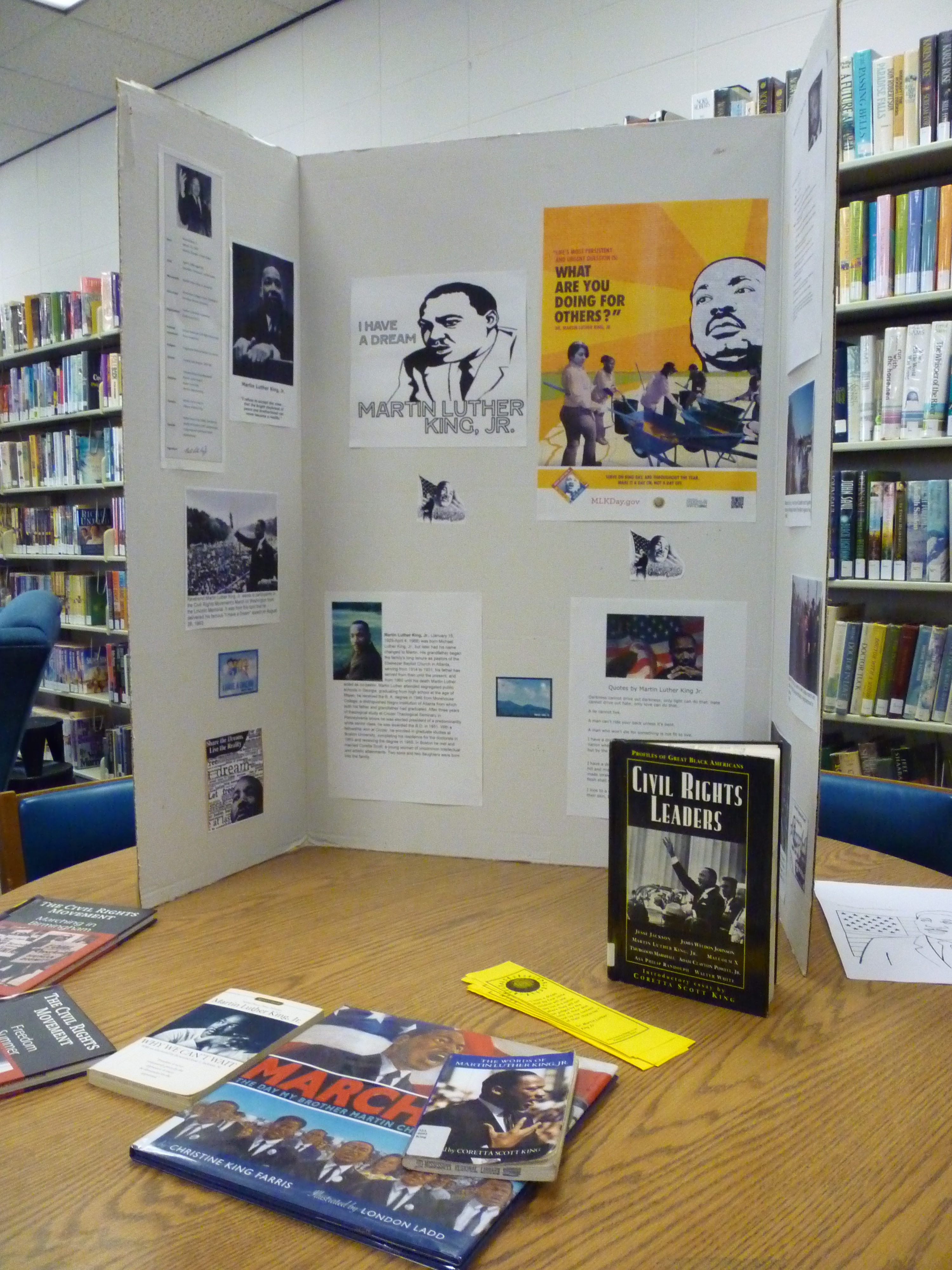
The next morning, Melanie and I returned to the library. A Civil Rights display featuring pictures of Martin Luther King Jr. greeted us as we entered the room. I was impressed. Mississippi is one of three southern states where citizens can choose to celebrate Martin Luther King Day or Robert E. Lee Day, whichever floats your boat. A Civil Rights display was above and beyond the call of civic duty.
I moved to the desk and asked if the library had any information about the old courthouse and county jail. “I’m not sure,” the librarian told me. “If we have anything it will be in the book we’ve got on Montgomery County history.”
She plucked an imposing tome from the library shelves. It was one of those local histories that most rural counties produce every half century or so. This one had been published in 1994, three decades after Fannie Lou Hamer and friends were savagely beaten at the county jail and three years before Curtis Flowers went on trial the first time.
Like most county histories, the book began with a section on local history. Although there was an extensive section on the Native American people who occupied the county before the arrival of white settlers, there was no discussion of slavery.
The book featured articles on every white family with roots in the county and several hundred pictures, but although Montgomery County is 45% African-American, not a single black face appeared anywhere. Melanie and I weren’t the first readers to notice this. One reader had scrawled his disgust on the table of contents page. “Sorry people,” the message read, “us black folks are not listed in family histories. Apparently we don’t exist though the copyright is 1994. Go figure racist white folks. Go Obama!”
The book’s extensive section on the Civil War merely reproduced documents from the war era with not even a passing reference to slavery. The war was all about Abraham Lincoln’s desire to “destroy all the institutions of the South and withdraw from her people the constitutional guarantees for the protection to property and the right to enjoy the same.”
A visitor to Montgomery County would have no idea that black people had ever lived there or that slavery and Jim Crow segregation were integral to the county’s legacy. No wonder the note writer was confused and angry.
But that was 1994 and this is 2012. I doubt you would have seen a civil rights display in the Winona library back when Curtis Flowers was first arrested in 1997.
At first blush, historical myopia and denial have little relevance to the fairness of the Montgomery County criminal justice system. Fannie Lou Hamer, Annell Ponder, June Johnson and the other civil rights leaders arrested at Winona’s bus depot in 1963 weren’t simply denied justice; their captives took sadistic pleasure in their ability to beat and sexually humiliate the men and women in their control. Thanks to pressure from the Kennedy White House, the officers were tried in federal court, but an all white, all-male jury acquitted them after deliberating for a matter of minutes. The law of the land did not apply to black people (especially black civil rights activists) in 1963.
How much had changed when Curtis Flowers went to trial for the first time 34 years later?
A lot. When Doug Evans illegally kept black residents off the jury, the Mississippi Supreme Court reversed the verdict. When, at a subsequent trial, five black jurors were selected, all five voted to acquit Mr. Flowers while all seven white voted to acquit.
These facts suggest radical change mixed with a disturbing degree of historical continuity. Things have changed for the better; but not nearly enough. That is why the case of Curtis Flowers and hundreds of other Mississippi defendants must be viewed through the lens of the Magnolia State’s troubled racial history. Did Curtis Flowers get a fair trial in 1997, in 2010, or at any time in between? You be the judge.
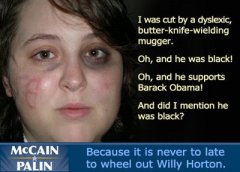
When Newt Gingrich calls Barack Obama the “food stamp president,” is he making a crude appeal to white racial resentment, or is he taking a race-neutral stand on economic policy?
To put the question another way, are we witnessing a return to the racially coded Willy Horton ads that brought George H. W. Bush back from the political grave?
The NPR story below gives both sides of the debate but, like most news coverage, substitutes he-said-she-said quotations for a nuanced discussion of the issue. Tali Mendelberg’s The Race Card is the definitive work on racial coding. Mendelberg notes that American politicians are no longer able to use race in an overt fashion. Since the civil rights era, he says, the idea of equality is too firmly established in American social life for overt appeals to white supremacy to work. This creates the impression that racism has no meaningful place in the political game, but such is not the case. White Americans are racially biased, but they also embrace the ideal of full racial equality. This is why racial coding can be highly effective. (more…)
 By Lisa D’Souza

 I recently heard Heather McGhee speak at the Samuel Dewitt Proctor conference in Chicago. She began with the obvious fact that America was
 y Alan Bean
 Southern Baptists have walked a long and winding road on the subject of race. In the 1950s, SBC conservatives like WA Criswell, pastor of the 20,000 member First Baptist Church Dallas, denounced the civil rights movement as a communist enterprise. Criswell denounced the Suprme Court as a “bunch of infidels” following the Brown v. Board of Education ruling in 1954.


 By Alan Bean
 Friends of Justice