Category: racial history

Learning Justice from Dr. King

By Alan Bean

This talk was originally delivered as an address at an MLK program at the Department of Veterans Affairs Dallas Campus on January 12, 2012

I was thrilled to be asked to speak to you today. For one thing, it gave me a chance to reflect on what Martin Luther King’s understanding of justice can teach us about leadership in the twenty-first century. There is a big picture of King in my office. “The ultimate measure of a man,” the caption reads, “is not where he stands in moments of comfort and convenience, but where he stands at times of challenge and controversy.”

As we will see, Dr. King knew whereof he spoke.

When I arrived at the Southern Baptist Theological Seminary in the summer of 1975, I entered a new world. There were more Baptists in a single Dallas church than in all of Western Canada. I had come south because my denomination was too small to support a seminary. There were 3,000 men and women enrolled at Southern, and there were five other Southern Baptist seminaries stretched across the southern half of America.

I can still remember waking up my first morning in the dorm. “Gol-ly!” a preacher boy down the hall was bellowing. He sounded exactly like Gomer Pyle. I had never reckoned with the possibility that real people sounded like Gomer Pyle.

“I want to preach so bad I can taste it,” a young seminarian told me later that day. Then, he asked what struck me as an odd question: “Who’s your favorite preacher?” I had been asked about my favorite football team or my favorite rock group; no one had ever inquired about my favorite preacher.

I had never given the matter a moment’s thought, but when I did, the answer was readily apparent. “Martin Luther King,” I said. (more…)

Pat Buchanan may be finished at MSNBC

Conservative icon Pat Buchanan may be losing his pulpit at left-leaning MSNBC.  Reports in the Washington Post, Slate, and the HuffPost indicate that MSNBC president Pat Griffin is on the verge of cutting his network’s ties to Buchanan.  Color of Change has been insisting that the conservative pundit be fired since the publication of Buchanan’s Suicide of a Superpower: Will America Survive to 2025.  The book contains a chapter called “The end of white America” in which it is argued that the loss of a shared European culture and a common Christian heritage is robbing the nation of its traditional character.
This quote, recently aired on NPR’s The Diane Rehm Show, provides a good synopsis of Buchanan’s position

For what is a nation?

Is it not a people of a common ancestry, culture, and language who worship the same God, revere the same heroes, cherish the same history, celebrate the same holidays, share the same music, poetry, art, literature, held together, in Lincoln’s words, by “bonds of affection … mystic chords of memory, stretching from every battle-field, and patriot grave, to every living heart and hearth-stone”?

If that is what a nation is, can we truly say America is still a nation? The European and Christian core of our country is shrinking. The birth rate of our native born has been below replacement level for decades. By 2020, deaths among white Americans will exceed births, while mass immigration is altering forever the face of America.

Buchanan says he took the controversial chapter title from an article in the Atlantic written by Vassar professor Hua Hsu.  Hsu’s lengthy piece traces a perceived white identity crisis through the 1990s and the first decade of the twenty-first century.  The article features the work of Temple sociologist Matt Wray who is paying close attention to the impact the academy’s critique of white supremacy is having on his students. (more…)

“Both sides are us”: Stuntz and Kennedy unpack the spirituality of criminal justice reform

By Alan Bean

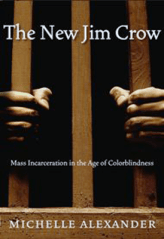
In 2010, Michelle Alexander’s The New Jim Crow: Mass Incarceration in an Age of Colorblindness, rocked the civil rights community back on its heels.  Alexander accused the criminal justice reform movement of seeking legal solutions to a moral problem, of fighting for affirmative action while abandoning the victims of a brutal and counter-productive drug war, of telling pretty stories about wrongfully convicted poster-boys while ignoring the social nightmares unfolding in poor communities of color.

 If the way we pursue reforms does not contribute to the building of a movement to dismantle the system of mass incarceration, and if our advocacy does not upset the prevailing public consensus that supports the new caste system, none of the reforms, even if won, will successfully disrupt the nation’s racial equilibrium.  Challenges to the system will be easily absorbed or deflected, and the accommodations made will serve primarily to legitimate the system, not undermine it.  We run the risk of winning isolated battles but losing the larger war.

In 2011, two books by white males revealed that Michelle Alexander is not the only American scholar in search of a new moral consensus for ending mass incarceration.   The Collapse of American Criminal Justice by William J. Stuntz, and Don’t Shoot: One Man, A Street Fellowship, and the End of Violence in Inner-City America by David M. Kennedy are not books written in response to Alexander’s The New Jim Crow.  Stuntz and Kennedy are white male academics who see mass incarceration and the war on drugs as unmitigated disasters.  These authors tackle America’s racial history head on.  Most importantly, they agree with Alexander that a movement to end mass incarceration must begin with a new moral consensus.    (more…)

Arlington ISD turns thumbs down on Cesar Chavez holiday (yet again)

By Alan Bean

To the surprise of no one, the students of Arlington were once again denied a May holiday honoring civil rights legend Cesar Chavez. 

Last night’s meeting of the Arlington ISD school board reminded me of the climactic scene in To Kill a Mockingbird.  An all-white jury convicts the black defendant even though the case against him has crumbled to dust.  As the article below suggests, last night’s decision was a foregone conclusion.

Last year, the statements of support for a Chavez holiday, mine included, were polite and deferential.  This year was different.  

I used my five minutes to address the elephant in the room.  The school board trustees are both politicians and public servants, I said.  There is no political upside to voting to rename a generic “May holiday” in honor of Chavez.  The majority of voters in Arlington have little interest in honoring a Latino icon, and many would staunchly oppose the move.  This is, after all, one of the most conservative demographics in America. 

On the other hand, 65% of the students (and therefore a solid majority of the parents) are people of color who would love to see Chavez honored.  There is a disconnect between the political imperative to please the voters and the moral imperative to do what’s best for the children.  The heart sides with the kids; the head craves political security. (more…)

Fetal personhood and civil rights

William Wilberforce as portrayed in "Amazing Grace"

By Alan Bean

Personhood USA, the group arguing that personhood begins the moment of conception, is promoting itself as a latter day embodiment of the civil rights movement.  Days after a “fetal personhood” amendment was rejected by 60% of Mississippi voters, Personhood Florida’s Bryan Longworth is undaunted.  William Wilberforce didn’t end slavery in England the first time he tried, Longworth says, and his group isn’t about to give up simply because voters in the most conservative state in America aren’t buying the fetal personhood argument.

The reference to Wilberforce caught my attention.  Nancy and I saw Amazing Grace in an Amarillo movie theatre in 2007.  We were weighing our options at the time.  Did we really want to stay in the criminal justice reform fight?  Sure, we had won some important victories, but when you live in the Texas Panhandle you have few illusions.  Every struggling rural community of any size is sustained by a state prison and there appears to be zero support for ending mass incarceration.  When you have repeatedly slammed your head into a brick wall you sometimes think how nice it would feel to stop. (more…)

The day Elizabeth and Hazel were dissed by Oprah

By Alan Bean

I have been inspired by the story about how Elizabeth Eckford (the black woman walking stoically into Little Rock’s Central High School in 1959) and Hazel Bryan (the white woman in the rear screaming, “Go home to Africa, nigger!”) had bridged the racial divide and become best friends.

Not surprisingly, it isn’t that simple.

Racial reconciliation comes hard.  Everybody needs to feel good about their people, their heritage, their roots.  At least Sir Walter Scott thought so:

Breathes there there the man with soul so dead

Who never to himself hath said,

This is my own, my native land!

Whose heart hath ne’er within him burned,

As home his footsteps he hath turned

From wandering on a foreign strand!

If such there breathe, go, mark him well;

For him no minstrel raptures swell . . .

African Americans and American whites, particularly in the South, have a hard time feeling good about their ethnic heritage.  Few Black Americans chose to come to this country.  In most cases, their ancestors were hunted down like dogs, manacled, separated from family, culture and religion, stowed into the hulls of slave ships, transported across the Atlantic ocean, and put to work under the lash beneath a blazing son.  The Emancipation Proclamation hardly improved their lot.  In its own strange way, Jim Crow was every bit as degrading as slavery.  (more…)

“People wasn’t made to burn”: Joe Allen resurrects a lost story

By Alan Bean

In a three-month period shortly after World War II, 751 home fires killed fo urteen people in the city of Chicago.  The deadliest of these fires broke out in filthy, overcrowded tenement buildings in the city’s black district.  Joe Allen’s People Wasn’t Made to Burn tells the story of a fire on 1733 West Washburne Street that claimed the lives of four children and eventually placed the victim’s father on trial for murder.

Like scores of other Mississippi sharecroppers, James and Annie Hickman had migrated north in search of a better life.  In segregated Chicago, housing options were strictly limited for Black families like the Hickmans.  They were “forced to live in ‘kitchenettes’: dilapidated one-room apartments that in many cases had no heat, electricity, or running water.”  The kitchenette the Hickman family moved into was owned by Mary Porter Adams, a Black woman desperate to maximize her monthly profit, and managed by David Coleman, a white man determined to spend as little as possible on maintenance and repair work.

James Hickman paid Coleman a $100 deposit and moved into a 25 by 15 foot attic apartment on the understanding that more suitable accommodations on the second floor would soon be available.  “The Hickmans had to go down to the floor below them to get water from a neighbor to cook and clean with” Joe Allen tells us.  “They cooked on a Kenmore two-burner stove a few footsteps from their beds.  At a local store James bought two lamps to light the room, both fueled by kerosene.”

When James Hickman asked Coleman when the second-floor apartment would be ready, the manager initially put him off.  Hickman kept pressing the issue.  Finally, Coleman told Hickman he wasn’t going to rent him the better apartment and wouldn’t return the deposit money.  Moreover, Coleman said “he had a man on the East Side ready to burn the place up” if Hickman took him to court.    (more…)

Girl Scouts, civil rights, and white racial resentment

Below is an interesting article detailing a lawsuit filed against a Georgia Girl Scouts organization. The lawsuit, filed last week, was a result of the expulsion of two sisters from their Girl Scout troop after they gave a presentation on the civil rights movement. 

The audience and other troop leaders did not respond well to the civil rights presentation. According to the suit, “The only applause [the presenters] received was from the other two African American girls and one Indian girl in attendance.”

The response to the young girls’ presentation is not surprising coming from a largely white audience. In fact, this reaction is all too common. The civil rights movement does not reflect favorably on most Southern whites and, therefore, discussion of the movement is often met with resistance and resentment from white audiences. It will be interesting to watch the suit unfold and hear the response (if any) from the Girls Scouts of America . MW

Ga. mom sues Girl Scouts claiming daughters were expelled after civil rights presentation 

By Associated Press

ATLANTA — An Atlanta-area mother has filed a lawsuit against a Girl Scouts organization alleging that her twin daughters were expelled from their troop after they gave a presentation on their family’s involvement in the civil rights movement.Angela Johnson filed the suit last week in Gwinnett County State Court, claiming intentional infliction of emotional distress and negligence. The suit says the troop leaders knew an expulsion would cause the girls harm and that the organization had a responsibility to repair the situation.

In a statement, the Girl Scouts of Greater Atlanta says the girls weren’t expelled and calls the incident a “disagreement between well-intentioned moms,” referring to Johnson and the troop leaders. (more…)

A whirlwind tour: Reflections on the Mississippi Delta


Mississippi Delta

By Melanie Wilmoth

It has been a few weeks since Alan Bean and I returned from our whirlwind trip to Mississippi. Since we arrived back in Texas, I have spent quite a bit of time reflecting on the trip and all of our various adventures and encounters while we were there.

We planned the trip to Mississippi for several reasons. We are currently working on a few cases in the Delta and had some research to conduct. We also arranged to meet with other advocacy organizations doing similar work in Mississippi so that we could build relationships and collaborate with them on future endeavors. In addition, we planned to meet up for a civil rights tour with a professor and several students from the University of Florida’s Samuel Proctor Oral History Program. With all of this on our agenda, our days were filled to the brim. Needless to say, I was pretty exhausted and exponentially more enlightened as the trip came to an end.

When we arrived in Jackson, MS, we were welcomed by the wonderful staff of the John M. Perkins Foundation where we stayed that night. The next morning, we met with the Foundation’s Special Projects Coordinator and learned more about the Foundation’s history and its goal of bringing racial reconciliation to Mississippi. From there, we touched base with the Program Director for the ACLU of Mississippi. She informed us of the current ALCU initiatives around immigration, youth justice, and the school-to-prison pipeline and we shared with her about the work of Friends of Justice, discussing opportunities for future dialogue and collaboration.

After two successful meetings with advocacy organizations in Jackson, we made our way to Cleveland, MS. There, we met with Professor Paul Ortiz and several University of Florida history students. Dr. Ortiz and the students were incredibly friendly and interested in the work of Friends of Justice. After meeting them, I was even more excited about joining them on the civil rights tour. (more…)

Officials won’t let prisoner read book on prisons and slavery

By Alan Bean

An Alabama inmate is suing for the right to read a Pulitzer prize-winning book, “Slavery By Another Name.”  The book chronicles the use of prisons and harsh treatment to maintain control over black citizens in the late 19th century and the first half of the 20th. 

The folks who run the Kirby Correctional Facility think the book constitutes a security risk.

When I read this story I was reminded of the Never Again rally Friends of Justice sponsored on the second anniversary of the infamous Tulia drug sting.  For reasons that have always eluded me, prisons within a 100-mile radius of Tulia (a small town in the Texas panhandle) were placed on full lockdown the day of the rally.  That means prisoners were confined to their cells and fed PB&J sandwiches while the incendiary sermons, comedy routines, musical presentations and speeches unfolded in front of 400 people in a Tulia park. 

The presence of Friends of Justice at the June 2010 trial of Curtis Flowers in Winona, MS prompted a similar kind of over-reaction.  An African-American intern who drove to Winona to assist defense counsel was pulled over by an officer who forced her to explain her reasons for being in town.

The authorities don’t always react this way.  The officers who handled the September 2007 march on Jena, Louisiana were uniformly cordial and professional, even though a crowd of at least 30,000 people was marching through a community of 3,000. (more…)