Category: the politics of race

Pardons in a punitive age

By Alan Bean

‘Tis the season for executive pardons–or at least it used to be. 

The editorial board of the Washington Post is criticizing President Obama for making nine trifling pardons, most of which involve small crimes that date back decades. 

In a slashing opinion piece in the Dallas Morning News, Scott Henson of Grits for Breakfast questions the prevailing practice of handing out a few scattered pardons like Christmas presents while ignoring entire categories of people who have fallen victim to ill-considered policies like putting non-violent citizens  in prison for simple pot possession.

Meanwhile, NYT columnist Bob Herbert takes a stripe out of Mississippi Governor Hailey Barbour and the political establishment of Mississippi for their shabby treatment of the Scott sisters. (more…)

Hailey Barbour suspends Scott sisters’ sentences

Governor Hailey Barbour has suspended the sentences of Gladys and Jamie Scott.  As the announcement appears below indicates, this was a political compromise.  According to the governor’s announcement, “The Mississippi Parole Board reviewed the sisters’ request for a pardon and recommended that I neither pardon them, nor commute their sentence.”  If no one in the wider world was paying attention, this would have been the end of the matter.  But thanks to Nancy Lockhart, the civil rights community is well aware of this egregious case and, with Mr. Barbour already on the hot seat for his racial tin ear he had good reason to look for a third way. (more…)

Bob Moser: Can Texas Democrats Stop Chasing Ghosts?

Back in July, when the governor’s race still looked like a race

This article originally appeared in the Texas Observer.

By Bob Moser

“The only thing worse than standing for something unpopular is standing for nothing at all.”

Back in July, when the governor’s race still looked like a race, Wayne Slater of The Dallas Morning News bird-dogged Democrat Bill White for a week as he hunted for votes among the Anglo conservatives of East Texas. In one especially vivid account, datelined Palestine, Slater showed White answering litmus-test gun-rights questions at the local Starbucks. The candidate answered satisfactorily, citing a B+ score from the National Rifle Association and artfully dodging a question about the right to pack heat in church. A couple of East Texans admitted to Slater that they were considering voting for this strange, surprising Democrat. But there was just one problem, Jerry Harrison of the Farm Bureau said: “The only holdback I can see is that he’s a Democrat and he’s going to be with Obama.” (more…)

Where real Christians are Republicans and real Republicans are Christians

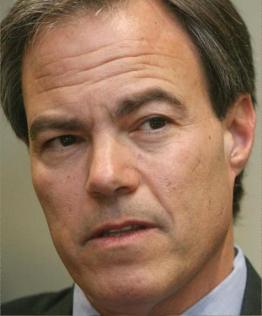
Joe Straus

We’re talking Texas, of course.

As the old saying goes, “When three different people tell you you’re drunk, it’s time to sit down.” 

Or, When Fox News suggests you’re a bigot, it’s time for some honest reflection.

It helps, of course, that Joe Straus, the embattled Speaker of the Texas House, is a Jewish Republican as opposed to being a black Democrat.  But the principle applies.

“Over the past month,” the article notes, “in a spate of e-mails and political pitches, conservative opponents of incumbent Speaker Joe Straus have said they want him replaced not because of his Jewish religion, but because of his betrayal of Republican principles.”

But in a November 30th email, John Cook of the Texas Republican Executive Committee reminded his readers that, “We elected a house with Christian, conservative values. We now want a true Christian, conservative running it.”

If you read enough of these statements, you will notice that the words “Republican,” “conservative,” and “Christian” are used more or less interchangeably.  In Texas it is generally assumed that orthodox Christianity teaches conservative economic and social principles.  It thus follows, as the night the day, that real conservatives are Christians who vote Republican. (more…)

Michelle Alexander: hard times won’t end the drug war

With America wrapped in the coils of a budget crunch, can we afford a drug war?  Shouldn’t the appalling cost of mass incarceration be giving us a terminal case of sticker shock? 

Many pundits are looking for modest cutbacks in prison populations and narcotics task forces in the years ahead.  No need to worry, they suggest, the new Jim Crow will soon collapse under its own weight.  It might be a slow process; but change is inevitable.

Michelle Alexander isn’t convinced.  Her article, “Obama’s drug war,” will appear in the December 27th edition of  The Nation along with several shorter pieces written by notable drug war critics like Bruce Western and Marc Mauer

Most of the articles in this series advance common sense public policy arguments construing the war on drugs as a misguided attempt at crime control.  Most of the writers know it ain’t that simple, but when you’re writing for the Nation you reach for arguments that click with white liberals.

Michelle Alexander comes bearing bad news.  The war on drugs and mass incarceration cannot be scaled back, she says, “in the absence of a large-scale movement—one that seeks to dismantle not only the system of mass incarceration and the drug war apparatus but also the habits of mind that allow us to view poor people of color trapped in ghettos as ‘others,’ unworthy of our collective care and concern.” (more…)

Does Mississippi want a civil rights museum?

The Rev. Martin Luther King Jr. (front left) walked in the funeral procession for Medgar Evers in June 1963. Evers was shot and killed in the driveway of his home in Jackson, Miss.
The funeral procession of Medgar Evers

Does the state of Mississippi really want a civil rights museum?

 
State Senator David Jordan, a black Democrat from Greenwood in Leflore County, certainly isn’t convinced. “It comes to a point that I don’t think Mississippi wants her history clearly told,” he told Byrd.
 
State Senator Hillman Frazier, a Democrat from Jackson, also has his doubts.  Governor Hailey Barbour initially embraced the idea of building a civil rights museum, but has done little to make it happen.  “It’s very frustrating when you’re visiting Memphis and Birmingham,” Frazier told the WP, “and they’re telling Mississippi’s history when we’re ground zero for civil rights.” (more…)

Greenwood’s black community questions suicide hypothesis


Senator David Jordan

Update: The Leflore County Coroner has officially concluded that Mr. Carter’s death was a suicide

The hanging death of Frederick Jermaine Carter is being interpreted as a suicide by local offials.  The civil rights community has problems with that theory.  According to Mississippi state senator, David Jordan, a resident of Greenwood, “There’s not a single black that’s talked to us who believes that he hanged himself.”  The USA Today story below does a good job of presenting both sides of the argument. (more…)

Making a stand in Grenada

Making a stand in Granada, MS

This is the 4th installment of a series.  The first three segments can be found here, here and here

By Alan Bean

In 1962, when Doug Evans was attending junior high school in Grenada, Mississippi, a black man named James Meredith enrolled at the University of Mississippi sparking days of riots aided and abetted by Mississippi State Troopers. Four years later, when Doug Evans was in high school in Grenada, James Meredith launched a march against fear, heading south from Memphis to Jackson. Shortly after setting out, Meredith was shot in the leg by a sniper and was unable to continue. Civil Rights leaders like Martin Luther King and Stokely Carmichael rushed to Mississippi to pick up where Meredith had left off.

When the marchers arrived in Grenada on June 15, 1966, City Manager John McEachin explained the situation to a reporter: “All we want is to get these people through town and out of here. Good niggers don’t want anything to do with this march. And there are more good niggers than sorry niggers.” (more…)

90 year-old jurist gives up on the death penalty

Justice John Paul Stevens

By Alan Bean

Retired Supreme Court justice John Paul Stevens was never enthusiastic about the death penalty.  Like a lot of Americans, he believed that some violent crimes are so horrific that capital punishment is the only appropriate response.  This abstract support for ultimate penalty was rooted in the assumption that the American criminal justice system is capable, first, of restricting capital prosecution to the very worst sort of crime, and, second, that with a man’s life at stake, jurors would hold prosecutors to the highest evidentiary standard: proof beyond a reasonable doubt.

Justice Stevens is still outraged by egregious acts of wanton violence, but he no longer trusts prosecutors to single out the very worst crimes for capital prosecution.  Moreover, he realizes that, in far too many cases, the more shocking the details of a crime, the lower the evidentiary standard becomes.  The intense desire to see justice done in a particular case easily trumps human reason and the principle of equal justice under law.  This is particularly true, Stevens discovered, when the defendant is black and the murder victim is white. (more…)