Category: Uncategorized

Key Witness in Flowers case is accused of three murders

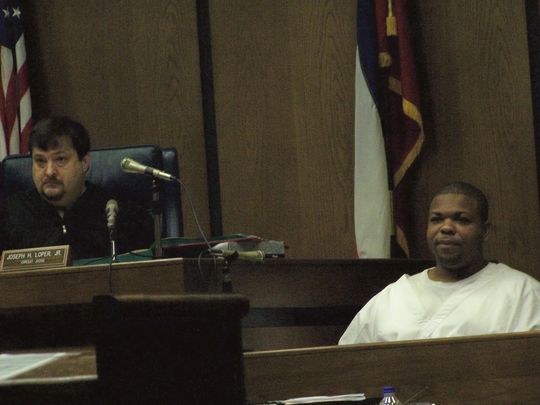
Hallmon

That’s Odell Hallmon telling a jury in Winona, Mississippi, that Curtis Flowers confessed to killing four people in a local furniture store in 1996.  Now it’s Hallmon who stands accused of killing three people in a town 20 miles south of Winona.

The difference is that Doug Evans, the DA who prosecuted Curtis Flowers 6 times before getting a final conviction, won’t have to create a case out of thin air to convict Hallmon–there is actual evidence.  You can find more about Hallmon’s role in convicting Flowers here.

But it gets worse.

In the first of the six Curtis Flowers trials (no capital case has been re-tried six times) Hallmon testified that Flowers had confessed to the murders when the two men were cellmates in the state penitentiary in Parchman, Mississippi.

In the second trial, Hallmon reversed himself.  He and his sister Patricia had learned that a reward of $30,000 was being offered to anyone giving evidence leading to a conviction in the case and they wanted to cash in.  So, when Hallmon and Flowers were locked up together, Patricia told Odell what to say and how to say it.

Then Odell, by his own account, got out of prison and was forced to live with a mother and a sister who were angry with him for turning on the family.  So Odell recanted his recantation and hasn’t budged since.

But it gets worse. (more…)

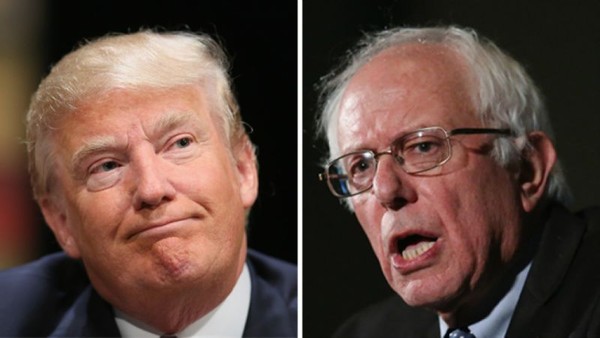
Why southern whites love Donald Trump

20160220_164813-1.jpg

By Alan Bean

In Texas, it isn’t enough to be a Republican.  As the yard signs sprouting around polling locations make clear, you can’t get elected unless you’re a “conservative Republican”.  In fact, you can drop the “Republican” altogether and just call yourself “conservative.”

If your opponent also advertises herself as conservative you can introduce qualifiers like “lifelong conservative”, “heroic conservative” or a “combat veteran” conservative.

But the 2016 election season is forcing us to reassess what we mean by “conservative”.

Traditionally, Southerners have glorified conservatism in all its forms: cultural, theological, economic and political.  But Donald Trump isn’t “conservative” in any commonly accepted sense of the term, so why is he such a hit in the conservative South?

Southerners have long embraced political and theological conservatism because, in an age of political correctness, no one wanted to admit, particularly to themselves, that their worldview was shaped by tribal loyalty and racial resentment.

In the early 1960s, southern whites put all their chips on white supremacy, spun the wheel, and lost big.  But the folks with all the votes, all the money and all the churches can’t be allowed to lose.

Enter the rhetoric of conservatism.

Political conservatives make two primary assertions.  First, any attempt to help poor people (especially non-white poor people) will make them hopelessly dependent on the nanny state.  Second, the only real way to raise the long-term prospects of the poor is to minimize the tax and regulatory burdens that keep wealthy people from creating jobs.

To help the poor, in other words, we must be kind to the wealthy.

The doctrines of political conservatism deflected attention from the racial resentment roiling the South.  We don’t want to keep the black folks down, southern conservatives said, we just want to save them from well-intentioned-but-misguided liberals.

Donald Trump’s naked appeal to racial resentment is a free floating tribalism that eschews explanation or justification.  White people want their tribe to win for the same reason residents of Pittsburgh pull for the Steelers.  It’s the home team; who else ya gonna pull for?  You’re wired that way; don’t fight it.

Donald Trump knows wealthy people don’t demand tax cuts and regulatory relief so they can create jobs; they are out for personal advantage.  Period.  Trump worked the pay-to-play system his entire career, so he should know.  It’s a broken system, he admits, but he offers no alternative.  Nor does he use conservative political theory to justify the white supremacy.   White people have money and history on their side, he says, so they should make the most of it.

For decades, political conservatives have argued that their beliefs were consistent with the ideals of fairness, equality and inclusion.  Trump sneers in disgust.

When Megyn Kelly took the real estate developer to task for making misogynistic remarks his response was simple: We shouldn’t be so concerned about political correctness.

To paraphrase: “I don’t have to explain to you why my past statements are consistent with fairness, equality and inclusion.  Those have never been my values.”

Political conservatives are loosing their minds over this kind of talk.  When the politics of racial resentment come untethered from high-minded principle the spell is broken.

Religious conservatives aren’t sure what to make of the Donald, either.  Russell Moore, the moral voice of the Southern Baptist Convention, is appalled by Trump and the wanna-be evangelicals who support him.  Obviously, Moore says, these people were never committed to the gospel of Jesus Christ in the first place.

But then we have Robert Jeffress, pastor of First Baptist Church, Dallas, who thinks Donald J. Trump is simply marvelous.

Since Moore and Jeffress are both Southern Baptists, their disagreement cries out for an explanation.

Like his political hero, Rev. Jeffress has parted ways with the politically correct language of fairness, equality and inclusion.  The god of Robert Jeffress is politically incorrect. Radically so.  This god takes sides; he isn’t fair.   America was founded as Christian nation.  Therefore, only Christians are true Americans.  Therefore, non-Christians are strangers to the American dream.  Therefore, any American who appeals to fairness, equality and inclusion doesn’t like god.

A crude characterization, perhaps, but that’s pretty much how Jeffress and his kin view the world.

Dr. Moore begs to differ.  God may have chosen America, he says, but the promise will be revoked if we sever our commitment to biblical justice.  Moore doesn’t apply God’s justice to homosexuals or, in any full sense, to women, but he extols the virtues of fairness, equality and inclusion, especially as they relate to racial justice.

Moore wants to make racial justice a central tenet of theological conservatism.  Jeffress does not.

But this isn’t primarily a fight between Baptist preachers.  The big takeaway of the primary season, thus far at least, is that a large percentage of white southerners prefer to take their white supremacy straight, undiluted by political or theological theory.

Every Southern Baptist who ever cracked a Bible knows what Jesus pushed the biblical rhetoric of fairness, equality and inclusion to its logical conclusion.  They know the God of Jesus plays no favorites. They understand that the God of Jesus Christ rejects our love if we refuse to love one another in the radical fashion Jesus espoused.

Southern “conservative” theology is best understood as an ingenious attempt to silence an inconvenient Jesus.  Nothing against the Saviour, mind you, but when the faithful are sizzling with racial resentment accommodations must be made.  Jesus saves, but he doesn’t teach.

The Donald doesn’t care about theology, conservative or otherwise.  “We live in Pittsburgh, people,” he says, “so we cheer for the Steelers, right? We’re white, we’re rich and we’re the majority, so the rest of the world can (expletive deleted) on it.”

“We’re gonna build a wall.”  That’s Trump in a nutshell.  But the wall between Mexico and the United States is purely optional.  It’s the wall separating our tribe from the restraints of political (or theological) correctness that appeals to them.

Trump is giving the middle finger to the strained justifications of political or theological conservatism and his followers love him for it.  They don’t want to explain how their self-centered tribal loyalties are consistent with the political and theological virtues of fairness, equality and inclusion.  They’re from Pittsburgh.  That’s all that matters.


Bernie is changing the game

BernieBy Alan Bean

I cannot recall another presidential election when both the official guardians of both major political parties were shocked and dismayed by the preferences of the base.   The Republican establishment is scared to death that Trump or Cruz will win the nomination.  Democrats are freaking out over a surging Sanders campaign.

But  let’s face it, Trump and Cruz are serving up the kind of red meat the party base has learned to love.  The  elite might prefer a compassionate conservative, but the folks in the trenches want an America that looks and sounds like 1953, a blessed time when the electorate was overwhelmingly white, men ruled the national roost, American economic and military power defined  the world and one-nation-under-God civil religion was the height of fashion.  The Republican base wants candidates who promise a return to White Eden and Trump and Cruz promise to deliver.

However George Will or David Brooks might define the term, Trump-Cruz is what contemporary conservatism looks like.

Conversely, the Democratic base looks and sounds like Bernie Sanders.  The prospect of a female president resonates, but economic populism is the driving passion of the Democratic base.  Sanders needs a haircut (badly) and his unmodulated apocalyptic rhetoric is shrill and predictable, but we all know what Bernie stands for.   Most movement Democrats, including many of those who think the man from Vermont is unelectable, agree with his economic analysis.

In fact, most Republicans agree with Bernie (so long as you don’t use the s-word).  American politics is controlled by corporate America and Hillary Clinton, for all her political merits, would do nothing to change that fact.

Donald Trump, Ted Cruz and the rest of a dwindling Republican field, realize their political success demands fealty to corporate sponsors.  They don’t wear corporate logos on their pin-stripes like NASCAR drivers, but they might as well.

Donald “you’re fired” Trump is the very face of corporate America.  We might not like the guy, but if you believe his entrepreneurial passion makes economic magic, you are willing to bow the knee.

Ted Cruz has been a willing tool of the corporate community since he was in high school.  All the constitutional blather boils down to cutting big business loose from federal regulation and taxation.  The money people rub their hands together when politicians like Cruz talk tough on foreign policy.  Militarism is as good for business as it’s bad for everyone else.  So is a dysfunctional immigration system predicated on private prisons.  Cruz can take an aggressively pro-life stance on the abortion issue because his corporate masters, being 98% male, have no strong feelings on the subject.

Social and foreign policy issues, from the perspective of those who own American politics, are a convenient distraction from the only agenda that really matters: the well being of the CEO class.  They would have us believe that the rule of the wealthy keeps America strong, prosperous and virtuous.

To the extent that American business is still subject to government regulation, the American form of plutocracy is approximate, not pure.  To the extent that the CEO class is taxed at all, the revolution is incomplete.

Most corporate types can live with a status quo that has them earning 500 times as much as their average employees.  Hillary Clinton is their candidate.

Others will only be satisfied when the taxing and regulatory powers of government disappear altogether.  They are bankrolling men like Cruz.

Donald Trump sees no reason to work through “conservative” surrogates when he could impose his will directly.  Initially, perhaps, he just wanted to pump us his celebrity (and indulge in a little innocent merriment) by throwing a spanner into the electoral works.  He never dreamed his crude antics would go over so well.

But they did and now Trump’s in it to win it.

The American electorate limps between two opinions.  We resent and envy the moneyed class, believing they have far too much influence.  Still, believing we’d be would be lost without the magnates and tycoons, we raise few objections when the political class calls for tax cuts for the wealthiest Americans.

Where you fall on this continuum largely determines your politics.

Should we placate the 1% a little, or a lot?  That is the question.

Bernie Sanders is a socialist.  He isn’t the kind of socialist who believes in government control over the economy; but he is challenging the suggestion that the average worker can’t do well unless the corporate class is doing 500 times better.  He’s calling for balance.  He wants more regulation and more taxation of the master class.  Lot’s more. And he is isn’t embarrassed to say so.

And that’s why Bernie’s star is currently in the ascendancy.  He ain’t pretty.  He ain’t smooth.  But he’s asking the right questions and jabbing his finger in the right direction.

The media (liberal and conservative) aren’t feeling the Bern.  Americans don’t elect socialists, so Sanders is bound to fade sooner or later. If we ignore him, they seem to be saying, maybe it will be sooner.

But Bernie’s not going away.  He may not win it all, but he has transformed a forgone conclusion into a genuine horse race.  And that is a great thing for American political discourse.

How a Baptist preacher learned about mass incarceration.

These days, everybody seems to agree that mass incarceration–the policy of fighting crime by locking up as many people as possible for as long as possible–was a really bad idea.   Charles and David Koch, Ted Cruz, and a steadily lengthening queue of criminologists and police chiefs have come out in favor of decreasing the American prison population.

It hasn’t always been this way.  In fact, when Friends of Justice formed fifteen years ago, most opinion leaders in America saw incarceration as the solution, not the problem.  Our work in places like Tulia, Texas and Jena, Louisiana helped change that perception.

But it will take more than a shift in the zeitgeist to significantly lower the prison population.  The following address concluded the “Ties That Blind: Race and the Criminal Justice System” conference at the United Theological Seminary in Minneapolis on October 16, 2015.   The little town of Tulia, Texas, I suggest, shows why mass incarceration looked like such a good idea at the time and why it will take a spiritual reformation to find a better solution.

By Alan Bean

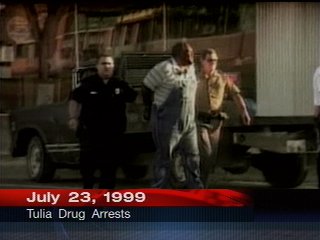
Tulia bustThe Tulia drug bust of 1999 was my introduction to mass incarceration.

In the early morning hours of July 23, 1999, officers from across the Texas panhandle converged on the south side of this community of 5,000.  Before they were finished, 47 people were stuffed into the tiny holding cells in the Swisher County Jail.  All but six of them were black, and those who weren’t had close ties with the black community.

Tom Coleman, a gypsy cop whose father was a legendary Texas Ranger, was responsible for buying 132 little baggies of white powder from these 47 defendants.  Nothing connected the little baggies to the defendants save Coleman’s uncorroborated word.  He had no second witness testimony, no audio or video evidence, no fingerprints and no guns, drugs or large amounts of cash were found in the course of the drug sweep.

You either believed Coleman was telling the truth or you didn’t.

I didn’t. (more…)