Category: Uncategorized

Sherrod missteps reveal harsh political realities

When the NAACP challenged the Tea Party movement to confront the overt racism within its ranks I was impressed.    A normally timid organization took a strong stand on a controversial issue.  The vote was unanimous.  Good for the NAACP. 

Then a conservative blogger named Andrew Breitbart posted a heavily-doctored video of a Shirley Sherrod, a high-level employee with the Department of Agriculture, telling an NAACP audience that she once gave less-than-stellar service to a white farmer because he copped a superior attitude.

Breitbart misrepresented Sherrod’s remarks so he could make the classic “you’re-racist-for-calling-me-a-racist” argument. 

As we all now know, Ms. Sherrod was actually telling her audience how she came to see that the real divide in America is more economic than racial. 

Fox News and the Tea Party gang jumped all over Mr.  Breit.rt’s video scam.  What could be more predictable?  The same shoddy tactics, aided and abetted by Fox News and the usual suspects on the right, were used to bring down ACORN and Van Jones.  The scenario is wearily familiar

But why did the NAACP and the Obama administration feel compelled to fire off hair-trigger denunciations of Ms. Sherrod’s alleged indiscretion?

Mr. Obama and the NAACP have both admitted that they rushed to judgment without taking a careful look at the facts.  True, Agriculture Secretary Tom Villsack took the blame.  But Sherrod insists that the USDA official who badgered her into a hasty resignation insisted that he was acting on White House authority.

Sure, these folks showed lamentably bad judgment; but why?

Check out this chart released a few days ago by the University of Washington Institute for the Study of Ethnicity, Race and Sexuality.  Note that 45% of white Americans express a measure of support for the Tea Party movement while only 25% of whites are opposed.

  The time will come when white Americans will be forced to build alliances with non-whites to get what they want, but we aren’t there yet.  White voters still control the political game.

The scandalously craven behavior of the Obama administration becomes even more understandable when the researchers asked a series of questions designed to tease out feelings of racial resentment.

In case the print is too small to read, here’s the statement, “Irish, Italians, Jewish, and many other minorities overcame prejudice and worked their way up.  Blacks should do the same without special favors.” 

As one would expect, 88% of strong Tea Party supporters endorsed this statement.  Only 67% of those who expressed mild support or mild opposition to the Tea Party movement followed suit–a 21% difference. 

This shows that Tea Party enthusiasts are higher on the racial resentment scale than average Americans.

But notice, a solid majority of those who adamantly oppose the Tea Party also agree with the statement, as do 70% of all white respondents.

Now, consider the second statement: “Generations of slavery and discrimination have created conditions that make it difficult for blacks to work their way out of the lower class.”  Almost three-quarters of Tea Party enthusiasts reject this claim.  The other quarter are likely the small government, low-tax folk who aren’t motivated in any significant way by racial resentment.  The numbers suggest that these people are the true fringe element within the Tea Party movement.

But notice, 55% of those showing weak support or opposition for the Tea Party phenomenon also disagree with this statement, as do 58% of all white respondents.

If these numbers are an accurate reflection of American opinion (as I suspect they are), there is a rough-and-ready consensus within the white electorate that systematic racism is a myth, that the civil rights movement removed the last vestiges of racial unfairness from American life, and that most claims of discrimination are bogus.

When the NAACP suggests that the Tea Party movement is riddled with racial resentment it is bucking hurricane-force winds.  The majority of white Americans (somewhere between 58 and 70 per cent) display Tea Party levels of racial resentment. 

Conclusion 1: The Tea Party is riddled with racial resentment, but this doesn’t distinguish them much from the balance of the white population.

Conclusion 2: The Democratic Party enjoys the enthusiastic backing of about one-third of white Americans and can’t win elections without overwhelming support from Black and Latino voters.  To win more than 30% of the white vote, Democrats must appeal to the 70% of white voters who believe that America is a level playing field.  This explains all the post-racial rhetoric we have been hearing of late.  No one with even a cursory grasp of American history or the elementary principles of sociology believes this prattle; but political reality demands it.

In fact, savvy politicians like Barack Obama learn the importance of denouncing “reverse racism” (such as that allegedly displayed by Sally Sherrod).  It’s a wink and a nod to socially moderate white folks who can occassionally be induced to pull the blue lever.  Message: forget about all that civil rights stuff; we just want a fair deal for middle class folks like yourself.

President Obama was right to issue a quick apology to Ms. Sherrod.  The decision to sack her in response to a silly smear-video was an act of political desperation. 

Chris Kromm at Facing South points out the deep irony in the USDA’s knee-jerk decision to fire Sherrod for alleged racism. 

It’s an astonishing development given the history of race relations at the USDA, an agency whose own Commission on Small Farms admitted in 1998 that “the history of discrimination at the U.S. Department of Agriculture … is well-documented” — not against white farmers, but African-American, Native American and other minorities who were pushed off their land by decades of racially-biased laws and practices.

It’s also a black eye for President Obama and Secretary of Agriculture Tom Vilsack, who signaled a desire to atone for the USDA’s checkered past, including pushing for funding of a historic $1.15 billion settlement that would help thousands of African American farmers but now faces bitter resistance from Senate Republicans.

Notice, the USDA has not been discriminating againt Irish, Italian or Jewish farmers–just African Americans. 

Kromm shares this excerpt from a USDA funded study:

Black farmers tell stories of USDA officials — especially local loan authorities in all-white county committees in the South — spitting on them, throwing their loan applications in the trash and illegally denying them loans. This happened for decades, through at least the 1990s. When the USDA’s local offices did approve loans to Black farmers, they were often supervised (farmers couldn’t spend the borrowed money without receiving item-by-item authorization from the USDA) or late (and in farming, timing is everything). Meanwhile, white farmers were receiving unsupervised, on-time loans. Many say egregious discrimination by local loan officials persists today.

One could make the same argument in connection with the GI Bill that gave a generation of American vets their first taste of home ownership.  That program too discriminated against African Americans on a massive scale.

And then there is the issue of white flight and red-lining that restricted Black Americans to inner city neighborhoods.  When the white folks headed for the suburbs, so did the manufacturing jobs.  This fundamental unfairness didn’t impact Jews, Italians and the Irish in a major way.

I could talk about the shabby schooling available to inner city populations, or the issue of racial profiling, but I think you get the drift.

The real issue in America may be economic rather than racial, as Sally Sherrod suggests, but the latter half of the 20th century was studded with examples of institutional discrimination targeting people of color.  The net result of these practices is that even the surprisingly large portion of the African American community that has moved up-and-out possesses far less net family worth than their white social peers. 

Barack Obama and Ben Jealous understand the impact of decades of systemic injustice; but they also know that speaking too freely would be politically disastrous. 

How else do we explain the cringing cowardice on display in recent days?

Jena Six the Hard Way


Jena Six the Hard Way

Stephanie Greenlea

Playing the Game

Silences on racial inequality in America have a solid history.  For decades during the civil rights movement, black activists and their allies pulled off innovative collective action and made sure that the media was there to see it.  In print and on screen, inequality by race (and white investment in it) became visible. Ultimately protest faded and coverage turned away, but not without leaving a peculiar legacy. Today most folks agree that racism is bad, that racists are “the bad guys” and that no one is inherently better than anyone else.  Having thus declared a change of mind, mainstream America became anxious to put the race saga to rest.

These silences serve a purpose, too, by ensuring a certain stability for the way that things are.  Inequality by race carries on, and in few places is this injustice more acutely felt than in the American criminal justice system. Unwillingness to talk about race as a foundational problem leaves everything intact. The business of mass imprisonment may proceed as usual, with high stakes for poor, young people of color.

From these thick silences, Americans across the country eke out a tenuous peace in order to go about daily life. In the absence of a sustained public discourse, the daily relevance of race finds most articulation in the marginalized spaces of black barbershops, living rooms, and through shared experience of friends. It is a remarkable game of co-existing, functional and occasionally comfortable, even when it doesn’t seem quite fair. 

And so, when Mychal Bell and five others were charged with severe crimes, Jena residents did the American thing to do.  In August, the town held a vigil at which underlying race issues were silenced for the town’s need for peace.  The way that Jena initially played it, silence was more valuable than race-talk.  It was a shortcut to unity and an easier way.

 Jena Six The Hard Way

Early research by Friends of Justice supported a race-centered reading of the events in Jena.  Alan Bean’s final narratives resonated with the buried conversations of black Americans.  This discourse was exhumed and aggregated through strategic organizing on the ground and innovative use of social media. With tens of thousands of supporters at marches and in the blogosphere these perspectives came forth in a remarkably public way. As with civil rights movements of the past, the September 20th protest elevated race talk from submerged, scattered conversation to a focused, highly-visible counter-narrative.  Collective action had changed the game. Rather than silence over-determining public interpretation, race-talk offered a competing narrative of increasingly equal weight.

Though it unsettled many observers, shouting about race in a culture prone to shushing presented an opportunity for a better way forward.  Rather than taking the easy route through silence, the protests demanded a more difficult engagement with racial justice.  Jena Six supporters imagined a future where interracial peace was not predicated upon ignored inequalities, but resulted instead from deep and meaningful equality of opportunity. They wanted to play it the hard way.

Obama Rolls the Dice

Remarkably, the counter-narrative on Jena became an important part of the 2008 presidential election, and by extension, an influence on subsequent national discussions on race.  The scale of the September protests made Jena a litmus test of candidates’ responsiveness to the expressed concerns of the people.  When Jesse Jackson critiqued Obama’s silence, it was clear that Obama had a heavy decision to make.  Mass support for Jena and related racial justice issues made continued silence untenable.  So, eventually the Illinois senator spoke.  When he did, he risked white backlash and black disappointment. 

Ever the good politician, Obama couched his remarks in language about shared commitments to American values (peace, equality, freedom) across race.  These rhetorical strategies allowed him to address both white fear of racial discord and black desire to have their experience taken seriously.  Clearly, Obama entered the election ready to play.  But his comments also suggest that he was willing (at least rhetorically) to play it the hard way.  His remarks on Jena would be some of his earliest articulations of a concern for racial justice in the campaign.  Breaking silences at the highest levels of government, his actions prompted candidates Clinton and Edwards to do the same. As a result of their collective action, supporters of the Jena Six had shifted national discourse on race from silence to engagement with racial justice questions.

Importantly, Obama’s support for the Jena Six made him legitimate to scores of black Americans, many of them the young people who also supported the defendants. His accountability to their experiences was rewarded richly by votes and growing loyalty.  His message of hope and unity no doubt seemed more trustworthy to black Americans after articulating that he was interested in achieving those ideals by addressing to racial inequality rather than skipping over it. By the South Carolina primary in January 2008, Obama had apparently gained enough traction with voters to enjoy their help in making him a candidate that could win.

Subsequent events would cause Obama to be more and more explicit about the relevance of race in American inequality.  Though Jena Six supporters probably did not imagine it at the time, his full-length, globally televised speech on the subject was prefigured in part by their small-town organizing.  By presenting an alternative reading of the Jena Six, Friends of Justice and their allies responded to the high stakes of the criminal justice system for black Americans, and helped to change the game for things to come. In pursuit of victory that is meaningful to all, playing the hard way is the only way to go.

Stephanie Greenlea, a doctoral student at Yale University, is currently writing her dissertation on the Jena 6 phenomenon.

Killing Oscar Grant: Did the jury get it right?

The 2009 shooting death of Oscar Grant certainly looked like murder.  With Mr. Grant flat on his belly, his arms pulled in behind his back, officer Johannes Mehserle pulled his gun and fired.  Mr. Grant died in the hospital several hours later. 

At trial, Mehserle said he mistakenly drew his pistol when he meant to use his stun gun.

That could be true.  Radley Balko of Reason Magazine, argues persuasively that the jury got it right this week when they found Mehserle guilty of involuntary manslaughter.

But Balko isn’t calling this an innocent mistake.  Police officers are trained to leave their weapons holstered unless a life is on the line.  That rule applies to tasers, not just firearms.  Whenever a weapon is unholstered something tragic is likely to happen.  Sometimes there’s no alternative.  This wasn’t one of those times.

Blogger Eddie Griffin, like most African American bloggers, calls the killing of Oscar Grant cold-blooded murder.

A number of videos taken from several different angles have been circulating on the web for a year and a half now and both Balko and Griffin’s articles contain appropriate links.

The racial divide over this issue was created by yet another jury that looks a lot more like the police officer than the shooting victim.  The Los Angeles jury that convicted Mehserle this week contained not a single African American.  Would the outcome have been different if the jury didn’t contain a single white person?

Whenever possible,  at least 33% of jurors should look like the defendant.  There is much to be said for random jury selection; but the perception of fairness is lost when a racially charged case is tried by a jury with no racial balance.

I always believed that O.J. Simpson was guilty of killing his wife, Nicolle.  Nonetheless, the jury got it right.  The prosecution failed to make its case beyond a reasonable doubt.  The dream team did it’s job well.  Had Mr. Simpson been represented by an over-worked and underpaid public defender, the trial would have been profunctory, the verdict guilty and the sentence death.

I generally favor conservative verdicts.  The “beyond a reasonable doubt” standard is intentionally high.  The fact that juries are often far too easily convinced by weak cases doesn’t justify a harsh sentence in a case like this. 

I have a hard time believing that Officer Mehserle intentionally killed a young man in his custody with dozens of cameras flashing in his face. 

That in no way justies his actions, of course.  He had no business pulling a weapon of any kind and must suffer the consequences of his unwarranted actions.

If African Americans refuse to accept this verdict it is because low-status black defendants and police officers typically receive two very different kinds of justice.  Mr. Mehserle got the verdict he deserved.  If young black men received the same kind of even-handed treatment from juries, we wouldn’t be hearing such an anguished outcry over this verdict.

The Squirrel Cages of St. Tammany Parish

The ACLU of Louisiana is alleging that prisoners at the St. Tammany Parish Jail are frequently held in 3 ft. by 3 ft. cells.  The minimum standard for pets in the Parish is twice that size.

Sheriff Jack Strain claims the cells are only used as a last resort for prisoners who are a threat to themselves and others.  See, if you can’t move, it’s hard to commit suicide.

I have only been inside the St. Tammany Parish Jail on one occasion, but the ACLU report isn’t the first time I have heard about the infamous “squirrel cages”. 

When I visited with Kelvin Kaigler at the jail, I learned that one of the defendants in the Jace Washington case  signed a confession after being held in one of these cages, deprived of toilet priviliges, for several days. 

The full list of allegations can be found in the open letter from the Louisiana ACLU to Sheriff Jack Strain

Sheriff Strain shared the ACLU letter with Dr. Demaree Inglese, medical director at the St. Tammany Jail.  Inglese sent a tart response to ACLU executive director Margorie Esman explaining that the cells are only used when prisoners are booked into the jail and when prisoners are deemed suicidal.  The squirrel cages, jail officials claim, allow staff to monitor a large number of individuals at a single time.

St. Tammany Parish Courthouse

Strain says the ACLU should have contacted his office if they were concerned about conditions in his jail.  

That would have been unwise.  Once the open letter went public, prisoners received a measure of protection from backlash.  Alerting the sheriff to their allegations prematurely would have placed prisoners at risk.

Picture inside the St. Tammany Sheriff's Office

The St. Tammany Parish Jail stands in marked contrast to the posh new St. Tammany Sheriff’s building Sheriff Strain recently erected to his immortal glory.  Pictures featuring paramilitary police operations line the walls and the reception area resembles the lobby of a posh hotel.

Conditions at the Jail couldn’t be more different.  That’s the idea.  The overcrowded lockup and Mr. Strain’s personal palace are designed to lionize law enforcement while dehumanizing offenders.

This is the same Sheriff, after all, who created a small sensation in the wake of Hurricane Katrina by telling a New Orleans news team that trashy people from New Orleans entering his parish could expect a visit from a sheriff’s deputy.  Folks with dreadlocks were considered especially worthy of official contempt.

It comes as no surprise that both Kelvin Kaigler and Jace Washington sport dreadlocks.  Both men were convicted by St. Tammany juries after Jack Strain and his boys pressured jailhouse snitches into making false allegations.  In Washington’s case, written recantations from the snitches proved inadequate.  A judge recently ruled that the men were responding to threats from Mr. Washington.

Kelvin Kaigler and James Bishop were convicted on the perjured testimony of Frank Knight, possibly the most thoroughly compromised and unconvincing snitch in the state of Louisiana.  And that’s quite a distinction.

The ACLU appears to be getting the best of the back-and-forth allegations.  Their response to Mr. Strains disingenuous counter-charges  show that Esman, Schwartzmann and company have their ducks in a row and won’t be backing down. 

The story was picked up today by the New York Daily News

The text of a recent article in the New Orleans  Times-Picayune appears below.

ACLU, St. Tammany Sheriff’s Office continue to spar over treatment of prisoners

Robert Rhoden, The Times-Picayune

The battle between the Louisiana chapter of the ACLU and the St. Tammany Parish Sheriff’s Office over the use of phone-booth sized cages to hold suicidal jail inmates has heated up, with the civil rights group and the agency issuing letters openly accusing one another of distorting the facts.

The letters come after the local American Civil Liberties Union blasted the Sheriff’s Office last week for keeping suicidal prisoners in “squirrel cages,” 3-foot-by-3-foot cages usually used to hold inmates for about an hour while deputies are doing paperwork. In some cases, the ACLU said, prisoners have reported being held in the cages for more than a month at a time.

In a response to those charges, the jail’s mMedical director, Dr. Demaree Inglese, argued in a letter Friday that the cages are used only as a last resort, “when other means…are not suitable for the situation,” and said alternative options were no less restrictive to inmates. Sheriff’s Office officials have said the cages give deputies the ability to monitor the activities of inmates to prevent them from attempting to hurt themselves.

“(We) make every effort to utilize alternative measures when possible and to minimize patients’ stays in the booking cells, but my first priority must always be protecting the health and life of the inmates, even if, at times, comfort must be sacrificed,” Inglese wrote. “Unless there is a radical shift in Louisiana policy and mental-health funding, I fully expect this situation to persist or likely worsen in the future.”

Inglese flatly denied allegations by the ACLU that the jail used the cages for all prisoners and that their requests to be let out to use the bathroom were often ignored. He also wrote that while prisoners are forced to wear shorts, actually cut-off pants from orange prison jumpsuits, while in the cages, this is not a form of punishment but a way to prevent inmates from using their clothes to hang themselves.

ACLU Executive Director Majorie Esman said the organization stands by its allegations, which were the result of a “very careful investigation spanning many months.” And, at its base, Esman wrote that both her organization and the Sheriff’s Office agree on the central issue, and the civil-rights group’s most serious allegation.

“There is one thing we agree upon: you are housing human beings in cages that are smaller than the St. Tammany Parish Code authorizes for dogs,” Esman wrote.

Esman accused the Sheriff’s Office of being “disingenuous” in saying that her organization had not visited the jail. She further argued that the cages, rather than offer protection, may contribute to suicides at the facility because inmates who “fear the shame and pain of the cages will therefore not report problems.”

Inglese, who has testified about conditions at the jail for the ACLU in a case the organization is bringing against state agencies in an effort to improve treatment options for mentally ill inmates, argued that he has tried to seek better services for mentally ill patients. But, with little ability to transfer inmates to medical facilities, the jail must “provide the best care they can in the jail environment.”

“I am curious why the ACLU is now suddenly interested in mental health services in the jail when we have been begging for assistance for over three years with no response,” Inglese wrote.

Esman replied, “(In) addition to relying upon the state for assistance, you have an obligation to take corrective measures yourself.”

Flowers case highlights resource gap

District Attorney Doug Evans

It takes a lot of money to put a defendant on death row.  Most capital defendants are poor and uneducated.  Families are rarely in a position to foot the bill for a qualified defense attorney.

The issue of indigent defense has been getting some long-deferred attention since Lawrence Tribe was appointed as Senior Counsel of the Department of Justice.  Tribe refers to the “justice gap” that makes it difficult for indigent defendants to get the justice the constitution demands.  “The whole system of justice in American is broken,” he says. “The entire legal system is largely structured to be labyrinthine, inaccessible, unusable.”

In 1963, in a groundbreaking case known as Gideon v. Wainright, the Supreme Court ruled that legal defense was a fundamental right guaranteed by the constitution.  After Gideon, defendants had the right to state-appointed defense counsel.

But how much defense is enough?

The American system of criminal justice is the most adversarial in the world.  In theory, the state, after determining that a prosecution is appropriate, does its best to make a compelling case for guilt.  Defense counsel then goes to the wall for the defendant, poking holes in the state’s case and working diligently for whatever seems to be the best outcome for their client.

This theoretical scenario can be incredibly expensive.  A thorough investigation of a homicide, for instance, requires the examination of a wide range of leads, possible suspects and theories of the crime.  If a suspect confesses and accepts a plea bargain, the state saves hundreds of hours and hundreds of thousands of dollars.

But suppose the “case facts” are complicated and the prime suspect maintains his innocence?  Then you are looking at a lot of time and money.  Prosecutors have limited resources.  If you invest $100,000 and hundreds of hours investigating a single high-profile case, other cases will suffer.

Now you understand why 95% of criminal cases are settled by plea bargain.   Cash-strapped investigators easily convince themselves that they can identify the perpetrator after a cursory investigation.  In most cases, this involves breaking down the alleged perpetrator through a process of intense interrogation that can stretch over days.  Investigators have been given the freedom of lie to suspects if they have no real evidence.  They can tell suspects that friends, family members and associates have implicated them.  They can lie about the results of polygraph tests.  They can even invent fake case files purporting to contain the fruits of an elaborate investigation.

The goal is to break the suspect down by making it appear that resistance is futile.  Once an admission of guilt is obtained, the goal is to get the suspect to write out a full confession so airtight, internally consistent and detailed that defense counsel will be completely disarmed.

The vast majority of homicide cases are solved through interrogation and plea bargain or become cold cases when the trail peters out.

You get the easy win or you give up.  You can only give so much time and money to a single case.

What happens when the state believes it knows the perpetrator but the case evidence is sketchy and  the guy won’t admit to the crime?  This scenario haunts a prosecutor’s dreams.  If the case is high-profile and the identity of the prime suspect is well known the state finds it virtually impossible to admit defeat.

The Curtis Flowers case only makes sense against this bureaucratic backdrop.  For some reason, DA Doug Evans and John Johnson, the lead investigator in the Flowers case, made little attempt to interrogate Curtis.  Maybe they thought it was a waste of time.  Instead, they spent nine months going door-to-door on the black end of Winona, Mississippi, looking for people willing to confirm aspects of their theory of the case.  Dozens of people were picked up at their jobs and carried down to the police station for an interview.

The goal was to pile up so many state’s witnesses that Curtis Flowers would realize his situation was hopeless.

But Curtis refused to fold.

He was offered life without parole in exchange for a guilty plea.

Curtis turned it down.

At some point prior to the first trial, Mr. Evans decided to make an example of Curtis Flowers.  A single trial wasn’t enough.  The plan was to try the defendant once for each of the four victims who died at the Tardy furniture store on July 16, 1996.

Unlike most capital defendants, Curtis Flowers was able to pay for legal counsel.   Sort of.  His first attorney was Billy Gilmore, a former police officer from Lexington, Mississippi.  Gilmore had been a sheriff’s deputy in the 1960s when African Americans were trying to register to vote in the 1960s.  Some local residents say Gilmore was present when the KKK firebombed the home of Hartman Turnbow in 1963.  Gilmore admits he was chief sheriff’s deputy of Holmes County at the time, but denies involvement with the Klan.

Gilmore, assisted by his son John, did a reasonably good job of defending Curtis Flowers at his first trial in Tupelo. But reading through the transcript, you get the uneasy feeling that the Gilmores came to the facts late in the day.  There was certainly no fresh investigation. Gilmore tried to poke holes in Doug Evans’ case, but made no attempt to introduce an alternative theory of the crime.

Curtis Flowers was convicted by eleven white jurors and one black juror and sentenced to death.

Unsatisfied with one conviction, Doug Evans took Flowers to trial in Gulfport.

Curtis Flowers and his family saw no reason to believe that using the same attorneys would produce a different outcome.  With this in mind, they hired Chokwe Lumumba, a highly respected civil rights attorney from Jackson.  But there was a problem.  The Gilmores had been hired to represent Mr. Flowers in four trials and the Flowers family didn’t have the money to hire Mr. Lumumba and an investigator.  At a pre-trial hearing, defense counsel requested state funds to pay for an investigator.

Judge Clarence Morgan told Lumumba that the record of the first trial should be a sufficient guide to the facts of the case.

Lumumba pointed out that the transcript of a trial that led to his client’s conviction was lacking by definition.

Judge Morgan said the defense had every right to an investigator if they wanted one, but the state wouldn’t be footing the bill.

Lumumba was incredulous.  “I would say this to the Court. You know we cannot penny-pinch around these death penalty cases. I mean I don’t care what people’s view is about budget and all this kind of stuff. If you are a state and you take the responsibility where you say you are going to put people to death then at that point money becomes no object.”

But money was an object.  A big object.  Judge Morgan was willing to let the state go to the incredible expense of trying Curtis Flowers in four consecutive trials, but he wouldn’t give the defense money for an investigator.

The economic issue raised its head later in the pre-trial process when Frederick Veal, one of the jailhouse snitches the state had used to convict Flowers in the first trial, told defense counsel that he had perjured himself in exchange for a get-out-of-jail-free card.  According to this new testimony, the sheriff of LeFlore County had sent Mr. Veal into a cell with Curtis Flowers by for the purpose of soliciting a confession.

Lumumba argued that the testimony of both snitches should be disallowed.

Judge Morgan was unimpressed.  There was no way of knowing, he said, if Veal perjured himself or not.

Lumumba could scarcely contain himself.  Why, he asked, would an ex-snitch contact defense counsel after being released from prison?  “There is no reason in the world that Veal had to tell us what he told us other than the fact that it’s the truth. We couldn’t put him in jail. We couldn’t let him out of jail. We can’t give him thirty thousand dollars. We can’t put him in a hotel . . .”

Even if the state had granted the defense a few thousand dollars for an investigator, there would be no way to match the state’s intimidating influence over potential witnesses.  When the state produces a dozen eye-witnesses, pointing out a few inconsistencies isn’t enough; you’ve got to put the entire investigation on trial.  And that means a thorough investigation.

It is obvious from trial and hearing transcripts that Mr. Lumumba made a heroic effort to perform his own investigation prior to trial, but the situation demanded the services of a full-time investigator.

In Flowers 2, the defendant was tried by another jury comprised of eleven white jurors and one black juror.  Once again, he was convicted and sentenced to death.

Shortly thereafter, the convictions in Flowers 1 and Flowers 2 were both overturned by the Mississippi Supreme Court.  Doug Evans had over-reached.  While only trying one specific murder, Evans had presented evidence relating to all four killings.

The case didn’t go to trial again until 2004.  This time, Curtis Flowers decided he could get a better shake back in Montgomery County.

The indigent defense situation had improved significantly since Mr. Flowers first went to trial.  A new state-funded office had been created in Jackson to ensure that indigent capital defendants would be fairly and competently represented.

Unfortunately, the new Office for Capital Defense had a limited budget and a daunting case load.  The budget for investigation was strictly limited.  The record suggests that no significant new evidence was sought or discovered in the Flowers case between three 2004 and trial six in 2010.

By now it was obvious that jurors exposed to testimony from the state’s eye-witnesses were inclined to convict.  On the other hand, there had been no significant African American representation on juries one and two, so maybe there was hope.

But in trial three, the state created yet another jury with only a single black juror by using all fifteen peremptory strikes to exclude black residents from the jury.  Predictably, the trial ended with another guilty verdict and another death sentence.

The Mississippi Supreme Court ruled that DA Evans had exhibited racial bias during jury selection.  Once again, the conviction was overturned and the case was remanded for re-trial.

In Flowers 4, all five black jurors–to the surprise and horror of all right-thinking people in Winona–held out for acquittal.

Did the defense suddenly come up with new evidence or find previously undiscovered holes in state testimony?

Not really.  Black jurors understood the impact reward money and implied threats could have on poor black folks.  They also had trouble seeing the Curtis Flowers they knew perpetrating such a heinous crime.

Finally, black jurors understood the power of the state to manipulate reality.  Many things had changed since the days of Jim Crow, but racial power dynamics in Montgomery County remained the same.

Trial five ended in another hung jury; but just barely.  One of three black jurors held out for acquittal.  He was charged with perjury.  Although charges were eventually dropped by the Attorney General’s Office, potential black jurors in trial six eliminated themselves at an unprecedented rate.

Thirteen years since Flowers 1, the state was putting on essentially the same witnesses.  Primed with transcripts of former statements, these men and women repeated the now-familiar stories, virtually word-for-word.  When a jury of eleven whites and one black was selected, it was all over.

Over six trials, every single white juror who has heard the state’s witnesses has voted to convict and has sentenced Curtis Flowers to death.  Single black jurors always go along for the ride.

After six jury trials, the resource gap remains intact.  The state’s theory of the case has never been seriously challenged in the courtroom.  You can’t place the state’s investigation on trial without matching state expenditures dollar-for-dollar and hour-by-hour.

The case against Flowers features unusually weak physical evidence bolstered by a large number of eye-witnesses.

Credibility, like beauty, is in the eye of the beholder.  Shortly after the state rested in Flowers 6, I was approached by a dignified white gentleman who had driven to Winona to witness the trial.  He had heard a lot about the case and wanted to see for himself what it was all about.

“Is that all the state has to offer?” he asked me.  “I simply don’t find those people credible.  In fact, most of them are downright ridiculous.”

“I agree,” I said.  “But the folks in the jury won’t see it that way.”

“Are you certain?” he asked.

“You can never be certain of anything,” I replied.  “But from where I sit, Curtis Flowers doesn’t have a chance.”

The legal system is like war and football; the side that brings the most resources to the table wins.

Why have so many people spent so many years repeating the same incriminating claims?  Either Mr. Flowers is guilty as sin, or the state of Mississippi, through the ministrations of District Attorney Doug Evans, has manufactured false testimony on an extraordinary scale.

My money is on the second alternative.

Curtis Flowers, like most God-fearing residents of Winona, doesn’t fit the hardened-thug profile.

The idea that an unassisted individual could kill four people execution-style is counter-intuitive.

Why would a killer walk witness-laden streets to a murder?

Why didn’t a single witness come forward of their own volition?

I can think of a few provisional answers.

The DA from Grenada, Mississippi was under enormous pressure to find a suspect on the black side of town.

Moreover, Doug Evans is an unreconstructed product of the Jim Crow era who has repeatedly displayed a remarkable degree of racial insensitivity.  There are plenty of Jim Crow alumni who experienced a come-to-Jesus moment later in life.  The late Robert Byrd is an obvious example.  But there is no evidence that Mr. Evans has made a clean break with the rigid worldview he was raised in.  Shortly before the Tardy murders, Evans was giving speeches at events sponsored by the unapologetically racist Council of Conservative Citizens.

None of this is proof that Flowers is innocent, of course.  But this case is riddled with questions that only an extensive re-investigation can answer.

Bashing Thurgood Marshall

Knowing Elena Kagan will win confirmation to the Supreme Court, Republican Senators used her confirmation hearing to malign the legacy of Thurgood Marshall.

Marshall believed that when the political process fails to protect the legitimate claims of the poor and the oppressed, the legal system should provide a second resort. 

This is what happened in Brown v. Board of Education in 1954. 

Which explains why conservative senators were at such pains to denigrate the Marshall heritage–he represented a theory of law they abhor.  Not all conservatives have accepted the logic of Brown v. Board and the Never in a Thousand Years philosophy of the late 1950s is emerging as a new orthodoxy.

The concept of civil rights has never been popular among conservatives.  For a time, they adjusted to the undeniable momentum behind the civil rights movement; but those days are long since gone.

Thurgood Marshall was appointed to the Supreme Court in 1967.  It is almost impossible to imagine a person of his judicial philosophy being appointed prior to 1964 or after 1968; the window of opportunity was exceedingly narrow.

Elena Kagan clerked for Marshall and considers him a mentor.  But she also works to distance herself from the Marshall legacy.  She embraces the death penalty because, as a practical matter, she must.  You can’t sit on a jury in a capital case if you oppose capital punishment, and you can’t get elected either.  If you want a seat on the Supreme Court, support for the ultimate penalty is mandatory.

Thurgood Marshall knew the American status quo was fundamentally unjust.  He was rejected by the University of Maryland law school in 1930 because of his color.  Had he been accepted, Marshall might have adopted a mainstream pragmatism.  Instead, he went to Howard University where he came under the influence of people like Charles Hamilton Houston who took the concept of equal justice under law seriously.

As a Jewish woman, Elena Kagan has likely experienced rejection and prejudice; but nothing like what Marshall and his black contemporaries faced. 

The resurgence of 1950s conservatism is apparent in the Marshall-bashing on display this week and in the thin-gruel liberalism exhibited by the nominee.  Conservatives, for all their setbacks, are on the offensive; liberals went into a defensive crouch in the chaotic years between 1966 and 1980 and have yet to stand up for their ideals. 

In fact, in twenty-first century America, only conservatives can have ideals; liberals must present themselves to the world as fuzzy pragamatic survivalists.

In an environment like this, trying to bring the criminal justice system into line with Thurgood Marshall’s vision is an uphill slog.

Barrow Twins win belated relief

Mandis Barrow is getting a new probation revocation hearing.  His twin brother, Landis, received similar relief from the Texas Court of Criminal Appeals in November of last year. 
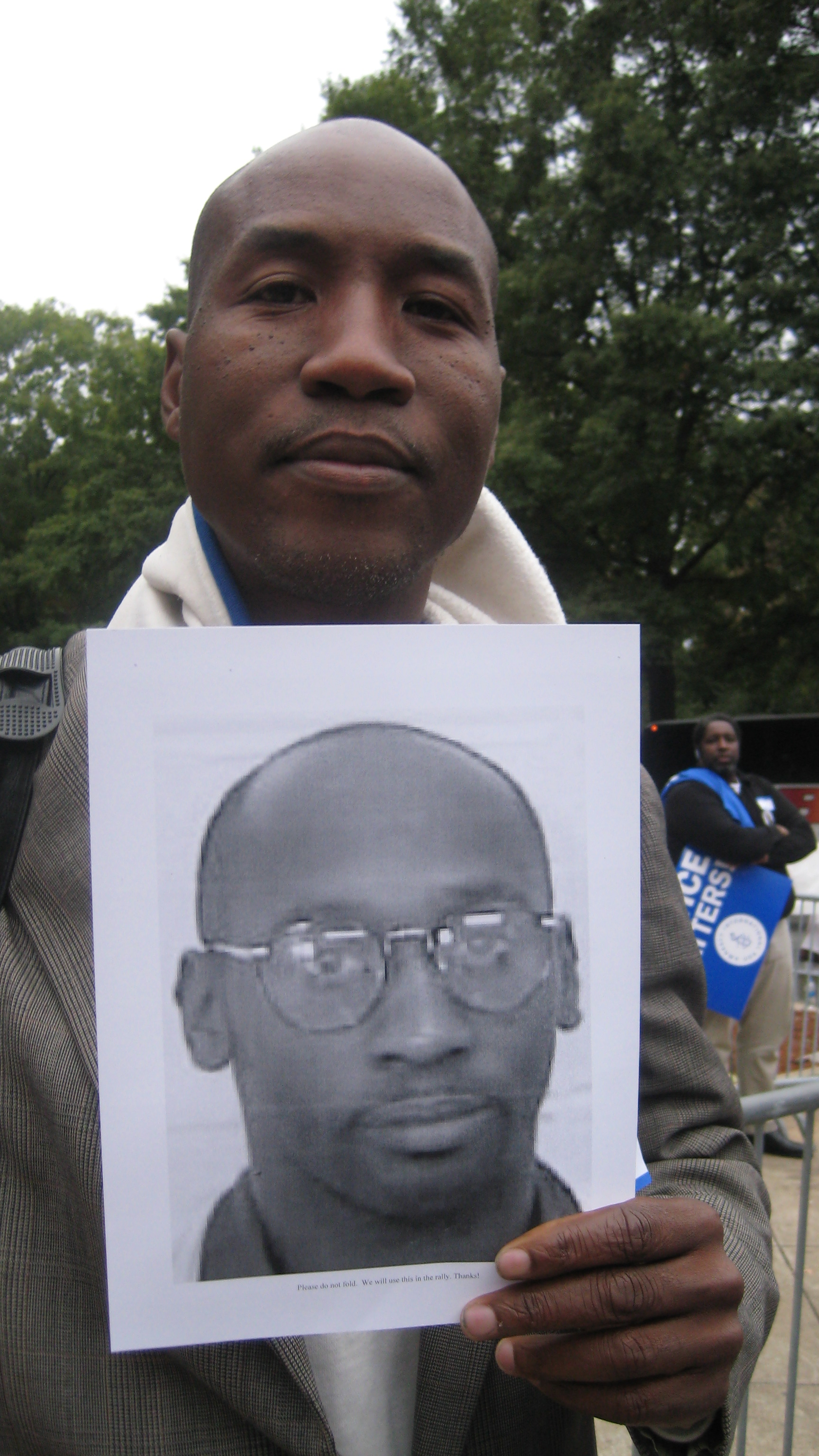
Potter County District Attorney Randall Sims (pictured to the left) is unlikely to press for a second revocation. 

The case of the Barrow twins is complicated.  As teenagers, they were accused of aggravated robbery in Amarillo.  Their attorney felt the charges were weak enough to fight, but the DA was offering deferred adjudication in exchange for guilty pleas and that meant a one way ticket back to the streets. 

This kind of short-term thinking often leads to a world of hurt.  Probation can be revoked for technical reasons (missing a meeting with a probation officer, for instance), but any new charges mean a virtually certain revocation.

That’s where Tom Coleman, the hero of Tulia’s once-fabulous drug bust, comes in.  An Amarillo judge heard Tom Coleman say he bought drugs from the Barrow twins and sentenced them each to twenty years in prison. 

While incarcerated, Landis and Mandis received money from a 6 million dollar settlement; but they remained in prison.

Randall Sims could have granted relief to the Barrow twins a long time ago.  Ably represented by the indefatigable Vanita Gupta (then with the Legal Defense Fund), the twins argued that, since their probation had been revoked on the uncorroborated word of a notorious liar, they should receive a new hearing.

Their plea fell on deaf ears. 

So now, with both brothers are back in the free world,  joint revocation hearing will be held in the near future.  If you want to read more about this story there is an article in the Amarillo Globe-News and Scott Henson has a good post at Grits for Breakfast that talks about the wide repercussions of the Coleman fiasco.

This case is personal to me. 

I corresponded with the twins for years and they helped me understand the social background of the Tulia drug sting. 

Secondly, I bumped into Mr. Sims at an event in Amarillo several years ago.  When I mentioned that I was from Tulia, he automatically assumed that I was one of the law abiding folks who backed the Coleman operation 110%.  The DA told me that Tulia was getting a really bum deal and everybody in Amarillo knew it.

In reality, Tulia had sown the wind and was reaping the whirlwind.  If prosecutors like Mr. Sims understood the seriousness of what was happening in Tulia they would have granted relief to the Barrow twins years ago.

Alan Bean

Fuzzy facts in Savannah: reflections on the Troy Davis hearing

The evidentiary hearing in the case of Troy Davis has come and gone.  If Mr. Davis is now guilty until proven innocent, Patrick Rodgers thinks his lawyers have little cause for rejoicing.  The waters are just as muddy now as they have ever been. 

But is this process just about the guilt or innocence of Troy Davis?  I don’t think so.  In fact, I predict that the State of Georgia will be unable to execute Troy Davis.  Why?  Too many people either think he is innocent or distrust the investigation underlying this case.  When that happens, the criminal justice system freezes up. 

Supreme Court Justice Anton Scalia painted the Supreme Court into a constitutional corner when he made this stunning observation:

“This Court has never held that the Constitution forbids the execution of a convicted defendant who has had a full and fair trial but is later able to convince a habeas court that he is ‘actually’ innocent.  We have repeatedly left that question unresolved, while expressing considerable doubt that any claim based on alleged ‘actual innocence’ is constitutionally cognizable.”

Scalia apparently think that’s okay.  Most Americans would disagree . . . if they were paying attention. 

The trouble with the Davis case is that so many people are paying attention.  Normally, the Alice in Wonderland character of the legal system goes unnoticed.  When a case gains widespread attention, a tipping point is reached.  The Davis case tipped a long time ago.

JUNE 29, 2010

Sound and fury: The Troy Davis hearing

Patrick Rodgers

Twenty years in the making, last week’s proceeding didn’t seem to clarify anything.

In a city with a reputation for celebrating the intersection between odd personalities and true crime drama, last week’s evidentiary hearings for Troy Davis did not disappoint.

There were remorseless convicts correcting the state’s legal team about prior arrests; wild–haired old ladies reflecting out loud (to no one in particular) about the distant past; tense moments implicating possible police malfeasance; and a court room audience that did not hesitate to emote audibly as various witnesses were questioned.

“We don’t usually have this much excitement in the courtroom,” I overheard a member of the court staff say while waiting for Wednesday morning’s session to convene.

It was expected to be a circus – after all, the case has grown from local tragedy to international controversy over the last few years. The Pope and the French government, among others, have even taken sides.

Media, special interest groups and curious observers all gathered to catch a glimpse of the proceedings.

In front of the court house dozens of high school and college students gathered to assist Amnesty International and the NAACP with a rally, waving signs, chanting and passing out fliers. The atmosphere was electric. (more…)

Michelle Milner: Standing with Curtis Flowers

Who is Curtis Flowers?  A lot of people have opinions, but those who grew up with Curtis are uniquely qualified to speak.  Michelle Milner contacted Friends of Justice shortly after Mr. Flowers was convicted and sentenced to die by lethal injection.  Michelle is a doctoral student in urban higher education at Jackson State University with a research interest in justice-related higher education.

I have observed with considerable angst the circus that has surrounded Curtis Flowers for some 13 years…a sort of morbid fascination with the injustice and racism that I see displayed. The prosecution’s distortion of Curtis Flowers as a murderer would be laughable if not for the fact that the individuals actually believe this pack of lies. The Curtis Flowers that I know could never have committed a crime such as this one.

I met Curtis as a teenager. I lived in a small town neighboring Winona, MS. Since our small community didn’t have very much to offer in the way of entertainment so we frequently traveled to nearby Winona, MS to attend games, dances, and participate in other activities. I struggle to remember our very first introduction because I honestly can’t remember a time as a teen that I didn’t know him or know of him.

Curtis is the kind of person that makes you feel instantly at ease. He is laid back, kindhearted, funny, and very easy to like. Some of the young men in Winona would fight with young men from our community, sort of a rivalry and a way to keep them away from the girls in Winona. He was never a participant in any of that foolishness. As a matter of fact I never remember him being involved in any altercations even when he was provoked. He dated a girl that lived near me for a short time. She never mentioned violence or a mean streak. Curtis had it all—good looks, great personality, charm, and a beautiful tenor voice that he used with the Unionaires (a male singing group). I have to admit it wasn’t always my love of Gospel music that made me search out churches where he would be singing. He was always willing to laugh and talk after service. We loved to hear him sing. I’m sure “the Curtis Effect” was obvious by the number of younger females that filled the audience during the time that the group sang. That’s the Curtis Flowers that I know and remember. He was a smiling, lighthearted, down-to-earth, fun-loving, and grounded Christian that boldly sang of God’s grace and goodness. I don’t remember which songs he sang, but I remember that he sang them with conviction and boldness. (more…)

CNN Story on Flowers Verdict

CNN’s Emanuella Grinberg did an excellent job of covering the final days of the Curtis Flowers trial from every conceivable angle.  Emanuella got her start in journalism with Court TV, so she has a good feel for courtroom dynamics.

One crime, six trials and a 30-minute guilty verdict

By Emanuella Grinberg, CNN
 
June 18, 2010 5:45 p.m. EDT

Winona, Mississippi (CNN) — The fatigue was palpable by the eighth day of Curtis Flowers’ sixth murder trial.

On the ninth day — Friday — Flowers was found guilty of four counts of murder in the July 16, 1996, shooting deaths of four people inside the Tardy family’s furniture store in downtown Winona.

The seven women and five men on the jury took just half an hour to resolve a case that has haunted the courts of Mississippi for 13 years. (more…)