
Steven Phillips, one of the several dozen men exonerated through the efforts of the Texas Innocence, is suing two Texas attorneys. According to Phillips’, Amarillo attorney Jeff Blackburn and Lubbock attorney Kevin Glasheen are claiming $1 million in legal fees from Phillips.
Blackburn says its all a misunderstanding because, regardless of what the paperwork says, he has no financial interest in the case. It appears evident, however, that Blackburn and Glasheen stand to collect a combined $8 million from representing Texas exonerees.
Jennifer Emily’s story in this morning’s Dallas Morning News is by far the most critical piece published thus far. Emily quotes State Representative Raphael Anchia thusly:
“When I hear about folks potentially abusing and taking the money of the exonerees, it really breaks my heart. They should be helping the exonerees on a pro bono basis. The exonerees have suffered enough.”
The DMN article also quotes Michelle Moore, who once worked with Blackburn at the Innocence Project of Texas. “It was bad enough to see private attorneys do it, taking 30 to 40 percent” Moore told the DMN, “but to see people who are supposed to be helping … I have no problem with someone who does attorney’s work receiving a fee. But when it’s a one-page document the guy could fill out himself …”
Finally, Texans for Public Justice, identified in the article as “a watchdog group”, has made statements critical of Blackburn and Glasheen. “”The Texas Innocence Project will suffer a huge loss of innocence,” the group says “if its top attorney worked by day as a pro bono attorney for the falsely accused while secretly angling by night for a cut of those exonerees’ monetary settlements.”
Meanwhile, the blogosphere is picking up on the story. “Frankly, I find this whole thing disgusting,” one blogger writes. “The compensation paid by the state was to help make up for a huge injustice done to these exonerees. It was not meant to make attorneys rich.”
But that appears to be the real issue here: should attorneys be expected to invest thousands of unreimbursed hours working for their clients?
Scott Henson at Grits for Breakfast doesn’t think so. Grits calls State Rep. Achaia naive for expecting attorneys to work pro bono–how are they supposed to pay the mortgage? Until recently, Henson worked with Blackburn and Glasheen for the Innocence Project of Texas. He takes issue with Michelle Moore’s comment about lawyers charging the big bucks to help fill out a one-page form. Scott’s argument here requires an extensive quotation:
The fact is that Texas already had a compensation statute when Steven Phillips got out of prison, but at a much lower compensation rate. All of the fellows who hired Glasheen (some of whom, but not Phillips, for which Blackburn receives a referral fee) could have filed that same one-page document already and received compensation at a lower rate. They each had a choice under the law: Sue or accept compensation. Some did accept the compensation and didn’t pay lawyers anything. Bully for them. That was their decision, but they’ll receive less money overall than Mr. Philips. The only ones on the hook for attorneys fees are the ones who made a conscious choice that the previous compensation package was not enough.
Under the law for exonerees who reject the state compensation package, their other option for compensation was and is to hire a lawyer and sue . . . Those lawsuits were settled this spring in light of Texas’ new compensation bill and a portion of the bill’s success may be attributed directly to leverage from Glasheen’s litigation – particularly among Dallas-area reps like Anchia whose local governments could otherwise be on the hook for big civil judgments. If the bill had failed, the litigation would have gone forward, including Mr. Phillips’, of that I have little doubt.
Bottom line: these exonerees are in a unique position because of a) choices they made and b) the point in history they made them. Nobody going forward will find themselves similarly situated because the law has changed.
This issue reveals a common assumption: those who work on behalf of indigent defendants are self-serving if they are reimbursed for their services. It is generally believed that attorneys like Blackburn and Glasheen are on salary to the Innocence Project of Texas. I’m not sure if that’s true and would like to be enlightened.
There is also the issue of proportionality. If Blackburn and Glasheen rake in $8 million for their services on behalf of exonerated defendants they will be earning more in a single year than the combined incomes of several dozen full-time Texas criminal justice reform advocates. The natural response, Scott Henson suggests, is that the attorneys in question lobbied extensively for legislation that, when passed, greatly expanded the pool of money available to the exonerated.
I am willing to buy that argument, but an immense compensation gap remains between high profile attorneys like Jeff Blackburn and the hundreds of people across the county who have given up the criminal justice reform game in recent years because they couldn’t make a living at it. The same issues arose in the wake of the Tulia drug sting. Jeff Blackburn was reimbursed handsomely (albeit for several years of hard work) while the rest of the advocacy network assembled around the case was recompensed at much lower levels, or not at all.
Friends of Justice and the Kunstler Fund for Racial Justice, the organizations that brought the case to national attention, received not a nickel. The Texas ACLU was the first established Texas-based organization (eight months after Friends of Justice first blew the whistle) to enter the Tulia fight and they didn’t have a financial stake in the game when the winnings were divided. It was just the way things worked.
True, there are many services that only attorneys can perform, and they certainly deserve to be reimbursed, but if the Tulia defendants had relied on Panhandle attorneys to go to the wall on their behalf (before 20/20 and the New York Times were involved, that is) they would have been sorely disappointed. The first steps must be taken by plucky, small-budget organizations who assume all the risk and reap none of the profit.
The same scenario played out in Jena, Louisiana. A few attorneys involved in the Jena fight were paid reasonable fees for their services but nothing approaching Blackburn-Glasheen levels. As in Tulia, most of the legal work was on a pro bono basis.
Of course, in Tulia and Jena, pro bono attorneys were working fordeep-pocket law firms who could afford to make a few attorneys available.
There is little consistency, proportionality or fairness to all of this. But if attorneys representing the Innocence Project of Texas are getting rich (and yes, $4 million in fees qualifies as rich in my book) the public should be aware of it. This story illustrates just how little the mainstream media understands about the legal business. Attorneys like Jeff Blackburn take big risks and incur big losses. Sometimes they hit the jackpot. That’s the way the game is played. One thing is clear, none of the attorneys associated with the Innocence Project were working out of the goodness of their hearts.
My guess is that more light is yet to be revealed. I’ll keep you apprised.
 Fannie Lou Hamer never recovered from the beating she suffered in the county jail in Winona, Mississippi. A blood clot eliminated vision in one eye. Severe damage to her kidneys shaved decades off her life.
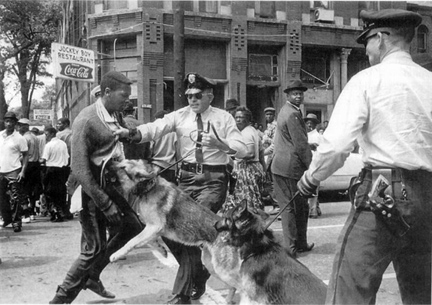

 In the fall of 2010, Mississippi will introduce its school children to the civil rights movement. When the new curriculum received its first round of media attention in August, anxiety in the white community was palpable.
  Mike Huckabee is done as a presidential contender. That’s the word on the street. When you commute a burglary sentence in 2000 and the guy shoots four police officers to death nine years later, you’re political toast.
  Tom Mangold was the first reporter to build an in-depth television story around Jena, Louisiana. Now the British journalist has the distinction of being the first reporter in any medium to address the social currents swirling around
  If Adam Liptak is right, liberals, conservatives and libertarians have come to distrust our criminal justice system. Liberals think it’s unfair; conservatives think it’s too expensive; libertarians think it’s too intrusive.
  We don’t like whiners, do we? And with good reason. The belief that the cards are intentionally stacked against you can be a one-way ticket to professional disaster . . . even if it’s true.
 Jesse Ray Beard, the youngest Jena 6 defendants, was featured on

 Friends of Justice