Author: Alan Bean

Fred Clark picks a fight with Mark Noll over the origins of “America’s Biblical Civilization”

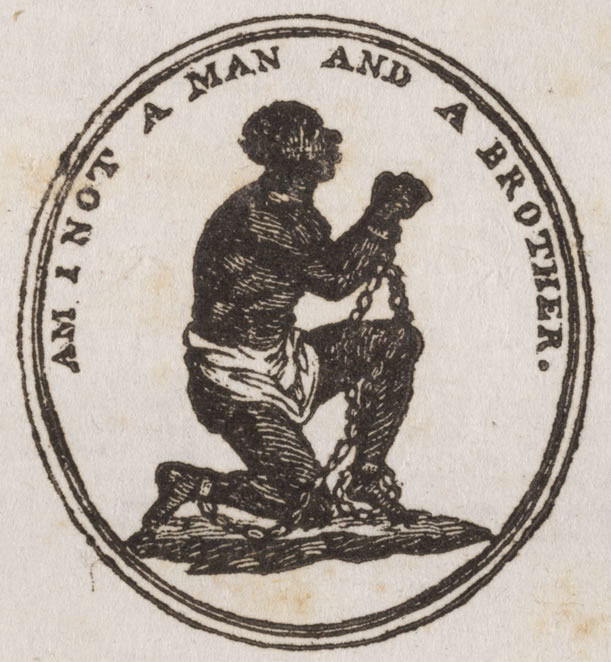
Am_I_not_a_manFred Clark has done an audacious thing.  He has picked a fight with Mark Noll, perhaps the most celebrated church historian in America.  You will have to read Fred’s essay yourself, but here is the conclusion:

Of course slavery was “biblical” and of course opposition to slavery was “unbiblical.” That was what those words mean. That was the whole point of declaring that American Christians should think of themselves as a biblical civilization rather than a Christian one.

All of which is why the dominant narrative in historical and theological discussion of pre-1865 American Christian “debates” about slavery get the whole thing backwards and upside-down. I love Mark Noll’s The Civil War as Theological Crisis. You should read it. It’s a terrific, incisive, engaging book full of profound questions and insights. But it also gets the core of its argument backwards and upside-down.

The perverse part of that argument and that narrative is this: It asserts that pre-1865 “biblical” Christians approved of slavery because of the way they read their Bibles. That’s not true. That’s the opposite of what is true. Pre-1865 “biblical” Christians read their Bibles the way they did because they approved of slavery.

Read Clark’s essay, listen to Noll’s lecture, and tell us what you think.  I think Clark’s right, and, considering that Noll is a leading authority on American religious history, that is surprising.  But Clark cut his scholarly teeth in an age when questions of self-interest, power and money bulked large in American scholarship while Knoll is the product of an age in which it was still assumed that the folks who shaped American civilization, though sometimes short-sighted, were well-intentioned Christians.

Here’s the thing.  Christianity, and the prophetic Judaism from which it sprang, emerged in a context of oppression.  The word, whether from Isaiah, Jeremiah or Jesus, was preached to a people on the losing side of the power equation.  If the folks who controlled the money, the politics, and the weaponry were resisted openly (whether we are talking about the Assyrians, the Babylonians, the Greeks or the Romans) they would always win.  And yet, miraculously, the God who created heaven and earth was on the side of the oppressed, not the oppressor.

This simple assumption lies at the heart of Jesus’ teaching, which is why people who identify with power (white Americans, for instance) have a hard time making any sense of Jesus’ teaching.  So we claim Jesus as savior while trying to cover up the fact that we disagree with virtually every thing he said.

“The Twilight of the American Enlightenment”: George Marsden’s recipe for genuine pluralism

xmarsdenq1332359620-pagespeed-ic-k8uxm06umhBy Alan Bean

George Marsden is an evangelical Christian who is deeply troubled by the current state of American evangelicalism.  But in The Twilight of the American Enlightenment the celebrated historian turns his attention to the failed quest for an American religious consensus in the 1950s, the halcyon days of liberal American Protestantism.

Marsden came of age in the 1950s, emerging from the womb of conservative evangelicalism, graduating from ultra-conservative Westminster Theological Seminary in the 1960s, then studying church history at an aggressively secular Yale university.  This cultural trajectory allows Marsden to consider American religion from both sides of the culture war.  He is telling his own story.

Marsden calls himself an “Augustinian Christian” and freely admits that this identity shapes his perspective.  He longs for an America where his own tradition has a place at the public policy table without excluding other voices, religious and secular.

Marsden-Twilight-Book-187x300The American liberal establishment appeared to be thriving in the late 1950s, Marsden reminds us, but within a decade the churches of the old American Protestant mainline were in utter disarray.  In his extensive introduction, Marsden lays out the skeleton of his thesis:

My argument, in brief, is that the culture wars broke out and persisted in part because the dominant principles of the American heritage did not adequately provide for how to deal with substantive religious differences as they relate to the public domain.  The American paradigm for relating religion to public life was an unusual blend of enlightenment and Protestant ideals.  In some ways it was the model of inclusivism and religious freedom.  But because it also fostered an informal Protestant establishment, or privileges for mainstream Protestants in public life, there were always those who were less privileged, who were excluded or discriminated against–such as Catholics, Jews, people of other world faiths, or those in smaller sectarian groups . . . My contribution is to point to an alternative paradigm for thinking about the varieties of religious outlooks in the public sphere and the roles they play within that sphere.

From the beginning, Marsden believes, America has been “shaped by an alliance between enlightenment rationality and Protestant religion.”  Religion, though socially prominent, has played a secondary or supplemental role “even as most of the business, politics, learning, literature, and arts of the nation were conducted on essentially secular grounds.”

In other words, when you flipped through the New York Times, listened to the NBC nightly news on the radio (or, increasingly, on television), or took in a movie in 1950s America, religion, if mentioned at all, appeared as a footnote to an essentially secular narrative. (more…)

A Prophetic Convergence: The Rev. Dr. Martin Luther King, Jr. & The Southern Baptist Theological Seminary

Guest Post by the Rev. Dr. Jeff Hood

10931722_771402396273952_6286234070078836912_n

On April 19, 1961, the Rev. Dr. Martin Luther King, Jr. delivered a stirring sermon in a most unlikely place. Though not his most famous address, Dr. King’s words to the Southern Baptist Theological Seminary or simply Southern Seminary pushed the audience to do more to accomplish racial justice. Delivered to the flagship theological institution of the flagship denomination of Southern Culture, Dr. King would never again give another address like this.

The Southern Baptist Convention originated from a desire amongst Southern Baptists to keep their slaves and Jesus too. For many of the early years, Southern Seminary reflected the staunch racist and segregationist attitudes of Southern Baptists. After many years of secret and segregated courses, Garland Offutt became the first African-American graduate of Southern Seminary in 1943. By 1947, Southern Seminary was fully integrated. To put this in perspective, Duke Divinity School did not integrate until 1961 and Candler School of Theology at Emory University did not integrate until 1965. Who would have thought that the flagship seminary of Southern Baptists led the way amongst major theological institutions in the South on race?

In December of 1960, Dr. Henlee Barnett secured an invitation for Dr. King to deliver the Julian Brown Gay Lecture from the Guest Lectureship Committee. Knowing that the invitation would be controversial, Southern Seminary President Duke McCall told the committee, “Boys, it is your call, but you do realize you are going to cost us hundreds of thousands dollars if you proceed.” Dr. Barnette replied, “If so, it will be money well spent.” Dr. King accepted the invitation and responded with a title, “The Church on the Frontier of Racial Tensions.” By the time April arrived, there were security concerns and controversy brewing throughout the Southern Baptist Convention.

Arriving with a full police escort, Dr. King was greeted by professors Henlee Barnett, Nolan P. Howington, Willis Bennett, Wayne Ward and James Leo Garrett. Dr. Ward remembered Dr. King being deeply reflective. The group stopped to take a picture that still hangs on the wall of my office. When Dr. King climbed into the pulpit, an overflow crowd of 1500 people greeted him. Former student Rev. Charles Worthy remembered, “The mood was absolutely electrifying.”

The Dr. King that is heard at the beginning of his address to Southern Seminary is not the same Dr. King that was later remembered as one of the greatest orators ever. Stumbling over his words, Dr. King is clearly nervous. However, once he got in the flow, Dr. King never turned back. Speaking about the role of the church, Dr. King pushed the gathered to “…develop a world perspective.” Speaking about race relations, Dr. King declared that racial injustice is “…diametrically opposed to the underlying philosophy of Christianity.” Speaking about economic injustice, Dr. King declared that people must, “…learn to live like Jesus.” Pushing the congregation out the door, Dr. King declared, the gathered must be “…maladjusted to the evils of this age.” The only African-American seminary student in attendance at the time, Dr. Emmanuel McCall remembered, “It was powerful…I felt like the direction of many lives were altered that day.” Though controversy did cause Southern Seminary to lose money, I have to agree with Dr. Barnette that it was money well spent.

In 2008, close to fifty years after Dr. King’s sermon, I was a student struggling at a radically different Southern Baptist Theological Seminary. Following denominational conflict, Southern Seminary became one of the most fundamentalist theological institutions in the nation. Due to some radical changes I experienced, I dramatically changed my perspective on a number of issues of social justice. When I was searching for direction and didn’t have many places to go, I discovered the story of Dr. King’s sermon. Realizing that there was a way to follow Jesus beyond the narrowness and bigotry I had known, I started following the advice contained in Dr. King’s sermon and began working to develop a world perspective that equipped me to fight against injustice and be maladjusted to the evils of this age. Presently, I work as the Minister of Social Justice for the social justice ministry of the Cathedral of Hope United Church of Christ, the largest LGBT church in the world. Without the courage of the earlier professors from the Southern Baptist Theological Seminary and the witness of Dr. King, I doubt I would be here. I pray that maladjustment to injustice continues to spread.

Amen.

Friends of Justice participates in “policing after Ferguson” summit in Arlington, Texas

635569476054443074-UTA
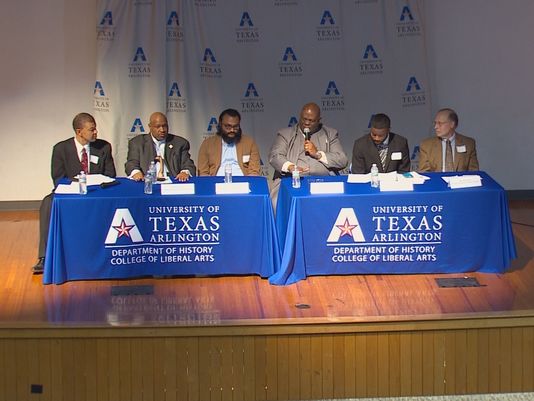
Rev. Dwight McKissic has the microphone; Alan Bean is on the far right and Gary Bledsoe, president of the Texas NAACP is on the left.

I was pleased to participate in an all-day summit on community policing after Ferguson, January 15 in Arlington.  As the Dallas Morning News article below suggests, this event brought together all four of the African American congressional delegation from Texas.  Some of my remarks are summarized in Sarah Mervosh’s article.

Alan Bean

Texas’ black U.S. House members join session on averting another Ferguson

Staff Writer

It’s not every day — or even every year — that Texas’ black U.S. representatives get together outside of Washington.

But they made a point to do so Thursday, united by an issue deeply relevant to them and their constituents: relations between police and communities of color in the wake of the controversial officer-involved shootings in Ferguson, Mo., and New York City.

“It was important for all of us to do this,” said Rep. Marc Veasey, D-Fort Worth, who noted that they typically meet in their home state only every other year for the Democratic State Convention. “It shows just how important this issue is.”

Veasey and his North Texas counterpart, Rep. Eddie Bernice Johnson, D-Dallas, co-hosted panel discussions about Dallas-Fort Worth’s own race-relations problems and what can be done to prevent a similar tragedy from happening here. Reps. Al Green and Sheila Jackson Lee, both Democrats from Houston, came to town for the event.

Speaking to several dozen people at the University of Texas at Arlington, the panelists — mixed in race and life experiences — illustrated the way trust in police splits down the color line.

Friends of Justice executive director Alan Bean, who is white, recalled a time when he was driving on a low-traffic road with a friend, who was a minority. The friend asked him to slow down, asking how many times Bean had been pulled over. Five times in his life, Bean said, all for speeding.

Bean turned the question back on his friend: “How many times have you been pulled over?” The friend replied: “I stopped counting at 30.”

“We just don’t come to these situations with the same perspective lens,” Bean said Thursday, encouraging more conversations between minorities and law enforcement officers to facilitate understanding.

Read full article here.  The local ABC affiliate’s story is here.

Why Jesus Loves the Little Children

Epiphany

By Alan Bean

I learned about the season of Epiphany from the book of Daily Office Bible readings I stole from the Episcopalians some thirty years ago.  First, I wondered why the advent readings focused on the end of the world; then I wondered why Matthew’s Magi stories didn’t show up until after Christmas.

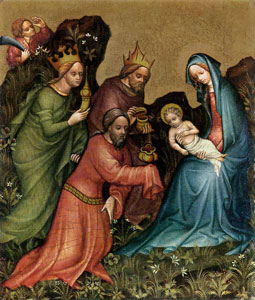
In my Baptist upbringing, the three wise men were right there, with the shepherds and all, at the stable in Bethlehem.   (more…)

Selma, the ignorance of the wealthy, and why we don’t talk about “Christian terrorists”

By Alan Bean

My inbox doesn’t always give me anything worth reading, but today was an exception.

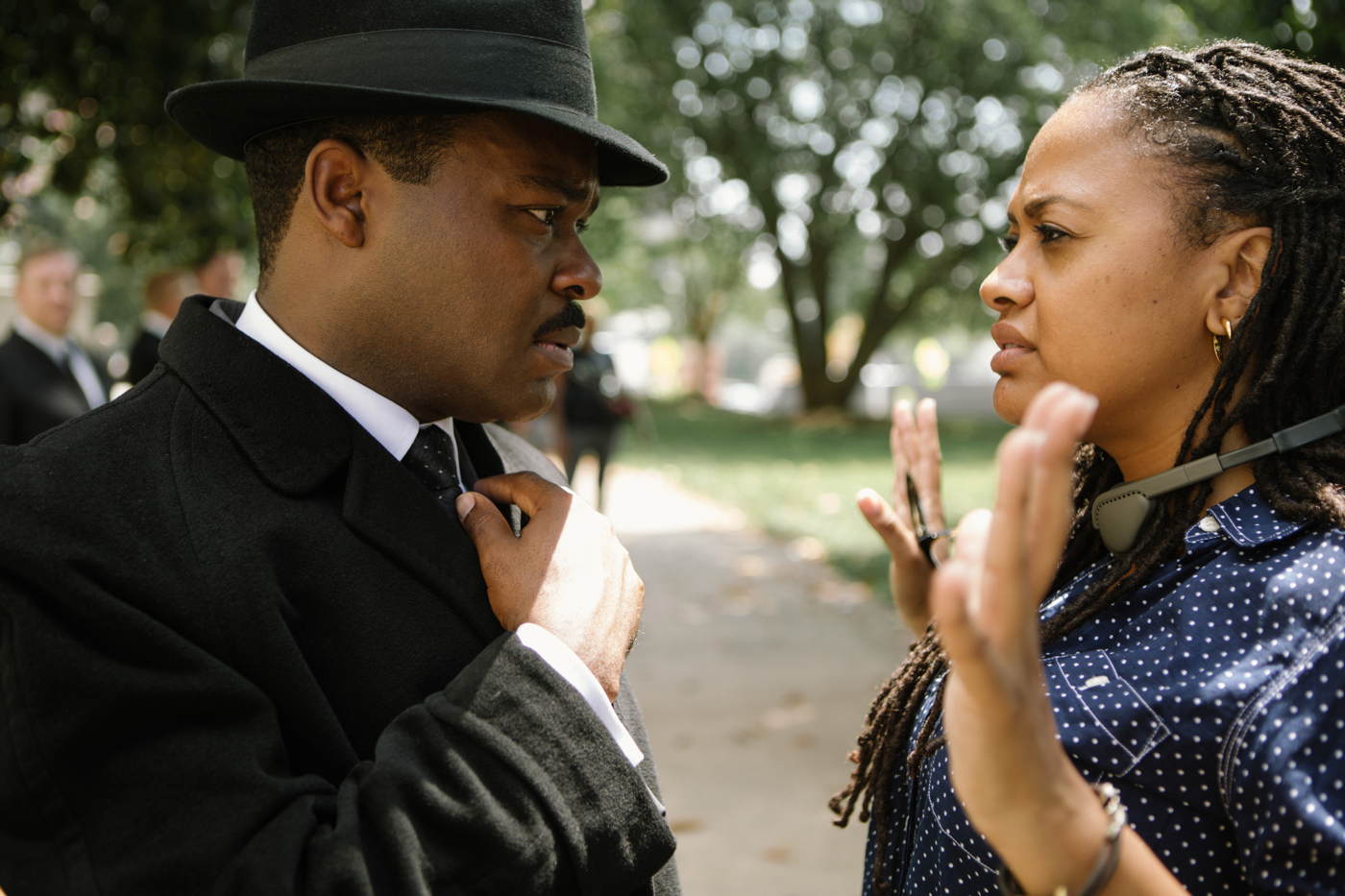
Actor David Oyelowo talks with director Ava DuVernay on the set of “Selma”.

First, you will want to read this interview with David Oyelowo, the British actor who plays Martin Luther King Jr. in the new film Selma.  I haven’t seen the film, but I have kept abreast of all the criticism from LBJ fans, and I listened yesterday to a delightful conversation between Terry Gross (Fresh Air) and director Ava DuVernay that explains why it has taken half a century for Hollywood to tackle MLK.  The interview with Oyelowo explains why, perhaps for the first time, a major film portrays authentic spirituality.  All of the major actors were either professing Christians or they had grown up in the Black Church and understood the context.  In other words, this isn’t a film made by secular white people who don’t understand genuine Christianity.

Views-of-the-Social-Safety-Net-By-Levels-of-Financial-SecuritySecondly, there is this disturbing post from Fred Clark, the Slacktivist, inspired by the surprising discovery that the more financially secure Americans become, the more they despise and “envy” poor people.  The study shows, Clark believes, that rich people have come what they pretended to be:

So the wealthy didn’t start out as genuinely ignorant, dumb and dull. They started out just pretending that’s what they were.  Alas, though, as Kurt Vonnegut warned us, “we must be careful about what we pretend to be,” because we become what we pretend to be.  And after decades of pretending to be stupid, it seems that a majority of the wealthiest Americans are no longer merely pretending.

1Finally, there is this post from The Boekstool asking why we don’t call misguided Christians who perform violent acts “Christian terrorists”.  An excellent question.  What is it like to grow up Muslim in America?  It ain’t easy, that’s for sure.

Enjoy!

Beware the devil’s Jesus

0474209_610_MC_Tx304By Alan Bean

The Christ child has been born of Mary, wrapped in swaddling clothes and laid to rest in a manger. The angelic host has winged its way back to highest heaven.  So, what do we do now?

The incarnation reveals a God who pitches his tent with the poor, the undocumented, the slave and the outcast.  Infinite power takes up residence in a helpless child.  And the child really is helpless.  Minus the loving care of its parents, this spark of life would quickly succumb to cold, thirst and hunger.  Perhaps this is why the parents-to-be were subjected to an extensive angelic interview.  The risk of birth, demanded parents who could hold up their end of the bargain.

The Bible doesn’t dwell on the Messiah’s formative years.  Mark and John introduce us to a fully grown Messiah, and Matthew and Luke restrict themselves to a few childhood glimpses.  Matthew reveals the subtle dance between the magi and mad king Herod ending with the slaughter of the innocents and the flight into Egypt.  Thanks to mad king Herod, the Christ-child retraces the steps of a slave people, living in Egypt as an undocumented immigrant.

Luke shows the most interest in Jesus’ childhood, but even he doesn’t tell us much.  No one sees the newborn king but a band of scruffy shepherds–the most despised caste in Jewish society.  Next, Jesus is presented at the temple in Jerusalem and an old man named Zechariah thanks God for allowing him to see the salvation of God in human form: “a light for revelation to the Gentiles and for glory to your people Israel.”

The old man grasped what no one else, even mother Mary, could grasp: still a nursing child, the claim of God was on the life of Jesus.  Only God would decide what sort of Messiah this baby would become.

The next time we see Jesus, he is a remarkably precocious twelve year-old posing theological questions to the leading Rabbis of the day and weighing their answers with rapt interest.  He is already wrestling with God’s claim on his life.

Luke and Matthew move swiftly from birth to baptism, then treat us to a blow-by-blow account of  what we call “the wilderness temptations”.  This is where Jesus decides what sort of Messiah God wants him to be.

The story reaches its dramatic high point when the devil takes Jesus to a high mountain and shows him all the kingdoms of the earth.  All this can fall under Jesus’ power.  The only catch is that the devil gets to decide what sort of Messiah Jesus will be.  His plan doesn’t seem half bad.  The devil desires a messiah who transforms the hard rock of suffering into the warm bread of blessing.  Just give the people what they want, become the savior they desire, the devil says, and all will be well.

Most of us would take this deal–the devil is an excellent salesman–but Jesus says no. As we quickly learn, God is calling his Messiah to a very different vocation.

In Matthew, Jesus leaves the wilderness, calls his disciples, and climbs a mountain. “Blessed are the poor in spirit,” he says, “for theirs is the kingdom of heaven.  Blessed are the meek. Blessed are the merciful.  Blessed are the peacemakers.  Blessed are those hunger and thirst for justice.”

The shape of Luke’s narrative is a bit different, but the message is pretty much the same.  After leaving the wilderness, Jesus reads the scroll of Isaiah in the very synagogue where he learned to read the Hebrew Scriptures as a young boy.  It was here, in the synagogue, poring over the precious scrolls, that Jesus first realized God’s claim on his life.  Having said no to the devil, Jesus says yes to the messianic role he learned from Isaiah the prophet:

The Spirit of the Lord is upon me,

Because he has anointed me

To preach good news to the poor.

He has sent me to proclaim release to the captives

and recovery of sight to the blind.

To set the captive free,

To proclaim the jubilee year of the Lord.

The kingdom gospel of Jesus is good news to the poor, release to the captives, sight to the blind, the kind of jubilee-liberation where all the slaves go free.

These themes were central to the life and preaching of the first generations of Christians, the people who gave us our New Testament.  The church was an egalitarian community of slaves and free people, men and women, rich and poor, a rag-tag assemblage drawn from every tribe and kindred on the face of the earth.  Their mission was to model the kingdom values that sent Jesus to a Roman cross: caring for the poor, welcoming the stranger, forgiving the enemy, breaking down the walls that fragment the human family.

Which brings us back to the child wrapped in swaddling clothes, lying in a manger.  The cute little tyke makes no demands.  According to the song, he doesn’t even cry.  He just lies there, cooing and looking adorable.  O come, let us adore him . . . before he grows up and makes demands of us.

In the Ballad of Ricky Bobby, the successful NASCAR veteran prefers the little baby Jesus to the grown up variety, and since he wins all the races and brings home the bacon, he figures he can pray to whatever kind of Jesus he likes.

“Dear, 8-pound, 6-ounce, newborn infant Jesus, don’t even know a word yet, just a little infant and so cuddly, but still omnipotent, we just thank you for all the races I’ve won and the 21.2 million dollars– Whoo!”

Taking their lead from Ricky Bobby, the other guests choose their favorite kind of Jesus:

Cal: “I like to picture Jesus in a Tuxedo T-shirt because it says, like, ‘I wanna be formal.  But I’m here to party too.’ ‘Cause I like to party, so I like my Jesus to party.”
Walker: “I like to picture Jesus as a ninja fighting off evil samurai.”
Cal: “I like to think of Jesus, like, with giant eagle’s wings.  And singing lead vocal for Lynyrd Skynyrd with, like, a angel band. And I’m in the front row and I’m hammered drunk.”

Can we select the Jesus that suits our style, or are we stuck with the guy in the Bible who preached good news to the poor and release to the captives?

The devil would give us a Jesus who turns hard stones into the warm bread; but the God of Christmas trades the security of heaven for the pungent hay of a feed trough.  In Matthew’s telling, incarnate God is hustled across the Egyptian border with the soldiers of a mad king baying at his heels.  The God of Christmas identifies himself with the poverty of shepherds and the early chapters of the salvation story “when Israel was in Egypt-land; oppressed so hard he could not stand.”

The devil couldn’t buy a Messiah of his own choosing, and we can’t either.

A Poem for Christmas

IN THE VISIONS OF THE NIGHT
December 12, 1993

Alan Bean

OGLE-2005-BLG-390L b is an uninhabitable ice ball stuck in a per

In the visions of the night
I saw this earth
Lost among the silent stars
I saw this earth lost among the stars.
No established date of birth;
No estimated time of arrival.
In the visions of the night
I saw this earth
Lost among the stars.

In the visions of the night
I saw this earth
Numbering her battle scars
I saw this earth
Numbering her scars.
No sword of retribution;
No tears of absolution.
In the visions of the night
I saw this earth
Numbering her scars.

In the visions of the night
I saw this earth
Cradling a mother’s child
I saw this earth
Cradling a child.
Lost among the silent stars;
Mid the noise of battle,
In the visions of the night
I saw this earth
Cradling a child.

Why (white) Millennials are leaving the church

exit (1)By Alan Bean

More white Millennials identify as “nones” than as Christians according  to a post originally published in On Faith.  

“Nones”, you may remember, are those who check the “none” box when asked to state their religious affiliation.

But there is no mass exodus afoot in the non-white Millennial segment of the American Church.  As a result, although people of color comprise only one-third of American Millennials, they represent over half of Millennial Christians.

By contrast, nearly 7 in 10 of older American Christians are white.  The On Faith article highlights the conclusion of Mark Silk, professor of Religion in Public Life at Trinity College in Hartford, CT:  “What you have in American religion today are the nonwhite Christians and the Nones.”

And it isn’t just the moderate-to-liberal Protestant mainline churches that are bleeding young people.  According to the article:

Among Americans 65 and older, nearly 3 in 10 (29 percent) are evangelicals. That number drops to 1 in 10 for younger Americans.

So, why are white Christians, conservative and liberal, in such a panic to leave the church while religious fervor among young people of color remains strong?

This difference is particularly surprising when you realize that most African American and Latino Christians take the rough outline of their theology from white Christians.  If you think non-white churches are bristling with liberation and civil rights theology you are mistaken.

There are three large tribes within white American Christianity: mainline Protestant, evangelical Protestant, and Roman Catholic, and all three are hemorrhaging young people.

Among white American evangelicals, Christianity largely overlaps with Republican political identification.  Although it is rare to hear blatantly partisan political preaching in white evangelical churches, even in the American South, the association between Christianity and Republicanism is widely assumed.

American evangelicalism loves Jesus and can’t pay him enough metaphysical compliments: Son of God, Lord of Lords, Coming King, etc.  But American evangelicals have a problem with the core teaching of Jesus recorded in the Gospels.

Jesus, to put it bluntly, makes liberal democrats look like Barry Goldwater.  His gospel is “good news to the poor”.

Jesus proclaimed an upside-down kingdom in which “the first will be last, and the last will be first.”

Jesus told his disciples to love everyone without reservation, to demolish us-them distinctions, to honor the dishonorable.

Jesus  loved and forgave his enemies, even while hanging in agony on the cross and, incredibly, insisted that his followers do the same.

It was once possible to ignore the content of Jesus’ teaching.  It didn’t get a lot of attention in sermons and Sunday school lessons and evangelical pastors evolved clever ways of explaining why Jesus almost never really meant what he said.

That is changing.  The radical shape of Jesus’ message is rapidly becoming public knowledge, forcing evangelical preachers and public theologians to ratchet up the machinery of denial.  Older evangelicals can live with the disconnect between revelation and proclamation; but the cognitive dissonance is proving too much for “the information generation”.

So, how do we explain the mass exodus of young people from the Protestant mainline and Roman Catholic churches of America?

While American evangelicals are overwhelmingly conservative in political ideology, the nation’s white mainline and Roman Catholic churches are evenly divided between ideological conservatives and liberals, people who primarily disagree about money, poor people, and the proper response to the enemy and the “other”; precisely the stuff Jesus talks about in the Bible.

Churches can’t wrestle openly with the alarming tenets Jesus-based morality without pouring oil on the polemical fire sizzling restlessly just beneath the surface of congregational life, so they ignore this stuff as much as possible.  Sure, you hear vague references to justice, caring for the poor and feeding the hungry in many white churches, but the systemic roots of injustice, poverty and hunger are rarely explored.

Here’s the big problem: You can’t apply the teaching of Jesus to the moral and public policy issues confronting American society without getting overtly political.  But the politics of Jesus transcends the party programs of Democrats ad Republicans.  The logic of Jesus-morality suggests a politics so radical and uncompromising that few elected officials in America would consider touching it.

As a consequence, the moral content of biblical Christianity, properly understood, is irrelevant to American politics.

Millennials love the Jesus portrayed in the Gospels and would love to learn more about them.  But in the white Christian churches of America they are confronted with silence or bizarre misrepresentations of the Master’s intent.

Are Christians of color more open to Jesus than their white counterparts?

If your congregation is directly impacted by American immigration policy, the Bible takes on a surprising relevance.  The Holy family was forced to live as refugees and illegal aliens.  The Old Testament insists, repeatedly, that the sojourner and the resident alien must receive just and humane treatment.  Jesus injunctions about “the least of these” take on a new relevance in a social context shaped by poverty and the constant threat of family separation, and this is true even if pulpit preaching is primarily about getting saved for heaven.

The same dynamic is alive in the Black church.  Only a small minority of Black churches participated in the civil rights movement, but that bold legacy has assumed a normative status in the Black church, even in churches where the preaching presents a Jesus who wants to make you rich.  The Black Church is overtly political because bad public policy has had a devastating impact in poor communities of color.

In short, there is just enough of the Jesus stuff in America’s Black and Latino churches to sustain the commitment of a restless Millennial generation.  Many of these young people are frustrated by much of what they see and hear in church, but there is a dash of genuine Jesus-religion in the religious stew, and that keeps the young folks coming.

Meanwhile, white American Christianity has a Jesus problem and it’s getting worse with each passing year.  The flight of the Millennials is primarily a white problem.  There’s something horribly wrong with white American spirituality and its driving our children to the exits.

Jesus is our problem.  Mercifully, Jesus is also the solution to our problem.