Category: violence

Were the Tulsa shootings racially motivated?

By Melanie Wilmoth Navarro

As of yesterday, two suspects have confessed to the Tulsa, Oklahoma shootings that left two injured and three dead over the Easter weekend.  The two suspects — Jacob England, 19, and Alvin Watts, 32 — were arrested Sunday morning and confessed shortly after their arrest.

Late Thursday, According to the New York Times, England wrote an angry post on his Facebook page about the deaths of his father and fiancée:

Mr. England’s father, Carl, was shot on April 5, 2010, at an apartment complex…and the man who was a person of interest in the case, Pernell Jefferson, is serving time at an Oklahoma state prison.

Mr. England is a Native American who has also described himself as white.  Mr. Jefferson is black.

“Today is two years that my dad has been gone,” Mr. England wrote, and then used a racial epithet to describe Mr. Jefferson. “It’s hard not to go off between that and sheran I’m gone in the head,” he added, referring to the recent suicide of his 24-year-old fiancée, Sheran Hart Wilde. “RIP. Dad and sheran I Love and miss u I think about both of u every second of the day.”

Hours later, England and his roommate, Watts, drove a pickup through a predominately black neighborhood in Tulsa and started to randomly shoot pedestrians.  Mr. England admitted to shooting three of the victims and Mr. Watts admitted to shooting the other two.

Many within the Tulsa community believe the actions of England and Watts were racially motivated.

The city of Tulsa has a history of racial tension.  In 1921, the city was the site of one of the deadliest race riots in U.S. history.  The riots began when a young black man was arrested after he was accused of sexually harassing a white woman.  His arrest sparked a violent confrontation between the black and white communities.  According to documents from the Tulsa Historical Society:

In the early morning hours of June 1, 1921, Black Tulsa was looted and burned by white rioters.  Governor Robertson declared martial law, and National Guard troops arrived in Tulsa.  Guardsmen assisted firemen in putting out fires, took imprisoned blacks out of the hands of vigilantes and imprisoned all black Tulsans not already interned.  Over 6,000 people were held at the Convention Hall and the Fairgrounds, some for as long as eight days.

Twenty-four hours after the violence erupted, it ceased.  In the wake of the violence, 35 city blocks lay in charred ruins.

Historians estimate that over 300 people were killed in the riot and more than 8,000 were left homeless.

Now, 91 years after the deadly riot, race relations in Tulsa remain rocky.  Many, including the Tulsa NAACP chapter and Tulsa City Council member Jack Henderson, want the gunmen to be prosecuted for a hate crime.

“Somebody that committed these crimes were very upset with black people,” said Jack Henderson, “That person happened to be a white person. The people that they happened to kill and shoot were black people — that fits the bill for me.”

Police officials and prosecutors, however, say it is still too early in the investigation to call the shooting rampage a hate crime.

The American vigilante myth

By Alan Bean

In an illuminating weekend piece, Washington Post film critic Ann Hornaday addresses America’s love affair with the lone wolf vigilante.  “Of the countless stories we tell ourselves,” she writes, “the American myth of the solitary enforcer of justice may be the most tenacious, beloved and — as the story of George Zimmerman and Trayvon Martin has so grievously demonstrated — distorting.”

In the movies, the vigilante takes the law into his (occasionally her)  own hands because “the system” has dropped the ball.  If they can’t get me some justice, the vigilante thinks, I’ll make my own.  This stark sentiment drives the narrative arc of dozens of blockbuster Hollywood films every year.  “Do you feel lucky, punk?” Dirty Harry asked forty years ago, and thousands of films are resolved in similar fashion.

For every lone wolf hero there must be a corresponding villain, a punk, a thug, a gang of thugs, or the favorite of prime time television dramas, the pathological serial killer.  In this sense, Hornaday writes,  “the fatal encounter” in a gated community in Florida, “played out like an all-too-real clash of iconographies: Zimmerman’s idea of the property-defending hero Standing His Ground vs. the hoodie-wearing youth who has symbolized menace and urban violence in everything from “The Wire” to last year’s comic teen-thugs-battle-aliens satire “Attack the Block.”

The racial dynamics shift from plot to plot, but the man who takes the law into his own hands is normally white and middle class while the punks and thugs, regardless of race, are heartless incarnations of evil.   We can’t know if Zimmerman’s pursuit of Martin was racially motivated, Hornaday says, but he clearly saw himself as a stand your ground vigilante protecting his neighborhood from the forces of evil.

The American gun culture is inspired by a similar iconography.  Charlton Heston’s “I’ll give you my gun when you pry it from my cold, dead hands!” applause line worked because his audience identified with the man-against-the-world hero trapped between human evil and an unresponsive and bureaucratic system.  This may explain why Zimmerman ignored the request to remain in his vehicle.  “If you want the job done right . . .”

But, as Hornaday points out, the real world never adapts to the cathartic demands of a Hollywood script:

It’s easy to understand the enduring appeal of the vigilante archetype, whose hard-charging moral certainty jibes perfectly with this country’s sense of exceptionalism, not to mention the narrative constraints of a 90-minute action movie. It’s far more difficult to reconcile complicated reality with the simplistic, comforting fictions we crave.

Here’s the big problem.  American’s on both sides of the black-white color line are traumatized.  A sober reading of American racial history does little to enhance the self-esteem of white people, and this is particularly true of the civil rights narrative.  White Americans can face the simple facts of our national history, or we can feel good about ourselves.  There’s no third alternative. 

Maybe that’s why Hollywood has a hard time telling civil rights stories that don’t involve white protagonists.  White people want to feel good about themselves, but history keeps getting in the way.

At the same time, it’s hard for black Americans to reckon with history and come away feeling good about their country.  Whether we’re talking about the era of slavery or the Jim Crow period, the same question arises: Do I want to be part of this country?  An affirmative answer is possible, but only with conditions attached.  At the very least, the truth of the historical record must be acknowledged. 

So here’s the problem.  Black America has a therapeutic need to tell a story that white America needs to ignore.  That was then, white folks say.  “That is now,” black Americans reply.

Which explains why the Trayvon Martin case divides public opinion along racial lines.

Hollywood’s vigilante myth gives white Americans (the majority of movie goers) a therapeutic myth they can live with.   If we can’t talk about us, let’s talk about me.  How we explain the dramatic spike in gun sales following the election of Barack Obama.  Why did a black man who avoids the race issue whenever possible stir such profound emotion in so many white people?  “I stand here today as hopeful as ever that the United States of America will endure,” our black president says, “that it will prevail, that the dream of our founders will live on in our time.”  What could possibly be threatening about that?

America is a nation with two foundational dreams.  There is the Manifest Destiny dream of steadily expanding white hegemony, and there is the Nation of Immigrants and Opportunity dream of radical inclusion.   From the beginning, these two conflicting narratives have been fighting for the upper hand.  The Civil War was simply the most bloody encounter in an ongoing war. 

Even when the president talks about American greatness, everybody knows he’s evoking the Nation of Immigrants narrative.  Obama doesn’t denigrate the myth of white hegemony; he doesn’t have to.  His mere existence constitutes a ringing denial of an old, old story that dare not speak its name.

We are drawn to the Americam vigilante myth because we can’t talk about who we are as a nation.

The demands of the 90-minute movie plot and the therapeutic needs of the majority of movie fans combine to give us a narrative that celebrates radical individualism.  We can’t talk about who we are as a people without making everybody uncomfortable.  So Dirty Harry singlehandedly rids Los Angeles of punks and Mr. Heston dares the government to pry his firearm from his cold, dead hands.

George Zimmerman is the product and the victim of the American vigilante myth.  We can’t escape his fate unless we decide what makes America exceptional.  Is it the ability of white patriots to enforce their will on inferior races; or is it our ability to move from apartheid to radical inclusion?  So long as we avoid the “us” question, the lone wolf vigilante will fill the void.

Western: we can cut crime and prisons at the same time

chart

Crime and Punishment

Public Safety Doesn’t Require More Inmates

By Bruce Western

This article orginally appeared in the Boston Review.

By the end of the 1990s, policymakers and police were celebrating the great American crime decline. Rates of murder, robbery, and rape had fallen across cities and suburbs, among rich and poor.

Less appreciated perhaps is the continuing decline in crime in the 2000s. In every state fewer incidences of serious violence and property crime were reported to police in 2010 than in 2000. The murder rate is now the lowest it has been since the early 1960s.

Research on the 1990s traces the crime drop to better policing; to a subsiding crack trade, which, at its height in the late 1980s, unleashed a wave of murderous violence; and to increasing prison populations.

However, some researchers find the apparently large effect of imprisonment controversial. Driven by tough-on-crime policy and intensified drug enforcement, prison populations grew unchecked from the early 1970s until the last decade, but crime rates fluctuated without any clear trend. By the early 2000s incarceration rates had grown to extraordinary levels in poor communities. Whole generations of young, mostly minority and poorly educated men were being locked up, leading to the United States’s current status as the world’s largest jailer, in both absolute and relative terms.

Prisons may have reduced crime a little in the short run, but at the current scale the negative effects of incarceration are likely to outweigh the positive. Commonplace incarceration among poor young men fuels cynicism about the legal system, destabilizes families, and reduces economic opportunities.

Over the last few years, the rate of prison population growth in the states finally began to slow. (The growth in federal prisons has continued unabated.) As the political salience of crime declined and the cost of prisons ballooned, policymakers and the courts turned to alternatives to incarceration.

Twelve states reduced imprisonment in the last decade. These states diverted more drug offenders to probation and community programs, and parolees were less likely to return to the penitentiary.

All the states that reduced imprisonment also recorded reductions in crime. For instance, between 2000 and 2010, New York cut imprisonment by about a fifth, and the crime rate fell by about 25 percent.

States that raised their imprisonment rates averaged similar reductions in crime, though the declines show a lot of variation. Where prisons grew by more than 20 percent, crime fell by a little less than the national average. And in some places—such as Maine, Arkansas, and West Virginia—crime barely fell at all.

It seems clear, then, that ever-increasing rates of incarceration are not necessary to reduce crime. Although it’s difficult to say precisely how much the growing scale of punishment reduced crime in the 1990s, the crime decline has been sustained even as imprisonment fell in many states through the 2000s.

These data are good news for governors who want to cut prison budgets. But cuts alone may not work. Policymakers should study cases such as New York and New Jersey. These states cut imprisonment while building new strategies for sentencing, parole and after-prison programs.

The era of mass incarceration is not over, but there are signs of reversal. Given the social costs of incarceration—concentrated in poor neighborhoods—these are heartening trends. The last decade shows that public safety can flourish, even as punishment is curtailed.

Bruce Western, Professor of Sociology at Harvard University, is author of Punishment and Inequality in America.

Juan Williams changes the subject

By Alan Bean

Some stories get too big to be ignored.  So imagine that you are an editor for the Wall Street Journal, the voice of sensible capitalism, the vast majority of your readers are white and conservative, in that classy, New York sort of way, and you are compelled to address the furor over the Trayvon Martin case?  You go to the bullpen and call Juan Williams to the mound.  Williams is the black guy that makes white guys feel good.  If a white editor opined that we should be giving less attention to Trayvon Martin while concentrating on black-on-black crime (the real problem) you might be facing a token backlash.  Your readers would applaud this sentiment, but a few outsiders might take exception.  But Mr. Williams is black, so he can’t be a racist.

Here’s the heart of William’s argument:

The race-baiters argue this case deserves special attention because it fits the mold of white-on-black violence that fills the history books. Some have drawn a comparison to the murder of Emmett Till, a black boy who was killed in 1955 by white racists for whistling at a white woman.

This is a magnificent misreading of the outrage.  When people compare Trayvon and Emmett, they aren’t saying the two cases are identical, or even that they are about the same kind of injustice.  The Till case sparked the civil rights movement.  Rosa Parks had Emmett Till on her mind when she refused to relinquish her seat to a white man.  Some are hoping the Trayvon Martin story sparks a similar revolution.  This time (contra Williams) the emphasis won’t be on white-on-black crime; the focus will be on racial profiling and the easy association between black skin and danger.

Hence the iconic emphasis on the hoodie. (more…)

Beyond the New Jim Crow?

By Alan Bean

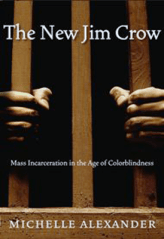
When a book about the criminal justice system sells 175,000 books, something is afoot.  Something big.  As this article in the New York Times observes, the initial hardcover release of Michelle Alexander’s The New Jim Crow: Mass Incarceration in an Age of Colorblindness was only 3,000 copies.  That’s a realistic sales target for this kind of book. 

Nobody who has read the book is surprised to find it on the best-seller list.  Many of the facts professor Alexander cited were familiar to criminal justice reform advocates, but she writes better than most academics and her argument transcended the normal drug war critique.  This clip from the article says it best:

Today, Professor Alexander writes, nearly one-third of black men are likely to spend time in prison at some point, only to find themselves falling into permanent second-class citizenship after they get out. That is a familiar argument made by many critics of the criminal justice system, but Professor Alexander’s book goes further, asserting that the crackdown was less a response to the actual explosion of violent crime than a deliberate effort to push back the gains of the civil rights movement.

Was the drug war a response to crime (as folks like Bill Stuntz and David Kennedy argue) or was the real goal to reverse the gains of the civil rights movement?

Yes.

In a journal article called “Racial Critiques of Mass Incarceration: Beyond the New Jim Crow“, professor James Forman Jr., son of the famed civil rights leader, makes two primary points.  First, Ms. Alexander doesn’t say enough about the relationship between urban crime and support for the drug war, and second, The New Jim Crow ignores the fact that civil rights leaders initially endorsed the idea of ramping up the drug war because drugs, and drug-related violence, was having a disastrous impact in poor black neighborhoods.

Forman makes some powerful arguments.  The war on drugs has always been a bipartisan disaster.  As Bill Stuntz suggested in his excellent The Decline of American Criminal Justice, liberal politicians had three choices when conservatives like Richard Nixon started demagoguing the drug war.  They could offer a progressive drug policy alternative, they could cede the drug issue to the conservatives, or they could out-tough the tough guys.  Democrats like Bill Clinton chose option number three and the drug war was transformed into a bipartisan bidding war. (more…)

Did the Religious Right enable Guatemalan genocide?

Pat Robertson

In January, former Guatemalan military dictator José Efraín Ríos Montt was ordered to stand trial for his role in almost 2,000 deaths and 1,400 human rights abuses that occurred during his rule as de-facto president from 1982-1983. Montt, according to the New York Times, faces charges of genocide and crimes against humanity for his part in Guatemala’s brutal 36-year civil war which resulted in the deaths of nearly 200,000 people.

According to Bill Berkowitz of Talk2Action.org, televangelist Pat Robertson enabled the Guatemalan genocide.

Montt was a favorite among conservative evangelicals, including Robertson who “praised Montt for his ‘enlightened leadership.'” Berkowitz argues that the Religious Right played a large role in U.S.-Central American relations during the 1980s. In an attempt to end communism and expand evangelical Protestantism in Central America, the Religious Right supported military dictators and policies that were “responsible for the deaths of hundreds of thousands of people.”

Take a moment to read Berkowitz’s enlightening essay posted below. MWN

Guatemala’s Former Leader Charged with Genocide. Pat Robertson Enabled It.

by Bill Berkowitz

Nearly thirty years ago, Guatemala’s ruthless dictator, José Efraín Ríos Montt and televangelist Pat Robertson were practically tied at the hip. Now, Guatemala’s judicial system is debating how to handle charges of genocide against the former military dictator, while Robertson, who had praised Ríos Montt for his `enlightened leadership,’ appears to have turned his back on his old friend.

In the early 1980s, José Efraín Ríos Montt, a military general was a favorite of the Reagan Administration and U.S. Christian conservative evangelical leaders – particularly televangelist Pat Robertson — and organizations. Ríos Montt was one of a series of military dictators that masterminded the murders of perhaps as many as 200,000 Guatemalans — including tens of thousands of Mayan people — as well as the destruction of a numerous Mayan villages. (more…)

Star of “The Wire” hooked by the streets of Baltimore

David Simon (R) and Ed Burns (L) on the set of The Wire

By Alan Bean

I learned about The Wire from former homicide detective Ed Burns.  He was sitting next to me at a convening of people concerned about the abuse of snitch testimony. “What do you do?” I asked.  When he told me he co-produced The Wire I said, “what’s the wire?”

Burns took my gnorance in stride.  “It’s an HBO drama about the war on drugs,” he replied.  I suspect I wasn’t the first person Burns had met who hadn’t heard of The Wire, a production widely regarded as the best dramatic series in the history of television.  The show had a rabidly loyal following, but it never rivalled HBO productions like The Sopranos.  The subject matter was gritty, intense, profane and troubling.  But from the moment we popped in the first rented DVD, my wife and I were hooked.

Sonja Sohn working with Baltimore street kids

Sonja Sohn played Detective Shakima “Kima” Greggs on The Wire, a role she initially struggled with.  Like the “corner boys” of Baltimore featured in The Wire, Sohn grew up in a world marked by deprivation, street hustling, violence and fear.  According to this Washington Post article, playing a cop was hard for Sohn; in the world she was raised in, law enforcement was the enemy.

The Wire played for five critically acclaimed seasons before Ed Burns and co-producer David Simon moved on to other things.  Sohn couldn’t move on.  The streets of Baltimore were wrapped around her soul.  This feature article in the Post is worthy of your time, and your reflection. 

After ‘The Wire’ ended, actress Sonja Sohn couldn’t leave Baltimore’s troubled streets behind

By Phil Zabriskie, Published: January 27

Sonja Sohn stood in front of her audience, confident about the performance she was about to give. This wasn’t surprising, considering her history as an actress who was just coming off a five-year run as Det. Shakima “Kima” Greggs on HBO’s “The Wire,” one of the most critically acclaimed shows in television history. To project professionalism, she had pulled her hair back and was wearing pressed slacks and a collared shirt. Her motivation was clear, her research was done, and after many months of preparation, she was ready. (more…)

America’s enemies: the experts weigh in

“Can someone explain to me if there is supposed to be a scandal that someone pees on the corpse of a Taliban fighter — someone who as part of an organization murdered over 3,000 Americans?  I’d drop trou and do it too. That’s me, though…Come on people this is a war.” CNN contributor Dana Loesch

 “A dead body is just, you know a f—— body that’s dead and it just doesn’t bother me.”  It all depends on “what the people they were pissing on did.  If they were real Taliban, if they were people who burned down girls’ schools, and, you know, do honor rapes and throw acid in people’s faces, I’m not that upset about pissing on them.” HBO comedian Bill Maher

“When you’re in war — and history kind of backs up. There’s a picture of General Patton doing basically the same thing in the Rhine river. Although there’s not a picture, Churchill did the same thing on the Siegfried line . . . Going after them as a criminal act, I think [is] really a bad message.” Texas governor Rick Perry 

“Andrew Jackson had a clear cut idea about Americas enemies…kill them!” Newt Gingrich

“You have heard that it was said, ‘You shall love your neighbor and hate your enemy.’  But I say to you, Love your enemies and pray for those who persecute you, so that you may be children of your Father in heaven.”  Jesus, Matthew 5:43-45

Has mass incarceration given us safe streets?

By Alan Bean

Charles Lane is excited.  Crime rates have been falling across America and, if present trends continue, the safe streets we enjoyed in the 1950s will soon return. 

Lane sees mass incarceration as a curious paradox.  It’s too bad we had to lock up 2.3 million people to “take a bite out of crime”, he seems to say, but that’s the way the corn bread crumbles.

You get the impression that Lane, like most moderate liberals, has formed his conclusions about crime and punishment after reading a single book, in Lane’s case Franklin Zimring’s The City That Became Safe.  How did America solve its crime problem?  We rolled up our sleaves and fixed it, Zimring says.

Fine, but how did we solve the crime problem?  What sort of tough, decisive political decisions did our leaders make?  There can be only one answer: we locked up millions of poor black males.

If Zimring and Lane think that’s a viable solution they need to read Michelle Alexander’s description of the post-prison experience in The New Jim Crow.  Have we solved the crime problem by creating (intentionally or by accident) a new racial caste? 

Lane’s self-congratulatory column explains why William Stuntz finished The Collapse of American Justice on a somber note:

The disaster that is contemporary American criminal justice does not look so disastrous in most places, which is why there has been no sustained political demand for large-scale reform of the justice system. Major changes in the system’s structure . . . require a critical mass of voters (also legislators and appellate judges) to support a program that carries little benefit for them.

Why should Charles Lane worry about problems that are largely invisible from the gentrified and suburban neighborhoods of Washington DC or New York City?  If the streets of the Big Apple are safe again, what’s the problem? (more…)

“Both sides are us”: Stuntz and Kennedy unpack the spirituality of criminal justice reform

By Alan Bean

In 2010, Michelle Alexander’s The New Jim Crow: Mass Incarceration in an Age of Colorblindness, rocked the civil rights community back on its heels.  Alexander accused the criminal justice reform movement of seeking legal solutions to a moral problem, of fighting for affirmative action while abandoning the victims of a brutal and counter-productive drug war, of telling pretty stories about wrongfully convicted poster-boys while ignoring the social nightmares unfolding in poor communities of color.

 If the way we pursue reforms does not contribute to the building of a movement to dismantle the system of mass incarceration, and if our advocacy does not upset the prevailing public consensus that supports the new caste system, none of the reforms, even if won, will successfully disrupt the nation’s racial equilibrium.  Challenges to the system will be easily absorbed or deflected, and the accommodations made will serve primarily to legitimate the system, not undermine it.  We run the risk of winning isolated battles but losing the larger war.

In 2011, two books by white males revealed that Michelle Alexander is not the only American scholar in search of a new moral consensus for ending mass incarceration.   The Collapse of American Criminal Justice by William J. Stuntz, and Don’t Shoot: One Man, A Street Fellowship, and the End of Violence in Inner-City America by David M. Kennedy are not books written in response to Alexander’s The New Jim Crow.  Stuntz and Kennedy are white male academics who see mass incarceration and the war on drugs as unmitigated disasters.  These authors tackle America’s racial history head on.  Most importantly, they agree with Alexander that a movement to end mass incarceration must begin with a new moral consensus.    (more…)