Fuzzy facts in Savannah: reflections on the Troy Davis hearing

The evidentiary hearing in the case of Troy Davis has come and gone.  If Mr. Davis is now guilty until proven innocent, Patrick Rodgers thinks his lawyers have little cause for rejoicing.  The waters are just as muddy now as they have ever been. 
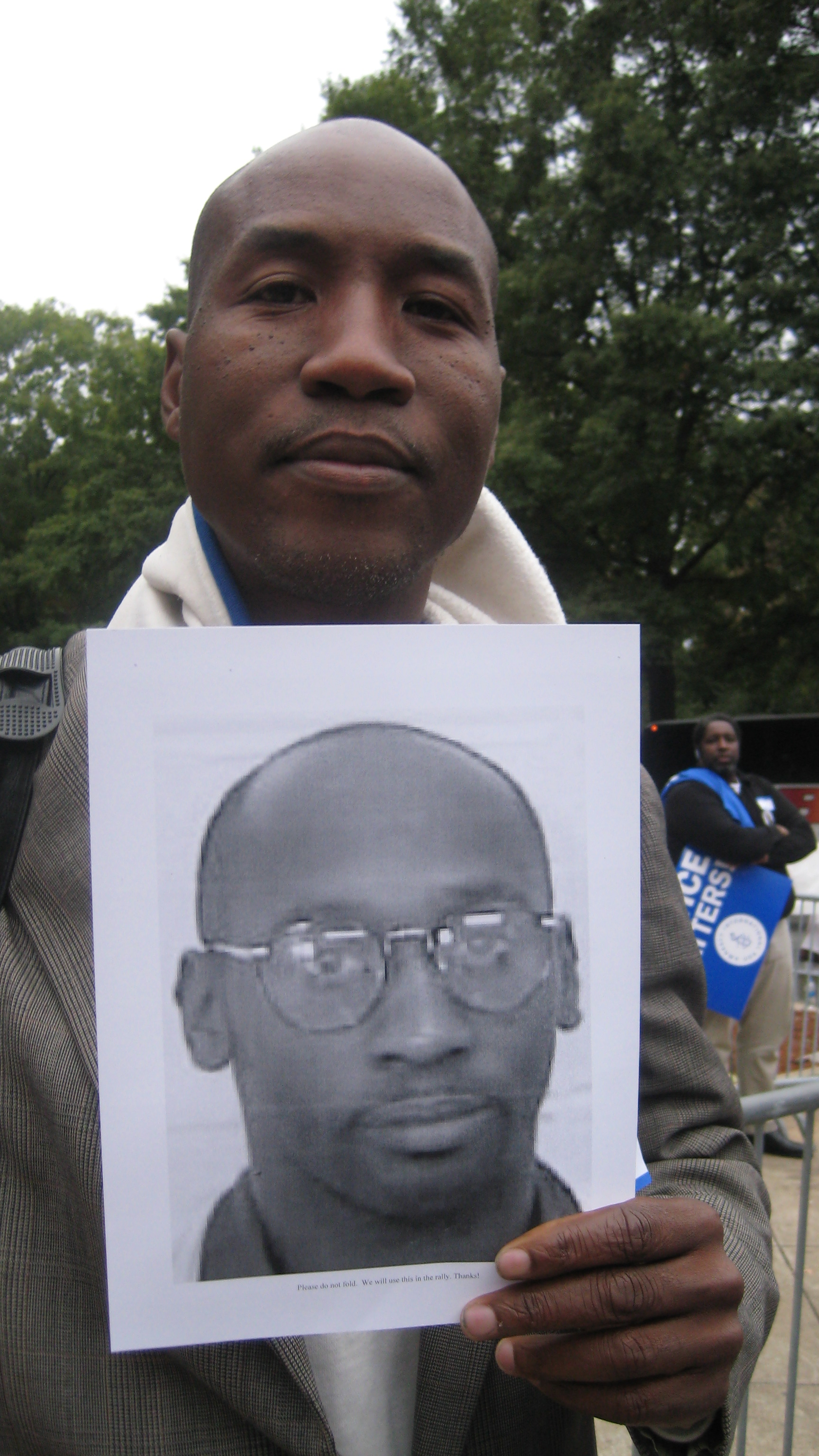
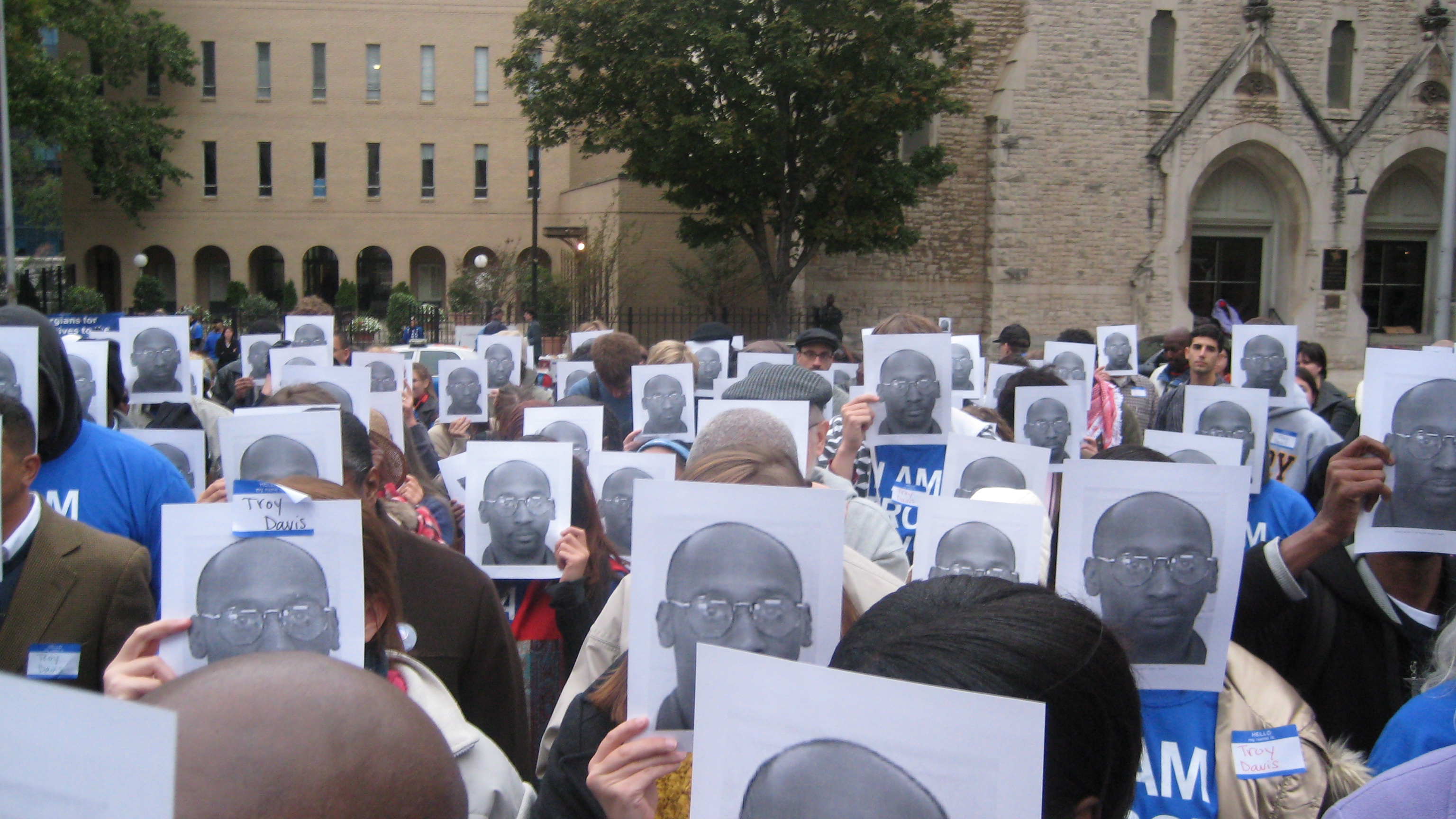
But is this process just about the guilt or innocence of Troy Davis?  I don’t think so.  In fact, I predict that the State of Georgia will be unable to execute Troy Davis.  Why?  Too many people either think he is innocent or distrust the investigation underlying this case.  When that happens, the criminal justice system freezes up. 

Supreme Court Justice Anton Scalia painted the Supreme Court into a constitutional corner when he made this stunning observation:

“This Court has never held that the Constitution forbids the execution of a convicted defendant who has had a full and fair trial but is later able to convince a habeas court that he is ‘actually’ innocent.  We have repeatedly left that question unresolved, while expressing considerable doubt that any claim based on alleged ‘actual innocence’ is constitutionally cognizable.”

Scalia apparently think that’s okay.  Most Americans would disagree . . . if they were paying attention. 

The trouble with the Davis case is that so many people are paying attention.  Normally, the Alice in Wonderland character of the legal system goes unnoticed.  When a case gains widespread attention, a tipping point is reached.  The Davis case tipped a long time ago.

JUNE 29, 2010

Sound and fury: The Troy Davis hearing

Patrick Rodgers

Twenty years in the making, last week’s proceeding didn’t seem to clarify anything.

In a city with a reputation for celebrating the intersection between odd personalities and true crime drama, last week’s evidentiary hearings for Troy Davis did not disappoint.

There were remorseless convicts correcting the state’s legal team about prior arrests; wild–haired old ladies reflecting out loud (to no one in particular) about the distant past; tense moments implicating possible police malfeasance; and a court room audience that did not hesitate to emote audibly as various witnesses were questioned.

“We don’t usually have this much excitement in the courtroom,” I overheard a member of the court staff say while waiting for Wednesday morning’s session to convene.

It was expected to be a circus – after all, the case has grown from local tragedy to international controversy over the last few years. The Pope and the French government, among others, have even taken sides.

Media, special interest groups and curious observers all gathered to catch a glimpse of the proceedings.

In front of the court house dozens of high school and college students gathered to assist Amnesty International and the NAACP with a rally, waving signs, chanting and passing out fliers. The atmosphere was electric. (more…)

Michelle Milner: Standing with Curtis Flowers

Who is Curtis Flowers?  A lot of people have opinions, but those who grew up with Curtis are uniquely qualified to speak.  Michelle Milner contacted Friends of Justice shortly after Mr. Flowers was convicted and sentenced to die by lethal injection.  Michelle is a doctoral student in urban higher education at Jackson State University with a research interest in justice-related higher education.

I have observed with considerable angst the circus that has surrounded Curtis Flowers for some 13 years…a sort of morbid fascination with the injustice and racism that I see displayed. The prosecution’s distortion of Curtis Flowers as a murderer would be laughable if not for the fact that the individuals actually believe this pack of lies. The Curtis Flowers that I know could never have committed a crime such as this one.

I met Curtis as a teenager. I lived in a small town neighboring Winona, MS. Since our small community didn’t have very much to offer in the way of entertainment so we frequently traveled to nearby Winona, MS to attend games, dances, and participate in other activities. I struggle to remember our very first introduction because I honestly can’t remember a time as a teen that I didn’t know him or know of him.

Curtis is the kind of person that makes you feel instantly at ease. He is laid back, kindhearted, funny, and very easy to like. Some of the young men in Winona would fight with young men from our community, sort of a rivalry and a way to keep them away from the girls in Winona. He was never a participant in any of that foolishness. As a matter of fact I never remember him being involved in any altercations even when he was provoked. He dated a girl that lived near me for a short time. She never mentioned violence or a mean streak. Curtis had it all—good looks, great personality, charm, and a beautiful tenor voice that he used with the Unionaires (a male singing group). I have to admit it wasn’t always my love of Gospel music that made me search out churches where he would be singing. He was always willing to laugh and talk after service. We loved to hear him sing. I’m sure “the Curtis Effect” was obvious by the number of younger females that filled the audience during the time that the group sang. That’s the Curtis Flowers that I know and remember. He was a smiling, lighthearted, down-to-earth, fun-loving, and grounded Christian that boldly sang of God’s grace and goodness. I don’t remember which songs he sang, but I remember that he sang them with conviction and boldness. (more…)

CNN Story on Flowers Verdict

CNN’s Emanuella Grinberg did an excellent job of covering the final days of the Curtis Flowers trial from every conceivable angle.  Emanuella got her start in journalism with Court TV, so she has a good feel for courtroom dynamics.

One crime, six trials and a 30-minute guilty verdict

By Emanuella Grinberg, CNN
 
June 18, 2010 5:45 p.m. EDT

Winona, Mississippi (CNN) — The fatigue was palpable by the eighth day of Curtis Flowers’ sixth murder trial.

On the ninth day — Friday — Flowers was found guilty of four counts of murder in the July 16, 1996, shooting deaths of four people inside the Tardy family’s furniture store in downtown Winona.

The seven women and five men on the jury took just half an hour to resolve a case that has haunted the courts of Mississippi for 13 years. (more…)

Troy Davis hearing gets underway

In a federal courtroom in Savannah, Georgia today, a parade of eye-witnesses admitted to perjury.  At the 1991 trial of Troy Davis, witnesses described seeing him shoot police officer Mark Allen MacPhail.  Others testified that Davis had confessed to the killing. 

Why would so many people lie about what they saw and heard back in 1989? 

Intimidation.  Recanting witnesses claim that they were threatened and bribed by investigators desperate to bring a cop-killer to justice.

Prosecutors claim the recantors had criminal records, some of them extensive.  But that’s just the point.  Ex-offenders are infinitely vulnerable to prosecutorial manipulation.  A childhood friend of Mr. Davis says he testified at trial because he was a street hustler and was afraid the police would hang a drug charge on him. (more…)

Bringing Justice to Winona, Mississippi

curtisflowers

This post was written in the immediate aftermath of the 2010 conviction of Curtis Flowers in a Winona, Mississippi courtroom.  Now that the justices of the Mississippi Supreme Court are considering how to respond to this unprecedented case, a re-examination of the basic issues is in order.  Who is Curtis Flowers, and why has he been tried six times on the same facts without a final conviction?

(Additional Information on the Flowers case can be found here.)

Bringing Justice to Winona Mississippi

Alan Bean, Friends of Justice

In June of 2010, a forty-year-old black man was convicted of killing four people in cold blood and sentenced to die by lethal injection.  His name is Curtis Flowers.

Stories of black men sentenced through a perversion of justice cram the in boxes of CNN, NPR, the New York Times and the like on a daily basis.  It is a quintessentially America story, but it is also without parallel.

Curtis Flowers is the only capital defendant in American history to be tried six times on the same evidence.  The first three convictions were overturned due to prosecutorial misconduct; in the fourth, five black jurors held out for acquittal.  Trial five also ended in a hung jury, with the single black juror who refused to side with the majority accused of perjury. The sixth trial yielded the sentence of death and is now before the Mississippi Supreme Court. (more…)

Curtis Flowers sentenced to die

(This post is part of a series concerning Curtis Flowers, an innocent man convicted of a horrific crime that has divided a small Mississippi town.  Information on the Flowers case can be found here.)

Alan Bean, Friends of Justice

Curtis Flowers has been sentenced to die by lethal injection.

The moment the jury was seated, a conviction was a foregone conclusion.  Over the years, Winona has woven a guilt-narrative around Curtis Flowers.  White Winona sees Curtis Flowers as a cold-hearted killer, nothing more.  Black people who know the good-natured gospel singer shake their heads in bewilderment when they hear white folks talk about him.  The Curtis of popular white imagination does not exist.

The jurors seated for the sixth Curtis Flowers trial could have rendered a guilty verdict without hearing a word of testimony–they already knew the story as well as the folks commenting on the Friends of Justice website.

The next phase of the process is a justice struggle that could take years.  But the case against Curtis is too weak to stand.  Exposed to proper scrutiny, it will crumble to dust.  Most of the thousands of people currently reading this website every day will lose interest.  That’s natural.  But the quest for justice will continue nonetheless.  I am asking you to join us in this quest.  We deeply appreciate the support you have shown over the last two weeks.  Lydia and Alan Bean will be returning to Texas later today after speaking to a group of civil rights veterans in Neshoba County and will have more to say about the Flowers trial in the days to come

The Fifth Victim: The Curtis Flowers Trial, Day 11

(This post is part of a series concerning Curtis Flowers, an innocent man convicted of a horrific crime that has divided a small Mississippi town.  Information on the Flowers case can be found here.)

Alan Bean, Friends of Justice

Curtis Flowers has been found guilty on all four capital murder counts.  No surprise there, but I wasn’t prepared for a twenty-seven minute jury (non)deliberation.  That’s right, twenty-seven minutes.  Hardly long enough to pick a jury foreman.

The courtroom quickly filled up with the kind of folks who have been leaving derogatory comments on our blog.  One older man rushed up the courthouse steps as I was emailing supporters.  “I guess I’m late,” I heard him say, “but maybe not.”

“They’re just starting the sentencing phase,” another man replied.

“That’s the part I’m looking for,” the first man exulted.

He will have to wait until tomorrow morning.  The defense put on an elaborate and lengthy mitigation case highlighted by the testimony of corrections expert James Aiken.  He testified that he had to sit down with Curtis Flowers for two face-to-face meetings because he couldn’t believe that a man locked up for almost fourteen years doesn’t have a single disciplinary write-up.  Aiken testified that manipulative inmates can put up a good front for a short time, but anyone who holds up for over a decade is an exceptional inmate.

The disconnect was almost surreal.  There is a very good reason why Curtis Flowers has a discipline record bordering on the miraculous–he is 100% innocent.  He simply doesn’t fit the killer profile.  His detractors have done a good job of demonizing Mr. Flowers over the years, but anyone who has sat down with the man (as I did for forty-five minutes Wednesday night) can’t help but be impressed with his gentle faith and quiet confidence.

The sentencing hearing got under way with several representatives of the victims families testifying.  The room was in tears as Roxanne Ballard explained that her children were too young in 1996 to know the woman she used to be.  One of Carmen Rigby’s sons talked about the horror of losing a mother on the verge of college.  The grief in the room was palpable.

Unfortunately, the victim families will find little solace in the conviction of an innocent man.  I suspect they know that.  Curtis Flowers has long been the fifth victim of the Tardy tragedy.  Sentencing him to death does nothing to bring solace to the grieving families.

Several potential jurors who swore they could put their deep affection for the victims families aside if they were named to the jury joined the celebrants in the courtroom this evening.  I suspect they still think they could have been fair and impartial, but the joy on their faces tonight suggested otherwise.

Several family members testified that Curtis was devoted and fun-loving.  Archie Flowers, talked about the day Curtis joined his gospel group, the Unionaires.  “I kept asking him to start singing in public,” Archie recalled, “but he just told me he’d let me know when he was ready.”

A video clip of Curtis singing lead for the Unionaires was then played.  There was something eery about a younger, slimmer Curtis Flowers belting our a gospel tune on the screen while his father looked on from the jury box.

“I’m afraid we’re going to have to interrupt this presentation,” Judge Loper broke in.  “I’m told the pizzas for the jurors have arrived and we don’t want the food to get cold.”

On the way out of the courthouse, the father of one of the slain victims confronted Curtis Flowers’ sister, Priscilla.  “We always knew that nigger was guilty anyway,” he barked.  Sheriff’s deputies quickly descended on the scene.  The same man had approached me earlier in the day as well.  I had been fielding insults all week long, and was running short on patience.  “If you want to try out a clever insult, I’m not interested,” I snapped.

Moments later, I apologized.  People don’t get over the kind of tragedy that engulfed Winona fourteen years ago.  On the other hand, a personal tragedy is no excuse for boorish behavior; especially when the crude remark is aimed at the sister of a man about to be sentenced to death by lethal injection.

The packed courthouse received the verdict without an outcry.  After twenty-seven minutes, everyone knew what was coming.

I will have more to say about the sentence in a day or two.  The jury will almost certainly hand Curtis Flowers another death sentence.  There is no big surprise here.  We were hoping for a better result, but when a jury of eleven whites and one black was selected the writing was on the wall.  That’s okay; every successful campaign Friends of Justice has launched began with a conviction (sometimes several).  This case is simply too weak to stand.

So enjoy the party while it lasts, Winona; brighter days lie ahead for Curtis Flowers and his loved ones.

Standards? We Don’t Need no Steenking Standards! Curtis Flowers trial, Day ten

(This post is part of a series concerning Curtis Flowers, an innocent man convicted of a horrific crime that has divided a small Mississippi town.  Information on the Flowers case can be found here.)

by Alan Bean, Friends of Justice

Day Ten of the Curtis Flowers trial concluded with a stunning proclamation: the State of Mississippi (like the rest of America) has no minimum standards for criminal investigations.

That’s right.  Law enforcement should adhere to accepted standards (wink, wink), but if they don’t, it’s okay.

Like the Mexican desperados in Blazing Saddles who “didn’t need no steenking badges”, the folks investigating the Tardy murders feel the rules don’t apply to them.   In fact, there are no rules.

John Johnson, the lead investigator for District Attorney Doug Evans, got started in law enforcement in 1972.  That’s just nine years after Fannie Lou Hamer was beaten half to death in Winona, MS.  Just six years after Grenada, MS was engulfed in daily riots over school segregation.  And just two years after southern schools finally integrated.  In other words, John Johnson was raised by old school standards.  The days of lynching, extra-judicial beatings and all-white juries may be over, but the authorities are still free to do their jobs any old way they choose.  (more…)

The defense begins its case: Curtis Flowers Trial, Day Nine

(This post is part of a series concerning Curtis Flowers, an innocent man convicted of a horrific crime that has divided a small Mississippi town.  Information on the Flowers case can be found here.)

On Tuesday morning, the Winona perjury parade ground to a halt.  Bonita Henry is one of several witnesses in this legal marathon who are no longer capable of testifying.  She appeared courtesy of a brief excerpt from the 2004 trial transcript.  Ms. Henry said she was sitting on her porch between 9:00 and 9:30 on the morning of the murders when she saw Curtis Flowers walk by.  He was wearing white shorts and a T-shirt.

I was hoping the defense attorney in the transcript would ask if Curtis had a .380 automatic stuck inside the elastic waist band of his shorts–but the question never came. (more…)

Smoke or fog: Curtis Flowers Trial, Day Eight

(This post is part of a series concerning Curtis Flowers, an innocent man convicted of a horrific crime that has divided a small Mississippi town.  Information on the Flowers case can be found here.)

“Where there’s smoke, there’s fire.”  The prosecution of Curtis Flowers rests on this bit of folk wisdom.  Curtis told investigators he never strayed onto the east side of Highway 51 on the morning in 1996 when four innocent people were murdered execution-style at the Tardy furniture store.  One witness seeing Curtis Flowers on the east side of the highway might be mistaken, but the state has half- a-dozen witnesses making this claim.

With that much smoke there must be a fire some place.  Right?

Or are we all being duped by an elaborate fog machine?

Strip the eye-witness testimony from this case and nothing remains but junk science. (more…)